
Unit 5 Photosynthesis and Plant Structures Plants Gymnosperms


- Slides: 22
Unit 5 Photosynthesis and Plant Structures
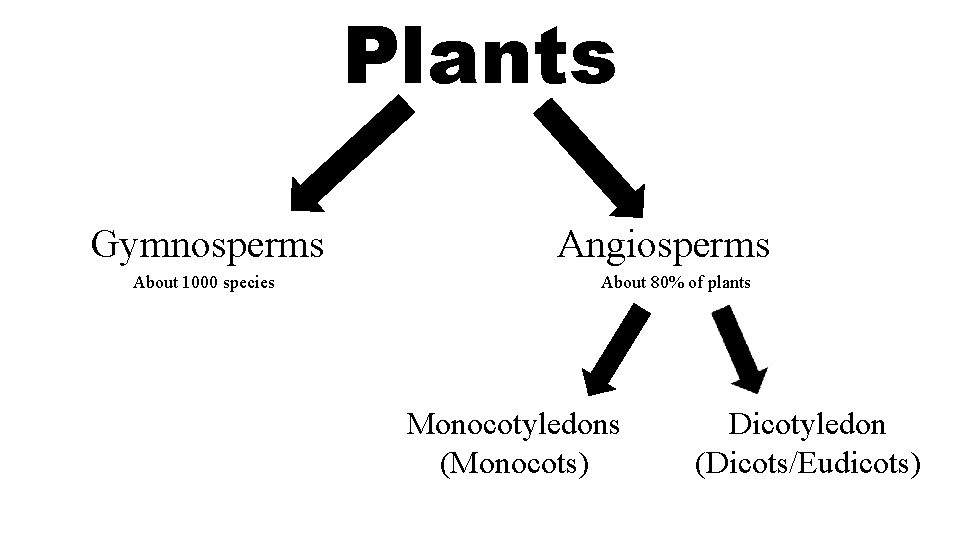
Plants Gymnosperms About 1000 species Angiosperms About 80% of plants Monocotyledons (Monocots) Dicotyledon (Dicots/Eudicots)
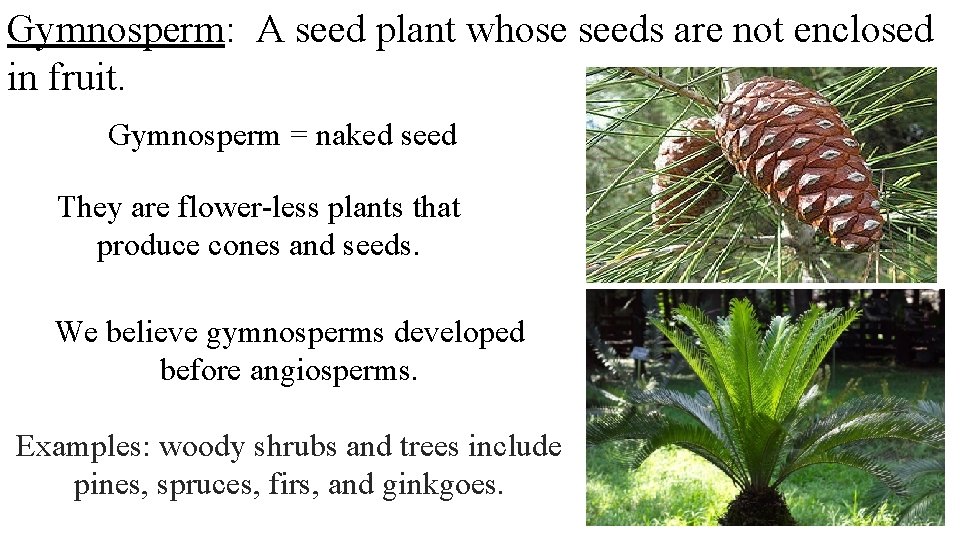
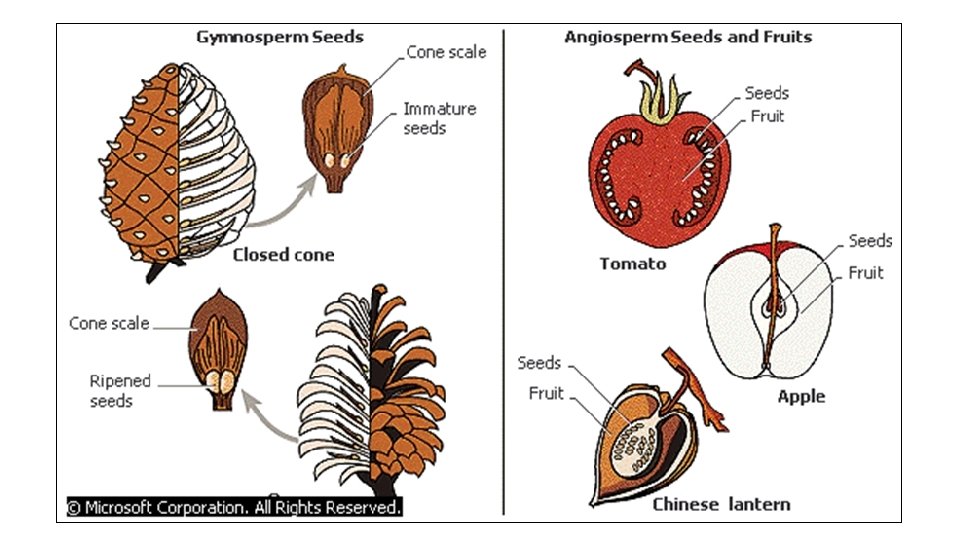
Gymnosperm: A seed plant whose seeds are not enclosed in fruit. Gymnosperm = naked seed They are flower-less plants that produce cones and seeds. We believe gymnosperms developed before angiosperms. Examples: woody shrubs and trees include pines, spruces, firs, and ginkgoes.
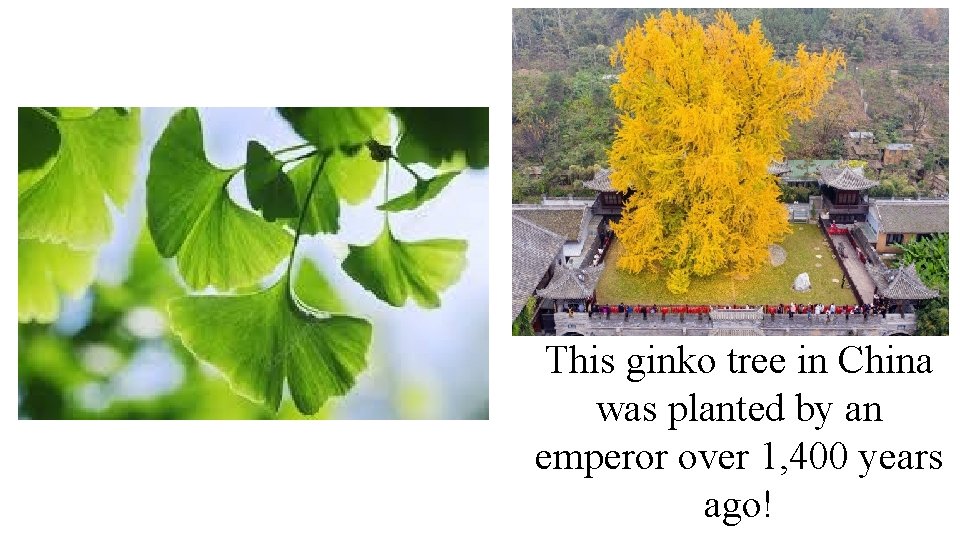
This ginko tree in China was planted by an emperor over 1, 400 years ago!
Angiosperm: A seed plant whose embryos are enclosed by fruit. Also known as “flowering plants” More reproductively successful than gymnosperms because: 1. Flowers attract pollinators so they can have their pollen spread farther. 2. The fruits that the seeds are encased in provide extra nourishment and protection for the offspring. Also seeds eaten by animals pass through the digestive tracts of animals to be defecated out. This allows for seeds to be spread farther from the parent plant and the fecal matter is a natural fertilizer for the seeds. Angiosperms make up about 80% of all plant species on the Earth Examples: Fruits (apples, cherries, oranges), grains (wheat, rice, corn), vegetables (broccoli, kale, and lettuce), and flowers (roses, lilies, and daffodils).
Plant Organization Remember, plants are composed in levels of organization just as animals are. Plant cells will form tissues, and tissues form plant organs.
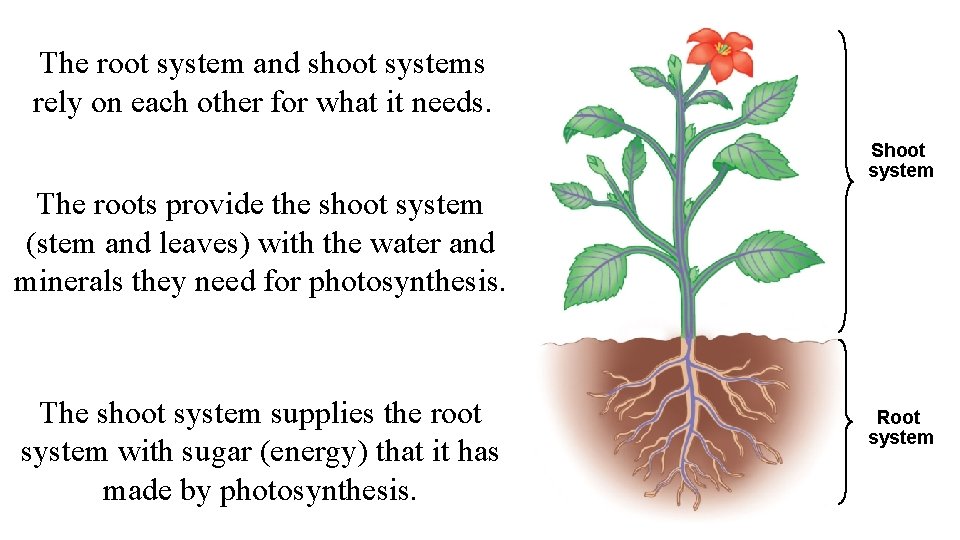
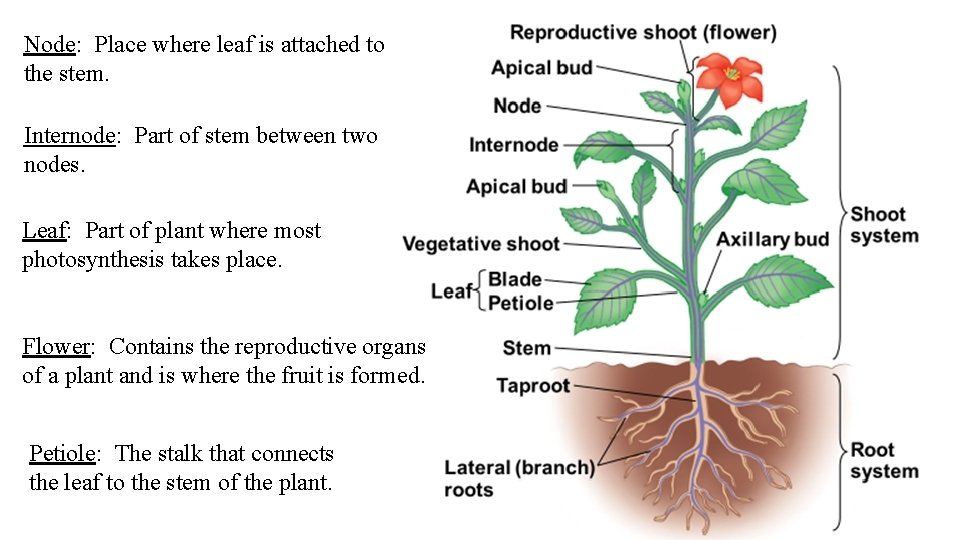
Plant Organs The three basic plant organs: Roots, stems, and leaves These organs are organized into a root system and a shoot system. Root system – Consists of the roots Shoot system – Consists of the stems and leaves
The root system and shoot systems rely on each other for what it needs. Shoot system The roots provide the shoot system (stem and leaves) with the water and minerals they need for photosynthesis. The shoot system supplies the root system with sugar (energy) that it has made by photosynthesis. Root system
Vascular System The vascular system is a collection of specialized tissues in some plants that transport water and mineral nutrients up from the roots and brings sugars down from the leaves. Phloem: Tissue that transports sugars (food) in vascular plants. Xylem: Tissue that transports water and dissolved minerals in vascular plants
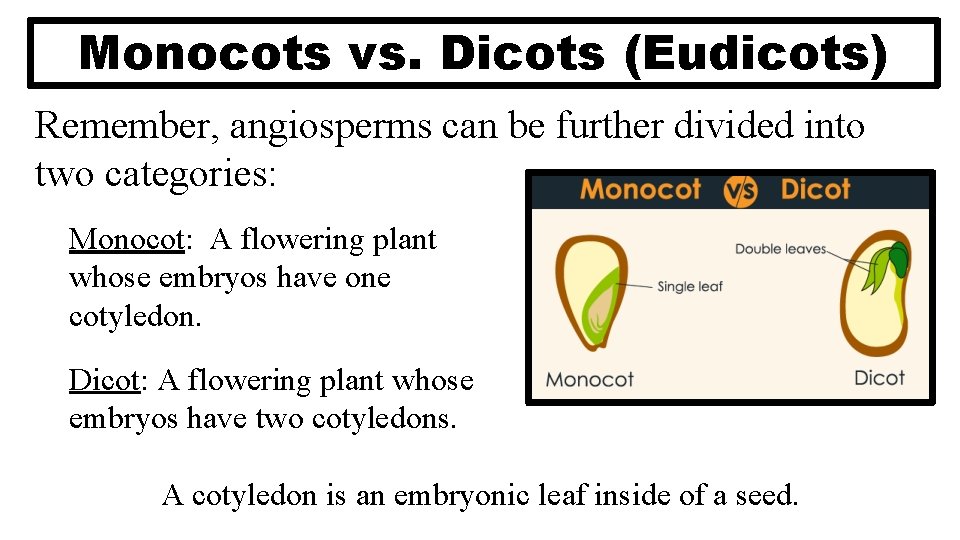
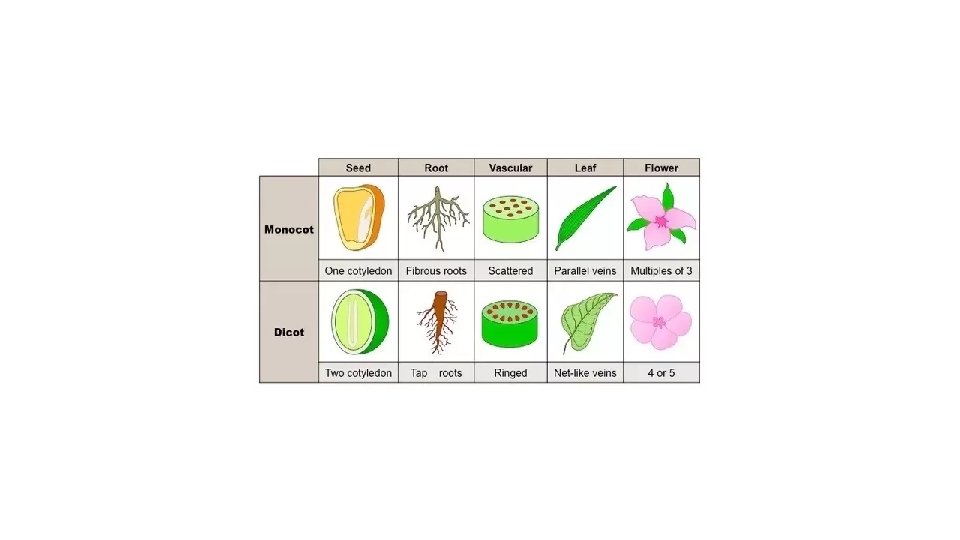
Monocots vs. Dicots (Eudicots) Remember, angiosperms can be further divided into two categories: Monocot: A flowering plant whose embryos have one cotyledon. Dicot: A flowering plant whose embryos have two cotyledons. A cotyledon is an embryonic leaf inside of a seed.
Roots A root is an organ with important functions such as: • Anchoring to plant down • Absorbing minerals and water • Storing carbohydrates
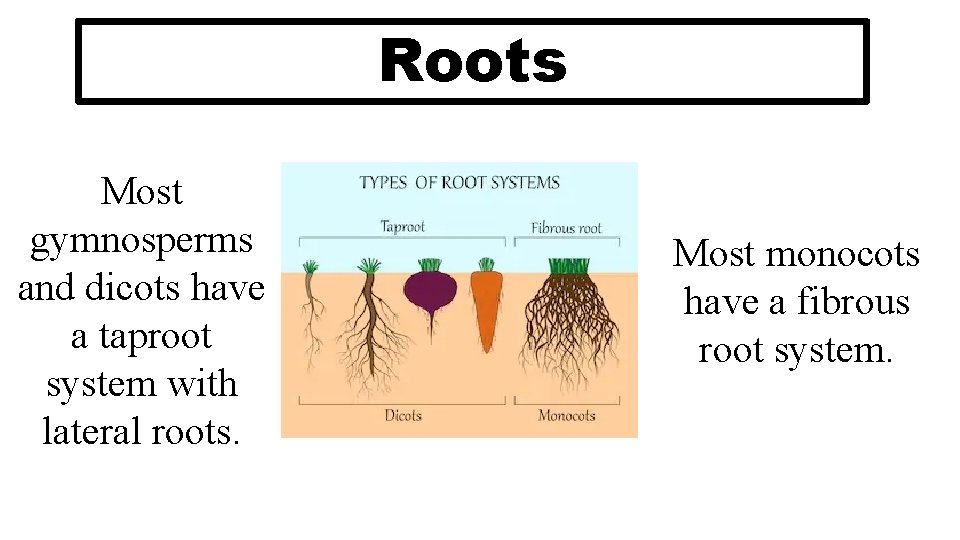
Roots Most gymnosperms and dicots have a taproot system with lateral roots. Most monocots have a fibrous root system.
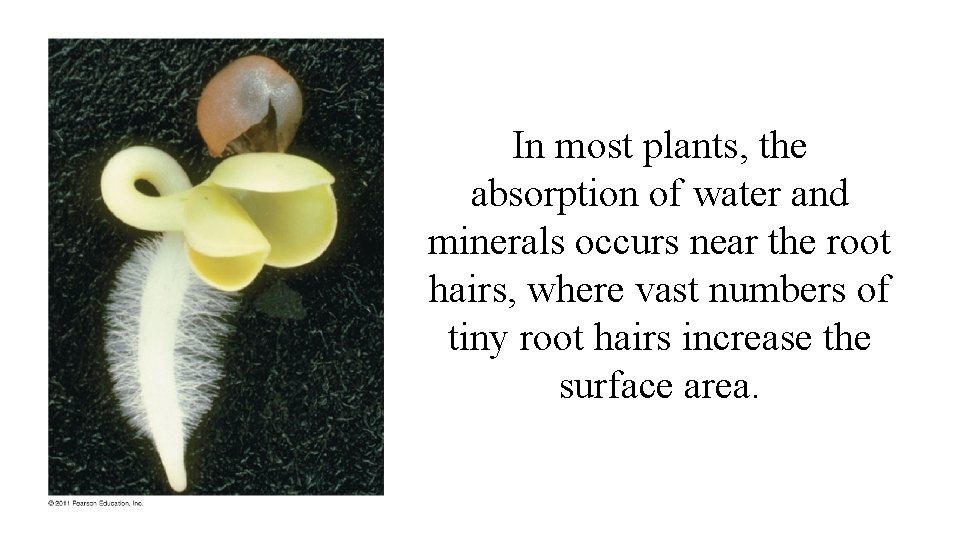
In most plants, the absorption of water and minerals occurs near the root hairs, where vast numbers of tiny root hairs increase the surface area.
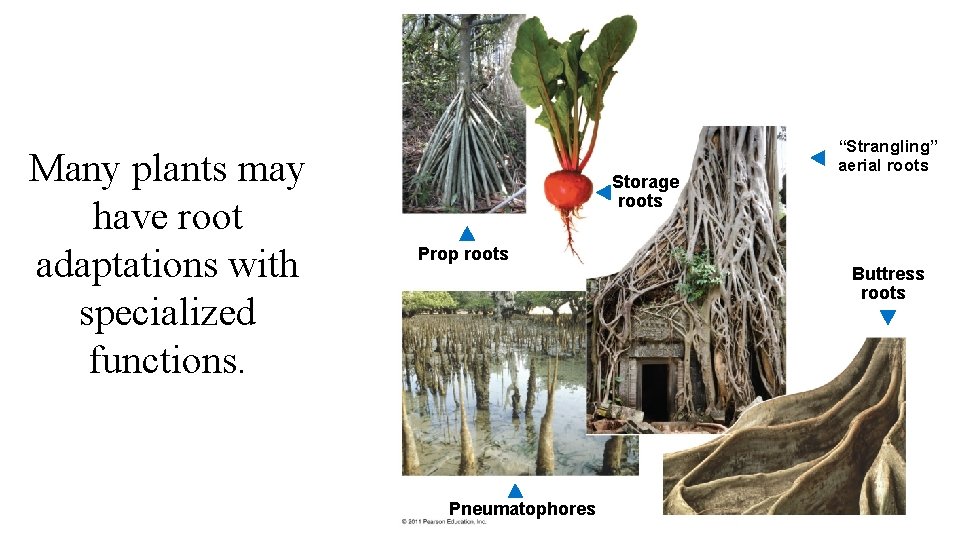
Many plants may have root adaptations with specialized functions. Storage roots “Strangling” aerial roots Prop roots Buttress roots Pneumatophores
Stem A stem is an organ consisting of a shoot with nodes and internodes. The stem supports leaves, flowers, fruit, and transports water and dissolved substance between the roots and the shoots. They may also store nutrients and produce new living tissue.
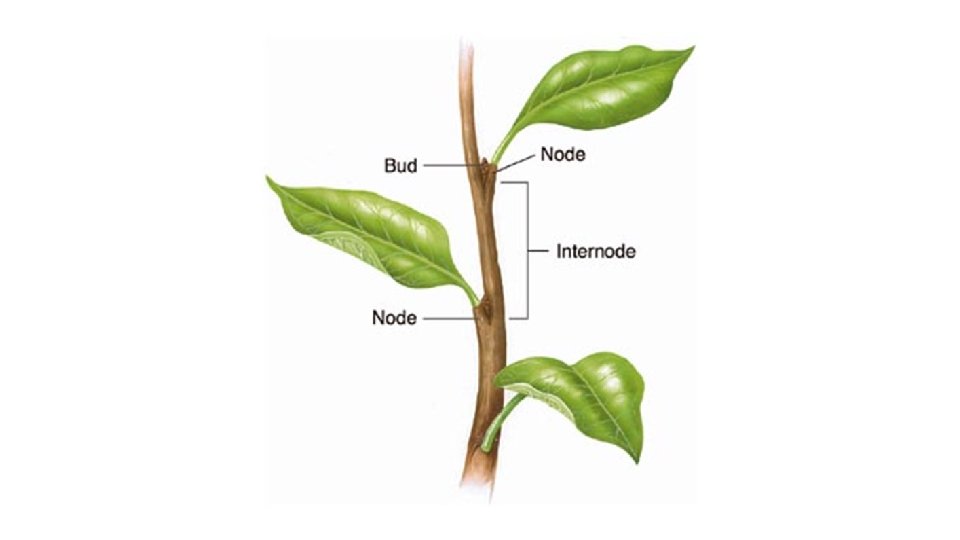
Node: Place where leaf is attached to the stem. Internode: Part of stem between two nodes. Leaf: Part of plant where most photosynthesis takes place. Flower: Contains the reproductive organs of a plant and is where the fruit is formed. Petiole: The stalk that connects the leaf to the stem of the plant.
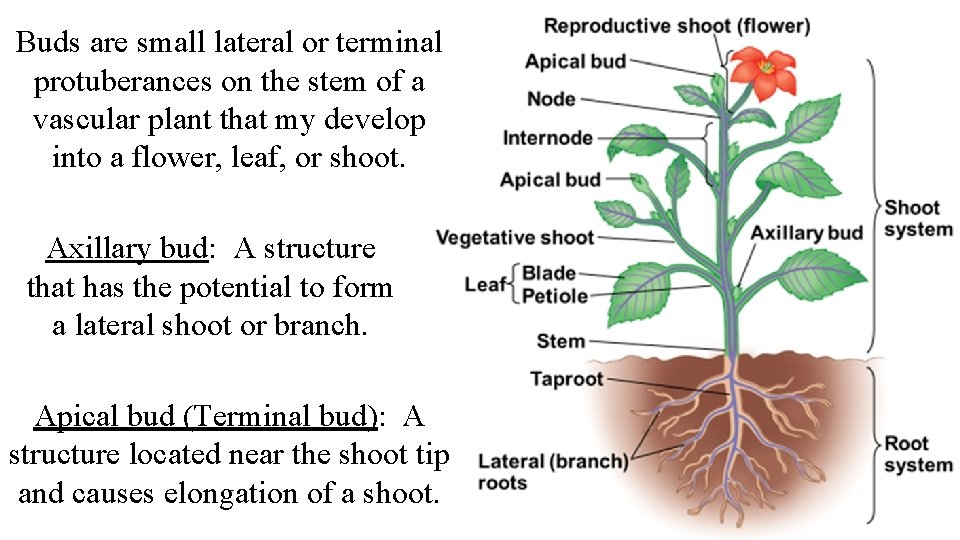
Buds are small lateral or terminal protuberances on the stem of a vascular plant that my develop into a flower, leaf, or shoot. Axillary bud: A structure that has the potential to form a lateral shoot or branch. Apical bud (Terminal bud): A structure located near the shoot tip and causes elongation of a shoot.