
Unit 5 Part 2 Notes The Nervous System
- Slides: 41
Unit 5, Part 2 Notes – The Nervous System AP Biology
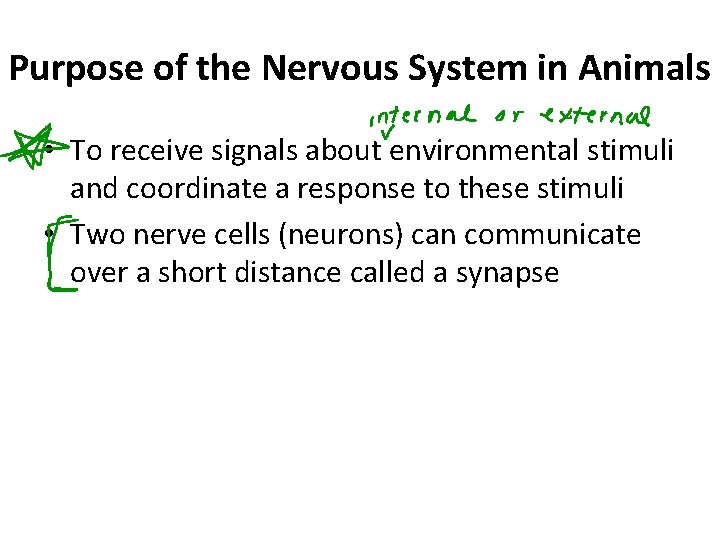
Purpose of the Nervous System in Animals • To receive signals about environmental stimuli and coordinate a response to these stimuli • Two nerve cells (neurons) can communicate over a short distance called a synapse
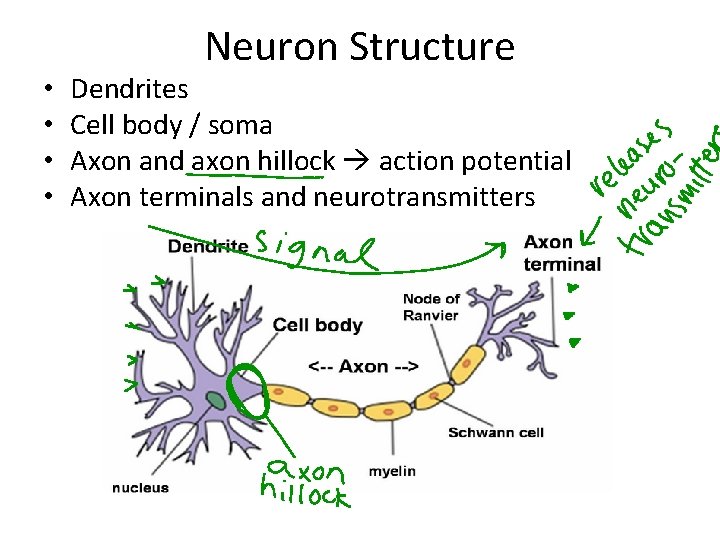
• • Neuron Structure Dendrites Cell body / soma Axon and axon hillock action potential Axon terminals and neurotransmitters
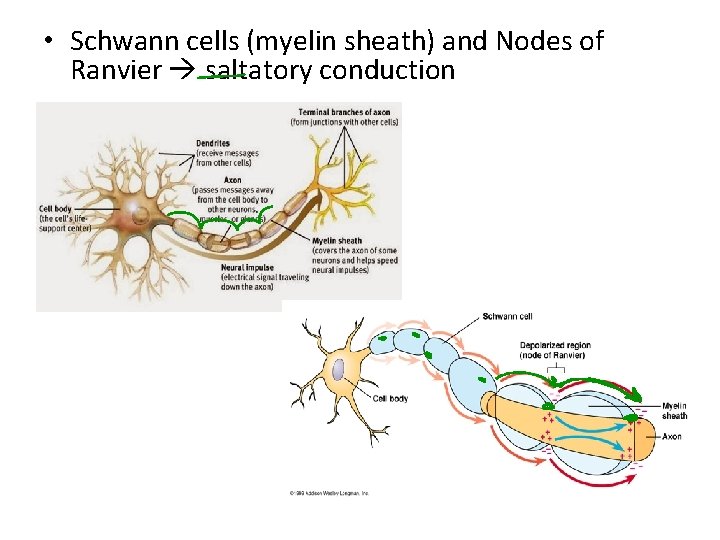
• Schwann cells (myelin sheath) and Nodes of Ranvier saltatory conduction
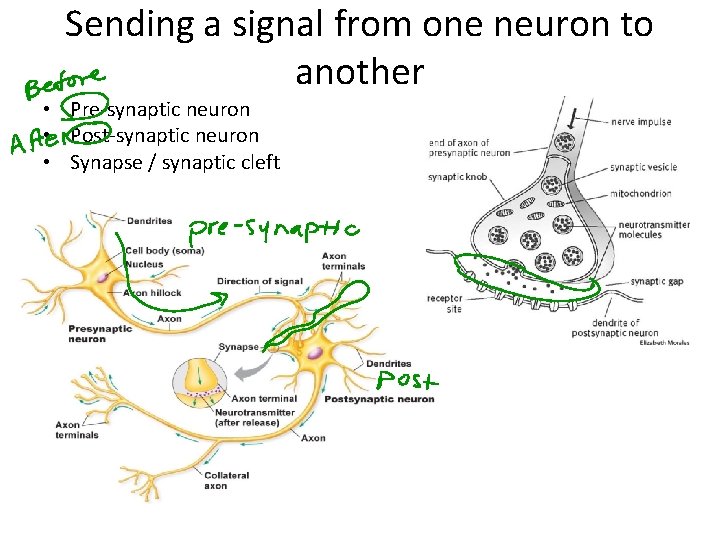
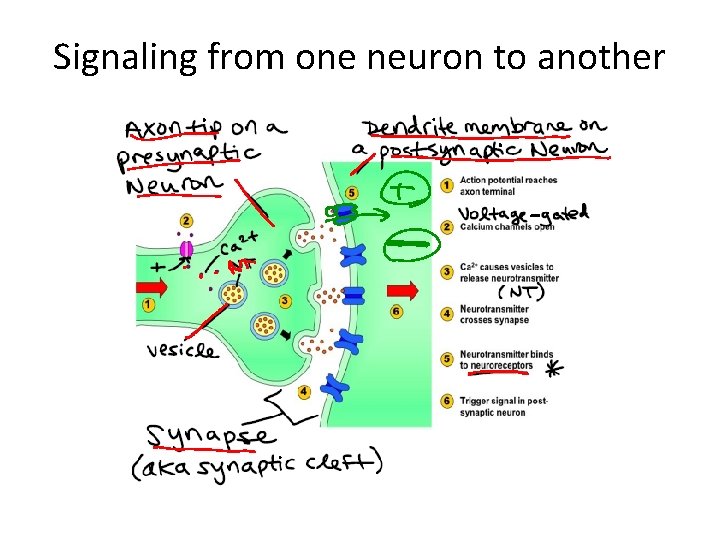
Sending a signal from one neuron to another • Pre-synaptic neuron • Post-synaptic neuron • Synapse / synaptic cleft
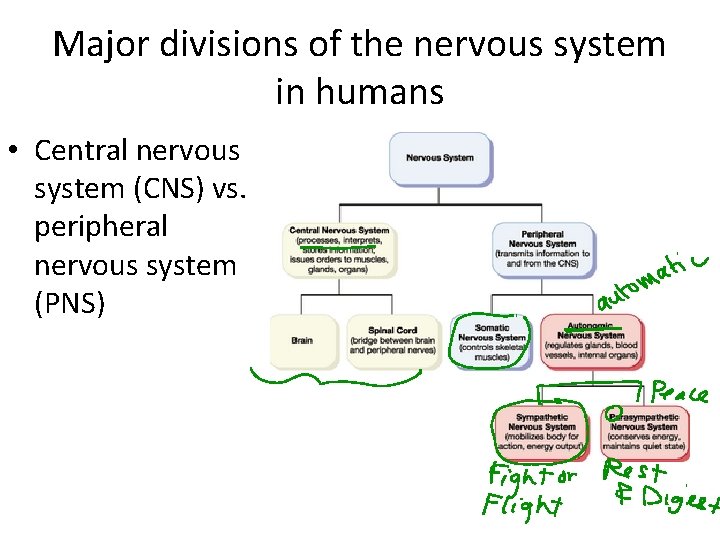
Major divisions of the nervous system in humans • Central nervous system (CNS) vs. peripheral nervous system (PNS)
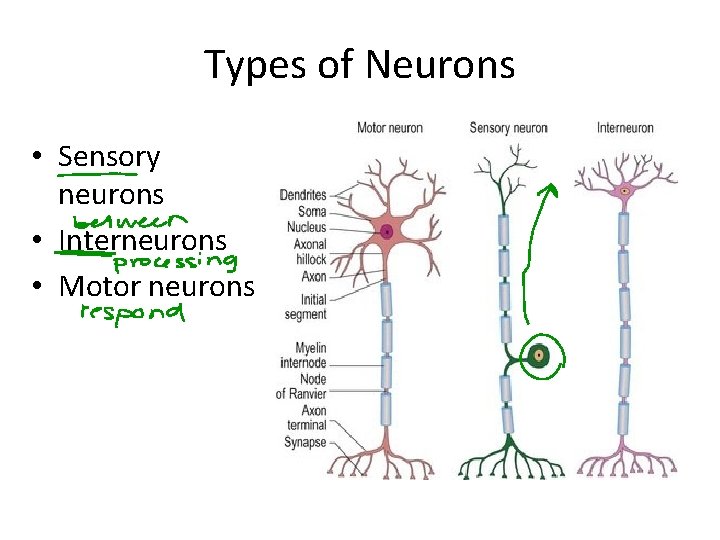
Types of Neurons • Sensory neurons • Interneurons • Motor neurons
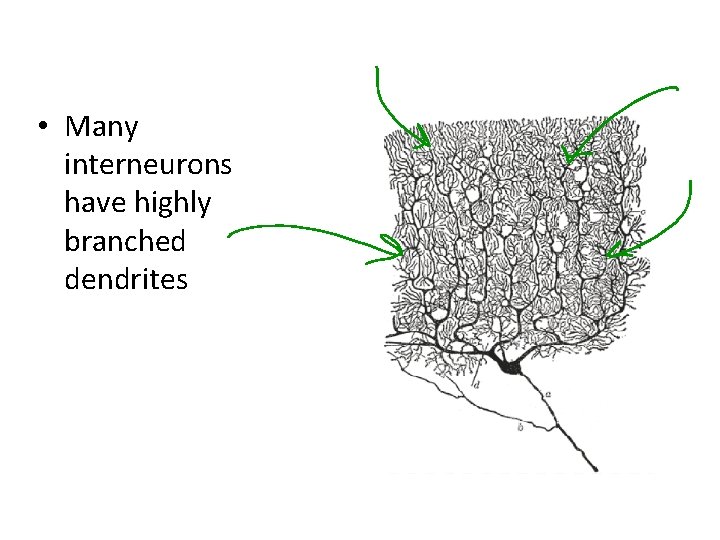
• Many interneurons have highly branched dendrites
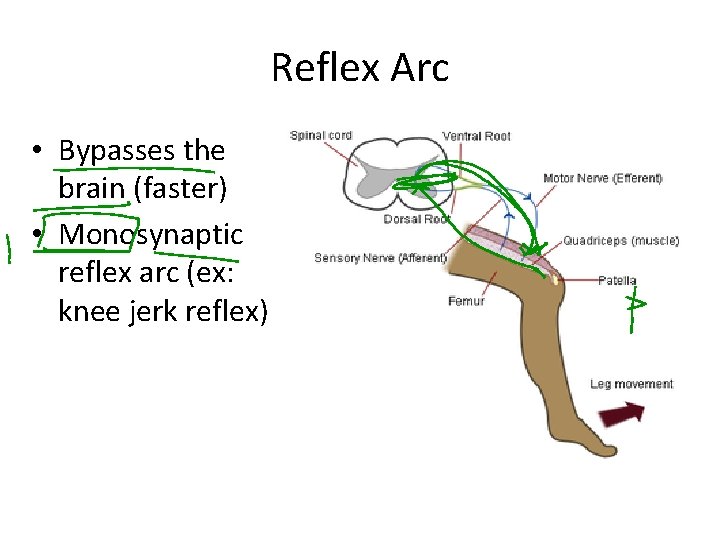
Reflex Arc • Bypasses the brain (faster) • Monosynaptic reflex arc (ex: knee jerk reflex)
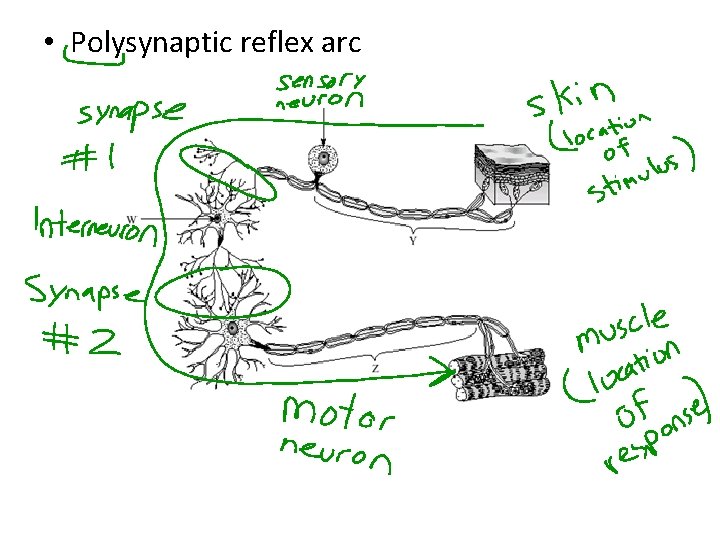
• Polysynaptic reflex arc
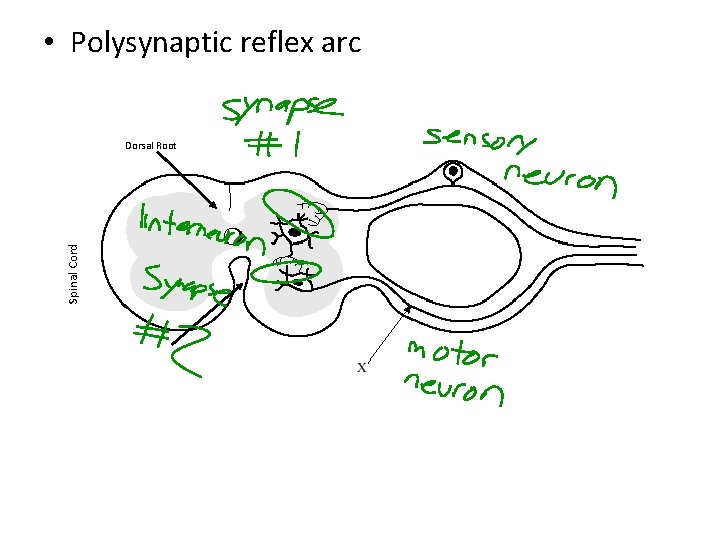
• Polysynaptic reflex arc Spinal Cord Dorsal Root
Most sensation/response pathways are not reflex arcs… • Most pathways involve the use of interneurons in the brain • Sensory receptor cell sensory neuron interneuron in spinal cord interneurons in brain interneuron in spinal cord motor neuron muscle cell
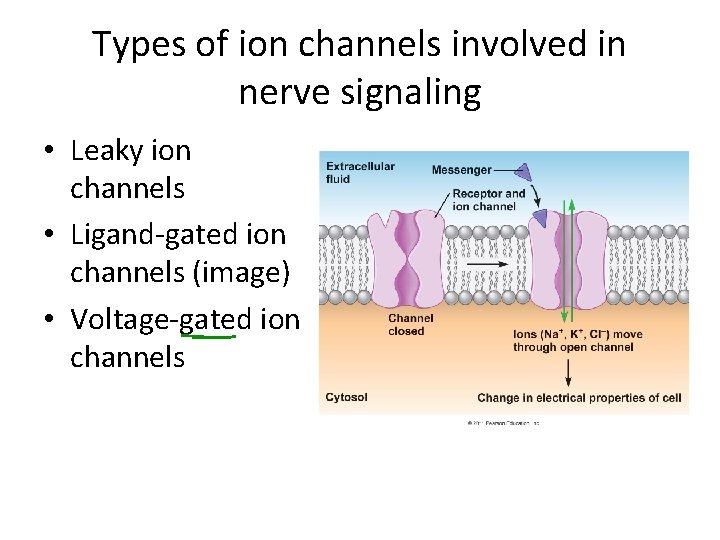
Types of ion channels involved in nerve signaling • Leaky ion channels • Ligand-gated ion channels (image) • Voltage-gated ion channels
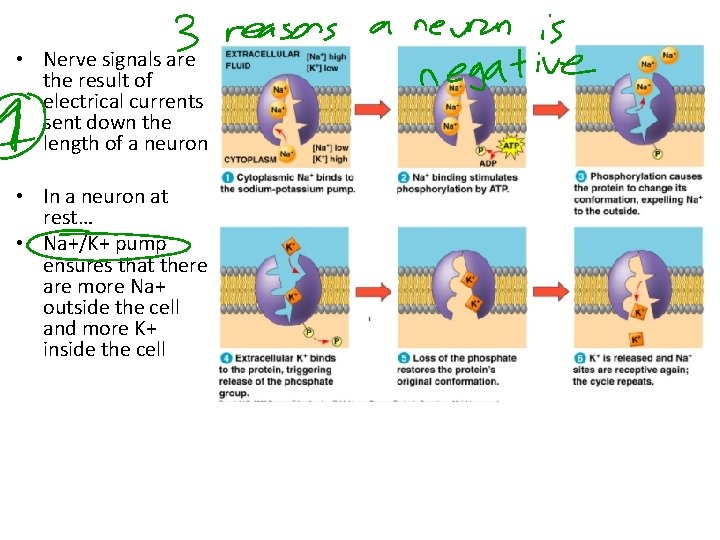
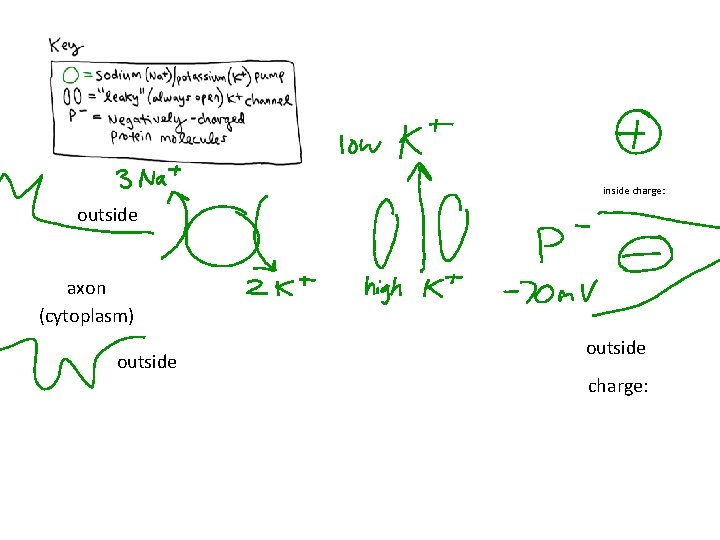
• Nerve signals are the result of electrical currents sent down the length of a neuron • In a neuron at rest… • Na+/K+ pump ensures that there are more Na+ outside the cell and more K+ inside the cell
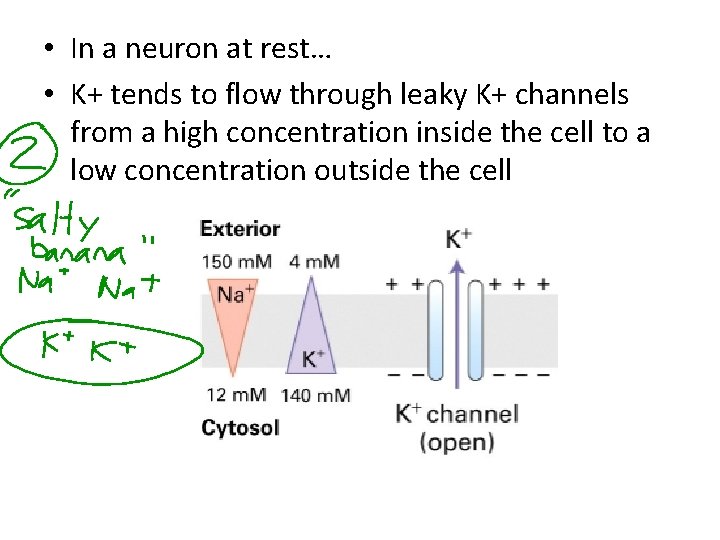
• In a neuron at rest… • K+ tends to flow through leaky K+ channels from a high concentration inside the cell to a low concentration outside the cell
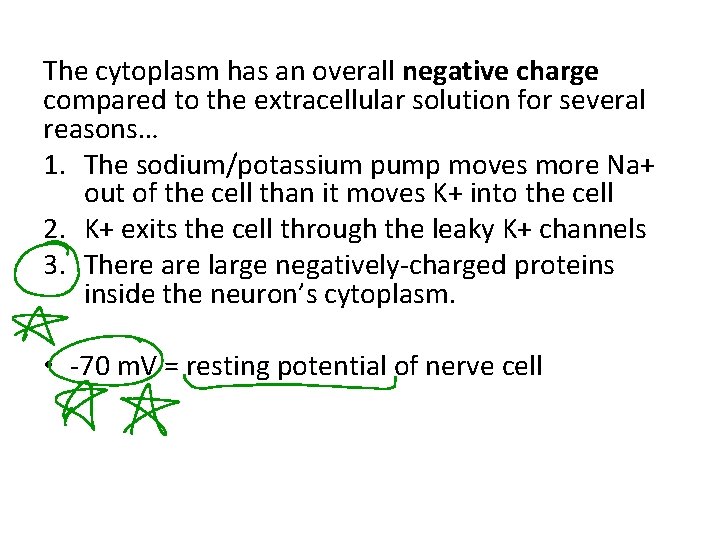
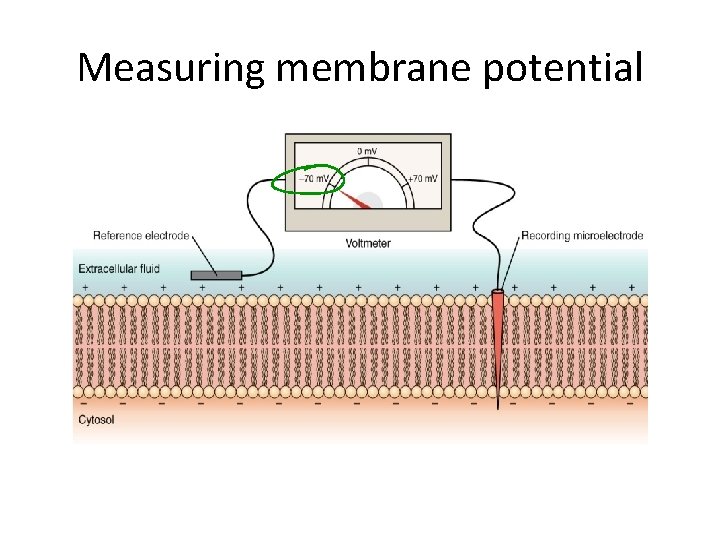
The cytoplasm has an overall negative charge compared to the extracellular solution for several reasons… 1. The sodium/potassium pump moves more Na+ out of the cell than it moves K+ into the cell 2. K+ exits the cell through the leaky K+ channels 3. There are large negatively-charged proteins inside the neuron’s cytoplasm. • -70 m. V = resting potential of nerve cell
inside charge: outside axon (cytoplasm) outside charge:
Measuring membrane potential
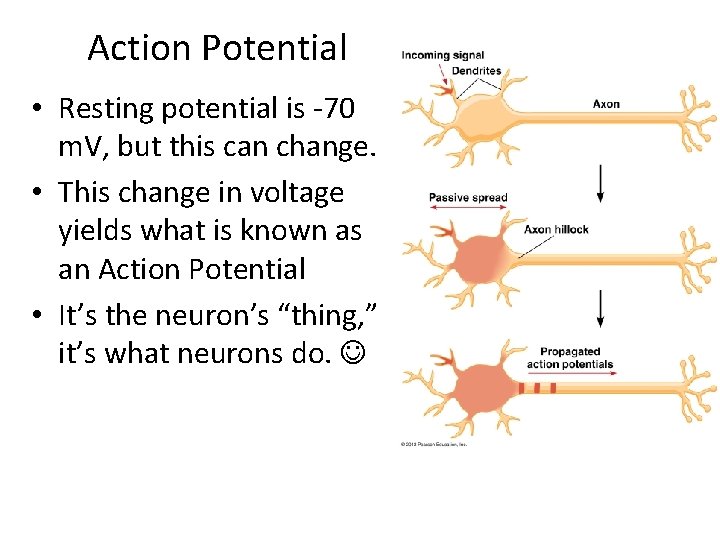
Action Potential • Resting potential is -70 m. V, but this can change. • This change in voltage yields what is known as an Action Potential • It’s the neuron’s “thing, ” it’s what neurons do.
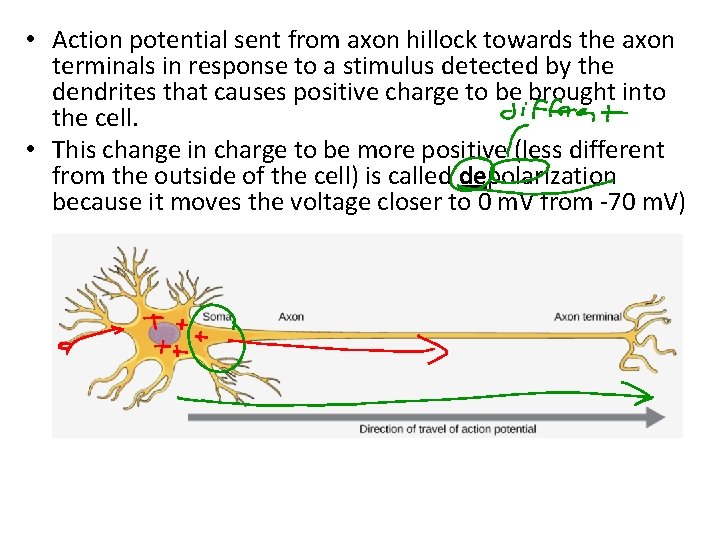
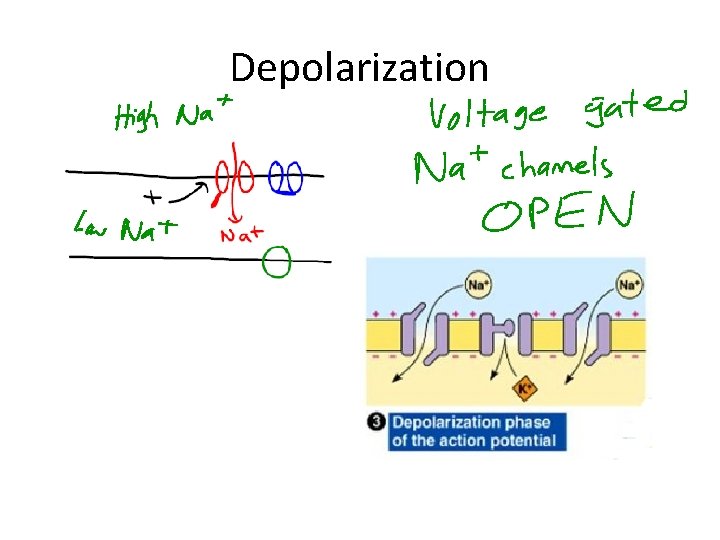
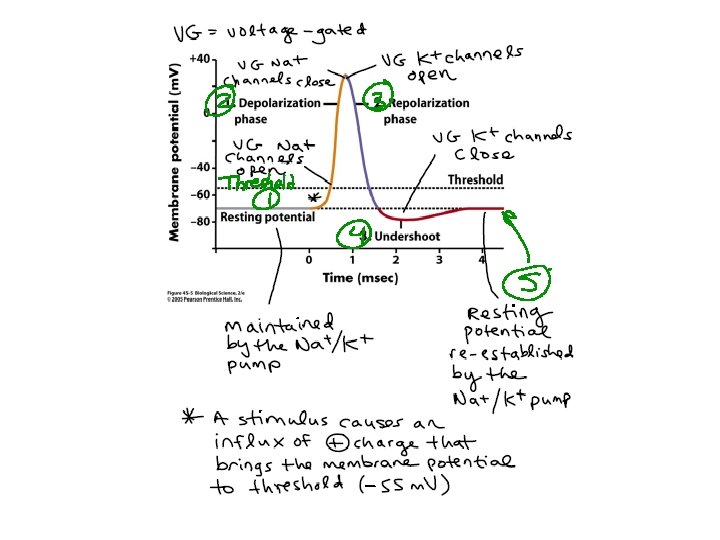
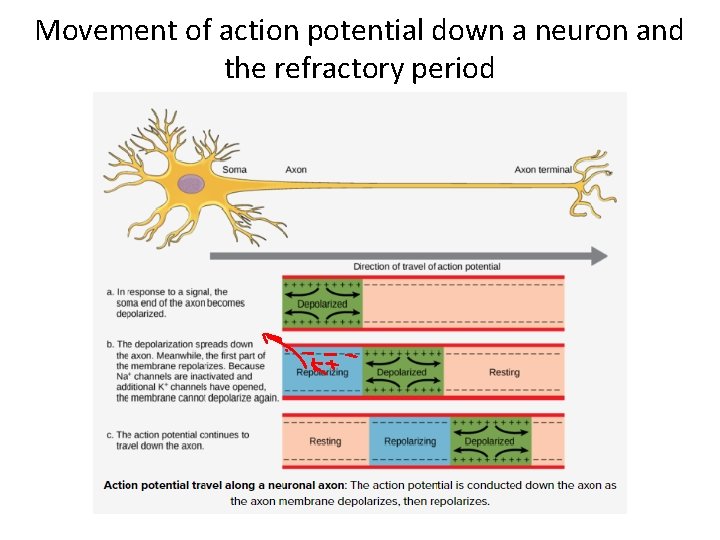
• Action potential sent from axon hillock towards the axon terminals in response to a stimulus detected by the dendrites that causes positive charge to be brought into the cell. • This change in charge to be more positive (less different from the outside of the cell) is called depolarization because it moves the voltage closer to 0 m. V from -70 m. V)
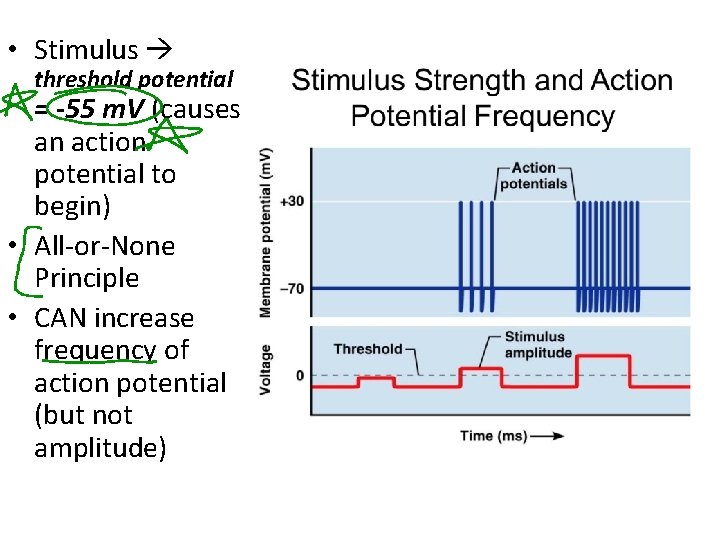
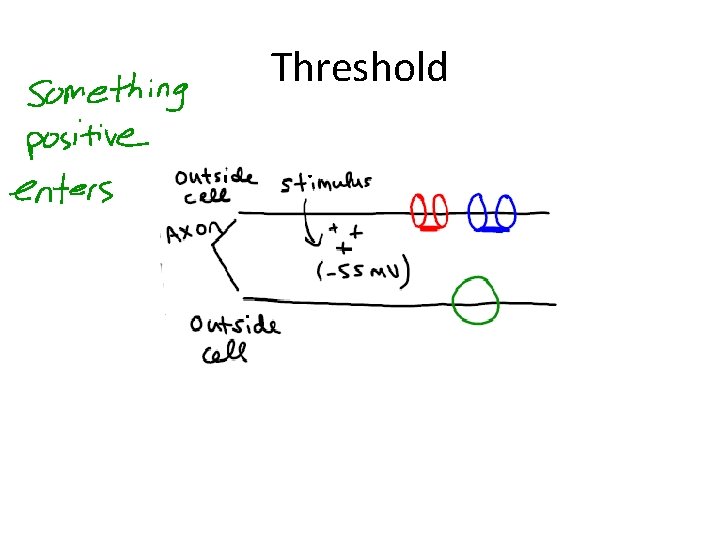
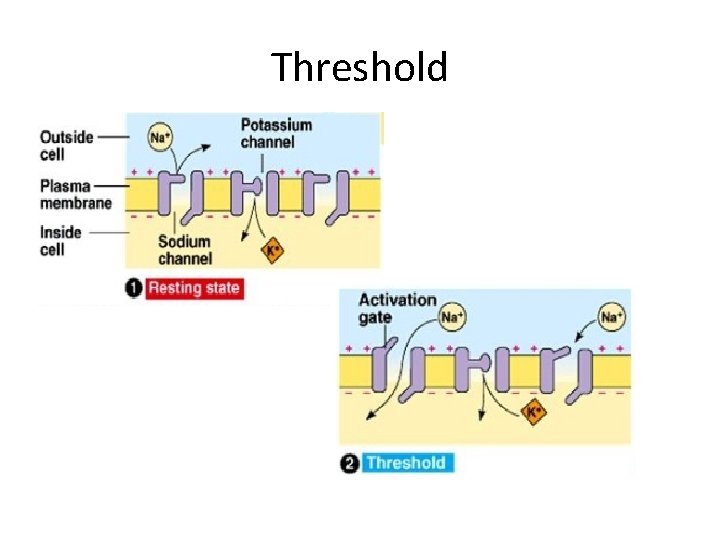
• Stimulus threshold potential = -55 m. V (causes an action potential to begin) • All-or-None Principle • CAN increase frequency of action potential (but not amplitude)
Threshold
Threshold
Depolarization
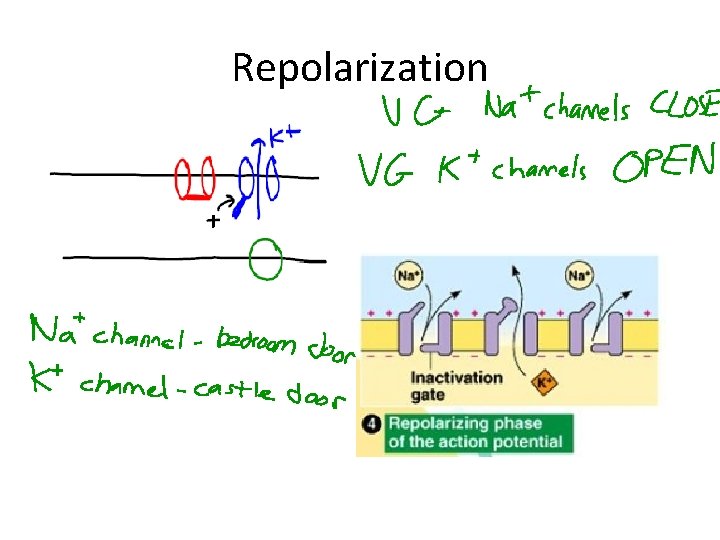
Repolarization
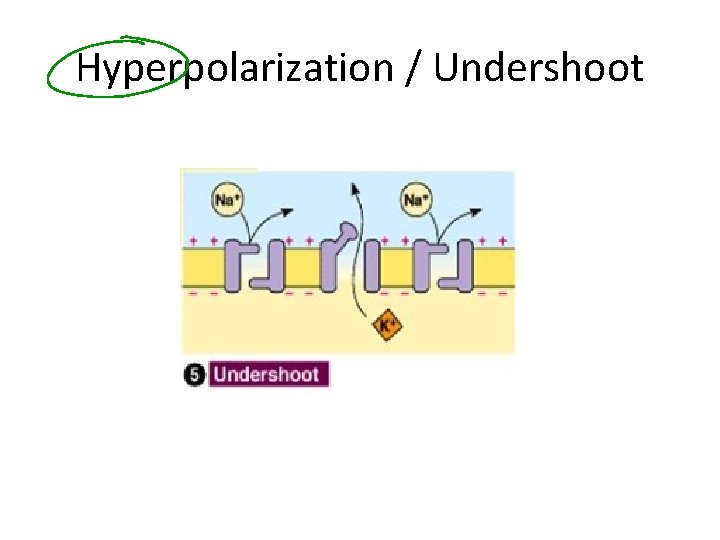
Hyperpolarization / Undershoot
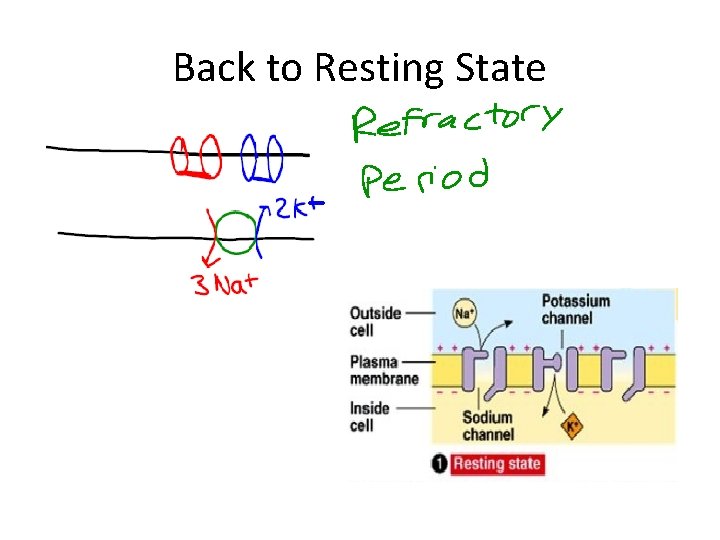
Back to Resting State
Movement of action potential down a neuron and the refractory period
Signaling from one neuron to another
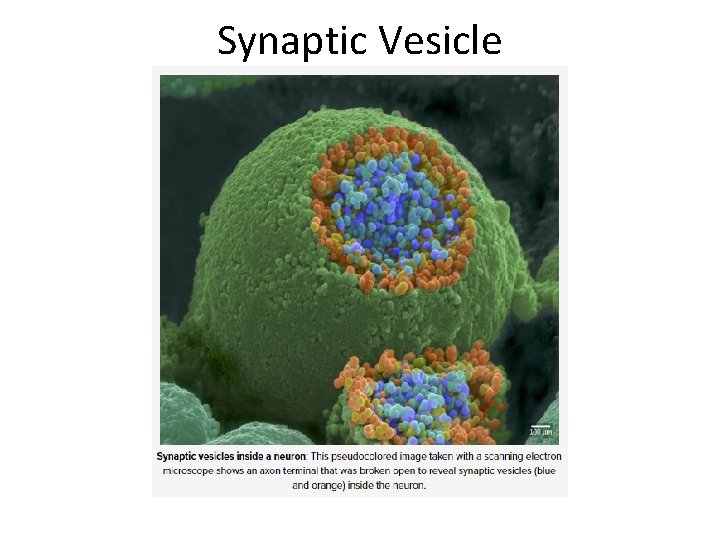
Synaptic Vesicle
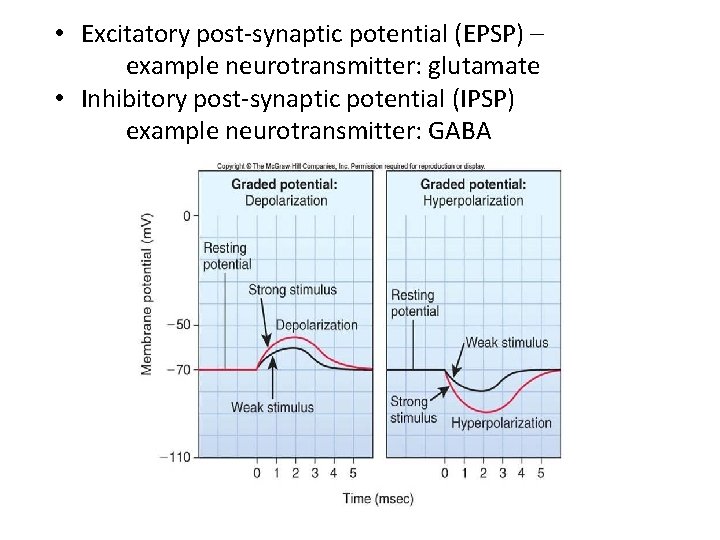
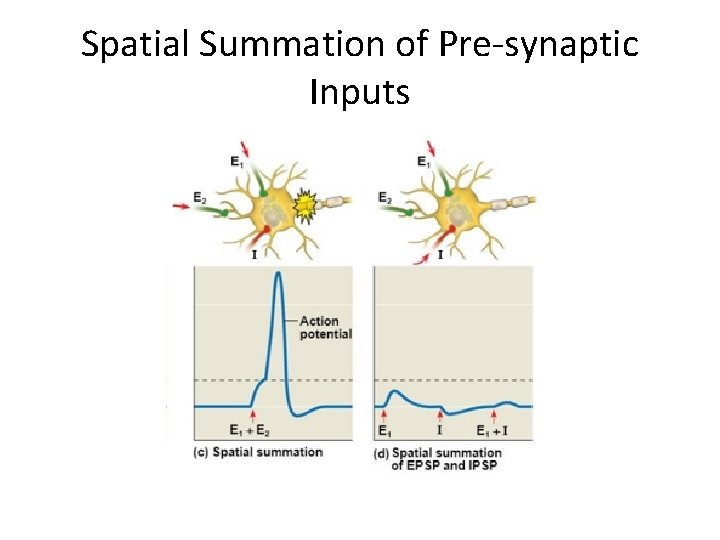
• Excitatory post-synaptic potential (EPSP) – example neurotransmitter: glutamate • Inhibitory post-synaptic potential (IPSP) example neurotransmitter: GABA
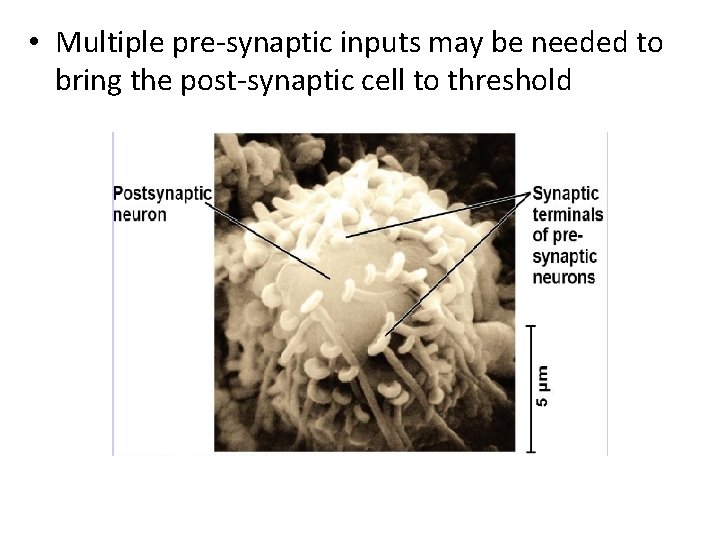
• Multiple pre-synaptic inputs may be needed to bring the post-synaptic cell to threshold
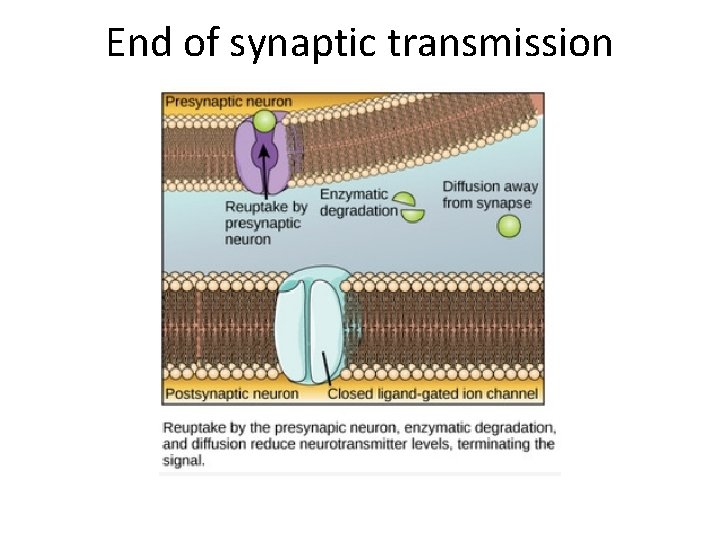
End of synaptic transmission
Spatial Summation of Pre-synaptic Inputs
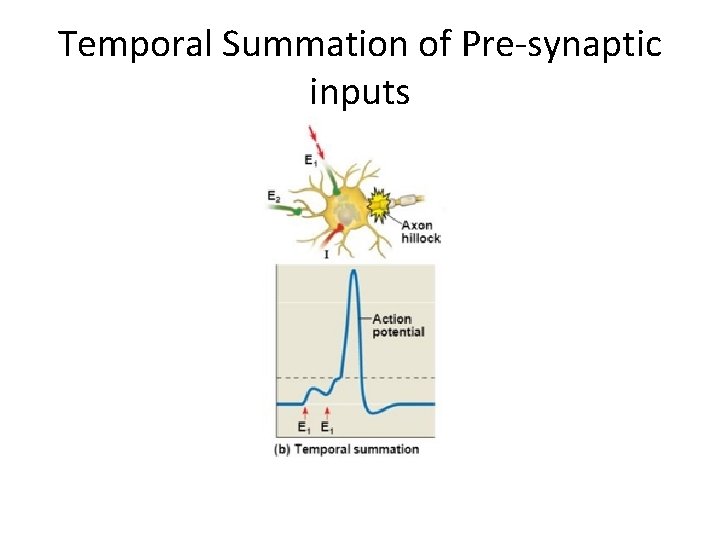
Temporal Summation of Pre-synaptic inputs
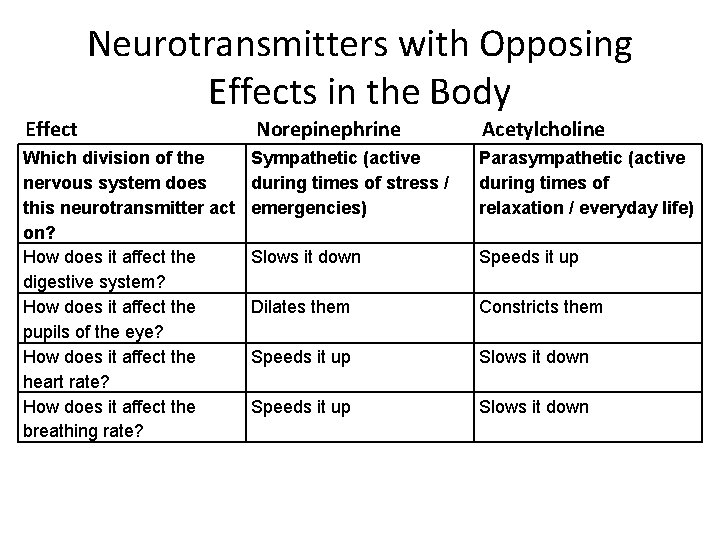
Neurotransmitters with Opposing Effects in the Body Effect Norepinephrine Acetylcholine Which division of the nervous system does this neurotransmitter act on? How does it affect the digestive system? How does it affect the pupils of the eye? How does it affect the heart rate? How does it affect the breathing rate? Sympathetic (active during times of stress / emergencies) Parasympathetic (active during times of relaxation / everyday life) Slows it down Speeds it up Dilates them Constricts them Speeds it up Slows it down
Effect of caffeine on the nervous system • Video
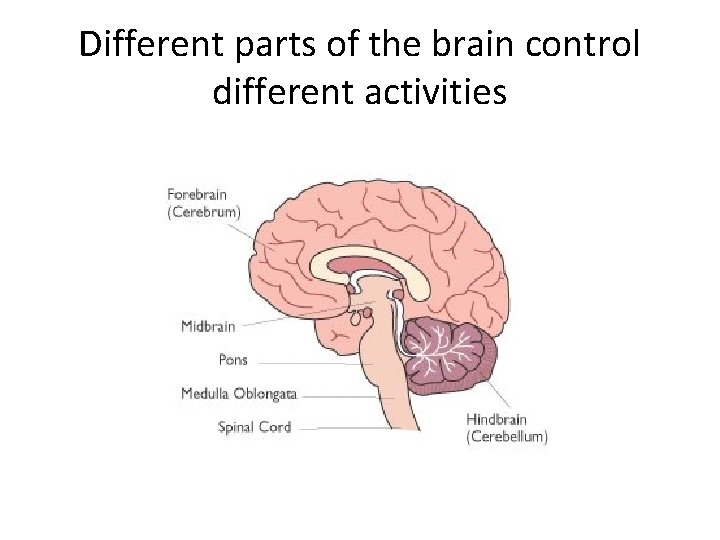
Different parts of the brain control different activities
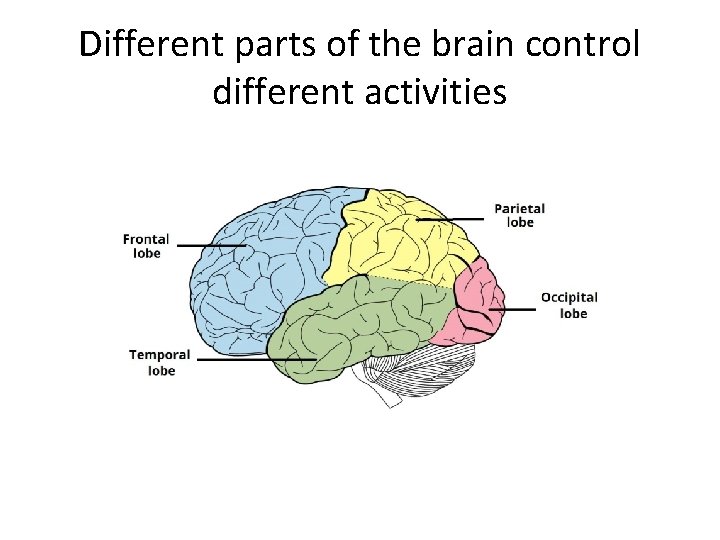
Different parts of the brain control different activities
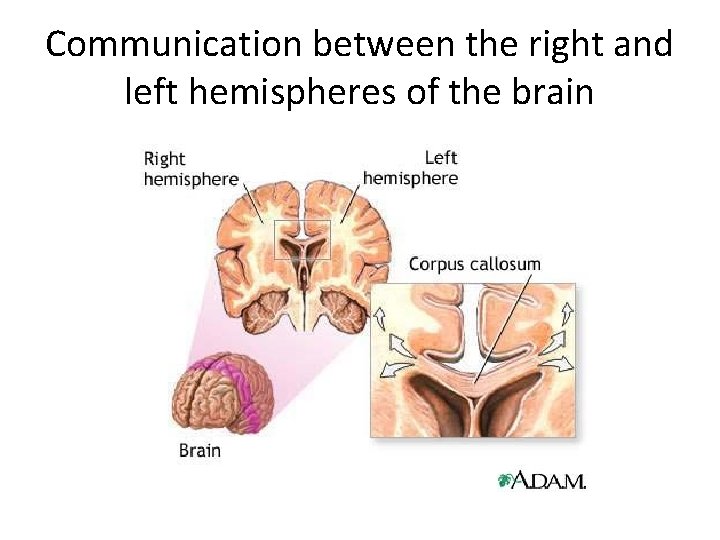
Communication between the right and left hemispheres of the brain