
Unit 5 Forces in action Learning objective Outcomes

Unit 5 Forces in action Learning objective Outcomes ■ To be able to describe types of forces ■ To state types of forces ■ To describe the direction of forces ■ To explain whether they are contact or non-contact forces

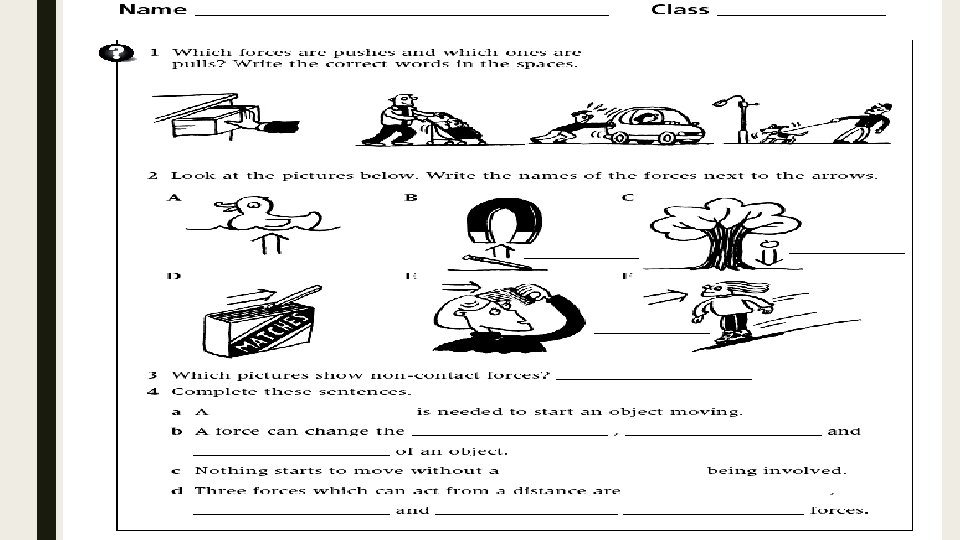
Forces ■ A force can be a push, pull or a squeeze. ■ Forces can make objects change shape, speed, direction or position. ■ Forces are measured in Newtons, N, using a Newton meter.
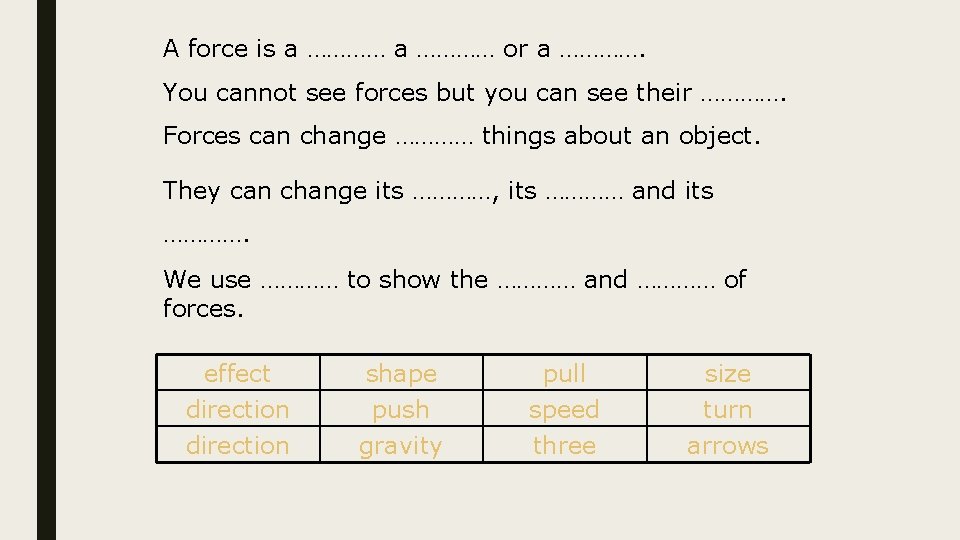
A force is a ………… or a …………. You cannot see forces but you can see their …………. Forces can change ………… things about an object. They can change its …………, its ………… and its …………. We use ………… to show the ………… and ………… of forces. effect direction shape push gravity pull speed three size turn arrows
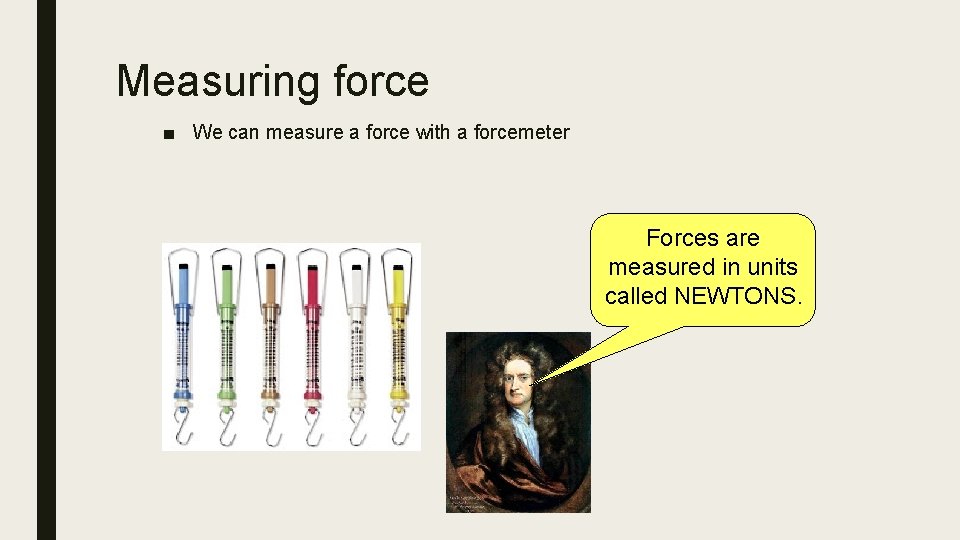
Measuring force ■ We can measure a force with a forcemeter Forces are measured in units called NEWTONS.
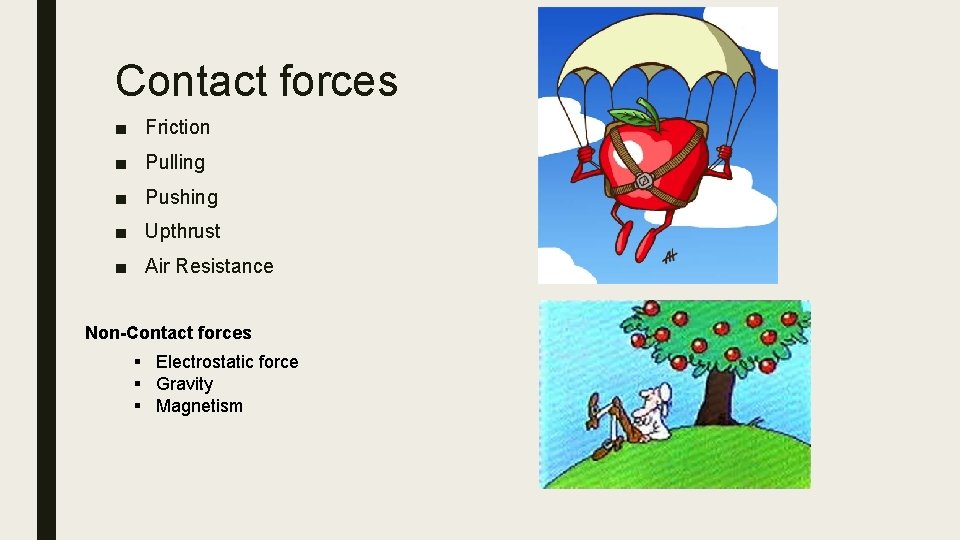
Contact forces ■ Friction ■ Pulling ■ Pushing ■ Upthrust ■ Air Resistance Non-Contact forces § Electrostatic force § Gravity § Magnetism
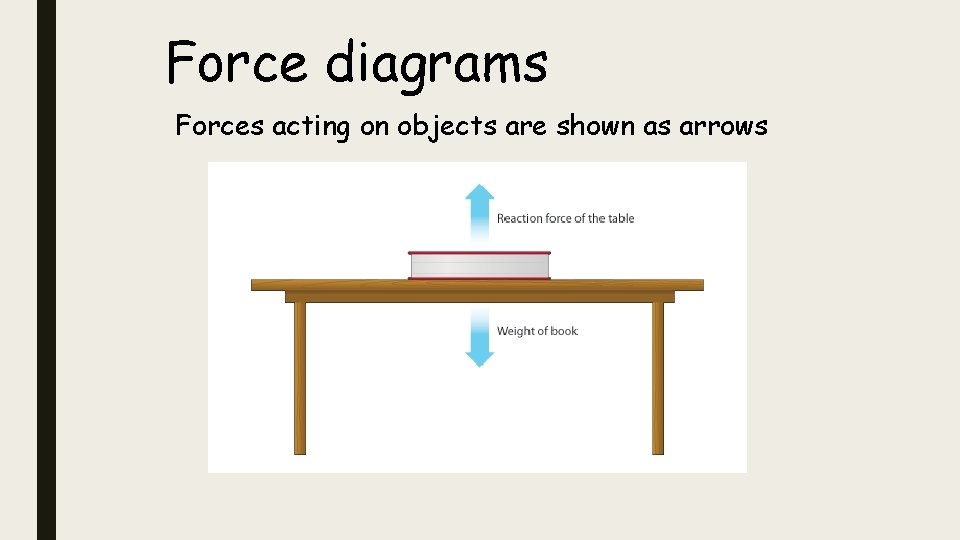
Force diagrams Forces acting on objects are shown as arrows
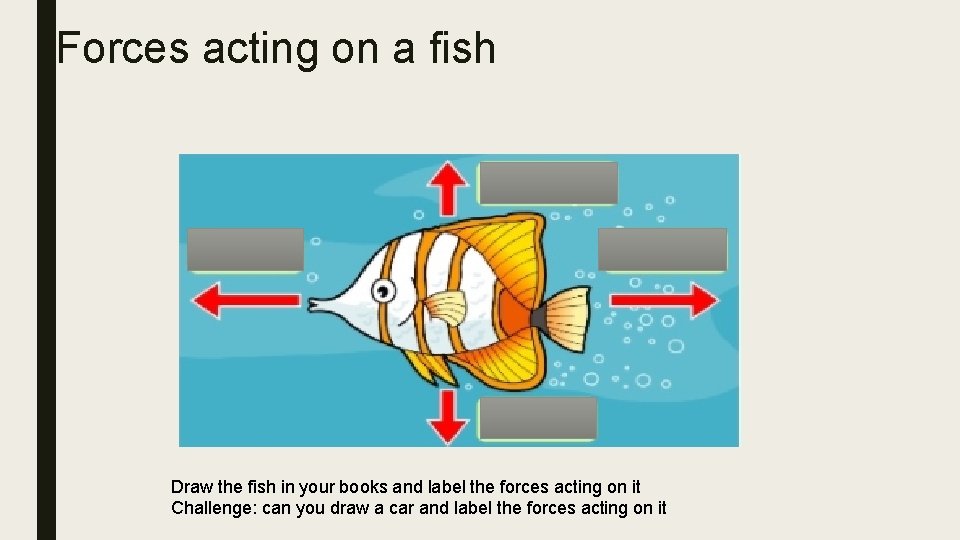
Forces acting on a fish Draw the fish in your books and label the forces acting on it Challenge: can you draw a car and label the forces acting on it
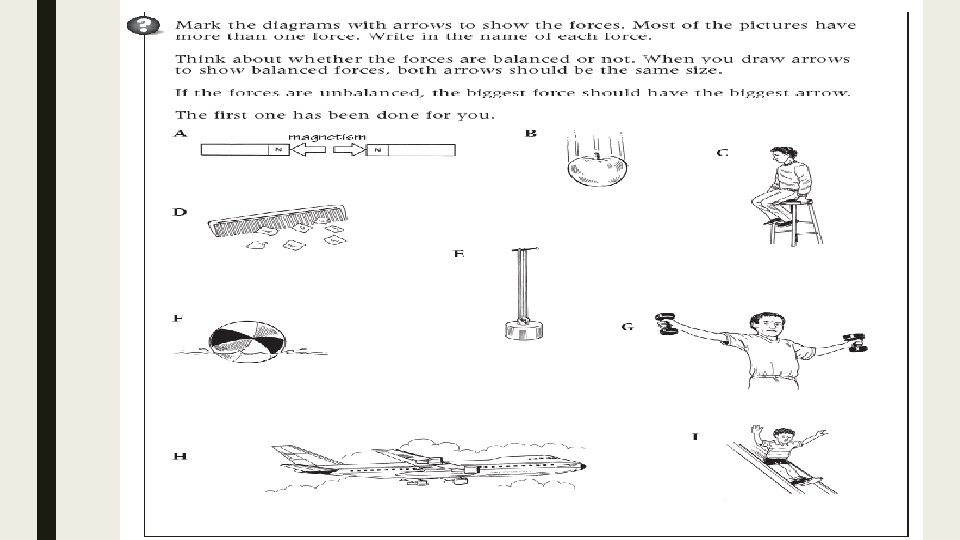
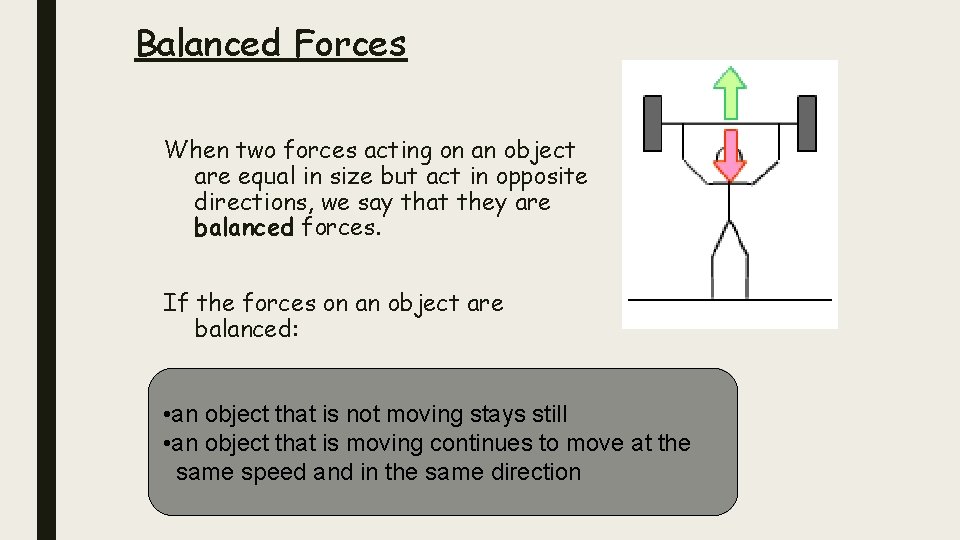
Balanced Forces When two forces acting on an object are equal in size but act in opposite directions, we say that they are balanced forces. If the forces on an object are balanced: • an object that is not moving stays still • an object that is moving continues to move at the same speed and in the same direction
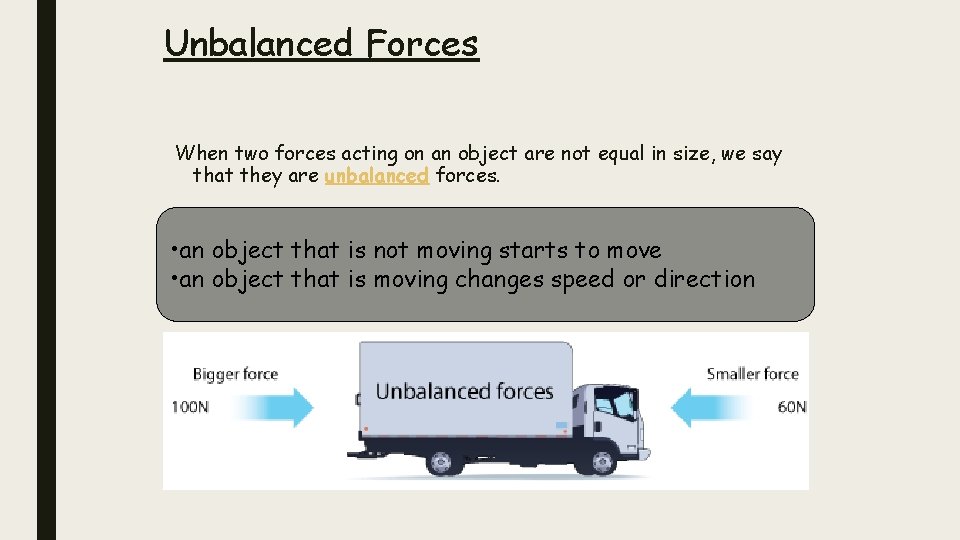
Unbalanced Forces When two forces acting on an object are not equal in size, we say that they are unbalanced forces. • an object that is not moving starts to move • an object that is moving changes speed or direction
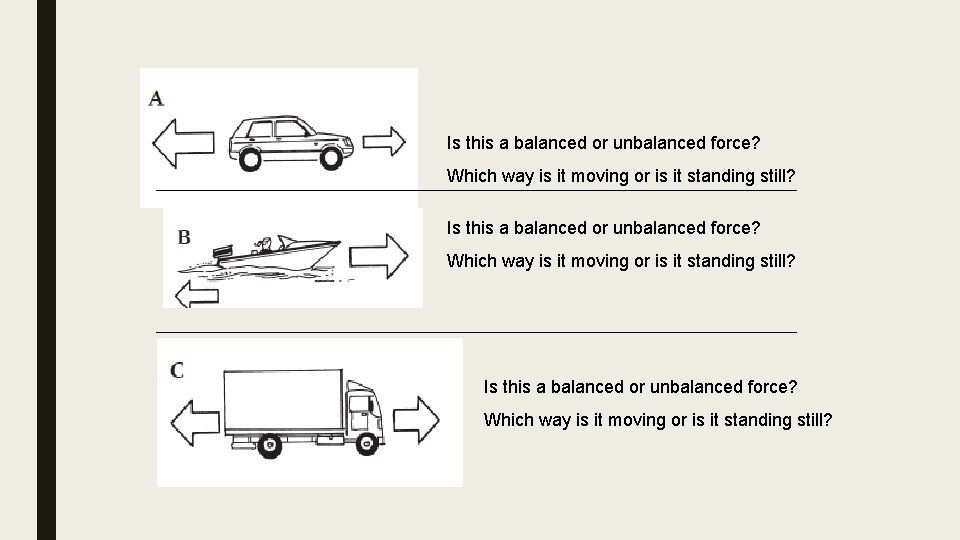
Is this a balanced or unbalanced force? Which way is it moving or is it standing still?
Investigating forces Learning objective ■ To be able to plan an investigation to see how forces affect the stretch of an elastic band
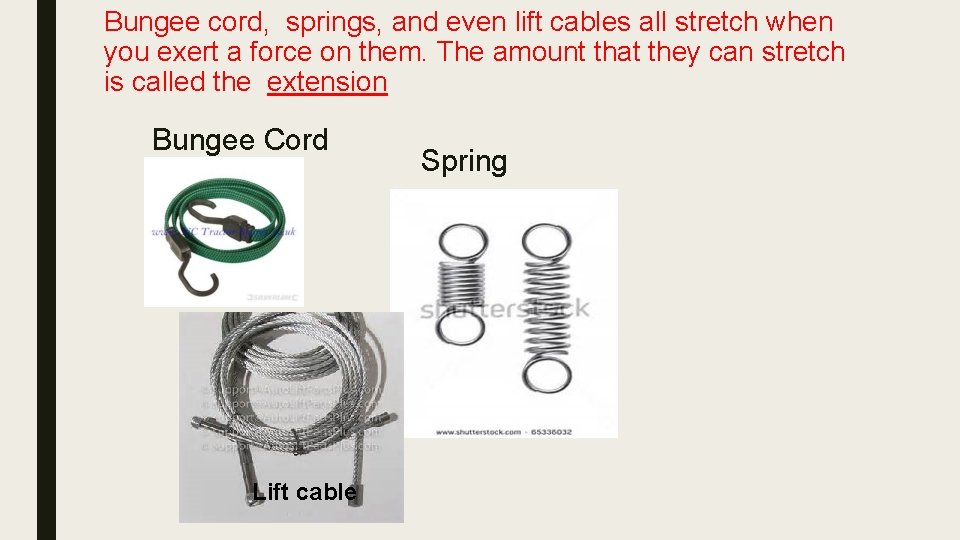
Bungee cord, springs, and even lift cables all stretch when you exert a force on them. The amount that they can stretch is called the extension Bungee Cord Lift cable Spring
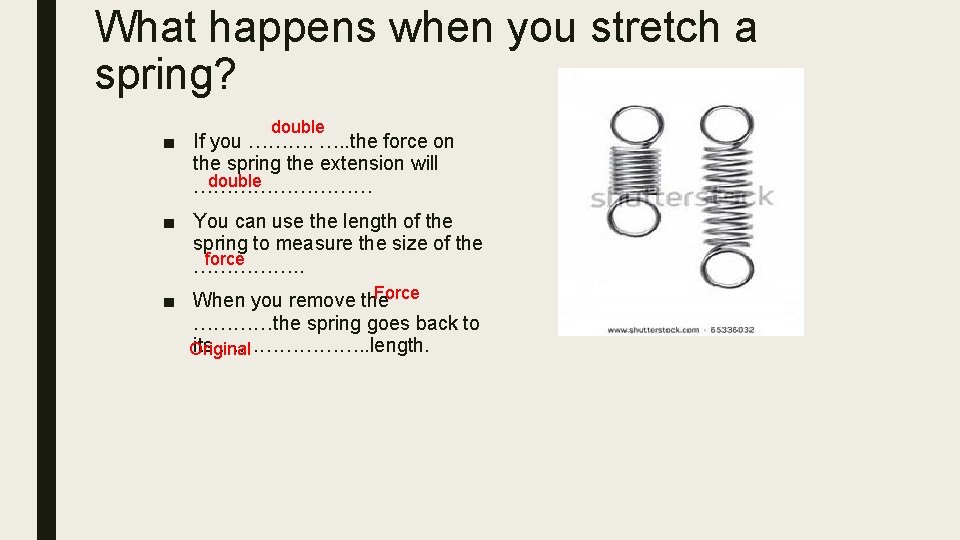
What happens when you stretch a spring? double ■ If you ………. …. . the force on the spring the extension will double …………… ■ You can use the length of the spring to measure the size of the force ……………. . Force ■ When you remove the …………the spring goes back to its …………………. . length. Original
Aim: To be able to plan an investigation to investigate how forces affects how much an spring stretches. ■ This is called a prediction ■ I think that as the _____ (IV) increases the ___________ (DV) increases/decreases. ■ This is because ____________.
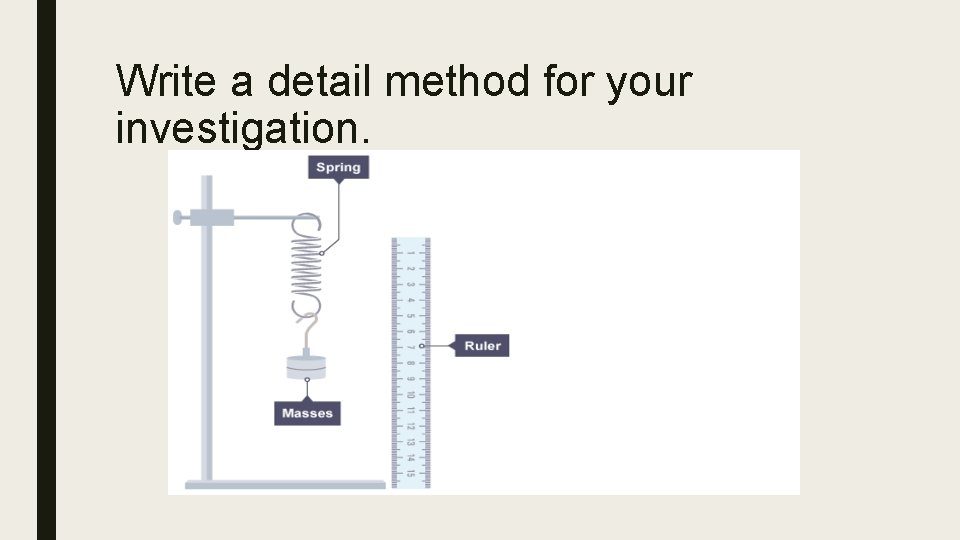
Write a detail method for your investigation.
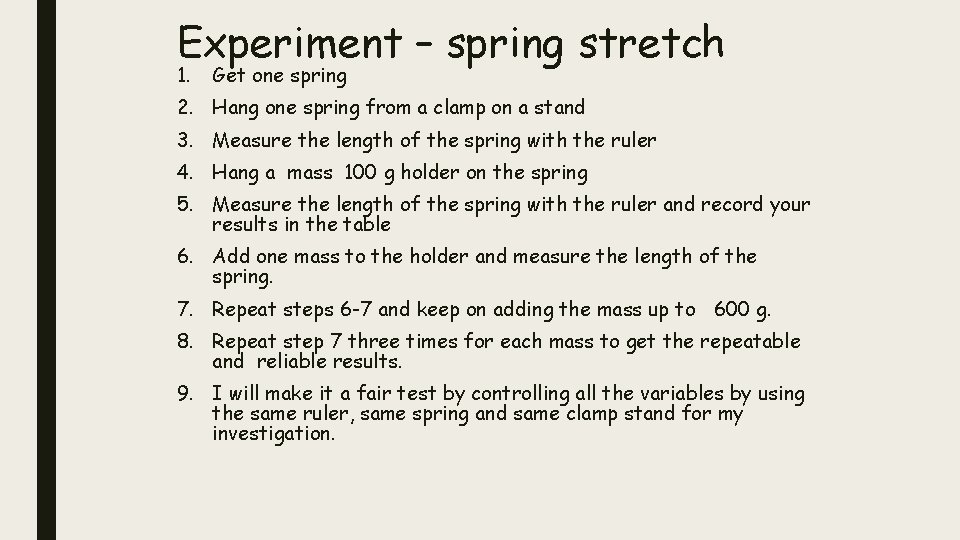
Experiment – spring stretch 1. Get one spring 2. Hang one spring from a clamp on a stand 3. Measure the length of the spring with the ruler 4. Hang a mass 100 g holder on the spring 5. Measure the length of the spring with the ruler and record your results in the table 6. Add one mass to the holder and measure the length of the spring. 7. Repeat steps 6 -7 and keep on adding the mass up to 600 g. 8. Repeat step 7 three times for each mass to get the repeatable and reliable results. 9. I will make it a fair test by controlling all the variables by using the same ruler, same spring and same clamp stand for my investigation.
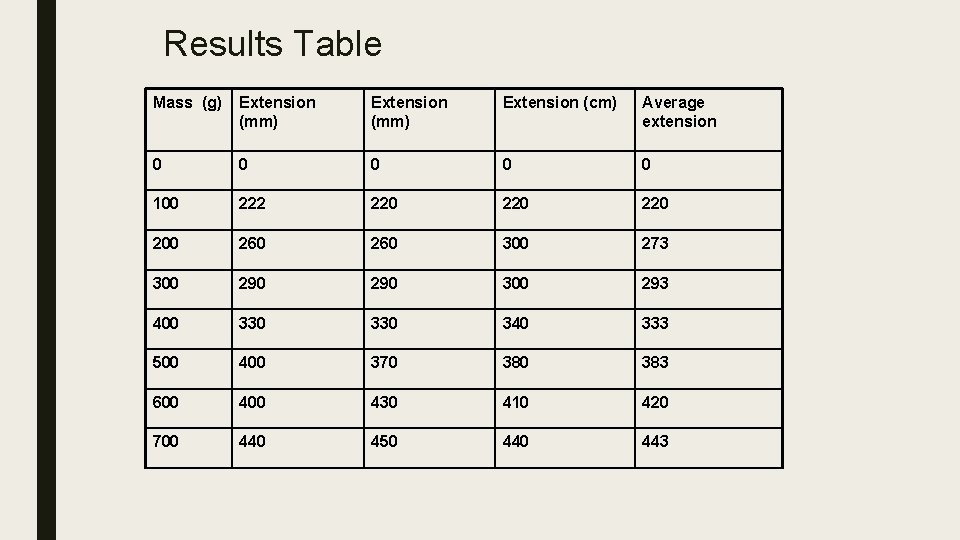
Results Table Mass (g) Extension (mm) Extension (cm) Average extension 0 0 0 100 222 220 220 200 260 300 273 300 290 300 293 400 330 340 333 500 400 370 383 600 430 410 420 700 440 450 443
Plotting a graph Learning objective Outcome ■ To be able to plot a line graph and analyse the grapsh ■ Plot a graph ■ Draw a line of best fit ■ Analyse the graph
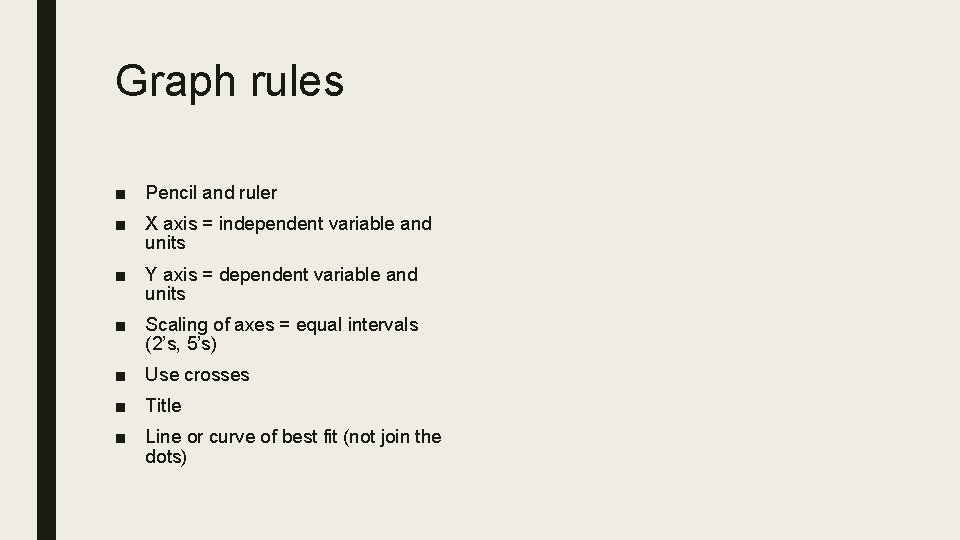
Graph rules ■ Pencil and ruler ■ X axis = independent variable and units ■ Y axis = dependent variable and units ■ Scaling of axes = equal intervals (2’s, 5’s) ■ Use crosses ■ Title ■ Line or curve of best fit (not join the dots)
Complete graph check list ■ What does the pattern in your graph tell us about Force and extension? ■ Did all your points fit the line of best fit? ■ Circle the ones that did not ■ Explain why they did not fit the pattern
PARTICLE THEORY: GAS PRESSURE

Gas pressure
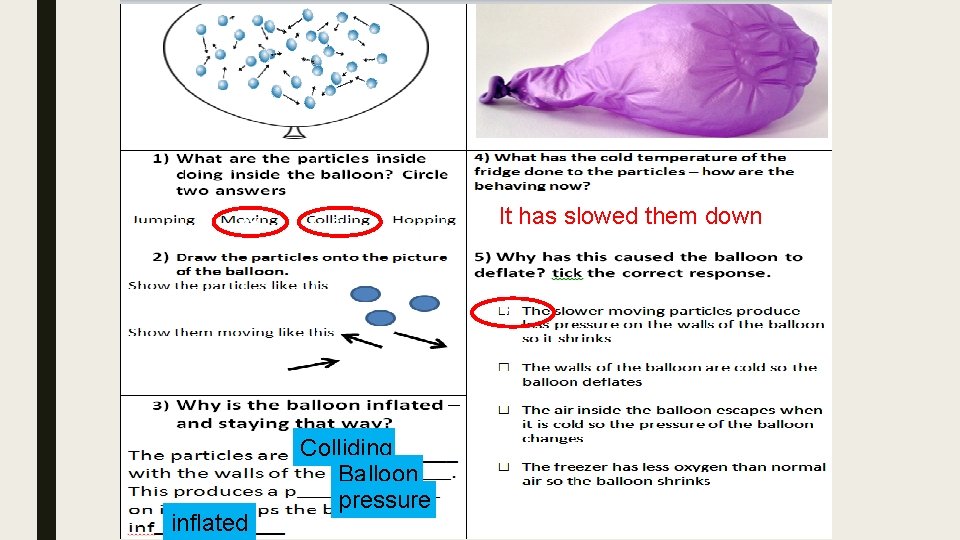
cv cv It has slowed them down cv inflated Colliding Balloon pressure
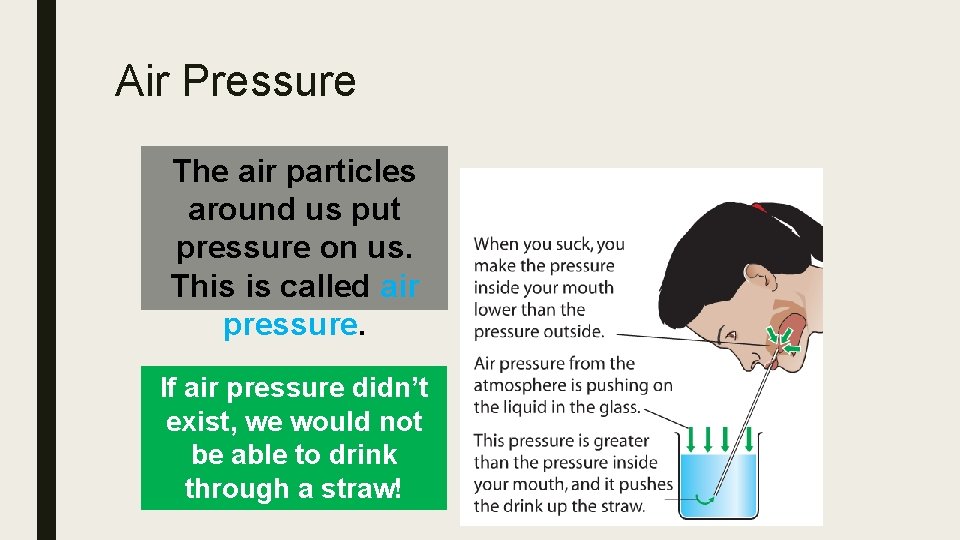
Air Pressure The air particles around us put pressure on us. This is called air pressure. If air pressure didn’t exist, we would not be able to drink through a straw!
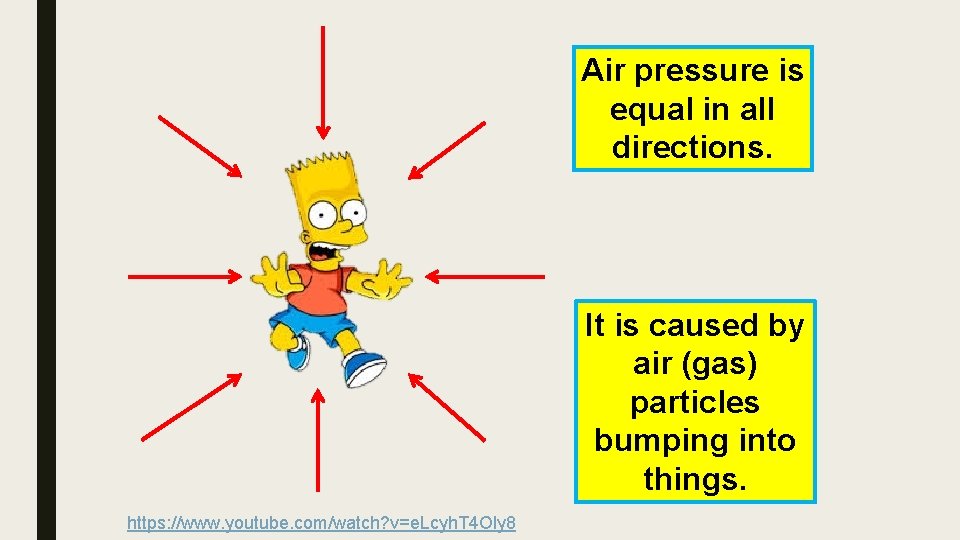
Air pressure is equal in all directions. It is caused by air (gas) particles bumping into things. https: //www. youtube. com/watch? v=e. Lcyh. T 4 Oly 8
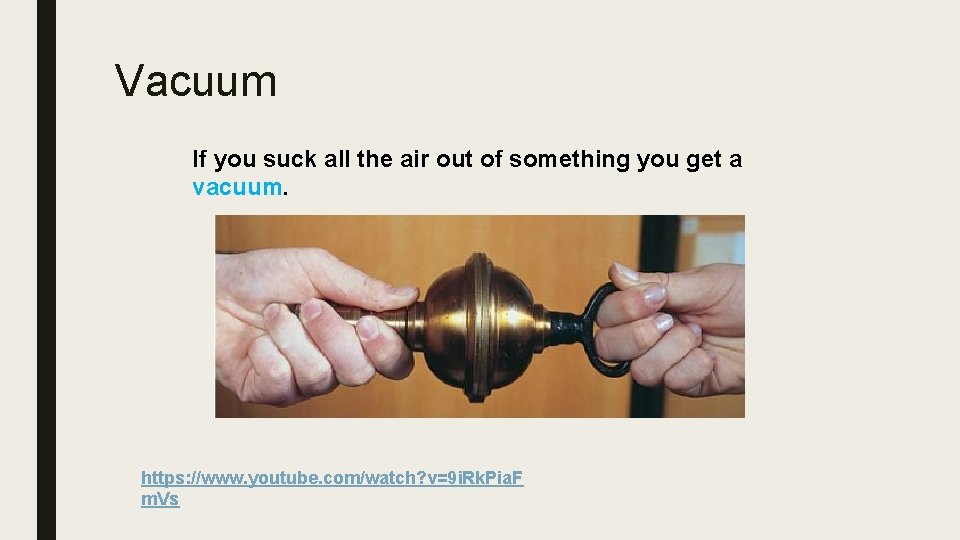
Vacuum If you suck all the air out of something you get a vacuum. https: //www. youtube. com/watch? v=9 i. Rk. Pia. F m. Vs
Friction ■ Friction is a force between two surfaces that are sliding, or trying to slide, across each other. ■ Friction always slows a moving object down. ■ Air resistance is a type of friction
Homework: Imagine you are a gas particle ■ Describe your journey – what happens to you, how you are feeling – in either – The Magdalene hemisphere OR – A person blowing up a balloon ■ You can choose to do: – A story – A cartoon strip (this MUST include some writing)
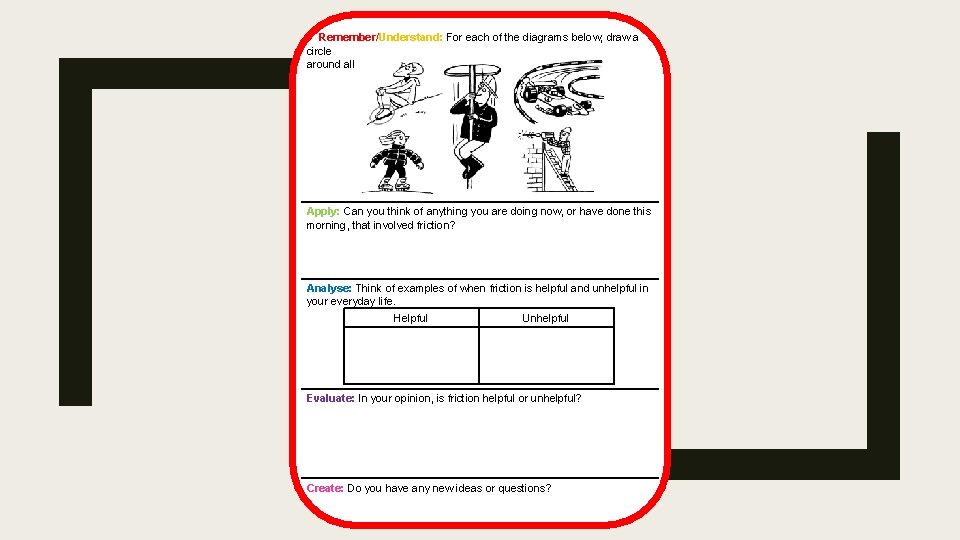
Remember/Understand: For each of the diagrams below, draw a circle around all the places where friction is. Apply: Can you think of anything you are doing now, or have done this morning, that involved friction? Analyse: Think of examples of when friction is helpful and unhelpful in your everyday life. Helpful Unhelpful Evaluate: In your opinion, is friction helpful or unhelpful? Create: Do you have any new ideas or questions?
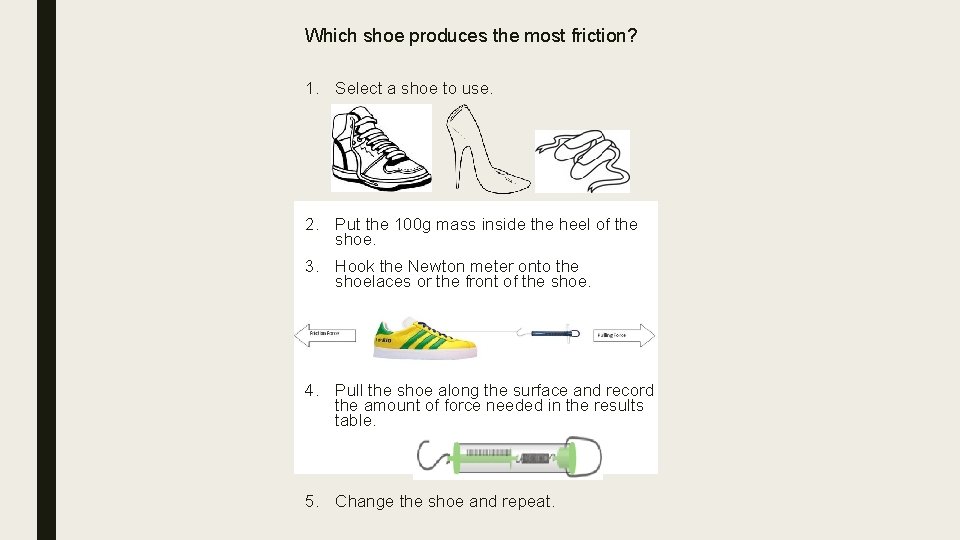
Which shoe produces the most friction? 1. Select a shoe to use. 2. Put the 100 g mass inside the heel of the shoe. 3. Hook the Newton meter onto the shoelaces or the front of the shoe. 4. Pull the shoe along the surface and record the amount of force needed in the results table. 5. Change the shoe and repeat.
Streamlining Know that forces can change the direction and speed of objects Level 3 Know that air resistance/friction opposes movement Level 4 Describe some ways of reducing air resistance/friction Level 5
Streamlining ■ Racing cyclists crouch down low on their bikes to reduce the air resistance on them. This helps them to cycle faster. They also wear streamlined helmets. These have special, smooth shapes that allow the air to flow over the cyclist more easily. ■ Modern cars are also streamlined. Their smooth shapes make the air resistance smaller, which allows them to travel further on the same amount of fuel.
- Slides: 35