
Unit 5 Classification and Kingdoms Viruses Viruses n
- Slides: 12
Unit 5: Classification and Kingdoms Viruses
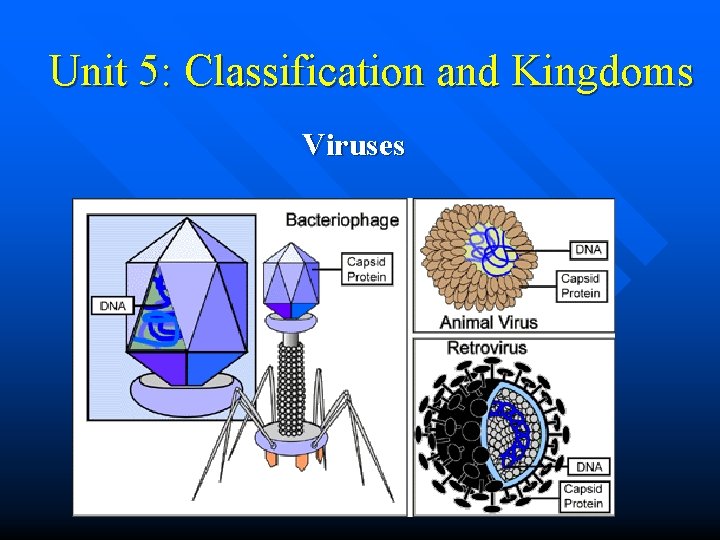
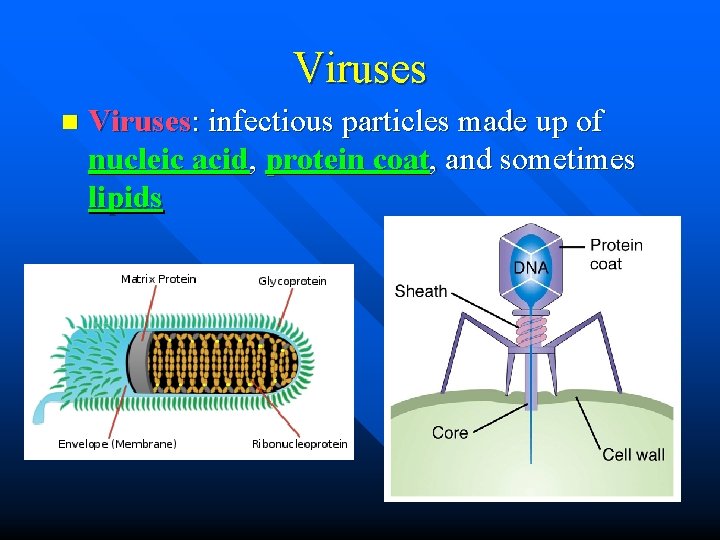
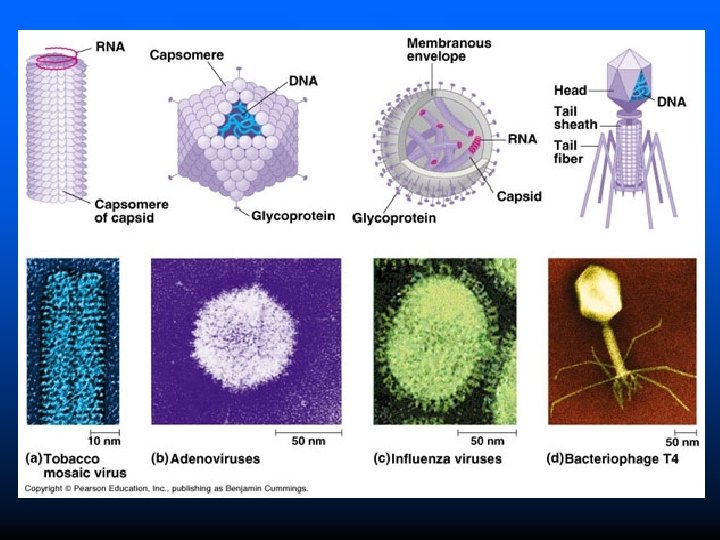
Viruses n Viruses: infectious particles made up of nucleic acid, protein coat, and sometimes lipids
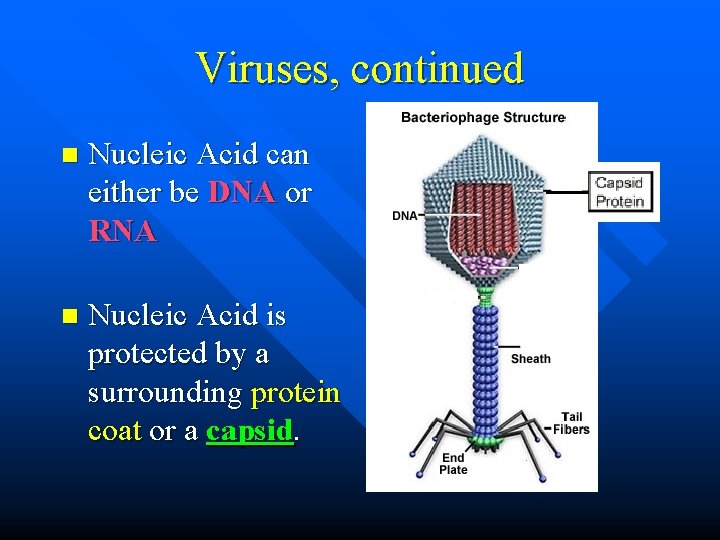
Viruses, continued n Nucleic Acid can either be DNA or RNA n Nucleic Acid is protected by a surrounding protein coat or a capsid.
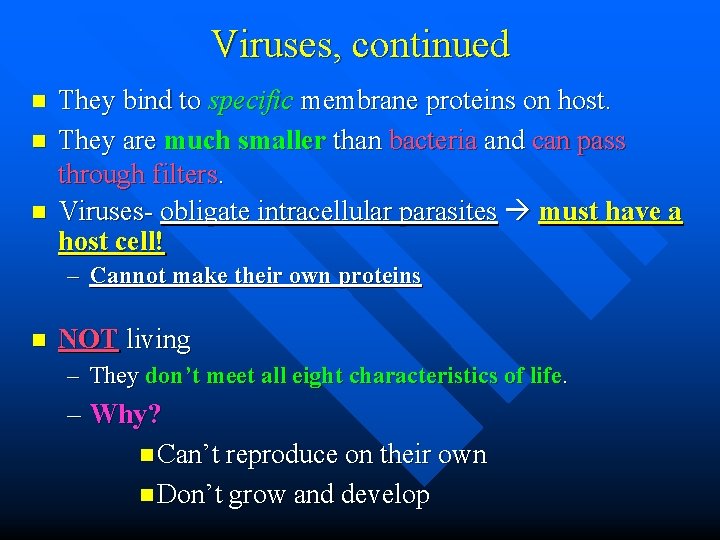
Viruses, continued n n n They bind to specific membrane proteins on host. They are much smaller than bacteria and can pass through filters. Viruses- obligate intracellular parasites must have a host cell! – Cannot make their own proteins n NOT living – They don’t meet all eight characteristics of life. – Why? n Can’t reproduce on their own n Don’t grow and develop
Viral Infection n Most viruses are highly specific to the cells they infect – Plant viruses only infect plants – Animal viruses only infect certain species of animals – Bacterial viruses (called bacteriophages) only infect bacteria
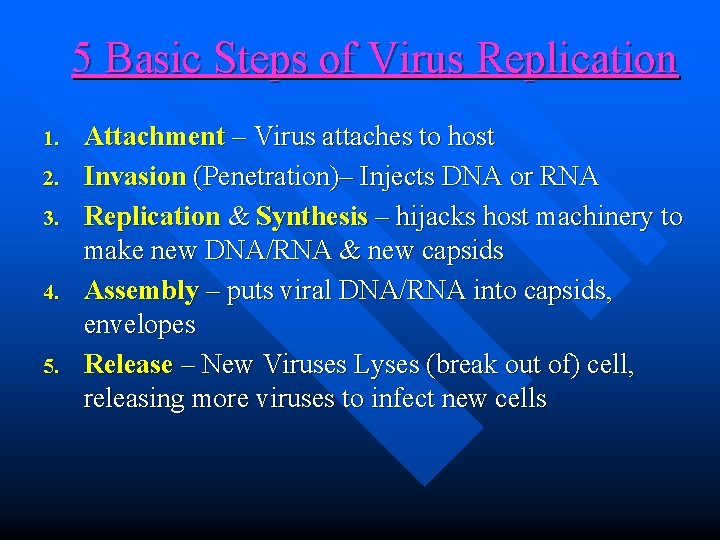
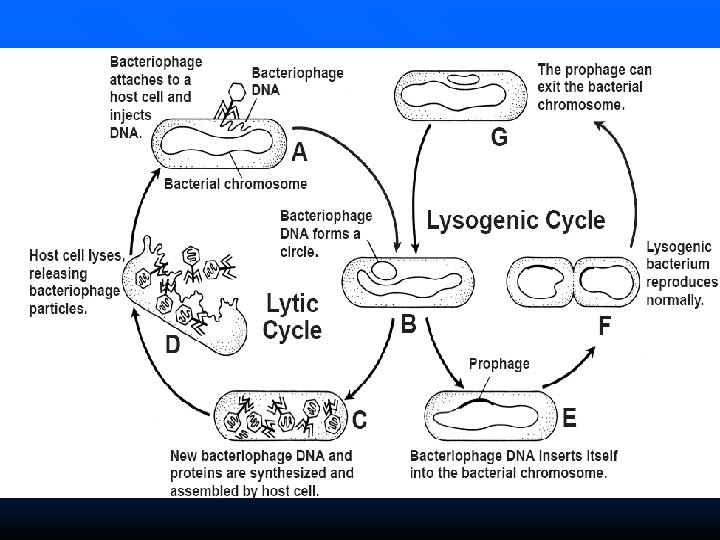
5 Basic Steps of Virus Replication 1. 2. 3. 4. 5. Attachment – Virus attaches to host Invasion (Penetration)– Injects DNA or RNA Replication & Synthesis – hijacks host machinery to make new DNA/RNA & new capsids Assembly – puts viral DNA/RNA into capsids, envelopes Release – New Viruses Lyses (break out of) cell, releasing more viruses to infect new cells
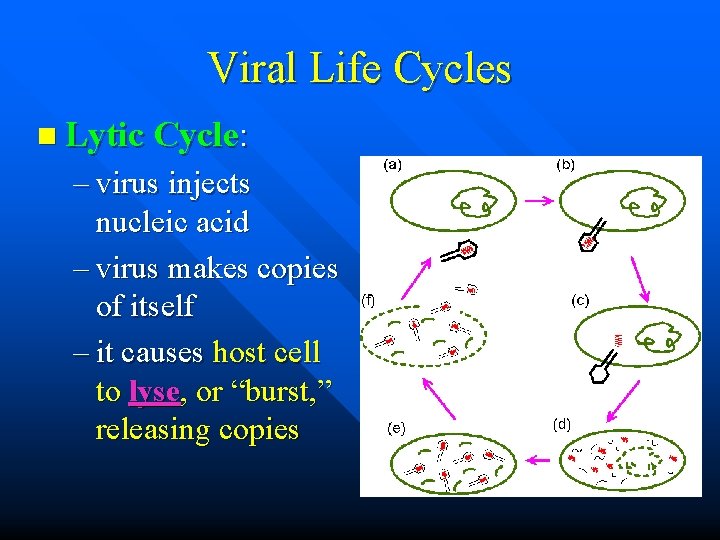
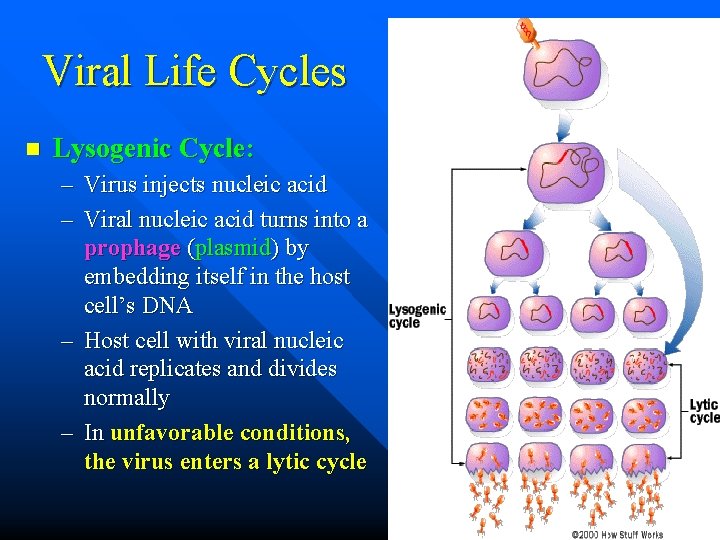
Viral Life Cycles n Lytic Cycle: – virus injects nucleic acid – virus makes copies of itself – it causes host cell to lyse, or “burst, ” releasing copies
Viral Life Cycles n Lysogenic Cycle: – Virus injects nucleic acid – Viral nucleic acid turns into a prophage (plasmid) by embedding itself in the host cell’s DNA – Host cell with viral nucleic acid replicates and divides normally – In unfavorable conditions, the virus enters a lytic cycle
Virus Dangers n Viruses cause yellow fever, rabies, polio, AIDS (HIV), influenza (the flu) , Herpes, Hepatitis & the even the common cold n You cannot “cure” a viral infection; you can only treat symptoms and prevent it with vaccines. – Vaccines – a preparation of a weakened or killed virus that is injected into the body to increase immunity (i. e. it causes your body to make more white blood cells).
Examples of Viruses… n Retrovirus: uses RNA; must copy genetic info backwards (ex: HIV AIDS virus) n Prions: protein infectious particles similar to viruses, only they do not have nucleic acids (i. e. No DNA or RNA) – might cause Mad Cow Disease