
Unit 5 Cell Energy 5 7 Electron Transport
- Slides: 10
Unit 5: Cell Energy 5. 7 Electron Transport Chain
Produces from both the Krebs Cycle and glycolysis feed into the last step of cellular respiration
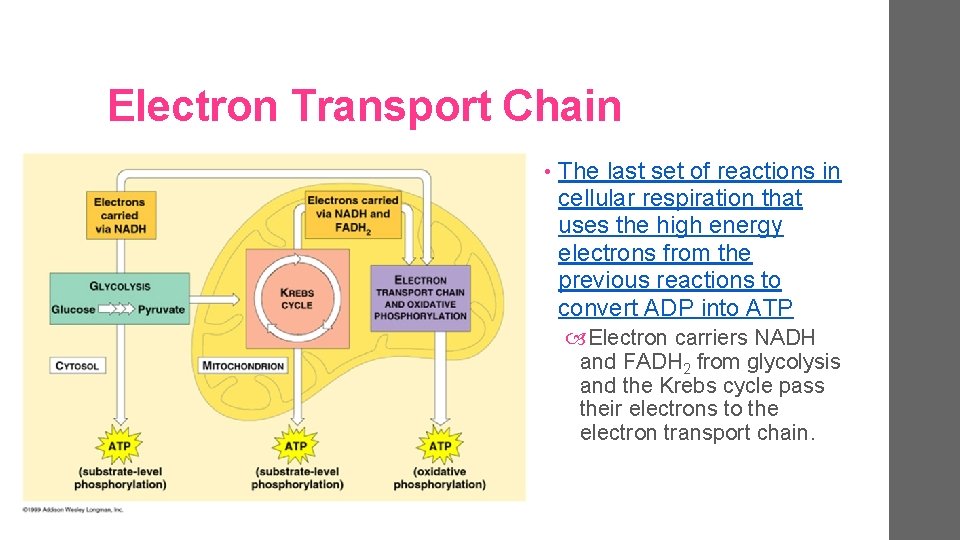
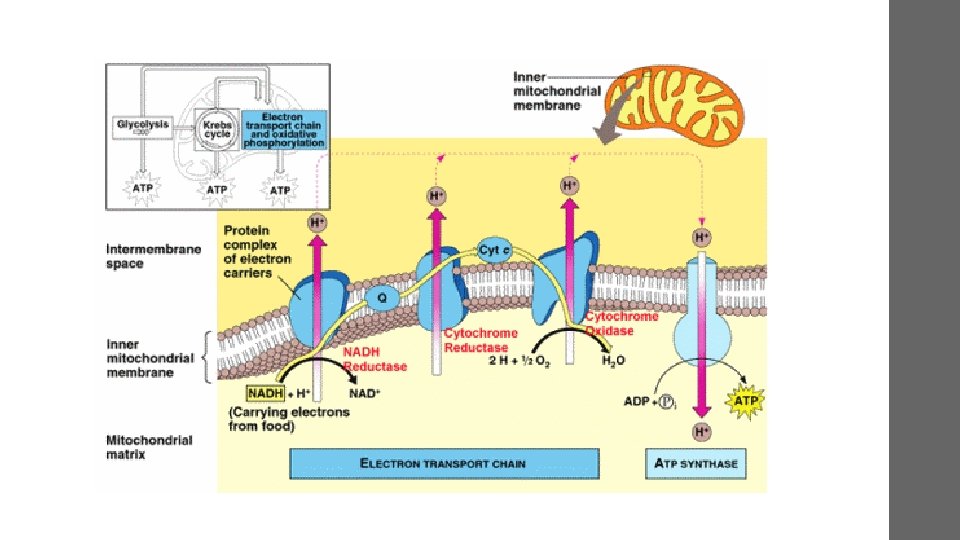
Electron Transport Chain • The last set of reactions in cellular respiration that uses the high energy electrons from the previous reactions to convert ADP into ATP Electron carriers NADH and FADH 2 from glycolysis and the Krebs cycle pass their electrons to the electron transport chain.
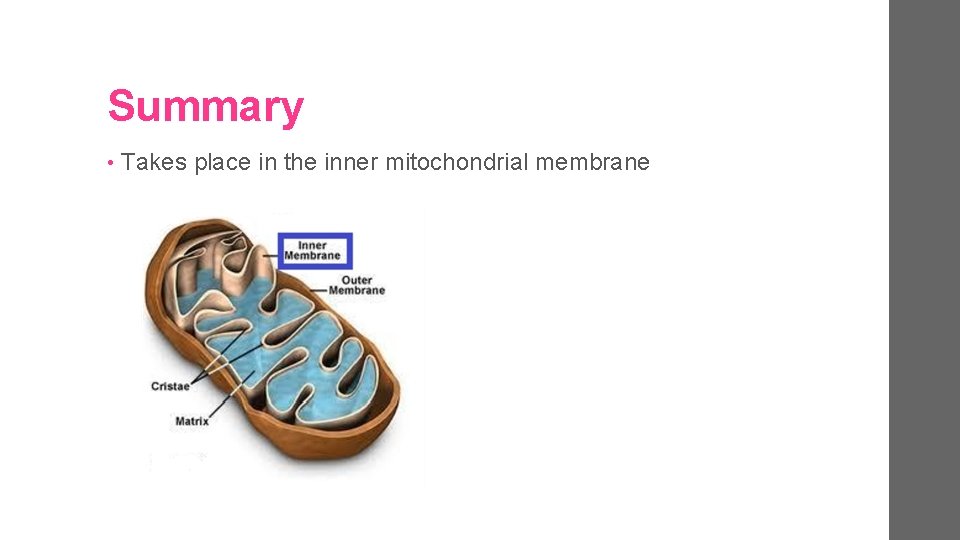
Summary • Takes place in the inner mitochondrial membrane
Summary • Aerobic
Summary • Uses proteins and the enzyme ATP Synthase to make ATP Electrons/Hydrogen ions from the electron carriers are passed down the protein chain releasing energy Oxidative phosphorylation: Energy generated by the electron transport chain is used to move hydrogen ions across the mitochondrial membrane and into the intermembrane space Hydrogen passes back across the membrane and ATP synthase generates ATP from ADP
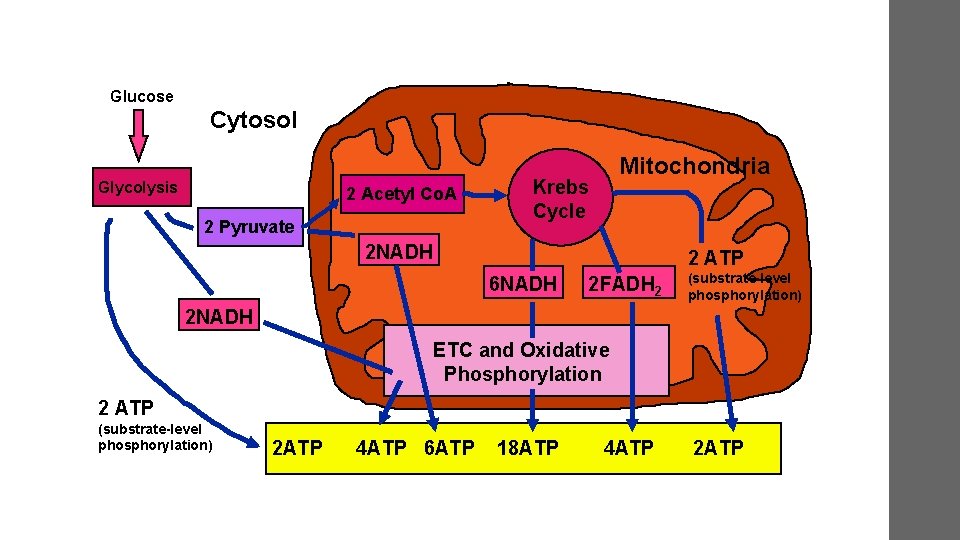
Summary • Products of the electron transport chain: Each NADH converts to 3 ATP Each FADH 2 converts to 2 ATP H 20 https: //www. youtube. com/watch? v=k. N 5 Mtq. AB_Yc
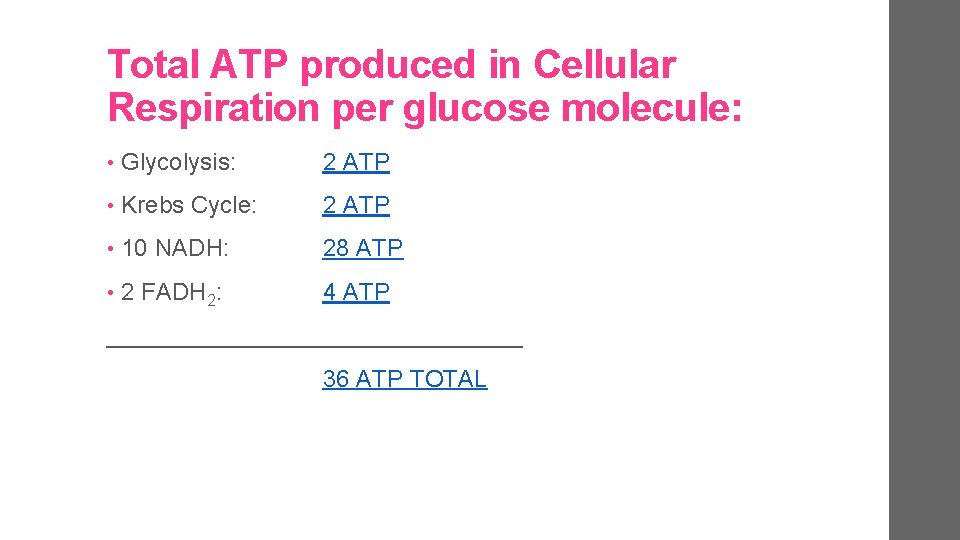
Total ATP produced in Cellular Respiration per glucose molecule: • Glycolysis: 2 ATP • Krebs Cycle: 2 ATP • 10 NADH: 28 ATP • 2 FADH 2: 4 ATP ________________ 36 ATP TOTAL
Glucose Cytosol Glycolysis 2 Acetyl Co. A 2 Pyruvate Mitochondria Krebs Cycle 2 NADH 2 ATP 6 NADH 2 FADH 2 (substrate-level phosphorylation) 2 NADH ETC and Oxidative Phosphorylation 2 ATP (substrate-level phosphorylation) 2 ATP 4 ATP 6 ATP 18 ATP 4 ATP 2 ATP