
Unit 5 Cell Energy 5 4 Cellular Respiration
- Slides: 14
Unit 5: Cell Energy 5. 4 Cellular Respiration Overview
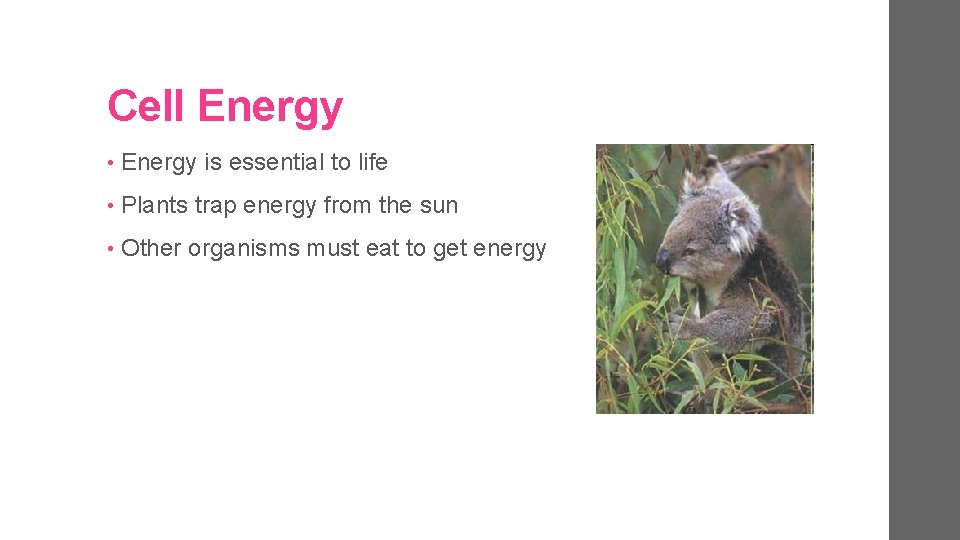
Cell Energy • Energy is essential to life • Plants trap energy from the sun • Other organisms must eat to get energy
Things that require energy… • Active transport • Cell division • Production, transport, and storage of proteins • Other examples?
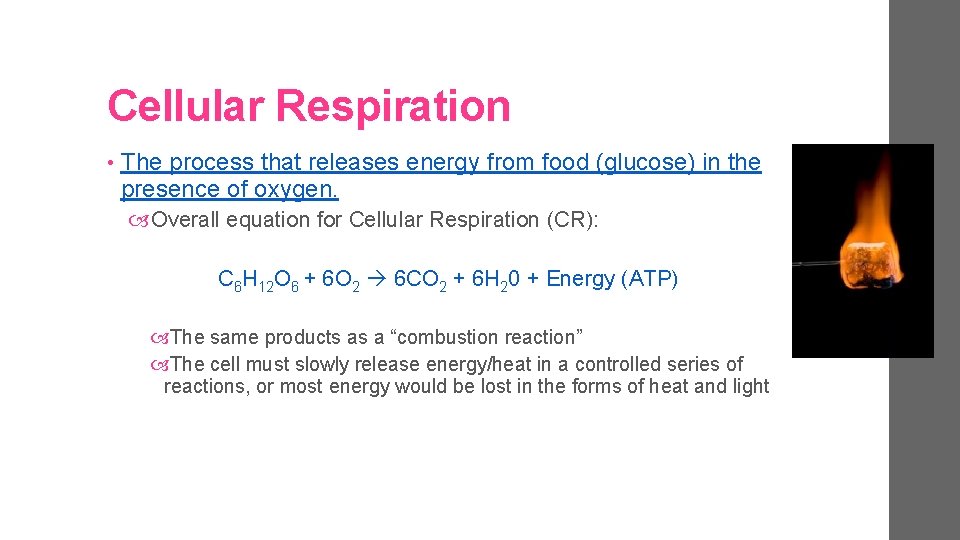
Cellular Respiration • The process that releases energy from food (glucose) in the presence of oxygen. Overall equation for Cellular Respiration (CR): C 6 H 12 O 6 + 6 O 2 6 CO 2 + 6 H 20 + Energy (ATP) The same products as a “combustion reaction” The cell must slowly release energy/heat in a controlled series of reactions, or most energy would be lost in the forms of heat and light
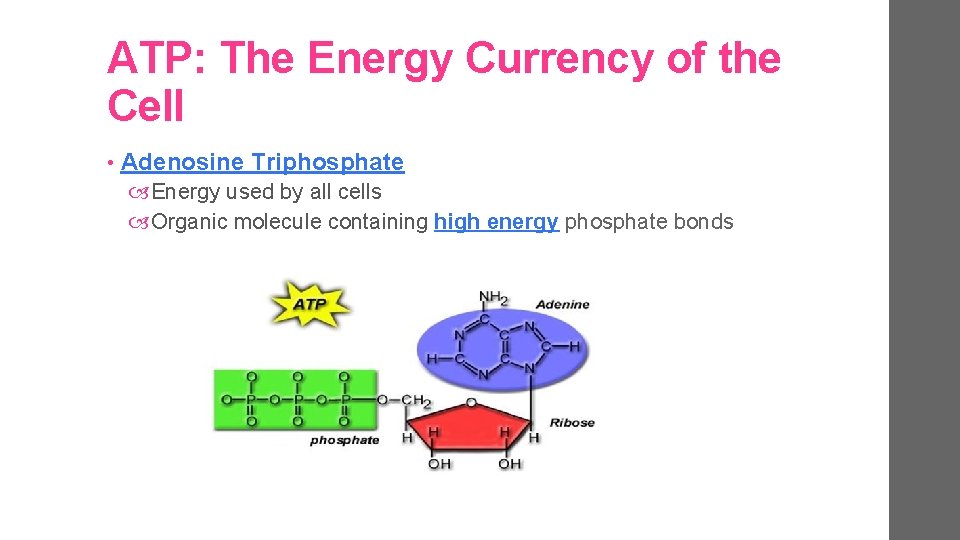
ATP: The Energy Currency of the Cell • Adenosine Triphosphate Energy used by all cells Organic molecule containing high energy phosphate bonds
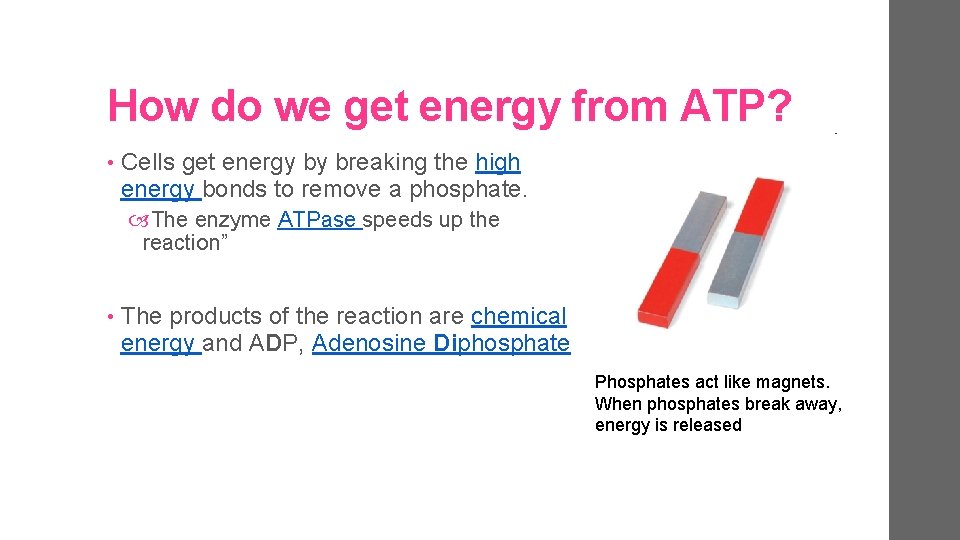
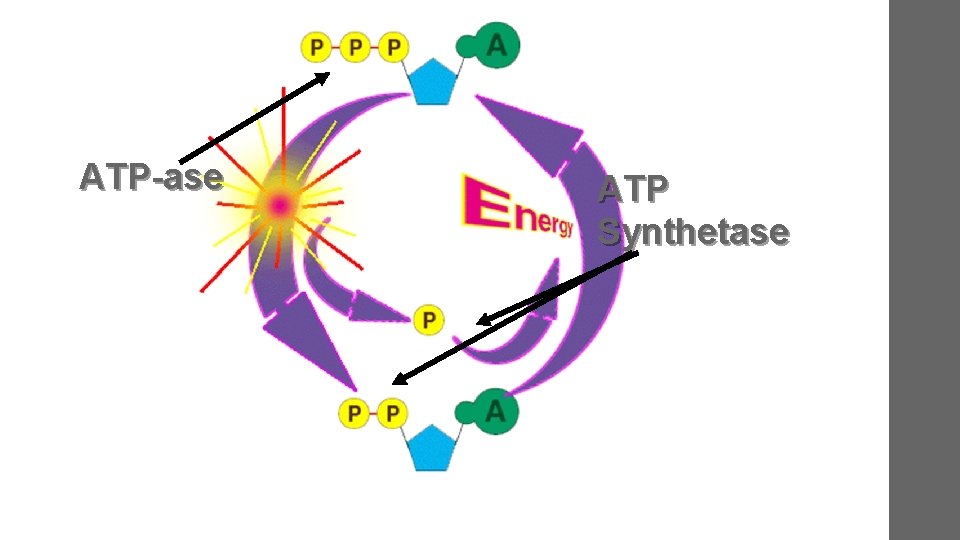
How do we get energy from ATP? • Cells get energy by breaking the high energy bonds to remove a phosphate. The enzyme ATPase speeds up the reaction” • The products of the reaction are chemical energy and ADP, Adenosine Diphosphate Phosphates act like magnets. When phosphates break away, energy is released
How is ATP Re-made? • The reverse reactions occurs and another phosphate is added. Phosphorylated: a phosphate is added to ADP to make ATP The enzyme ATP Synthase speeds up the reaction • ATP is made during the process of cellular respiration
ATP-ase ATP Synthetase
Where is ATP made in the cell? • ATP is made in the cytoplasm and the mitochondria
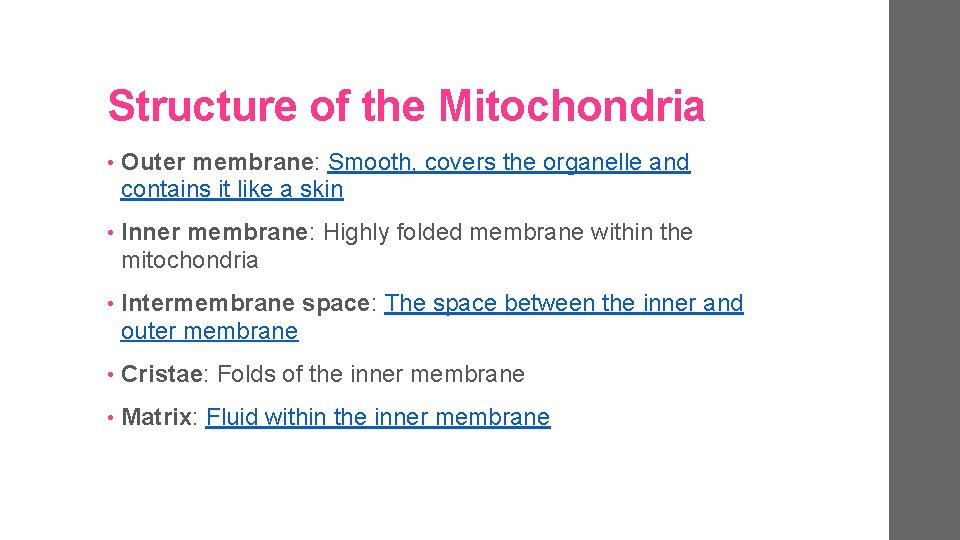
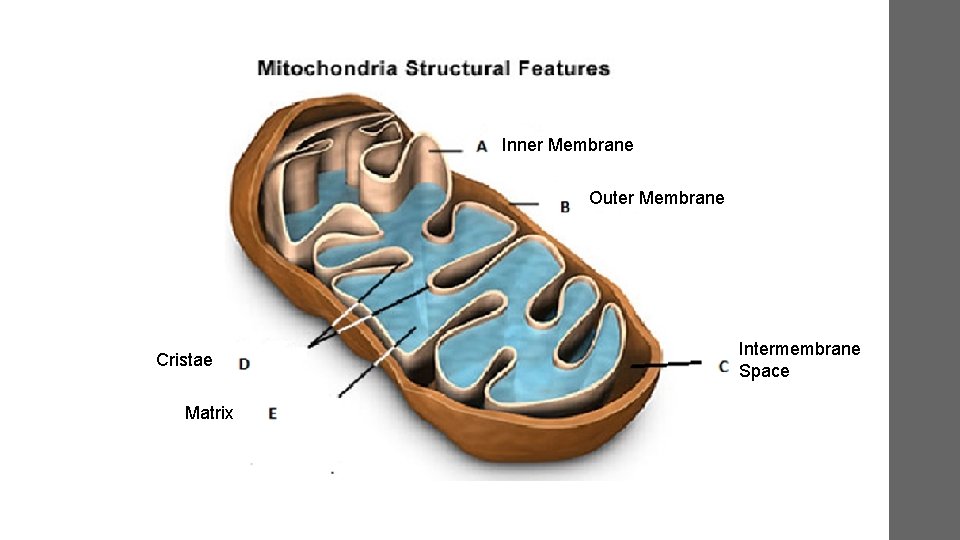
Structure of the Mitochondria • Outer membrane: Smooth, covers the organelle and contains it like a skin • Inner membrane: Highly folded membrane within the mitochondria • Intermembrane space: The space between the inner and outer membrane • Cristae: Folds of the inner membrane • Matrix: Fluid within the inner membrane
Inner Membrane Outer Membrane Cristae Matrix Intermembrane Space
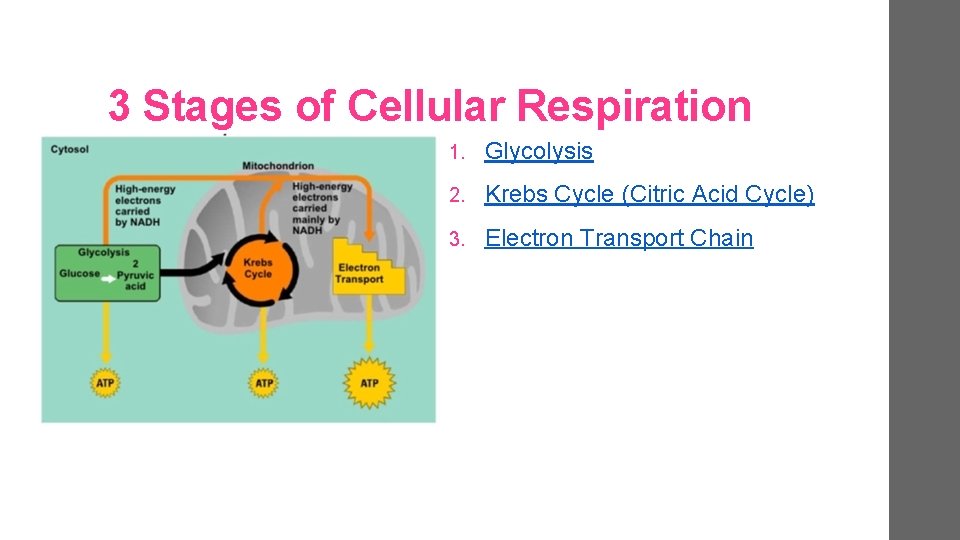
3 Stages of Cellular Respiration 1. Glycolysis 2. Krebs Cycle (Citric Acid Cycle) 3. Electron Transport Chain
Some stages are… • Aerobic: Requires oxygen • Anaerobic: Does NOT require oxygen
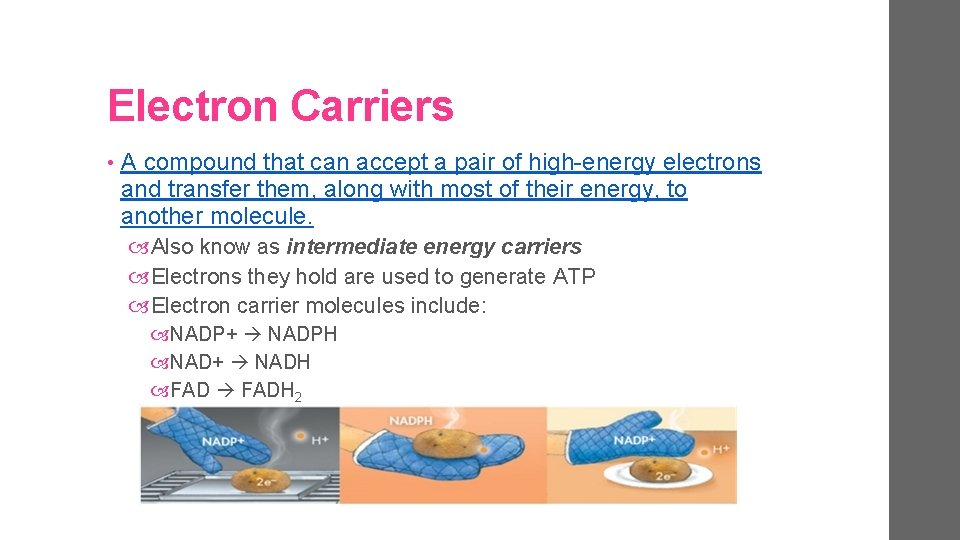
Electron Carriers • A compound that can accept a pair of high-energy electrons and transfer them, along with most of their energy, to another molecule. Also know as intermediate energy carriers Electrons they hold are used to generate ATP Electron carrier molecules include: NADP+ NADPH NAD+ NADH FADH 2