
Unit 4 Weathering and Soils Weathering the breaking
Unit 4: Weathering and Soils
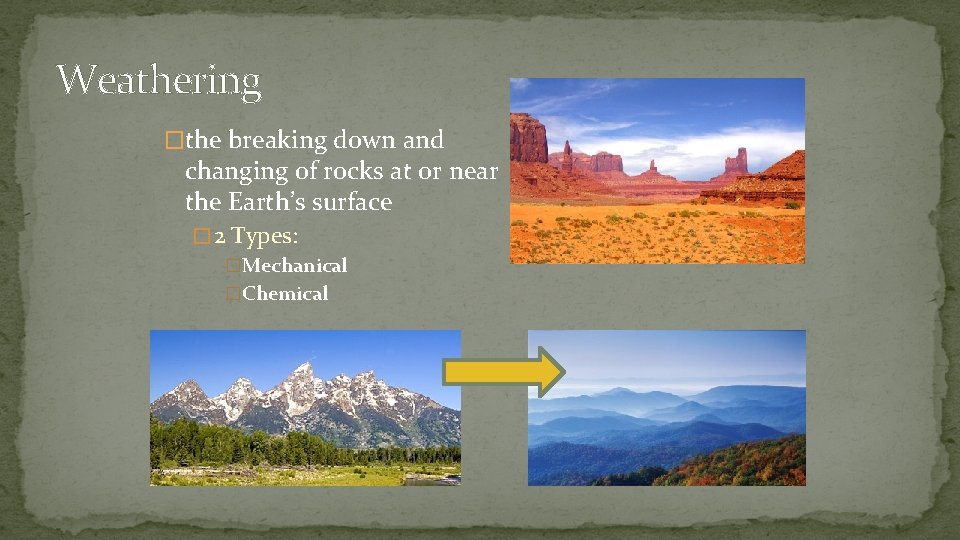
Weathering �the breaking down and changing of rocks at or near the Earth’s surface � 2 Types: �Mechanical �Chemical
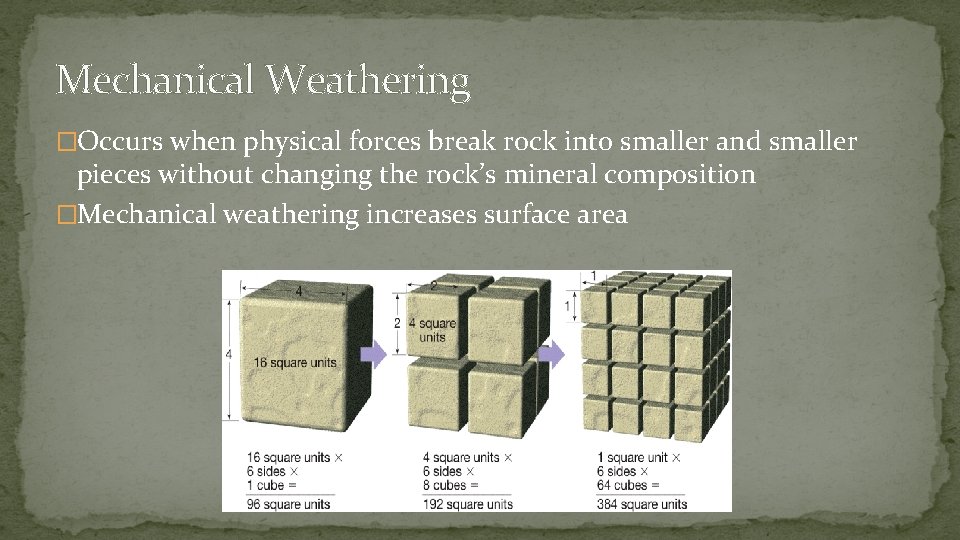
Mechanical Weathering �Occurs when physical forces break rock into smaller and smaller pieces without changing the rock’s mineral composition �Mechanical weathering increases surface area
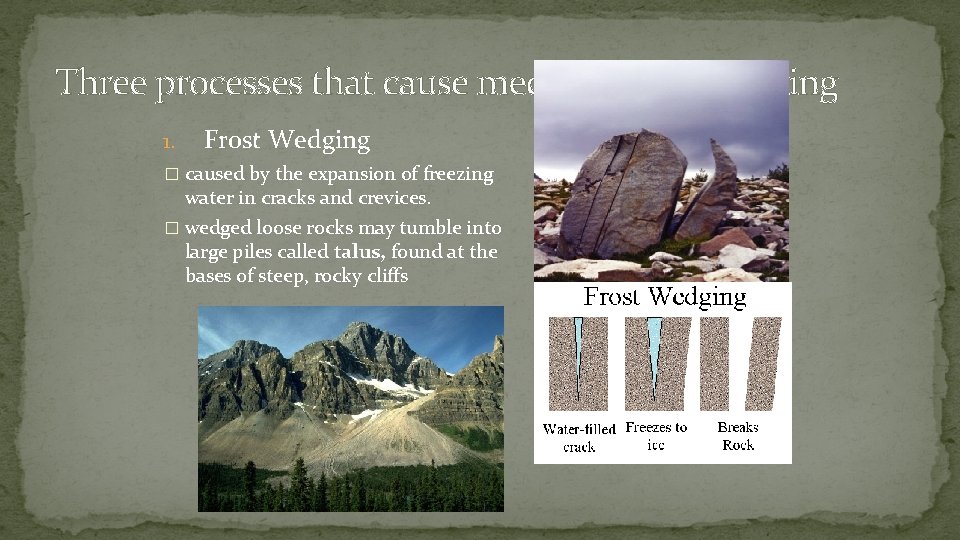
Three processes that cause mechanical weathering 1. Frost Wedging � caused by the expansion of freezing water in cracks and crevices. � wedged loose rocks may tumble into large piles called talus, found at the bases of steep, rocky cliffs
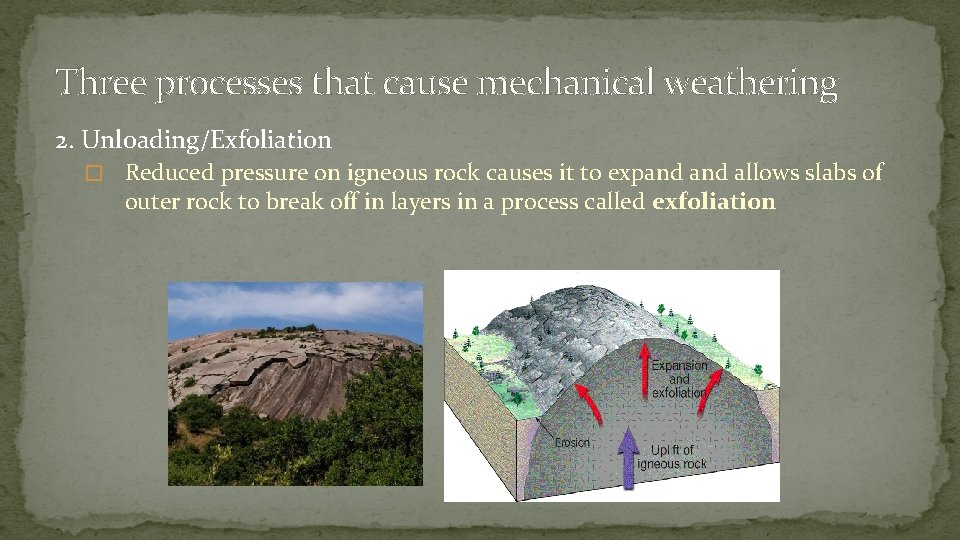
Three processes that cause mechanical weathering 2. Unloading/Exfoliation � Reduced pressure on igneous rock causes it to expand allows slabs of outer rock to break off in layers in a process called exfoliation
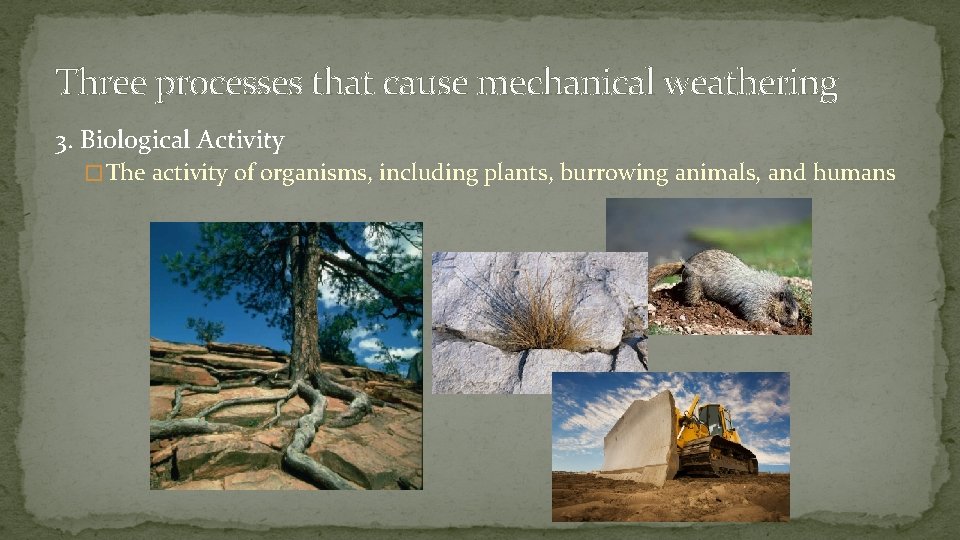
Three processes that cause mechanical weathering 3. Biological Activity � The activity of organisms, including plants, burrowing animals, and humans
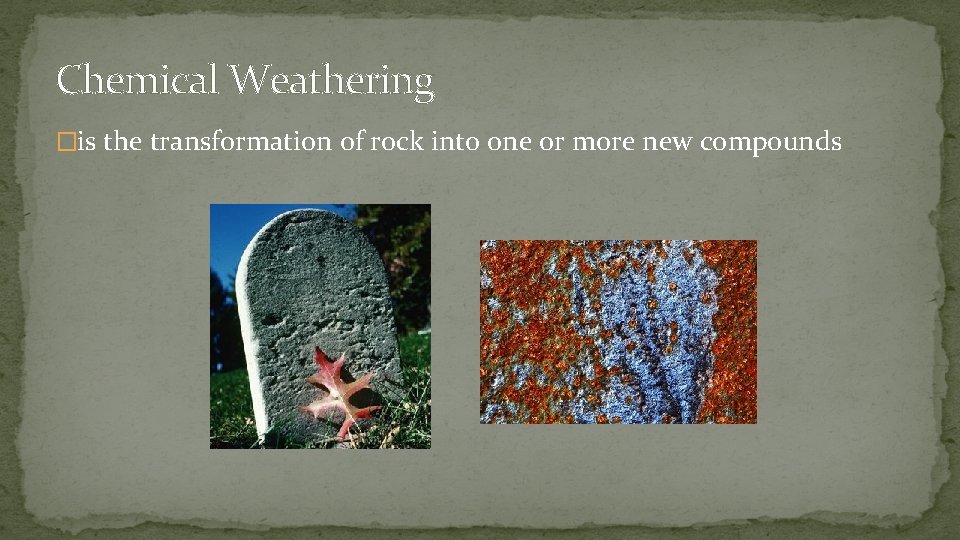
Chemical Weathering �is the transformation of rock into one or more new compounds
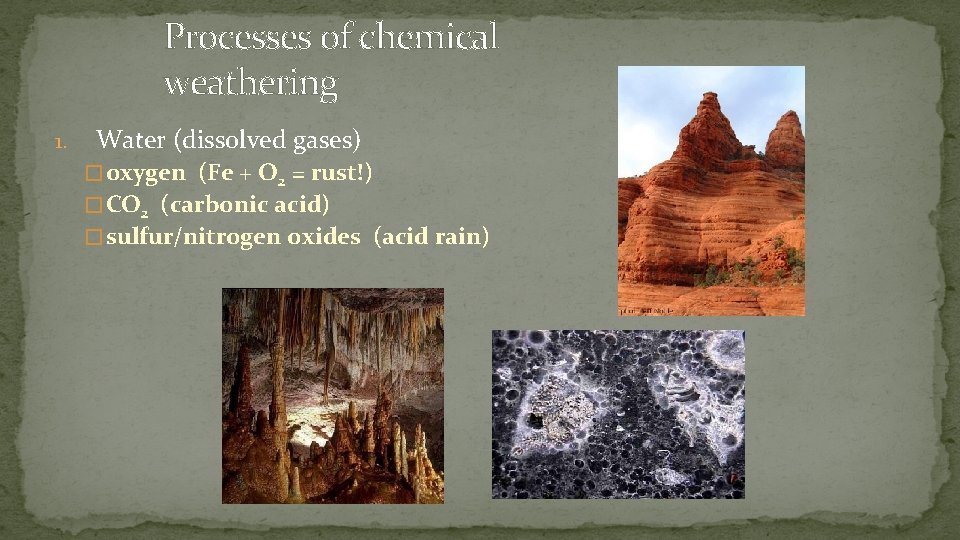
Processes of chemical weathering 1. Water (dissolved gases) � oxygen (Fe + O 2 = rust!) � CO 2 (carbonic acid) � sulfur/nitrogen oxides (acid rain)
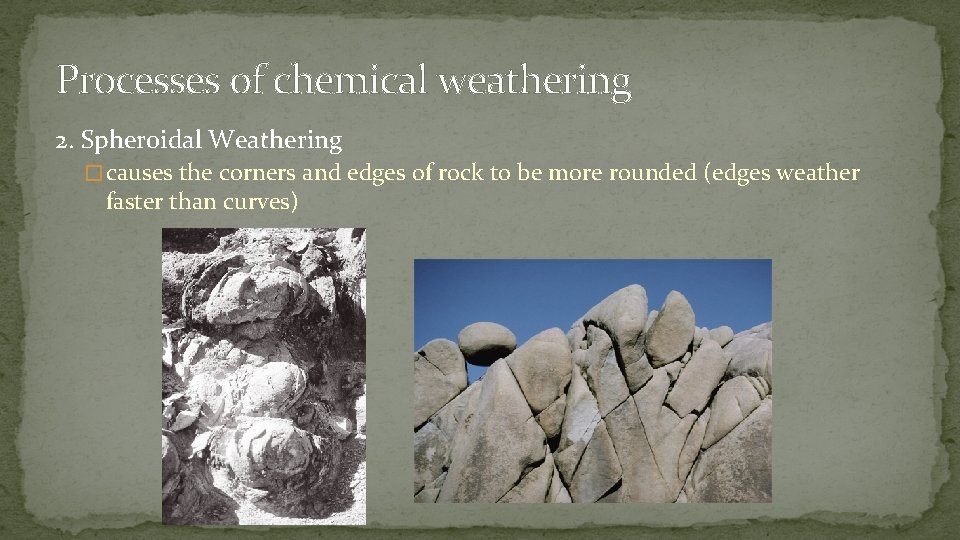
Processes of chemical weathering 2. Spheroidal Weathering � causes the corners and edges of rock to be more rounded (edges weather faster than curves)
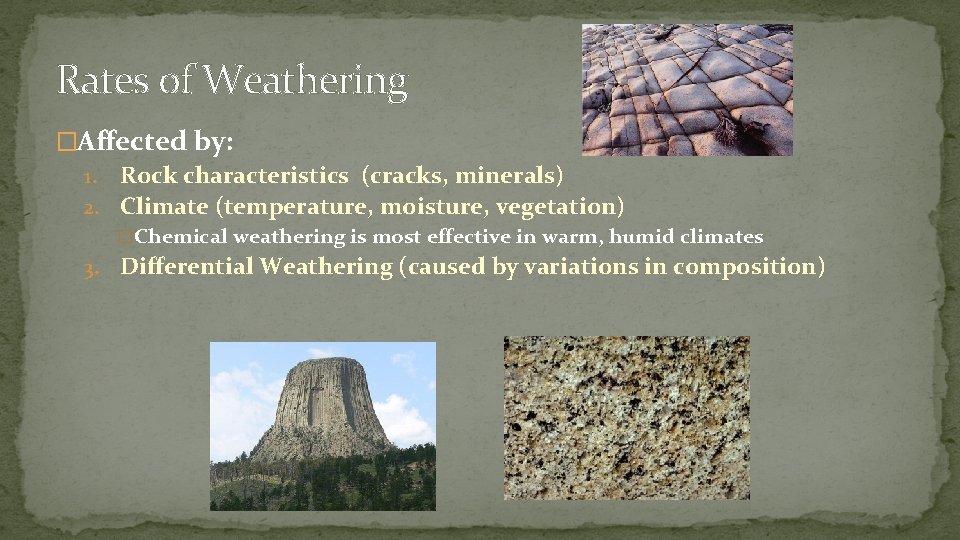
Rates of Weathering �Affected by: 1. Rock characteristics (cracks, minerals) 2. Climate (temperature, moisture, vegetation) �Chemical weathering is most effective in warm, humid climates 3. Differential Weathering (caused by variations in composition)
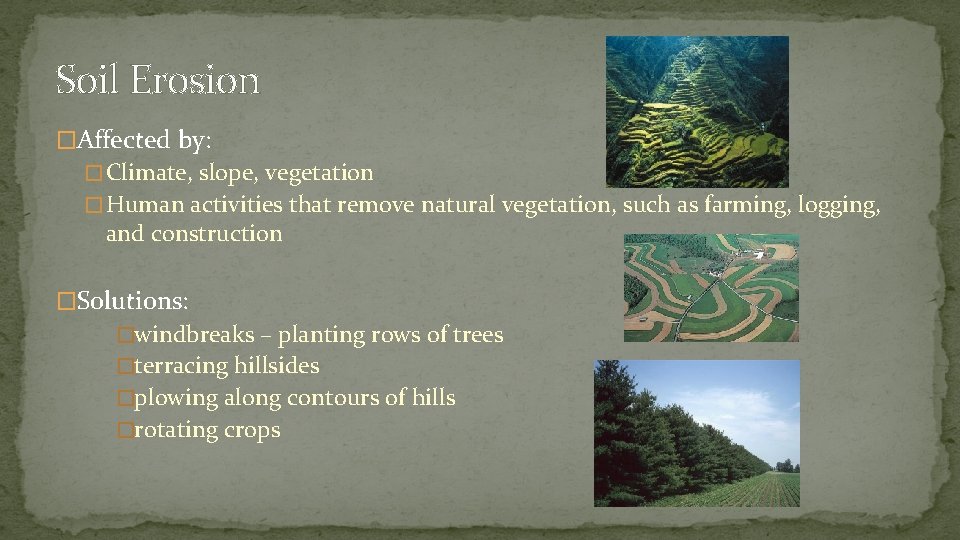
Soil Erosion �Affected by: � Climate, slope, vegetation � Human activities that remove natural vegetation, such as farming, logging, and construction �Solutions: �windbreaks – planting rows of trees �terracing hillsides �plowing along contours of hills �rotating crops
Mass Movements �Transfer of rock and soil downslope due to gravity �Triggers - anything that makes a slope more susceptible to gravity
Triggers of Mass Movement �Water – heavy rain, rapid melting of snow – saturates surface materials �Oversteepened slopes – stable up to 25 -40 (depending on size/shape of particles) � Ex: waves on cliff, excavating, road construction �Removal of Vegatation – roots bind soil �Earthquakes – dislodge rock and unconsolidated material
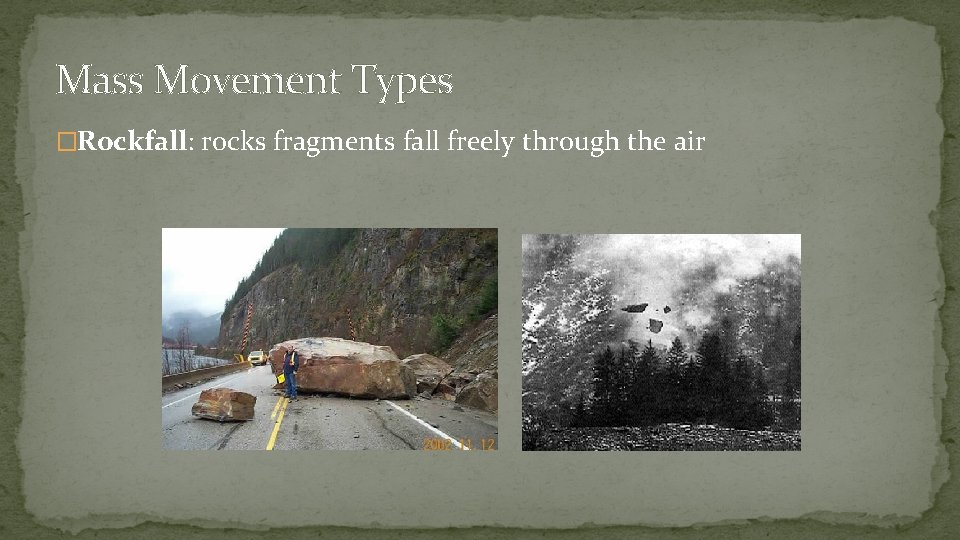
Mass Movement Types �Rockfall: rocks fragments fall freely through the air
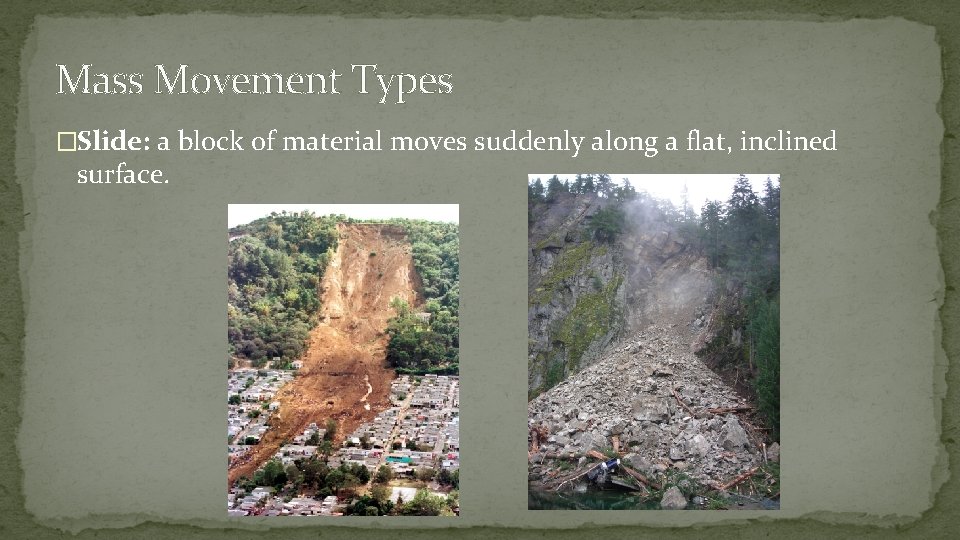
Mass Movement Types �Slide: a block of material moves suddenly along a flat, inclined surface.
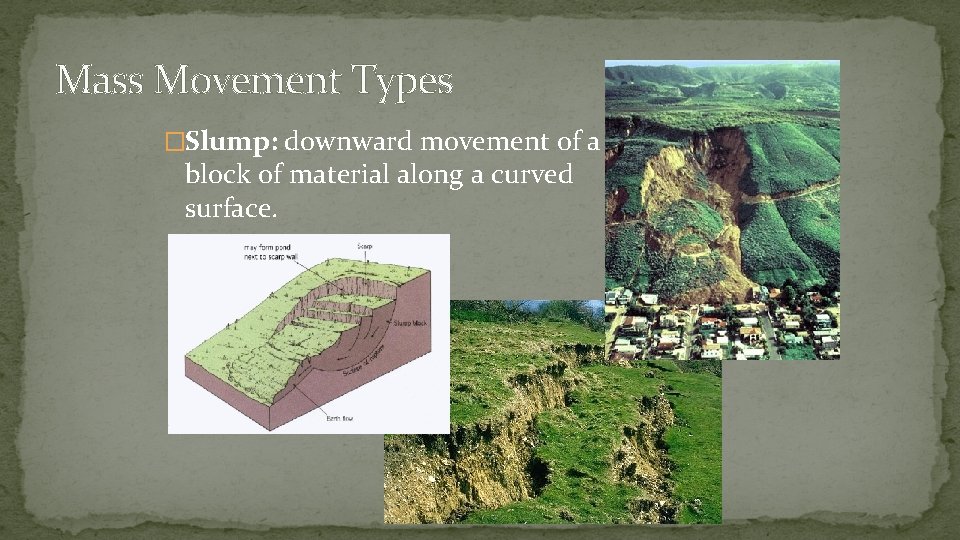
Mass Movement Types �Slump: downward movement of a block of material along a curved surface.
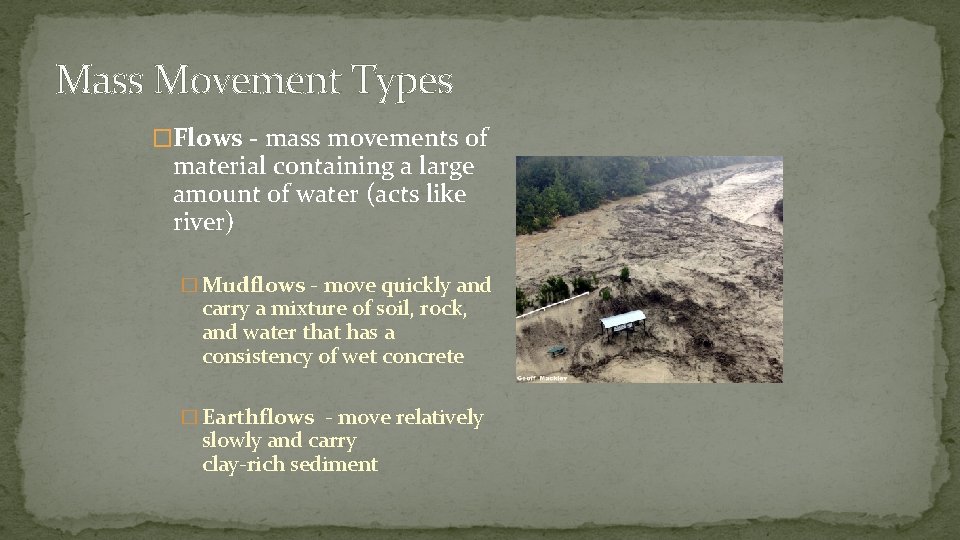
Mass Movement Types �Flows - mass movements of material containing a large amount of water (acts like river) � Mudflows - move quickly and carry a mixture of soil, rock, and water that has a consistency of wet concrete � Earthflows - move relatively slowly and carry clay-rich sediment
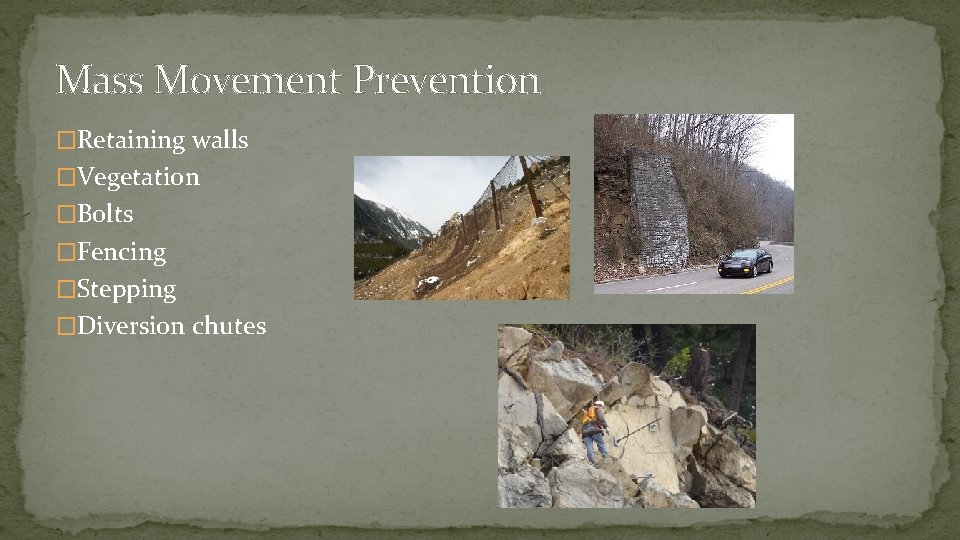
Mass Movement Prevention �Retaining walls �Vegetation �Bolts �Fencing �Stepping �Diversion chutes
- Slides: 18