
Unit 4 Types of Matter Types of Matter
- Slides: 76
Unit 4 Types of Matter
Types of Matter
Lesson Objectives: ✓ Differentiate between elements, compounds and mixtures ✓ Identify the diatomic elements
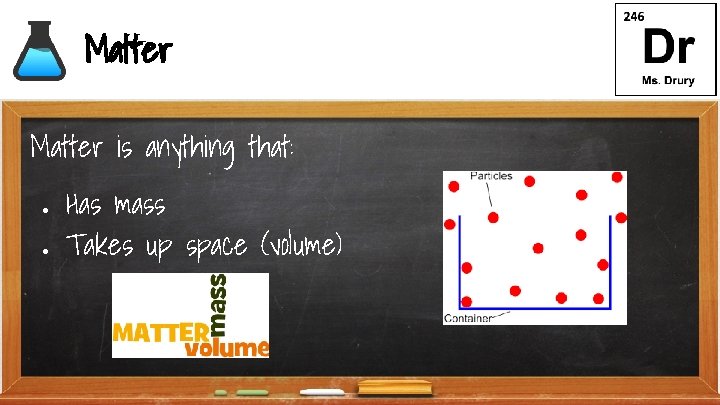
Matter is anything that: ● ● Has mass Takes up space (volume)
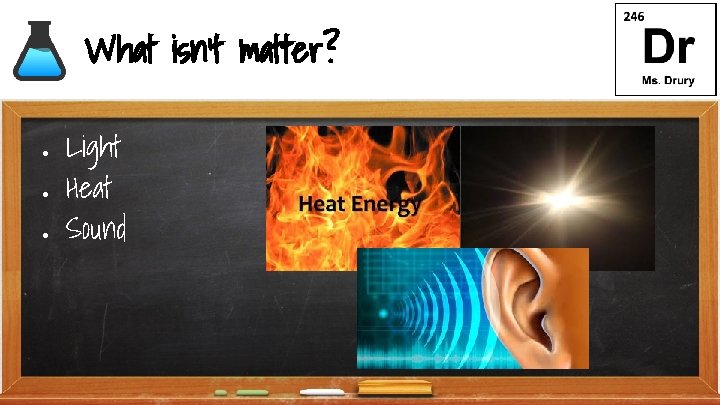
What isn’t matter? ● ● ● Light Heat Sound
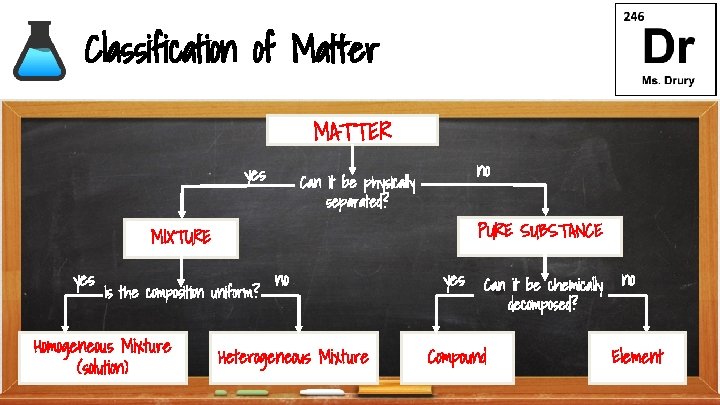
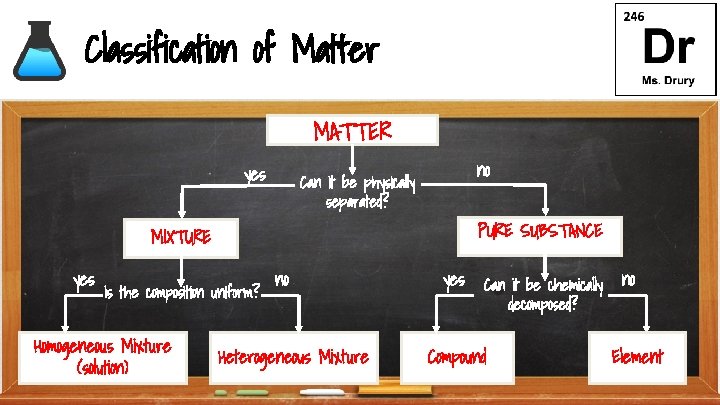
Classification of Matter MATTER yes no Can it be physically separated? PURE SUBSTANCE MIXTURE yes Is the composition uniform? Homogeneous Mixture (solution) no Heterogeneous Mixture yes Can it be chemically decomposed? Compound no Element
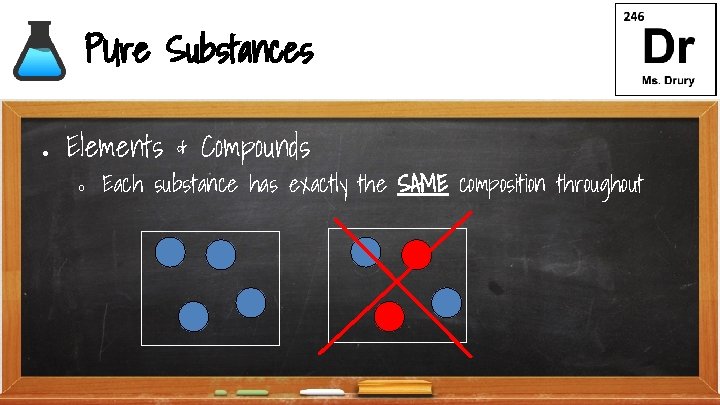
PUre Substances ● Elements & Compounds ○ Each substance has exactly the SAME composition throughout
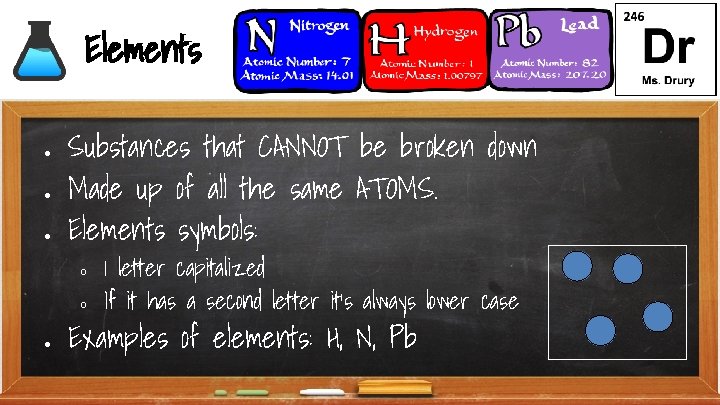
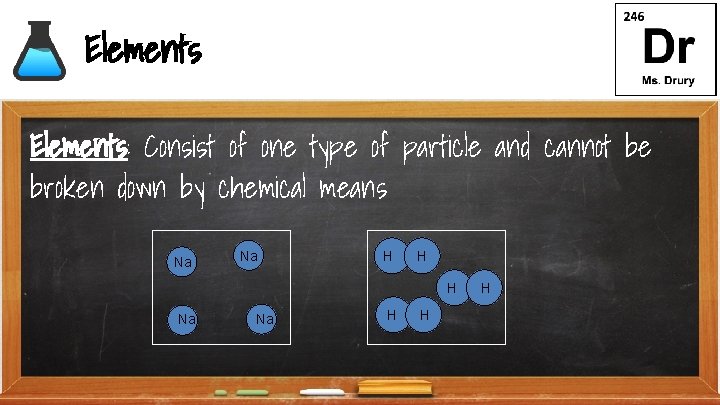
Elements ● ● ● Substances that CANNOT be broken down Made up of all the same ATOMS. Elements symbols: ○ ○ ● 1 letter capitalized If it has a second letter it’s always lower case Examples of elements: H, N, Pb
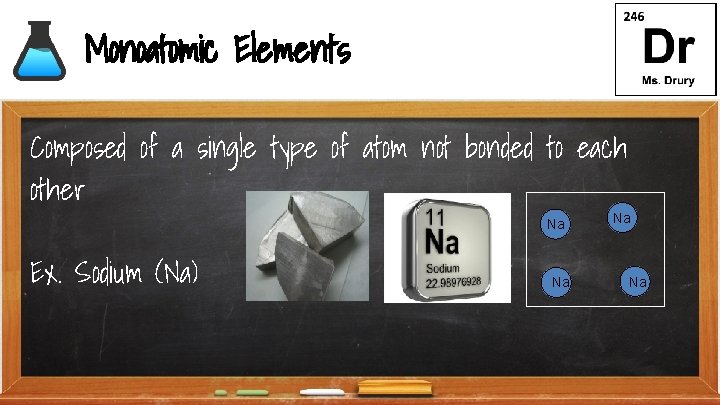
Monoatomic Elements Composed of a single type of atom not bonded to each other Na Ex. Sodium (Na) Na Na Na
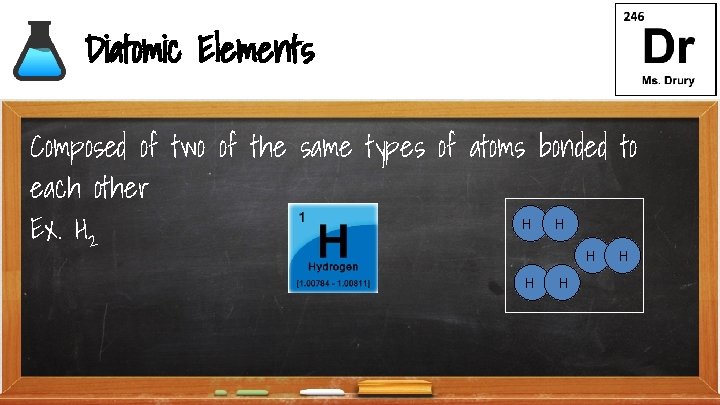
Diatomic Elements Composed of two of the same types of atoms bonded to each other H H Ex. H 2 H H
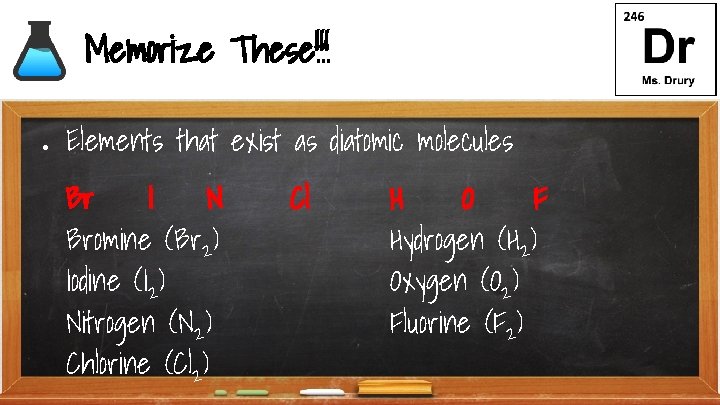
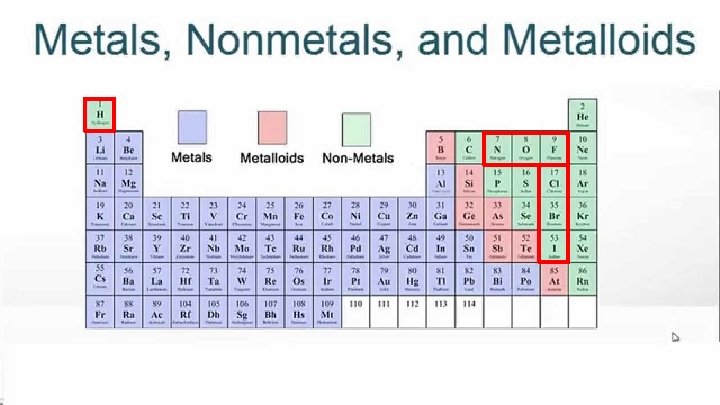
Memorize These!!! ● Elements that exist as diatomic molecules Br I N Bromine (Br 2) Iodine (I 2) Nitrogen (N 2) Chlorine (Cl 2) Cl H O F Hydrogen (H 2) Oxygen (O 2) Fluorine (F 2)
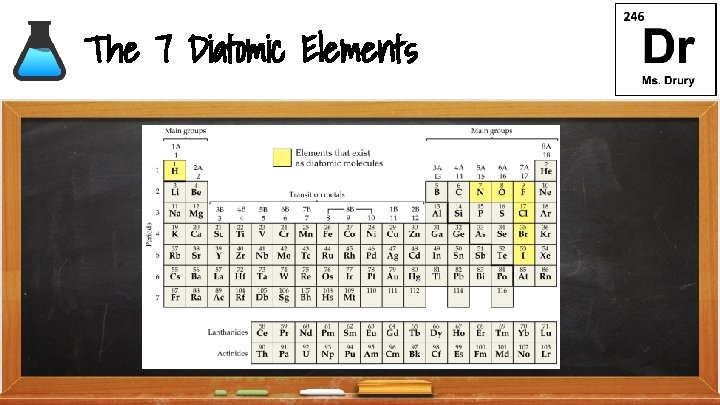
The 7 Diatomic Elements
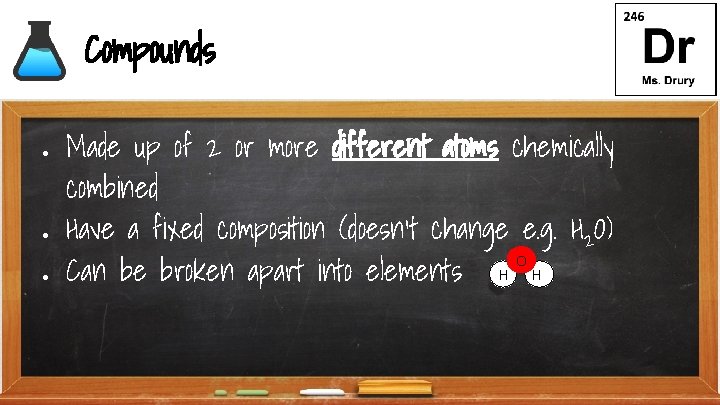
Compounds ● ● ● Made up of 2 or more different atoms chemically combined Have a fixed composition (doesn’t change e. g. H 2 O) O Can be broken apart into elements H H
You should be able to: ✓ Differentiate between elements, compounds and mixtures ✓ Identify the diatomic elements
Classifying Elements
Lesson Objectives ✓ Differentiate between different classifications of elements ✓ Classify elements as metals, nonmetals and metalloids and determine their properties
Elements: Consist of one type of particle and cannot be broken down by chemical means Na Na H H H
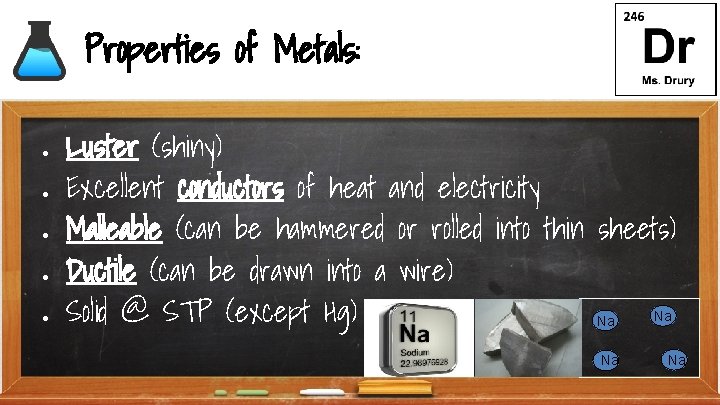
Properties of Metals: ● ● ● Luster (shiny) Excellent conductors of heat and electricity Malleable (can be hammered or rolled into thin sheets) Ductile (can be drawn into a wire) Na Solid @ STP (except Hg) Na Na Na
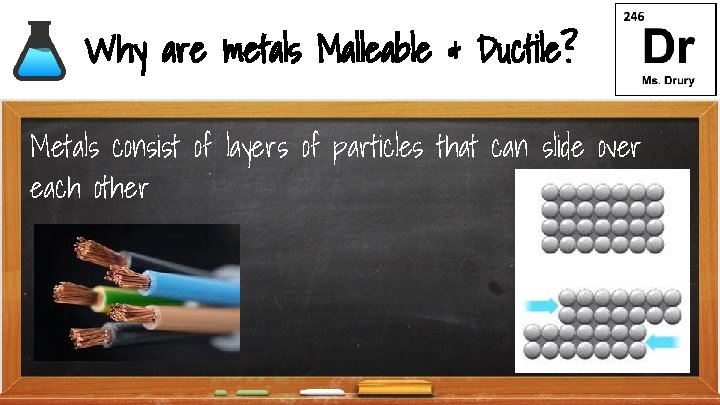
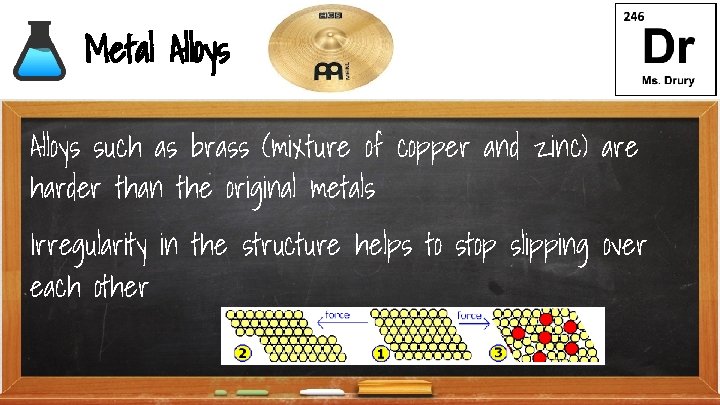
Why are metals Malleable & Ductile? Metals consist of layers of particles that can slide over each other
Metal Alloys such as brass (mixture of copper and zinc) are harder than the original metals Irregularity in the structure helps to stop slipping over each other
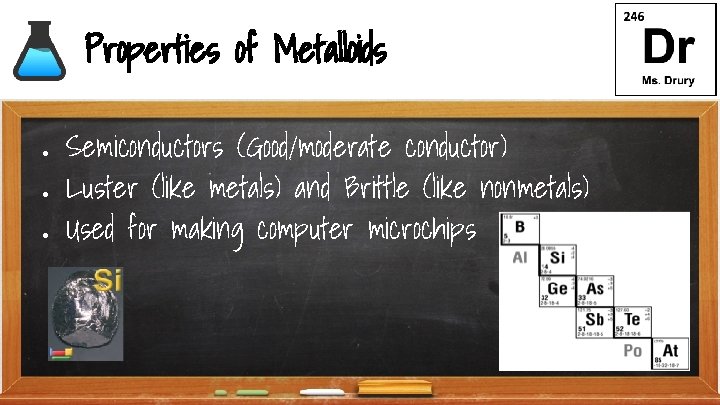
Properties of Metalloids ● ● ● Semiconductors (Good/moderate conductor) Luster (like metals) and Brittle (like nonmetals) Used for making computer microchips
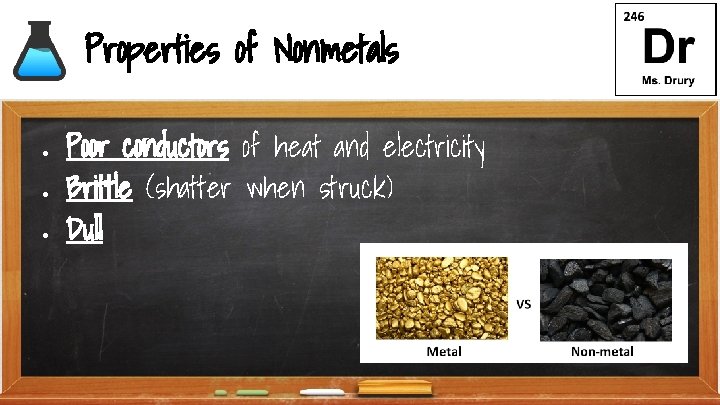
Properties of Nonmetals ● ● ● Poor conductors of heat and electricity Brittle (shatter when struck) Dull
You should be able to: ✓ Differentiate between different classifications of elements ✓ Classify elements as metals, nonmetals and metalloids and determine their properties
Classifying Compounds
Lesson Objectives ✓ Differentiate between atoms and molecules and compounds ✓ Classify compounds as ionic or covalent ✓ Determine the type of compound based on its properties ✓ Determine if a covalent compound is polar or nonpolar
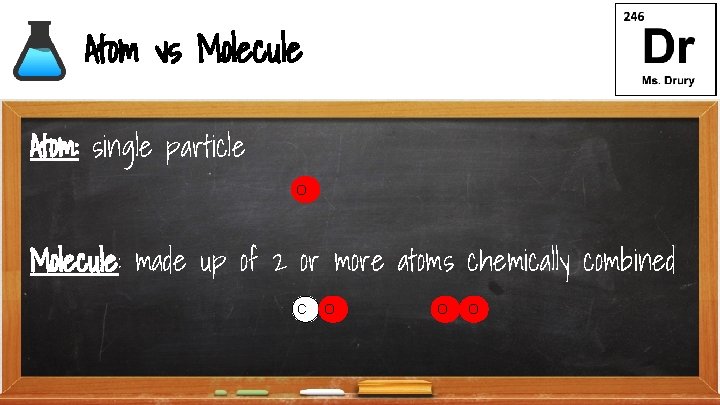
Atom vs Molecule Atom: single particle O Molecule: made up of 2 or more atoms chemically combined C O O O
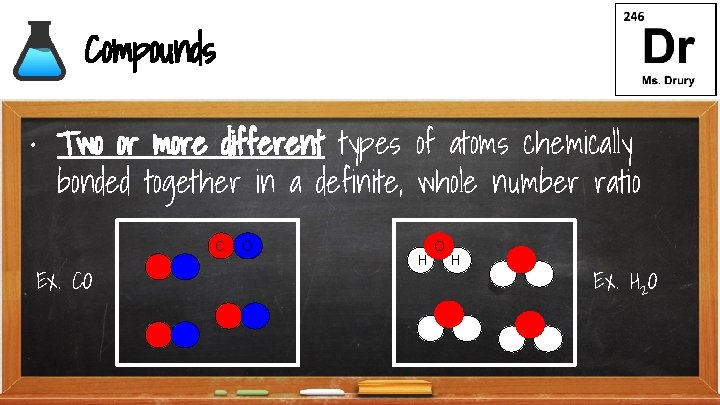
Compounds • Two or more different types of atoms chemically bonded together in a definite, whole number ratio C Ex. CO O H Ex. H 2 O
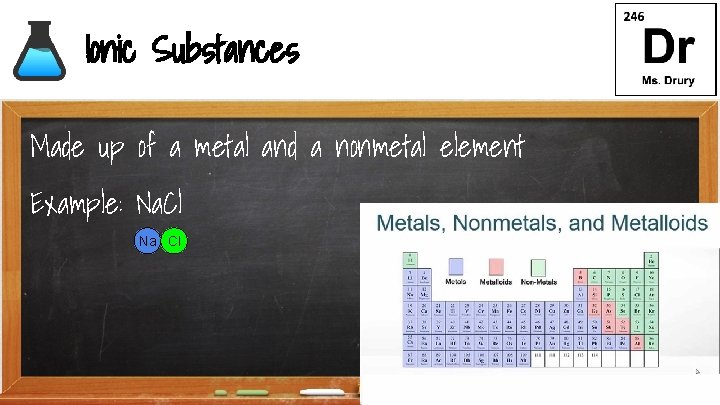
Ionic Substances Made up of a metal and a nonmetal element Example: Na. Cl Na Cl
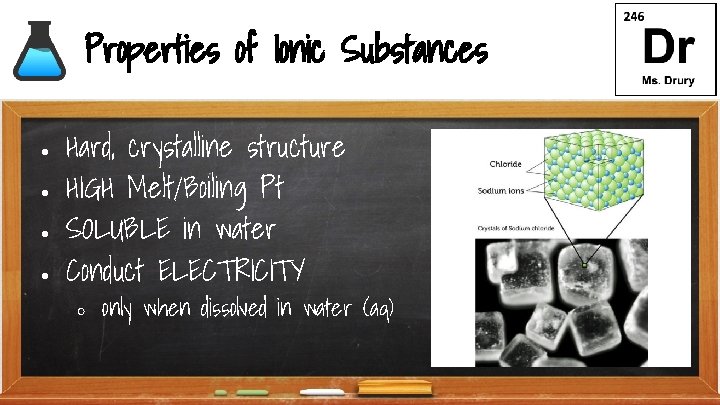
Properties of Ionic Substances ● ● Hard, crystalline structure HIGH Melt/Boiling Pt SOLUBLE in water Conduct ELECTRICITY ○ only when dissolved in water (aq)
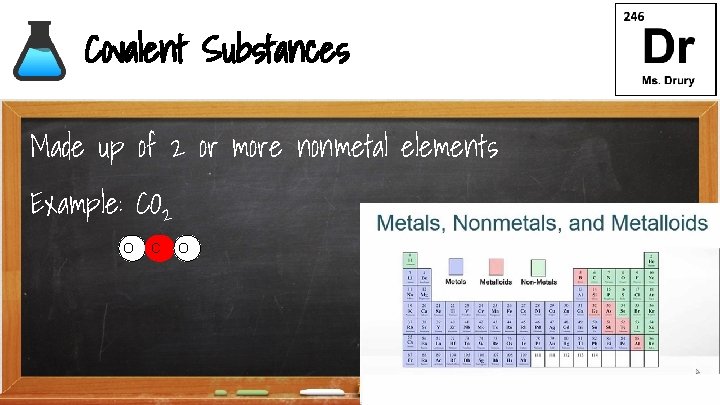
Covalent Substances Made up of 2 or more nonmetal elements Example: CO 2 O C O
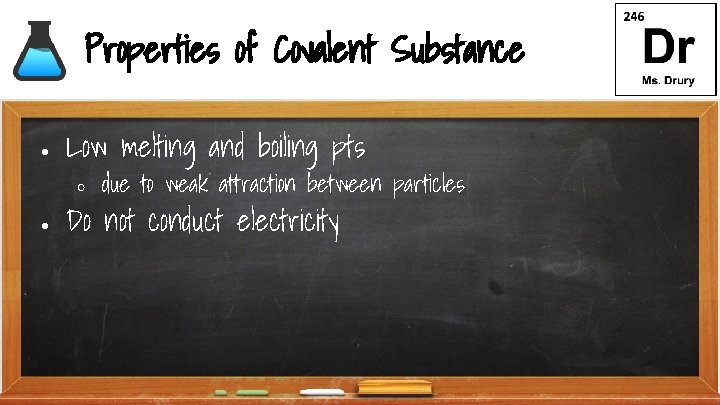
Properties of Covalent Substance ● Low melting and boiling pts ○ ● due to weak attraction between particles Do not conduct electricity
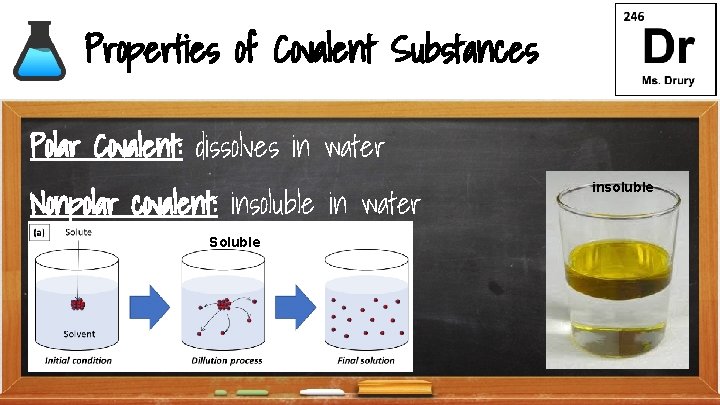
Properties of Covalent Substances Polar Covalent: dissolves in water Nonpolar covalent: insoluble in water Soluble insoluble
You should be able to: ✓ Differentiate between atoms and molecules and compounds ✓ Classify compounds as ionic or covalent ✓ Determine the type of compound based on its properties ✓ Determine if a covalent compound is polar or nonpolar
Formulas of Compounds
Lesson Objectives: ✓ Determine how many atoms are in a compound and how many molecules/compounds are in a reaction ✓ Explain the laws of definite and multiple proportions
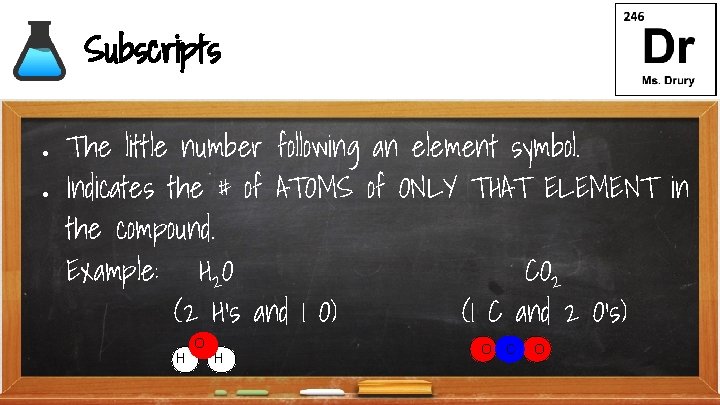
Subscripts ● ● The little number following an element symbol. Indicates the # of ATOMS of ONLY THAT ELEMENT in the compound. Example: H 2 O CO 2 (2 H’s and 1 O) (1 C and 2 O’s) H O C O
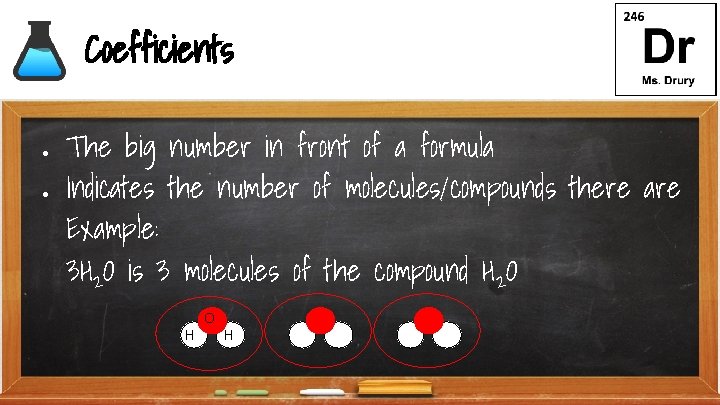
Coefficients ● ● The big number in front of a formula Indicates the number of molecules/compounds there are Example: 3 H 2 O is 3 molecules of the compound H 2 O O H H
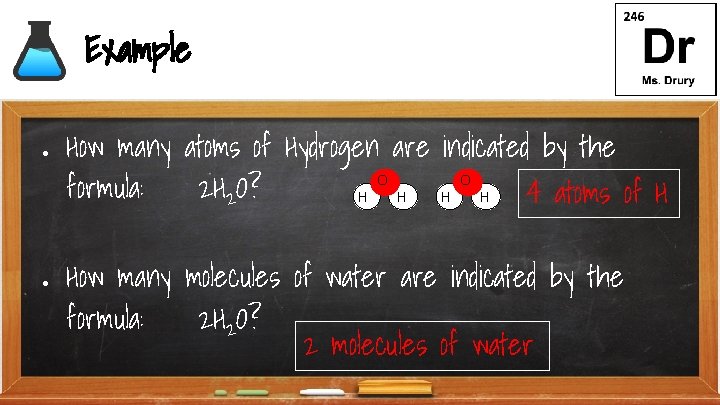
Example ● ● How many atoms of Hydrogen are indicated by the O O formula: 2 H 2 O? H H 4 atoms of H How many molecules of water are indicated by the formula: 2 H 2 O? 2 molecules of water
Law of Multiple Proportions When 2 elements react to form more than one compound, a fixed mass of one element will react with fixed masses of the other element in a ratio of small, whole numbers
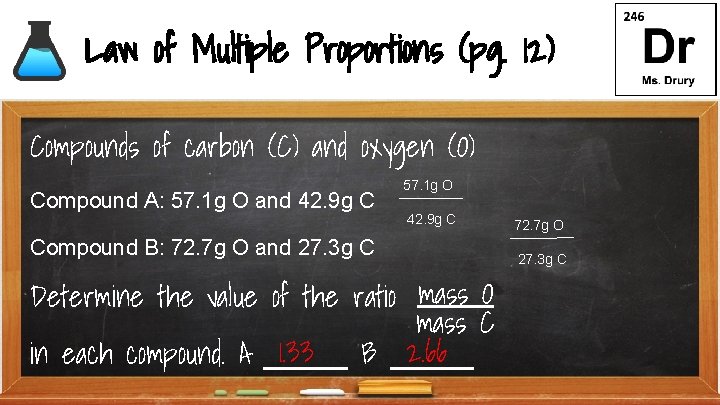
Law of Multiple Proportions (pg. 12) Compounds of carbon (C) and oxygen (O) Compound A: 57. 1 g O and 42. 9 g C 57. 1 g O 42. 9 g C Compound B: 72. 7 g O and 27. 3 g C Determine the value of the ratio mass O mass C 1. 33 2. 66 in each compound. A _____ B _____ 72. 7 g O 27. 3 g C
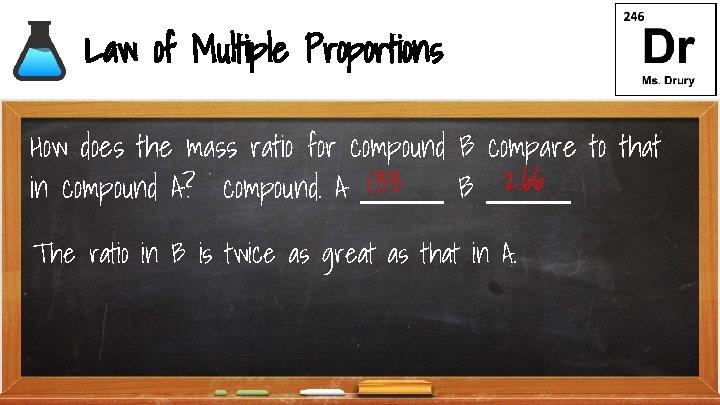
Law of Multiple Proportions How does the mass ratio for compound B compare to that 2. 66 1. 33 in compound A? compound. A _____ B _____ The ratio in B is twice as great as that in A.
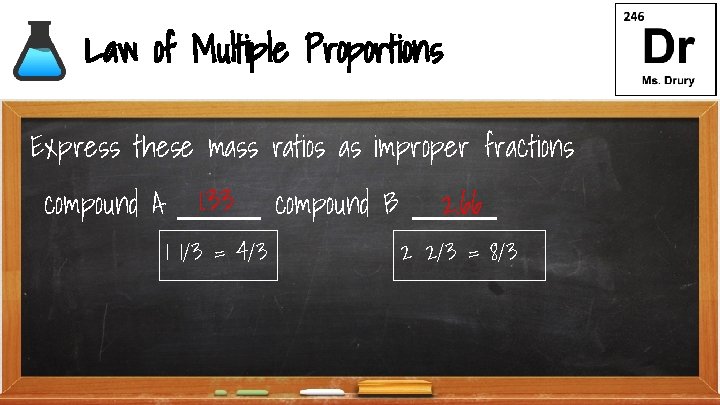
Law of Multiple Proportions Express these mass ratios as improper fractions 1. 33 compound B _____ compound A _____ 2. 66 1 1/3 = 4/3 2 2/3 = 8/3
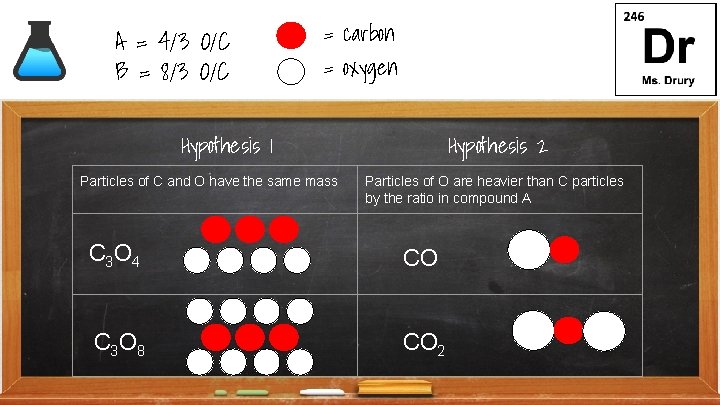
A = 4/3 O/C B = 8/3 O/C = carbon = oxygen Hypothesis 1 Particles of C and O have the same mass Hypothesis 2 Particles of O are heavier than C particles by the ratio in compound A C 3 O 4 CO C 3 O 8 CO 2
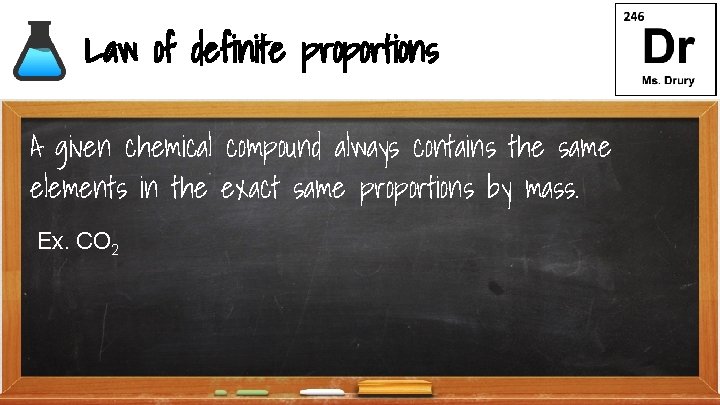
Law of definite proportions A given chemical compound always contains the same elements in the exact same proportions by mass. Ex. CO 2
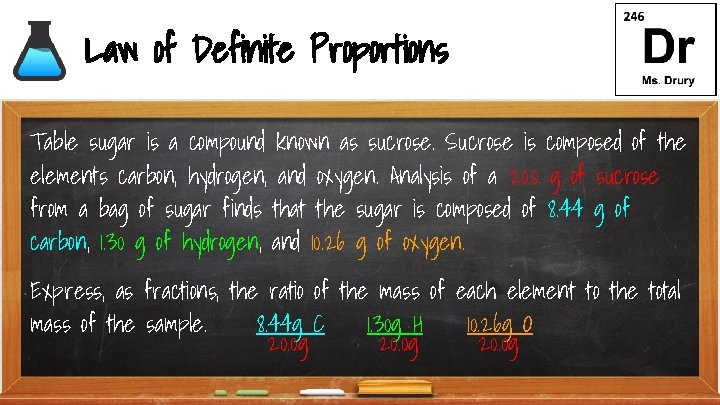
Law of Definite Proportions Table sugar is a compound known as sucrose. Sucrose is composed of the elements carbon, hydrogen, and oxygen. Analysis of a 20. 0 g of sucrose from a bag of sugar finds that the sugar is composed of 8. 44 g of carbon, 1. 30 g of hydrogen, and 10. 26 g of oxygen. Express, as fractions, the ratio of the mass of each element to the total 8. 44 g C 1. 30 g H 10. 26 g O mass of the sample. 20. 0 g
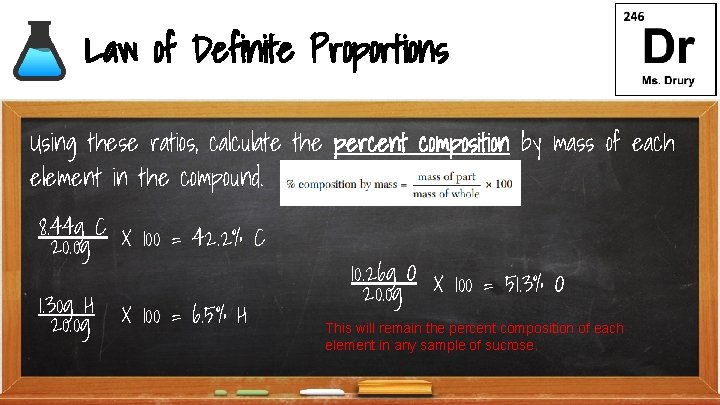
Law of Definite Proportions Using these ratios, calculate the percent composition by mass of each element in the compound. 8. 44 g C X 100 = 42. 2% C 20. 0 g 1. 30 g H 20. 0 g X 100 = 6. 5% H 10. 26 g O X 100 = 51. 3% O 20. 0 g This will remain the percent composition of each element in any sample of sucrose.
You should be able to: ✓ Determine how many atoms are in a compound and how many molecules/compounds are in a reaction ✓ Explain the laws of definite and multiple proportions
Classifying Mixtures
Lesson Objectives ✓ Determine if a mixture is homogeneous or heterogeneous ✓ Idenitify ways to separate a mixture.
Classification of Matter MATTER yes no Can it be physically separated? PURE SUBSTANCE MIXTURE yes Is the composition uniform? Homogeneous Mixture (solution) no Heterogeneous Mixture yes Can it be chemically decomposed? Compound no Element
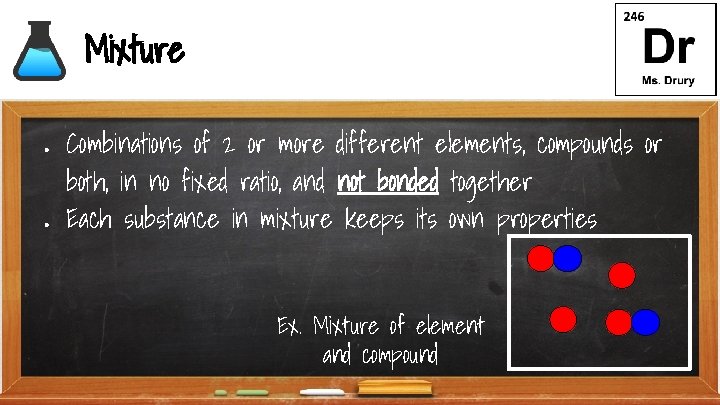
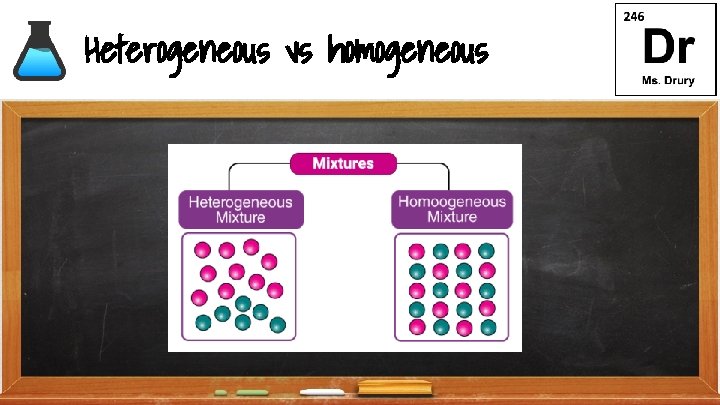
Mixture ● ● Combinations of 2 or more different elements, compounds or both, in no fixed ratio, and not bonded together Each substance in mixture keeps its own properties Ex. Mixture of element and compound
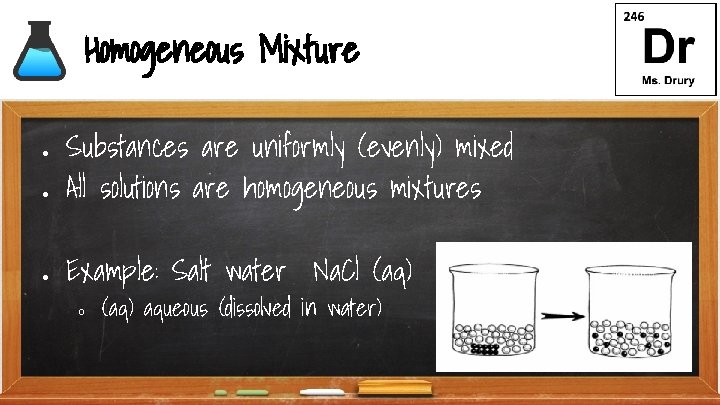
Homogeneous Mixture ● ● ● Substances are uniformly (evenly) mixed All solutions are homogeneous mixtures Example: Salt water Na. Cl (aq) ○ (aq) aqueous (dissolved in water)
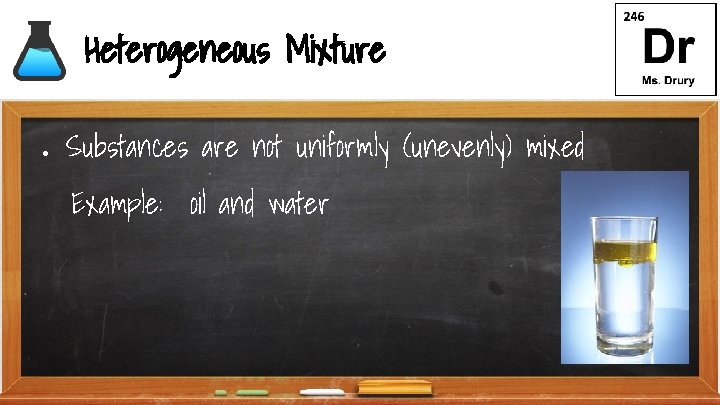
Heterogeneous Mixture ● Substances are not uniformly (unevenly) mixed Example: oil and water
Heterogeneous vs homogeneous
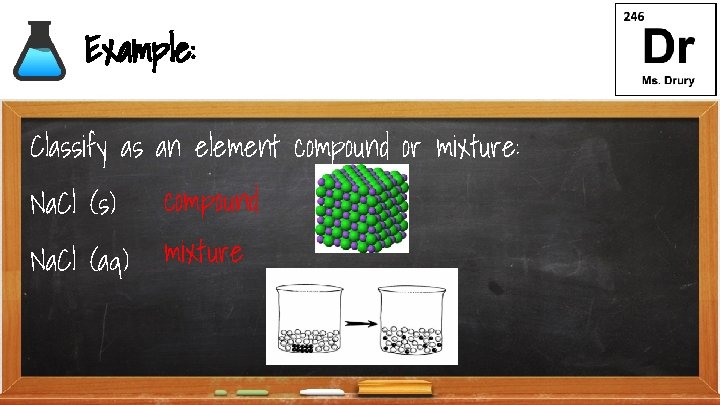
Example: Classify as an element compound or mixture: Na. Cl (s) compound Na. Cl (aq) mixture
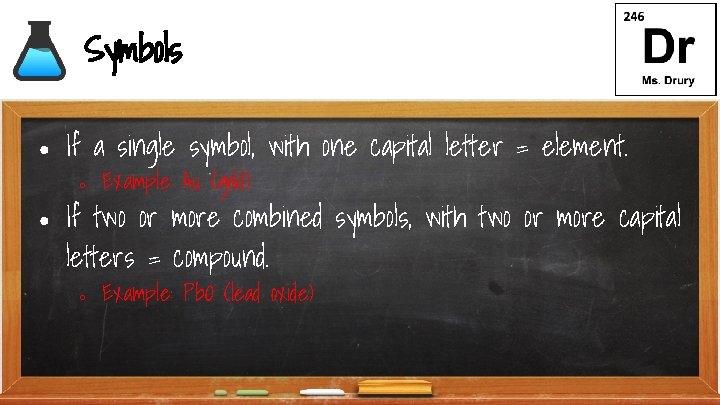
Symbols ● If a single symbol, with one capital letter = element. ○ ● Example: Au (gold) If two or more combined symbols, with two or more capital letters = compound. ○ Example: Pb. O (lead oxide)
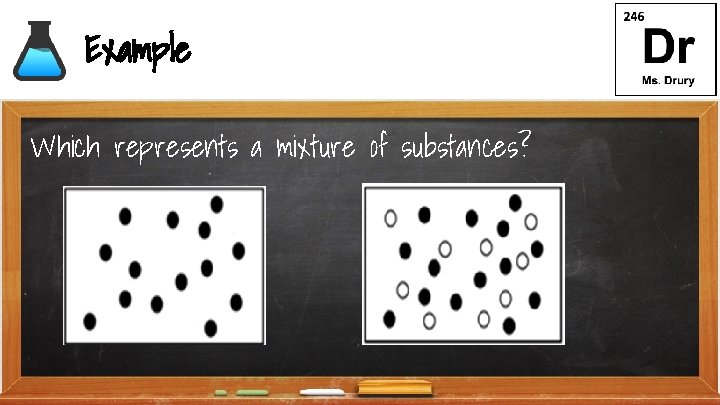
Example Which represents a mixture of substances?
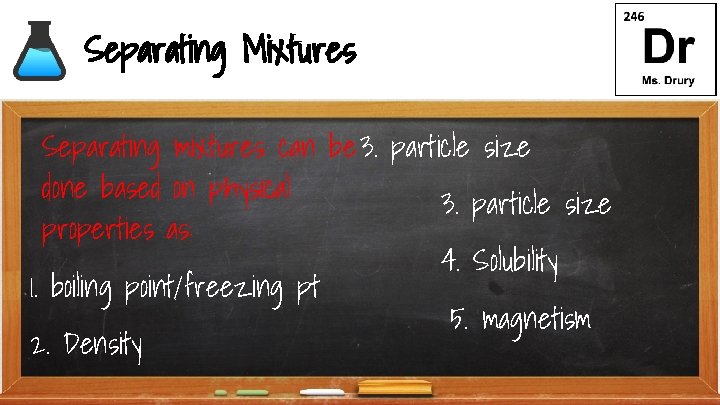
Separating Mixtures Separating mixtures can be 3. particle size done based on physical 3. particle size properties as: 4. Solubility 1. boiling point/freezing pt 5. magnetism 2. Density
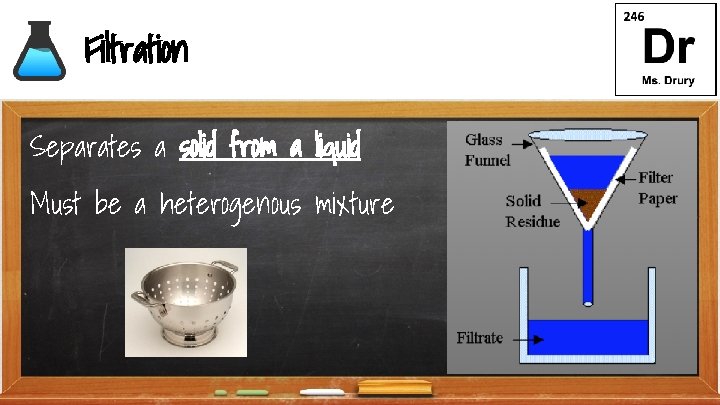
Filtration Separates a solid from a liquid Must be a heterogenous mixture
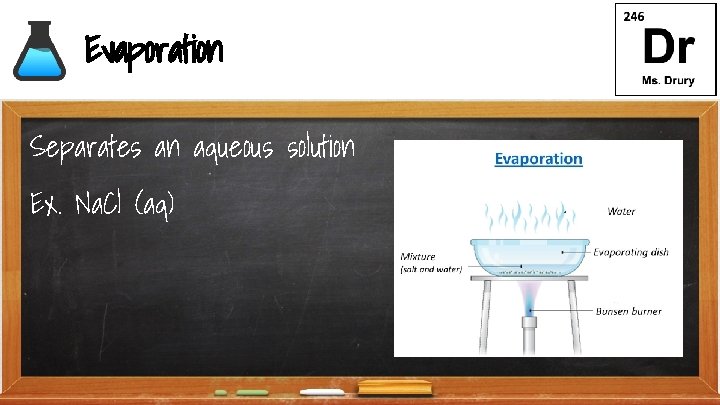
Evaporation Separates an aqueous solution Ex. Na. Cl (aq)
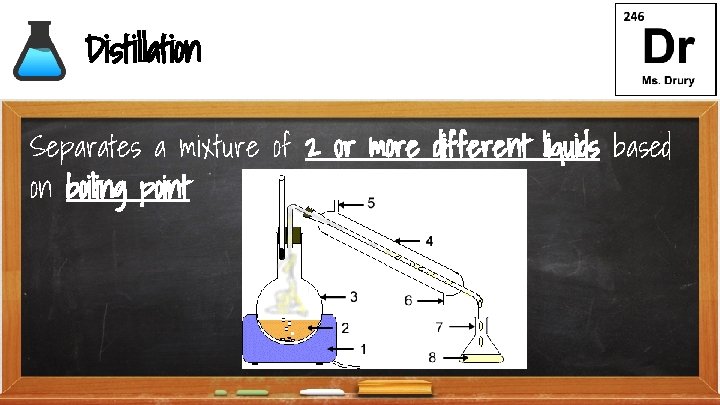
Distillation Separates a mixture of 2 0 r more different liquids based on boiling point
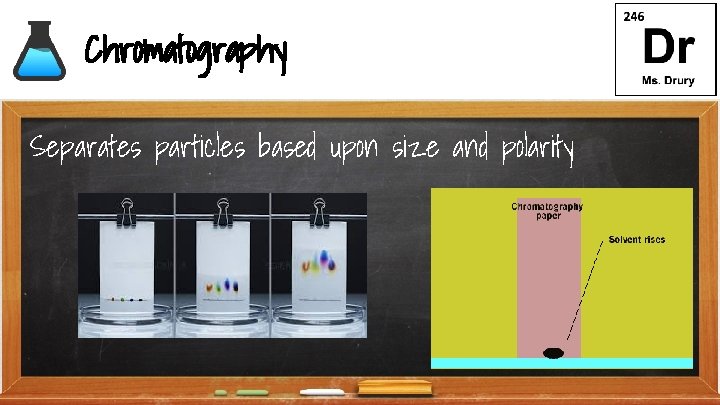
Chromatography Separates particles based upon size and polarity
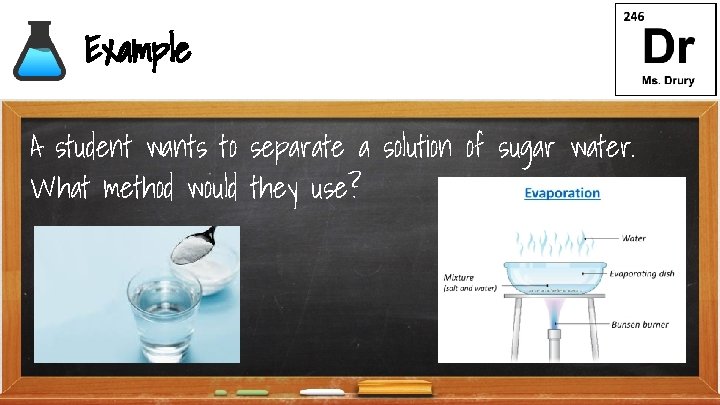
Example A student wants to separate a solution of sugar water. What method would they use?
You should be able to: ✓ Determine if a mixture is homogeneous or heterogeneous ✓ Identify ways to separate a mixture.
Properties & Changes of Matter
Lesson Objectives: ✓ Differentiate between physical and chemical changes
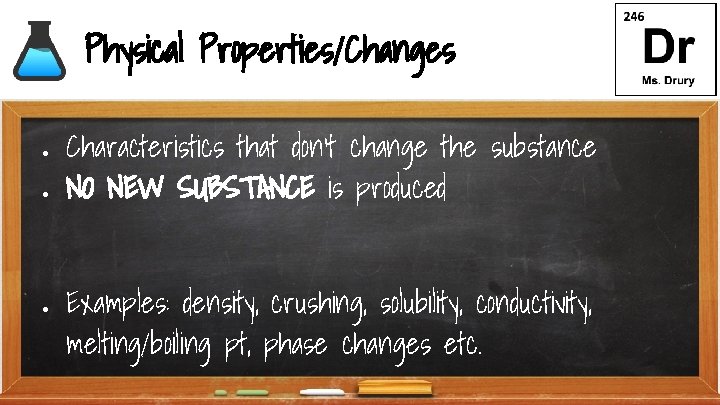
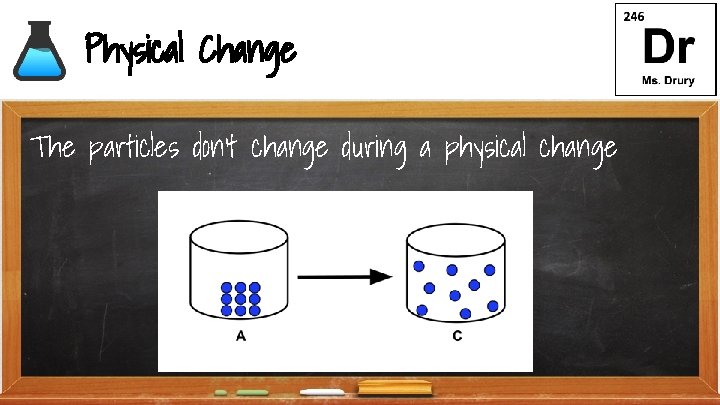
Physical Properties/Changes ● ● ● Characteristics that don’t change the substance NO NEW SUBSTANCE is produced Examples: density, crushing, solubility, conductivity, melting/boiling pt, phase changes etc.
Physical Change The particles don’t change during a physical change
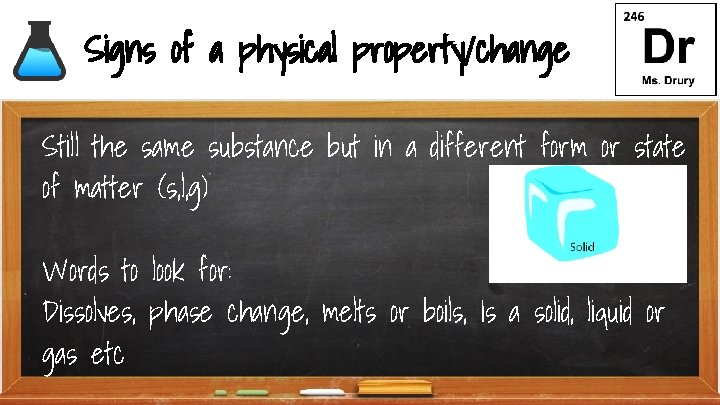
Signs of a physical property/change Still the same substance but in a different form or state of matter (s, l, g) Words to look for: Dissolves, phase change, melts or boils, Is a solid, liquid or gas etc
Chemical properties/changes Characteristics that change the substance A NEW SUBSTANCE is made Examples: Reactivity, flammable, corrosive, bubbling
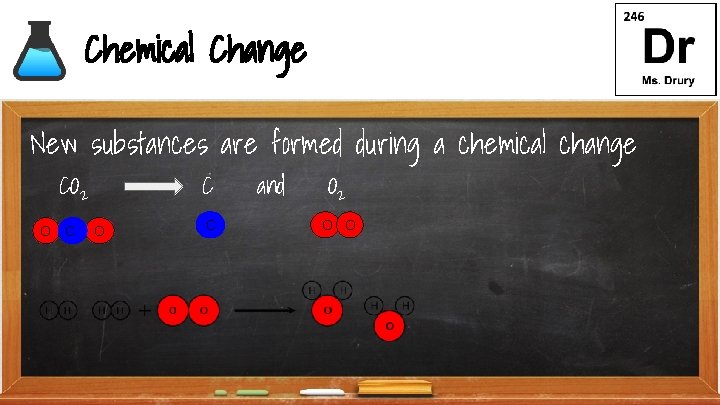
Chemical Change New substances are formed during a chemical change CO 2 O C C O C and O 2 O O
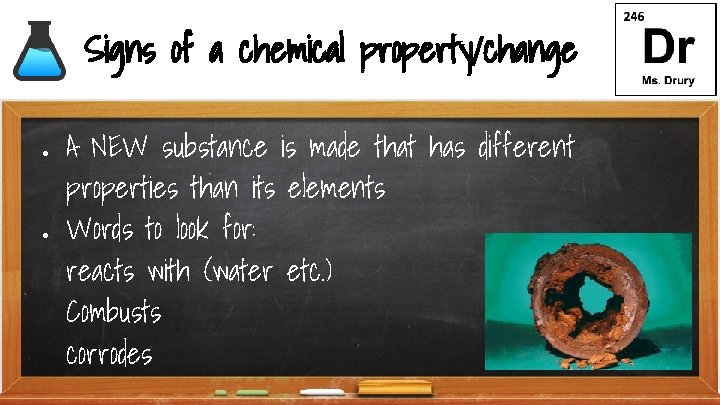
Signs of a chemical property/change ● ● A NEW substance is made that has different properties than its elements Words to look for: reacts with (water etc. ) Combusts corrodes
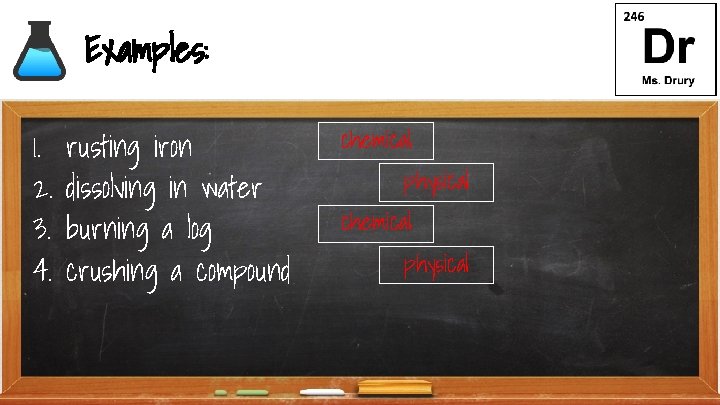
Examples: 1. 2. 3. 4. rusting iron dissolving in water burning a log crushing a compound chemical physical
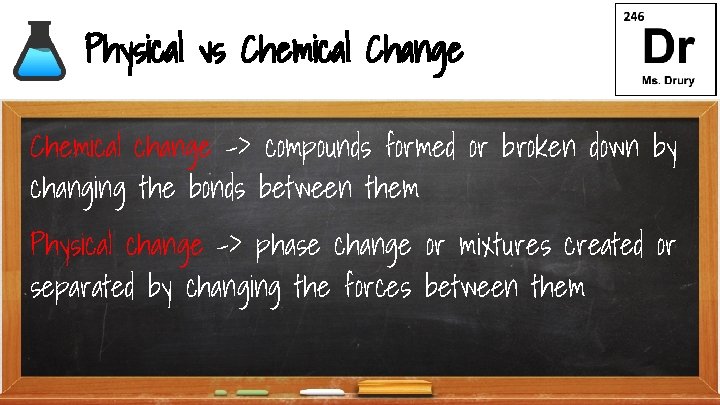
Physical vs Chemical Change Chemical change -> compounds formed or broken down by changing the bonds between them Physical change -> phase change or mixtures created or separated by changing the forces between them
You should be able to: ✓ Differentiate between physical and chemical changes