
Unit 4 The Code of Life 1 Topic
- Slides: 29
Unit 4 The Code of Life 1
Topic 1 Experimental Evidence, Activity 1: What is the code of Life 2
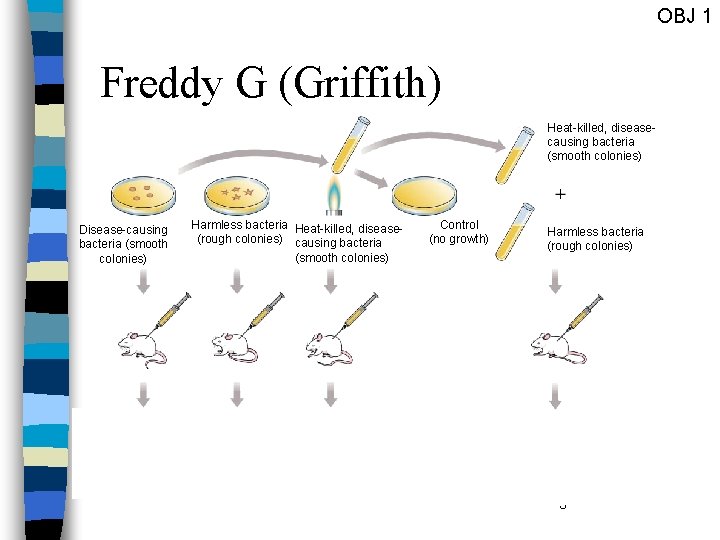
OBJ 1 Freddy G (Griffith) Heat-killed, diseasecausing bacteria (smooth colonies) Disease-causing bacteria (smooth colonies) Harmless bacteria Heat-killed, disease(rough colonies) causing bacteria (smooth colonies) Dies of pneumonia Lives Control (no growth) Live, disease-causing bacteria (smooth colonies) Harmless bacteria (rough colonies) Dies of pneumonia 3
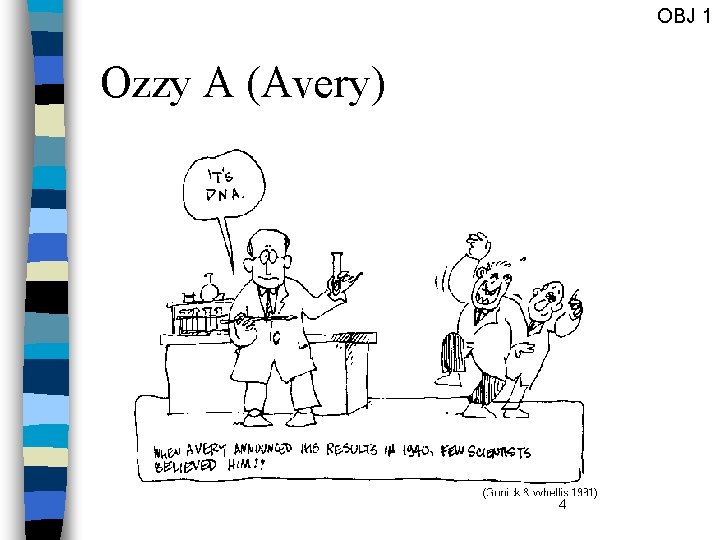
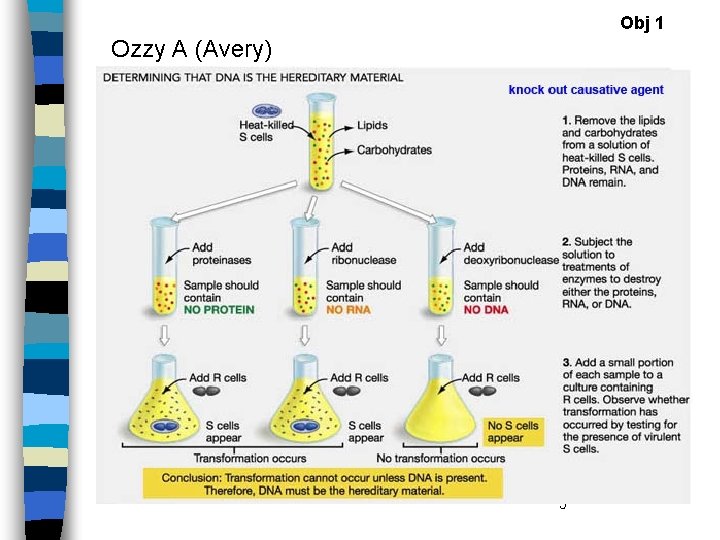
OBJ 1 Ozzy A (Avery) 4
Obj 1 Ozzy A (Avery) 5
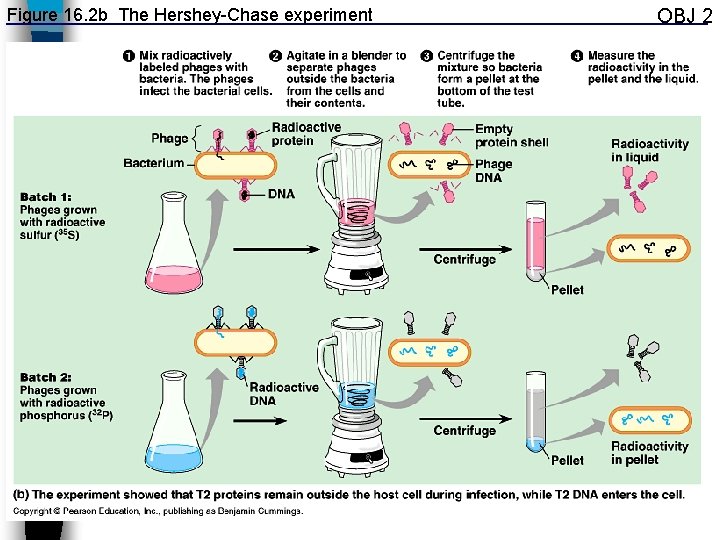
Figure 16. 2 b The Hershey-Chase experiment OBJ 2 6
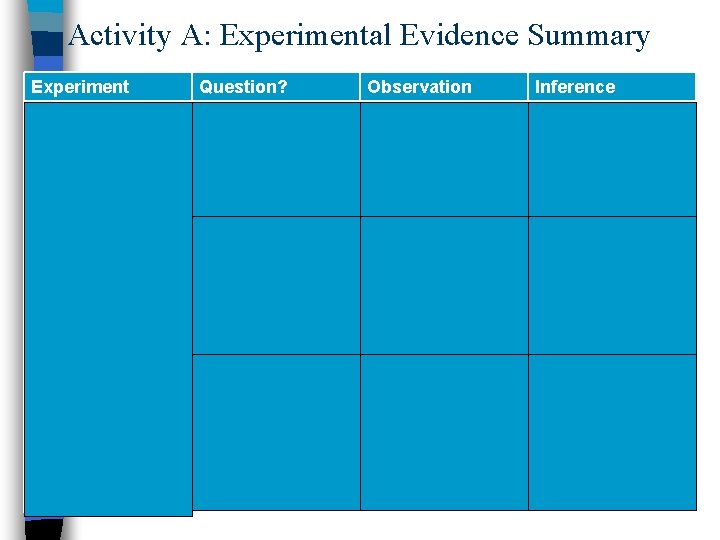
Activity A: Experimental Evidence Summary Experiment Question? Observation Inference Frederick Griffith (R, S bacteria effects on mice) What causes virulence in bacteria? R strain bacteria transform into living S bacteria in the presence of dead S bacteria Virulence was transferred from S to R bacteria Oswald Avery (Griffith’s exp. with enzymes) What is being transferred from S to R bacteria? Dead S bacteria do not transfer virulence when DNA is digested with an enzyme DNA is the molecule for information transfer (molecule of inheritance), not protein Hershey and Chase (bacteriophages) What type of molecule is injected into bacteria (DNA or protein) Radioactive DNA found inside of bacteria, radioactive protein found outside of bacteria DNA is the molecule for information transfer (molecule of inheritance), not protein
Topic 2 DNA Structure and Replication 8
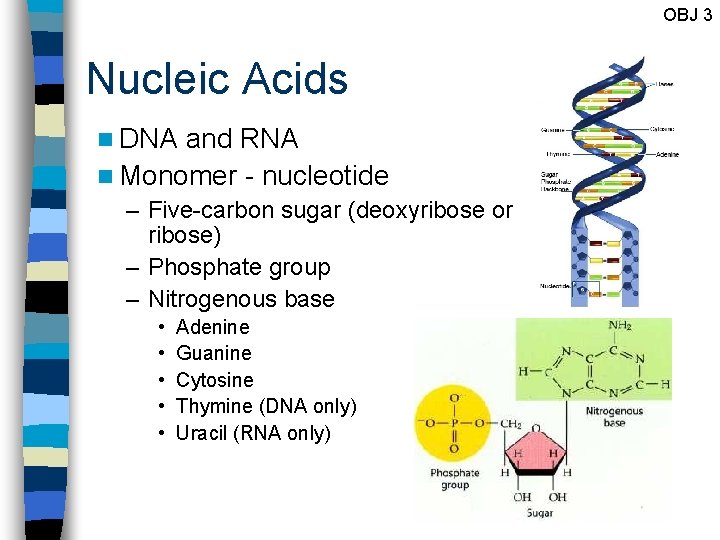
OBJ 3 Nucleic Acids n DNA and RNA n Monomer - nucleotide – Five-carbon sugar (deoxyribose or ribose) – Phosphate group – Nitrogenous base • • • Adenine Guanine Cytosine Thymine (DNA only) Uracil (RNA only)
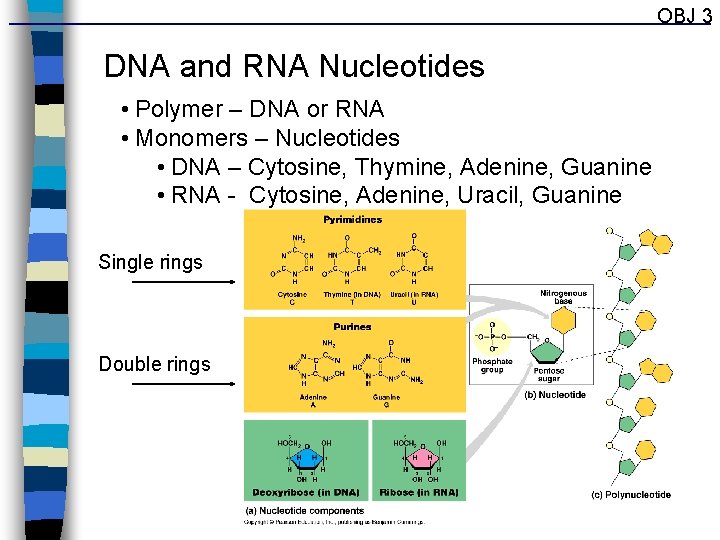
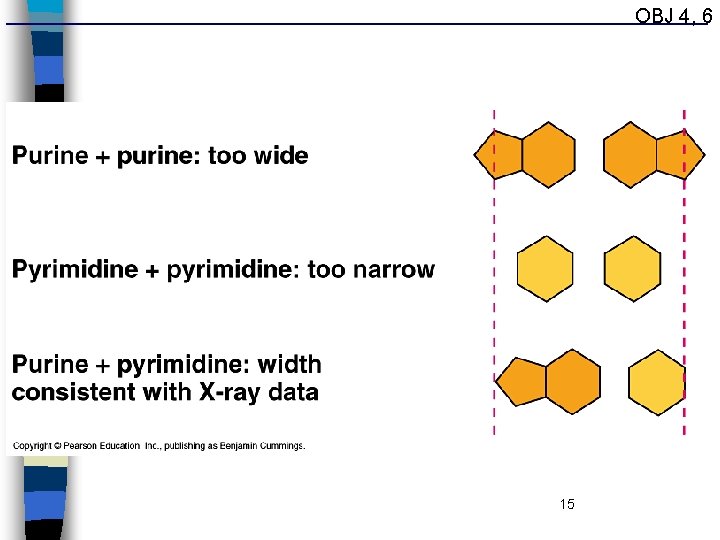
OBJ 3 DNA and RNA Nucleotides • Polymer – DNA or RNA • Monomers – Nucleotides • DNA – Cytosine, Thymine, Adenine, Guanine • RNA - Cytosine, Adenine, Uracil, Guanine Single rings Double rings 10
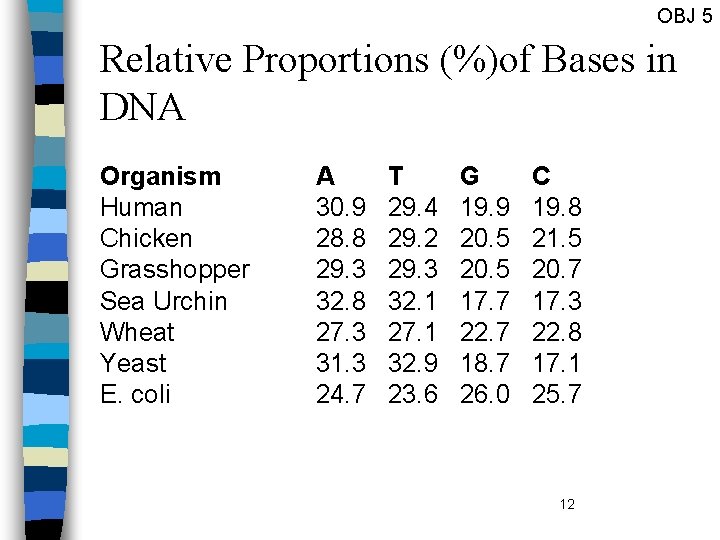
Obj 4, 5, 6 DNA Structure - Putting it all together… Hershey-Chase and Avery– Convinced the world that DNA was the molecule of inheritance n Chargaff’s Rule – data collected showed that there are equal numbers of Adenine(A) to Thymine(T) and Cytosine(C) to Guanine (G) n – Implied that the nucleotides are related in some way 11
OBJ 5 Relative Proportions (%)of Bases in DNA Organism Human Chicken Grasshopper Sea Urchin Wheat Yeast E. coli A 30. 9 28. 8 29. 3 32. 8 27. 3 31. 3 24. 7 T 29. 4 29. 2 29. 3 32. 1 27. 1 32. 9 23. 6 G 19. 9 20. 5 17. 7 22. 7 18. 7 26. 0 C 19. 8 21. 5 20. 7 17. 3 22. 8 17. 1 25. 7 12
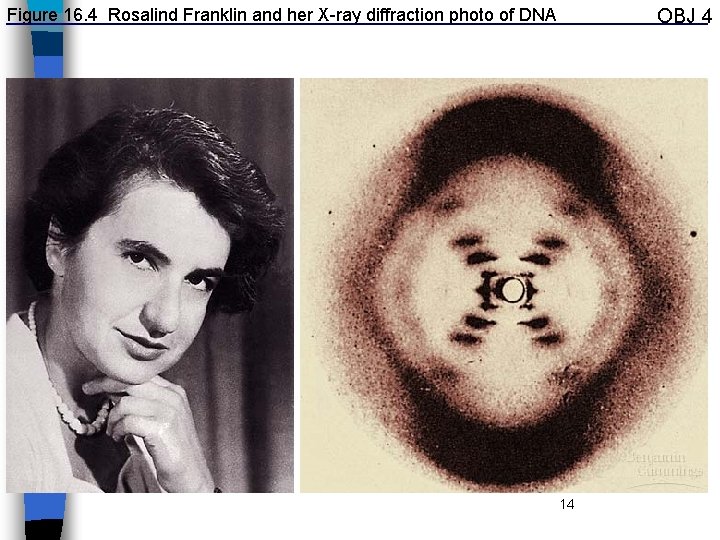
DNA Structure - Putting it all together… n Obj 4, 5, 6 Hershey-Chase and Avery– Convinced the world that DNA was the molecule of inheritance – Most of the Chemical minds are now working on determining the structure of DNA n Chargaff’s Rule – data collected showed that there are equal numbers of Adenine(A) to Thymine(T) and Cytosine(C) to Guanine (G) – Implied that the nucleotides are related in some way n Rosalind Franklin – X-ray crystallographer – Produced ‘Photo 51’ image of DNA, showing consistent 2 nm diameter of DNA and parallel strands 13
Figure 16. 4 Rosalind Franklin and her X-ray diffraction photo of DNA OBJ 4 14
OBJ 4, 6 15
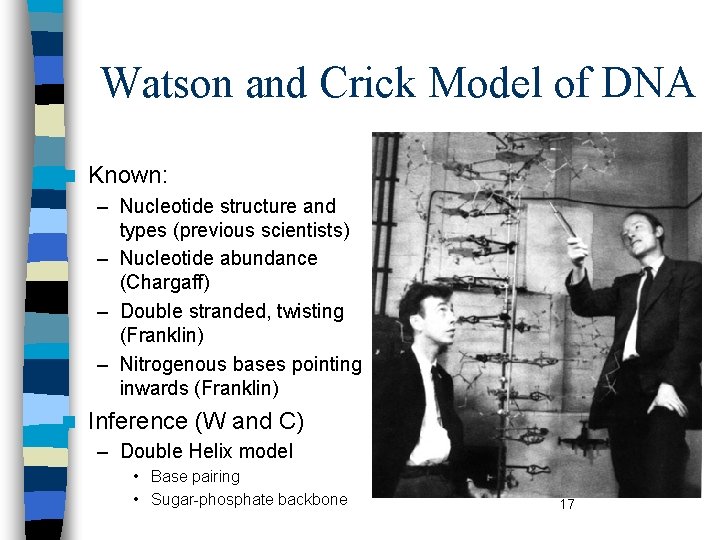
DNA Structure - Putting it all together… n Obj 4, 5, 6 Hershey-Chase and Avery – Convinced the world that DNA was the molecule of inheritance – Most of the Chemical minds are now working on determining the structure of DNA n Chargaff’s Rule – data collected showed that there are equal numbers of Adenine(A) to Thymine(T) and Cytosine(C) to Guanine (G) – Implied that the nucleotides are related in some way n Rosalind Franklin – X-ray crystallographer – Produced ‘Photo 51’ image of DNA, showing consistent 2 nm diameter of DNA and parallel strands n James Watson, Francis Crick (and Maurice Wilkins) – Put it all together, make the first model of DNA 16 – Win the Nobel Prize
Watson and Crick Model of DNA n Known: – Nucleotide structure and types (previous scientists) – Nucleotide abundance (Chargaff) – Double stranded, twisting (Franklin) – Nitrogenous bases pointing inwards (Franklin) n Inference (W and C) – Double Helix model • Base pairing • Sugar-phosphate backbone 17
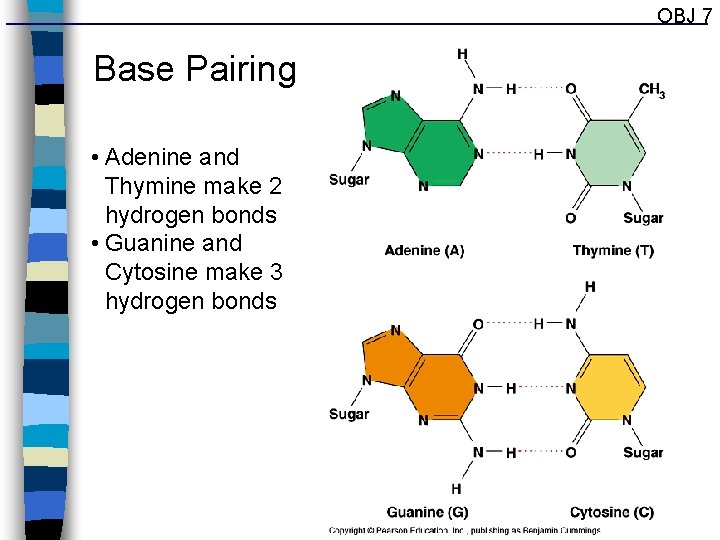
OBJ 7 Base Pairing • Adenine and Thymine make 2 hydrogen bonds • Guanine and Cytosine make 3 hydrogen bonds 18
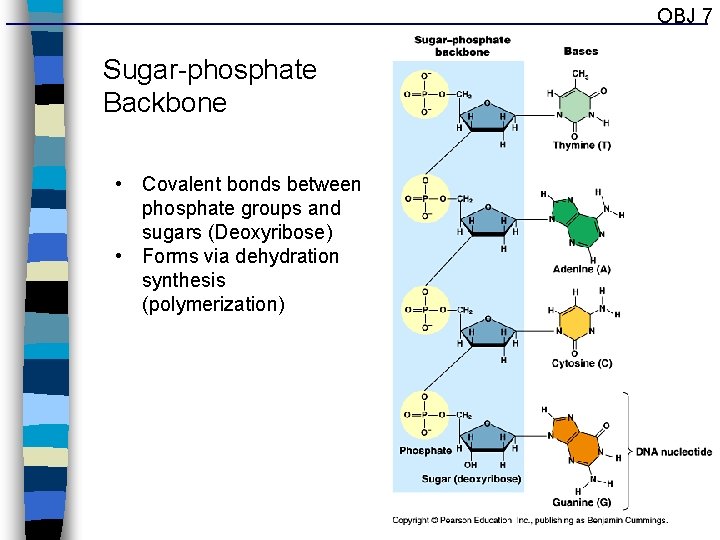
OBJ 7 Sugar-phosphate Backbone • Covalent bonds between phosphate groups and sugars (Deoxyribose) • Forms via dehydration synthesis (polymerization) 19
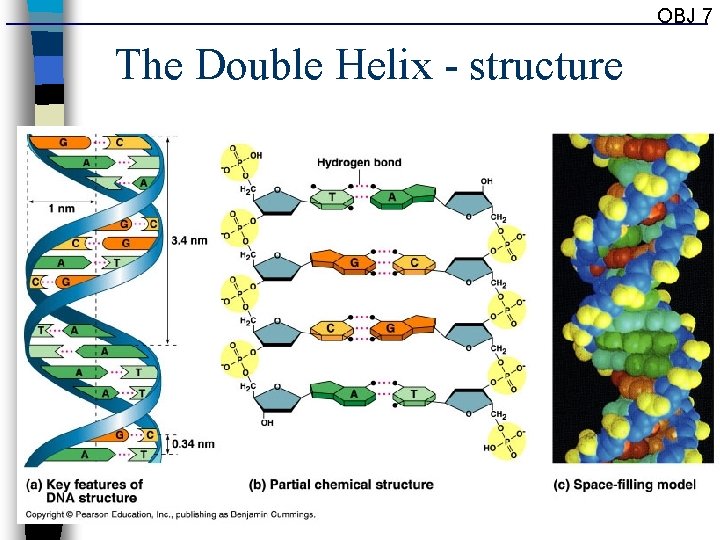
OBJ 7 The Double Helix - structure 20
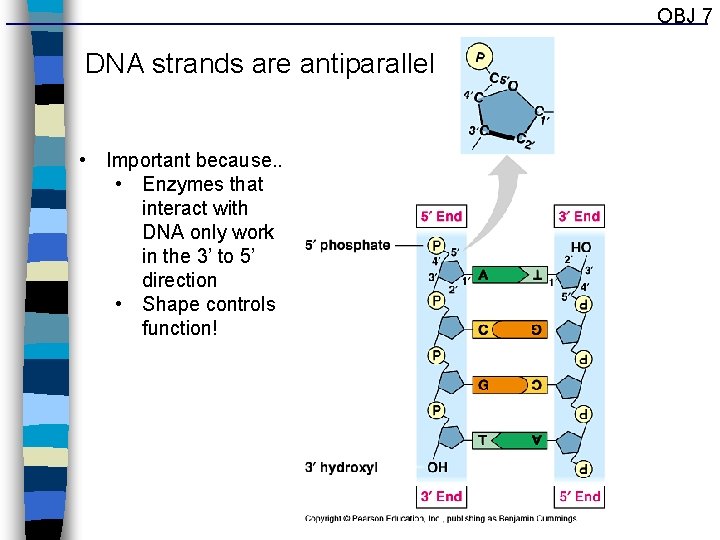
OBJ 7 DNA strands are antiparallel • Important because. . • Enzymes that interact with DNA only work in the 3’ to 5’ direction • Shape controls function! 21
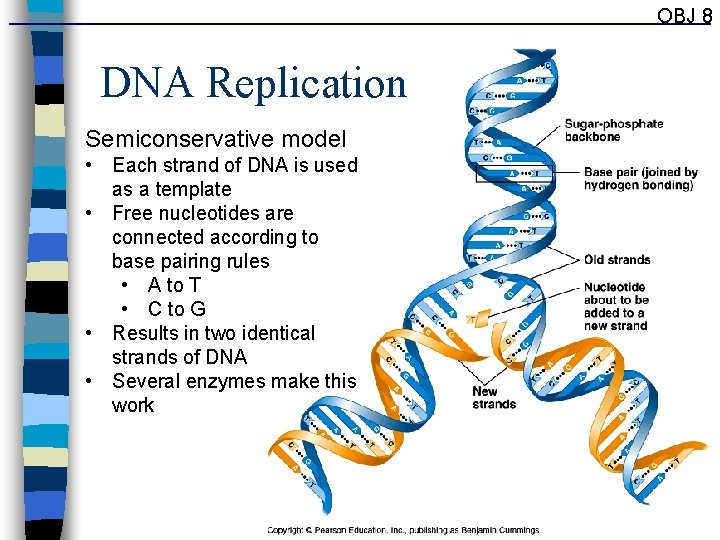
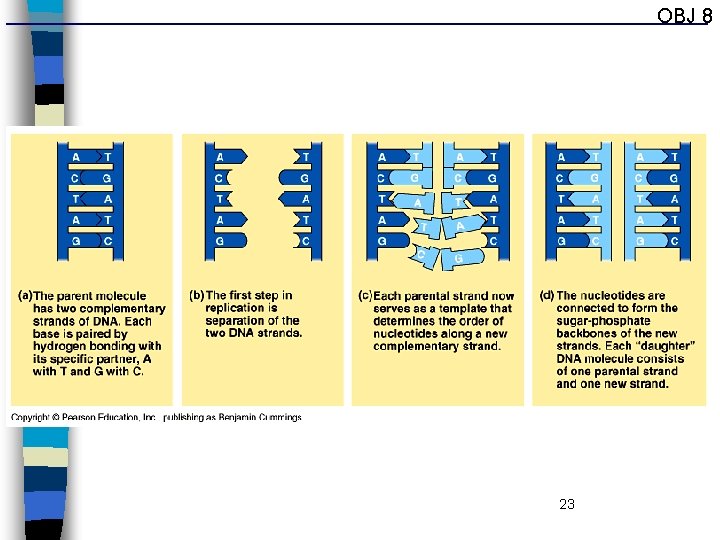
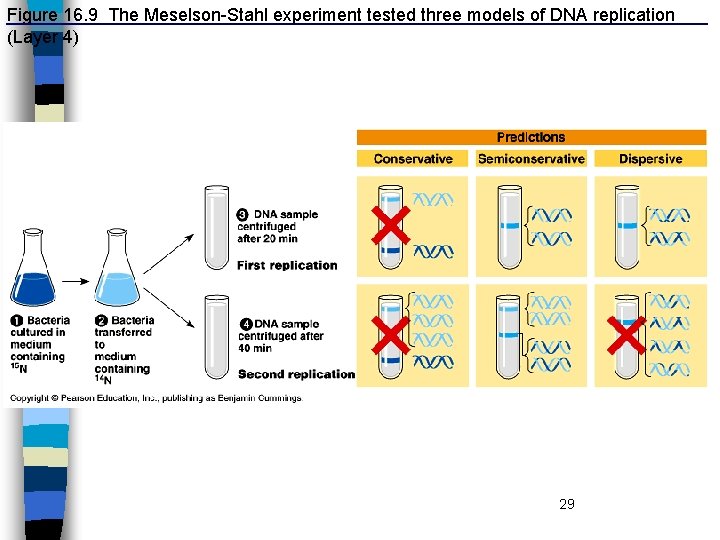
OBJ 8 DNA Replication Semiconservative model • Each strand of DNA is used as a template • Free nucleotides are connected according to base pairing rules • A to T • C to G • Results in two identical strands of DNA • Several enzymes make this work 22
OBJ 8 23
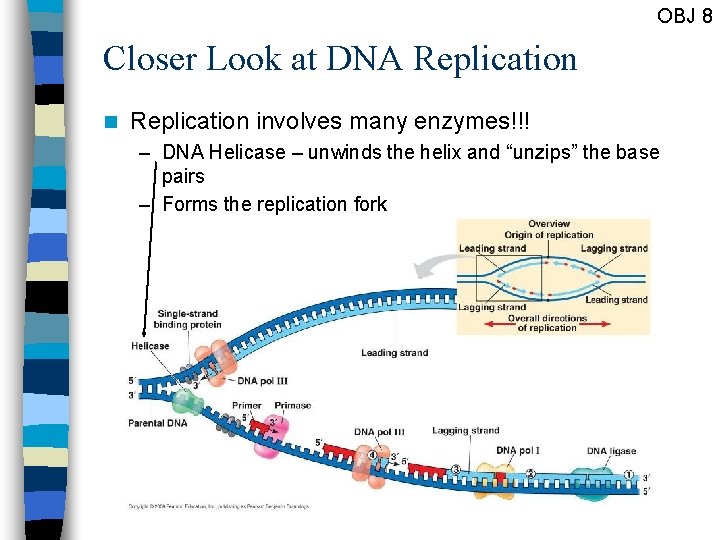
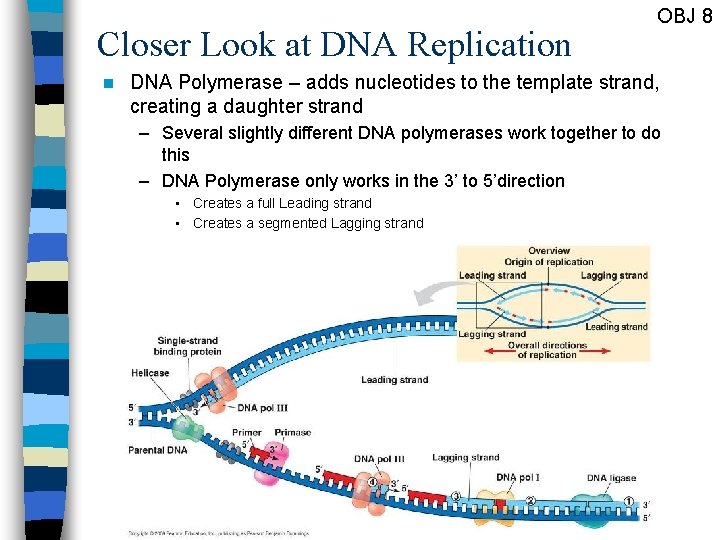
OBJ 8 Closer Look at DNA Replication n Replication involves many enzymes!!! – DNA Helicase – unwinds the helix and “unzips” the base pairs – Forms the replication fork 24
Closer Look at DNA Replication n OBJ 8 DNA Polymerase – adds nucleotides to the template strand, creating a daughter strand – Several slightly different DNA polymerases work together to do this – DNA Polymerase only works in the 3’ to 5’direction • Creates a full Leading strand • Creates a segmented Lagging strand 25
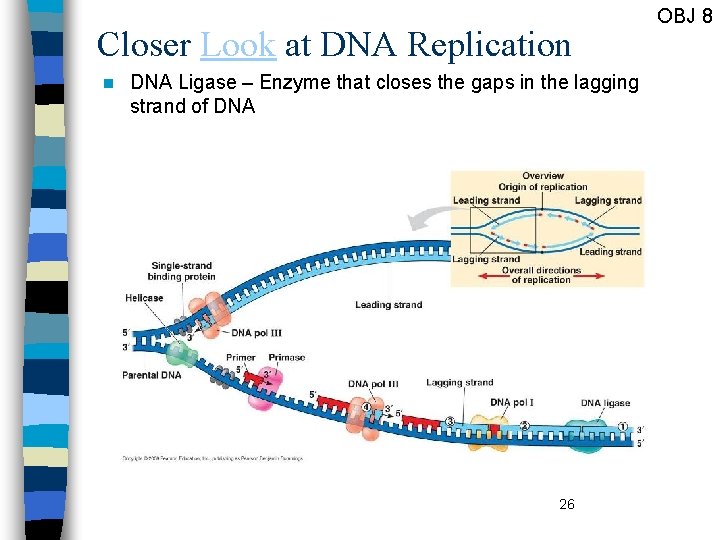
Closer Look at DNA Replication n DNA Ligase – Enzyme that closes the gaps in the lagging strand of DNA 26 OBJ 8
THE END 27
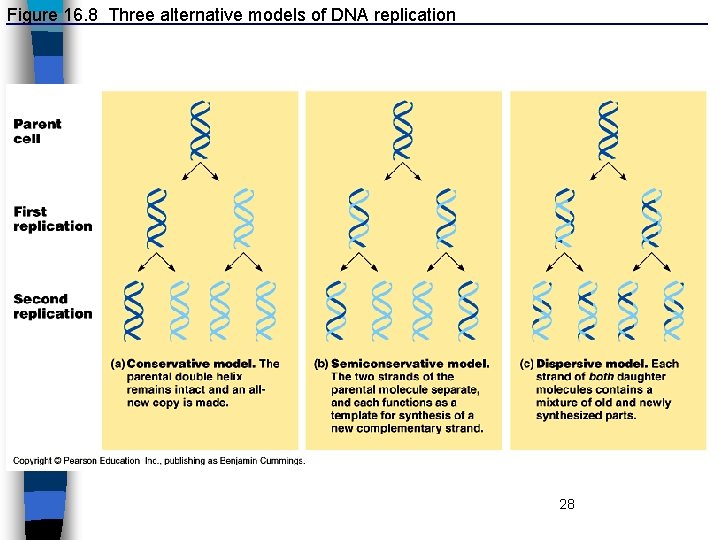
Figure 16. 8 Three alternative models of DNA replication 28
Figure 16. 9 The Meselson-Stahl experiment tested three models of DNA replication (Layer 4) 29