
Unit 4 The Circulatory System Word Formation atrium


- Slides: 52
Unit 4 The Circulatory System
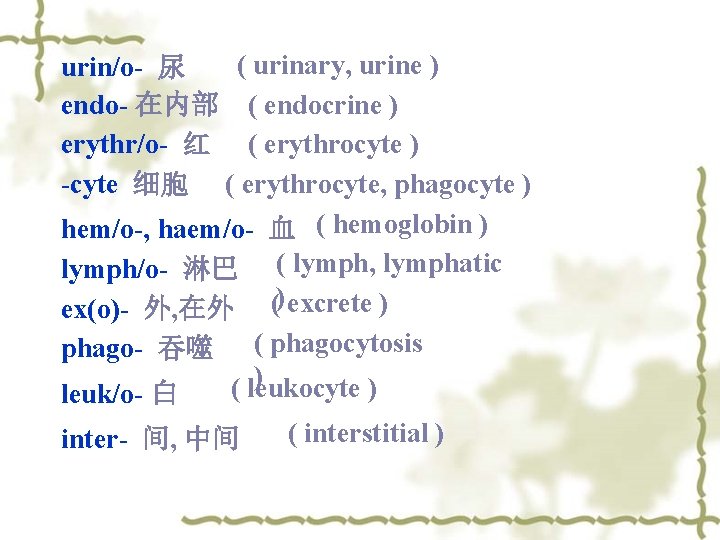
Word Formation ( atrium ) atri/o- 房 ventricul/o- 室 ( ventricle ) my/o- 肌肉 ( myocardium ) cardi/o- 心 ( myocardium ) de- 去掉, 脱离 ( deoxygenate ) -let (使小后缀) ( platelet ) arteri/o- 动脉 ( artery ) ven/i-, ven/o- 静脉 ( vein, venous ) pulmo-, pulmon/o- 肺; 气 ( pulmonary ) v di- 二, 双 ( carbon dioxide )
( urinary, urine ) urin/o- 尿 endo- 在内部 ( endocrine ) erythr/o- 红 ( erythrocyte ) -cyte 细胞 ( erythrocyte, phagocyte ) hem/o-, haem/o- 血 ( hemoglobin ) lymph/o- 淋巴 ( lymph, lymphatic ex(o)- 外, 在外 () excrete ) phago- 吞噬 ( phagocytosis ) ( leukocyte ) leuk/o- 白 ( interstitial ) inter- 间, 中间
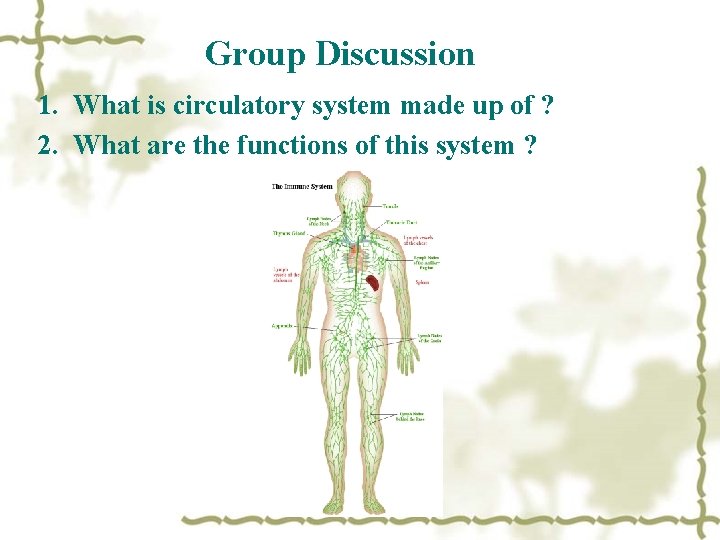
Group Discussion 1. What is circulatory system made up of ? 2. What are the functions of this system ?
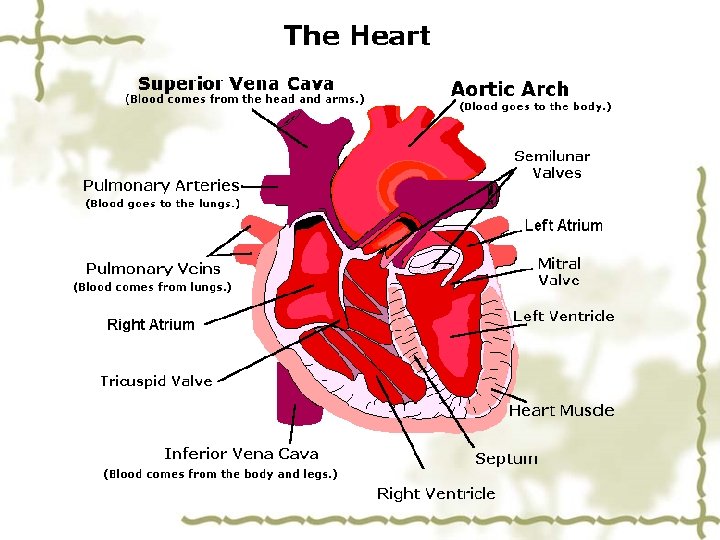
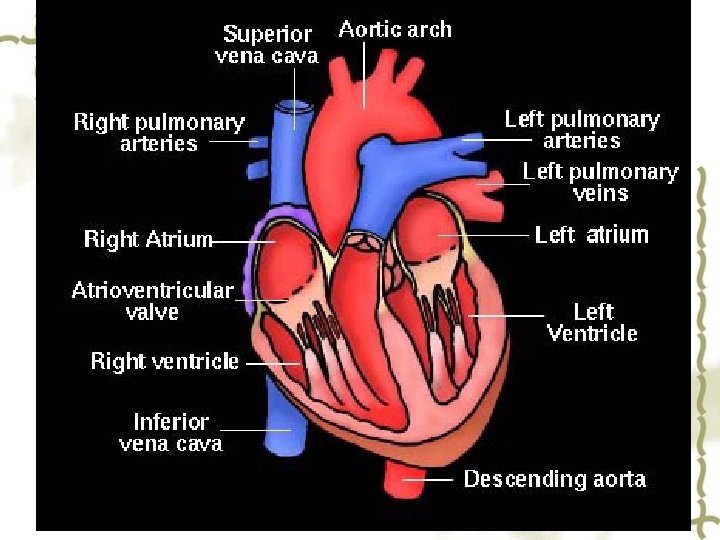
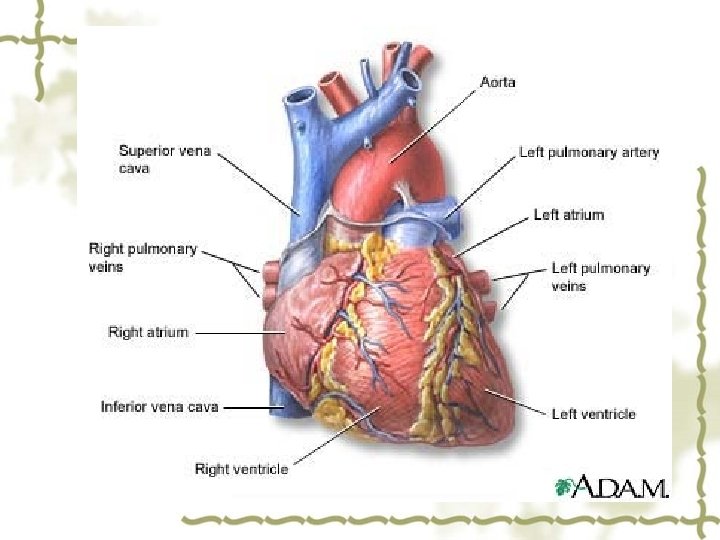
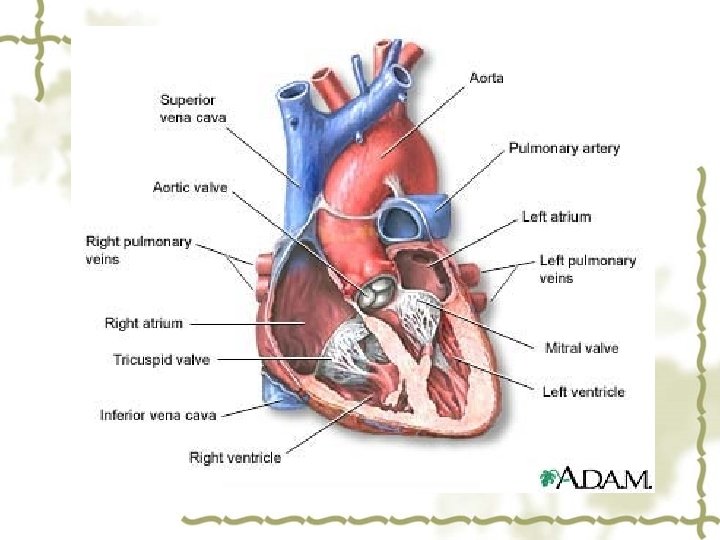
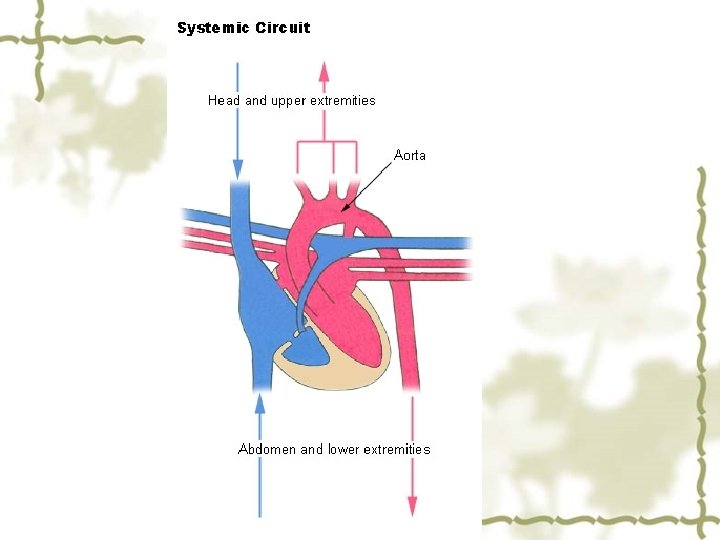
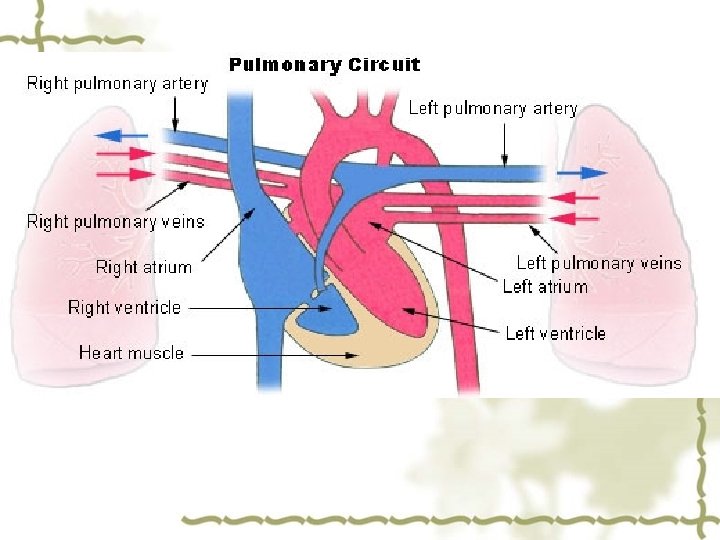
Introduction The circulatory system consists of the heart, the blood vessels, the blood, and the lymphatics. The heart works as a pump that pushes blood to the organs, tissues, and cells of the body. Blood carries oxygen and nutrients to every cell and carries away the carbon dioxide and waste products made by those cells.
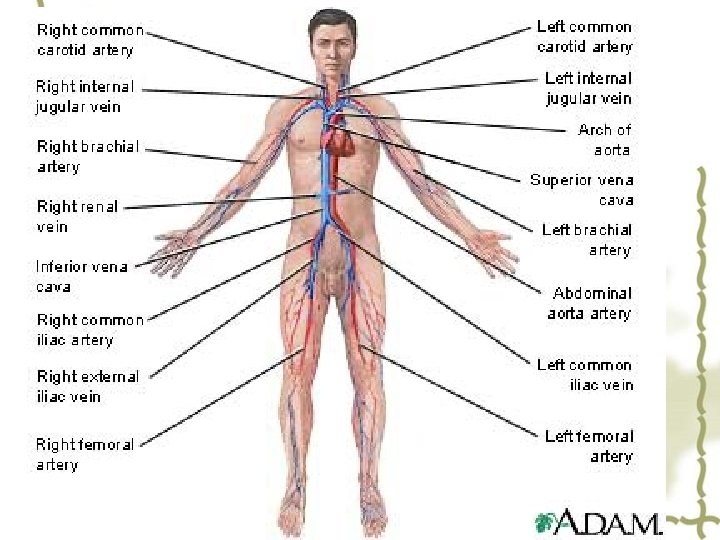
Blood is carried from the heart to the rest of the body through a complex network of arteries and arterioles. Blood is returned to the heart through venules and veins. The capillaries connect the arteries to veins by venules. The lymphatic system, closely related to the cardiovascular system, consists of lymph nodes and lymphatic vessels that link the lymph nodes.
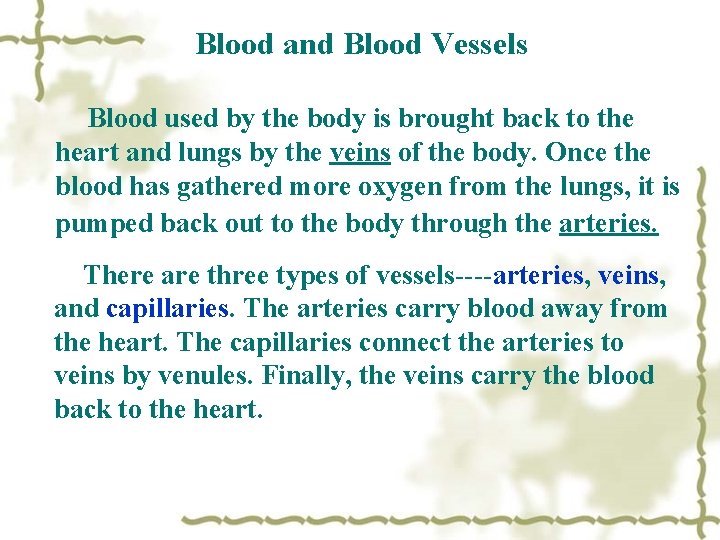
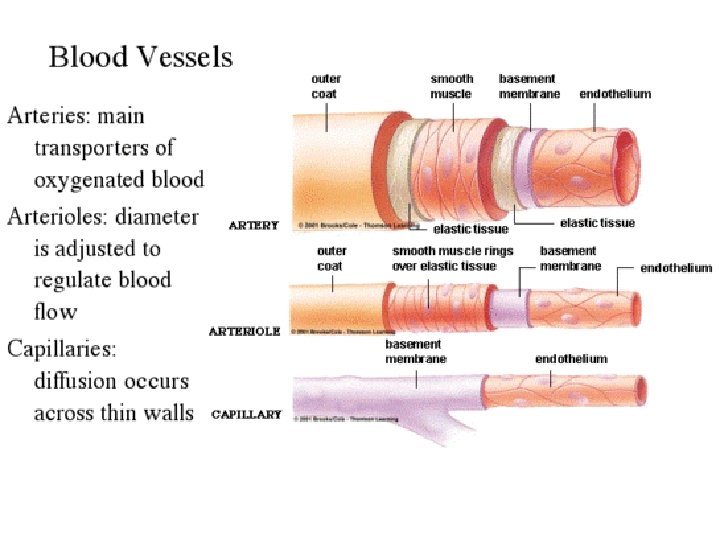
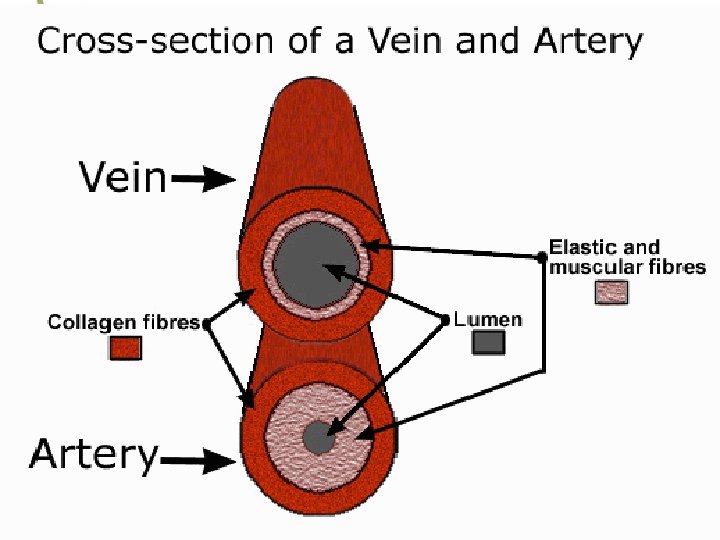
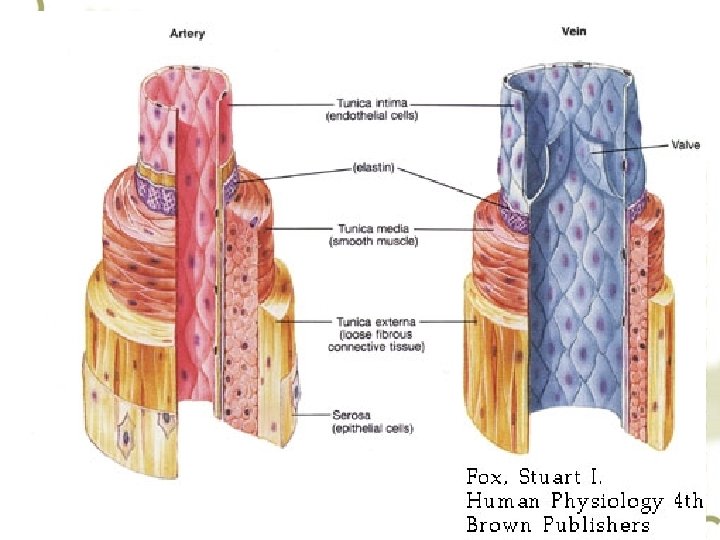
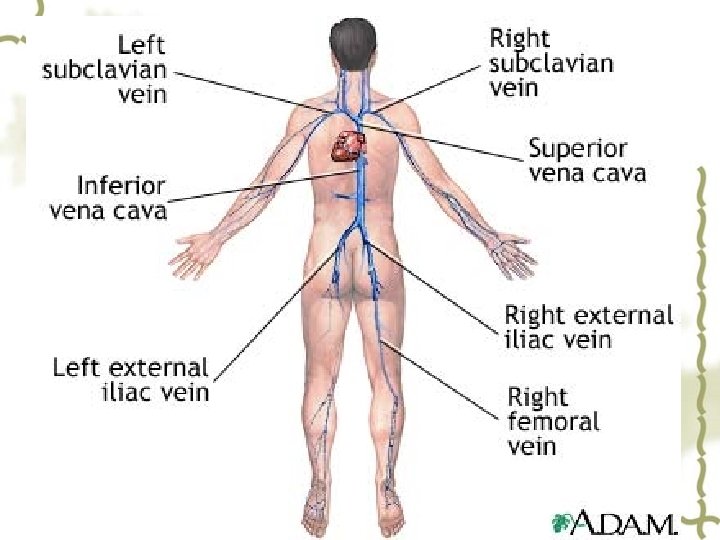
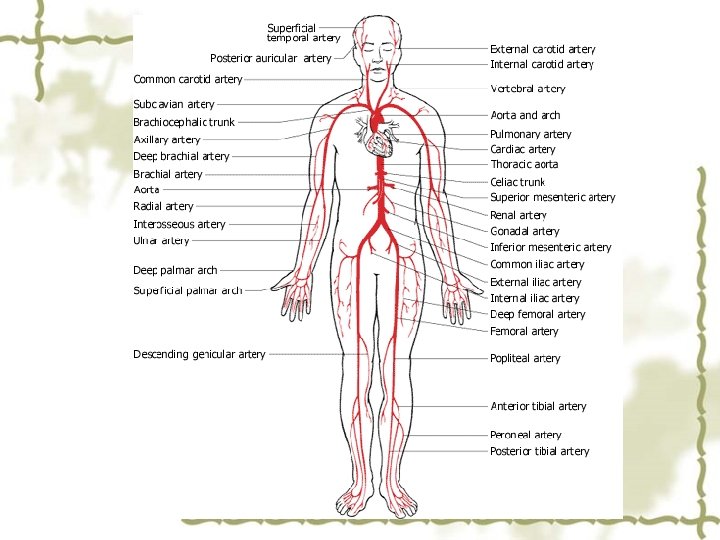
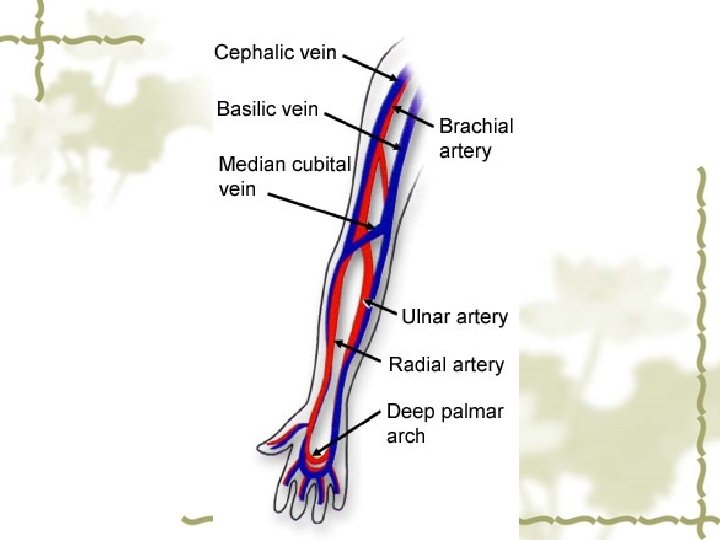
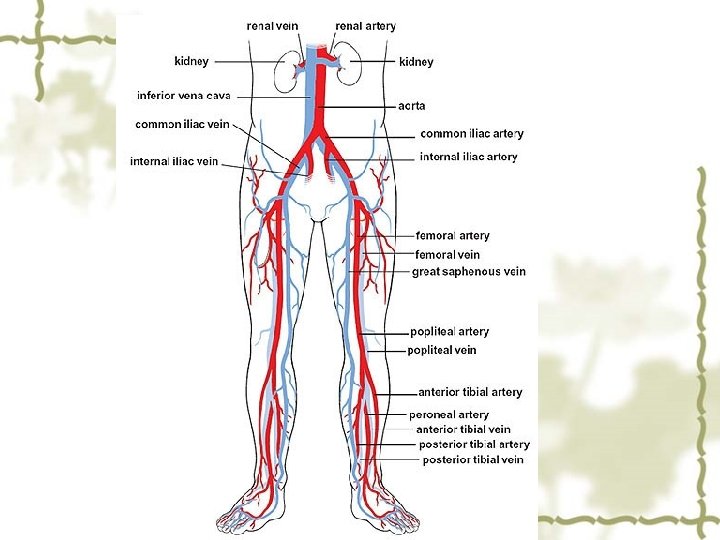
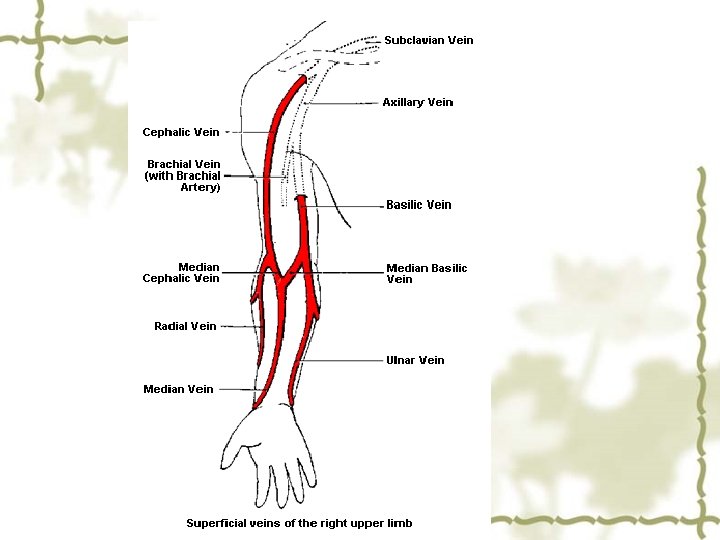
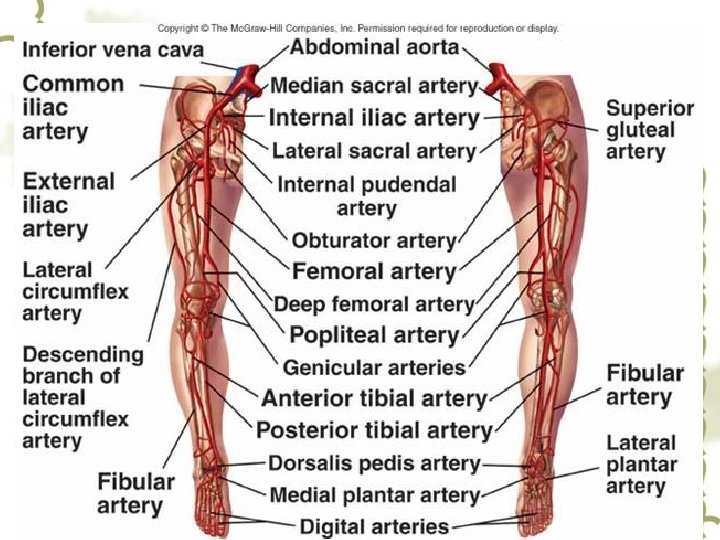
Blood and Blood Vessels Blood used by the body is brought back to the heart and lungs by the veins of the body. Once the blood has gathered more oxygen from the lungs, it is pumped back out to the body through the arteries. There are three types of vessels----arteries, veins, and capillaries. The arteries carry blood away from the heart. The capillaries connect the arteries to veins by venules. Finally, the veins carry the blood back to the heart.
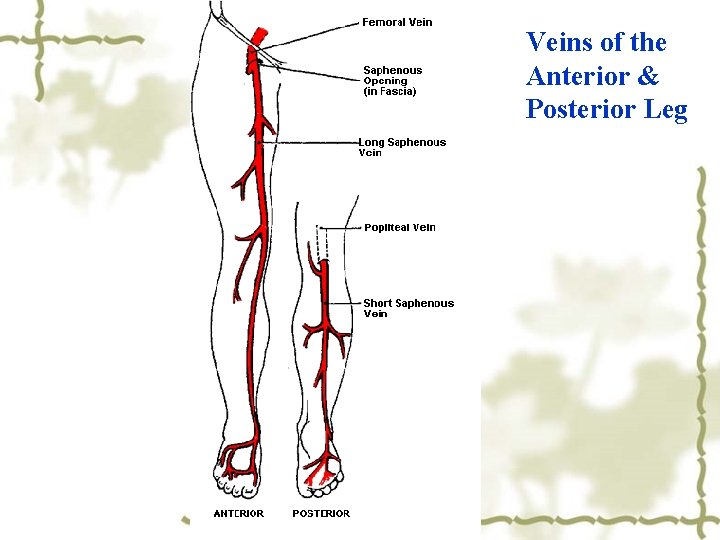
Veins of the Anterior & Posterior Leg
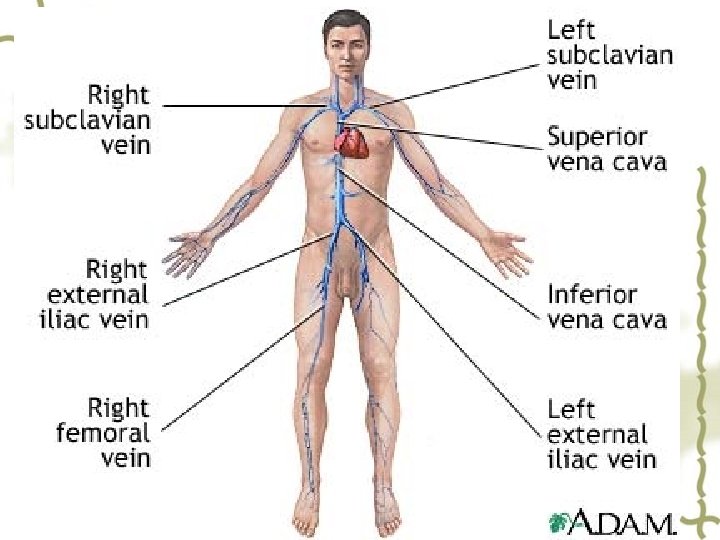
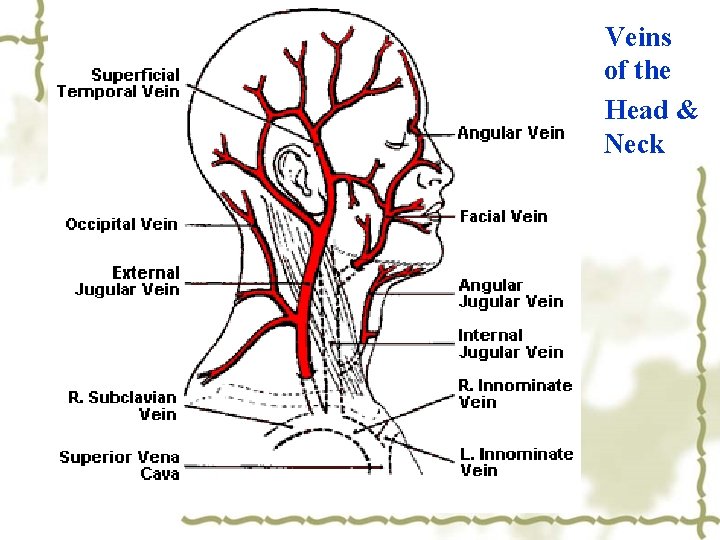
Veins of the Head & Neck
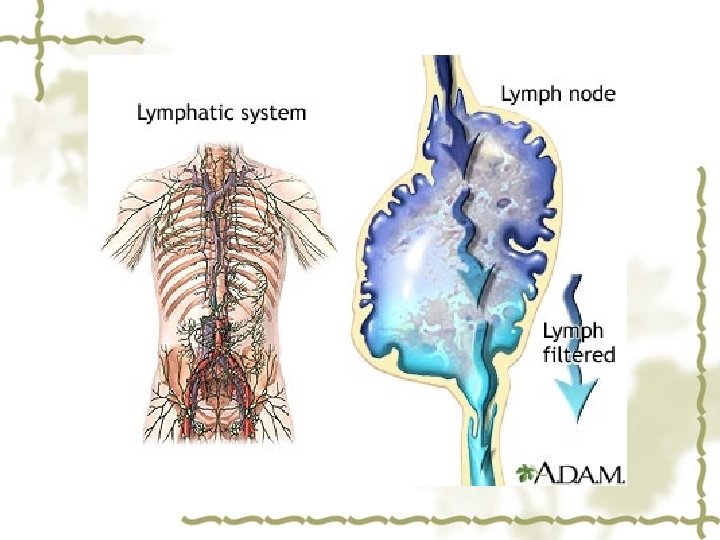
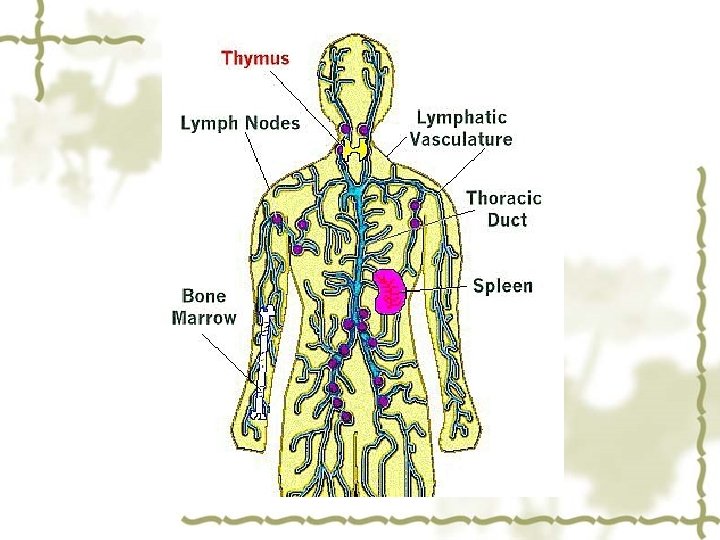
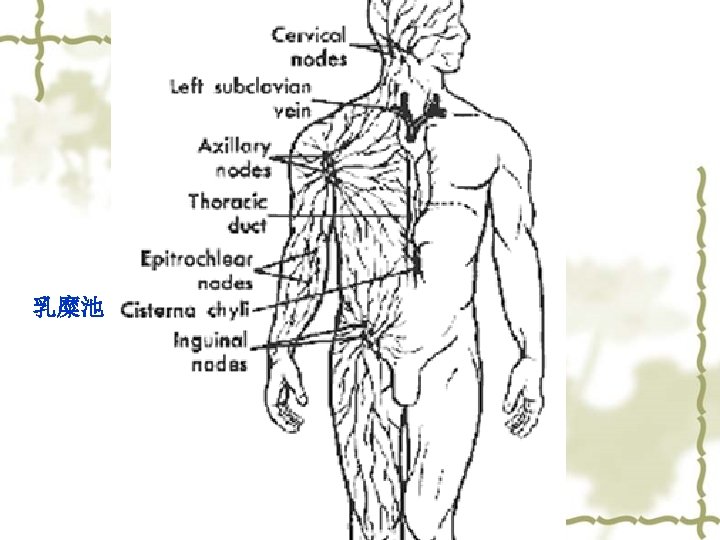
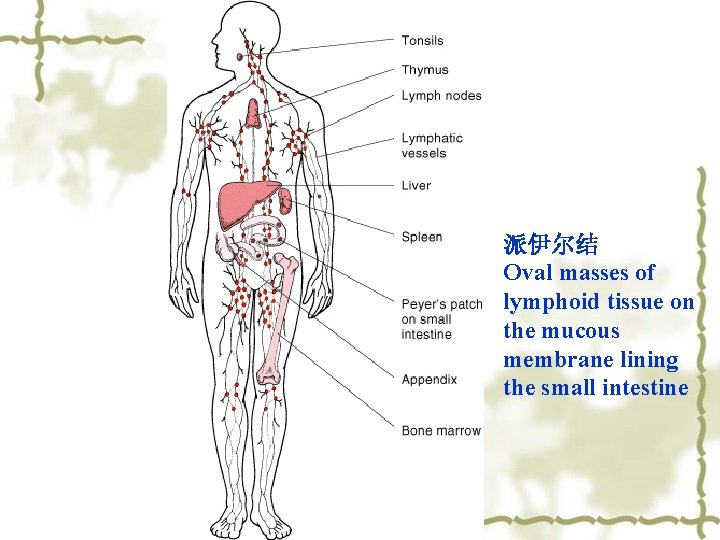
Lymphatic System The lymphatic system is made up of lymph and lymphatic vessels that bring the lymph back to the blood. The organs of the lymphatic system include the lymph glands ( lymph nodes ), spleen, tonsil and thymus gland.
The lymphatic system is a subsystem of the circulatory system. Its functions, closely related to that of the cardiovascular system, include collecting and returning interstitial fluid, thus helping maintain fluid balance, defending the body against diseases by producing lymphocytes, and absorbing lipids from the intestine and transporting them to the blood. The lymphatic system is made up of lymph capillaries, lymph vessels, and lymph nodes.
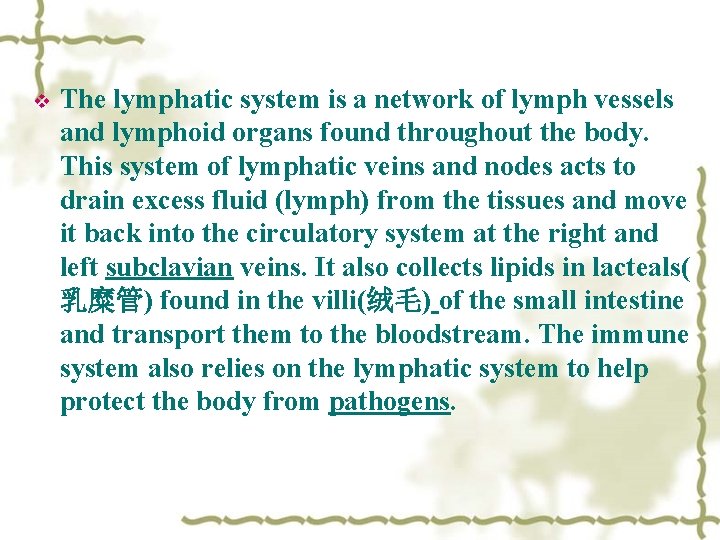
v The lymphatic system is a network of lymph vessels and lymphoid organs found throughout the body. This system of lymphatic veins and nodes acts to drain excess fluid (lymph) from the tissues and move it back into the circulatory system at the right and left subclavian veins. It also collects lipids in lacteals( 乳糜管) found in the villi(绒毛) of the small intestine and transport them to the bloodstream. The immune system also relies on the lymphatic system to help protect the body from pathogens.
派伊尔结 Oval masses of lymphoid tissue on the mucous membrane lining the small intestine
Understanding the Text Part I Introduction (para. 1) Question: 1. What does the first paragraph try to tell us ? importance of circulatory system
Difficult Points multitude----n. (formal) a very large number of e. g. a multitude of difficulties 困难重重 multitudes of systems 众多系统 ingenious----a. (used about a thing or an idea )cleverly made or thought out 精巧, 巧妙 e. g. an ingenious plan for (doing) sth. 妙计 an ingenious division of labor 巧妙的分 retrieve----v. get sth. back 取回, 寻回; 获取 e. g. retrieve the basics of their existence 获取生存的基本物质 fend for---- look after
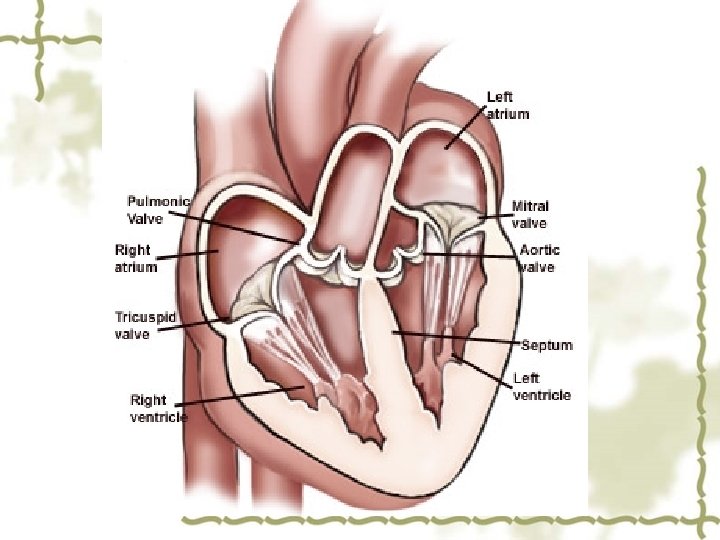
Part II Components of the system(para. 2 -7) Para. 2 Questions: 2. What does this paragraph mainly talk about ? 3. Try to distinguish the following terms: ( chamber/atrium/ventricle/myocardium) 4. What are diastole and systole ?
Para. 3 Question: 5. What are the components of blood ? Do they have any functions ? Para. 4 Questions: 6. What are the types of blood vessels ? Do they have different functions ? 7. For what purpose do blood vessels expand or contract ?
Difficult Points diffuse---- v. to spread through tissue 扩散, 弥散 e. g. Some substances easily diffuse through the walls of capillaries. endothelial cells / epithelial tissue
Para. 5 Question: 8. What does paragraph 5 mainly talk about ? Para. 6— 7 Question: 9. What are the functions of the two systems of circulation ?
Part III Functions of the system (para. 8— 15) Para. 8 stand-alone----adj. capable of operating independently 独立的 sustenance----n. 营养; 维持, 支持 intense----powerful segregated----divided
Para. 9 -13 Question: 10. Give three examples of the linkage between circulatory system with other systems. (para. 9 -11) 11. How are nutrients absorbed by our body ? (para. 10) cleanse----vt. 净化, 使清洁 reside----vt. exist expelled----removed exhale/inhale----
12. What are the two main functions of the circulatory system ? (para. 9 -13) 13. How is the circulatory system involved in the protection of the body ? (para. 13) feverish----adj. with a fever e. g. 1) She is in bed with a feverish chill. 2) He felt feverish and took an aspirin.
phagocytosis ----Phagocytosis is involved in the acquisition of nutrients for some cells, and in the immune system is a major mechanism used to remove pathogens and cell debris (碎屑). Bacteria, dead tissue cells, and small mineral particles are all examples of objects that may be phagocytosed.
Para. 14 Question: 14. What functions can clotting agents perform ? clotting agent---clotting---- n. action of coagulating e. g. Deficiency in one or more of the clotting factors results in haemophilia. cease----v. stop
Para. 15 Question: 15. What is the natural form of recycling of the body ? strategic(al)----adj. helping to achieve a plan; giving an advantage 有利的, 有益的; 对全局有重要意义的 e. g. strategically placed lymph nodes (p 59)
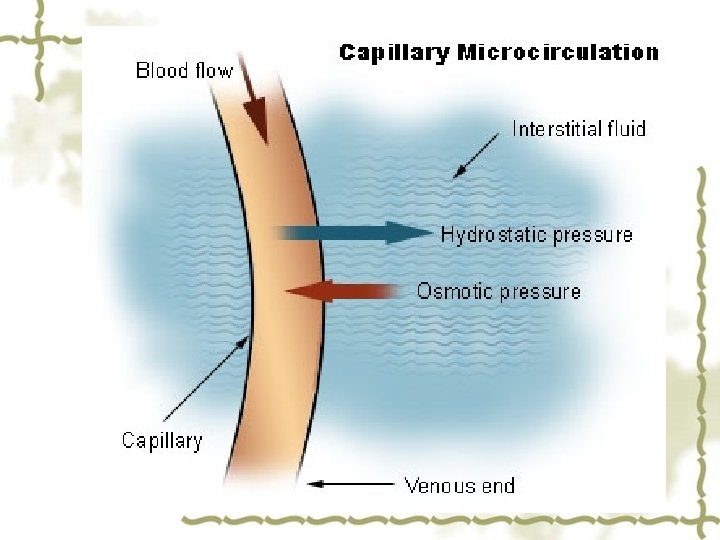
interstitial fluid ---the fluid in spaces between the tissue cells. On average, a person has about 11 litres of interstitial fluid providing the cells of the body with nutrients and a means of waste removal. Interstitial fluid consists of a water solvent(溶 剂)containing amino acids(氨基酸), sugars, fatty acids, coenzymes(辅酶), hormones, neurotransmitters, salts, as well as waste products from the cells.
Phrases in the Text 1. endothelial cells 2. systemic/pulmonary circulation 3. integumentary systems 4. cellular metabolism 5. oxygen molecules 6. nutrient absorption 7. endocrine/ lymphatic system 8. interstitial fluid 9. venous blood 10. lymph nodes 11. metabolic waste
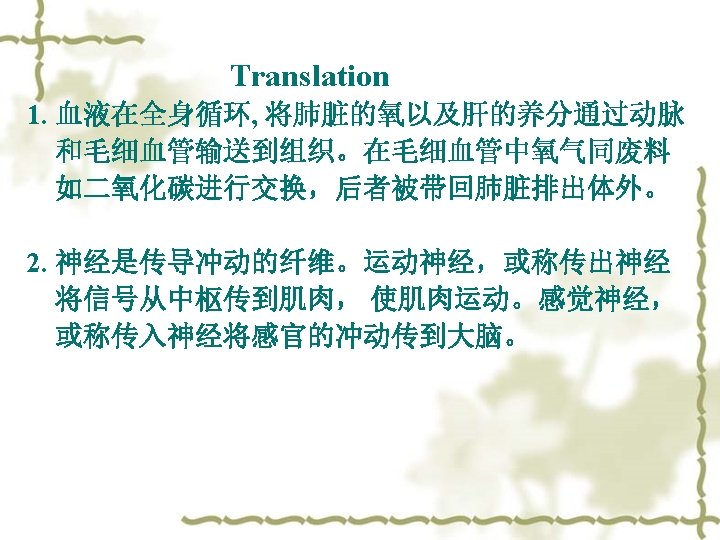
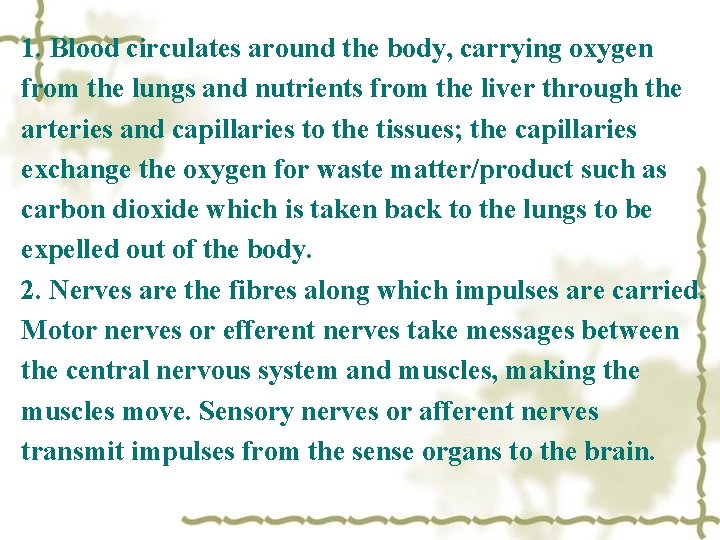
1. Blood circulates around the body, carrying oxygen from the lungs and nutrients from the liver through the arteries and capillaries to the tissues; the capillaries exchange the oxygen for waste matter/product such as carbon dioxide which is taken back to the lungs to be expelled out of the body. 2. Nerves are the fibres along which impulses are carried. Motor nerves or efferent nerves take messages between the central nervous system and muscles, making the muscles move. Sensory nerves or afferent nerves transmit impulses from the sense organs to the brain.