
Unit 4 Speech and Language Deficits in Children
- Slides: 7
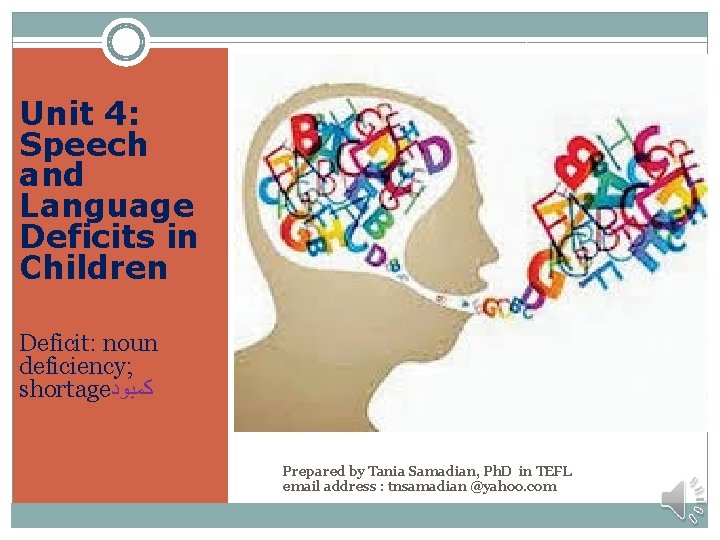
Unit 4: Speech and Language Deficits in Children Deficit: noun deficiency; shortage ﻛﻤﺒﻮﺩ Prepared by Tania Samadian, Ph. D in TEFL email address : tnsamadian @yahoo. com
I. Passage One Children that receive speech-language therapy for speech sound deficits (e. g. substituting one sound for another, misarticulating sounds) or delayed language skills (e. g. slow acquisition of first words, difficulty understanding complex language) are often at risk for later reading difficulties. Research indicates that reading difficulties are prevalent in children with language impairments and that early language deficits have a strong link to later difficulty in reading. Many of the skills required to become proficient readers are rooted in oral language. A strong oral language foundation provides children with a sense of words and their meanings as well as sensitivity to the sound structure of our language. From articulation to vocabulary, learning to read starts with learning to speak! e. g. : for example ﺑﻪ ﻋﻨﻮﺍﻥ ﻣﺜﺎﻝ substitute: verb, replace ﺟﺎﺑﺠﺎ ﻛﺮﺩﻥ articulate: verb, to speak or pronounce ﺷﻤﺮﺩﻩ ﺍﺩﺍ ﻛﺮﺩﻥ. ﺑﻴﺎﻥ ﻛﺮﺩﻥ misarticulate : ﻧﺎ ﺩﺭﺳﺖ ﺑﻴﺎﻥ ﻛﺮﺩﻥ articulation : noun indicate : verb, show , point out ﺍﺷﺎﺭﻩ ﻛﺮﺩﻥ. ﻧﺸﺎﻥ ﺩﺍﺩﻥ prevalent : adjective , common ﺷﺎﻳﻊ impairments : noun, flaw, defect ﺍﺧﺘﻼﻻﺕ require: verb, to need ﻧﻴﺎﺯ ﺩﺍﺷﺘﻦ proficient : adjective, skilled , expert ﻣﺎﻫﺮ to be rooted in something : to be based on , to be caused by something Exp: …. are rooted in oral language : are based on oral language. ﺭﻳﺸﻪ ( ﺩﺭﺯﺑﺎﻥ گﻔﺘﺎﺭﻱ ﺩﺍﺭﺩ root : )ﺭﻳﺸﻪ foundation: noun, base پﺎﻳﻪ
Children with speech sound deficits may have an incomplete representation of the speech sounds that make up our language. Articulation difficulties can impact a child’s phonological awareness, a building block of learning to read. Phonological awareness is a continuum of skills including the ability to recognize and analyze the sounds in words. A child that has difficulty recognizing that words are made up of component parts (e. g. syllables and sounds), may have later difficulty with blending or sounding out words as they read. If a child has speech sound errors, for example says “tat” instead of “cat”, they may have difficulty recognizing that the letters “t” and the “c” represent different sounds. In addition, speech sound deficits can contribute to difficulty reading fluently because children are working harder to try to sound out each word or have misrepresentations of letter-sound correspondence. impact: verb, affect strongly ﺗﺎﺛﻴﺮگﺬﺍﺷﺘﻦ building block: noun, basic part awareness : noun, knowledge, آگﺎﻫﻲ continuum : noun, connected series, ﺯﻧﺠﻴﺮﻩ recognize: verb, identify ﺗﺸﺨﻴﺺ ﺩﺍﺩﻥ Contribute to : verb, to help to cause to happen , ﻣﻮﺟﺐ ﺷﺪﻥ Misrepresentations : inaccurate description , ﺗﺼﻮﺭ ﻏﻴﺮ ﻭﺍﻗﻌﻲ
Children with language delays may have deficits in vocabulary or the grammar structure of language, which are also essential skills for reading proficiency. Language delays can contribute to reduced reading comprehension because students simply do not know the meaning of the words that they are reading. A limited vocabulary may also prevent a child from using context clues to aid reading comprehension. Because written language is decontextualized, it requires a well-developed vocabulary and knowledge of the rules of language in order to be fully understood (Catts, 1997). Knowing word meanings and being able to predict the structure of a sentence helps a reader flow smoothly and quickly over reading material. The component skills of reading include phonemic awareness, phonics, fluency, vocabulary, and comprehension. The component skills of spoken language include phonology, morphology, syntax, semantics, and pragmatics. The chart below provides some examples of how each area of language influences an important skill in reading. essential : adjective , necessary, ﺿﺮﻭﺭﻱ prevent : verb, to stop ﻣﺎﻧﻊ ﺷﺪﻥ context: noun, paragraphs surrounding a word or sentence ﻣﺘﻦ. ﺯﻣﻴﻨﻪ predict : verb, to say in advance پﻴﺶ ﺑﻴﻨﻲ ﻛﺮﺩﻥ component : noun, part ﺟﺰ ﻭﻣﻮﻟﻔﻪ
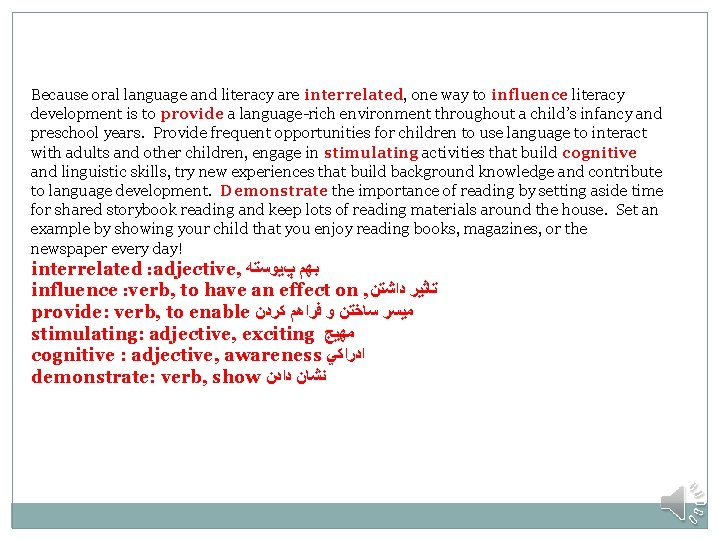
Because oral language and literacy are interrelated, one way to influence literacy development is to provide a language-rich environment throughout a child’s infancy and preschool years. Provide frequent opportunities for children to use language to interact with adults and other children, engage in stimulating activities that build cognitive and linguistic skills, try new experiences that build background knowledge and contribute to language development. Demonstrate the importance of reading by setting aside time for shared storybook reading and keep lots of reading materials around the house. Set an example by showing your child that you enjoy reading books, magazines, or the newspaper every day! interrelated : adjective, ﺑﻬﻢ پﻴﻮﺳﺘﻪ influence : verb, to have an effect on , ﺗﺎﺛﻴﺮ ﺩﺍﺷﺘﻦ provide: verb, to enable ﻣﻴﺴﺮ ﺳﺎﺧﺘﻦ ﻭ ﻓﺮﺍﻫﻢ ﻛﺮﺩﻥ stimulating: adjective, exciting ﻣﻬﻴﺞ cognitive : adjective, awareness ﺍﺩﺭﺍﻛﻲ demonstrate: verb, show ﻧﺸﺎﻥ ﺩﺍﺩﻥ
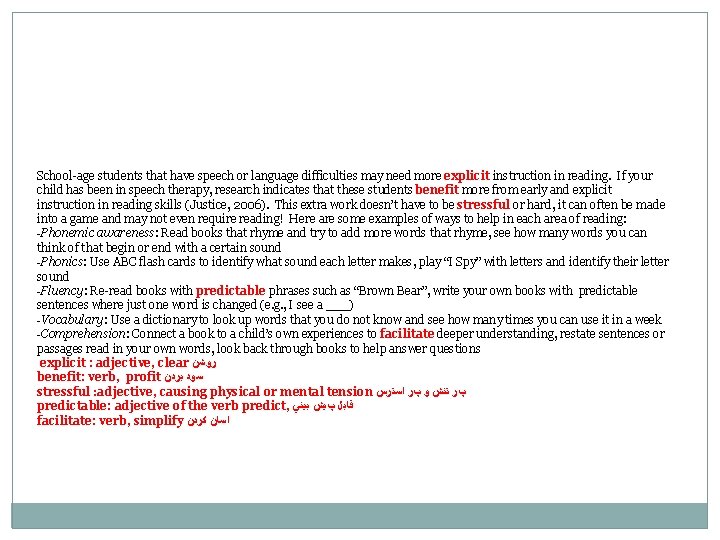
School-age students that have speech or language difficulties may need more explicit instruction in reading. If your child has been in speech therapy, research indicates that these students benefit more from early and explicit instruction in reading skills (Justice, 2006). This extra work doesn’t have to be stressful or hard, it can often be made into a game and may not even require reading! Here are some examples of ways to help in each area of reading: -Phonemic awareness: Read books that rhyme and try to add more words that rhyme, see how many words you can think of that begin or end with a certain sound -Phonics: Use ABC flash cards to identify what sound each letter makes, play “I Spy” with letters and identify their letter sound -Fluency: Re-read books with predictable phrases such as “Brown Bear”, write your own books with predictable sentences where just one word is changed (e. g. , I see a ___) -Vocabulary: Use a dictionary to look up words that you do not know and see how many times you can use it in a week -Comprehension: Connect a book to a child’s own experiences to facilitate deeper understanding, restate sentences or passages read in your own words, look back through books to help answer questions explicit : adjective, clear ﺭﻭﺷﻦ benefit: verb, profit ﺳﻮﺩ ﺑﺮﺩﻥ stressful : adjective, causing physical or mental tension پﺮ ﺗﻨﺶ ﻭ پﺮ ﺍﺳﺘﺮﺱ predictable: adjective of the verb predict, ﻗﺎﺑﻞ پﻴﺶ ﺑﻴﻨﻲ facilitate: verb, simplify ﺍﺳﺎﻥ ﻛﺮﺩﻥ
Assignment: Please study Passage two, and complete the vocabulary focus on page 27. You can email your assignments to tnsamadian@yahoo. com. Also should you have any questions feel free to email me and I’ll get back to you ASAP. Thank you and good luck !