
UNIT 4 Political Ideologies Beliefs Chapters 4 7
UNIT 4 Political Ideologies & Beliefs Chapters 4, 7, 8, & 9
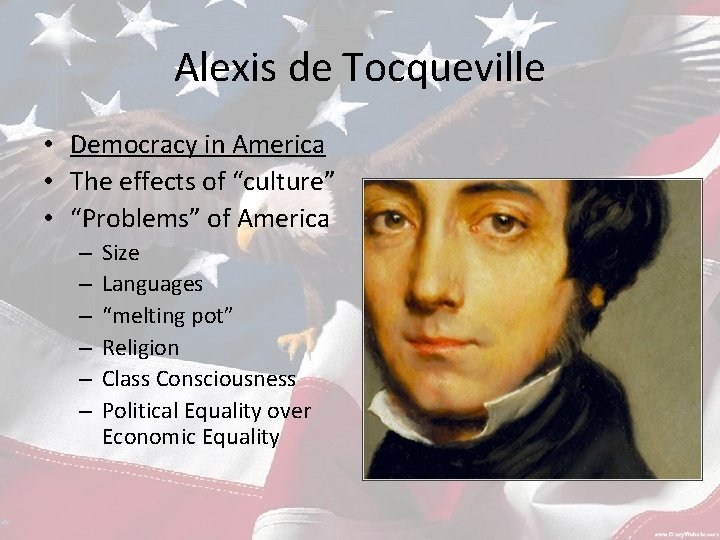
Alexis de Tocqueville • Democracy in America • The effects of “culture” • “Problems” of America – – – Size Languages “melting pot” Religion Class Consciousness Political Equality over Economic Equality

Core Values of the American Political System • • Liberty Equality Democracy Civic Duty Individual Responsibility The Role of the Civil Society The Necessity of Political Tolerance Free Enterprise
• How do we know that Americans share these beliefs? • Why is our society inconsistent with our beliefs? • Why is there so much political conflict? • Does the economy reflect our values? • What is the affect of Religion? • Are we Red, Blue, or Purple?
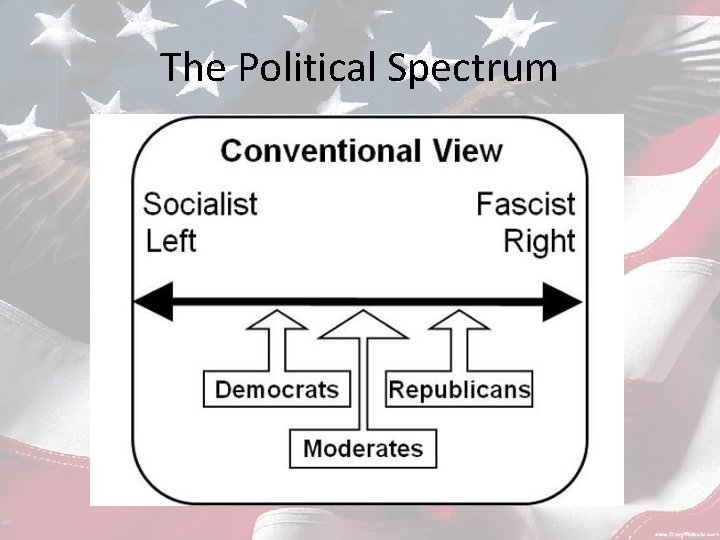
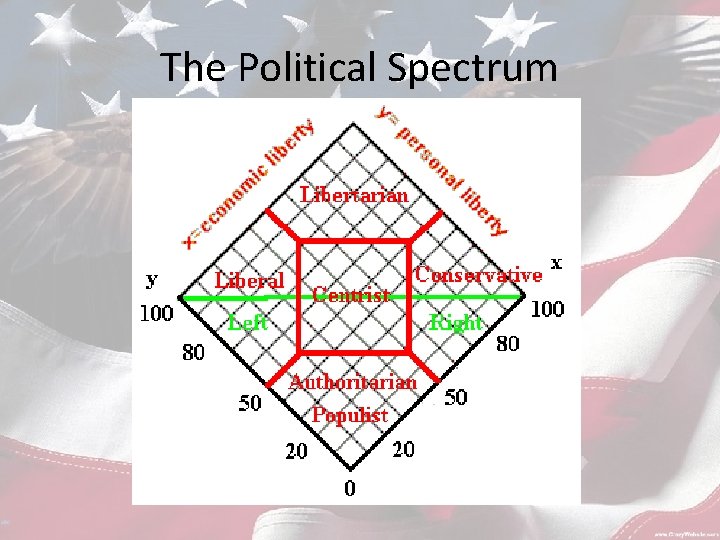
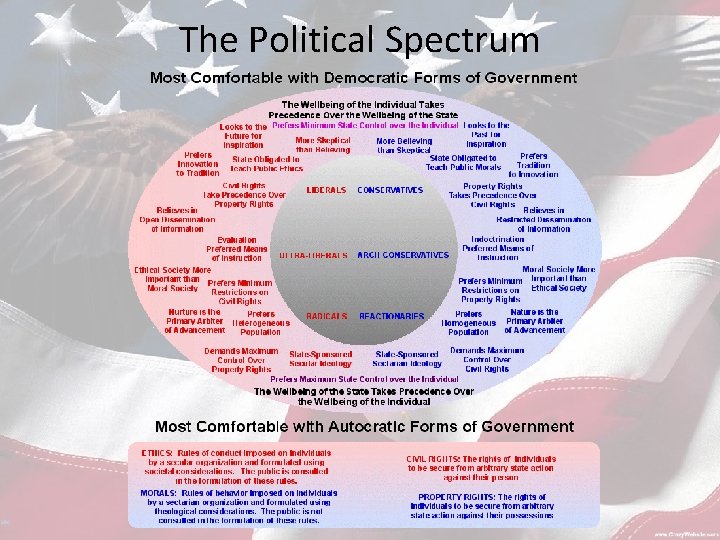
Elements of the American Political System • Proper Definition of Terms – Conservative – Liberal • Where did the Political Spectrum originate?
The Political Spectrum
The Political Spectrum
The Political Spectrum
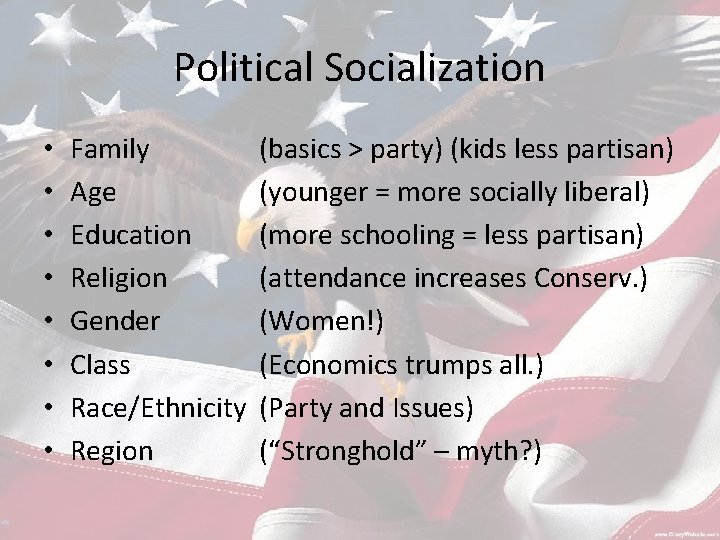
Political Socialization • • Family Age Education Religion Gender Class Race/Ethnicity Region (basics > party) (kids less partisan) (younger = more socially liberal) (more schooling = less partisan) (attendance increases Conserv. ) (Women!) (Economics trumps all. ) (Party and Issues) (“Stronghold” – myth? )
“Inside Information” • Table 4. 2 ~ Survey says: We take more pride, believe that we are in control, think kids should be taught the value of hard work, and believe that belief in God is essential to morality than Europe. • Table 4. 3 ~ In the past 40 years, confidence in church, schools, newspapers, unions, business, and Congress have all declined. • Table 7. 1 ~ young adults are pretty jaded.
Scientific Polling • • Straw polls George Gallup Random sampling Margin of error (sampling error) Exit polls Effect of Elites Bill Clinton – Overpolling?
The Value of Public Opinion • Plenty of Problems: – There are many “publics” – Difficult to measure accurately – “We know very little, but we reason fairly well. ” • Errors occur: – We don’t use terms correctly. – Our desires are inconsistent/incompatible. – We hide our truest thoughts. • “Public opinion is often dynamic, not static. ”
Voting Trends • Chart page 185 – Older voters vote in larger percentages – Presidential elections draw larger turnouts than Midterm elections – Less than half of registered voters ages 18 -20 vote in Midterms – Younger voters fluctuate more (disinterest? ) – 2008 got the most out of every group
? ? ? • Have you ever heard of “Fiscal Policy”? – If we lower taxes, we must reduce govt. spending – With less income, we must cut some services • If we spend or borrow less, what do we cut, or who do we choose to hurt? • Where is the line drawn between where the government should and should not be involved?
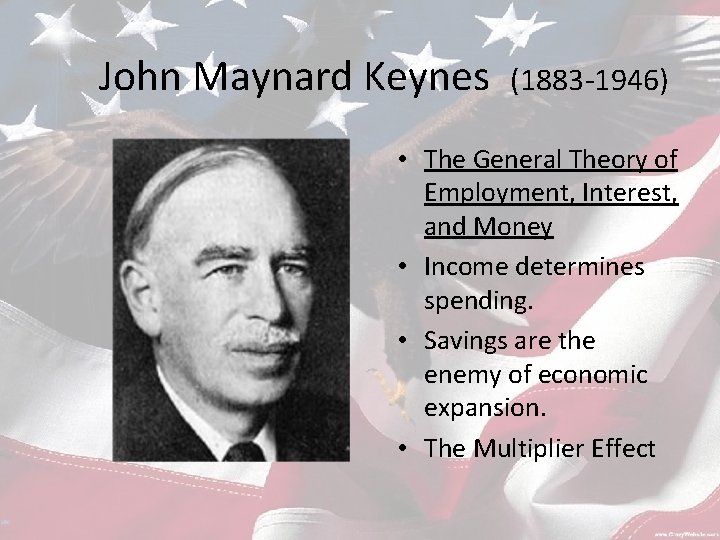
John Maynard Keynes (1883 -1946) • The General Theory of Employment, Interest, and Money • Income determines spending. • Savings are the enemy of economic expansion. • The Multiplier Effect
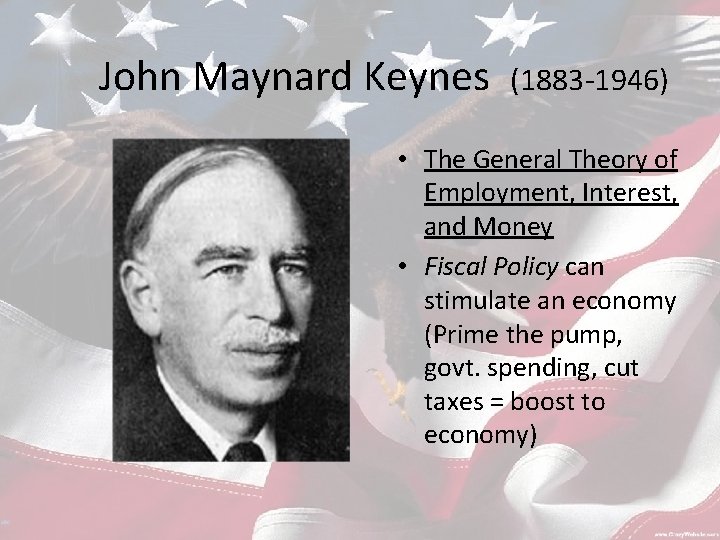
John Maynard Keynes (1883 -1946) • The General Theory of Employment, Interest, and Money • Fiscal Policy can stimulate an economy (Prime the pump, govt. spending, cut taxes = boost to economy)
Repeat after me… • Fiscal Policy is • Monetary Policy is
Fiscal Policy • 3 Types of Taxes –Progressive –Regressive –Proportionate • Flat?
Fiscal Policy • Individual vs. Corporate Taxes – Mill’s Paradox • Deregulation • Let’s Go To the Data!
The Monetarists Strike Back • The government is not a very good driver. • Growth has little to do with fiscal policy. • The velocity of money is most important.
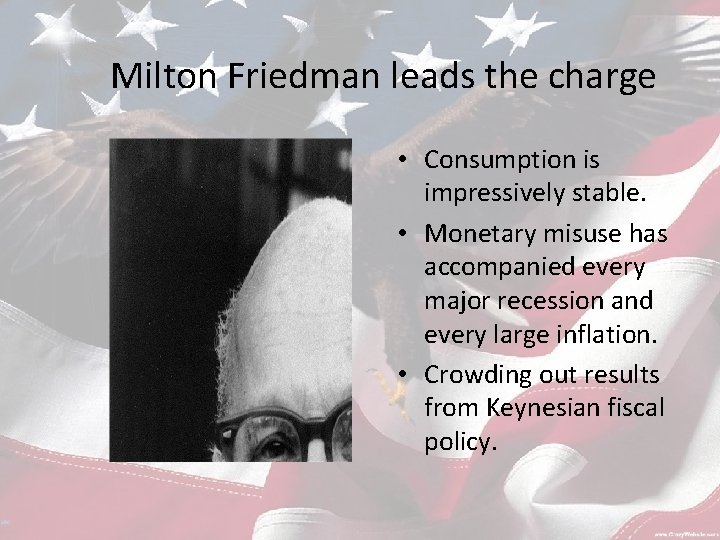
Milton Friedman leads the charge • Consumption is impressively stable. • Monetary misuse has accompanied every major recession and every large inflation. • Crowding out results from Keynesian fiscal policy.
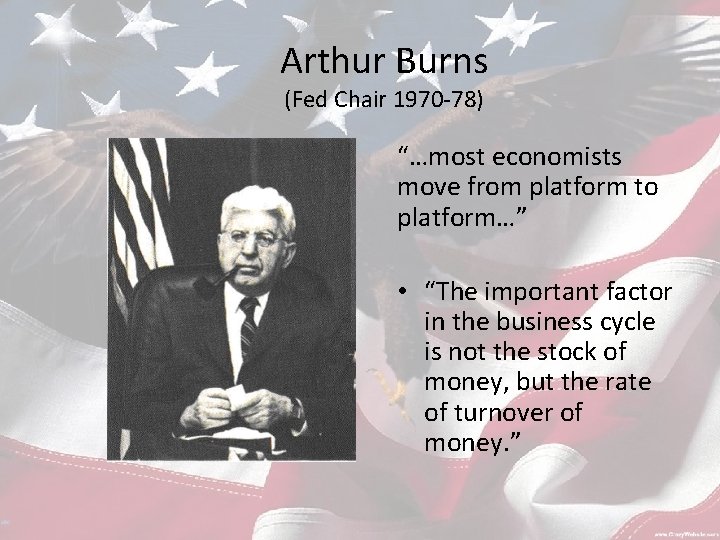
Arthur Burns (Fed Chair 1970 -78) “…most economists move from platform to platform…” • “The important factor in the business cycle is not the stock of money, but the rate of turnover of money. ”
3 Ways the FED controls the Money Supply • Prime Rate –If it goes up… • Reserve Ratio –If it goes up… • Open Market Operations –If sales go up…
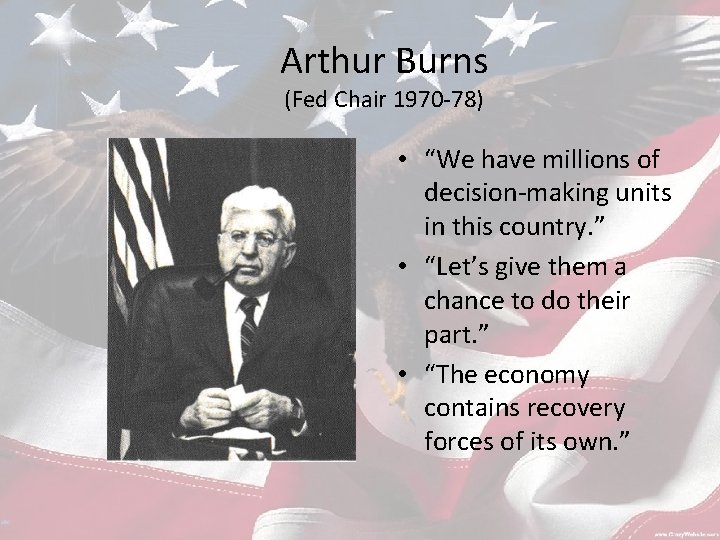
Arthur Burns (Fed Chair 1970 -78) • “We have millions of decision-making units in this country. ” • “Let’s give them a chance to do their part. ” • “The economy contains recovery forces of its own. ”
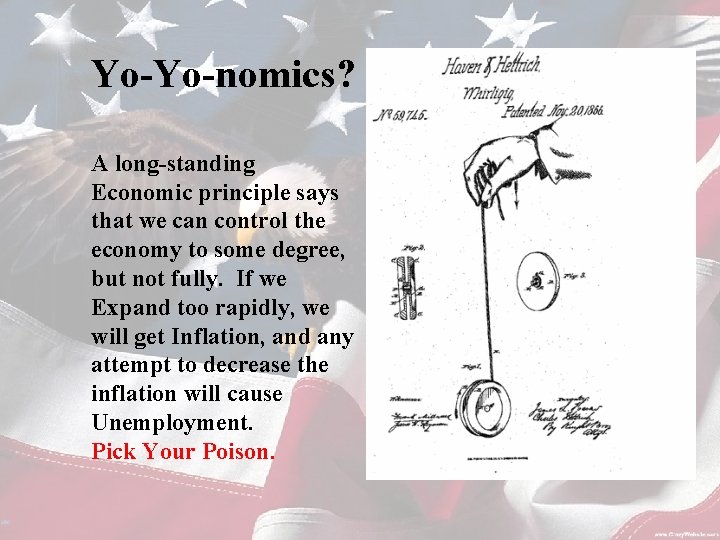
Yo-Yo-nomics? A long-standing Economic principle says that we can control the economy to some degree, but not fully. If we Expand too rapidly, we will get Inflation, and any attempt to decrease the inflation will cause Unemployment. Pick Your Poison.
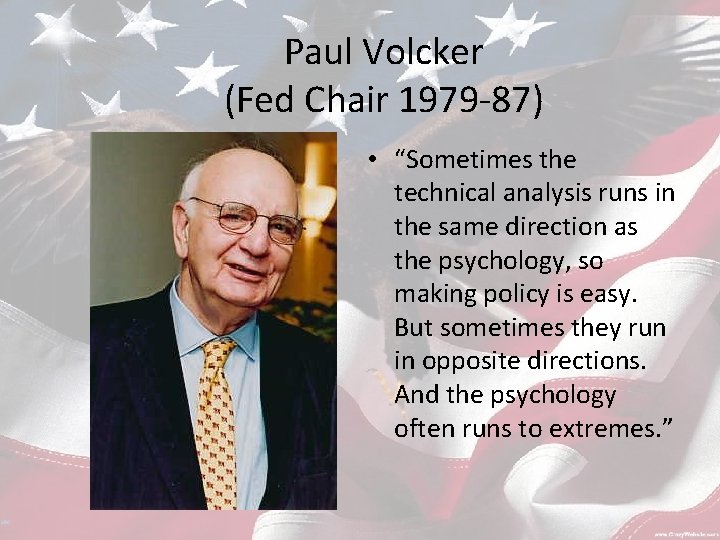
Paul Volcker (Fed Chair 1979 -87) • “Sometimes the technical analysis runs in the same direction as the psychology, so making policy is easy. But sometimes they run in opposite directions. And the psychology often runs to extremes. ”
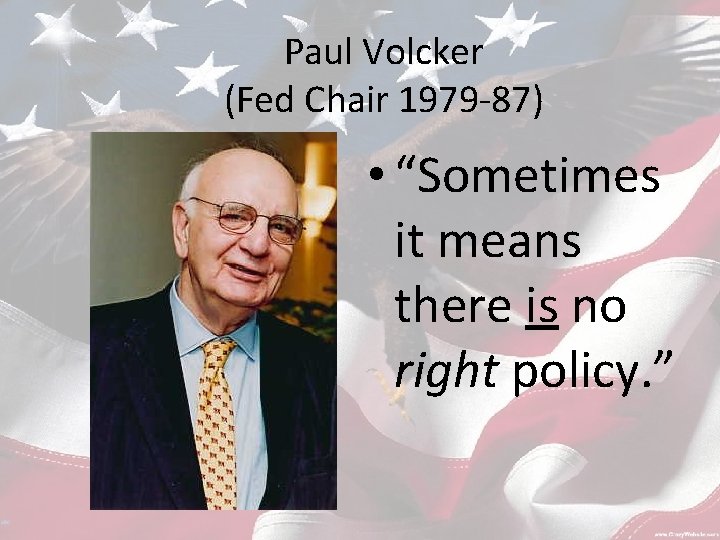
Paul Volcker (Fed Chair 1979 -87) • “Sometimes it means there is no right policy. ”
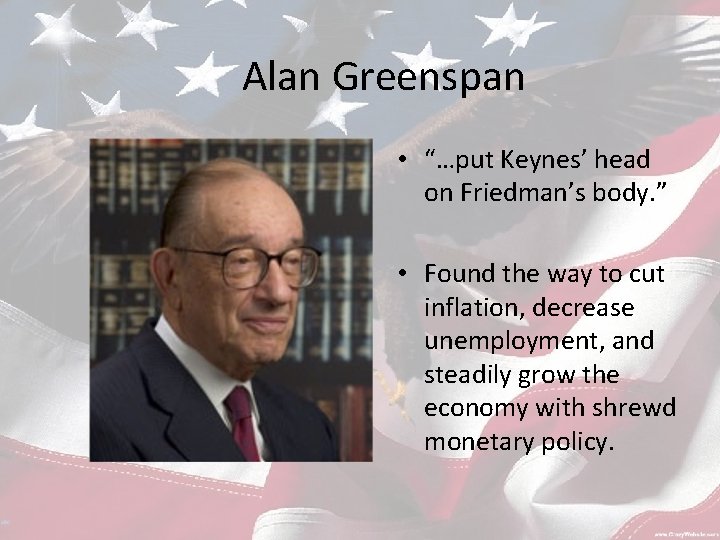
Alan Greenspan • “…put Keynes’ head on Friedman’s body. ” • Found the way to cut inflation, decrease unemployment, and steadily grow the economy with shrewd monetary policy.
Alan Greenspan So, WHAT WENT WRO NG ?
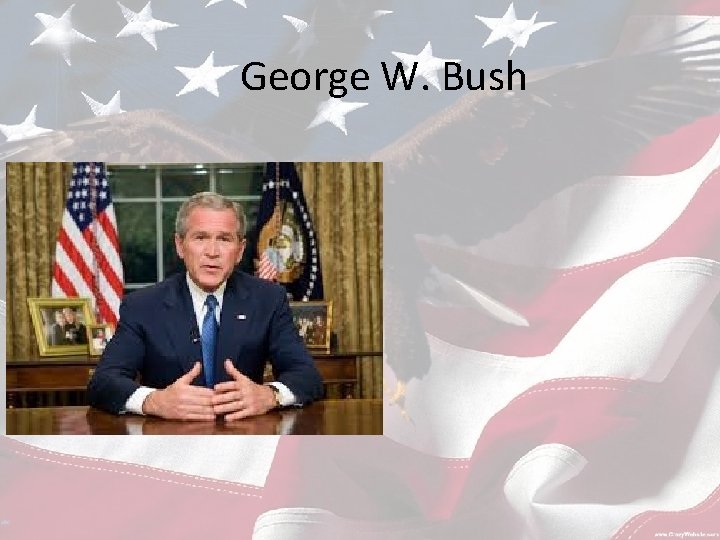
George W. Bush
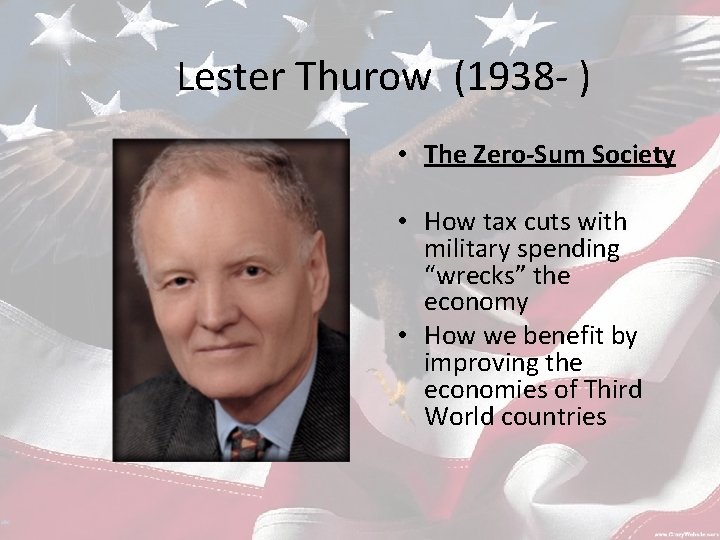
Lester Thurow (1938 - ) • The Zero-Sum Society • How tax cuts with military spending “wrecks” the economy • How we benefit by improving the economies of Third World countries
- Slides: 31