
Unit 4 Political Beliefs Behaviors Lecture Discussion 1
Unit 4: Political Beliefs & Behaviors Lecture & Discussion 1: American Political Culture
Enduring Understanding Citizens beliefs about government are shaped by demographics, cultural factors, and dynamic political, economic, and social change.

Objective(s) To identify core beliefs of U. S. citizens and explain the relationship between political culture and attitudes about the role of government.
Do Now Read the information graphic “Views of Individualism & the Role of the State” and respond to the prompts. 1. Describe the data presented. 2. Explain what the data implies about American political culture. 3. What is a limitation of the data?

A. What is Political Culture? 1. political culture: a coherent way of thinking about how politics and government ought to be carried out
A. What is Political Culture? 2. American Core Values • liberty: everyone should be free to do as they please, so long as it does not hurt others • equality: everyone should have the right to vote and be afforded equality of opportunity • democracy: government officials should be accountable to the people
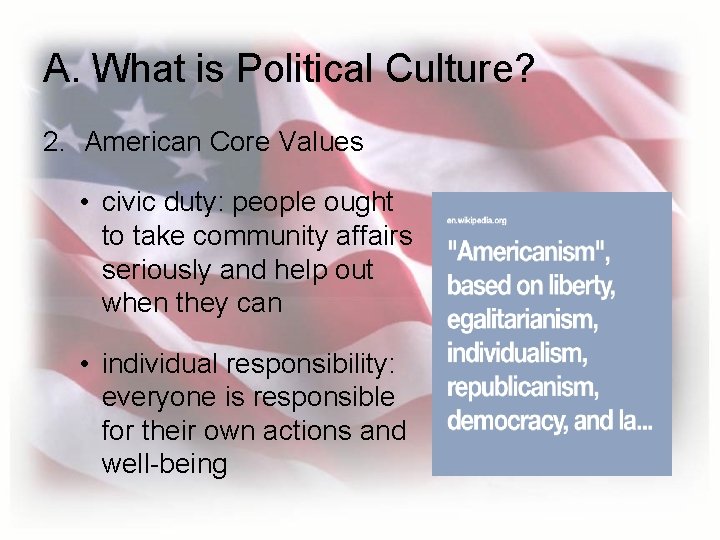
A. What is Political Culture? 2. American Core Values • civic duty: people ought to take community affairs seriously and help out when they can • individual responsibility: everyone is responsible for their own actions and well-being
B. Cultural Conflict 1. Political Disputes • policy can create conflict among those who share fundamental values due to the prioritization of commonly held beliefs (e. g. liberty versus equality of opportunity) • Civil War essentially fought over the rights of slaves versus rights of slave owners
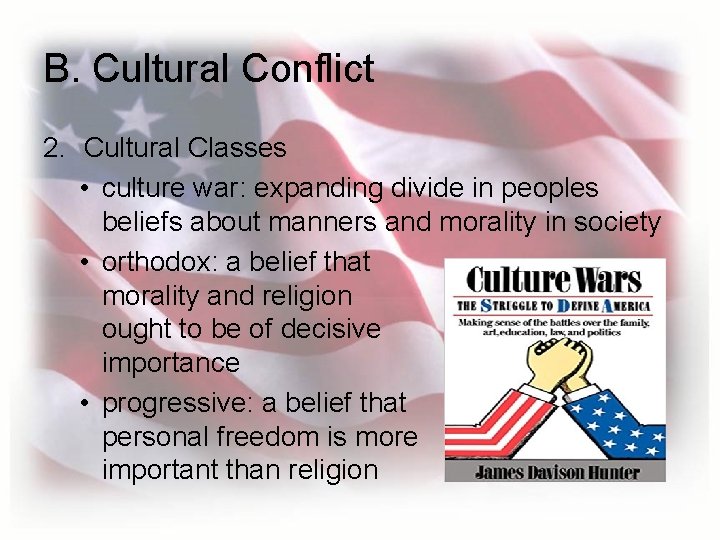
B. Cultural Conflict 2. Cultural Classes • culture war: expanding divide in peoples beliefs about manners and morality in society • orthodox: a belief that morality and religion ought to be of decisive importance • progressive: a belief that personal freedom is more important than religion
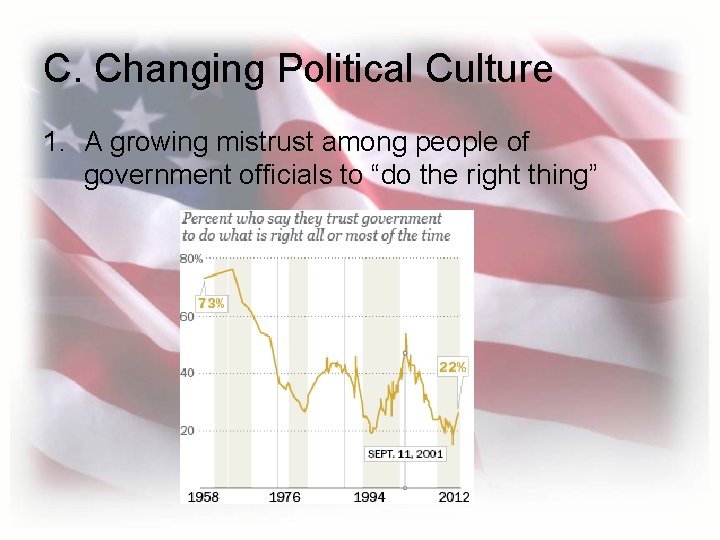
C. Changing Political Culture 1. A growing mistrust among people of government officials to “do the right thing”
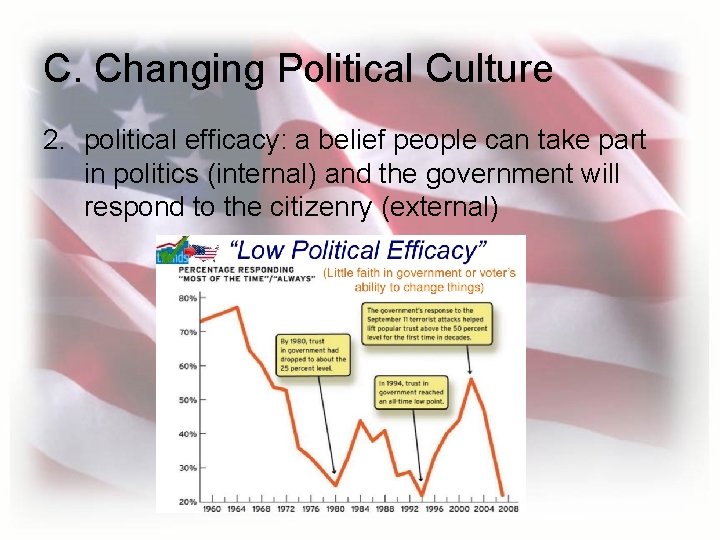
C. Changing Political Culture 2. political efficacy: a belief people can take part in politics (internal) and the government will respond to the citizenry (external)
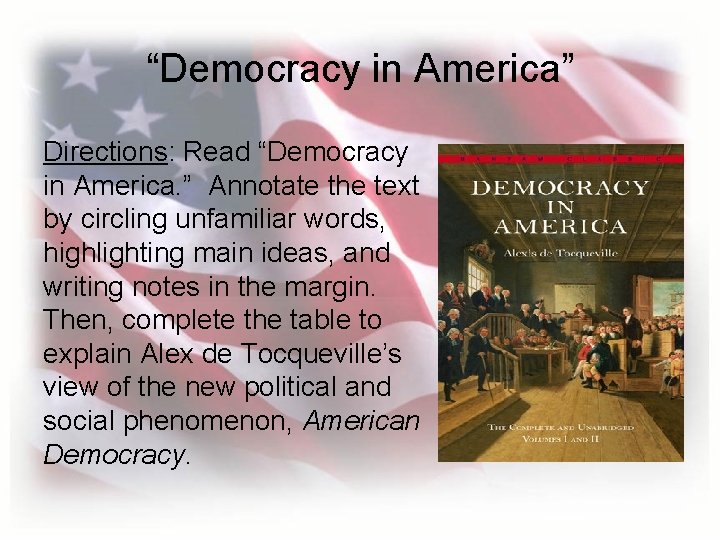
“Democracy in America” Directions: Read “Democracy in America. ” Annotate the text by circling unfamiliar words, highlighting main ideas, and writing notes in the margin. Then, complete the table to explain Alex de Tocqueville’s view of the new political and social phenomenon, American Democracy.
- Slides: 13