
Unit 4 Phenomena Common to Classical Conditioning and
- Slides: 36
Unit 4: Phenomena Common to Classical Conditioning and Operant Conditioning
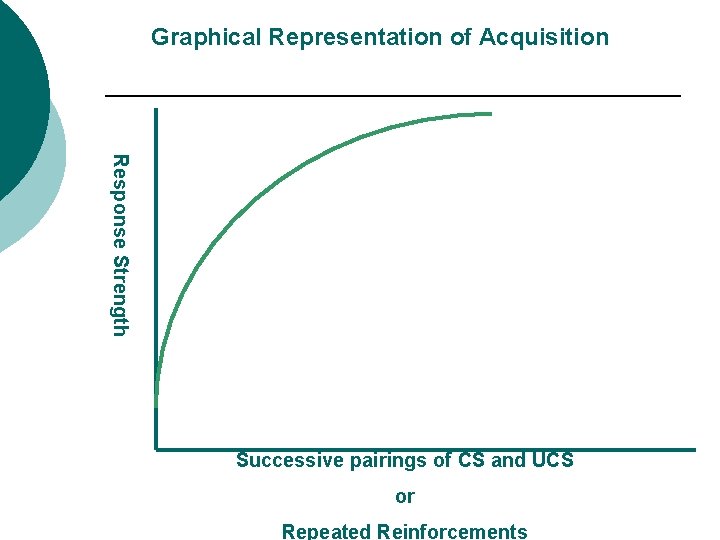
Unit 4: Phenomena Common to Classical and Operant Conditioning A. Acquisition 1. Definition increase in response strength as a result of successive pairings of the CS and UCS (classical conditioning) or repeated reinforcement of the response (operant conditioning) 2. Graphical representation
Graphical Representation of Acquisition
Graphical Representation of Acquisition
Graphical Representation of Acquisition Successive pairings of CS and UCS or Repeated Reinforcements
Graphical Representation of Acquisition Response Strength Successive pairings of CS and UCS or Repeated Reinforcements
Graphical Representation of Acquisition Response Strength Successive pairings of CS and UCS or Repeated Reinforcements
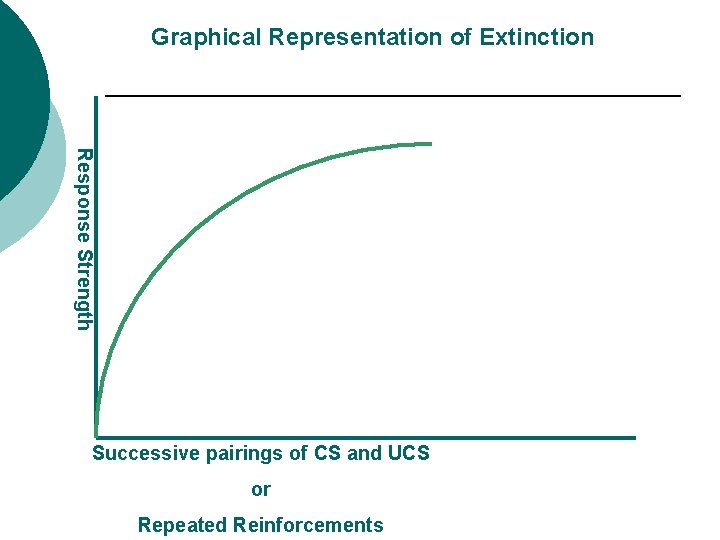
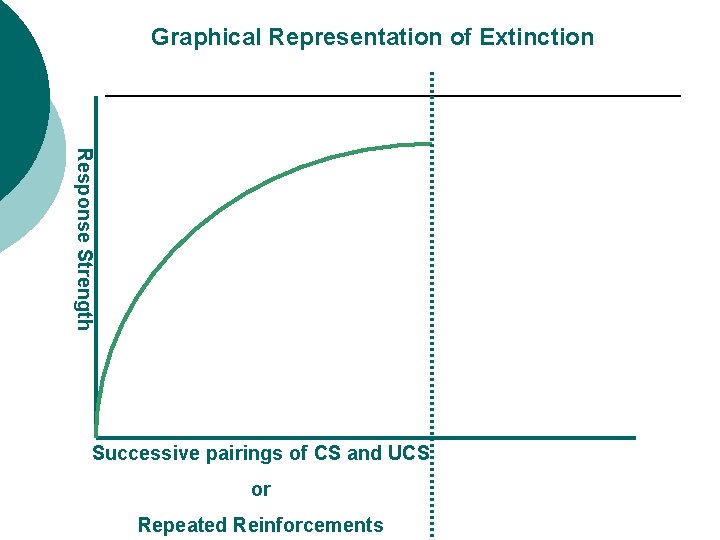
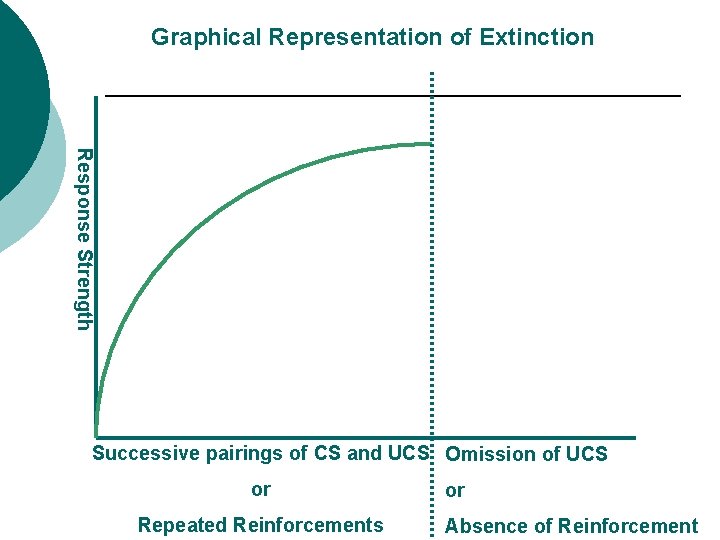
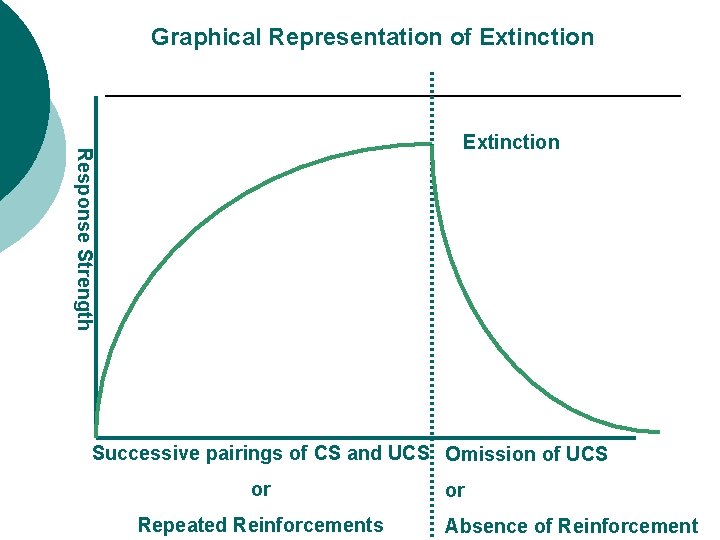
Unit 4: Phenomena Common to Classical and Operant Conditioning B. Extinction 1. Definition decrease in response strength as a result of omission of UCS (classical conditioning) or absence of reinforcement of the response (operant conditioning) 2. Graphical representation
Graphical Representation of Extinction Response Strength Successive pairings of CS and UCS or Repeated Reinforcements
Graphical Representation of Extinction Response Strength Successive pairings of CS and UCS or Repeated Reinforcements
Graphical Representation of Extinction Response Strength Successive pairings of CS and UCS Omission of UCS or Repeated Reinforcements or Absence of Reinforcement
Graphical Representation of Extinction Response Strength Extinction Successive pairings of CS and UCS Omission of UCS or Repeated Reinforcements or Absence of Reinforcement
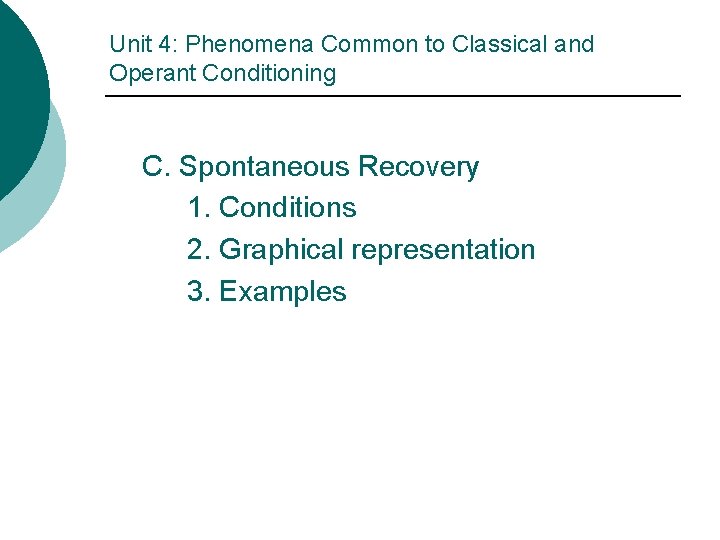
Unit 4: Phenomena Common to Classical and Operant Conditioning C. Spontaneous Recovery 1. Conditions 2. Graphical representation
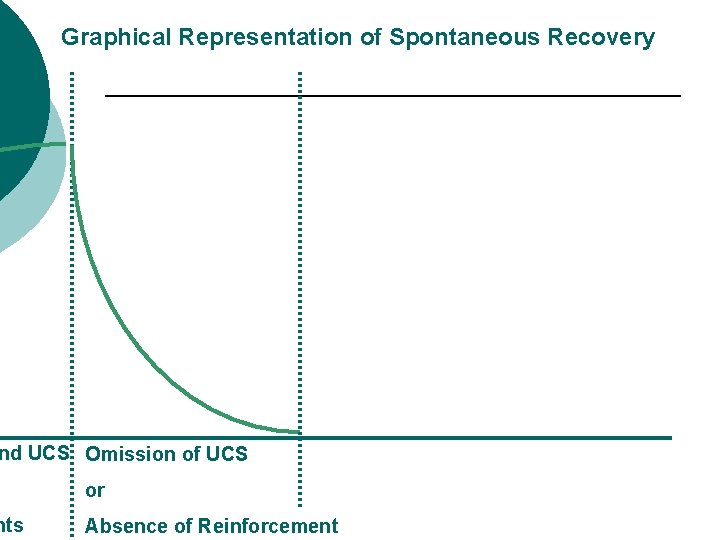
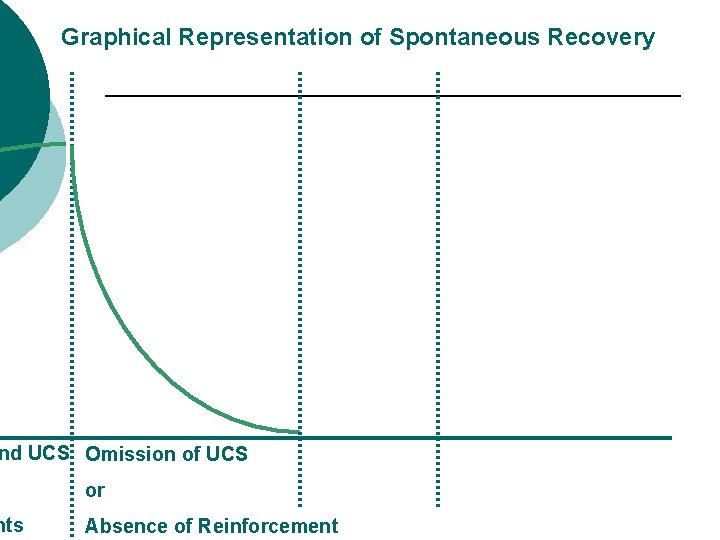
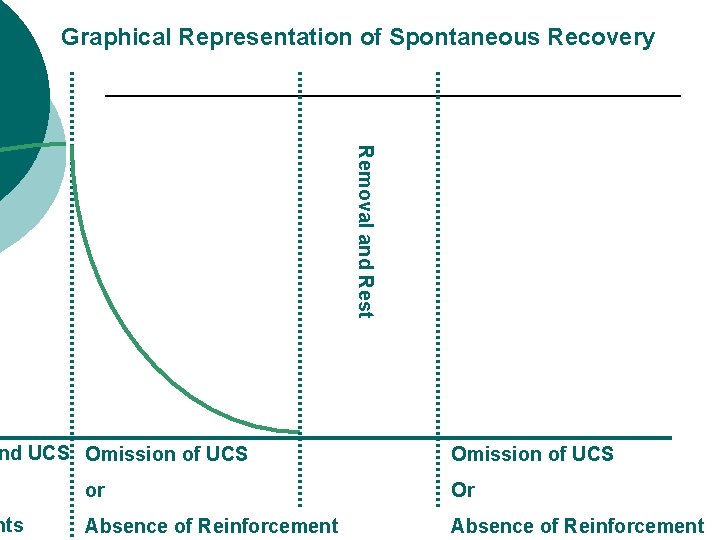
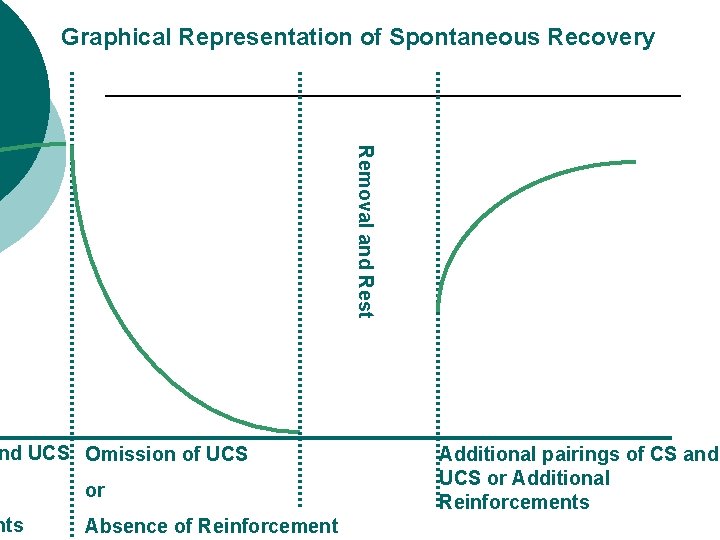
Graphical Representation of Spontaneous Recovery nd UCS Omission of UCS nts or Absence of Reinforcement
Graphical Representation of Spontaneous Recovery nd UCS Omission of UCS nts or Absence of Reinforcement
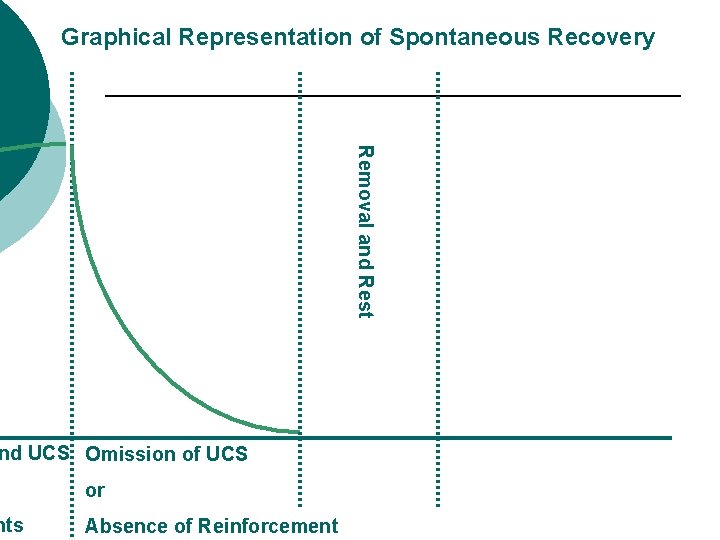
Graphical Representation of Spontaneous Recovery Removal and Rest nd UCS Omission of UCS nts or Absence of Reinforcement
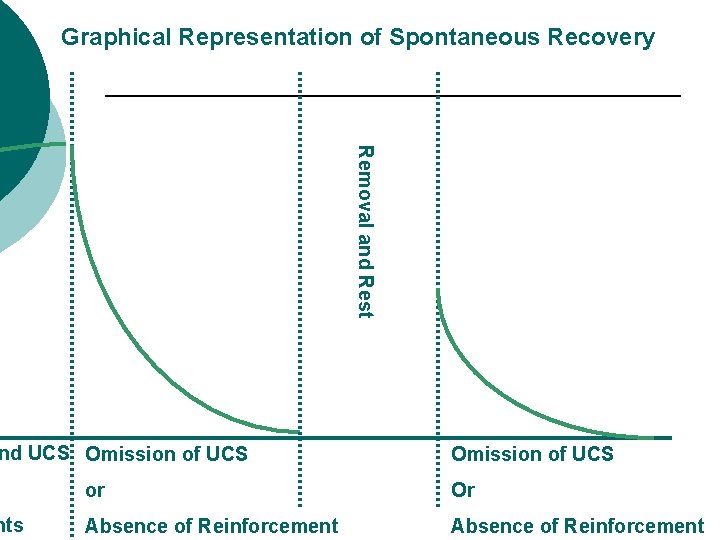
Graphical Representation of Spontaneous Recovery Removal and Rest nd UCS Omission of UCS nts Omission of UCS or Or Absence of Reinforcement
Graphical Representation of Spontaneous Recovery Removal and Rest nd UCS Omission of UCS nts Omission of UCS or Or Absence of Reinforcement
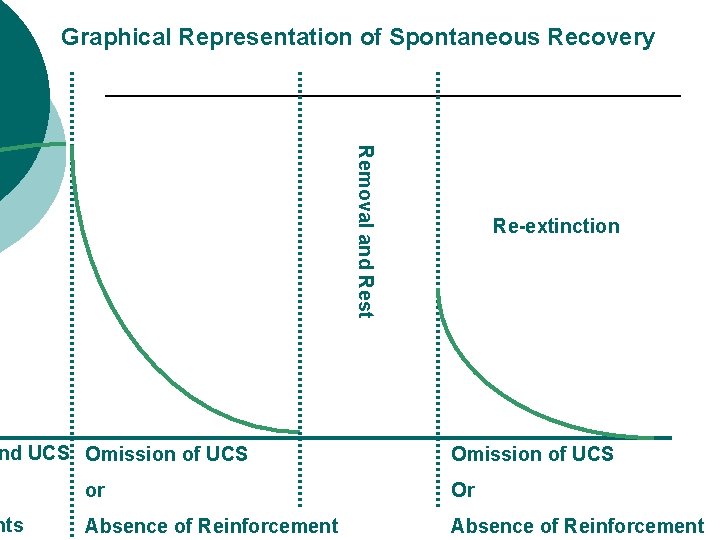
Graphical Representation of Spontaneous Recovery Removal and Rest nd UCS Omission of UCS nts Re-extinction Omission of UCS or Or Absence of Reinforcement
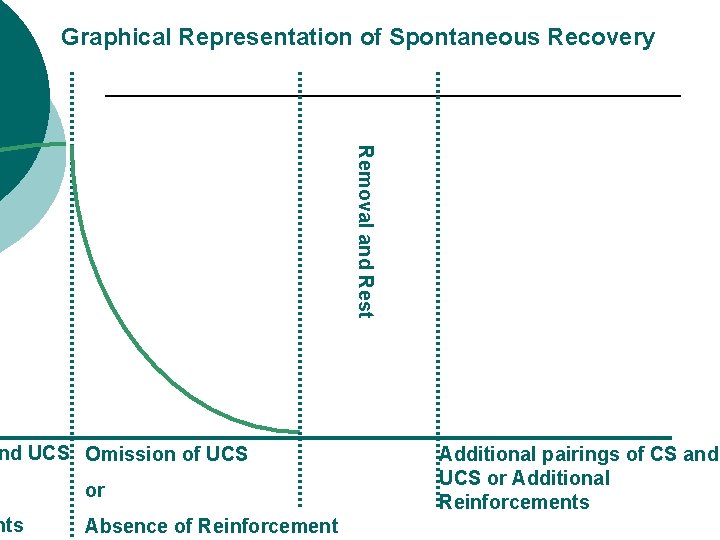
Graphical Representation of Spontaneous Recovery Removal and Rest nd UCS Omission of UCS nts or Absence of Reinforcement Additional pairings of CS and UCS or Additional Reinforcements
Graphical Representation of Spontaneous Recovery Removal and Rest nd UCS Omission of UCS nts or Absence of Reinforcement Additional pairings of CS and UCS or Additional Reinforcements
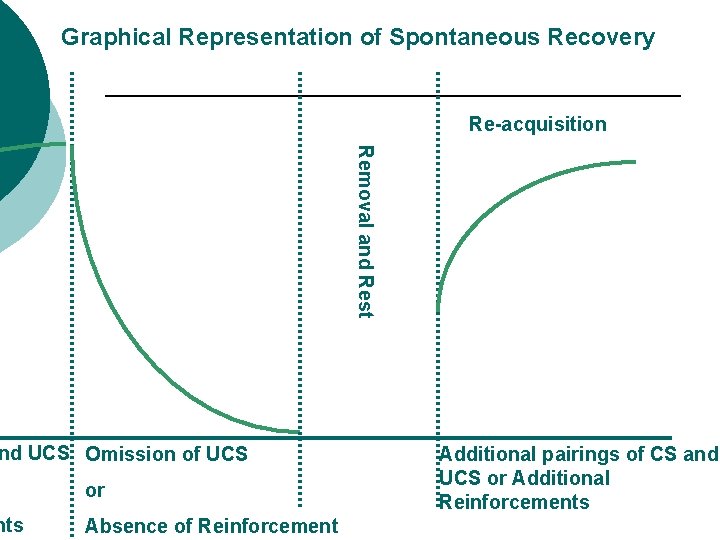
Graphical Representation of Spontaneous Recovery Re-acquisition Removal and Rest nd UCS Omission of UCS nts or Absence of Reinforcement Additional pairings of CS and UCS or Additional Reinforcements
Unit 4: Phenomena Common to Classical and Operant Conditioning C. Spontaneous Recovery 1. Conditions 2. Graphical representation 3. Examples
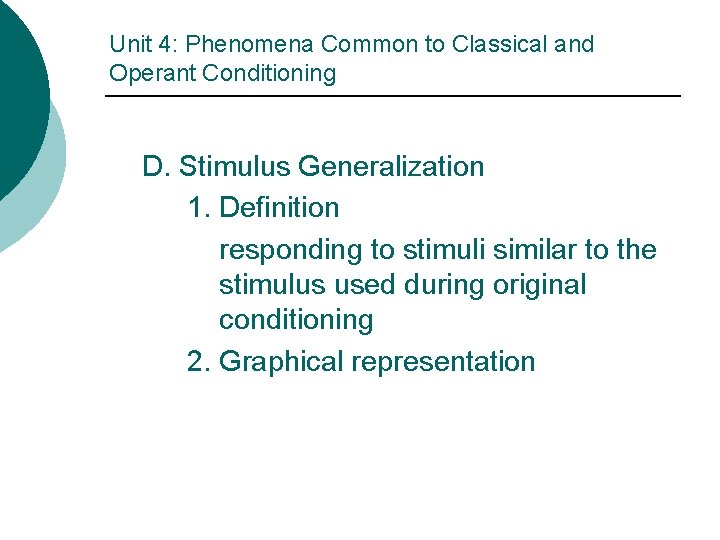
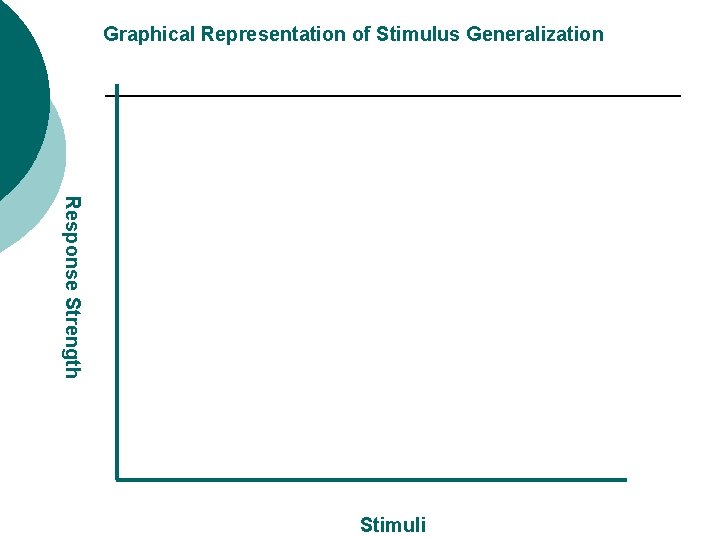
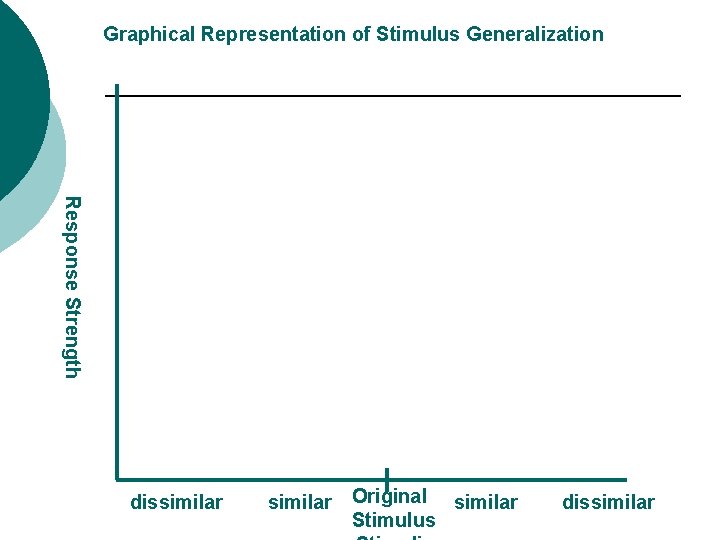
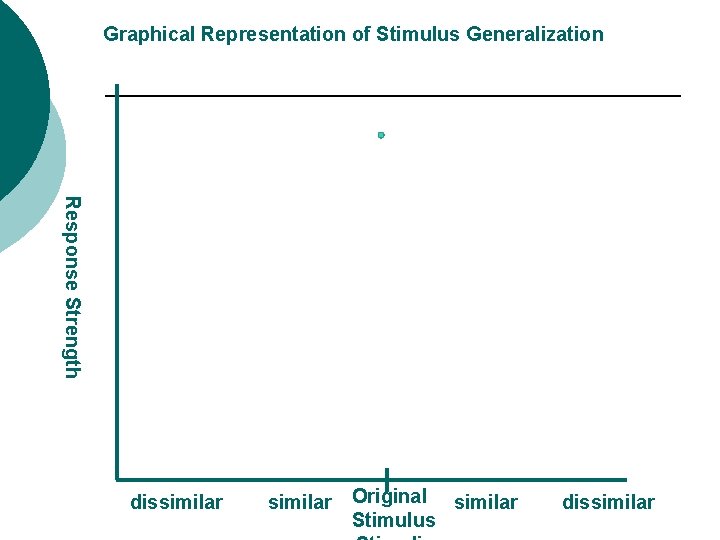
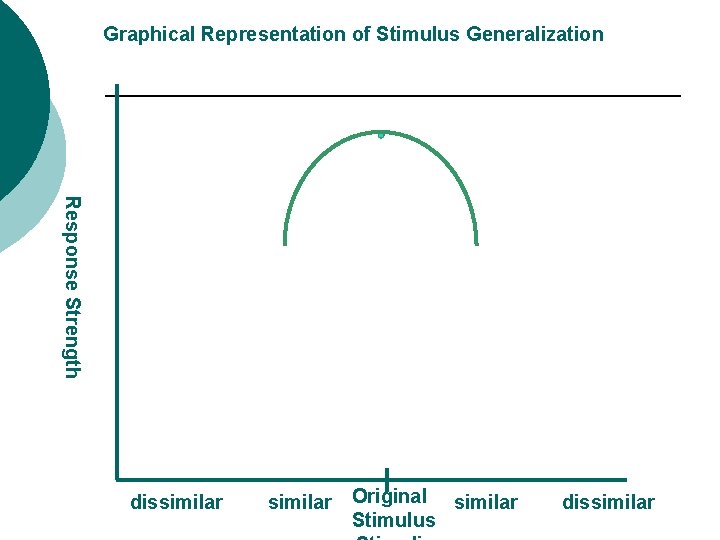
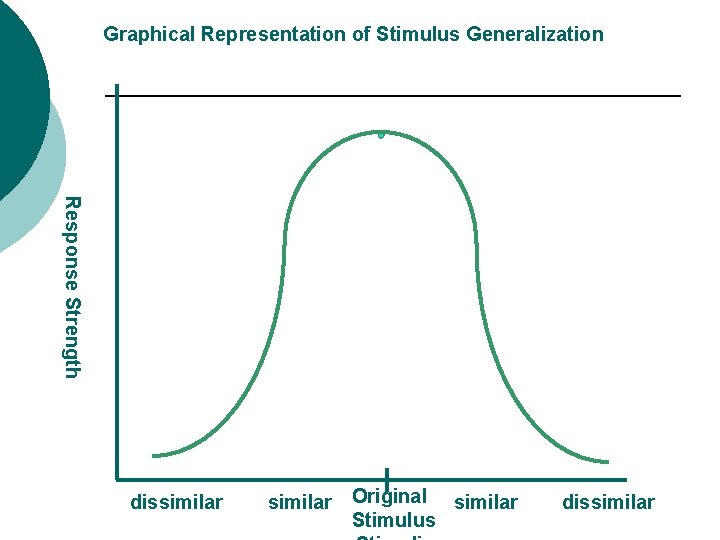
Unit 4: Phenomena Common to Classical and Operant Conditioning D. Stimulus Generalization 1. Definition responding to stimuli similar to the stimulus used during original conditioning 2. Graphical representation
Graphical Representation of Stimulus Generalization
Graphical Representation of Stimulus Generalization
Graphical Representation of Stimulus Generalization Response Strength
Graphical Representation of Stimulus Generalization Response Strength Stimuli
Graphical Representation of Stimulus Generalization Response Strength Original Stimulus
Graphical Representation of Stimulus Generalization Response Strength similar Original similar Stimulus
Graphical Representation of Stimulus Generalization Response Strength dissimilar Original similar Stimulus dissimilar
Graphical Representation of Stimulus Generalization Response Strength dissimilar Original similar Stimulus dissimilar
Graphical Representation of Stimulus Generalization Response Strength dissimilar Original similar Stimulus dissimilar
Graphical Representation of Stimulus Generalization Response Strength dissimilar Original similar Stimulus dissimilar
Unit 4: Phenomena Common to Classical and Operant Conditioning D. Stimulus Generalization 1. Definition 2. Graphical representation 3. Examples
Unit 4: Phenomena Common to Classical and Operant Conditioning E. Stimulus Discrimination 1. Definition not responding to stimuli different from the stimulus used during original conditioning 2. Examples 3. Testing animals’ sensory capacities