
Unit 4 Perceptual Organization Interpretation Perceptual Organization We


- Slides: 18
Unit 4: Perceptual Organization & Interpretation
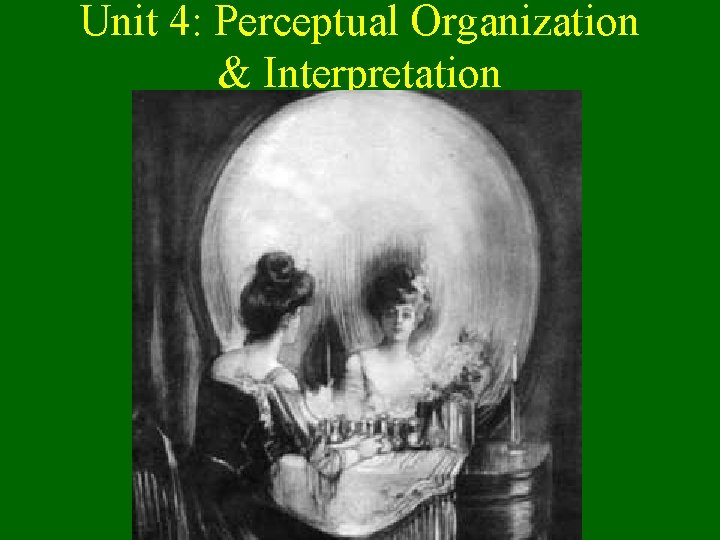
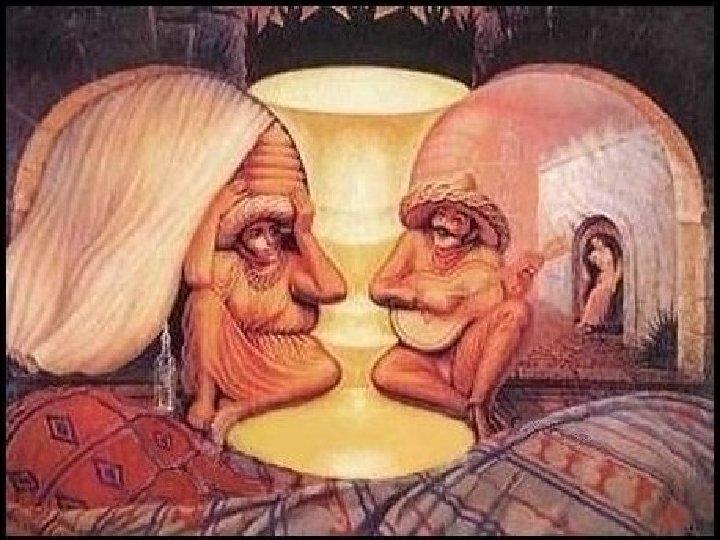
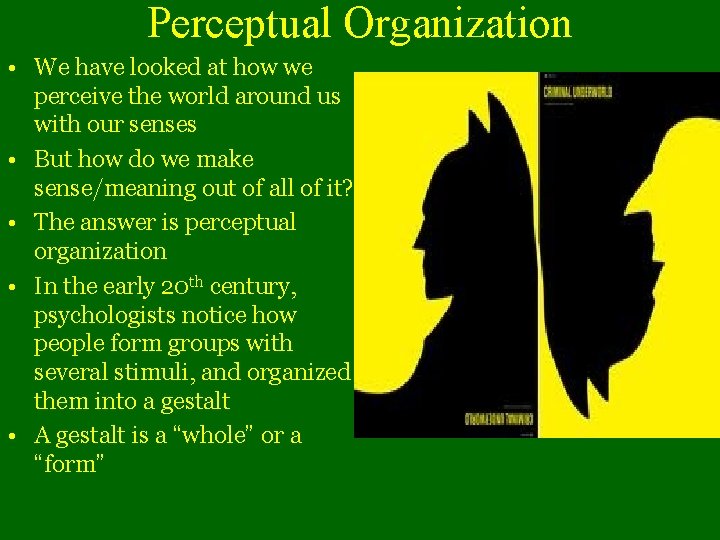
Perceptual Organization • We have looked at how we perceive the world around us with our senses • But how do we make sense/meaning out of all of it? • The answer is perceptual organization • In the early 20 th century, psychologists notice how people form groups with several stimuli, and organized them into a gestalt • A gestalt is a “whole” or a “form”
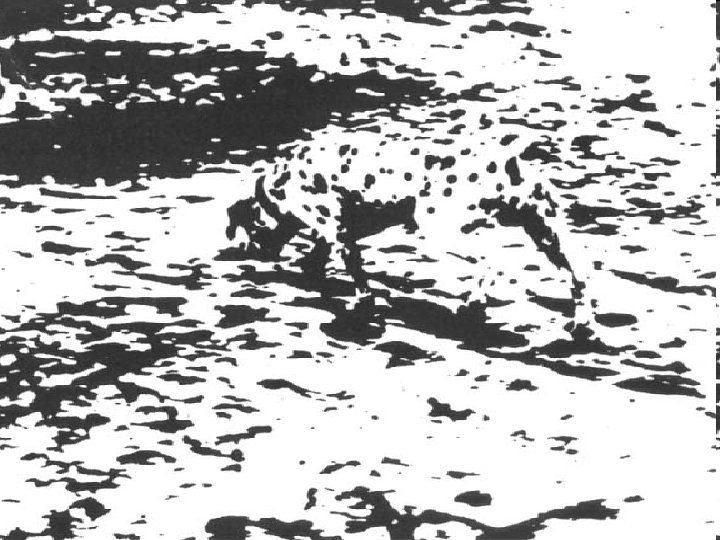
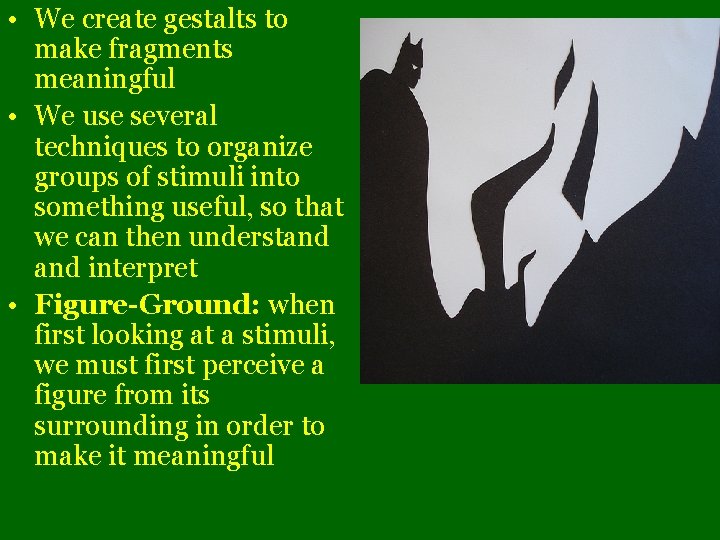
• We create gestalts to make fragments meaningful • We use several techniques to organize groups of stimuli into something useful, so that we can then understand interpret • Figure-Ground: when first looking at a stimuli, we must first perceive a figure from its surrounding in order to make it meaningful
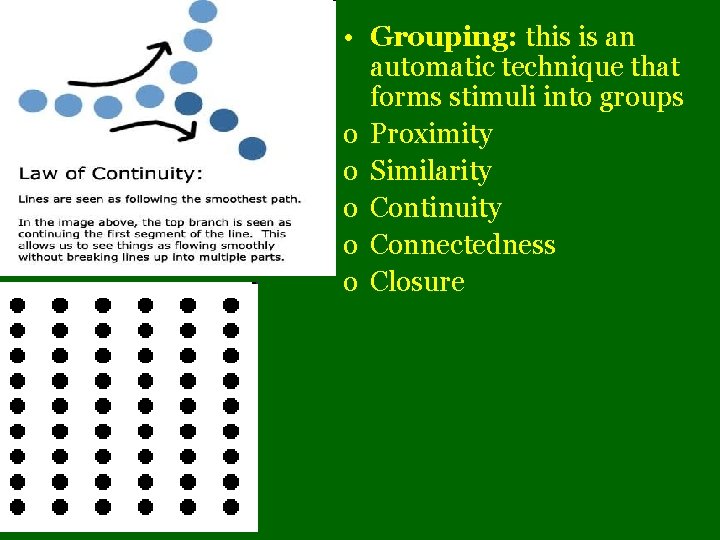
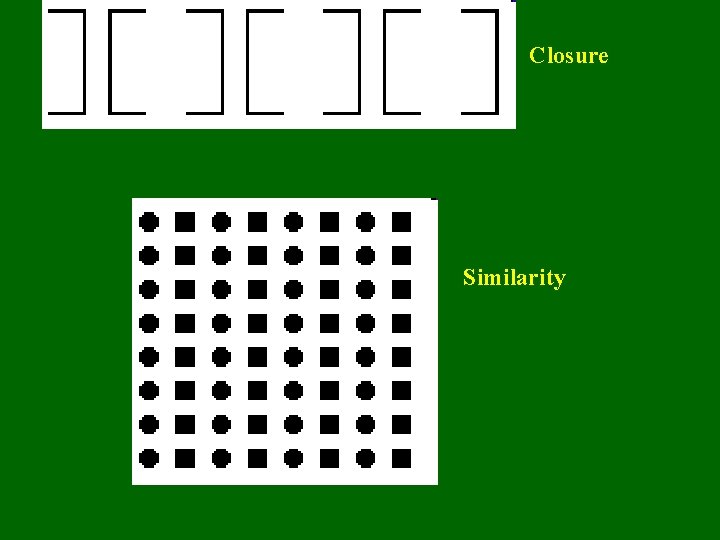
• Grouping: this is an automatic technique that forms stimuli into groups o Proximity o Similarity o Continuity o Connectedness o Closure
Closure Similarity
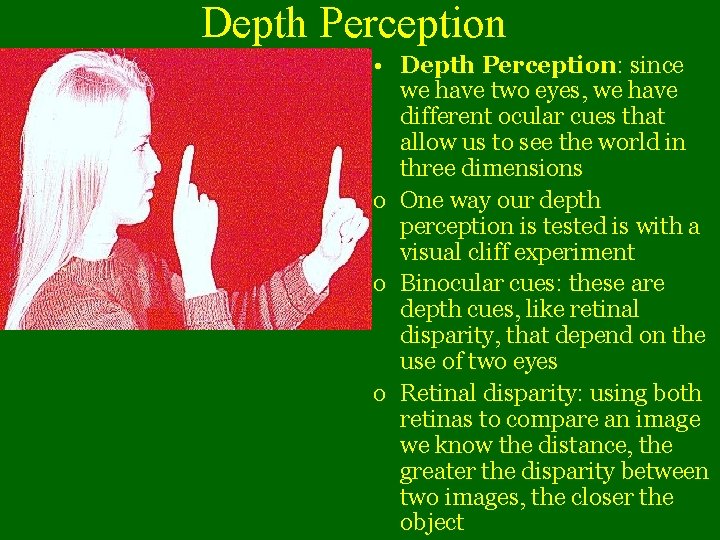
Depth Perception • Depth Perception: since we have two eyes, we have different ocular cues that allow us to see the world in three dimensions o One way our depth perception is tested is with a visual cliff experiment o Binocular cues: these are depth cues, like retinal disparity, that depend on the use of two eyes o Retinal disparity: using both retinas to compare an image we know the distance, the greater the disparity between two images, the closer the object
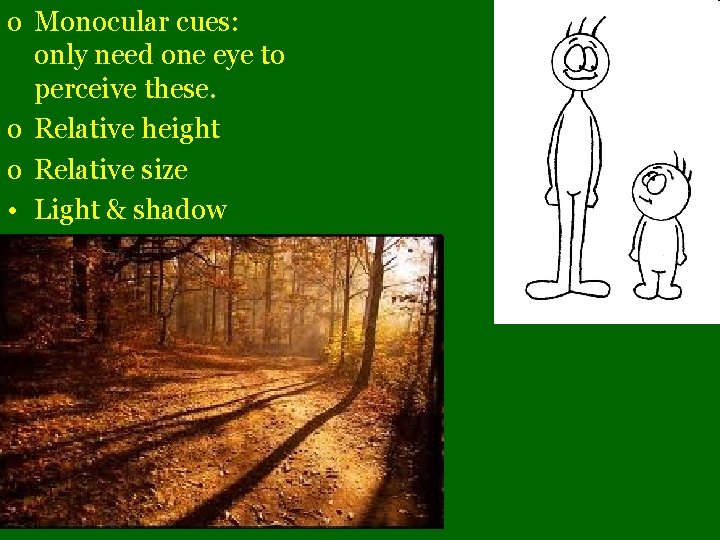
o Monocular cues: only need one eye to perceive these. o Relative height o Relative size • Light & shadow
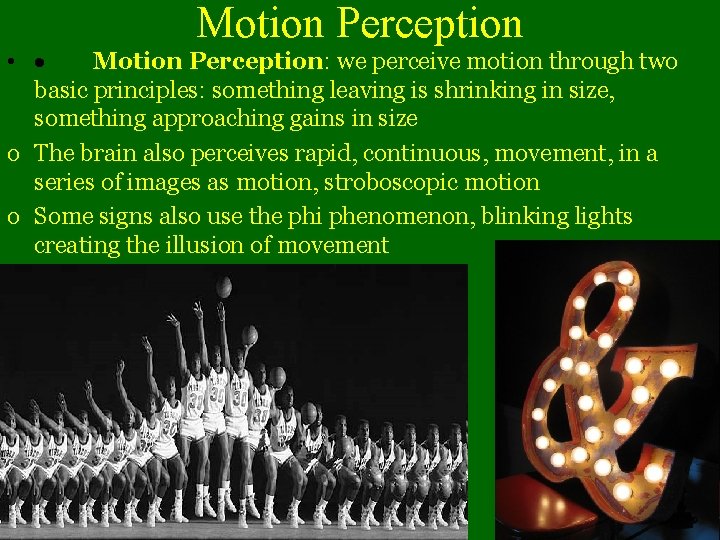
Motion Perception • · Motion Perception: we perceive motion through two basic principles: something leaving is shrinking in size, something approaching gains in size o The brain also perceives rapid, continuous, movement, in a series of images as motion, stroboscopic motion o Some signs also use the phi phenomenon, blinking lights creating the illusion of movement
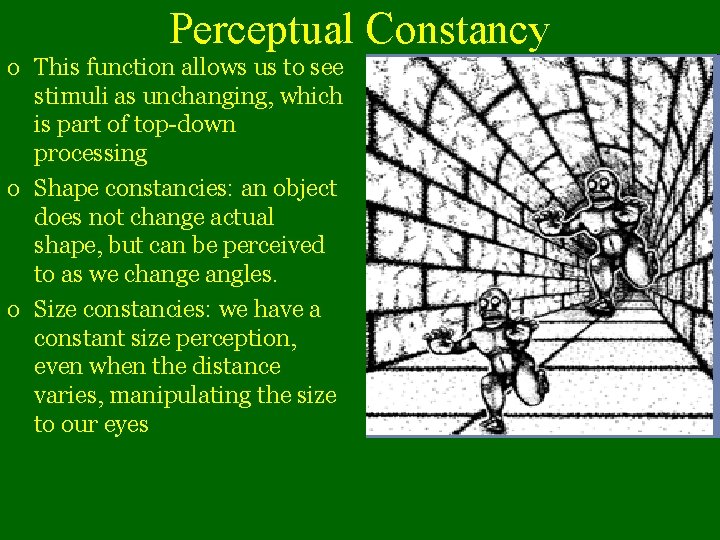
Perceptual Constancy o This function allows us to see stimuli as unchanging, which is part of top-down processing o Shape constancies: an object does not change actual shape, but can be perceived to as we change angles. o Size constancies: we have a constant size perception, even when the distance varies, manipulating the size to our eyes
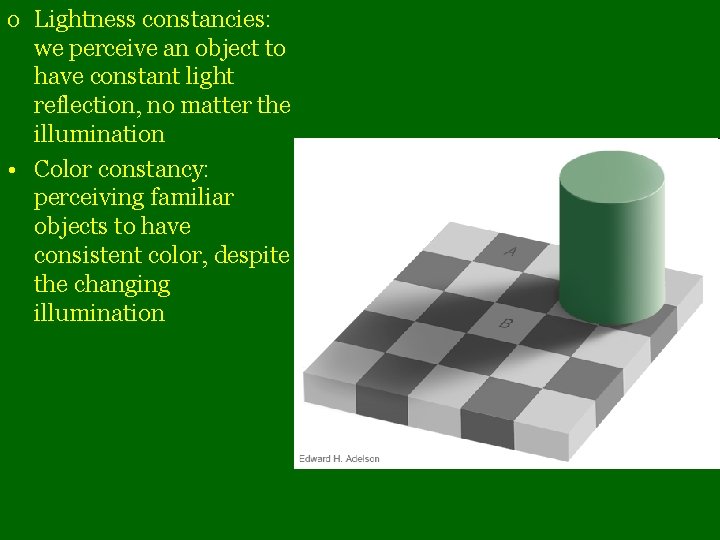
o Lightness constancies: we perceive an object to have constant light reflection, no matter the illumination • Color constancy: perceiving familiar objects to have consistent color, despite the changing illumination
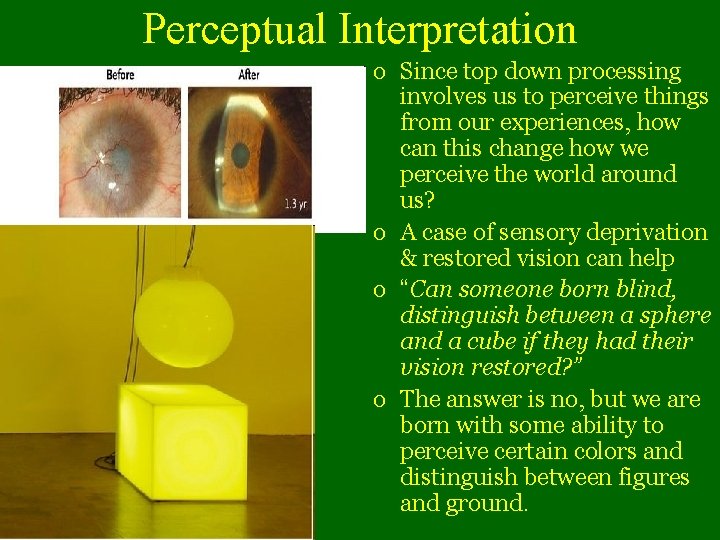
Perceptual Interpretation o Since top down processing involves us to perceive things from our experiences, how can this change how we perceive the world around us? o A case of sensory deprivation & restored vision can help o “Can someone born blind, distinguish between a sphere and a cube if they had their vision restored? ” o The answer is no, but we are born with some ability to perceive certain colors and distinguish between figures and ground.
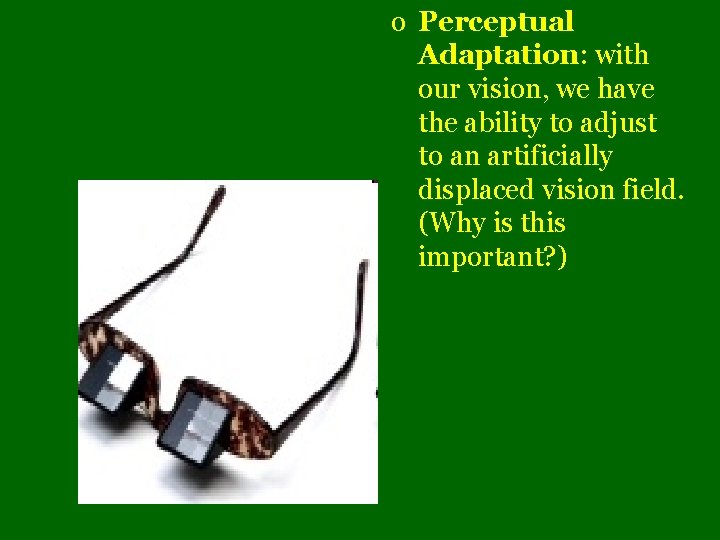
o Perceptual Adaptation: with our vision, we have the ability to adjust to an artificially displaced vision field. (Why is this important? )
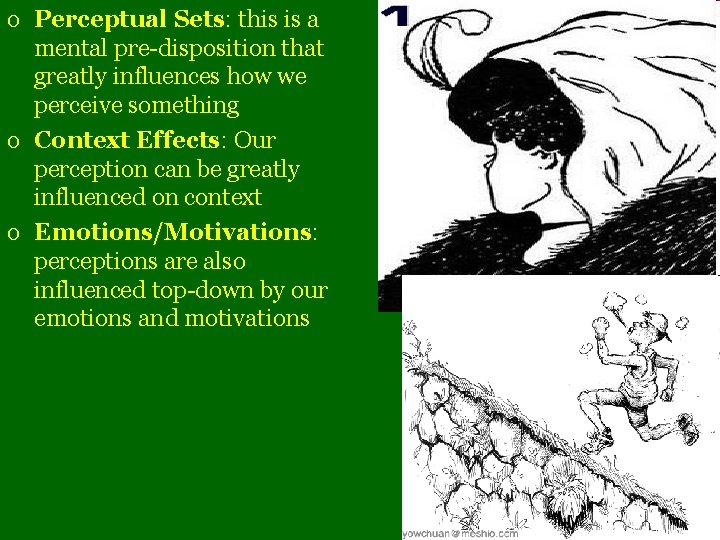
o Perceptual Sets: this is a mental pre-disposition that greatly influences how we perceive something o Context Effects: Our perception can be greatly influenced on context o Emotions/Motivations: perceptions are also influenced top-down by our emotions and motivations
Cultural Impacts • On your paper, think for a minute and come with a few ideas, as to how culture can impact our perceptual sets, thereby our top-down processing.