
Unit 4 MIGRATION What is this a map








- Slides: 43
Unit 4 MIGRATION
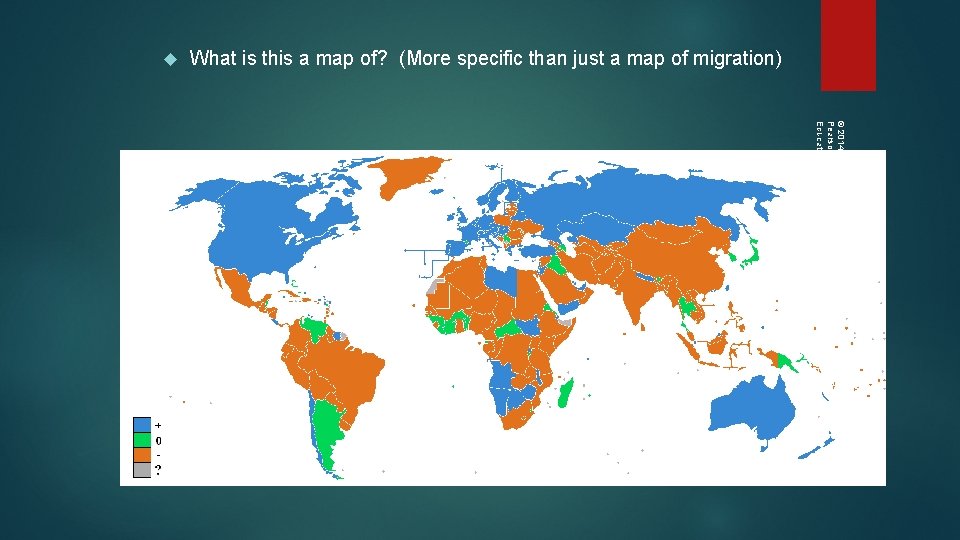
What is this a map of? (More specific than just a map of migration) © 2014 Pearson Education, Inc.
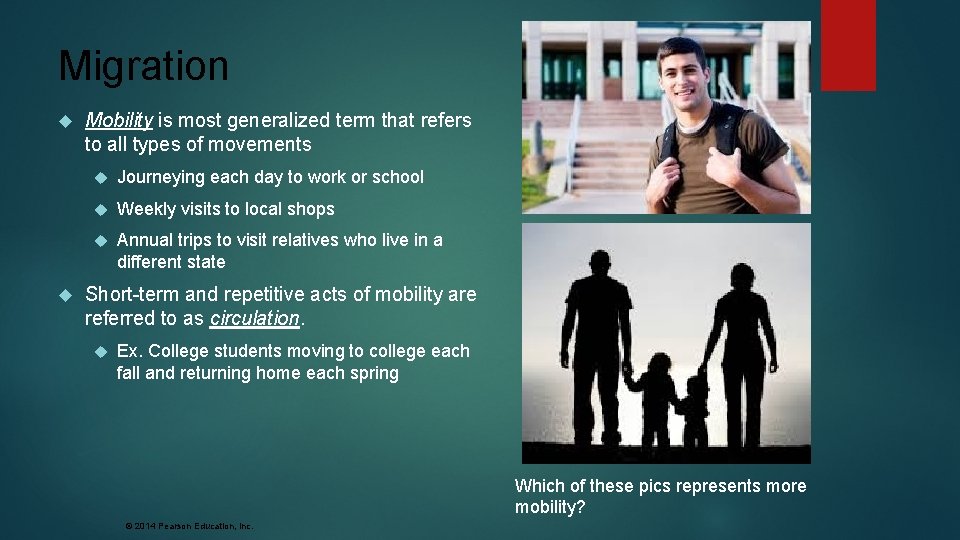
Migration Mobility is most generalized term that refers to all types of movements Journeying each day to work or school Weekly visits to local shops Annual trips to visit relatives who live in a different state Short-term and repetitive acts of mobility are referred to as circulation. Ex. College students moving to college each fall and returning home each spring Which of these pics represents more mobility? © 2014 Pearson Education, Inc.
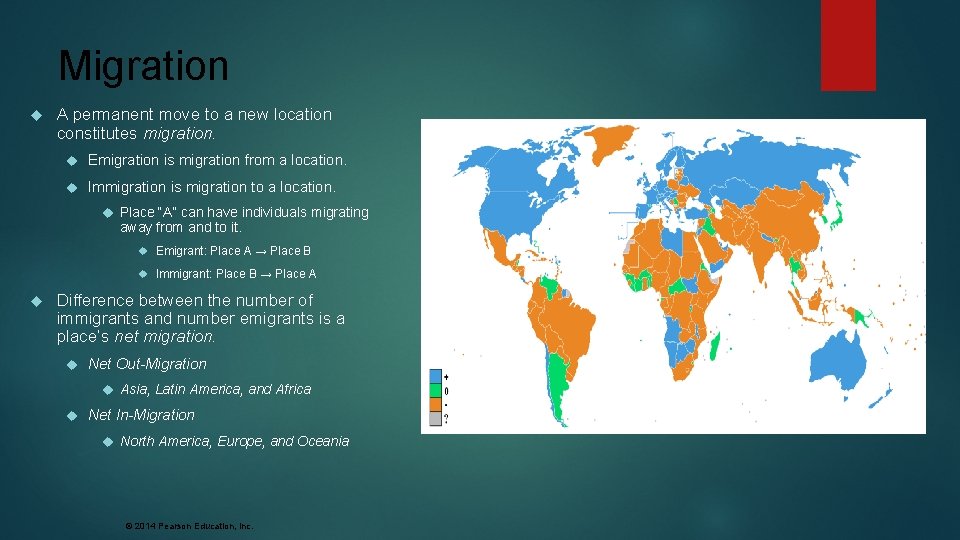
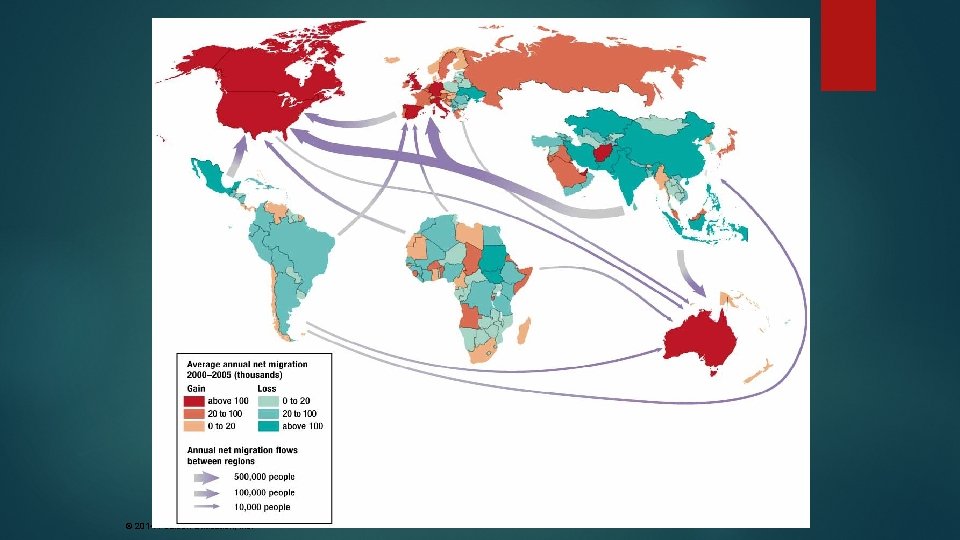
Migration A permanent move to a new location constitutes migration. Emigration is migration from a location. Immigration is migration to a location. Place “A” can have individuals migrating away from and to it. Emigrant: Place A → Place B Immigrant: Place B → Place A Difference between the number of immigrants and number emigrants is a place’s net migration. Net Out-Migration Asia, Latin America, and Africa Net In-Migration North America, Europe, and Oceania © 2014 Pearson Education, Inc.
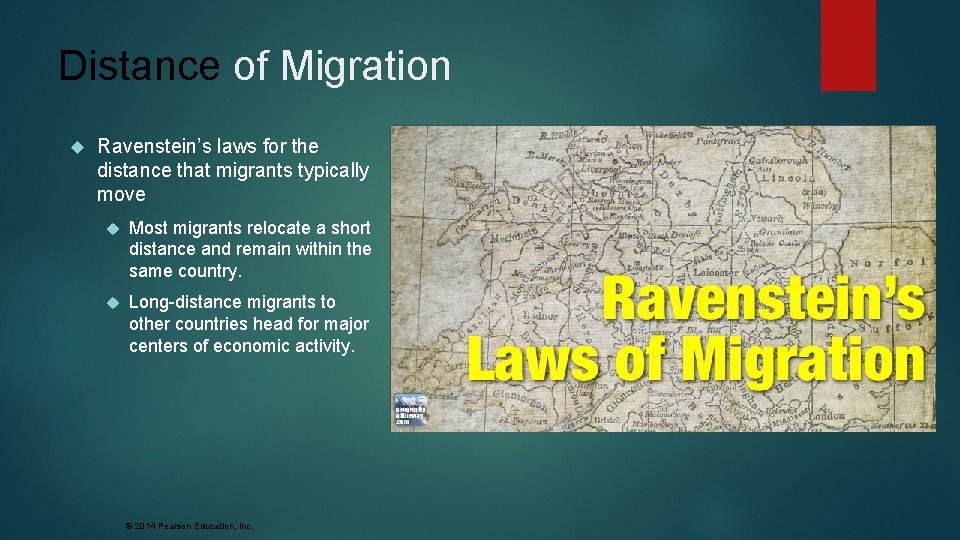
Distance of Migration Ravenstein’s laws for the distance that migrants typically move Most migrants relocate a short distance and remain within the same country. Long-distance migrants to other countries head for major centers of economic activity. © 2014 Pearson Education, Inc.
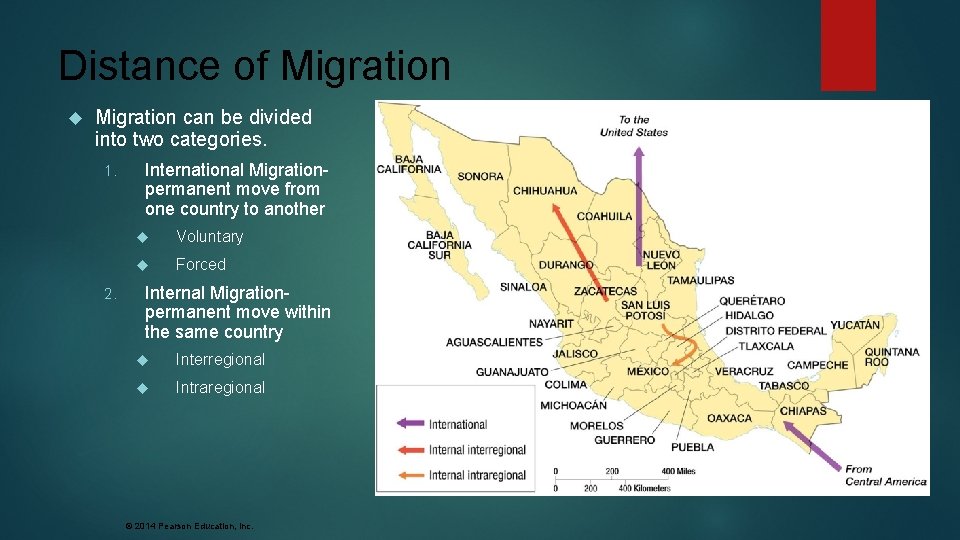
Distance of Migration can be divided into two categories. 1. 2. International Migrationpermanent move from one country to another Voluntary Forced Internal Migrationpermanent move within the same country Interregional Intraregional © 2014 Pearson Education, Inc.
© 2014 Pearson Education, Inc.
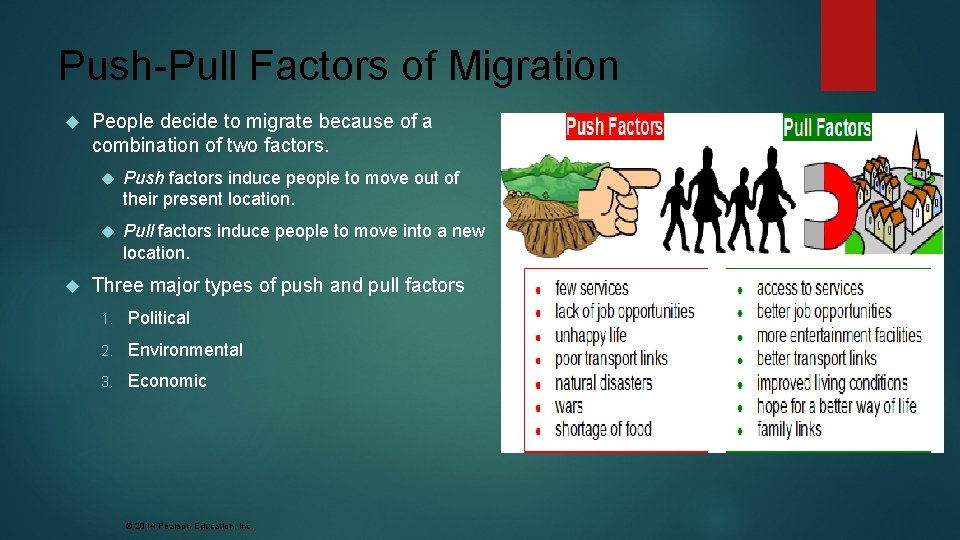
Push-Pull Factors of Migration People decide to migrate because of a combination of two factors. Push factors induce people to move out of their present location. Pull factors induce people to move into a new location. Three major types of push and pull factors 1. Political 2. Environmental 3. Economic © 2014 Pearson Education, Inc.
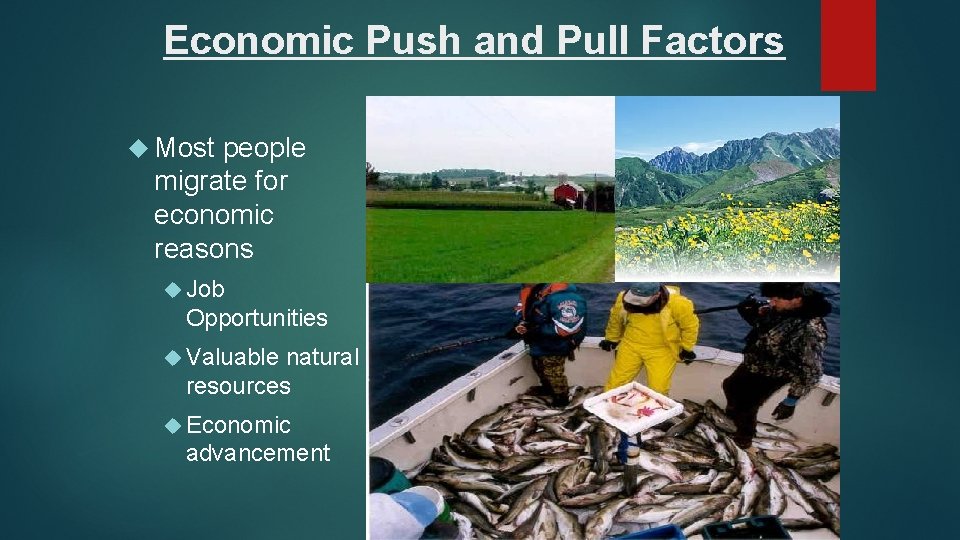
Economic Push and Pull Factors Most people migrate for economic reasons Job Opportunities Valuable natural resources Economic advancement
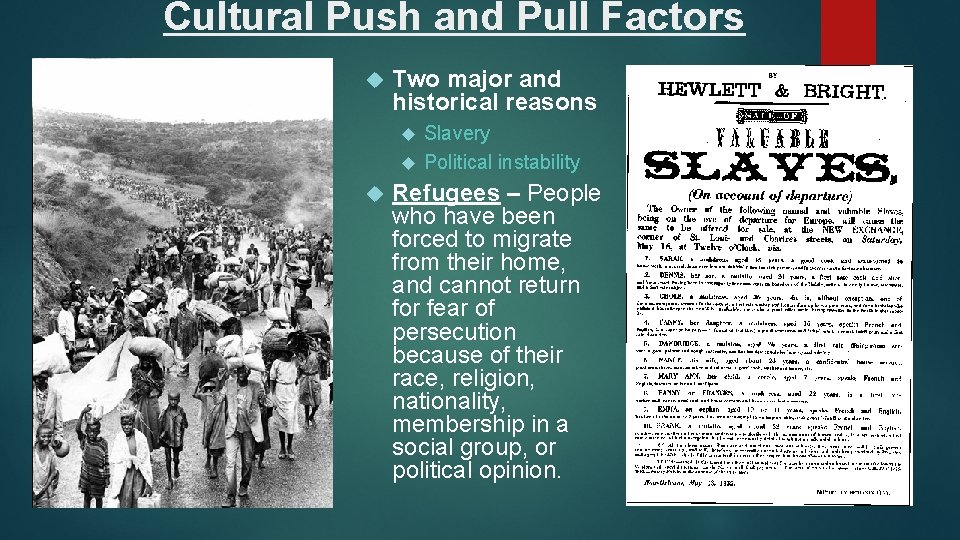
Cultural Push and Pull Factors Two major and historical reasons Slavery Political instability Refugees – People who have been forced to migrate from their home, and cannot return for fear of persecution because of their race, religion, nationality, membership in a social group, or political opinion.
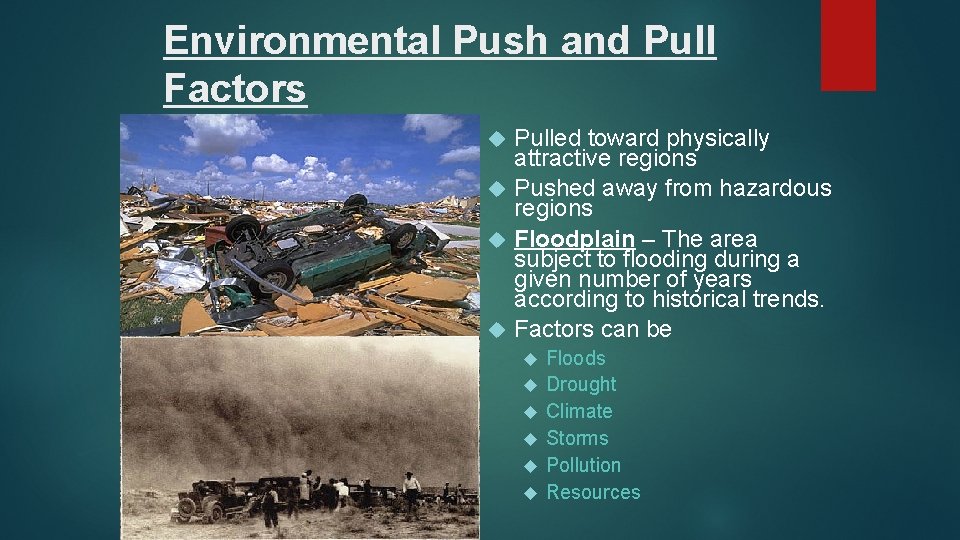
Environmental Push and Pull Factors Pulled toward physically attractive regions Pushed away from hazardous regions Floodplain – The area subject to flooding during a given number of years according to historical trends. Factors can be Floods Drought Climate Storms Pollution Resources
Push/Pull Factor Warm-Up L
The opening of a new factory would be an example of: Economic push Economic pull Cultural push Cultural pull Environmental push Environmental pull
A Buddhist in the western regions of China is threatened with imprisonment due to his beliefs Economic push Economic pull Cultural push Cultural pull Environmental push Environmental pull
Freedom of religion, press, and speech in the United States Economic push Economic pull Cultural push Cultural pull Environmental push Environmental pull
Arizona’s dry climate is beneficial to people with asthma Economic push Economic pull Cultural push Cultural pull Environmental push Environmental pull
Flooding in the Houston area engulfs a family’s home causing them to relocate to a different portion of the U. S. Economic push Economic pull Cultural push Cultural pull Environmental push Environmental pull
A medical facility is closed down in the Pittsburgh region Economic push Economic pull Cultural push Cultural pull Environmental push Environmental pull
Urbanization and Megacities
Urbanization Process by which the population of cities grow Two dimensions Increase in # of people living in cities Increase in % of people living in cities
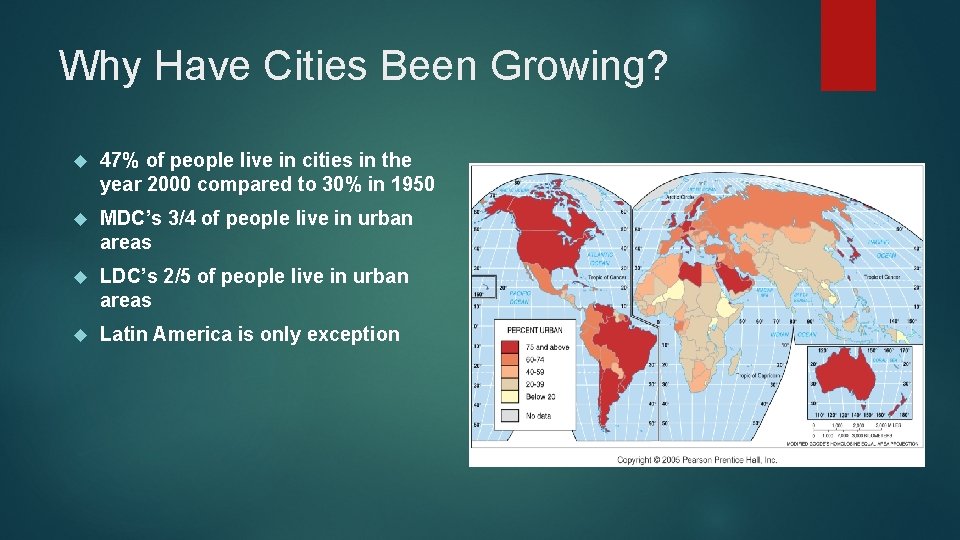
Why Have Cities Been Growing? 47% of people live in cities in the year 2000 compared to 30% in 1950 MDC’s 3/4 of people live in urban areas LDC’s 2/5 of people live in urban areas Latin America is only exception
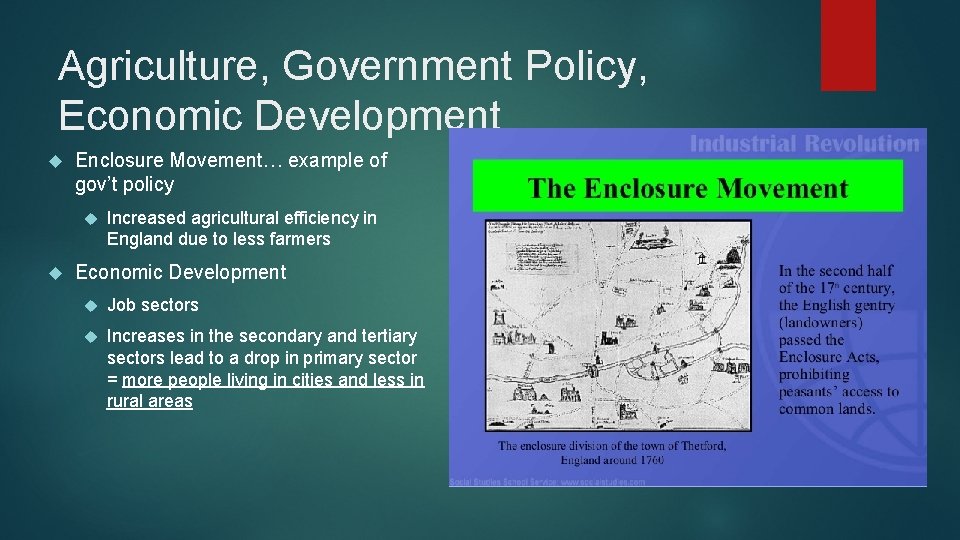
Agriculture, Government Policy, Economic Development Enclosure Movement… example of gov’t policy Increased agricultural efficiency in England due to less farmers Economic Development Job sectors Increases in the secondary and tertiary sectors lead to a drop in primary sector = more people living in cities and less in rural areas
In MDC’s over last 200 years, rural residents have migrated to work in factories and services concentrated in cities The need for fewer farmers have pushed people to cities MDC’s are now fully urbanized because the % of urban residents is so high, this is due to people have already left the rural areas leaving the others choosing to stay
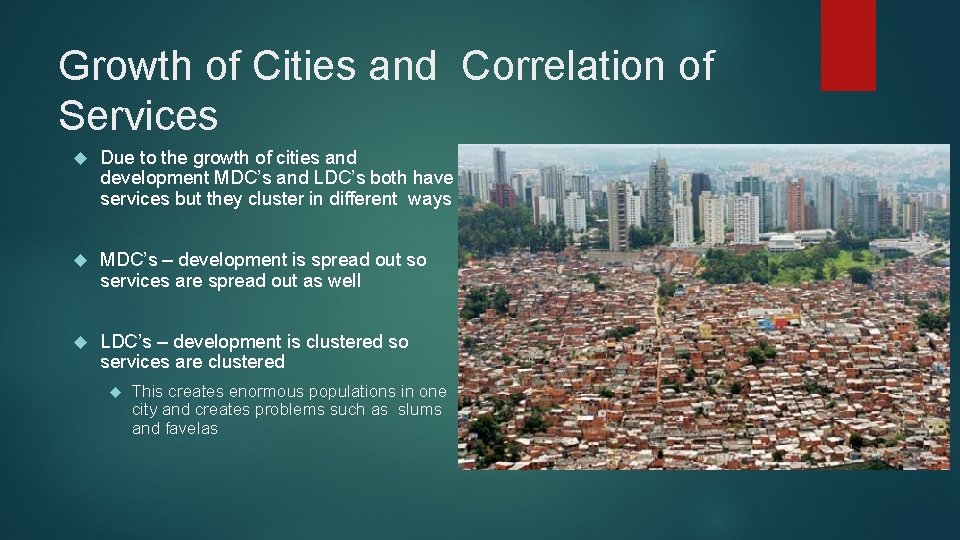
Growth of Cities and Correlation of Services Due to the growth of cities and development MDC’s and LDC’s both have services but they cluster in different ways MDC’s – development is spread out so services are spread out as well LDC’s – development is clustered so services are clustered This creates enormous populations in one city and creates problems such as slums and favelas
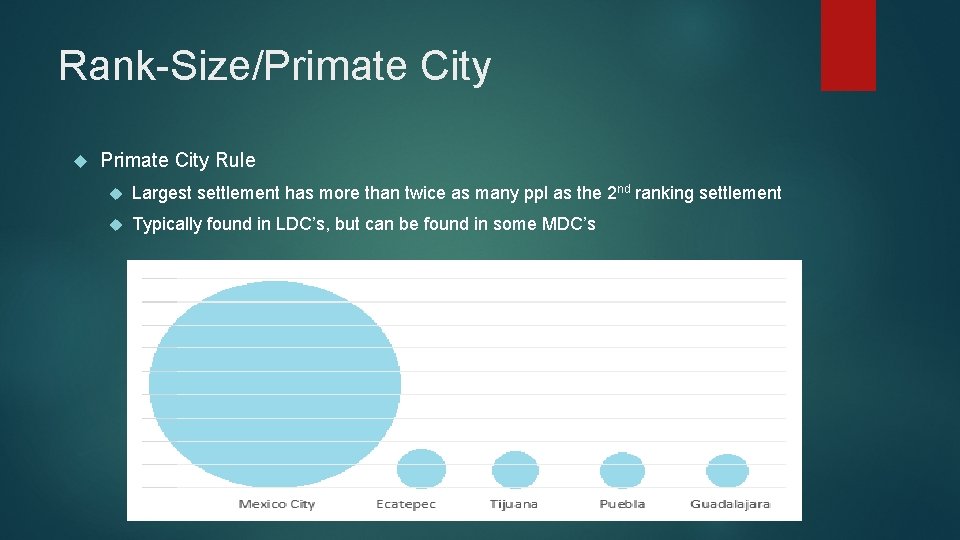
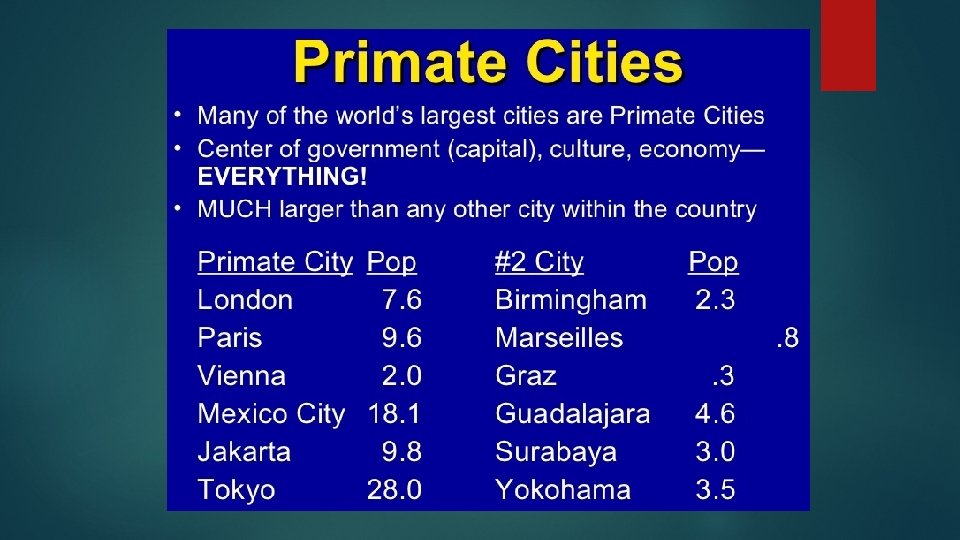
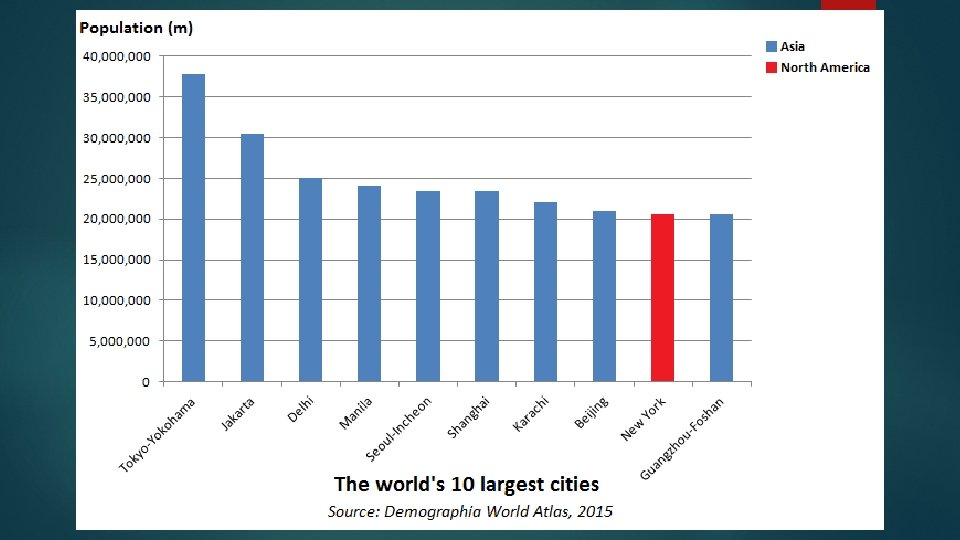
Rank-Size/Primate City Rule Largest settlement has more than twice as many ppl as the 2 nd ranking settlement Typically found in LDC’s, but can be found in some MDC’s
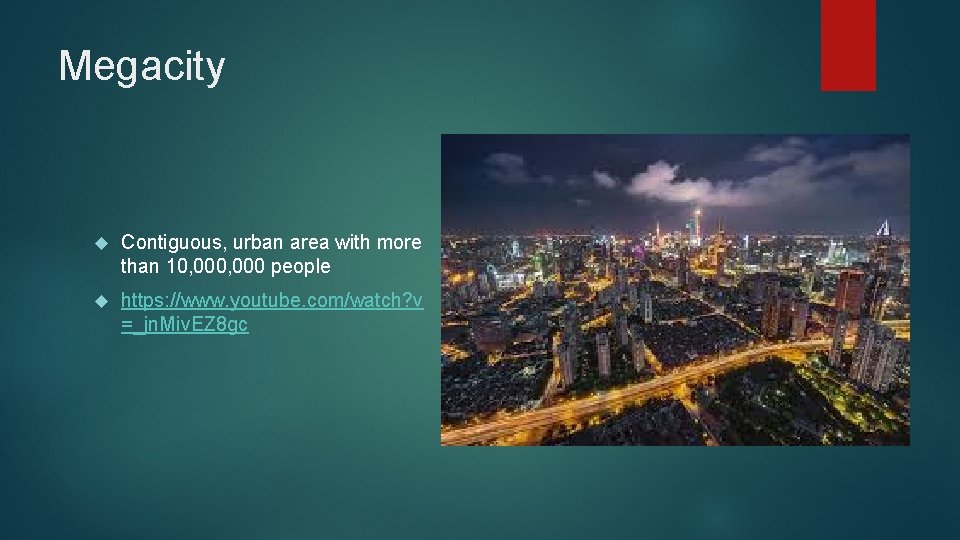
Megacity Contiguous, urban area with more than 10, 000 people https: //www. youtube. com/watch? v =_jn. Miv. EZ 8 gc
Rank Size Rule Rank-size Rule Country’s nth largest settlement is 1/n the population of the largest settlement Typically found in MDC’s
What obstacles do migrants face?
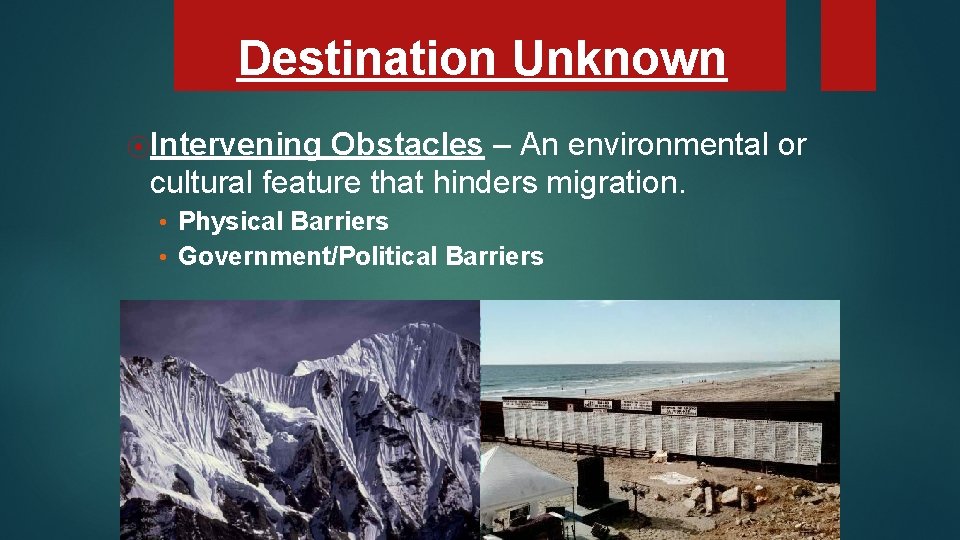
Destination Unknown ⦿Intervening Obstacles – An environmental or cultural feature that hinders migration. • Physical Barriers • Government/Political Barriers
Obstacles Migrants Face Quotas – a restriction on the number of people allowed to migrate 1921 – 2% of number of people currently living in US (very flawed…. KEEP US EUROPEAN!!) 1965 – Hemisphere quotas (gave more to eastern hemisphere) 1978 – Global Quota (620, 000)… no more than 7% from one given country
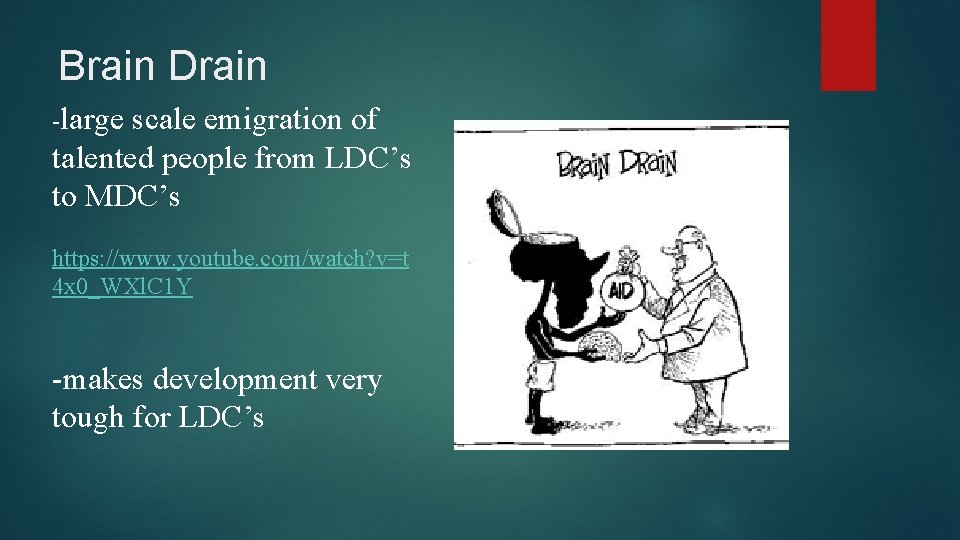
Brain Drain -large scale emigration of talented people from LDC’s to MDC’s https: //www. youtube. com/watch? v=t 4 x 0_WXl. C 1 Y -makes development very tough for LDC’s
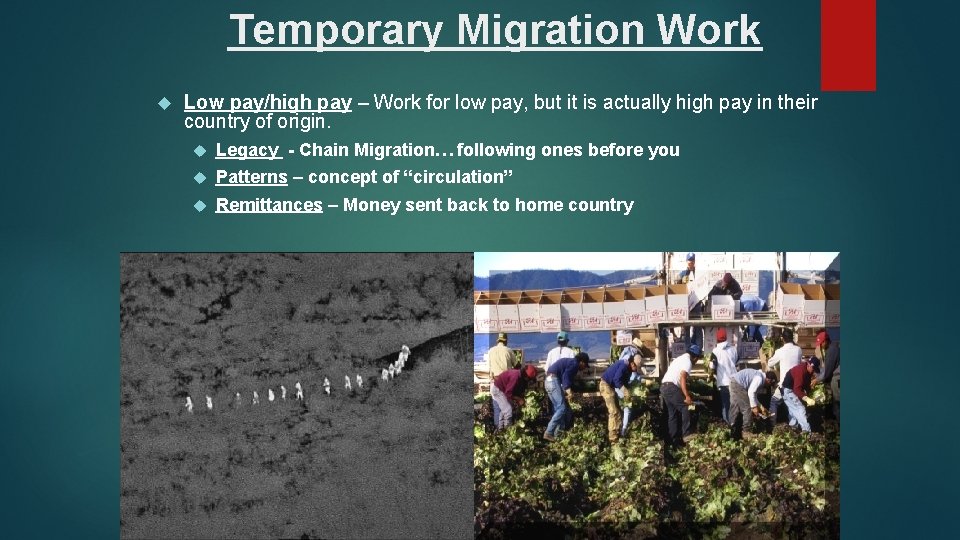
Temporary Migration Work Low pay/high pay – Work for low pay, but it is actually high pay in their country of origin. Legacy - Chain Migration… following ones before you Patterns – concept of “circulation” Remittances – Money sent back to home country
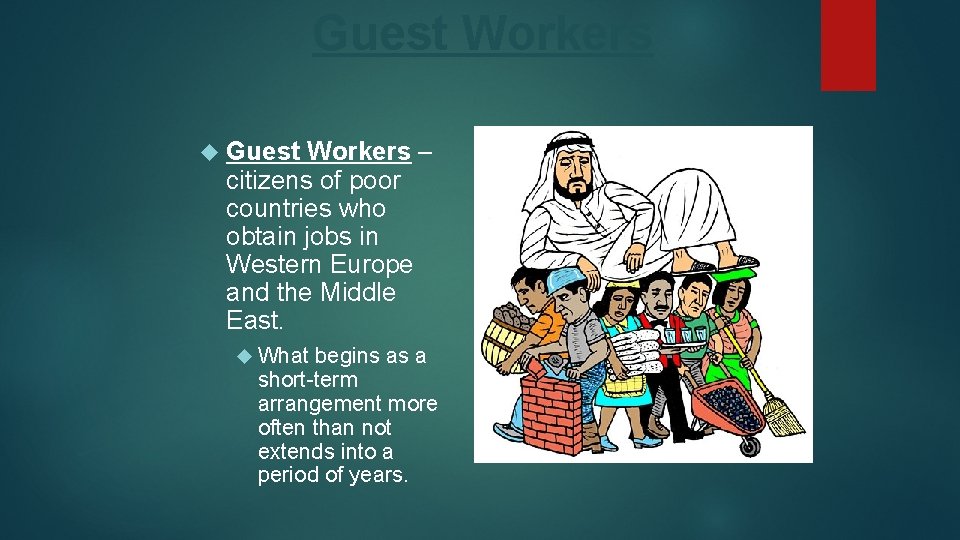
Guest Workers – citizens of poor countries who obtain jobs in Western Europe and the Middle East. What begins as a short-term arrangement more often than not extends into a period of years.
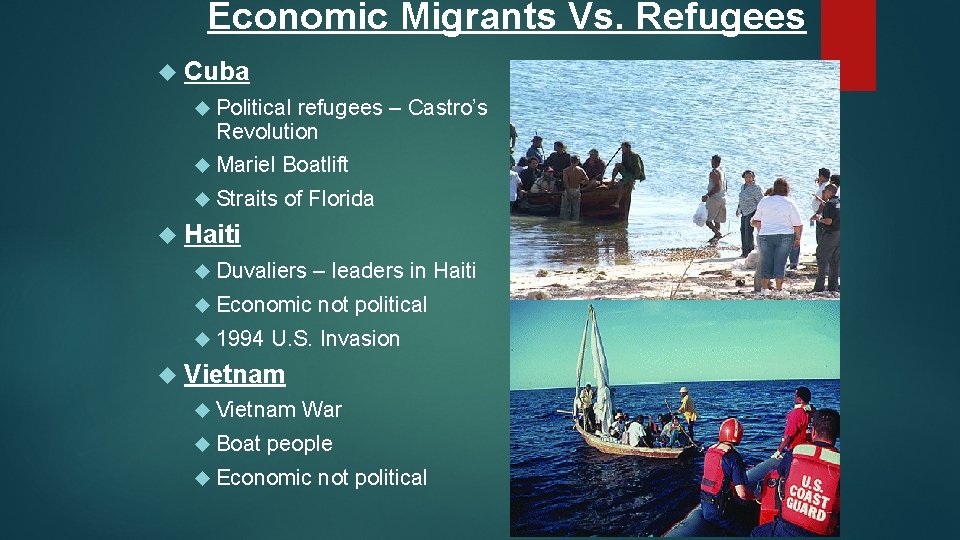
Economic Migrants Vs. Refugees Cuba Political refugees – Castro’s Revolution Mariel Boatlift Straits of Florida Haiti Duvaliers – leaders in Haiti Economic not political 1994 U. S. Invasion Vietnam Boat War people Economic not political
Latin America PHYSICAL FEATURES AND POPULATION DISTRIBUTION
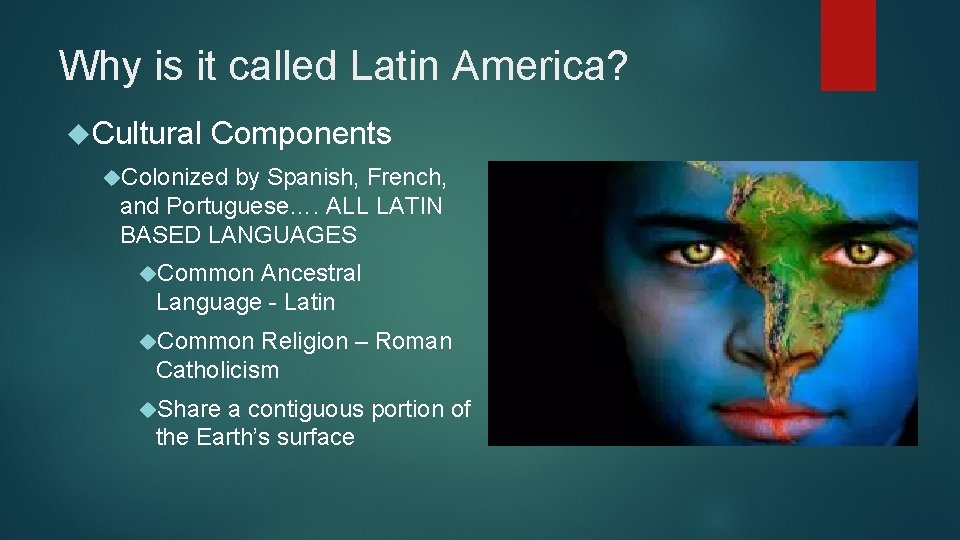
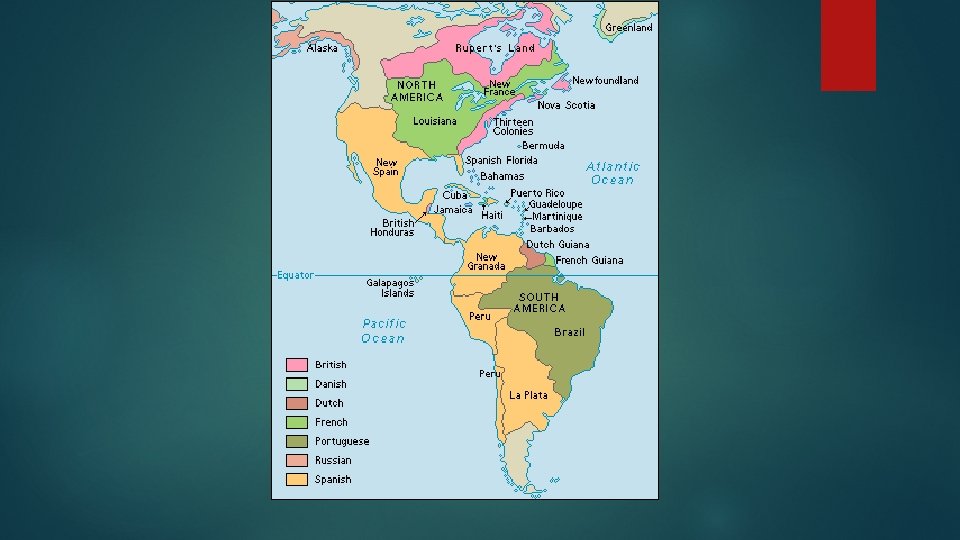
Why is it called Latin America? Cultural Components Colonized by Spanish, French, and Portuguese…. ALL LATIN BASED LANGUAGES Common Ancestral Language - Latin Common Religion – Roman Catholicism Share a contiguous portion of the Earth’s surface
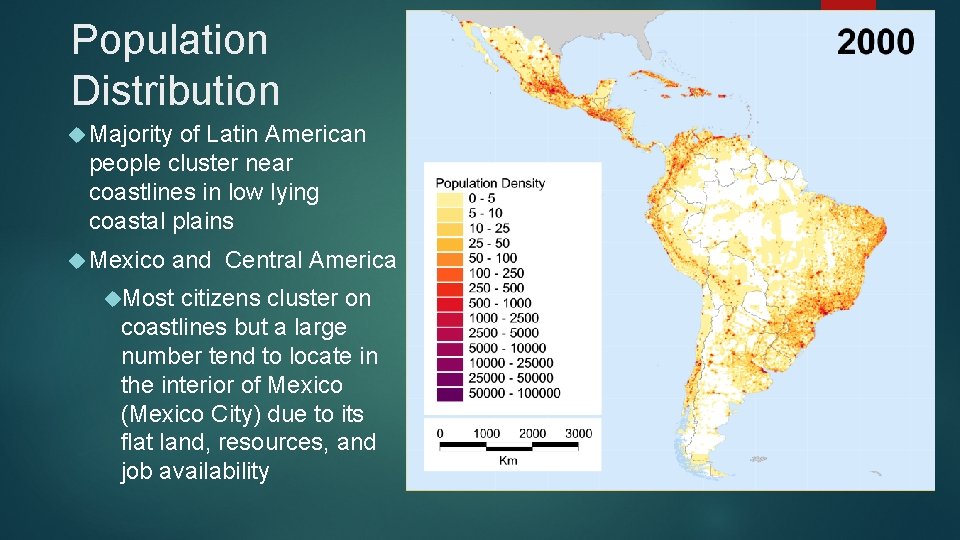
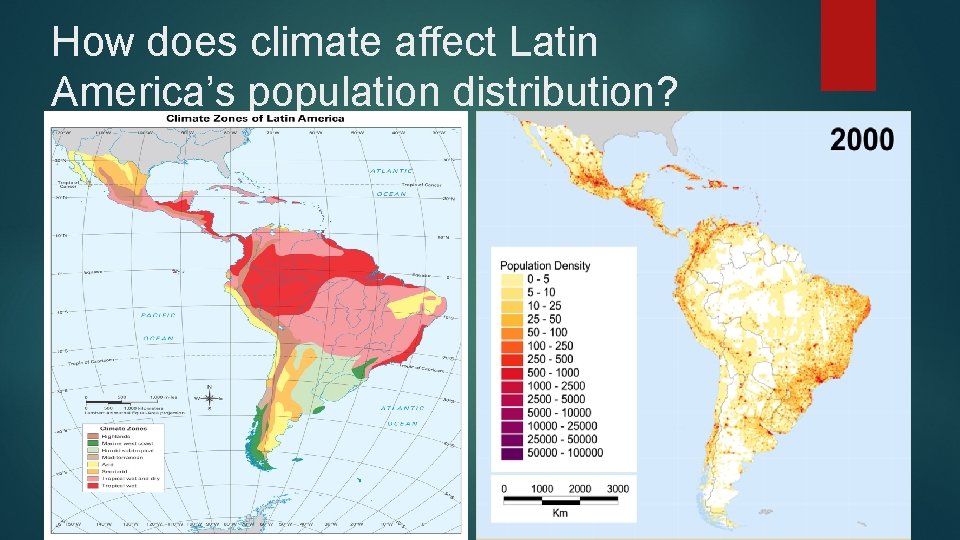
Population Distribution Majority of Latin American people cluster near coastlines in low lying coastal plains Mexico and Central America Most citizens cluster on coastlines but a large number tend to locate in the interior of Mexico (Mexico City) due to its flat land, resources, and job availability
How does climate affect Latin America’s population distribution?
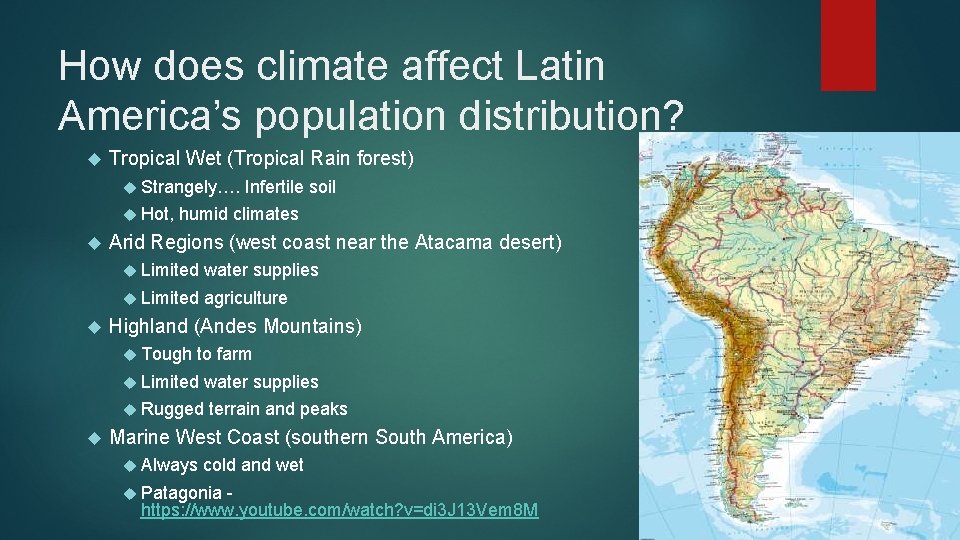
How does climate affect Latin America’s population distribution? Tropical Wet (Tropical Rain forest) Strangely…. Hot, humid climates Arid Regions (west coast near the Atacama desert) Limited water supplies Limited agriculture Highland (Andes Mountains) Tough to farm Limited water supplies Rugged Infertile soil terrain and peaks Marine West Coast (southern South America) Always cold and wet Patagonia https: //www. youtube. com/watch? v=di 3 J 13 Vem 8 M
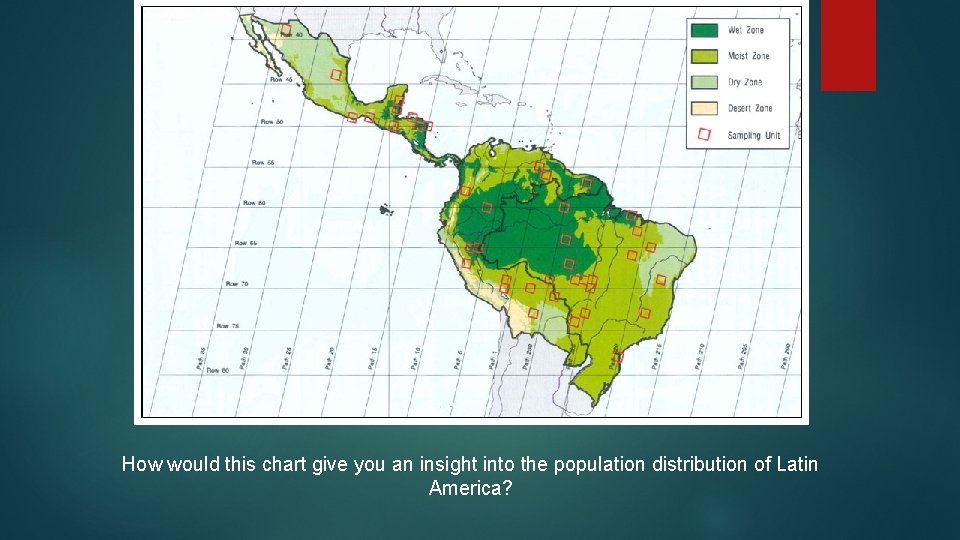
How would this chart give you an insight into the population distribution of Latin America?