
UNIT 4 MICROBIOLOGY WHAT ARE MICROORGANISMS Micro organism
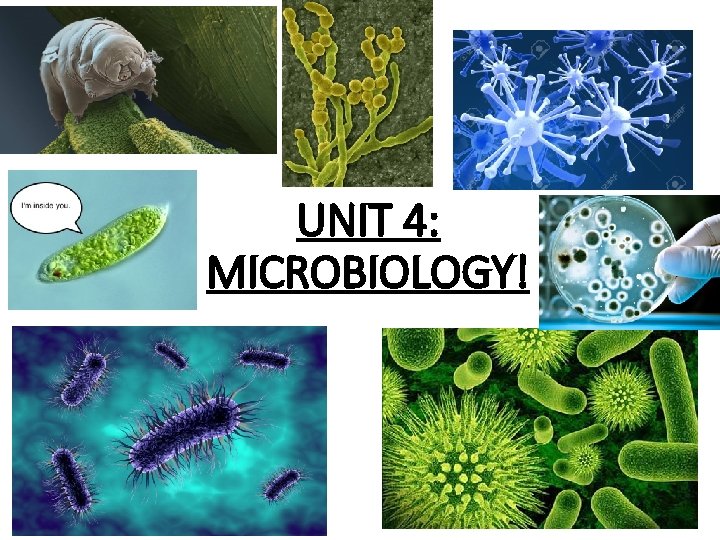
UNIT 4: MICROBIOLOGY!
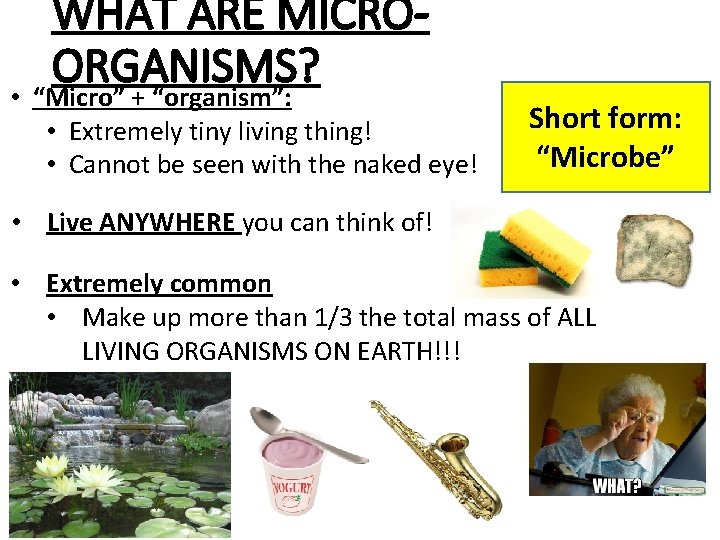
WHAT ARE MICROORGANISMS? • “Micro” + “organism”: • Extremely tiny living thing! • Cannot be seen with the naked eye! Short form: “Microbe” • Live ANYWHERE you can think of! • Extremely common • Make up more than 1/3 the total mass of ALL LIVING ORGANISMS ON EARTH!!!
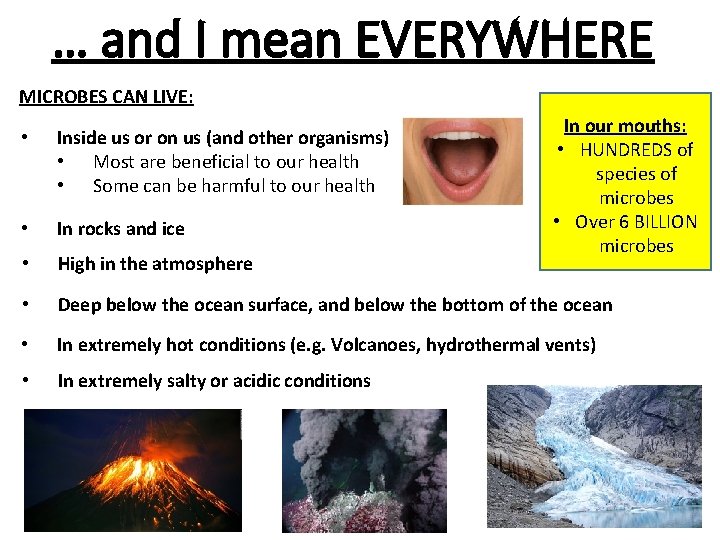
… and I mean EVERYWHERE MICROBES CAN LIVE: In our mouths: • HUNDREDS of species of microbes • Over 6 BILLION microbes • Inside us or on us (and other organisms) • Most are beneficial to our health • Some can be harmful to our health • In rocks and ice • High in the atmosphere • Deep below the ocean surface, and below the bottom of the ocean • In extremely hot conditions (e. g. Volcanoes, hydrothermal vents) • In extremely salty or acidic conditions

MICROBIOLGY • “Micro” + “biology”: • The field of biology that studies microscopic organisms. • Morphology • Shape and other structural features of an organism. • With microbes, this deals with identifying overall shape and cell structure. • Steps for Studying Micro-organisms 1. Specimen Collection • Collecting samples that may contain microbes • Sources could be soil, water, food products, or body fluids (blood, urine, feces, etc. ) 2. Inoculation and Incubation • Inoculation: collected microbes are placed in nutrient-rich liquids or jellylike substances. • Incubation: provides the right environment (temperature, humidity, etc. ) for the microbes to grow. 3. Inspection • After some time being incubated, populations of microbes are inspected analyzed. • Microscope: you can see the microbes’ morphology up close. • Agar plate: you can see how populations grow.


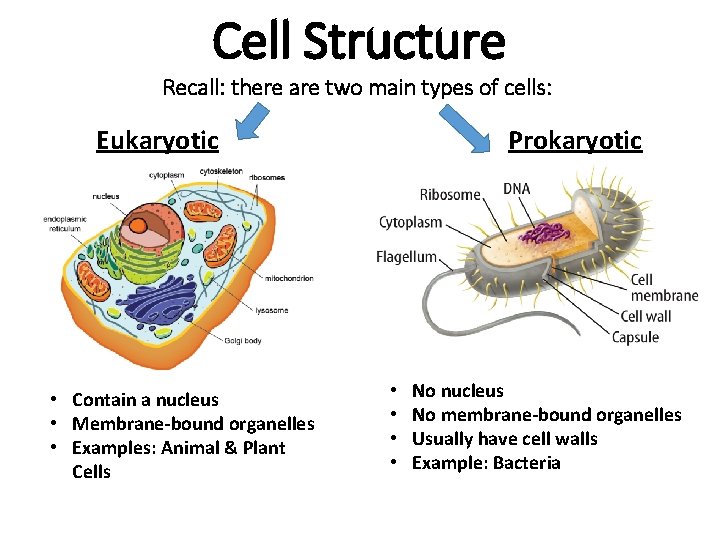
Cell Structure Recall: there are two main types of cells: Eukaryotic • Contain a nucleus • Membrane-bound organelles • Examples: Animal & Plant Cells Prokaryotic • • No nucleus No membrane-bound organelles Usually have cell walls Example: Bacteria

Classifying Life on Earth • All life on Earth is Classified into Three Groups called Domains • Each domain is further classified into Kingdoms
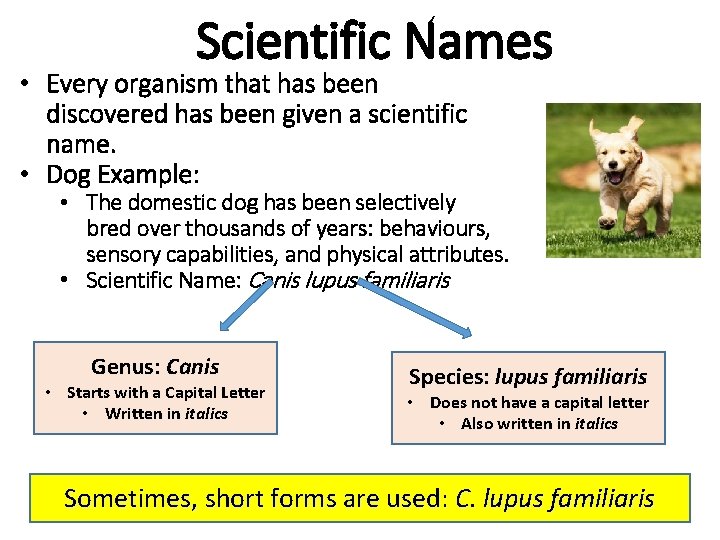
Scientific Names • Every organism that has been discovered has been given a scientific name. • Dog Example: • The domestic dog has been selectively bred over thousands of years: behaviours, sensory capabilities, and physical attributes. • Scientific Name: Canis lupus familiaris Genus: Canis • Starts with a Capital Letter • Written in italics Species: lupus familiaris • Does not have a capital letter • Also written in italics Sometimes, short forms are used: C. lupus familiaris

Domain Kingdom Phylum Class Order Family Genus Species
- Slides: 10