
UNIT 4 MANUFACTURING PROCESS Prof Kiran Gore WHAT






- Slides: 68
UNIT- 4 MANUFACTURING PROCESS Prof. Kiran Gore
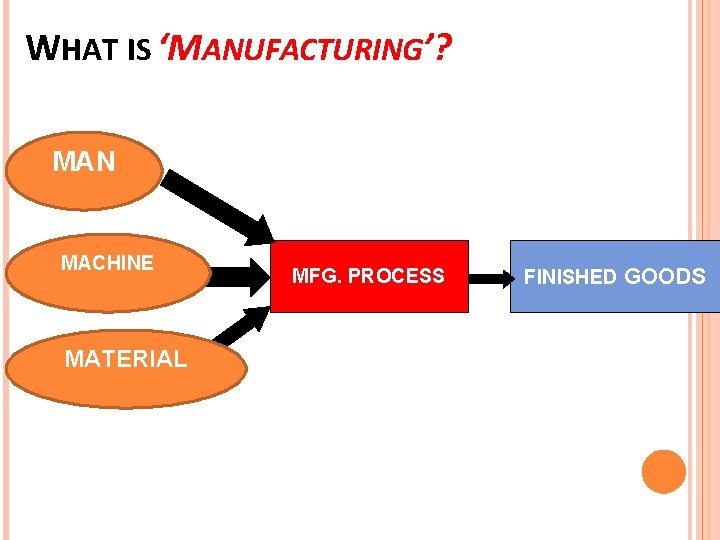
WHAT IS ‘MANUFACTURING’? MAN MACHINE MATERIAL MFG. PROCESS FINISHED GOODS
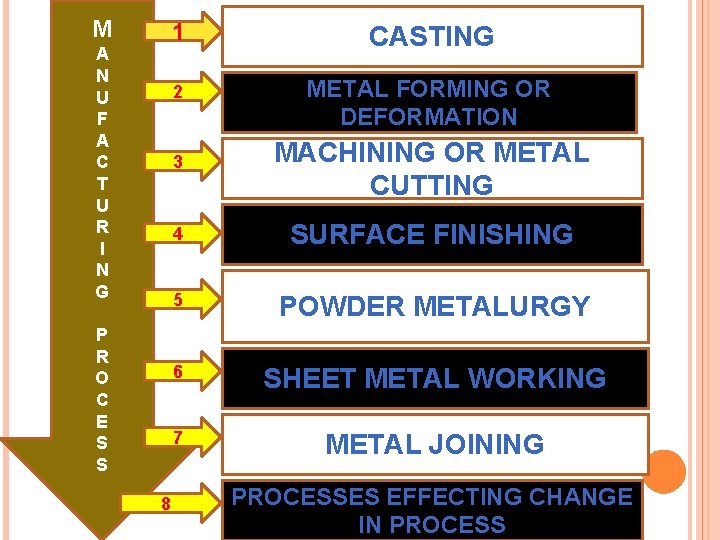
M A N U F A C T U R I N G P R O C E S S 8 1 CASTING 2 METAL FORMING OR DEFORMATION 3 MACHINING OR METAL CUTTING 4 SURFACE FINISHING 5 POWDER METALURGY 6 SHEET METAL WORKING 7 METAL JOINING PROCESSES EFFECTING CHANGE IN PROCESS
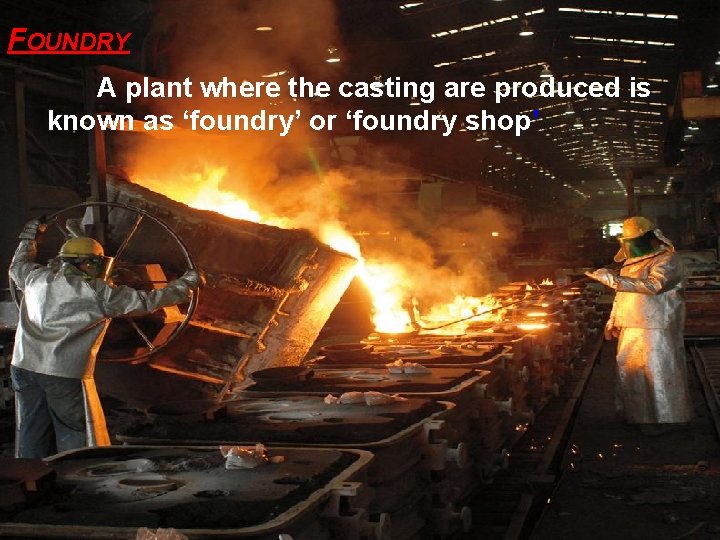
FOUNDRY A plant where the casting are produced is known as ‘foundry’ or ‘foundry shop’
MATERIAL SUITABLE FOR CASTING PROCESS ü Cast iron ü Aluminum alloys ü Copper alloys ü Plastics
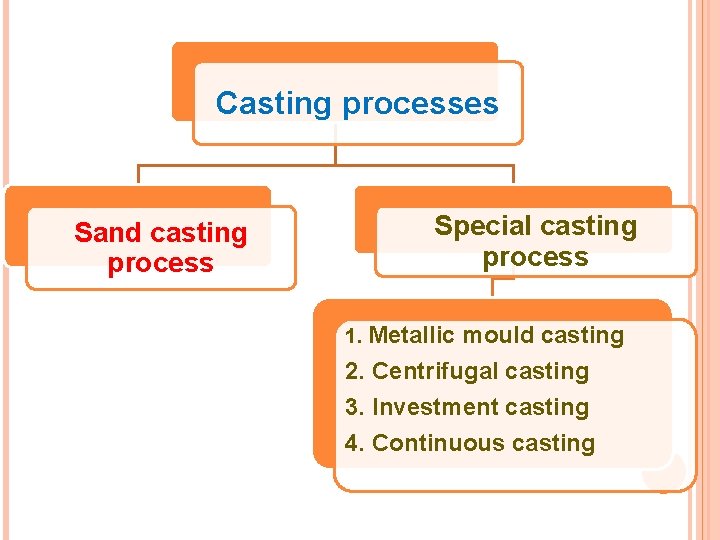
Casting processes Sand casting process Special casting process 1. Metallic mould casting 2. Centrifugal casting 3. Investment casting 4. Continuous casting
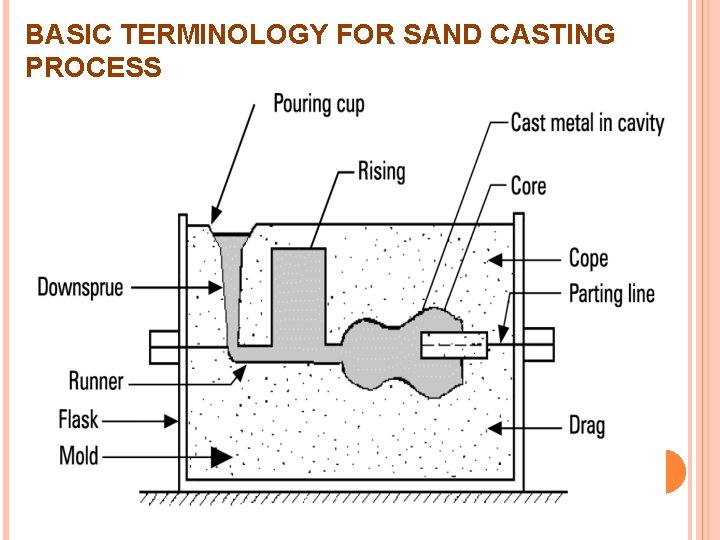
BASIC TERMINOLOGY FOR SAND CASTING PROCESS The commonly used terms used in casting process are Pattern Casting Mould box Cope Drag Core Sprue Runner Riser
BASIC TERMINOLOGY FOR SAND CASTING PROCESS
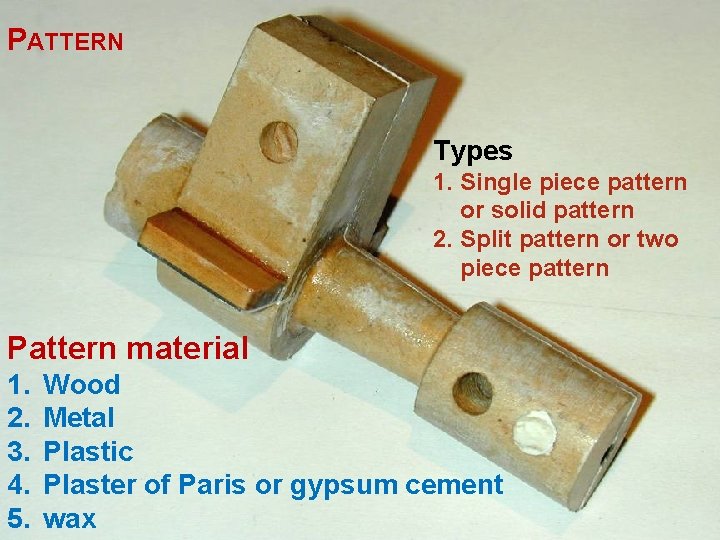
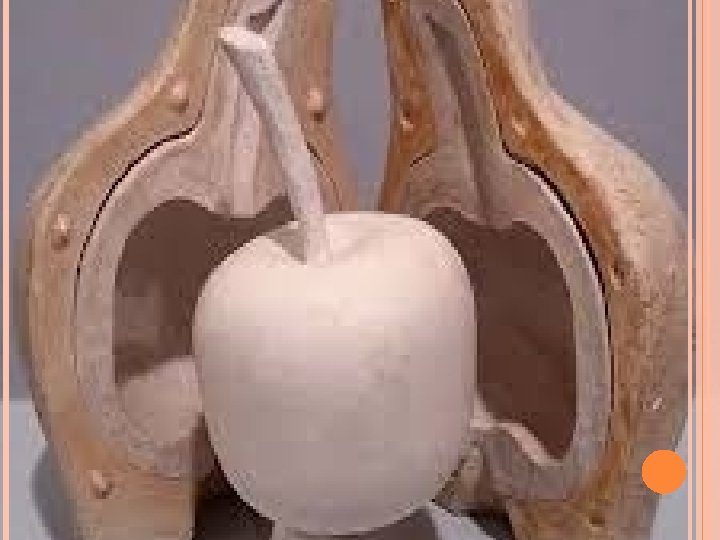
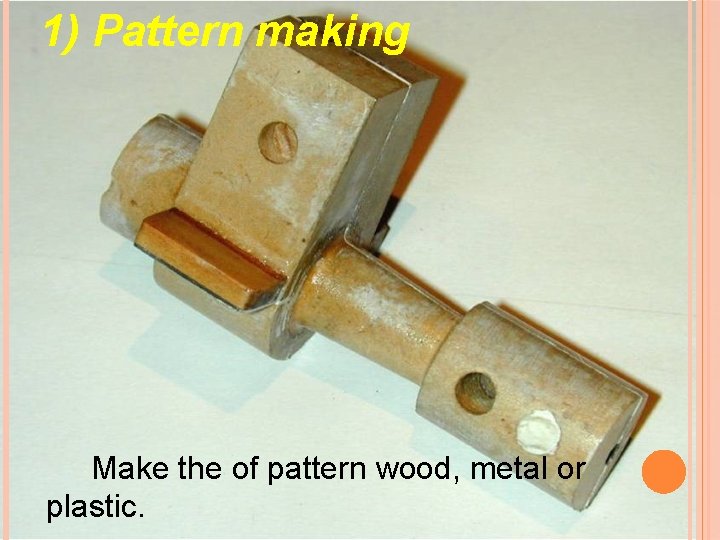
PATTERN Types 1. Single piece pattern or solid pattern 2. Split pattern or two piece pattern Pattern material 1. 2. 3. 4. 5. Wood Metal Plastic Plaster of Paris or gypsum cement wax
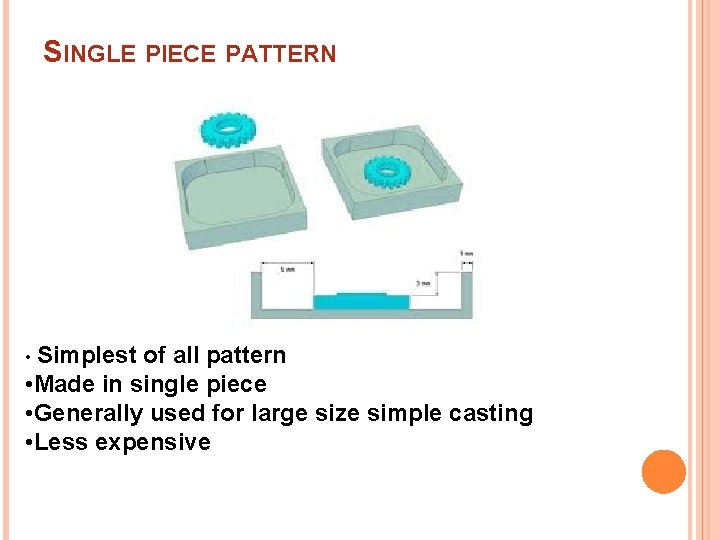
SINGLE PIECE PATTERN • Simplest of all pattern • Made in single piece • Generally used for large size simple casting • Less expensive
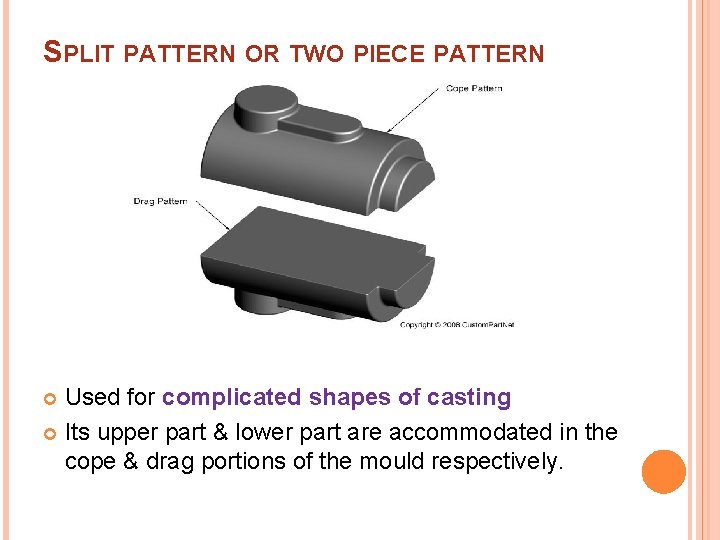
SPLIT PATTERN OR TWO PIECE PATTERN Used for complicated shapes of casting Its upper part & lower part are accommodated in the cope & drag portions of the mould respectively.
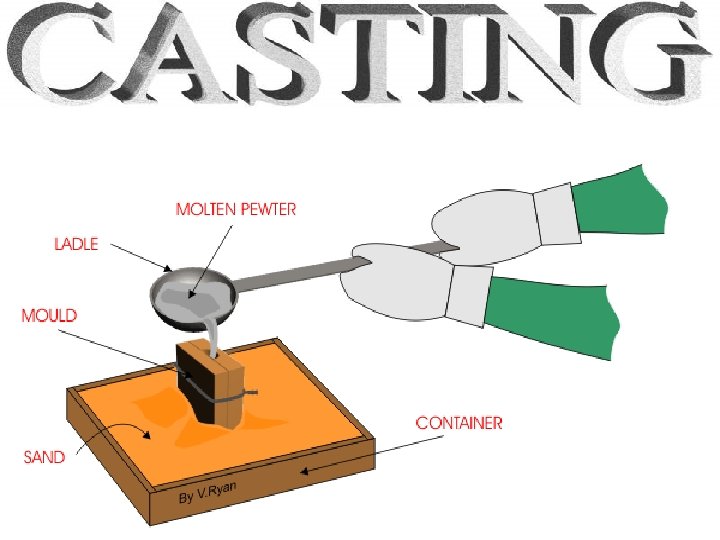
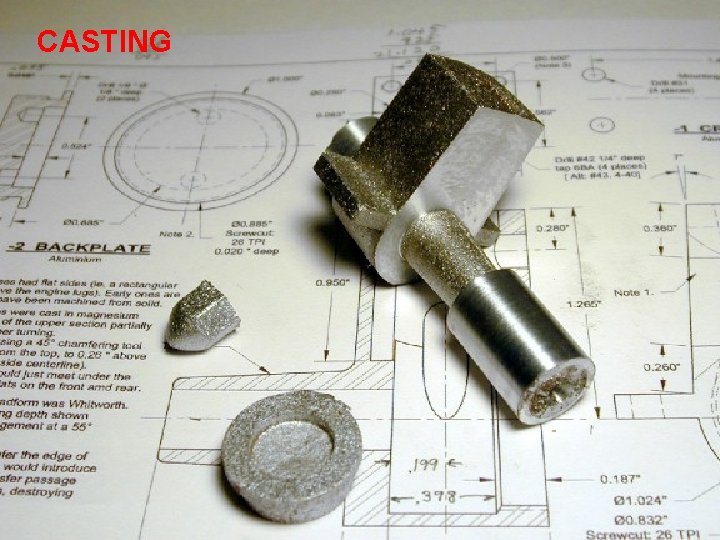
CASTING
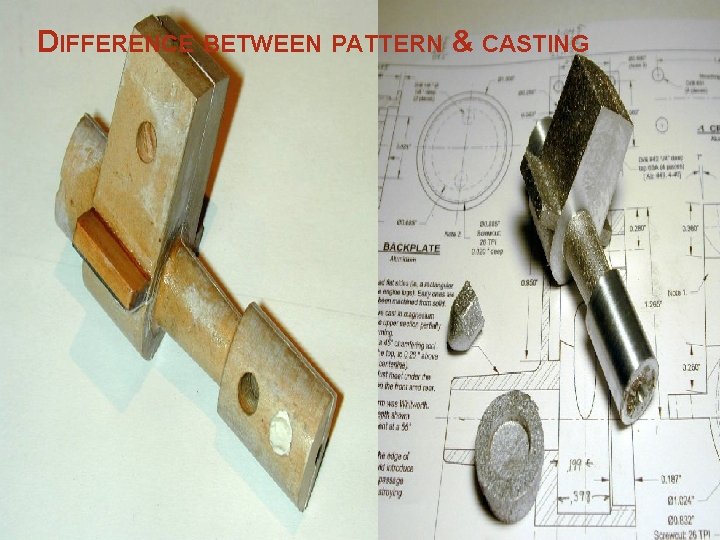
DIFFERENCE BETWEEN PATTERN & CASTING
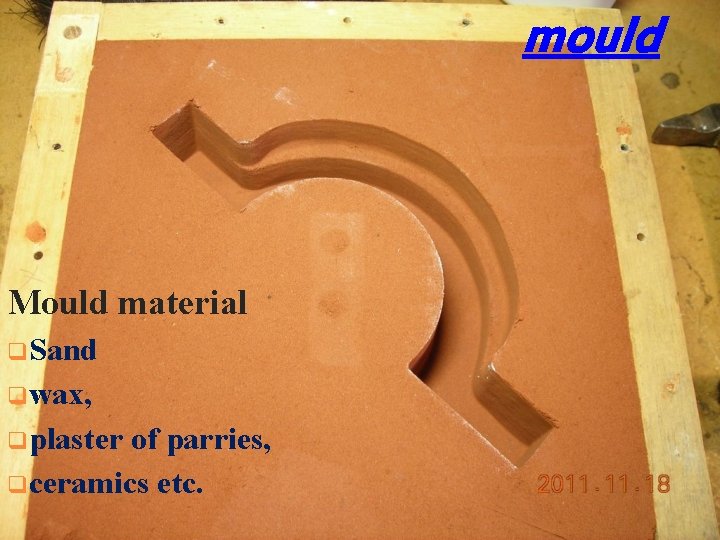
mould Mould material q Sand q wax, q plaster of parries, q ceramics etc.
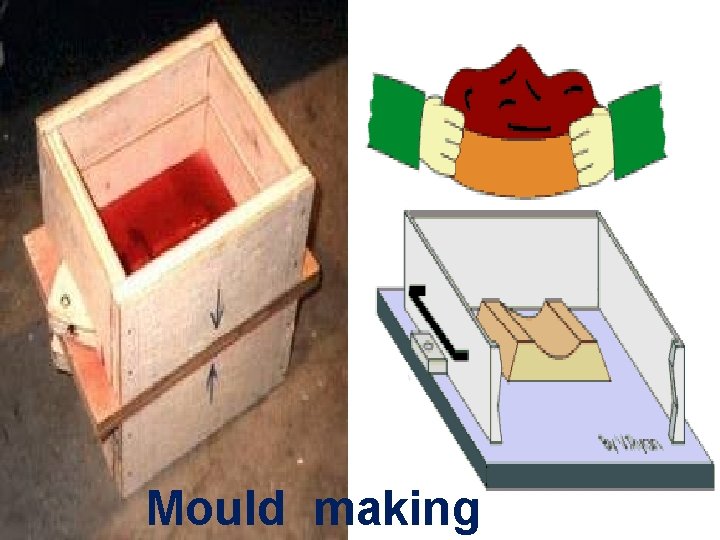
Mould making
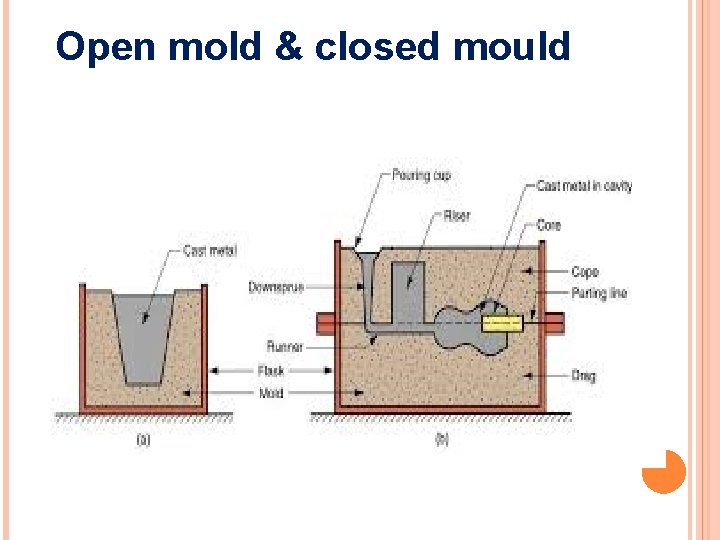
Open mold & closed mould
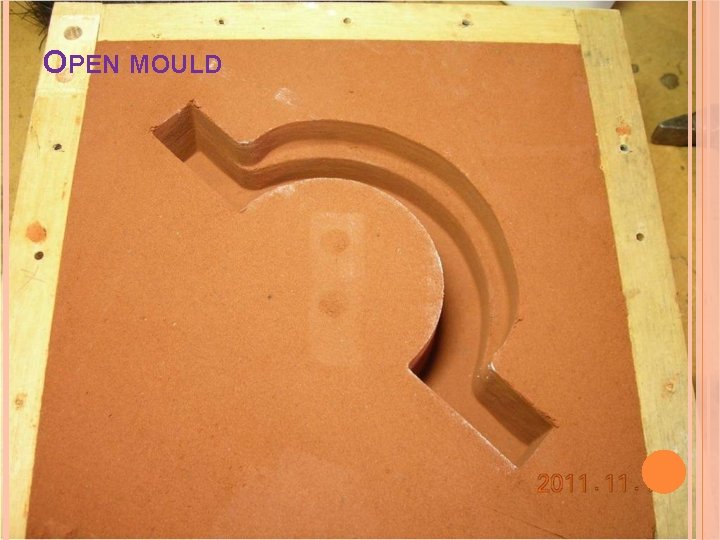
OPEN MOULD
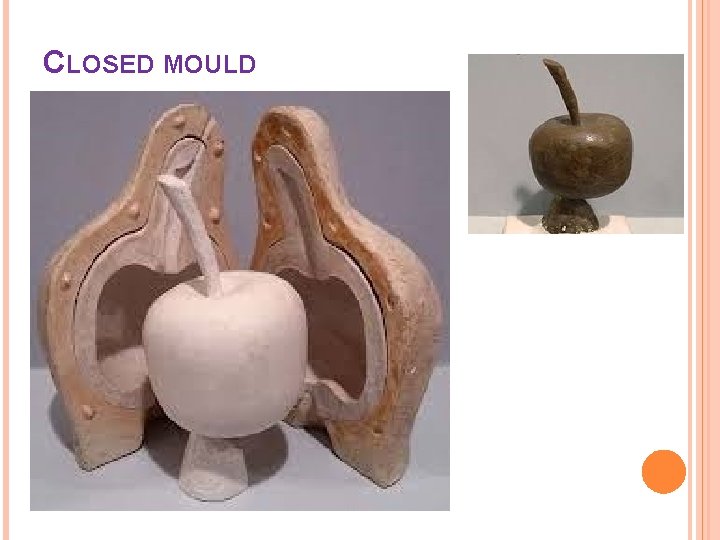
CLOSED MOULD
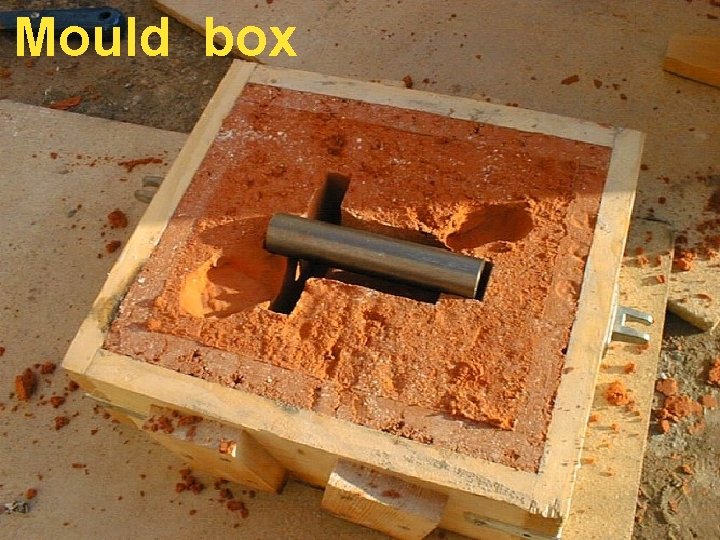
Mould box
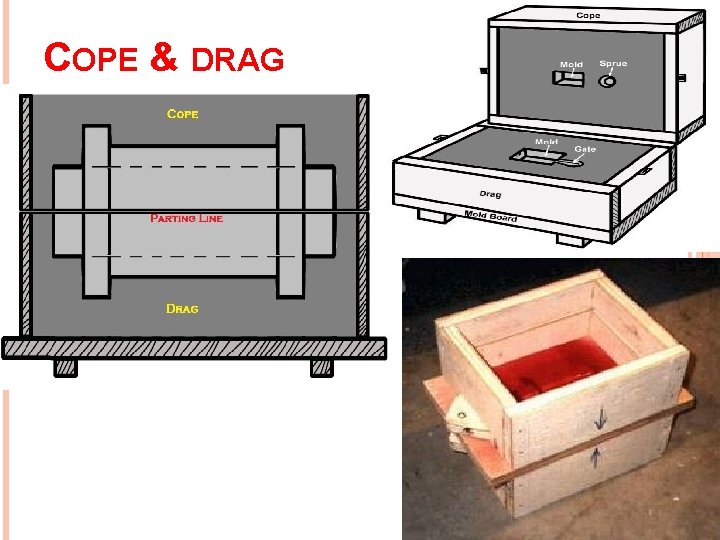
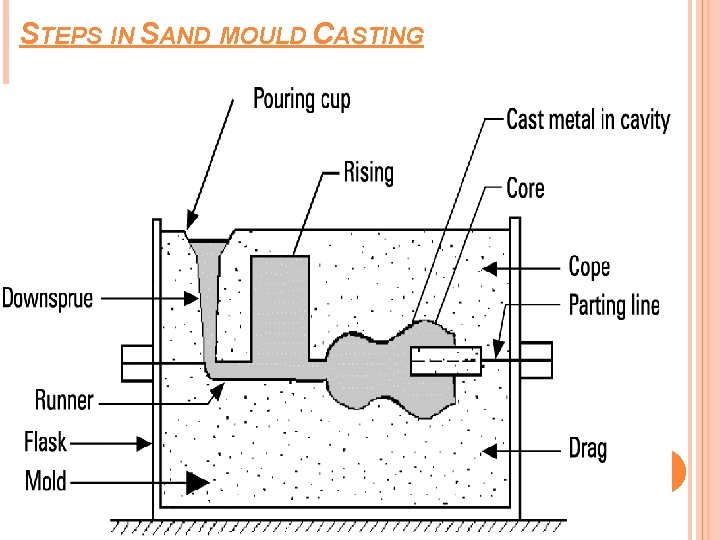
COPE & DRAG
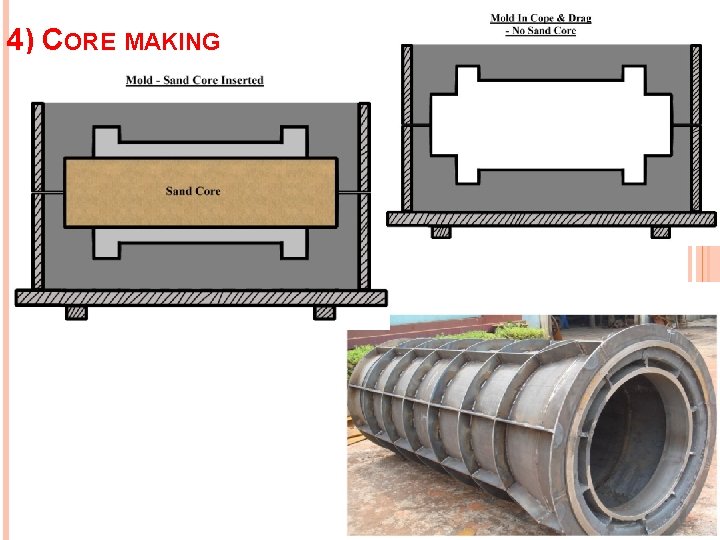
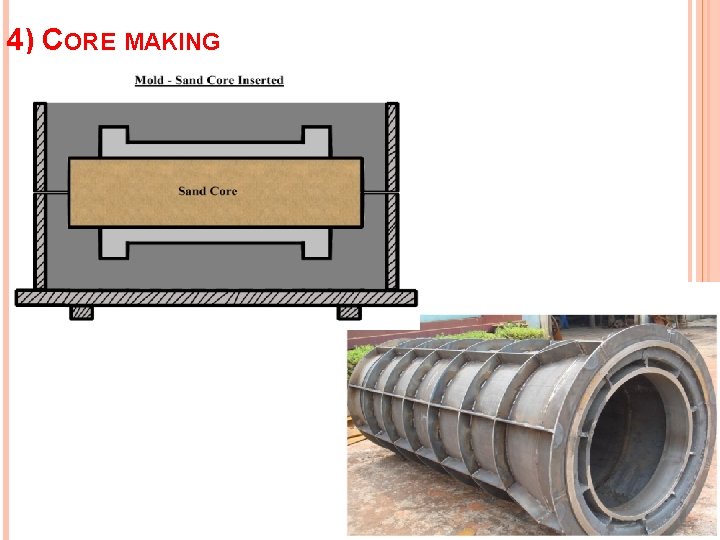
4) CORE MAKING
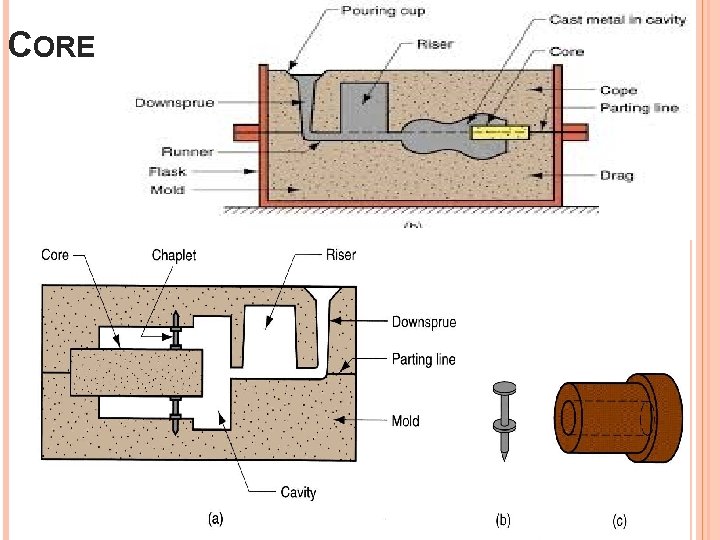
CORE
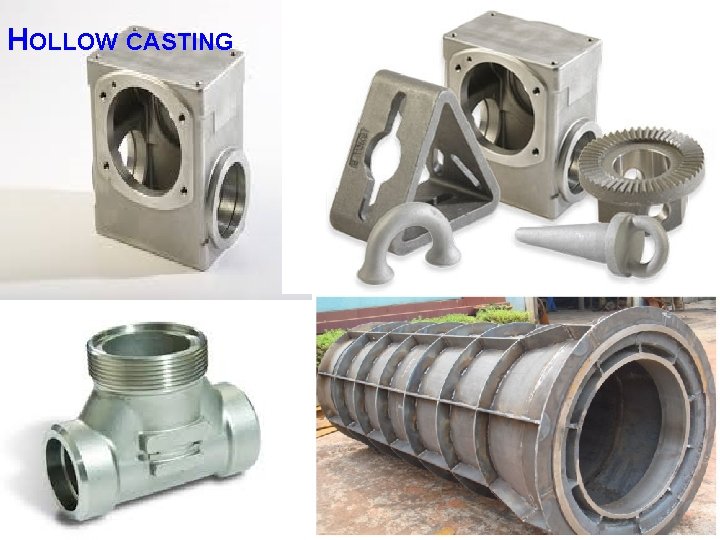
HOLLOW CASTING
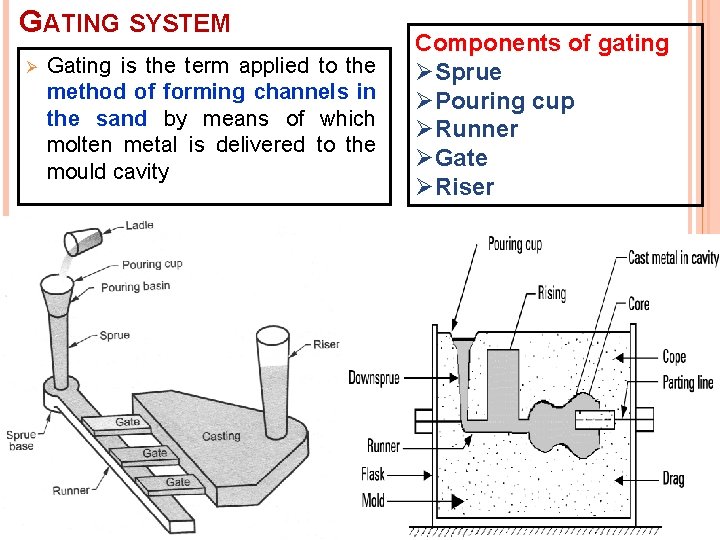
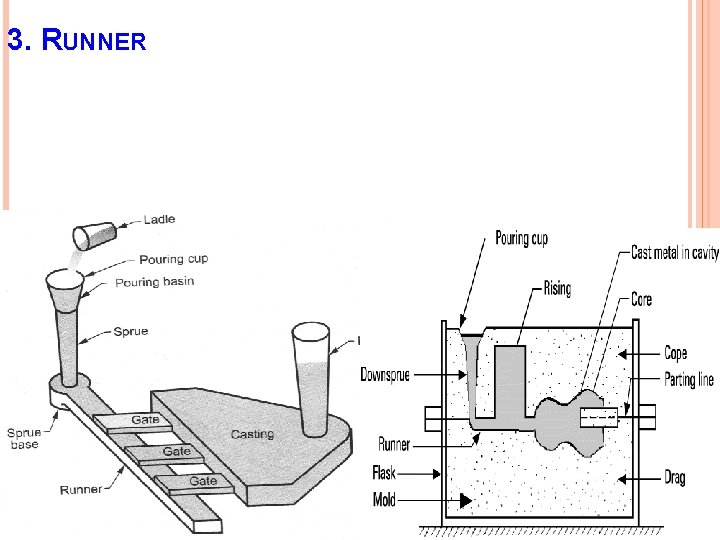
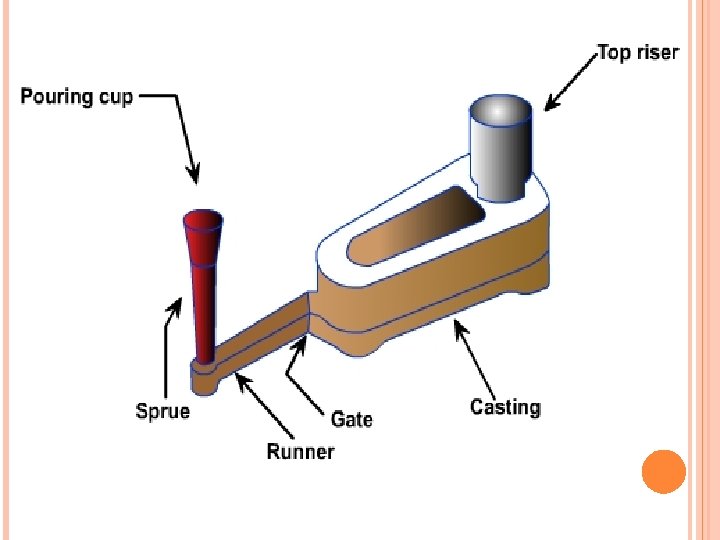
GATING SYSTEM Ø Gating is the term applied to the method of forming channels in the sand by means of which molten metal is delivered to the mould cavity Components of gating ØSprue ØPouring cup ØRunner ØGate ØRiser
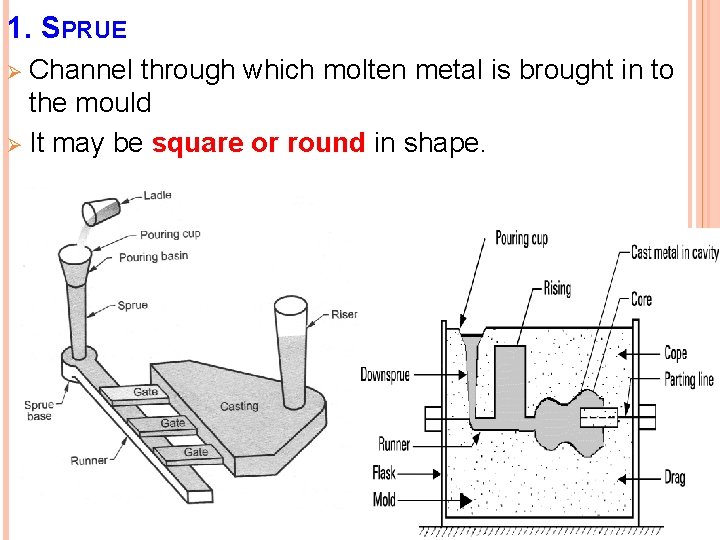
1. SPRUE Ø Channel through which molten metal is brought in to the mould Ø It may be square or round in shape.
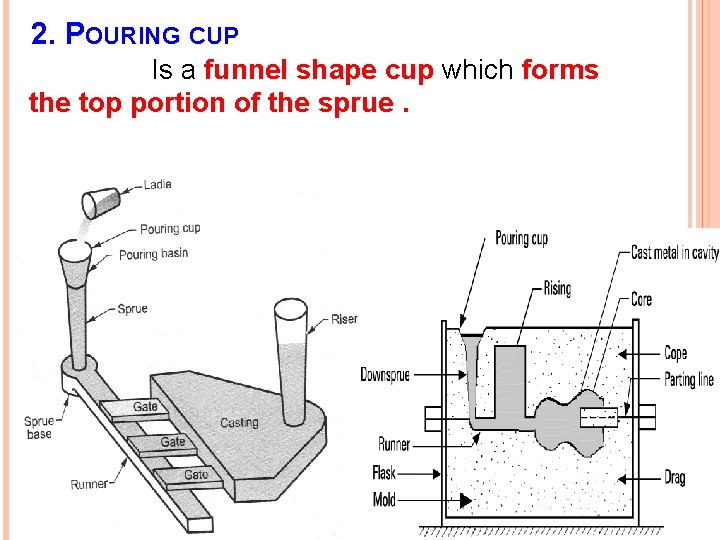
2. POURING CUP Is a funnel shape cup which forms the top portion of the sprue.
3. RUNNER
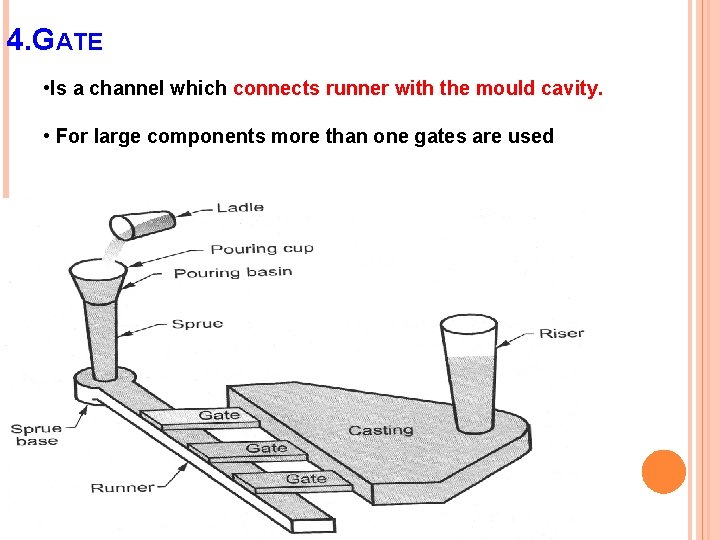
4. GATE • Is a channel which connects runner with the mould cavity. • For large components more than one gates are used
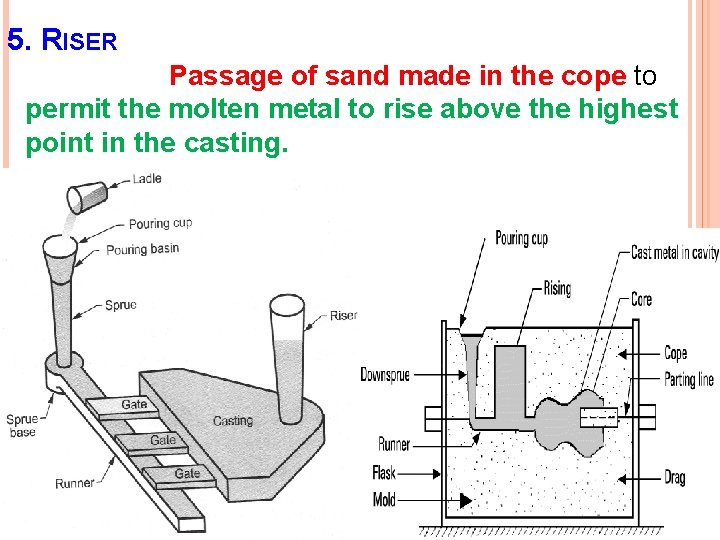
5. RISER Passage of sand made in the cope to permit the molten metal to rise above the highest point in the casting.
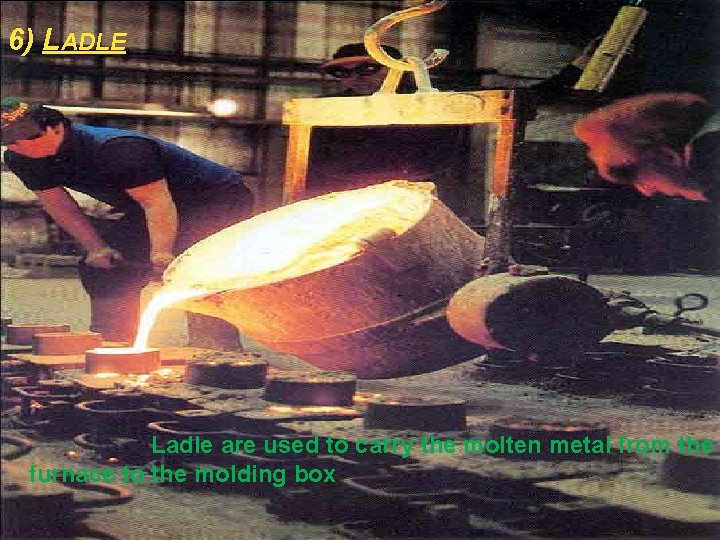
6) LADLE Ladle are used to carry the molten metal from the furnace to the molding box
STEPS IN SAND MOULD CASTING
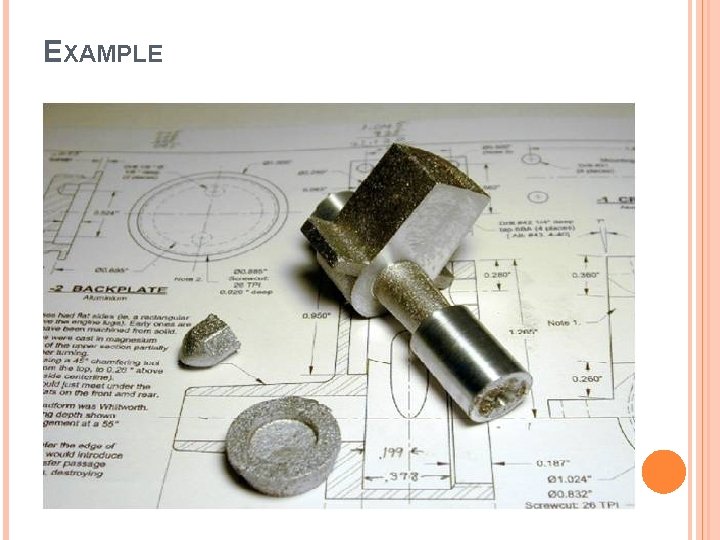
EXAMPLE
1) Pattern making Make the of pattern wood, metal or plastic.
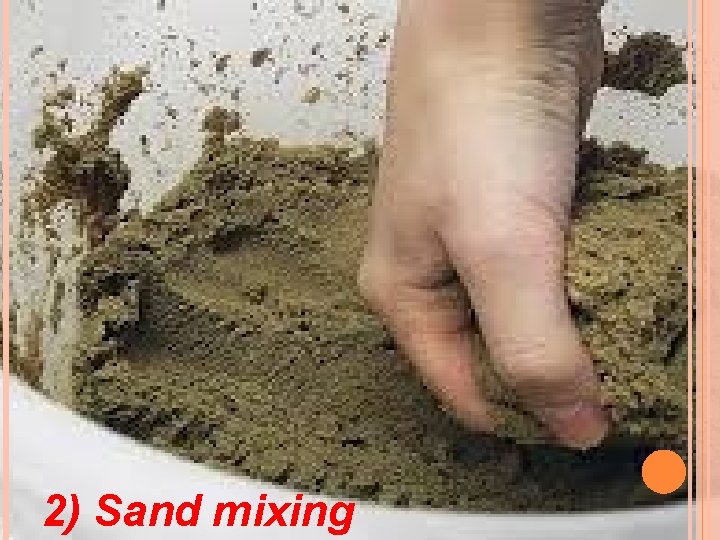
2) Sand mixing
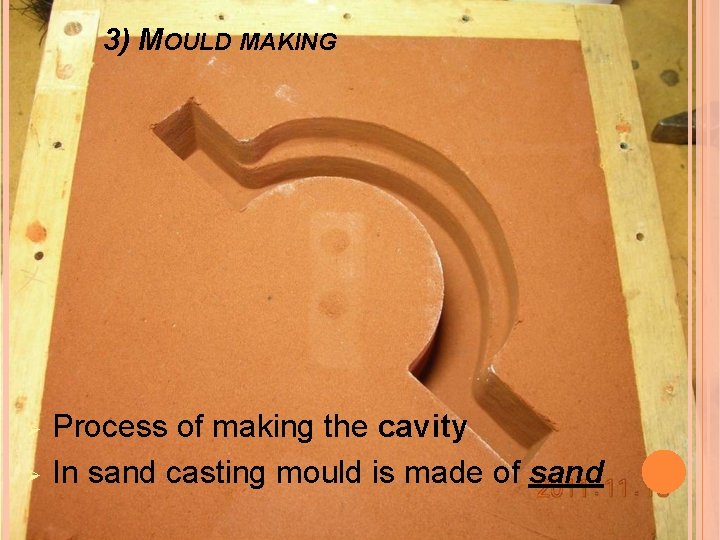
3) MOULD MAKING Ø Ø Process of making the cavity In sand casting mould is made of sand
4) CORE MAKING
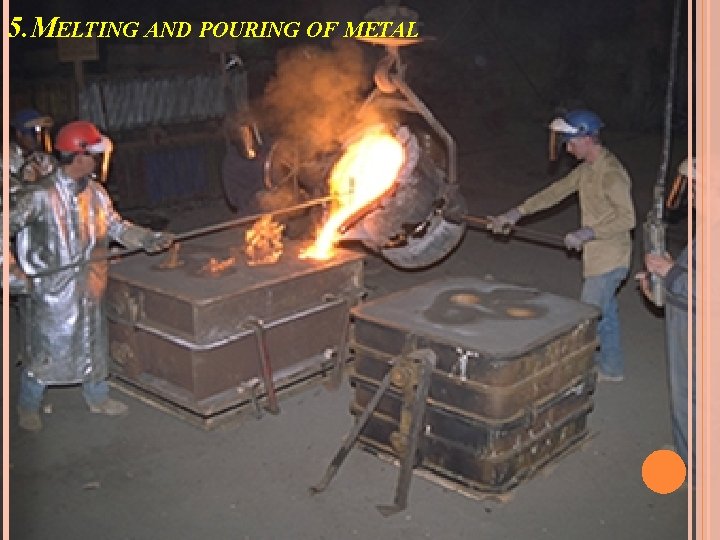
5. MELTING AND POURING OF METAL
6. COOLING AND SOLIDIFICATION OF CASTING
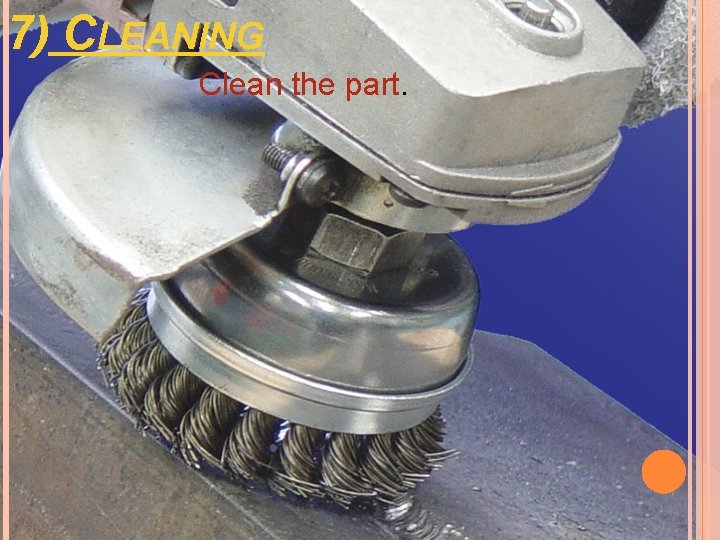
7) CLEANING Clean the part.
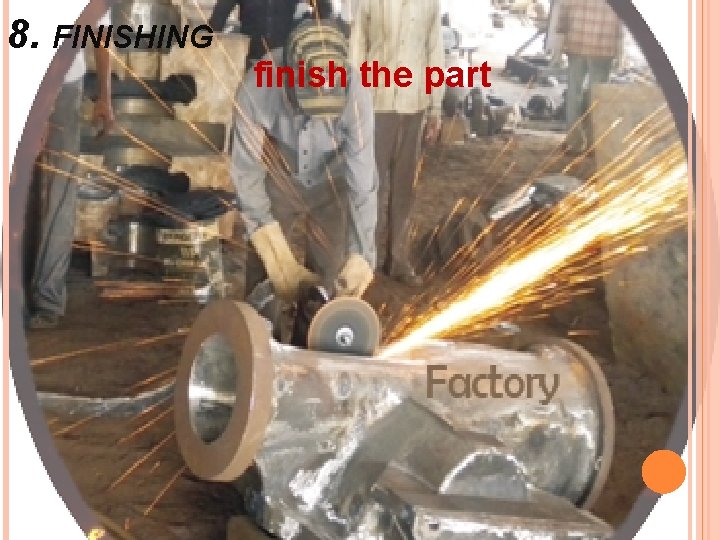
8. FINISHING finish the part
Test & inspect the casting & remove the defects, if any. 9
CASTING PROCESS
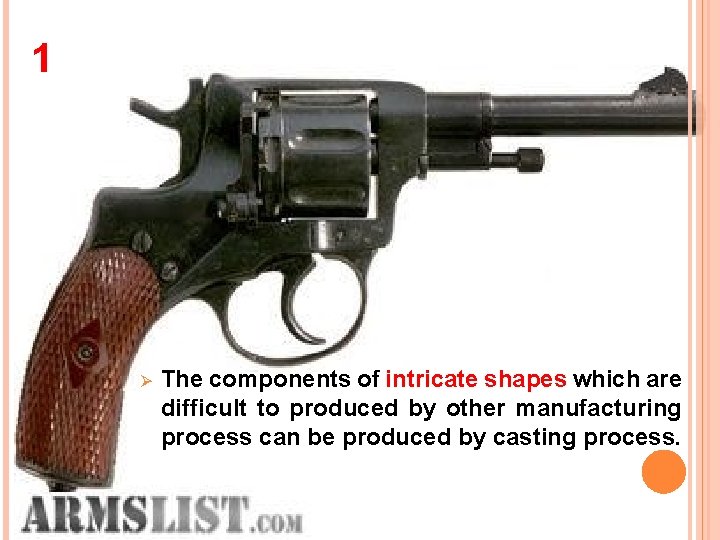
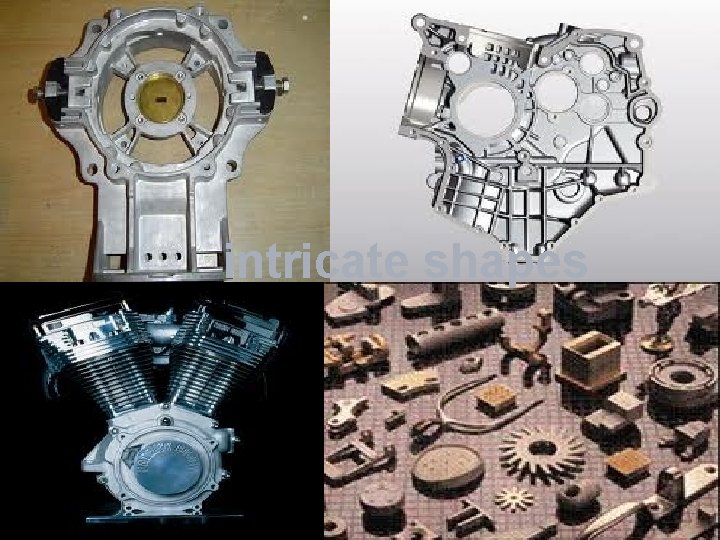
1 Ø The components of intricate shapes which are difficult to produced by other manufacturing process can be produced by casting process.
intricate shapes
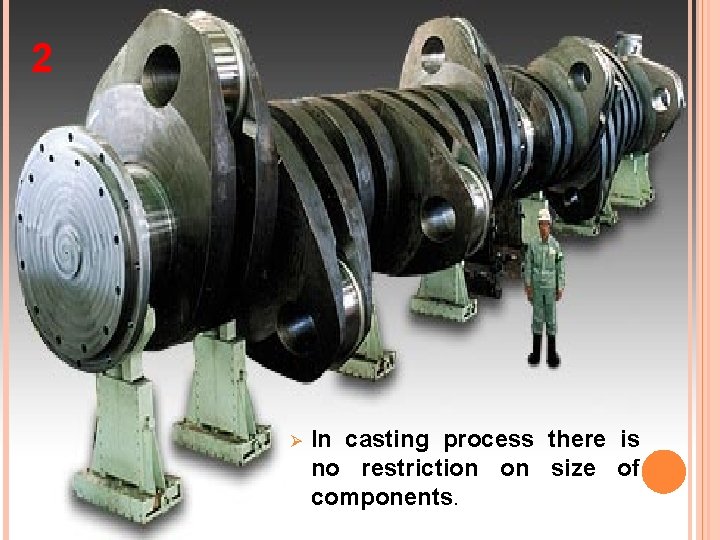
2 Ø In casting process there is no restriction on size of components.
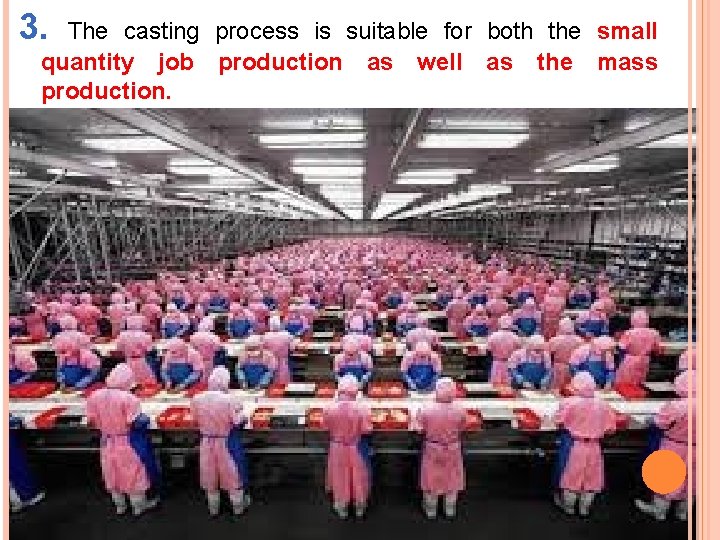
3. The casting process is suitable for both the small quantity job production as well as the mass production.
4 In casting process the cost of component is very low.
5. Does not require high initial investment
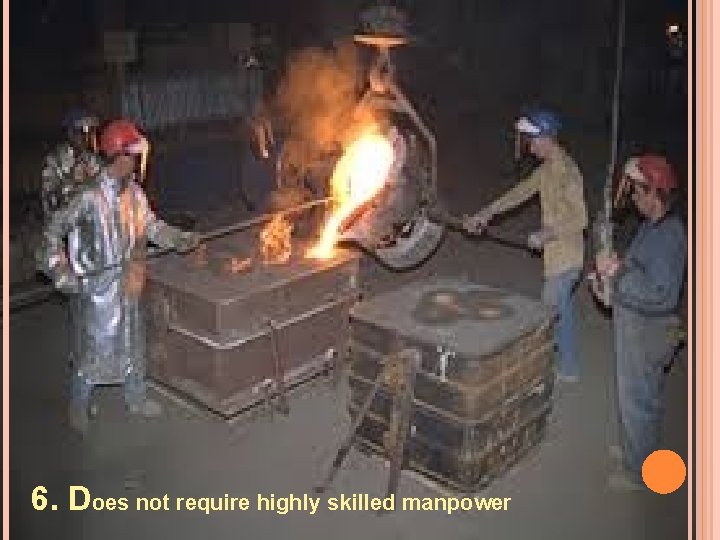
6. Does not require highly skilled manpower
LIMITATION OF CASTING PROCESS
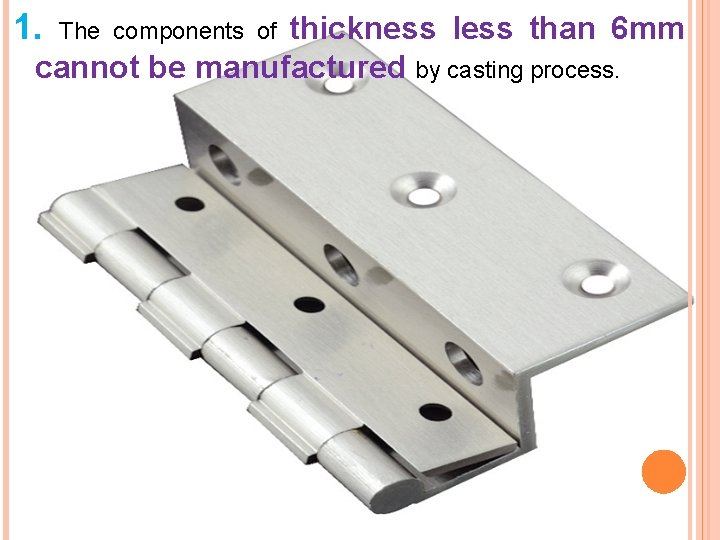
1. thickness less than 6 mm cannot be manufactured by casting process. The components of
2. Requires large man power as compared to other manufacturing process.
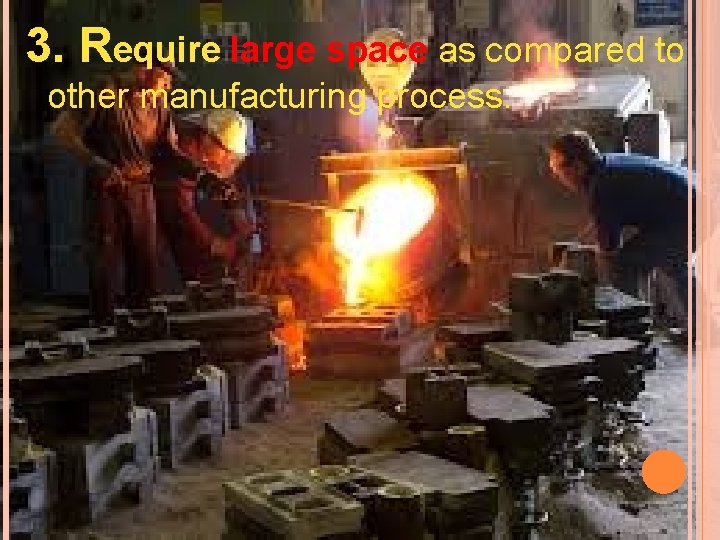
3. Require large space as compared to other manufacturing process.
4. Environmental pollution is very high.
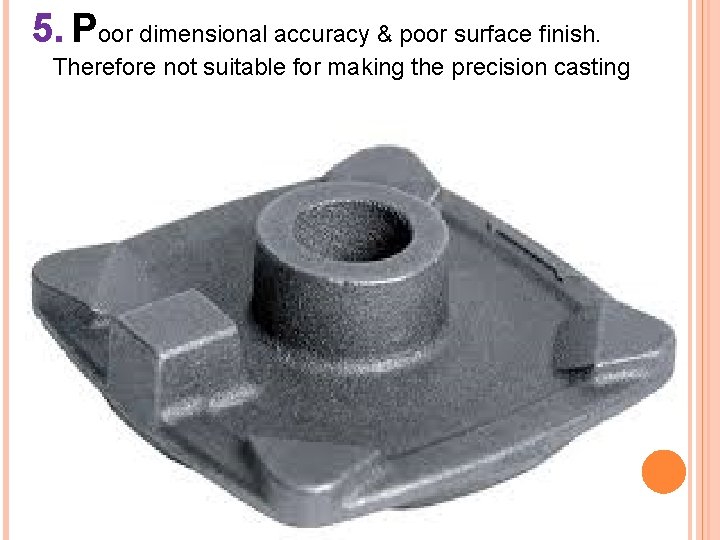
5. Poor dimensional accuracy & poor surface finish. Therefore not suitable for making the precision casting
APPLICATION OF CASTING PROCESS
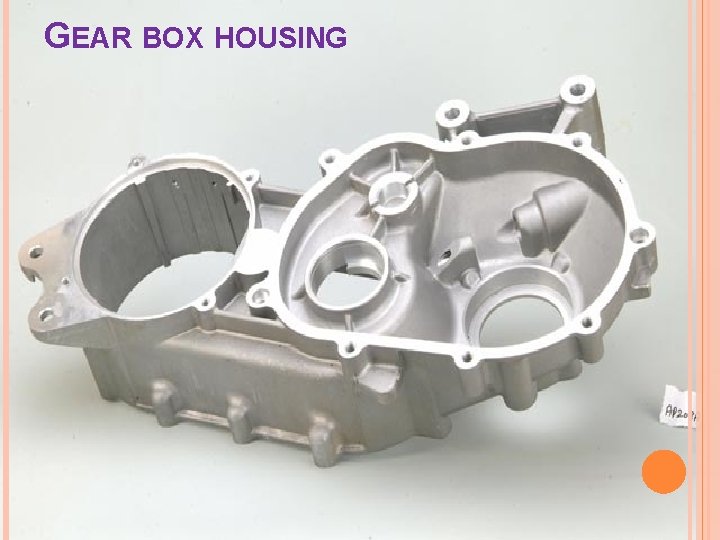
GEAR BOX HOUSING
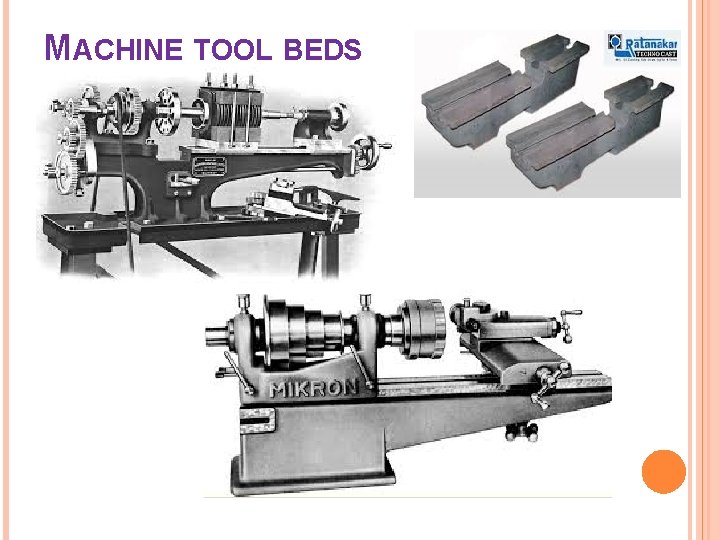
MACHINE TOOL BEDS
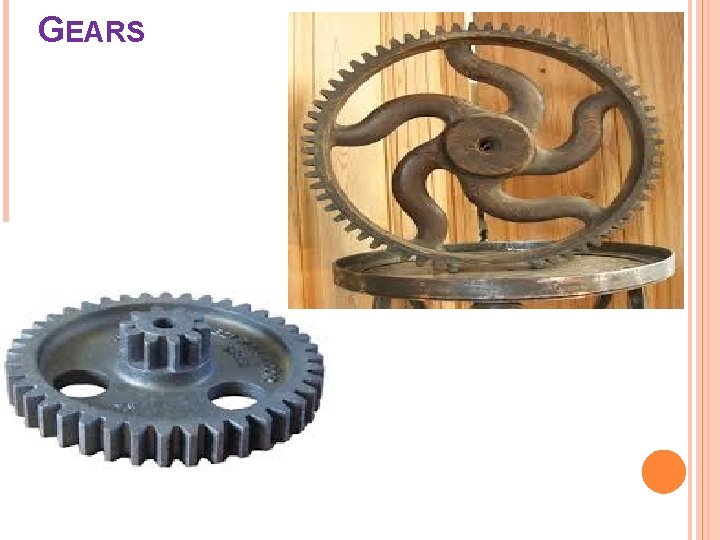
GEARS
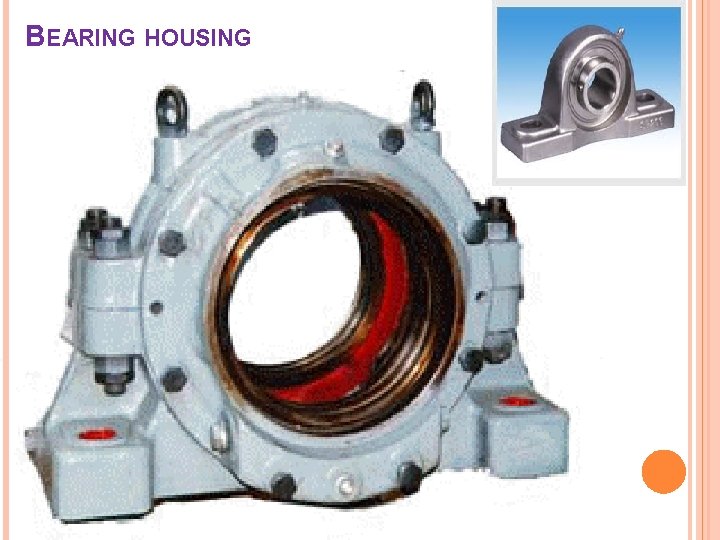
BEARING HOUSING
LINK http: //slideplayer. com/slide/4457478/