
UNIT 4 MANUFACTURING PROCESS METAL JOINING PROCESS Prof


- Slides: 24
UNIT- 4 MANUFACTURING PROCESS METAL JOINING PROCESS Prof. Kiran Gore
METAL JOINING PROCESS Types 1. 2. 3. 4. 5. Welding Brazing Soldering Mechanical fasteners Adhesive bending
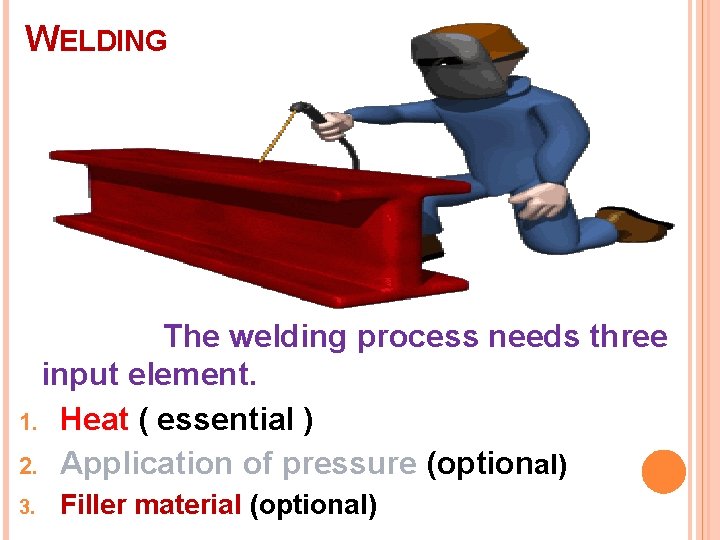
WELDING The welding process needs three input element. 1. Heat ( essential ) 2. Application of pressure (optional) 3. Filler material (optional)
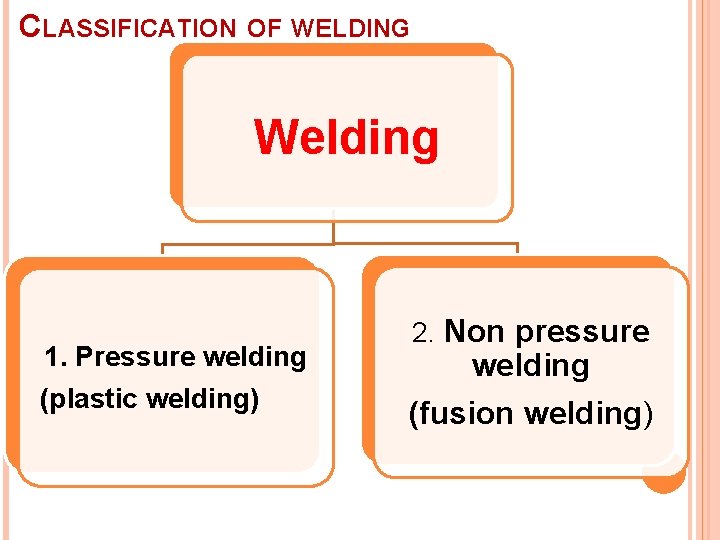
CLASSIFICATION OF WELDING Welding 1. Pressure welding (plastic welding) 2. Non pressure welding (fusion welding)
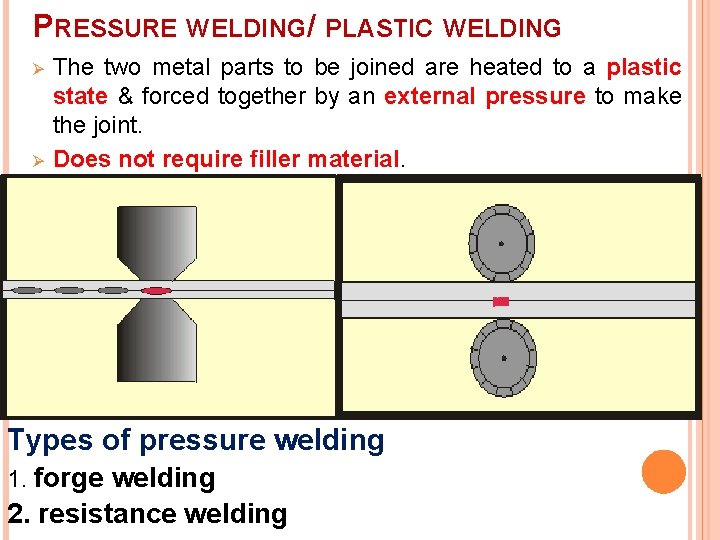
PRESSURE WELDING/ PLASTIC WELDING Ø Ø The two metal parts to be joined are heated to a plastic state & forced together by an external pressure to make the joint. Does not require filler material. Types of pressure welding 1. forge welding 2. resistance welding
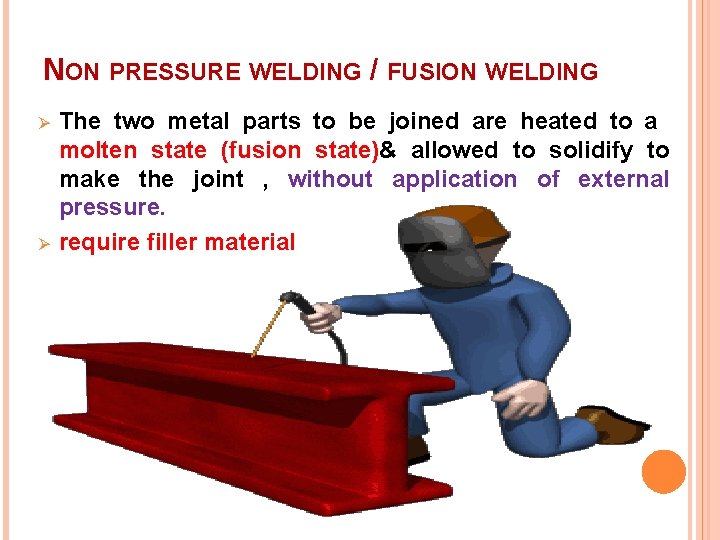
NON PRESSURE WELDING / FUSION WELDING Ø Ø The two metal parts to be joined are heated to a molten state (fusion state)& allowed to solidify to make the joint , without application of external pressure. require filler material
TYPES OF NON PRESSURE WELDING Depending upon the source of heat used 1. Electric arc welding 2. Gas welding 3. Non pressure thermit welding
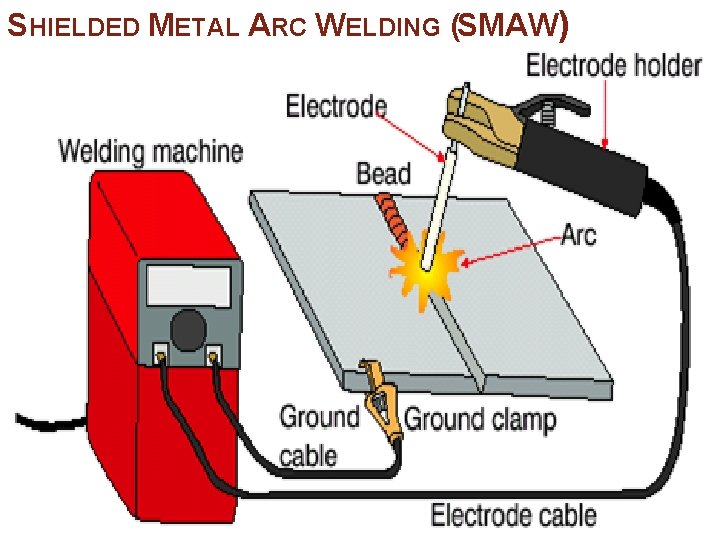
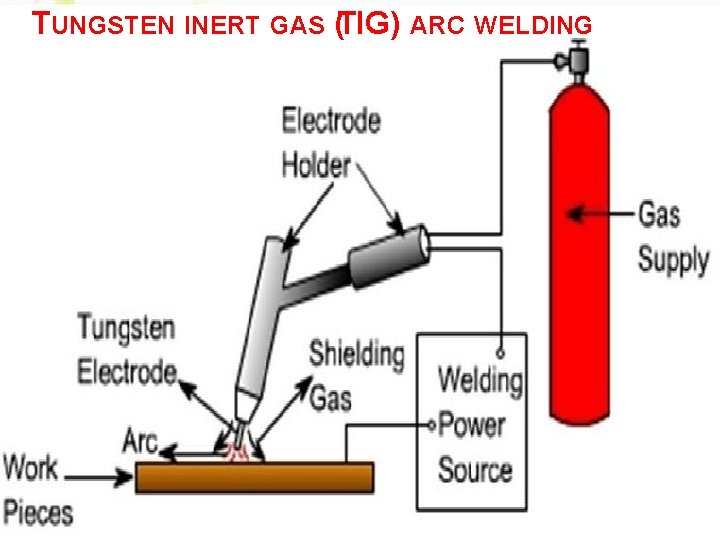
TYPES OF ELECTRIC ARC WELDING 1. 2. 3. 4. Shielded metal arc welding (SMAW) Tungsten inert gas welding (TIG Welding) Metal inert gas welding (MIG Welding) Carbon Arc welding
SHIELDED METAL ARC WELDING (SMAW)
TUNGSTEN INERT GAS (TIG) ARC WELDING
WELDING
ADVANTAGES Ø Welding gives light weight construction Ø Welding process can be mechanized or automated Ø Low cost metal joining process Ø Welding can produced fluid tight joints
DISADVANTAGES Ø Welded joint is a permanent Ø Weak joint against vibrations Ø Quality & strength depends upon skilled of operator Ø Welding process gives harmful radiations like lights, fumes.
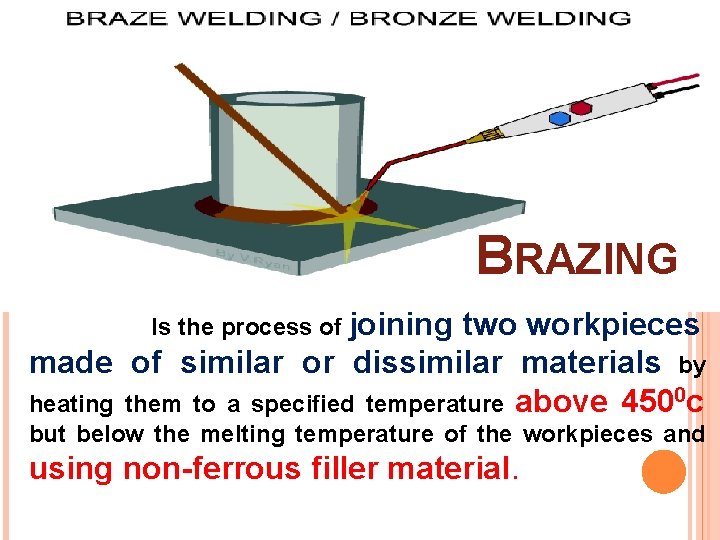
BRAZING Is the process of joining two workpieces made of similar or dissimilar materials by heating them to a specified temperature above 4500 c but below the melting temperature of the workpieces and using non-ferrous filler material.
BRAZING
ADVANTAGES Ø Brazing can join a large variety of dissimilar metals. Ø Thin sheets and pipes that cannot be joined by welding process can be joined by brazing process Ø Non metals can be joined with metals by brazing process Ø Brazing can produced joint corrosion resistance
DISADVANTAGES Ø Strength of the brazed joint is much lower than of the welded joints. Ø Cost Ø of filler material is high Brazing requires tightly meting parts
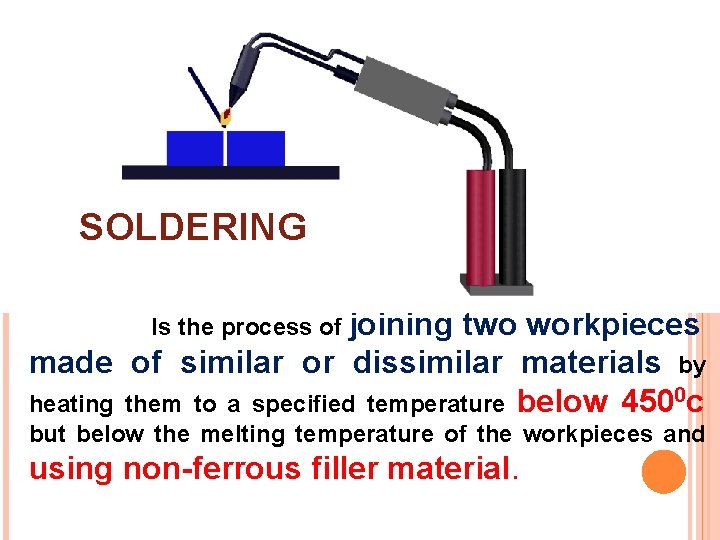
SOLDERING Is the process of joining two workpieces made of similar or dissimilar materials by heating them to a specified temperature below 4500 c but below the melting temperature of the workpieces and using non-ferrous filler material.
SOLDERING
ADVANTAGES Ø Soldering can join a large variety of dissimilar metals. Ø Soldering can be join the workpieces of different thickness Ø The process is cheaper than brazing. Ø Soldered joints require no finishing.
DISADVANTAGES Ø Strength of the soldered joint is lower than of the brazed joints.
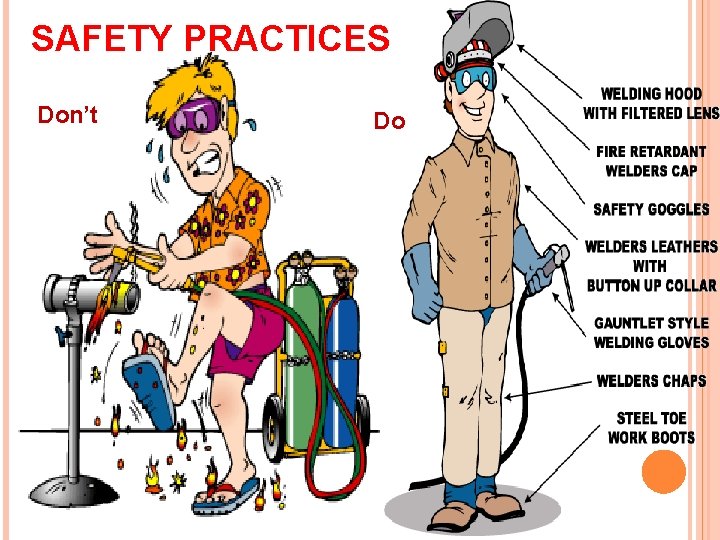
SAFETY PRACTICES Don’t Do