
Unit 4 Lesson 2 Properties of Waves How



- Slides: 15
Unit 4 Lesson 2 Properties of Waves
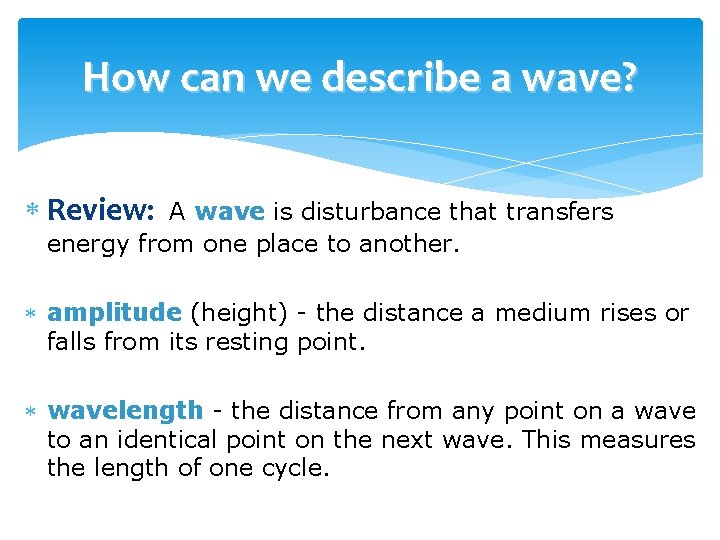
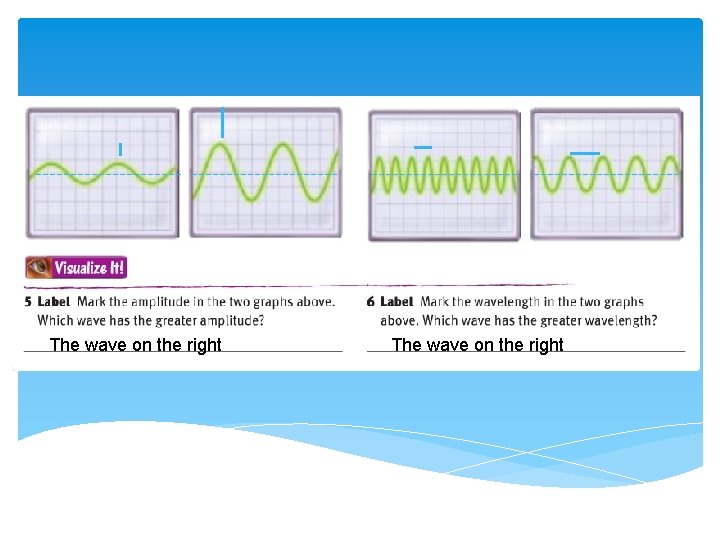
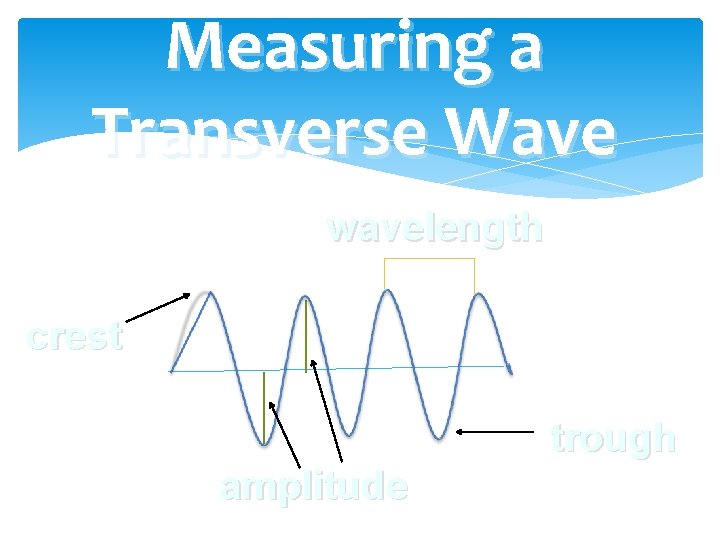
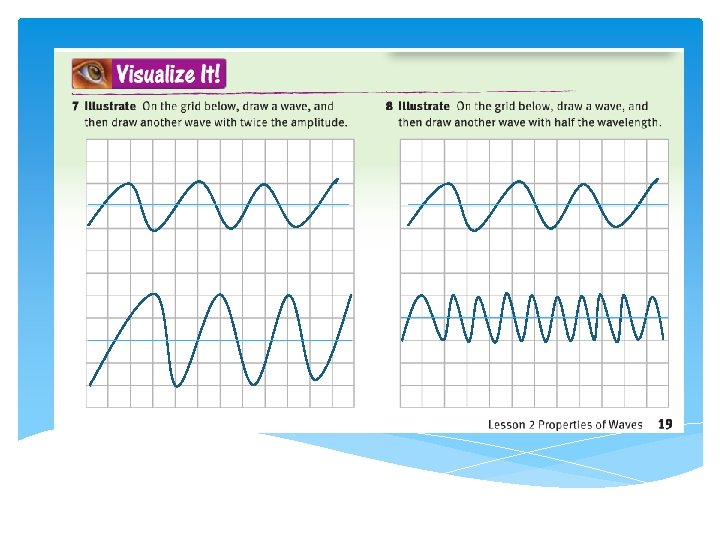
How can we describe a wave? Review: A wave is disturbance that transfers energy from one place to another. amplitude (height) - the distance a medium rises or falls from its resting point. wavelength - the distance from any point on a wave to an identical point on the next wave. This measures the length of one cycle.
The wave on the right
Measuring a Transverse Wave wavelength crest trough amplitude
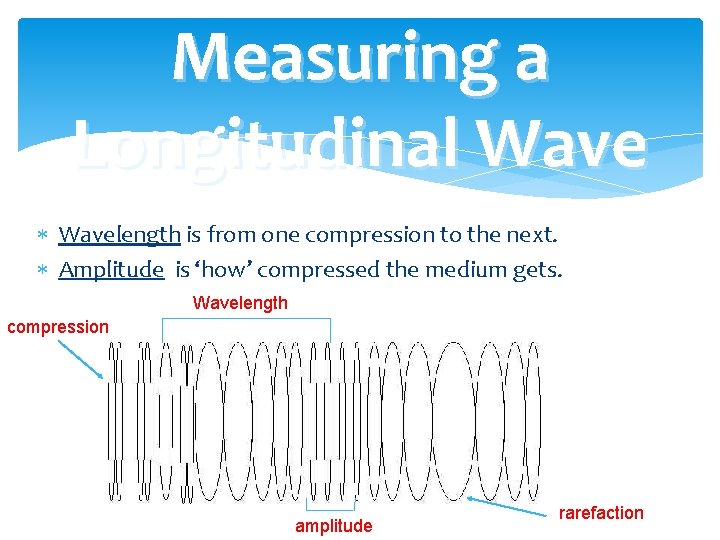
Measuring a Longitudinal Wavelength is from one compression to the next. Amplitude is ‘how’ compressed the medium gets. Wavelength compression amplitude rarefaction
How can we describe a wave? wave period - the time required for one wavelength to pass a given point. frequency - how many cycles occur in an amount of time, usually 1 s. Frequency is measured in hertz (Hz). One hertz equals one wavelength per second.
What affects the energy of a wave? Mechanical wave: energy is related to amplitude ØThe greater the amplitude the more energy the wave is carrying! EM wave: energy is related to frequency Ø Very high frequency EM waves can damage human tissue Ø Lower frequency EM waves can be absorbed safely
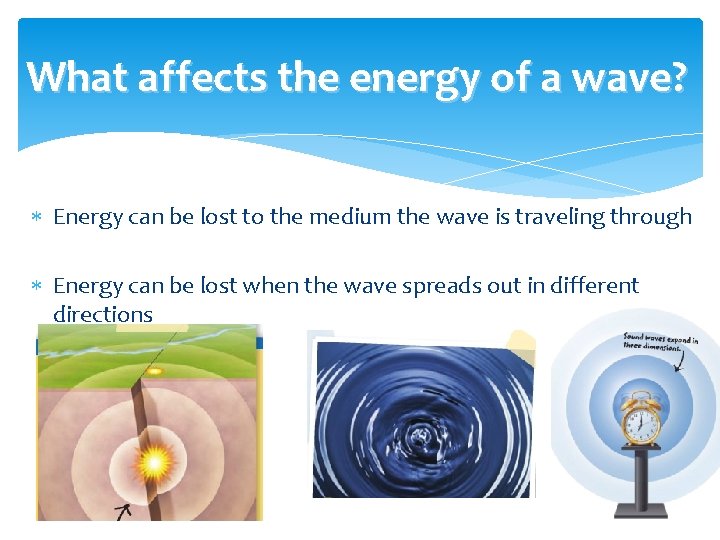
What affects the energy of a wave? Energy can be lost to the medium the wave is traveling through Energy can be lost when the wave spreads out in different directions
If the table were longer, then the energy of the waves would have farther to travel, and the students overall would feel the wave less strongly. The third student might not feel the wave at all.
What determines the speed of a wave? Wave speed - the speed at which waves travel Ø depends on the properties of the medium Waves travel faster in solids than in liquids and faster in liquids than in gases In a gas, wave speed depends on temperature Ø Waves travel faster in hot air than cold air EM waves don’t require a medium, so they can travel in a vacuum at the speed of light
faster
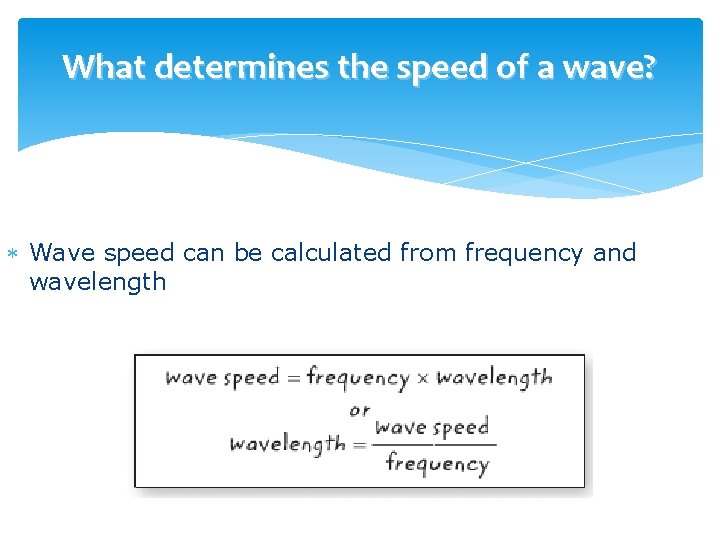
What determines the speed of a wave? Wave speed can be calculated from frequency and wavelength
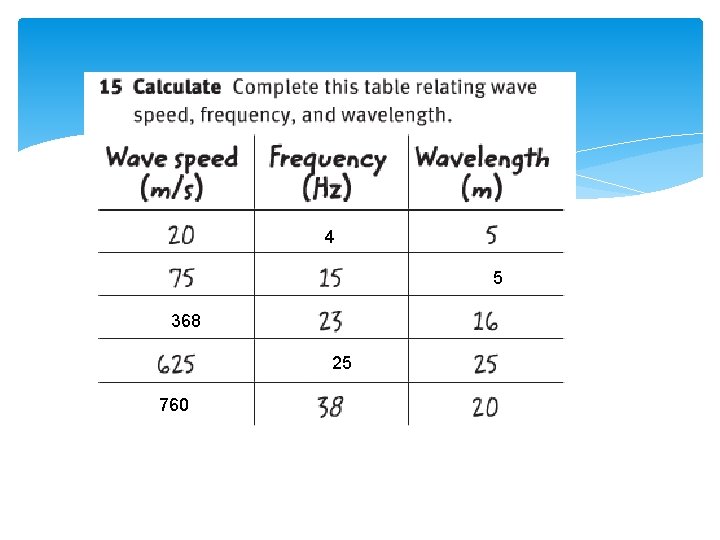
4 5 368 25 760