
Unit 4 Lesson 1 Nh PT song Mc
- Slides: 27
Unit 4 – Lesson 1
Nh PT song Mc Ts Og
Nh Fl Mc Lv Ts Og
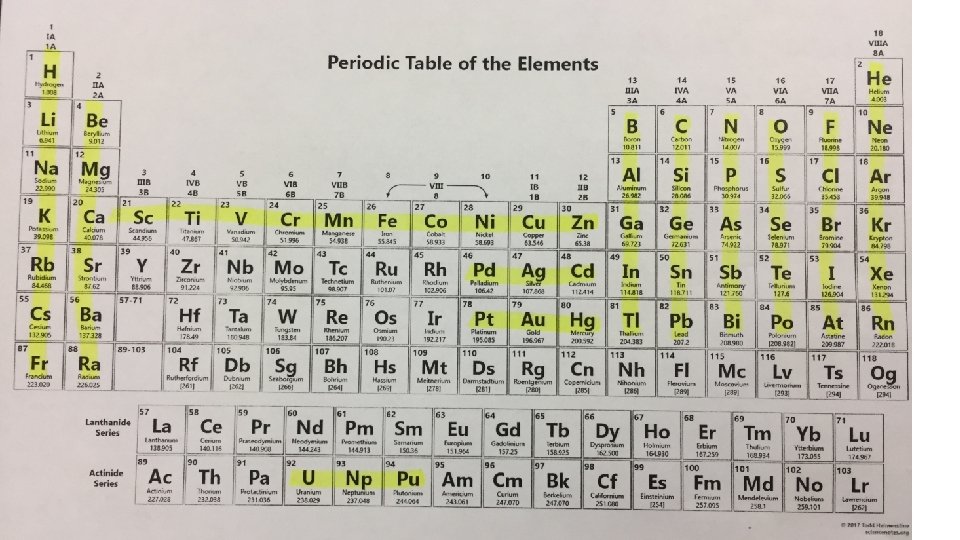
Periodic Law When elements are arranged in order of increasing atomic number, there is a periodic repetition of their physical and chemical properties.
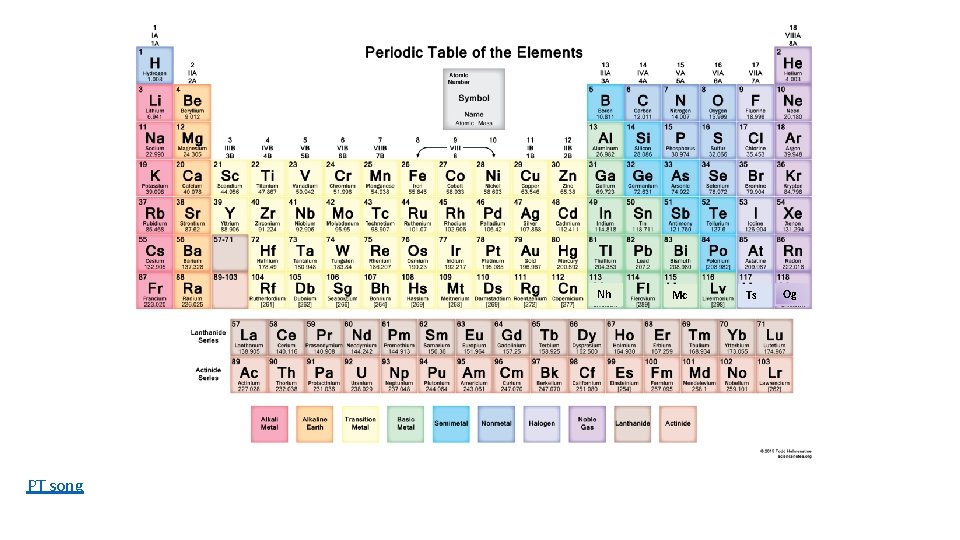
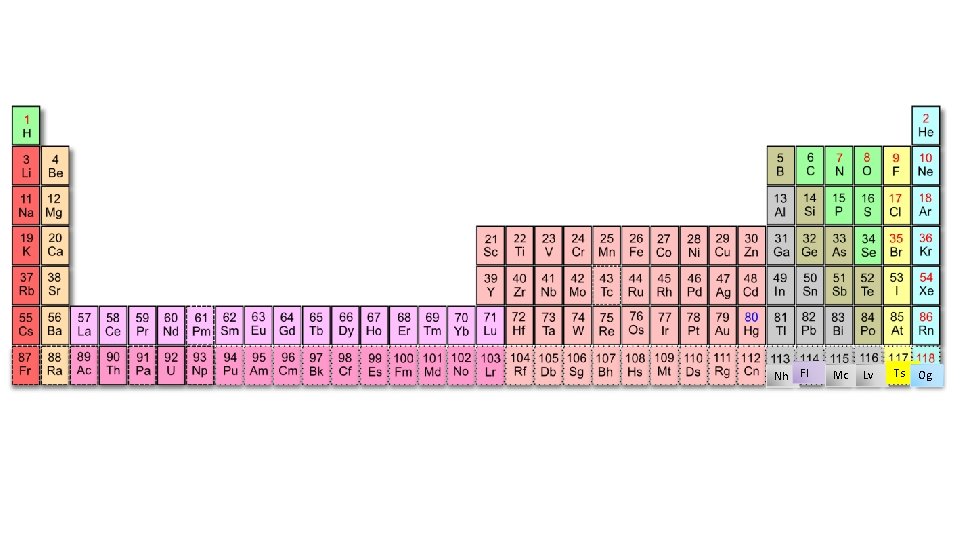
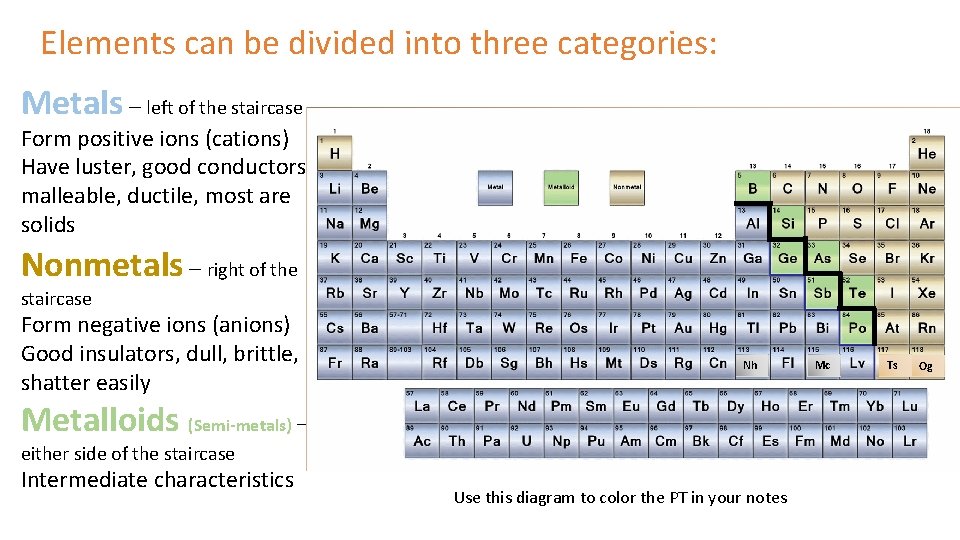
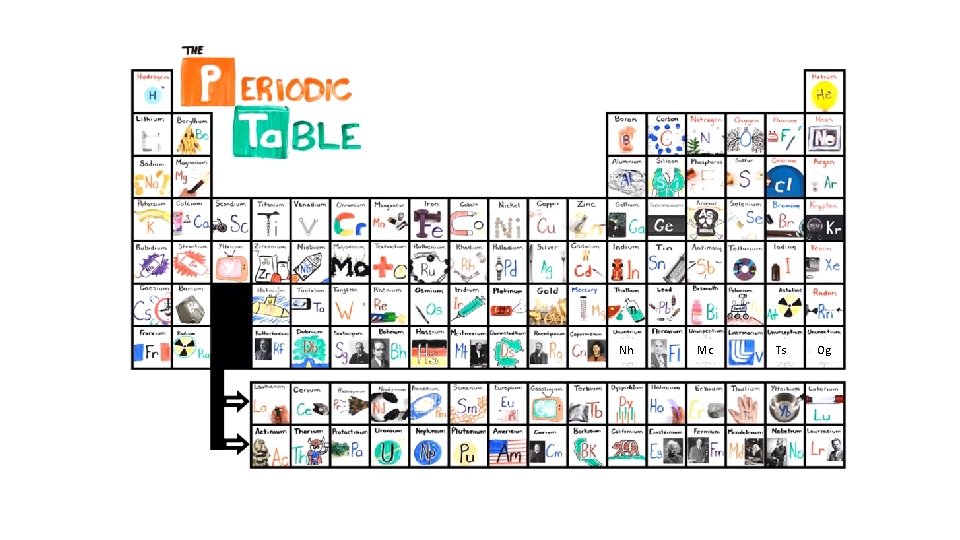
Elements can be divided into three categories: Metals – left of the staircase Form positive ions (cations) Have luster, good conductors, malleable, ductile, most are solids Nonmetals – right of the staircase Form negative ions (anions) Good insulators, dull, brittle, shatter easily Nh Metalloids (Semi-metals) – either side of the staircase Intermediate characteristics Use this diagram to color the PT in your notes Mc Ts Og
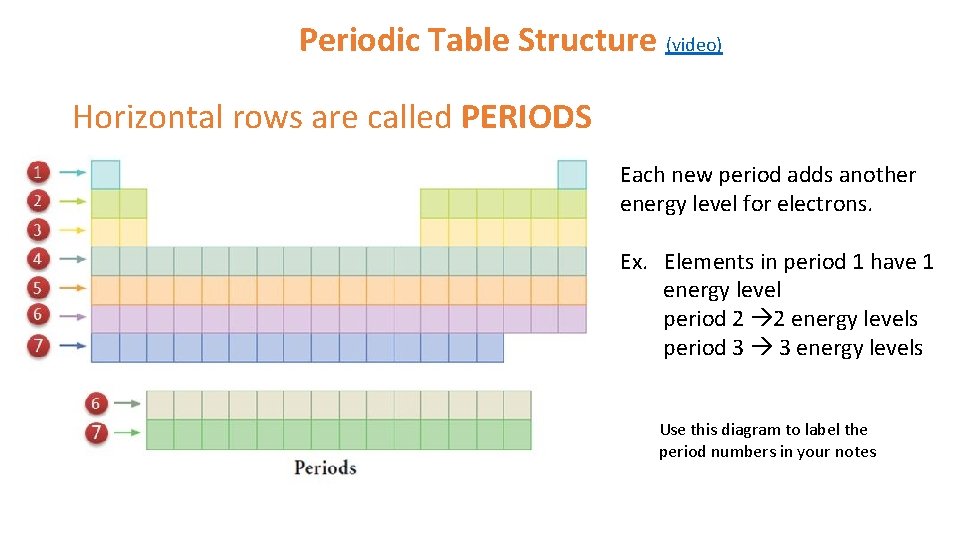
Periodic Table Structure (video) Horizontal rows are called PERIODS Each new period adds another energy level for electrons. Ex. Elements in period 1 have 1 energy level period 2 2 energy levels period 3 3 energy levels Use this diagram to label the period numbers in your notes
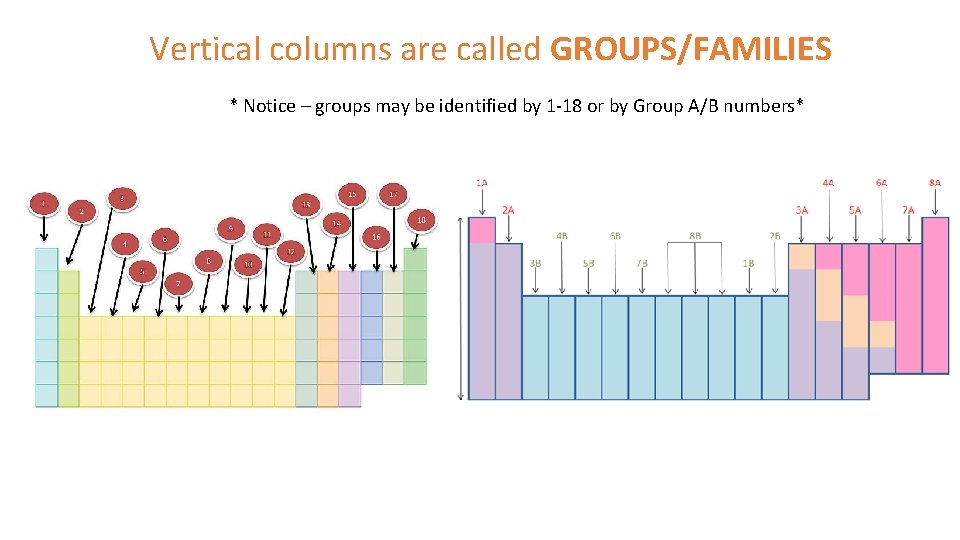
Vertical columns are called GROUPS/FAMILIES * Notice – groups may be identified by 1 -18 or by Group A/B numbers*
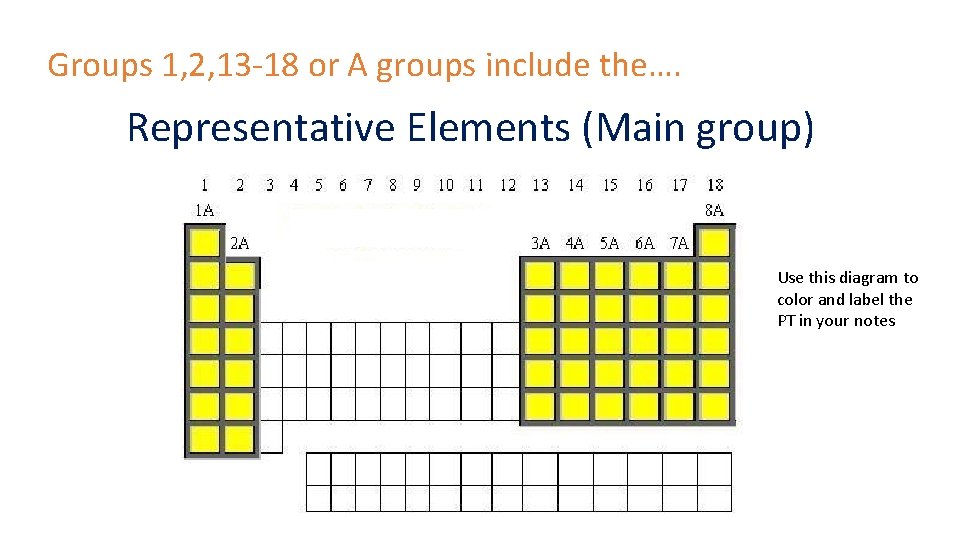
Groups 1, 2, 13 -18 or A groups include the…. Representative Elements (Main group) Use this diagram to color and label the PT in your notes
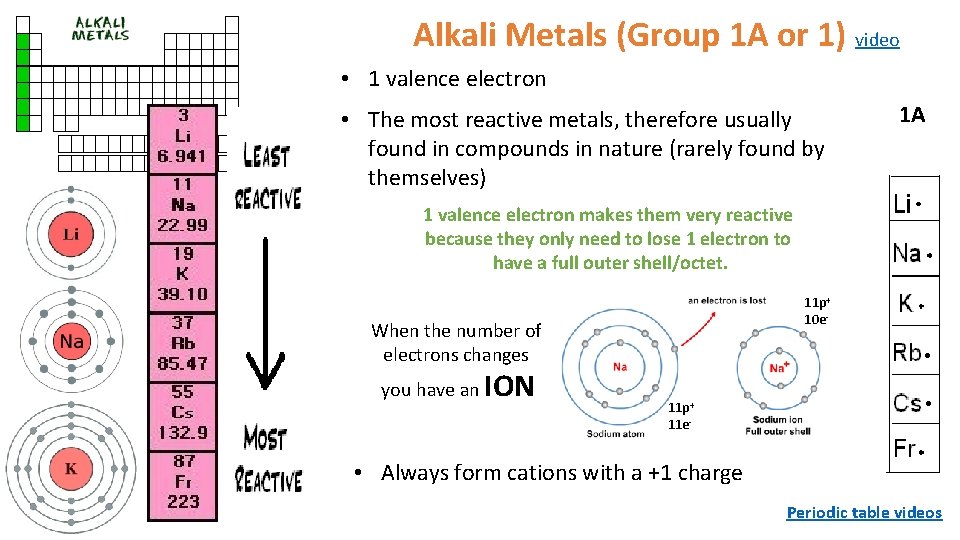
Alkali Metals (Group 1 A or 1) video • 1 valence electron • The most reactive metals, therefore usually found in compounds in nature (rarely found by themselves) 1 A 1 valence electron makes them very reactive because they only need to lose 1 electron to have a full outer shell/octet. 11 p+ 10 e- When the number of electrons changes you have an ION 11 p+ 11 e- • Always form cations with a +1 charge Periodic table videos
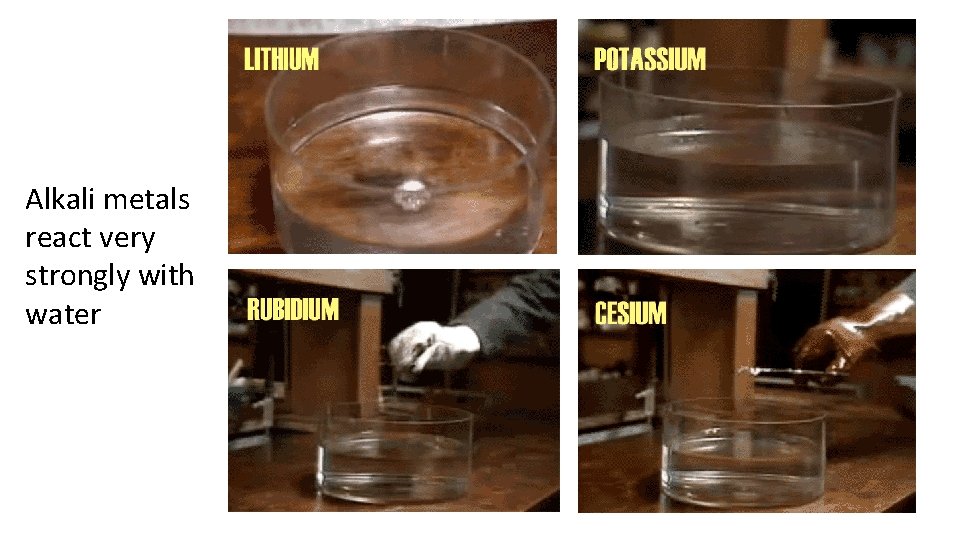
Alkali metals react very strongly with water
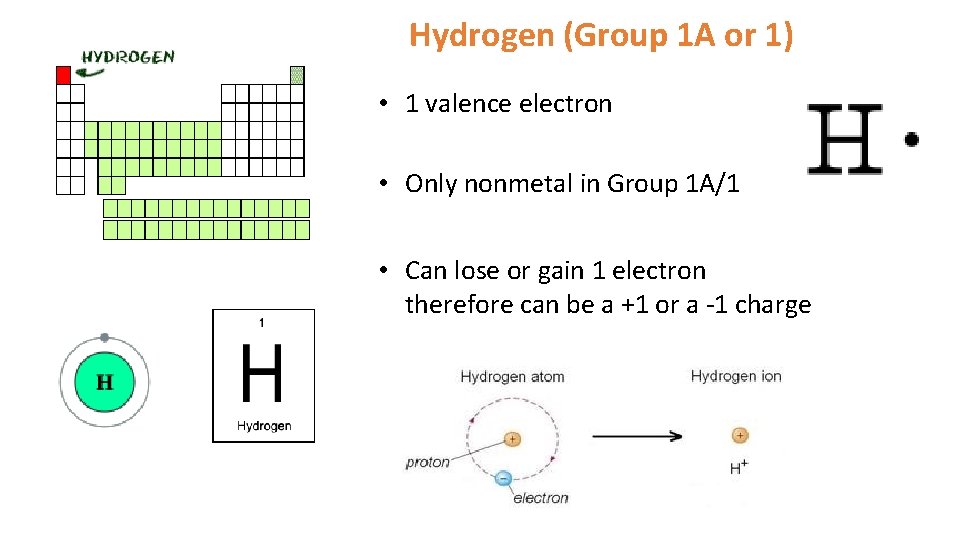
Hydrogen (Group 1 A or 1) • 1 valence electron • Only nonmetal in Group 1 A/1 • Can lose or gain 1 electron therefore can be a +1 or a -1 charge
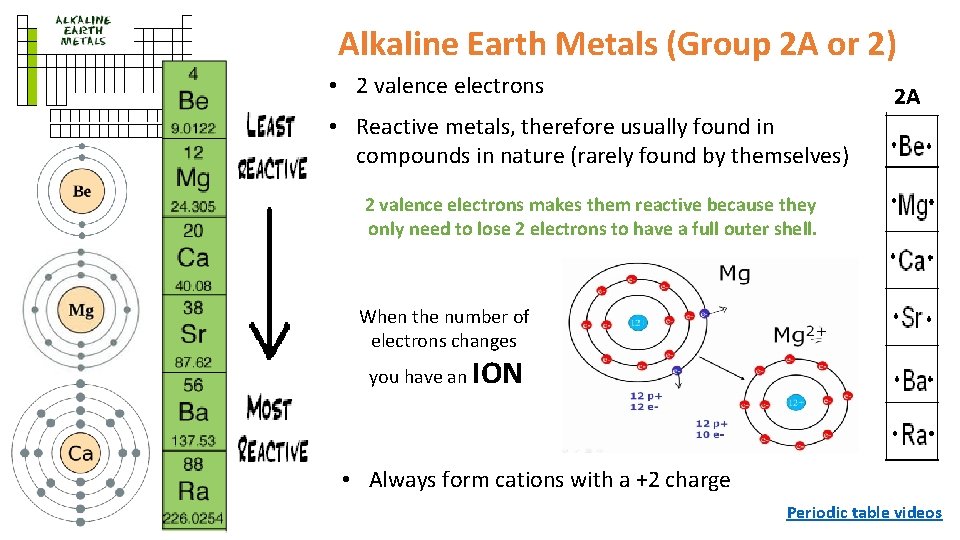
Alkaline Earth Metals (Group 2 A or 2) • 2 valence electrons 2 A • Reactive metals, therefore usually found in compounds in nature (rarely found by themselves) 2 valence electrons makes them reactive because they only need to lose 2 electrons to have a full outer shell. When the number of electrons changes you have an ION • Always form cations with a +2 charge Periodic table videos
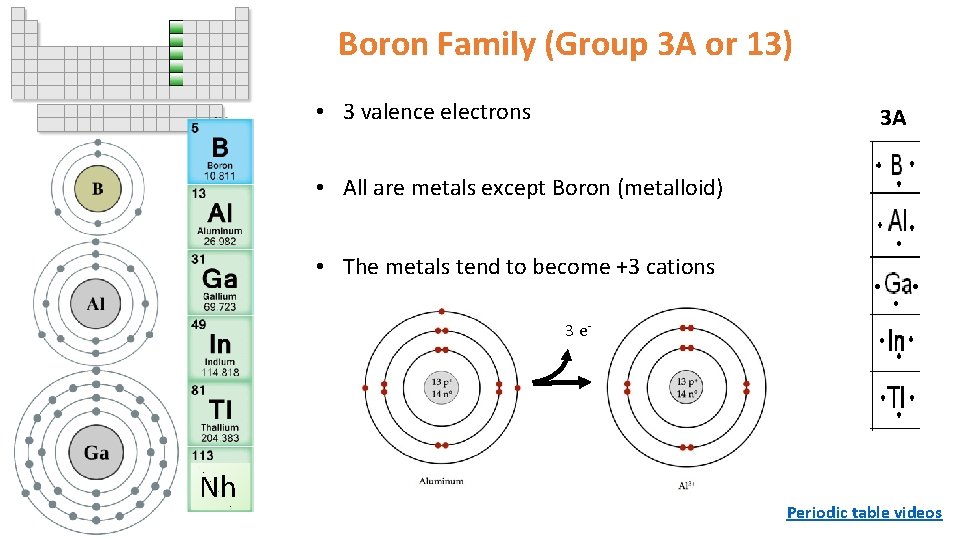
Boron Family (Group 3 A or 13) • 3 valence electrons 3 A • All are metals except Boron (metalloid) • The metals tend to become +3 cations 3 e- Nh Periodic table videos
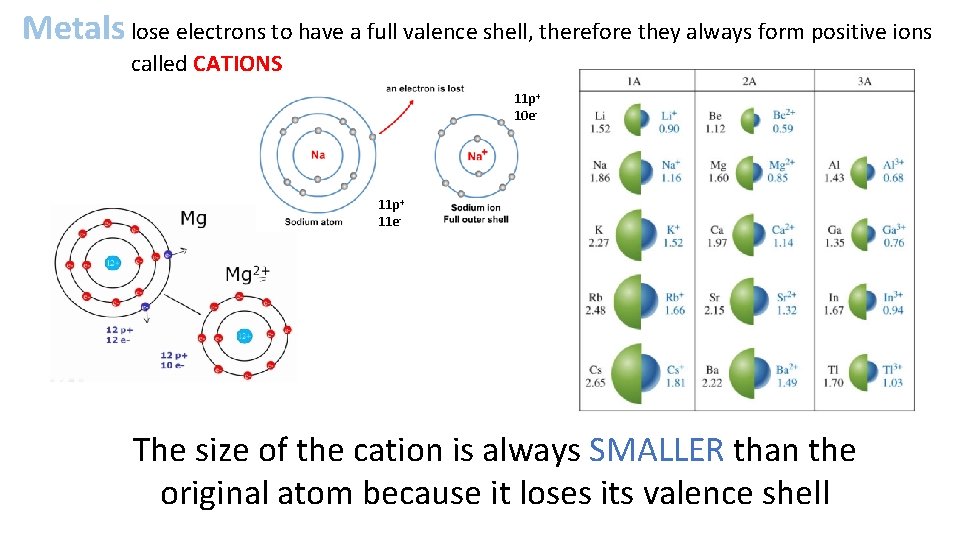
Metals lose electrons to have a full valence shell, therefore they always form positive ions called CATIONS 11 p+ 10 e- 11 p+ 11 e- The size of the cation is always SMALLER than the original atom because it loses its valence shell
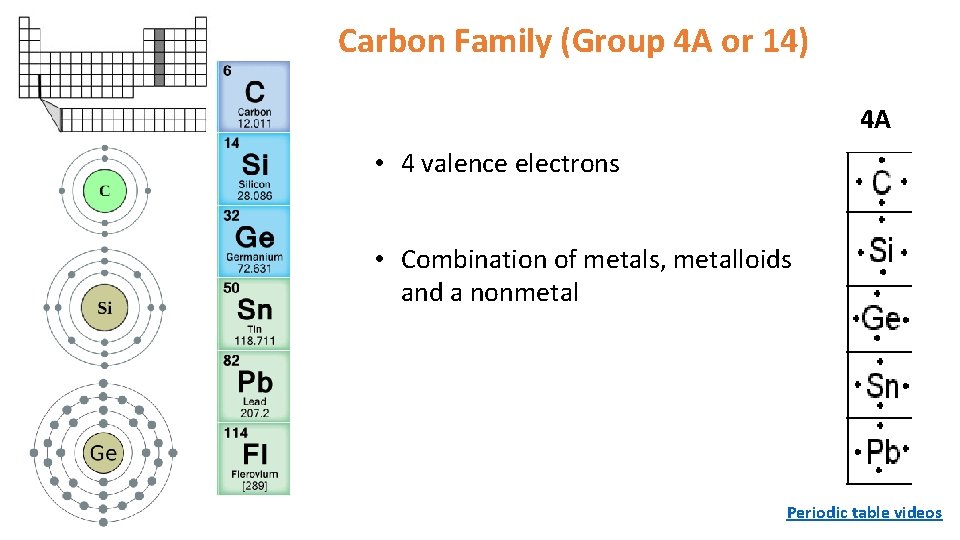
Carbon Family (Group 4 A or 14) 4 A • 4 valence electrons • Combination of metals, metalloids and a nonmetal Periodic table videos
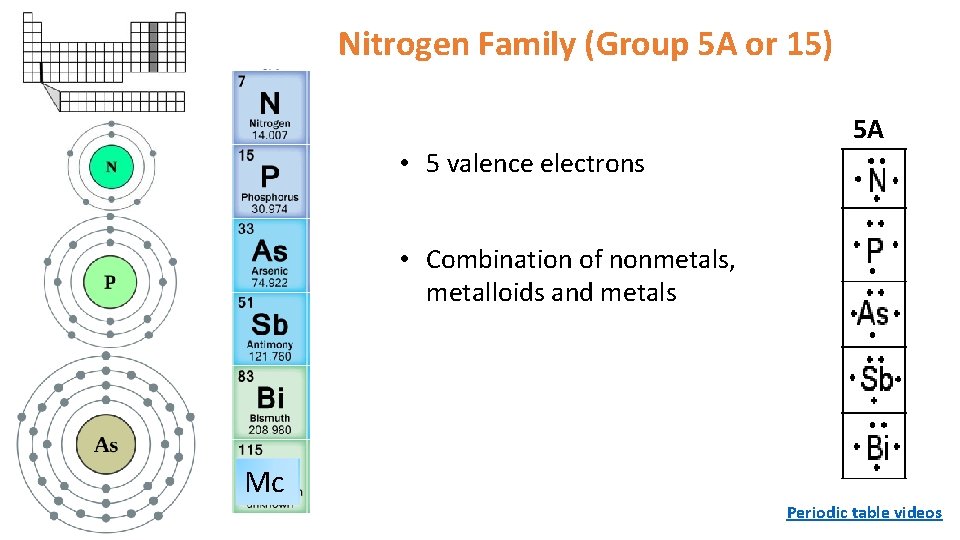
Nitrogen Family (Group 5 A or 15) 5 A • 5 valence electrons • Combination of nonmetals, metalloids and metals Mc Periodic table videos
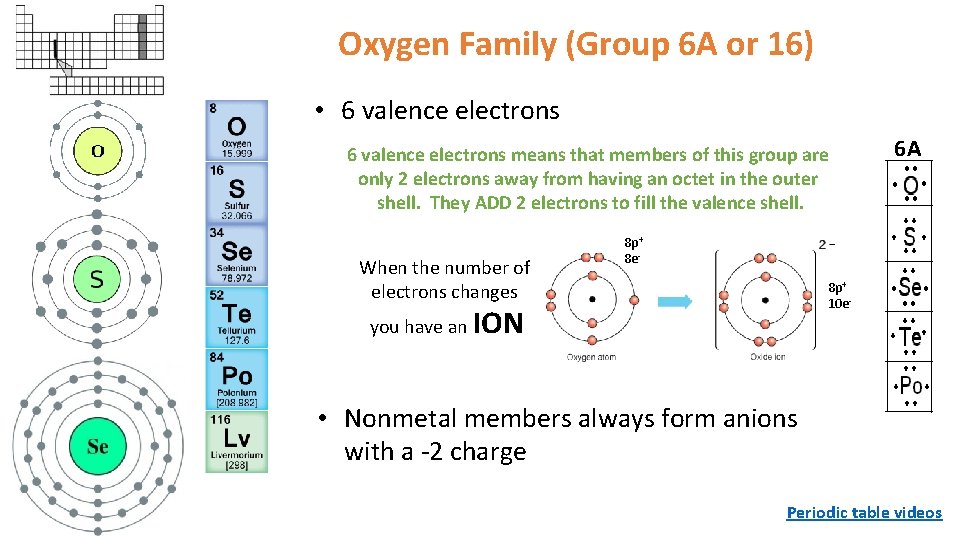
Oxygen Family (Group 6 A or 16) • 6 valence electrons means that members of this group are only 2 electrons away from having an octet in the outer shell. They ADD 2 electrons to fill the valence shell. When the number of electrons changes you have an 6 A 8 p+ 8 e 8 p+ 10 e- ION • Nonmetal members always form anions with a -2 charge Periodic table videos
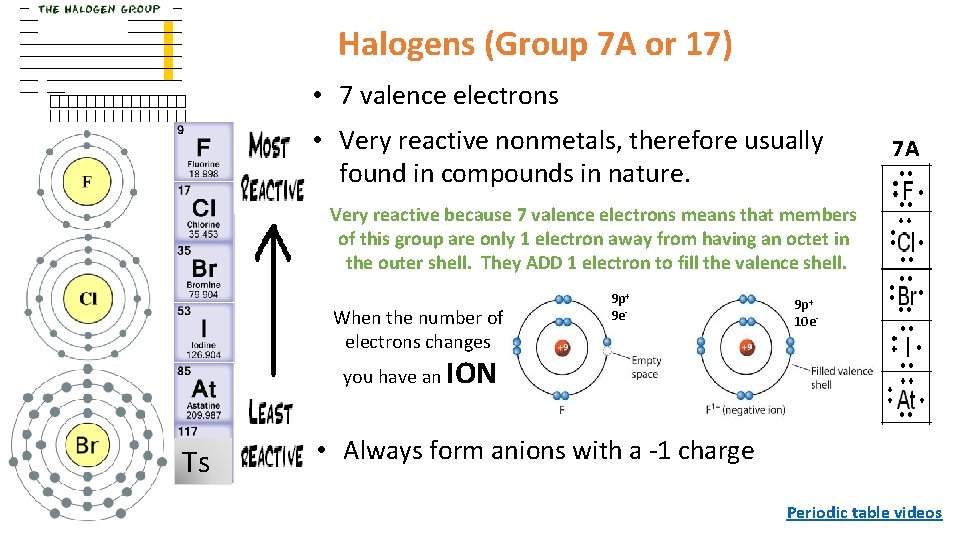
Halogens (Group 7 A or 17) • 7 valence electrons • Very reactive nonmetals, therefore usually found in compounds in nature. 7 A Very reactive because 7 valence electrons means that members of this group are only 1 electron away from having an octet in the outer shell. They ADD 1 electron to fill the valence shell. When the number of electrons changes you have an Ts 9 p+ 9 e- 9 p+ 10 e- ION • Always form anions with a -1 charge Periodic table videos
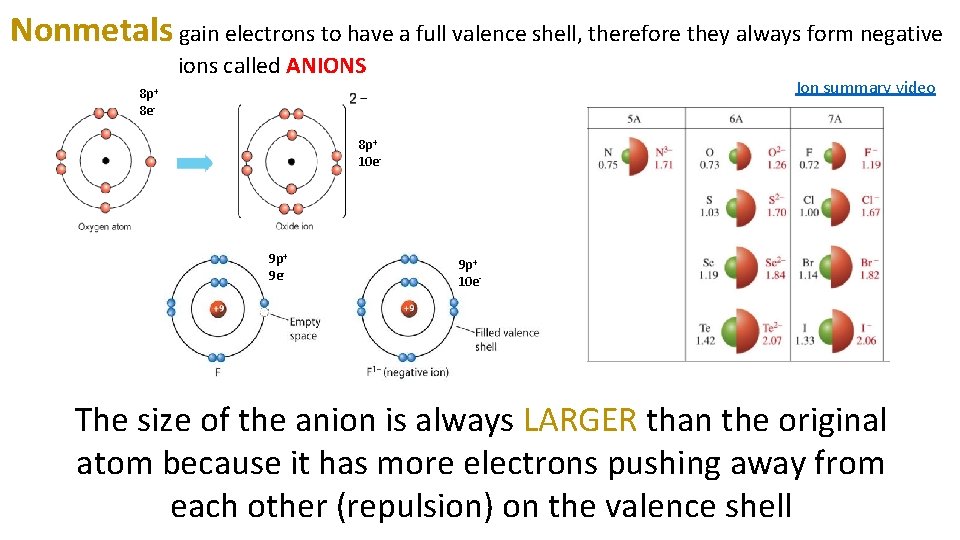
Nonmetals gain electrons to have a full valence shell, therefore they always form negative ions called ANIONS Ion summary video 8 p+ 8 e 8 p+ 10 e- 9 p+ 9 e- 9 p+ 10 e- The size of the anion is always LARGER than the original atom because it has more electrons pushing away from each other (repulsion) on the valence shell
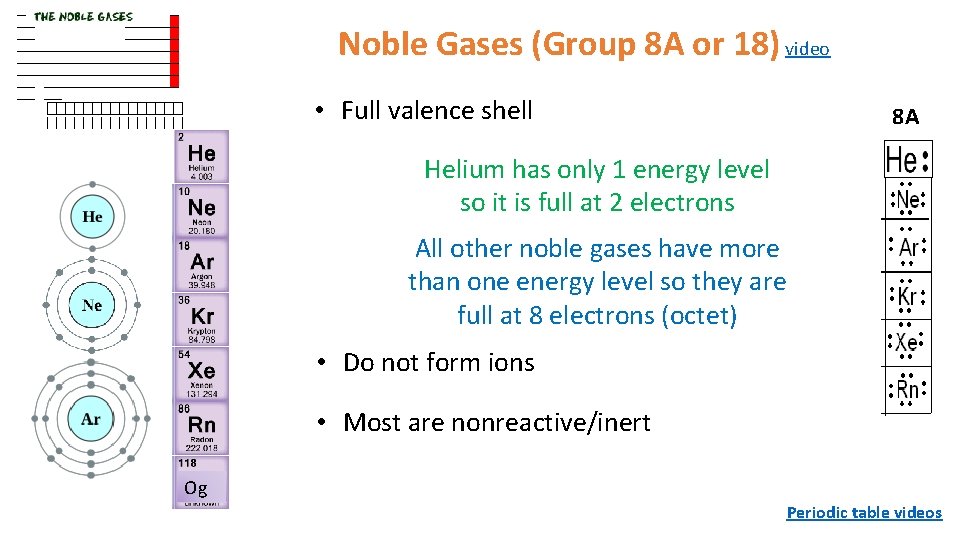
Noble Gases (Group 8 A or 18) video • Full valence shell 8 A Helium has only 1 energy level so it is full at 2 electrons All other noble gases have more than one energy level so they are full at 8 electrons (octet) • Do not form ions • Most are nonreactive/inert Og Periodic table videos
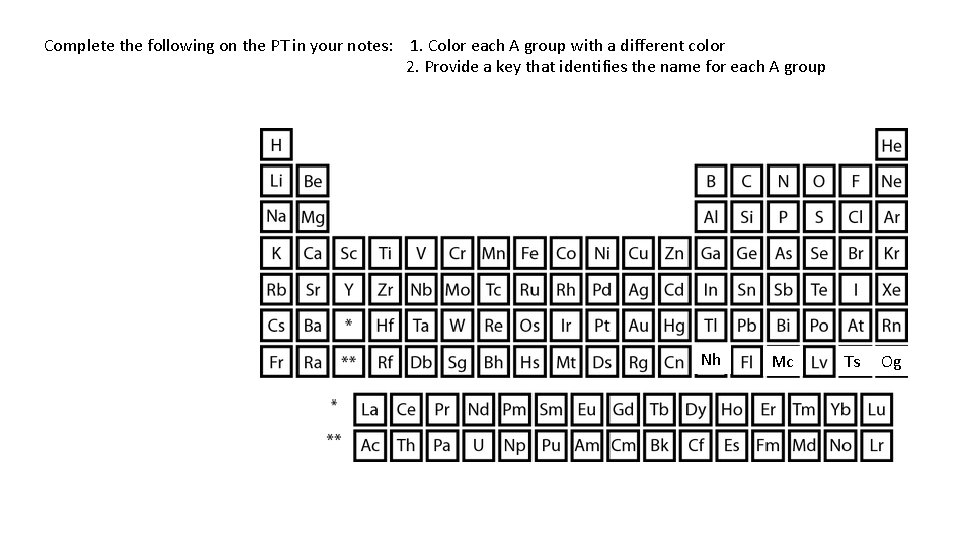
Complete the following on the PT in your notes: 1. Color each A group with a different color 2. Provide a key that identifies the name for each A group Nh Mc Ts Og
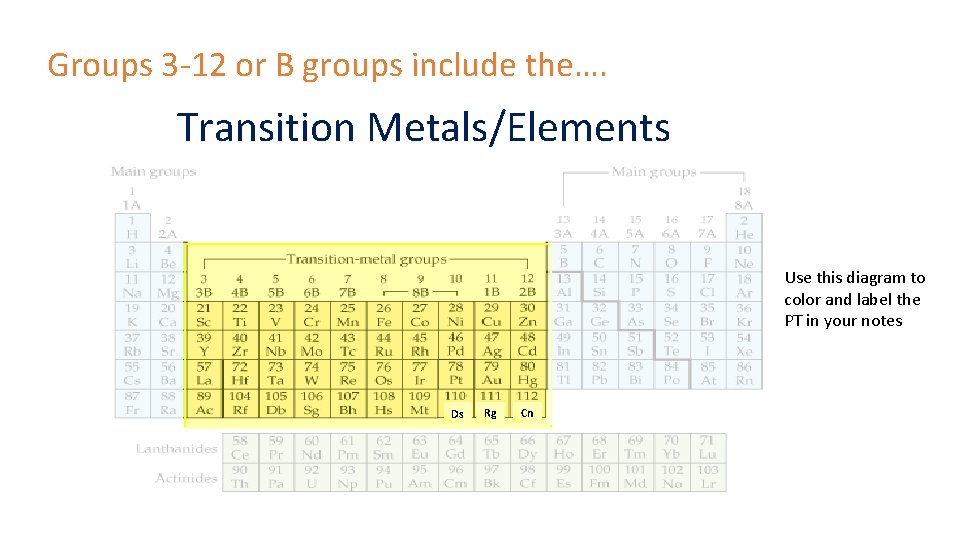
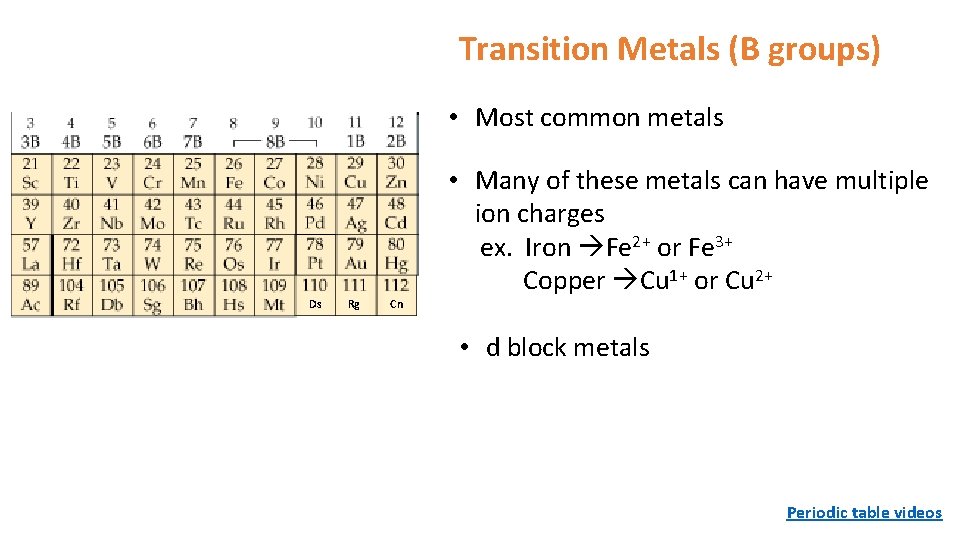
Groups 3 -12 or B groups include the…. Transition Metals/Elements Use this diagram to color and label the PT in your notes Ds Rg Cn
Transition Metals (B groups) • Most common metals Ds Rg Cn • Many of these metals can have multiple ion charges ex. Iron Fe 2+ or Fe 3+ Copper Cu 1+ or Cu 2+ • d block metals Periodic table videos
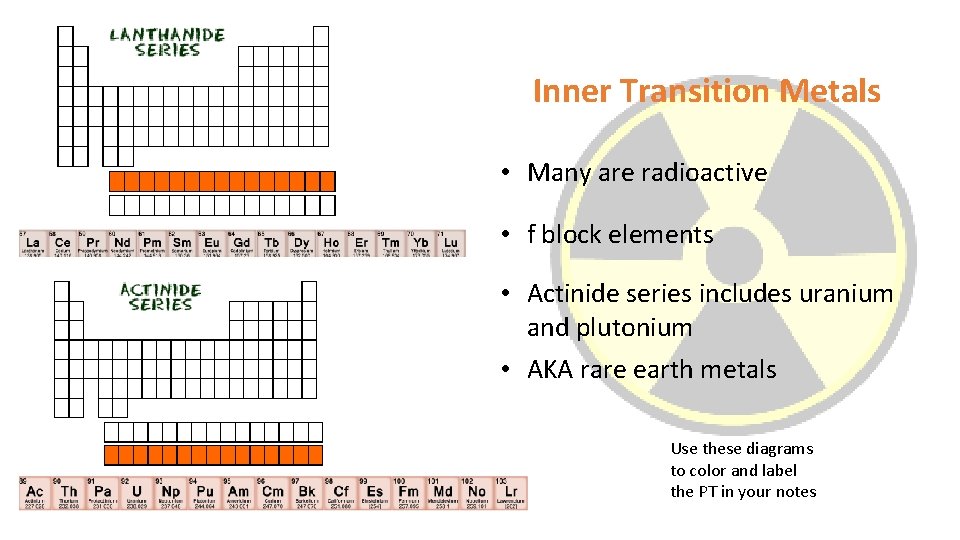
Inner Transition Metals • Many are radioactive • f block elements • Actinide series includes uranium and plutonium • AKA rare earth metals Use these diagrams to color and label the PT in your notes
Nh Mc Ts Og