
Unit 4 Lesson 1 MONEY Day 1 Word









- Slides: 67
Unit 4 Lesson 1 MONEY
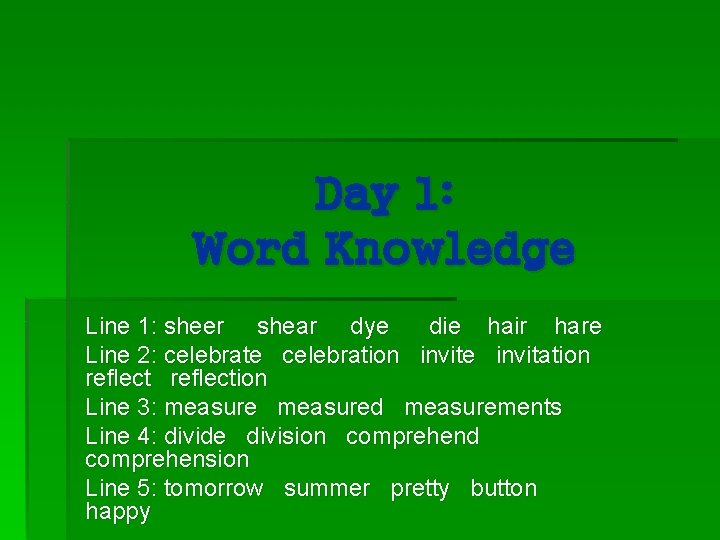
Day 1: Word Knowledge Line 1: sheer shear dye die hair hare Line 2: celebrate celebration invite invitation reflection Line 3: measured measurements Line 4: divide division comprehend comprehension Line 5: tomorrow summer pretty button happy
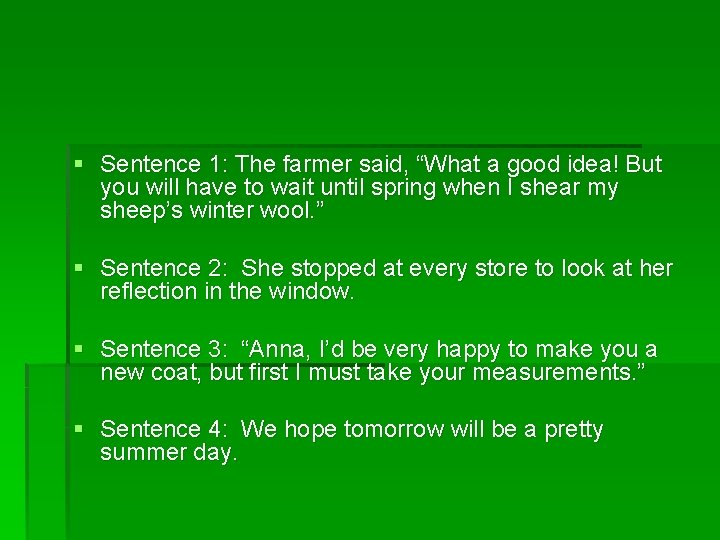
§ Sentence 1: The farmer said, “What a good idea! But you will have to wait until spring when I shear my sheep’s winter wool. ” § Sentence 2: She stopped at every store to look at her reflection in the window. § Sentence 3: “Anna, I’d be very happy to make you a new coat, but first I must take your measurements. ” § Sentence 4: We hope tomorrow will be a pretty summer day.
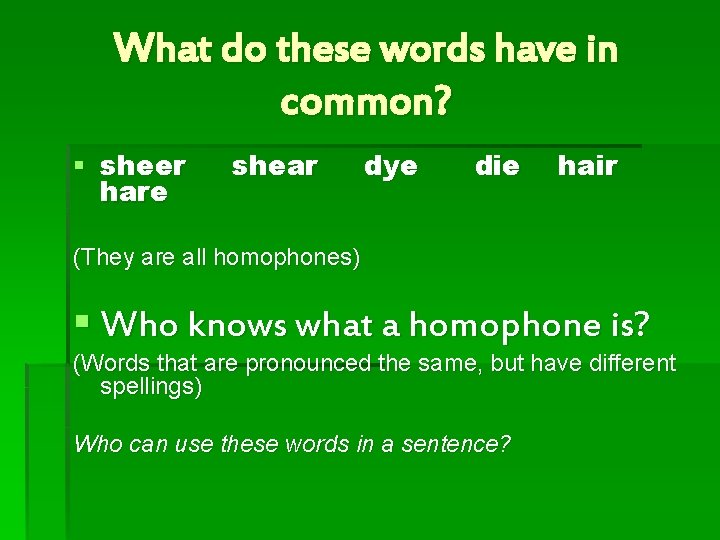
What do these words have in common? § sheer hare shear dye die hair (They are all homophones) § Who knows what a homophone is? (Words that are pronounced the same, but have different spellings) Who can use these words in a sentence?
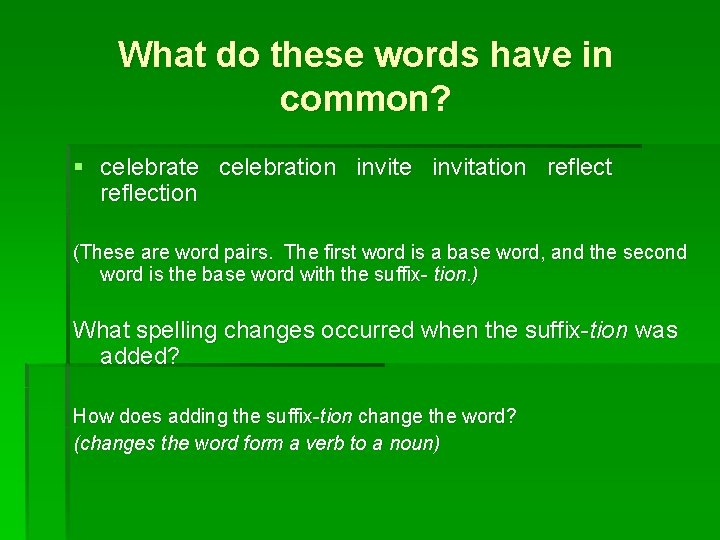
What do these words have in common? § celebrate celebration invite invitation reflection (These are word pairs. The first word is a base word, and the second word is the base word with the suffix- tion. ) What spelling changes occurred when the suffix-tion was added? How does adding the suffix-tion change the word? (changes the word form a verb to a noun)
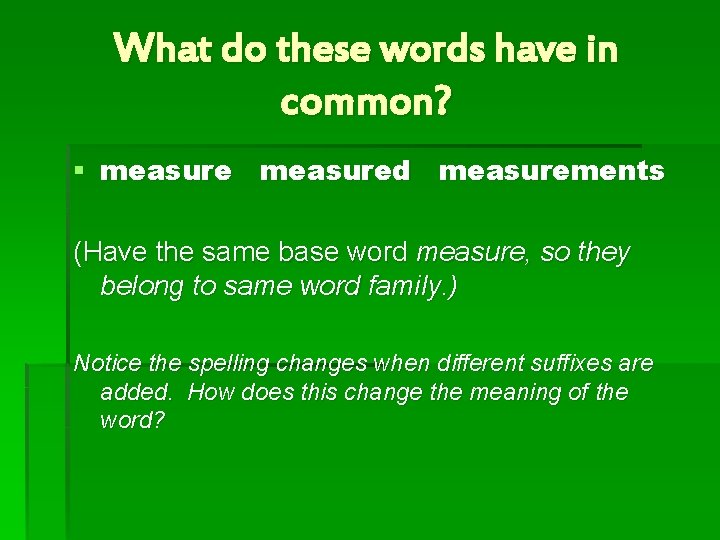
What do these words have in common? § measured measurements (Have the same base word measure, so they belong to same word family. ) Notice the spelling changes when different suffixes are added. How does this change the meaning of the word?
What do these words have in common? § divide division comprehend comprehension (Word pairs, first word is the base word, second word is the base word with the suffix-sion). Notice the spelling changes that occur when the suffix-sion is added. This suffix being added also changes the word from a verb to a noun.
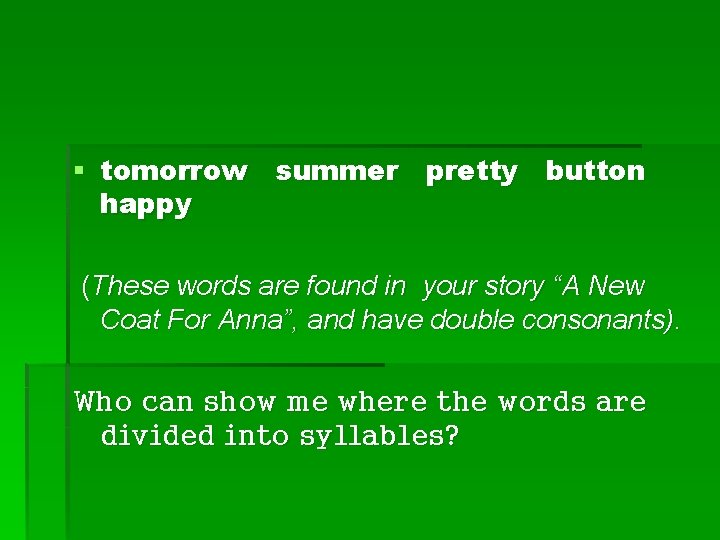
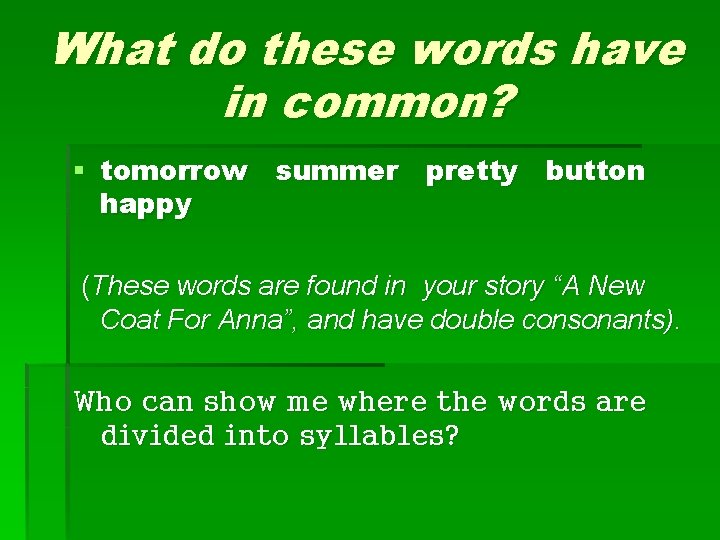
§ tomorrow summer pretty button happy (These words are found in your story “A New Coat For Anna”, and have double consonants). Who can show me where the words are divided into syllables?
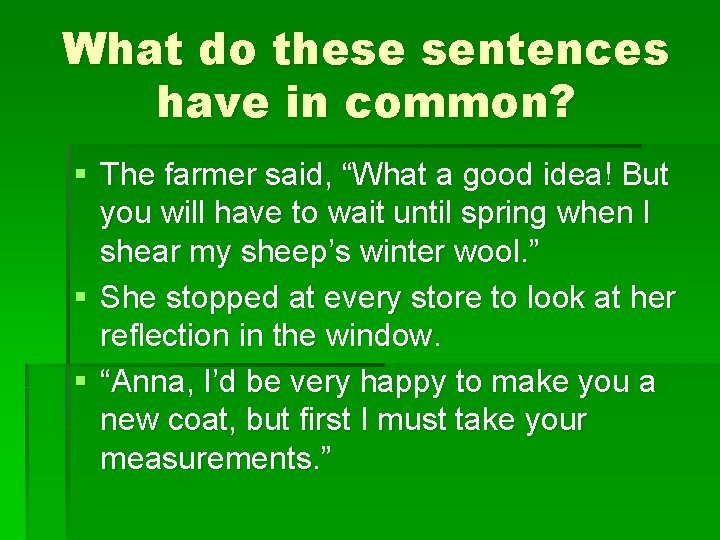
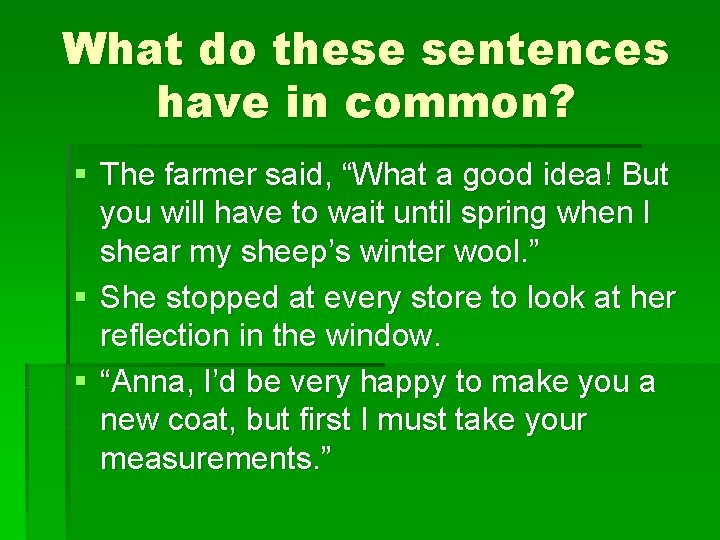
What do these sentences have in common? § The farmer said, “What a good idea! But you will have to wait until spring when I shear my sheep’s winter wool. ” § She stopped at every store to look at her reflection in the window. § “Anna, I’d be very happy to make you a new coat, but first I must take your measurements. ”
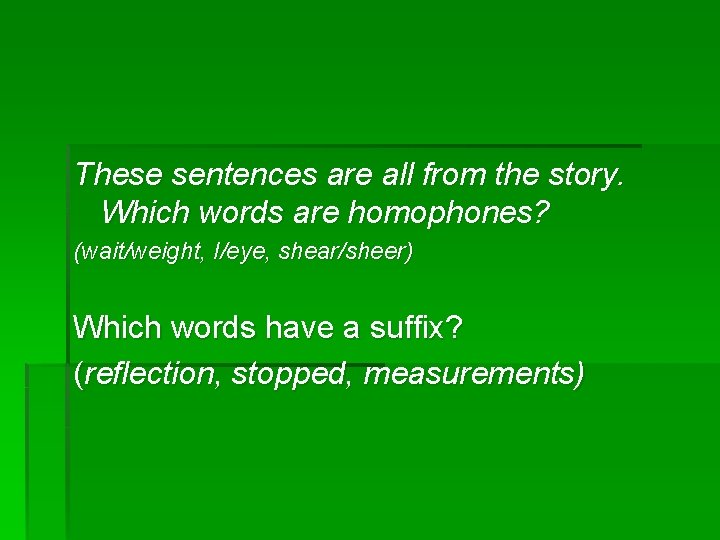
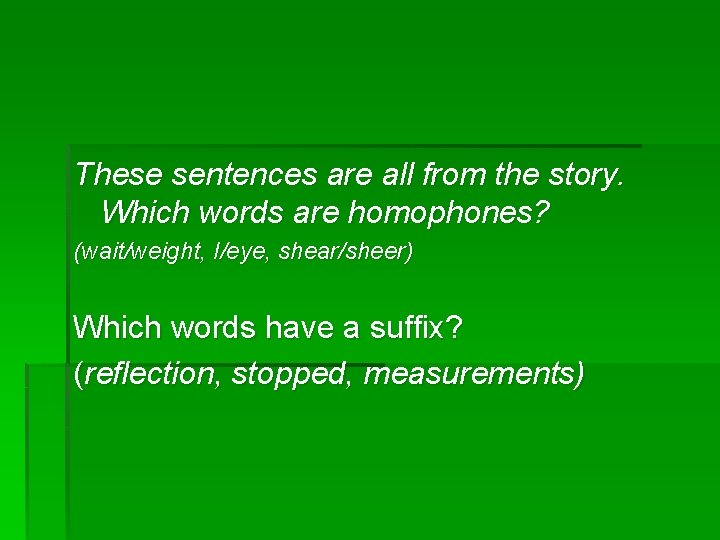
These sentences are all from the story. Which words are homophones? (wait/weight, I/eye, shear/sheer) Which words have a suffix? (reflection, stopped, measurements)
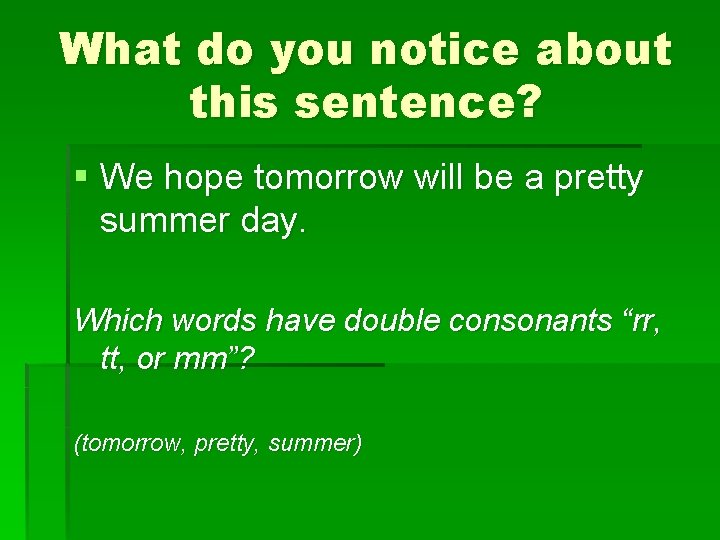
What do you notice about this sentence? § We hope tomorrow will be a pretty summer day. Which words have double consonants “rr, tt, or mm”? (tomorrow, pretty, summer)
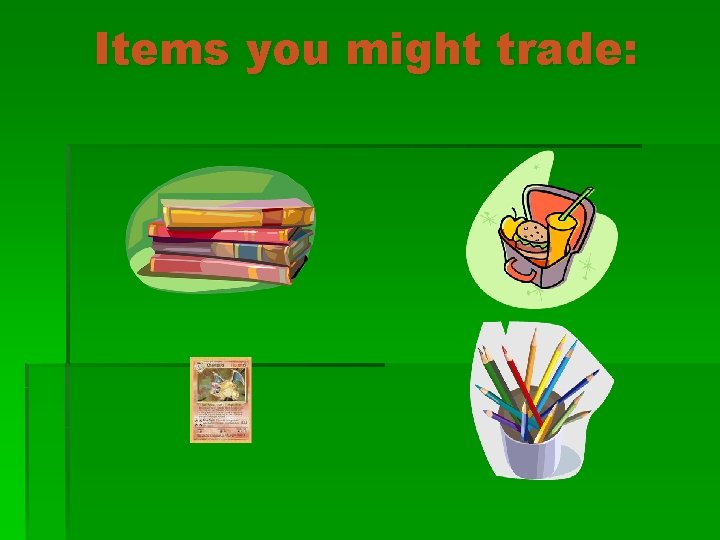
Build Background § Activate Prior Knowledge: Have you ever traded something you had with a friend for another item? Do you like to trade? This type of trading is called bartering. Adults use bartering sometimes when money is scarce.
Items you might trade:
Background Information Have you ever read any stories about people who trade or barter things? The story you are about to read is called “A New Coat for Anna”, and it takes place in Europe just after WWII, when money, food, and clothing were scarce. This story is based on a true story that was told to the author by a friend
Preview and Prepare § Browse through the story and search for clues that tell you something about the story. Look for problems, such as unfamiliar words. Look for wonderings, questions you might have about the story.
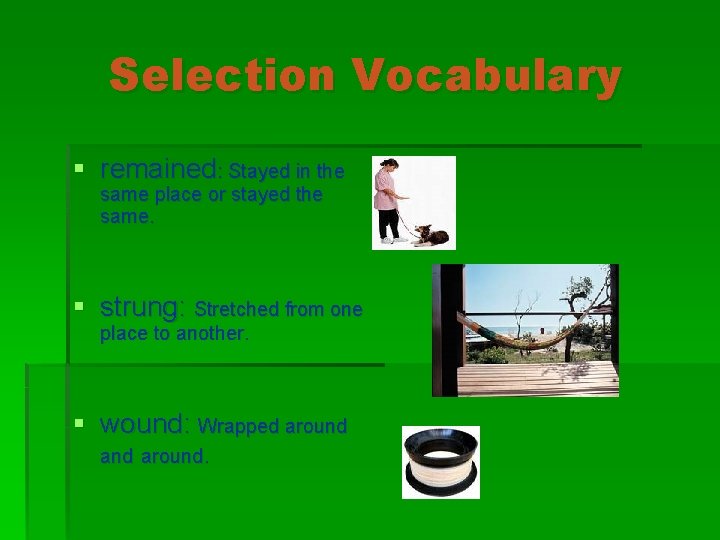
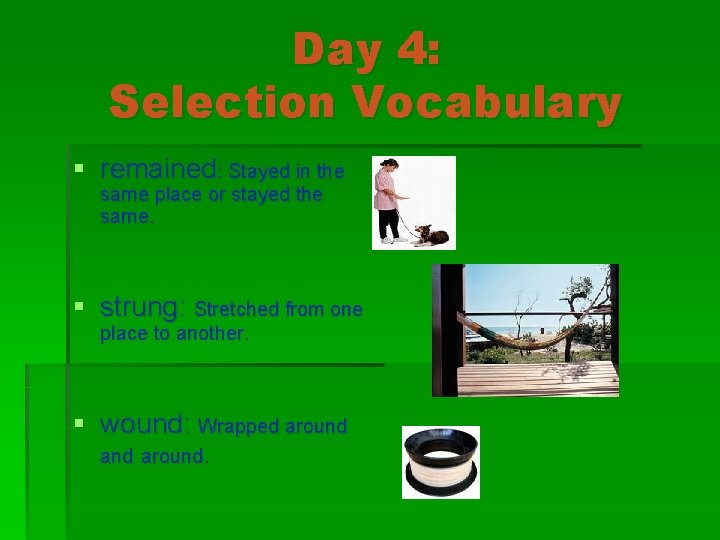
Selection Vocabulary § remained: Stayed in the same place or stayed the same. § strung: Stretched from one place to another. § wound: Wrapped around.
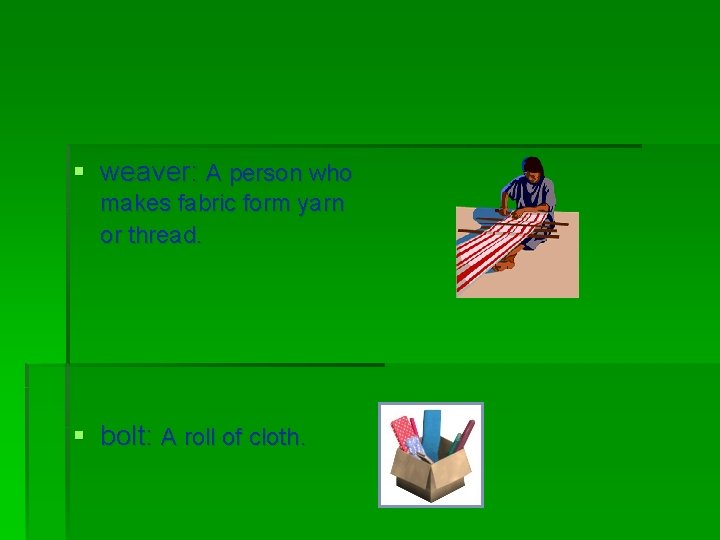
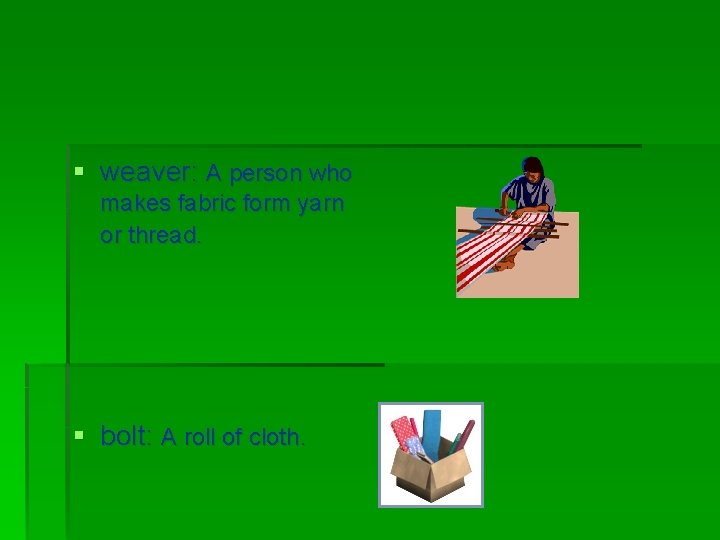
§ weaver: A person who makes fabric form yarn or thread. § bolt: A roll of cloth.
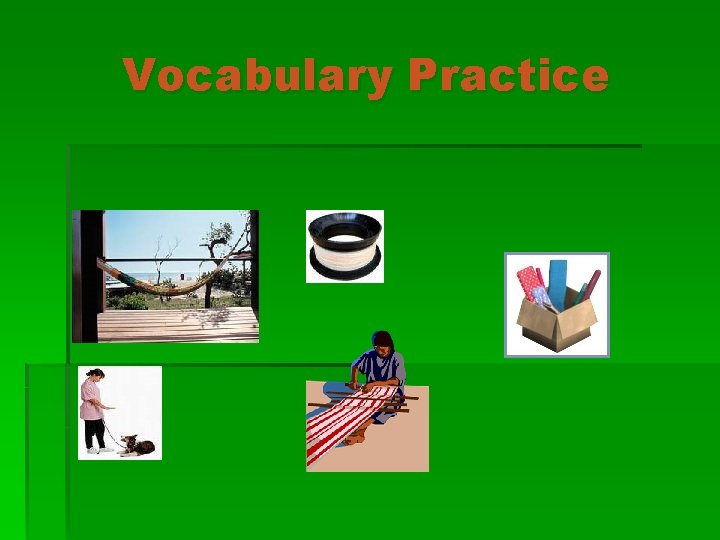
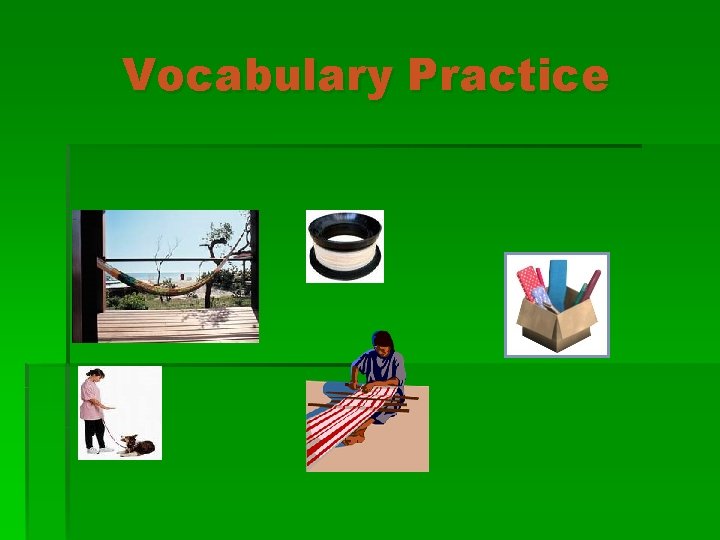
Vocabulary Practice
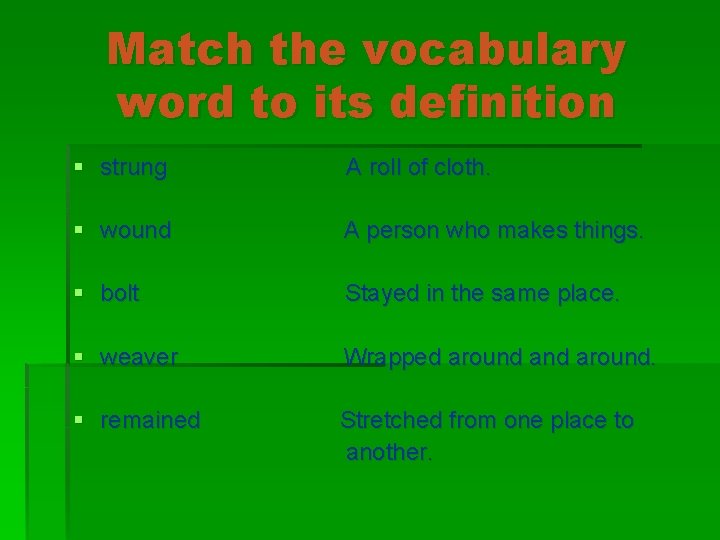
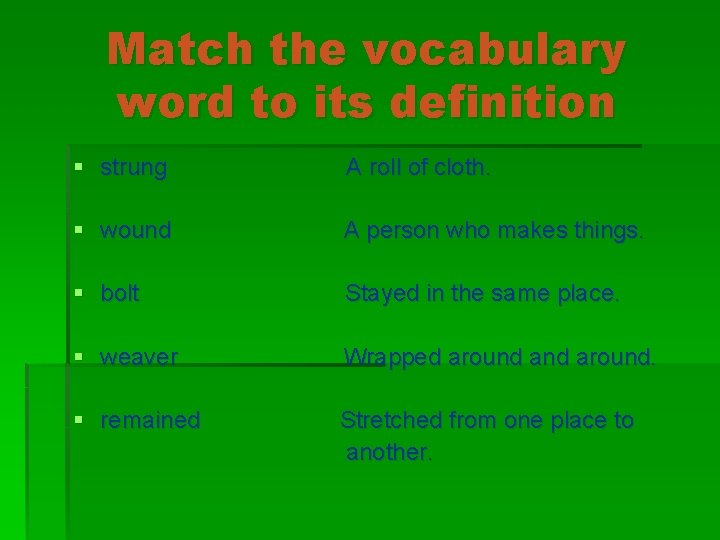
Match the vocabulary word to its definition § strung A roll of cloth. § wound A person who makes things. § bolt Stayed in the same place. § weaver Wrapped around. § remained Stretched from one place to another.
Word Analysis: Pretest: Double Consonants Proofread and correct any misspelled words.
Wriritng Process Strategies § Persuasive Writing Form Language Arts Handbook pgs. 156 -157 Language Arts transparency 6, Models of good Writing Persuasive Peer Letter.
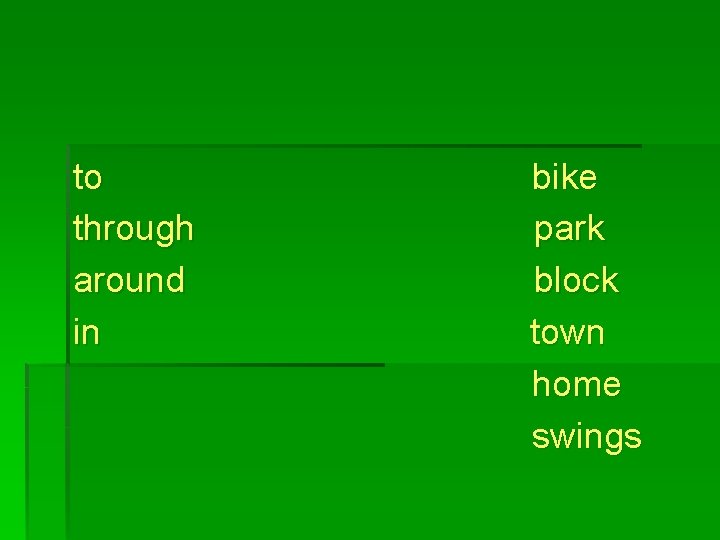
English Language Conventions § Language Arts Handbook pg. 254 (prepositions and prepositional phrases) Can you form prepositional phrases with the words from these two columns?
to through around in bike park block town home swings
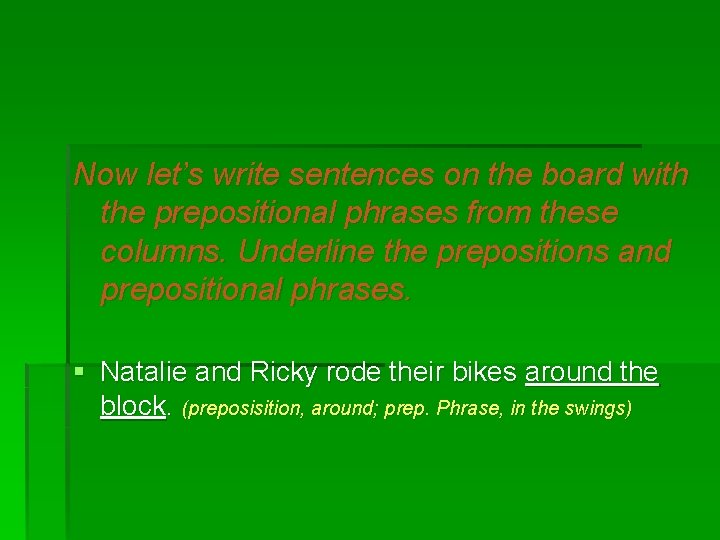
Now let’s write sentences on the board with the prepositional phrases from these columns. Underline the prepositions and prepositional phrases. § Natalie and Ricky rode their bikes around the block. (preposisition, around; prep. Phrase, in the swings)
More Practice § Comprehension and Language Arts Skills pgs. 92 -93
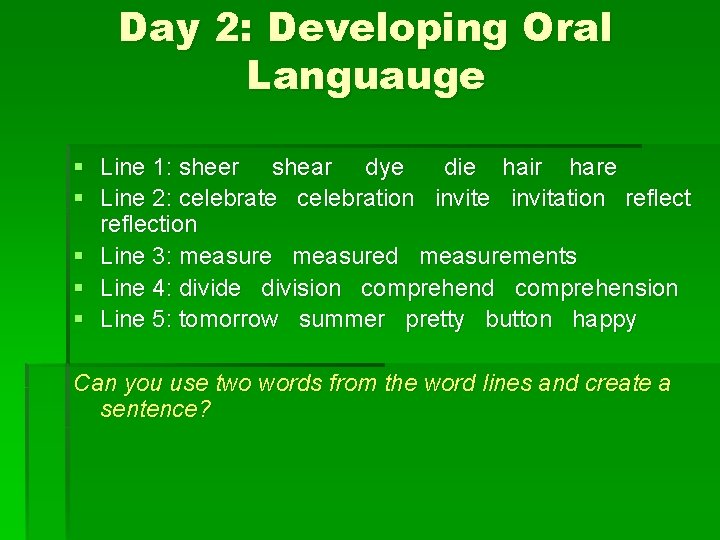
Day 2: Developing Oral Languauge § Line 1: sheer shear dye die hair hare § Line 2: celebrate celebration invite invitation reflection § Line 3: measured measurements § Line 4: divide division comprehend comprehension § Line 5: tomorrow summer pretty button happy Can you use two words from the word lines and create a sentence?
Reading Recommendations As I read the selection I will… § Make and Confirm Predictions to help me understand the story better. § Ask Questions about what I am reading if I don’t understand something. § Summarize the story to make sure I understand important concepts. Lets’ read pgs. 14 -23 together.
Focus Questions? § Why do we sometimes have to give up something in order to get something we want? § Why are things we receive more special when others have had to work together in order to give them to us?
Discussing Strategy Use What questions did you ask yourself while reading? Where did you stop to summarize? Did you confirm any predictions? What predictions were correct?
Discussing the Selection Let’s use the Handing Off Process to answer the following questions… Why did Anna’s mother trade her possessions with other people? Why was money scarce? What were the steps in making the coat? What does the story teach us about money Or the lack of money?
Day 2 Word Analysis § Spelling: Double Consonants Say; super Say: supper Circle the double consonant in supper. Double consonants come after short-vowel sounds. Notice the /u/ in supper, and the /oo/ in super
better soccer dinner Circle the double consonants and notice the short-vowel sounds.
English Language Conventions § Review Prepositions/Prepositional Phrases Comp. and LA Skills pgs. 92 -93 from Day 1. § The potlatch was a custom among Native Americans in the pacific Northwest. (prep. , among, in; prep. Phrases among Native Americans, in the Pacific Northwest). At the Potlatch, tribe members would give great gifts to other members. (prep. , at, to; prep. phrases, at the potlatch, to other members).
§ People came form everywhere on foot and on horses. (prep. , from, on; prep. phrases, from everywhere, on foot). People outside the tribe would not receive gifts. (prep. , outside; prep. phrase, outside the tribe). Lets’ work together in small groups and find prepositions and prepositional phrases from our story, noting the page each comes from on a sheet of paper.
Day 2: Writing Process Strategies § Prewriting: Persuasive Friendly Letter Let’s make a graphic organizer for our persuasive friendly letter. Writer’s workbook page 54 -55
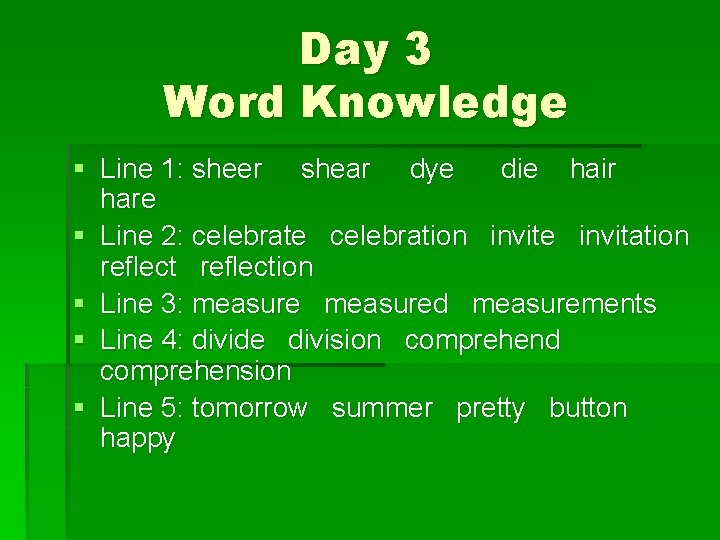
Day 3 Word Knowledge § Line 1: sheer shear dye die hair hare § Line 2: celebrate celebration invite invitation reflection § Line 3: measured measurements § Line 4: divide division comprehend comprehension § Line 5: tomorrow summer pretty button happy
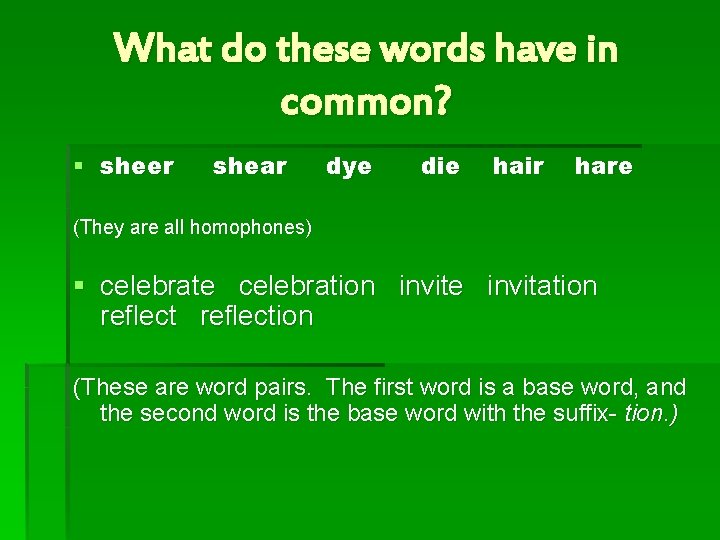
What do these words have in common? § sheer shear dye die hair hare (They are all homophones) § celebrate celebration invite invitation reflection (These are word pairs. The first word is a base word, and the second word is the base word with the suffix- tion. )
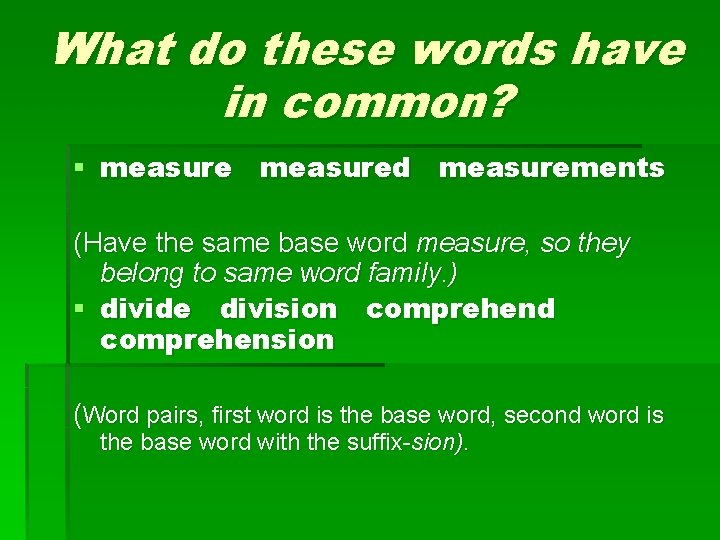
What do these words have in common? § measured measurements (Have the same base word measure, so they belong to same word family. ) § divide division comprehend comprehension (Word pairs, first word is the base word, second word is the base word with the suffix-sion).
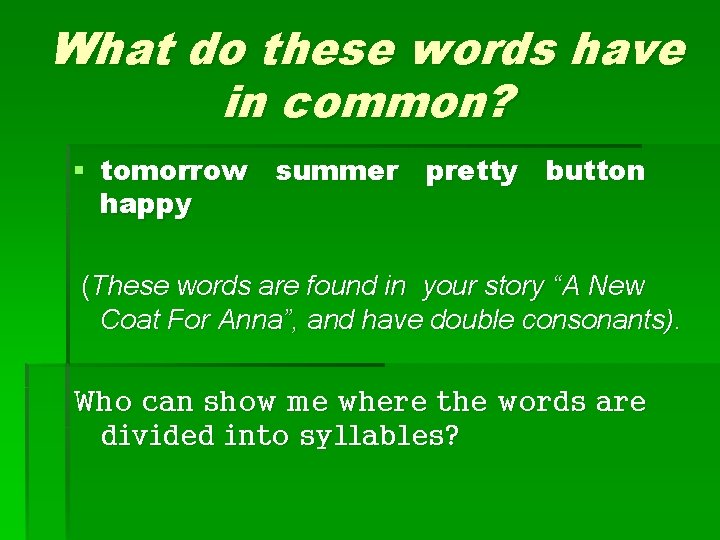
What do these words have in common? § tomorrow summer pretty button happy (These words are found in your story “A New Coat For Anna”, and have double consonants). Who can show me where the words are divided into syllables?
What do these sentences have in common? § Sentence 1: The farmer said, “What a good idea! But you will have to wait until spring when I shear my sheep’s winter wool. ” § Sentence 2: She stopped at every store to look at her reflection in the window. § Sentence 3: “Anna, I’d be very happy to make you a new coat, but first I must take your measurements. ”
These sentences are all from the story. Which words are homophones? (wait/weight, I/eye, shear/sheer) Which words have a suffix? (reflection, stopped, measurements)
What do you notice about this sentence? § Sentence 4: We hope tomorrow will be a pretty summer day. Which words have double consonants “rr, tt, or mm”? (tomorrow, pretty, summer)
Day 3: Comprehension Skills § Good readers make inferences in order to figure out information and details that the writer does not actually say in the story. § Use story clues and what you already know as a basis for understanding what has happened. § Clues: stores boarded up and closed; no potatoes for sale; no coats for Anna’s mother to buy § Inferences: Life was very difficult, and sometimes you might even be hungry or cold.
Buddy Reading § Let’s read the story again with our partner using inferences to make sure we understand the story. § Second Read: Anthology pgs. 14 -23
Checking Comprehension § What did you learn about Anna and her mother from the way that they went about getting Anna a new winter coat? (Anna’s mother was resourceful and determined in trading what she had for something they needed. ) Why wasn’t it necessary to pay for Anna’s new coat with money? (The people in the village who helped make Anna’s coat were willing to work in exchange for something else that they wanted or needed, such as a lamp or a gold watch. )
§ Who demonstrated the importance of working together in the story? (The farmer, the spinner, the weaver, and the tailor all cooperated with Anna and her mother to make a new coat. Also, Anna and her mother worked together to dye the wool for Anna’s coat. )
Day 3 Word Analysis § Spelling: Introducing words with double consonants that end in –er, -on, or –y and have short-vowel sounds. § What parts or type of clothing have double consonants? § button, zipper, slippers § Let’s do Spelling Vocab. Skills pg. 76
§ Untangling Who can circle the prefix? (un, meaning; not or opposite of) Who can find the base word? (tangle, meaning; in a knot, all tied up) How does the ending ing, change the word? (makes the word an action in the present, happening now)
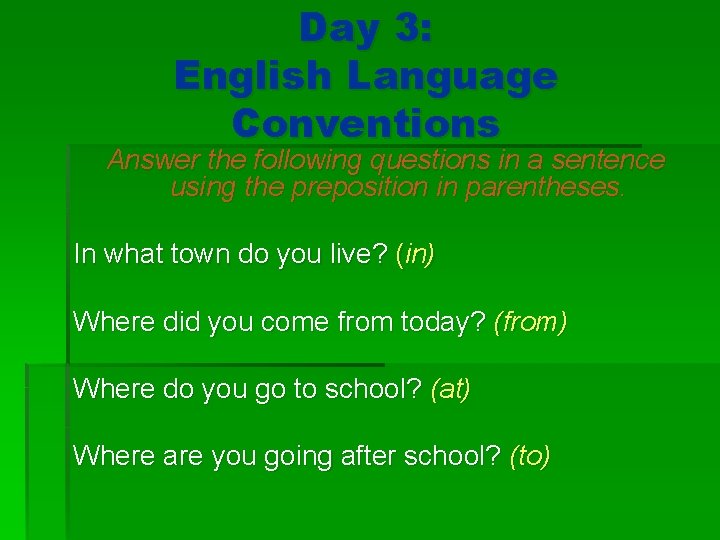
Day 3: English Language Conventions Answer the following questions in a sentence using the preposition in parentheses. In what town do you live? (in) Where did you come from today? (from) Where do you go to school? (at) Where are you going after school? (to)
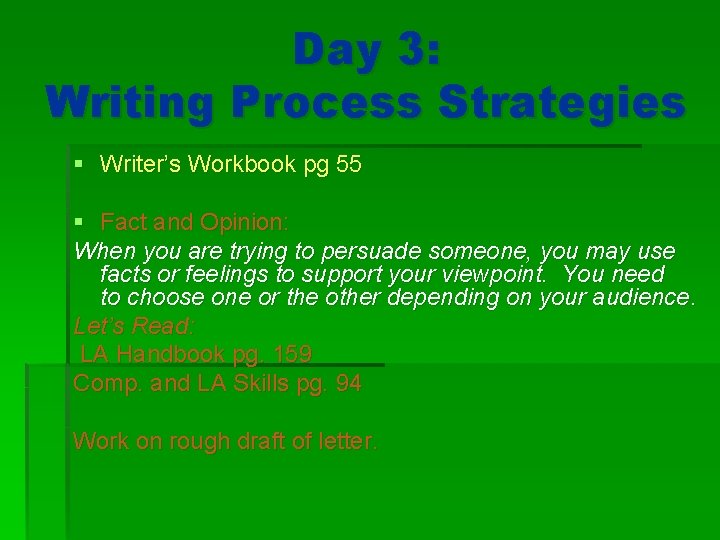
Day 3: Writing Process Strategies § Writer’s Workbook pg 55 § Fact and Opinion: When you are trying to persuade someone, you may use facts or feelings to support your viewpoint. You need to choose one or the other depending on your audience. Let’s Read: LA Handbook pg. 159 Comp. and LA Skills pg. 94 Work on rough draft of letter.
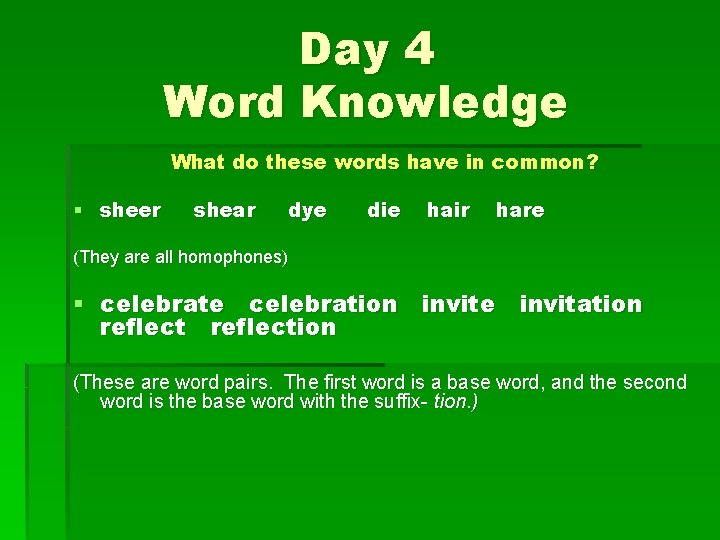
Day 4 Word Knowledge What do these words have in common? § sheer shear dye die hair hare (They are all homophones) § celebrate celebration invite invitation reflection (These are word pairs. The first word is a base word, and the second word is the base word with the suffix- tion. )
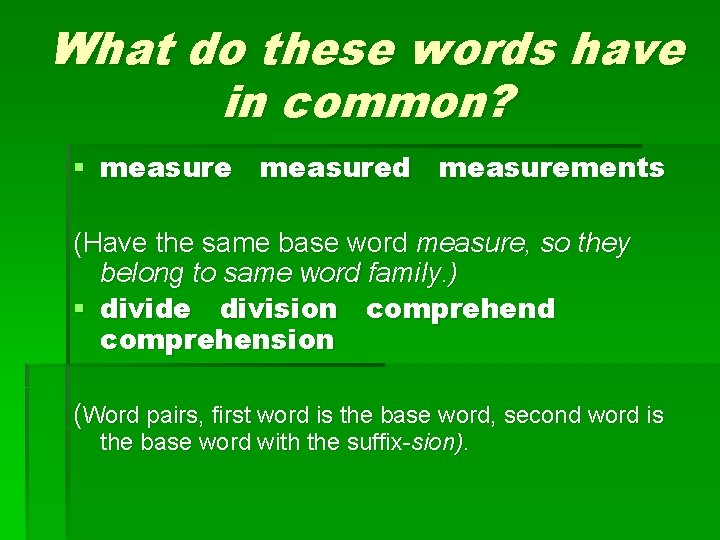
What do these words have in common? § measured measurements (Have the same base word measure, so they belong to same word family. ) § divide division comprehend comprehension (Word pairs, first word is the base word, second word is the base word with the suffix-sion).
What do these words have in common? § tomorrow summer pretty button happy (These words are found in your story “A New Coat For Anna”, and have double consonants). Who can show me where the words are divided into syllables?
What do these sentences have in common? § The farmer said, “What a good idea! But you will have to wait until spring when I shear my sheep’s winter wool. ” § She stopped at every store to look at her reflection in the window. § “Anna, I’d be very happy to make you a new coat, but first I must take your measurements. ”
These sentences are all from the story. Which words are homophones? (wait/weight, I/eye, shear/sheer) Which words have a suffix? (reflection, stopped, measurements)
What do you notice about this sentence? § We hope tomorrow will be a pretty summer day. Which words have double consonants “rr, tt, or mm”? (tomorrow, pretty, summer)
Day 4: Selection Vocabulary § remained: Stayed in the same place or stayed the same. § strung: Stretched from one place to another. § wound: Wrapped around.
§ weaver: A person who makes fabric form yarn or thread. § bolt: A roll of cloth.
Vocabulary Practice
Match the vocabulary word to its definition § strung A roll of cloth. § wound A person who makes things. § bolt Stayed in the same place. § weaver Wrapped around. § remained Stretched from one place to another.
Literary Elements All stories have plots. What do you know about plots? A plot is the sequence of events that occurs in a story and usually centers around the problem and how the characters go about solving it. Think about the problem that needs to be solved in “A New Coat for Anna. ” (Anna needs a new coat, but her mother doesn’t have any money. ) Let’s work in groups to figure out the sequence of events that makes up the plot.
§ 1 st Event: Mother says Anna needs a new coat, but she has no money. § 2 nd Event: § 3 rd Event: § 4 th Event: § 5 th Event: § 6 th Event: § 7 th Event:
Day 4: Word Analysis § Winner Knowing how to spell winner can help you to spell other words by consonant substitution, such as dinner. Let’s do Spelling and Vocabulary Skills pg. 77
§ Measurements § What is the base word? What does measure mean? (to find the size, length, weight, or height) § What is the suffix? § What does the suffix –ment mean? (the result or act of ) Define measurement by using the meaning of the base word and suffix. (the result or measuring, the actual size)
Day 4: English Language Conventions § § § Fact and Opinion Fact: Something that actually exists or has happened. Phrases that signal fact are; It has been proven There is evidence Scientific proof shows
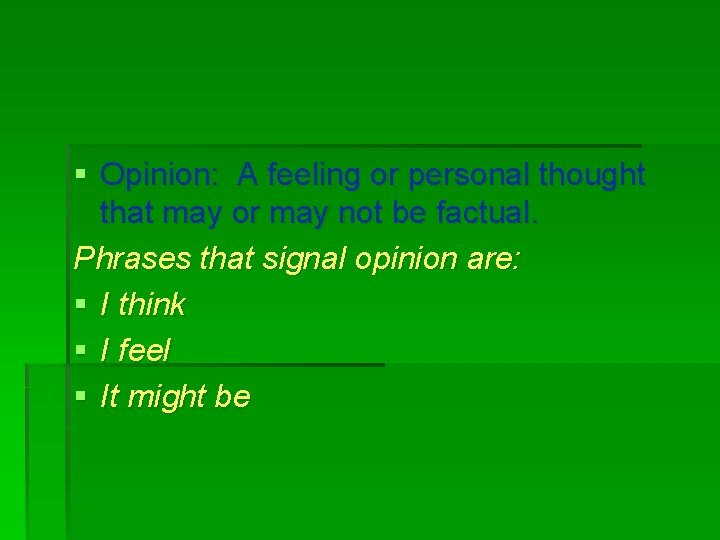
§ Opinion: A feeling or personal thought that may or may not be factual. Phrases that signal opinion are: § I think § I feel § It might be
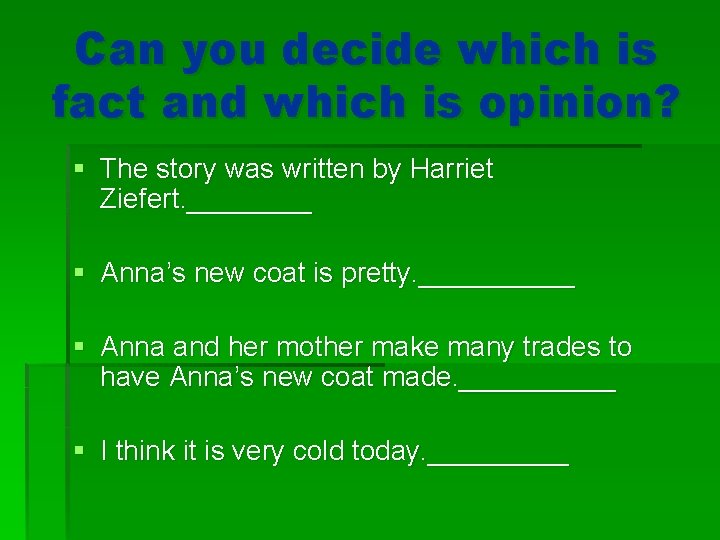
Can you decide which is fact and which is opinion? § The story was written by Harriet Ziefert. ____ § Anna’s new coat is pretty. _____ § Anna and her mother make many trades to have Anna’s new coat made. _____ § I think it is very cold today. _____