
UNIT 4 LAW LEGAL SYSTEM The Judicial Process
- Slides: 14
UNIT 4: LAW & LEGAL SYSTEM The Judicial Process
RESOLVING JUDICIAL CONFLICT court room: resolve diff types of conflicts �Criminal – guilty/innocent �Civil – money/responsibility �Family – custody /divorce helps adversaries resolve probs �Ppl/grps against one another
PEOPLE IN THE COURT ROOM
ADVERSARIAL PARTIES DEFENDANT Person being accused of crime OR Person being sued PLAINTIFF Brings charges against the accused OR Person doing the suing
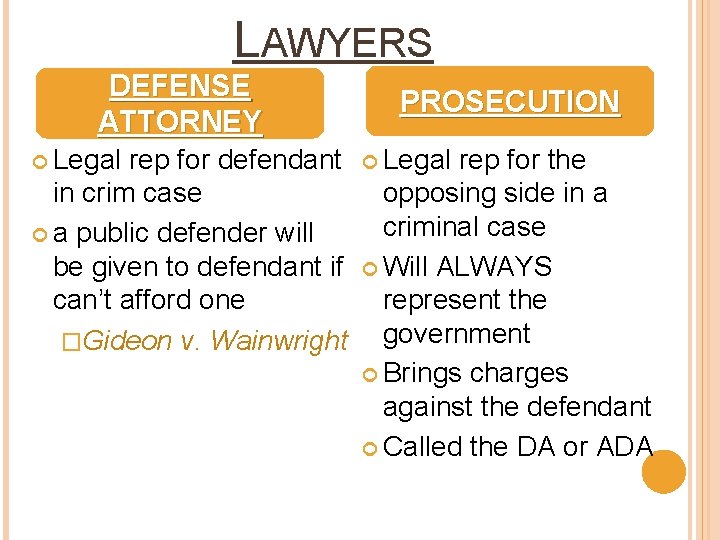
LAWYERS DEFENSE ATTORNEY Legal rep for defendant in crim case a public defender will be given to defendant if can’t afford one �Gideon v. Wainwright PROSECUTION Legal rep for the opposing side in a criminal case Will ALWAYS represent the government Brings charges against the defendant Called the DA or ADA
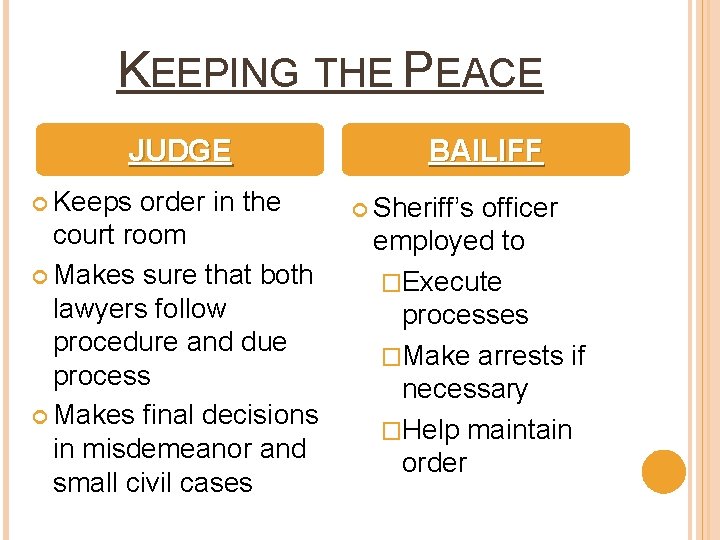
KEEPING THE PEACE JUDGE Keeps order in the court room Makes sure that both lawyers follow procedure and due process Makes final decisions in misdemeanor and small civil cases BAILIFF Sheriff’s officer employed to �Execute processes �Make arrests if necessary �Help maintain order
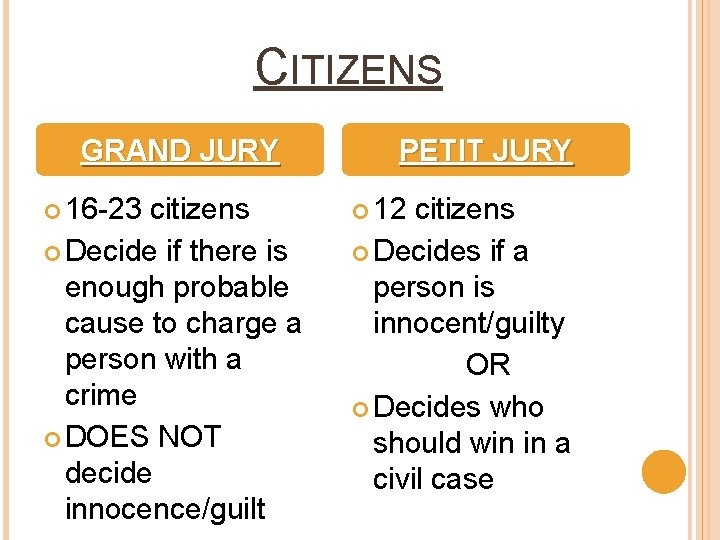
CITIZENS GRAND JURY 16 -23 citizens Decide if there is enough probable cause to charge a person with a crime DOES NOT decide innocence/guilt PETIT JURY 12 citizens Decides if a person is innocent/guilty OR Decides who should win in a civil case
COURT PROCEEDINGS
HERE’S HOW IT GOES… 1. After a person is suspected of committing a crime they are ARRESTED 2. Once a person is arrested they are taken to the county jail and BOOKED (mug shot, fingerprints, etc. ) 3. A PRELIMINARY HEARING is then set �A GRAND JURY will listen to both sides to determine if there is enough PROBABLE CAUSE to INDICT (charge) the suspect
4. Suspect then goes to ARRAIGNMENT (usually within 48 hours of INDICTMENT) �Suspect will be told of charges �PLEA of guilty/not guilty/no contest will be entered Guilty = no trial Not guilty/no contest = go to trial �BAIL, money given for release until trial, will be set 5. Trial date is then set on the COURT DOCKET (calendar of cases) 6. The defendant will be given a SUMMONS telling them when to come to court
7. Lawyers go to work for each side to create their case, they write BRIEFS to summarize their argument 8. Once the trial begins, each side has the opportunity to give opening statements, call WITNESSES, and present evidence �Witnesses can be forced to come to court by being served a SUBPOENA �Once on the stand a witness must tell the truth, if they lie it is called PERJURY and it is a crime 9. If a case does not look good to either side, PLEA BARGAINING will sometimes take place. This means the defendant will change their plea to guilty for a lesser charge
10. If the case goes to the end, the lawyers will present CLOSING ARGUMENTS and then it will be in the hands of the jury 11. The PETIT JURY will deliberate (discuss) the evidence and come up with a VERDICT of guilty or not guilty � If found guilty, SENTENCING will be set to determine the punishment for the crime � If found not guilty, this is called an ACQUITTAL, the defendant will be free to go 12. If found guilty, a case can by APPEALED to a higher court � At the higher levels of court the lawyers will give ORAL ARGUMENTS of their sides to a panel of judges � No juries are used
HERE IS HOW IT GOES… (CIVIL STYLE) If a person wants to sue another person for money, change a contract, get a divorce, etc. they will file a COMPLAINT with the court. Both the defendant and plaintiff will get lawyers (if desired and necessary) and go to court to present their sides A judge and/or jury will listen to both sides of the case and then decide who the “winner” is and the outcome should be for both parties (who pays/who gains) If an agreement is reached before the end of the case this is known as a PRE-HEARING SETTLEMENT
SPECIAL ITEMS TO NOTE… The information on court proceedings will change a little based on where you are and what the crime was, etc. Every case is different, no two are ever the same, this is just the BASICS! Our examples were for felony (severe crime) and large civil cases � In misdemeanor (less severe crimes) and small civil cases a judge will usually make a decision, there will be no jury, and lawyers are not always needed