
Unit 4 Fresh Water Surface Water Fresh vs
- Slides: 9
Unit 4: Fresh Water Surface Water Fresh vs. Salt Water River Systems
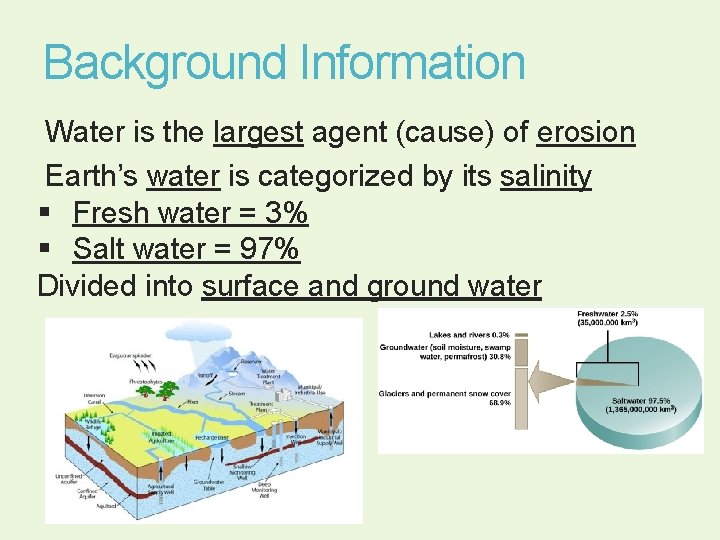
Background Information Water is the largest agent (cause) of erosion Earth’s water is categorized by its salinity § Fresh water = 3% § Salt water = 97% Divided into surface and ground water
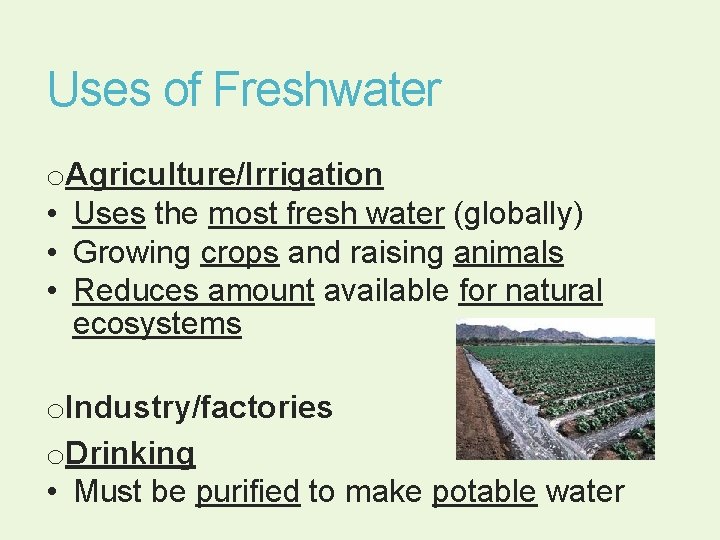
Uses of Freshwater o. Agriculture/Irrigation • Uses the most fresh water (globally) • Growing crops and raising animals • Reduces amount available for natural ecosystems o. Industry/factories o. Drinking • Must be purified to make potable water
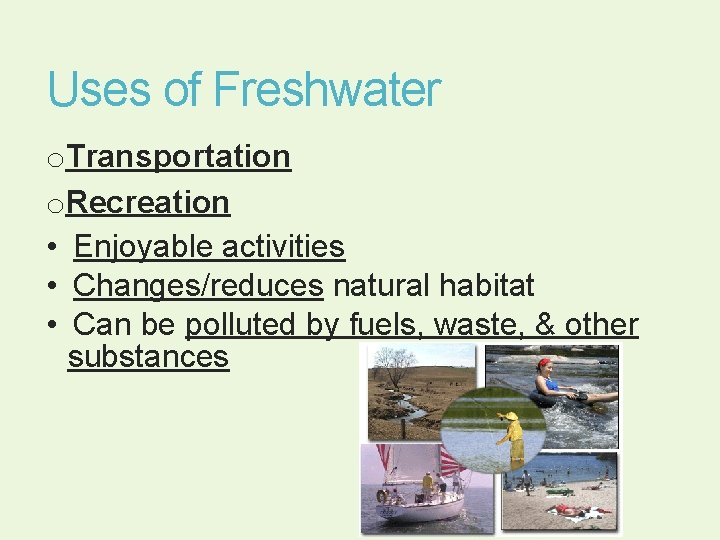
Uses of Freshwater o. Transportation o. Recreation • Enjoyable activities • Changes/reduces natural habitat • Can be polluted by fuels, waste, & other substances
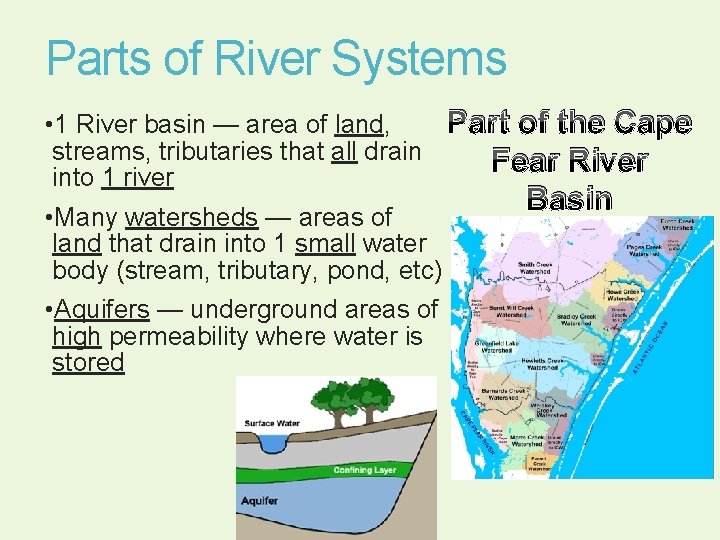
Parts of River Systems Part of the Cape • 1 River basin — area of land, streams, tributaries that all drain Fear River into 1 river Basin • Many watersheds — areas of land that drain into 1 small water body (stream, tributary, pond, etc) • Aquifers — underground areas of high permeability where water is stored
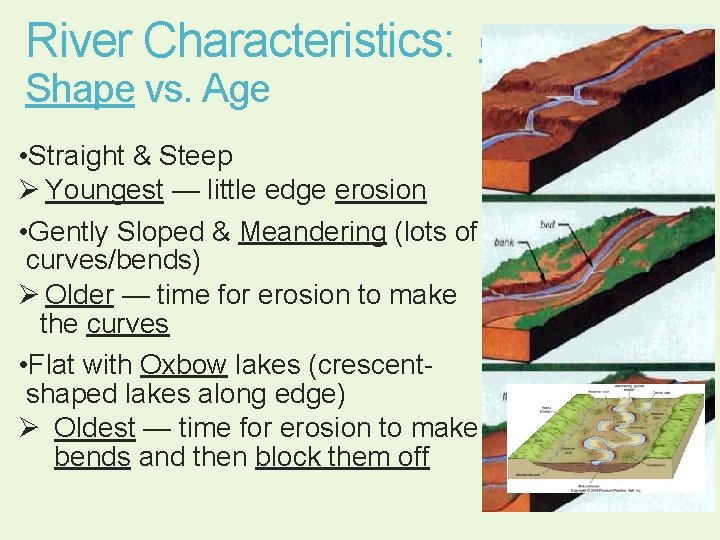
River Characteristics: Channel Shape vs. Age • Straight & Steep Ø Youngest — little edge erosion • Gently Sloped & Meandering (lots of curves/bends) Ø Older — time for erosion to make the curves • Flat with Oxbow lakes (crescentshaped lakes along edge) Ø Oldest — time for erosion to make bends and then block them off
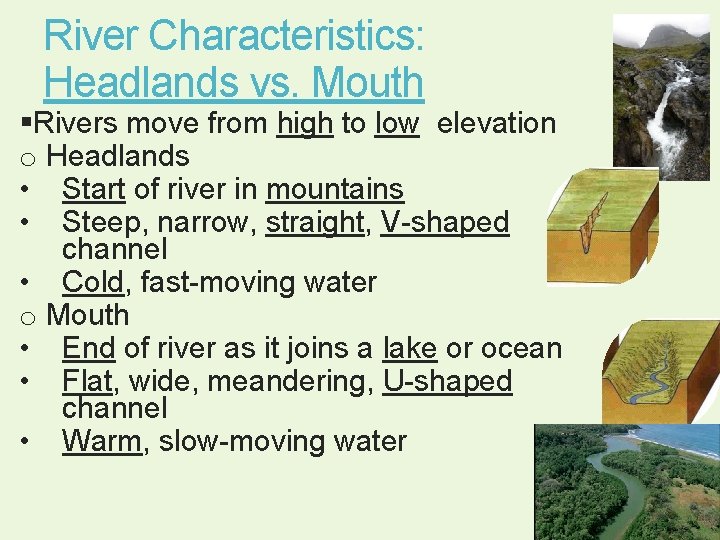
River Characteristics: Headlands vs. Mouth §Rivers move from high to low elevation o Headlands • Start of river in mountains • Steep, narrow, straight, V-shaped channel • Cold, fast-moving water o Mouth • End of river as it joins a lake or ocean • Flat, wide, meandering, U-shaped channel • Warm, slow-moving water
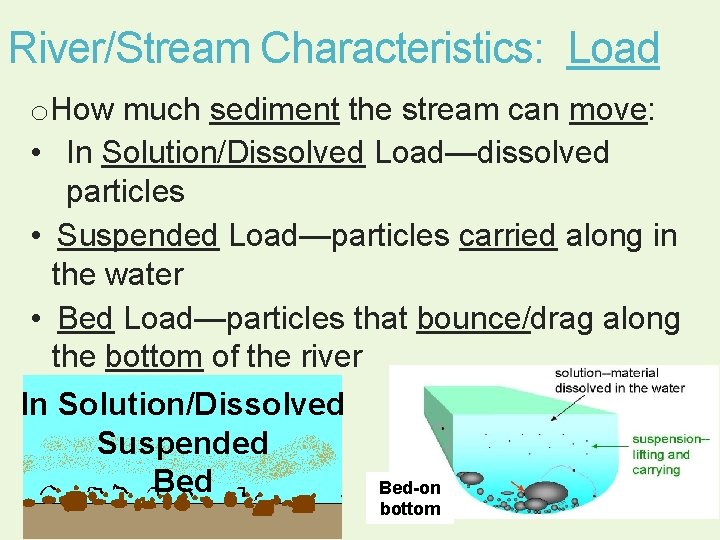
River/Stream Characteristics: Load o. How much sediment the stream can move: • In Solution/Dissolved Load—dissolved particles • Suspended Load—particles carried along in the water • Bed Load—particles that bounce/drag along the bottom of the river In Solution/Dissolved Suspended Bed-on bottom
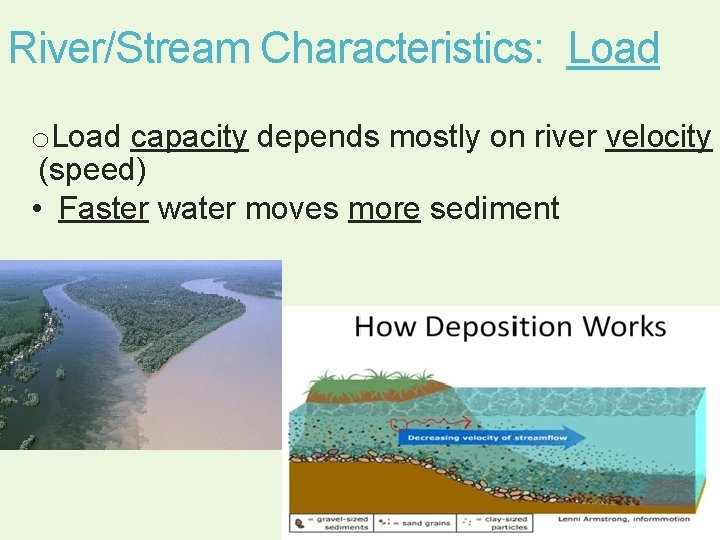
River/Stream Characteristics: Load o. Load capacity depends mostly on river velocity (speed) • Faster water moves more sediment