
Unit 4 Formation of Earth and Geology EarthEnvironmental




- Slides: 73
Unit 4: Formation of Earth and Geology Earth/Environmental Science
Bell Ringer (WRITE THEM DOWN) The law that states that each planet revolves so that an imaginary line connecting it to the sun sweeps over equal areas in equal time intervals is part of _____ laws. A Einstein’s Laws c. Ptolemy’s Laws B Kepler’s Laws d. the law of universal gravitation Why does Earth experience precession? A. Because the plane of the moon’s orbit is tilted from the Earth’s elliptical plane B. Because the sun revolves around the Earth every 365 days C. Because Earth is the third planet from the sun D. Because the Earth revolves around the Sun every 365 days
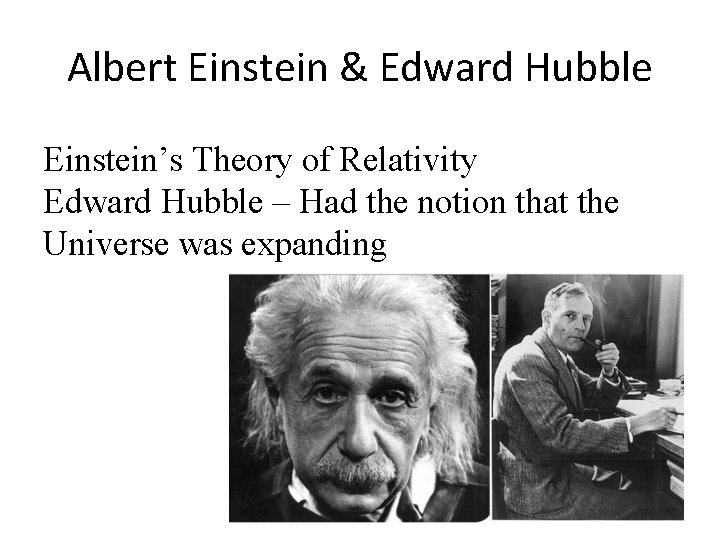
Albert Einstein & Edward Hubble Einstein’s Theory of Relativity Edward Hubble – Had the notion that the Universe was expanding
Time begins: The Big Bang Theory • The universe begins ~13. 7 Billion years ago • The universe begins as the size of a single atom • The universe began a rapid expansion – All matter and space were created from a single point of pure energy in an instant
< 1 second after the Big Bang • Extremely hot and dense. . So hot that matter and energy were almost the same thing • Quark Era – Quarks are subatomic particles that carry a fractional electric charge. • They are “born” then within milliseconds they are converted back into energy. • These are the building blocks on atoms
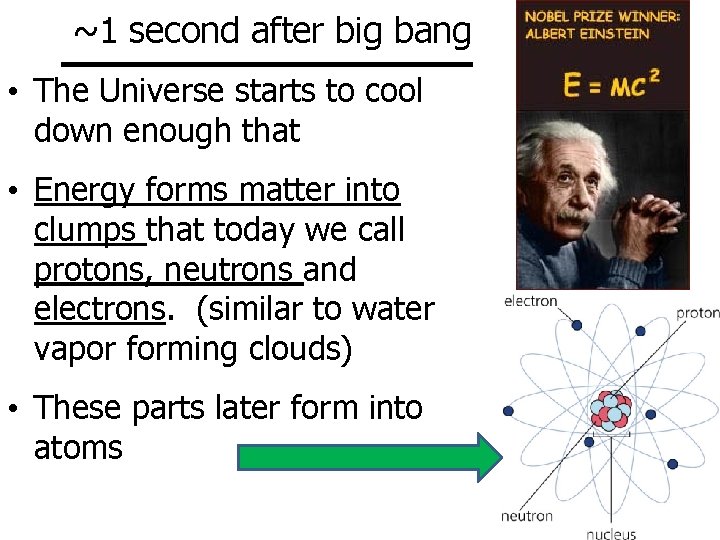
~1 second after big bang • The Universe starts to cool down enough that • Energy forms matter into clumps that today we call protons, neutrons and electrons. (similar to water vapor forming clouds) • These parts later form into atoms
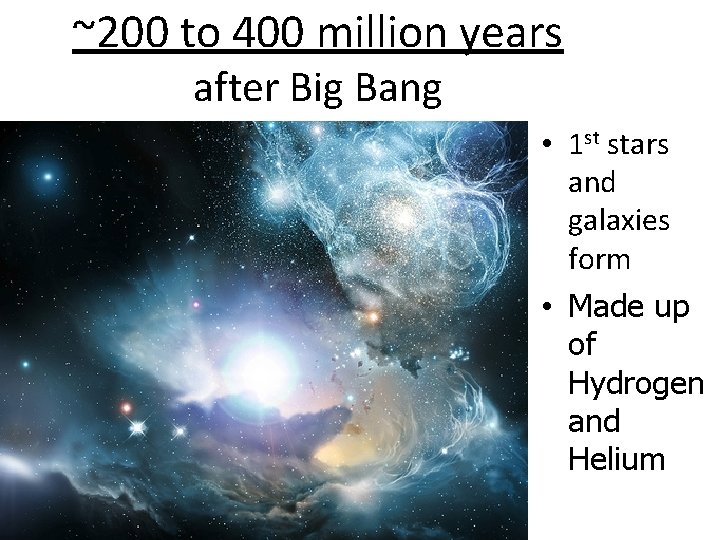
~200 to 400 million years after Big Bang • 1 st stars and galaxies form • Made up of Hydrogen and Helium
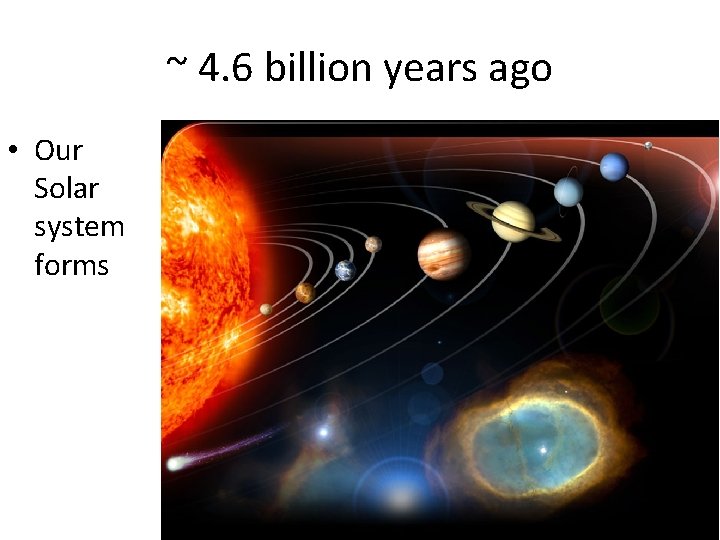
~ 4. 6 billion years ago • Our Solar system forms
Nebula Theory • Theory of how the bodies of our solar system evolved from an enormous rotating cloud called the solar nebula. • Theory how the planets were formed 8 9
Turn and Talk • With the person next to you, talk about The Big Bang, what is it? • What where three atoms that formed because of The Big Bang? • Which theory states that at one time the entire universe was confided to a hot, denser super mass? • 45 seconds….
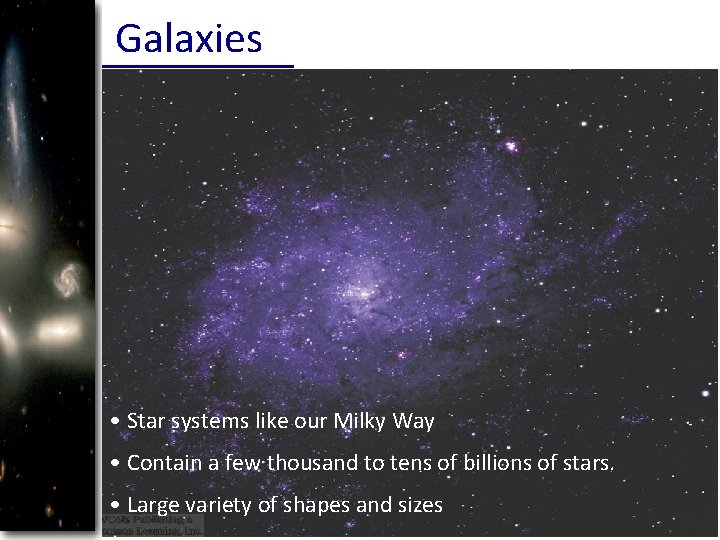
Galaxies • Star systems like our Milky Way • Contain a few thousand to tens of billions of stars. • Large variety of shapes and sizes
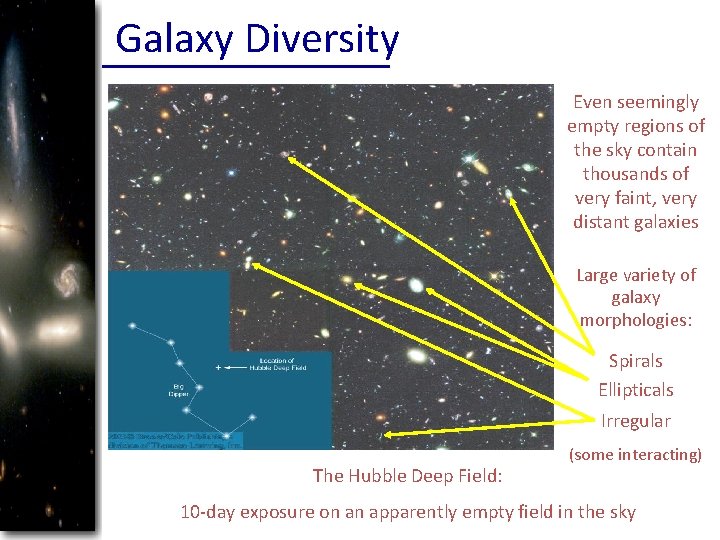
Galaxy Diversity Even seemingly empty regions of the sky contain thousands of very faint, very distant galaxies Large variety of galaxy morphologies: Spirals Ellipticals Irregular The Hubble Deep Field: (some interacting) 10 -day exposure on an apparently empty field in the sky
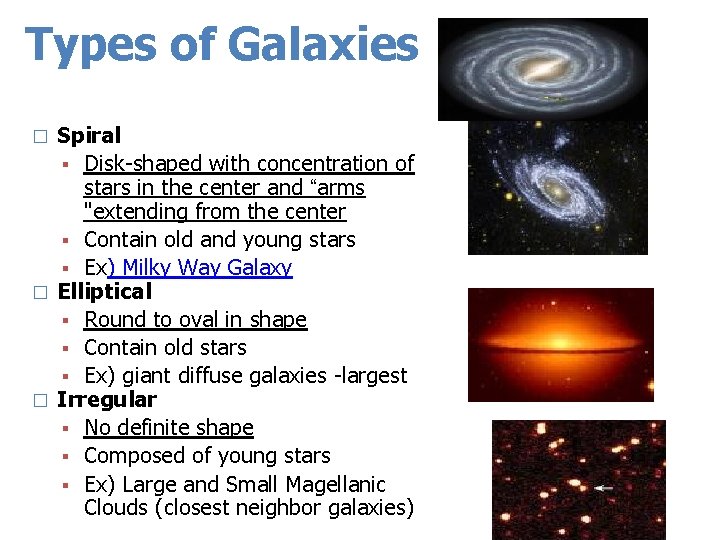
Types of Galaxies Spiral ▪ Disk-shaped with concentration of stars in the center and “arms "extending from the center ▪ Contain old and young stars ▪ Ex) Milky Way Galaxy � Elliptical ▪ Round to oval in shape ▪ Contain old stars ▪ Ex) giant diffuse galaxies -largest � Irregular ▪ No definite shape ▪ Composed of young stars ▪ Ex) Large and Small Magellanic Clouds (closest neighbor galaxies) �
The Expanding Universe Theory • States that the space between galaxies is expanding, so that they appear to recede from us at velocities that increase with their distance https: //www. youtube. com/watch? v=DCl. EX O 0 p. CZ 4 9 14
Turn and Talk • With the person next to you, talk about the expanding Universe Theory. What it is? Do you think the Universe will ever stop expanding? Where is it expanding to? • What where three types of Galaxies that we just learned about? • 45 seconds….
MARS JOHANNES KEPLER THE SOLAR SYSTEM LAWS OF PLANETARY MOTION
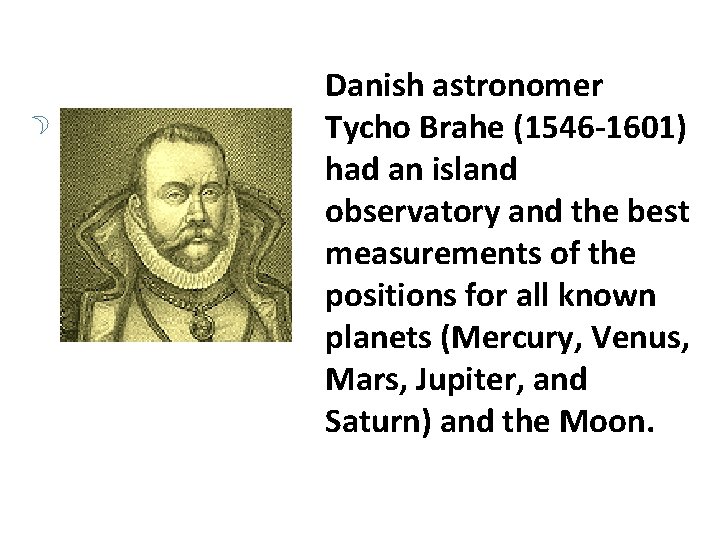
Picture of Brahe Danish astronomer Tycho Brahe (1546 -1601) had an island observatory and the best measurements of the positions for all known planets (Mercury, Venus, Mars, Jupiter, and Saturn) and the Moon.
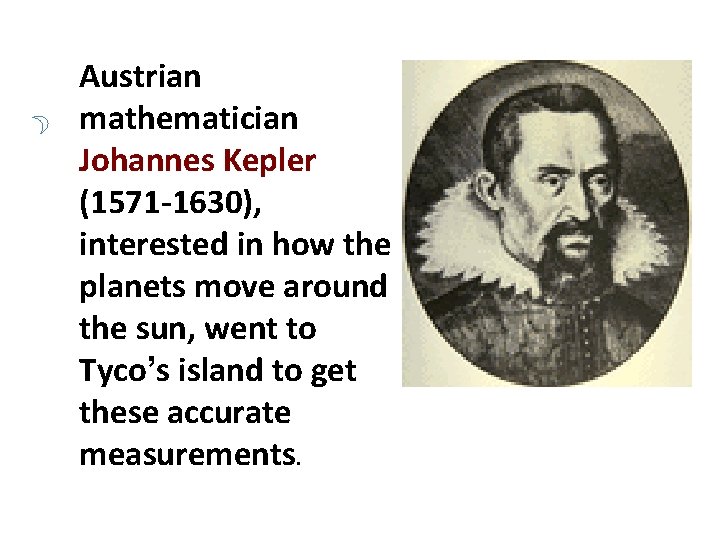
Austrian mathematician Johannes Kepler (1571 -1630), interested in how the planets move around the sun, went to Tyco’s island to get these accurate measurements.
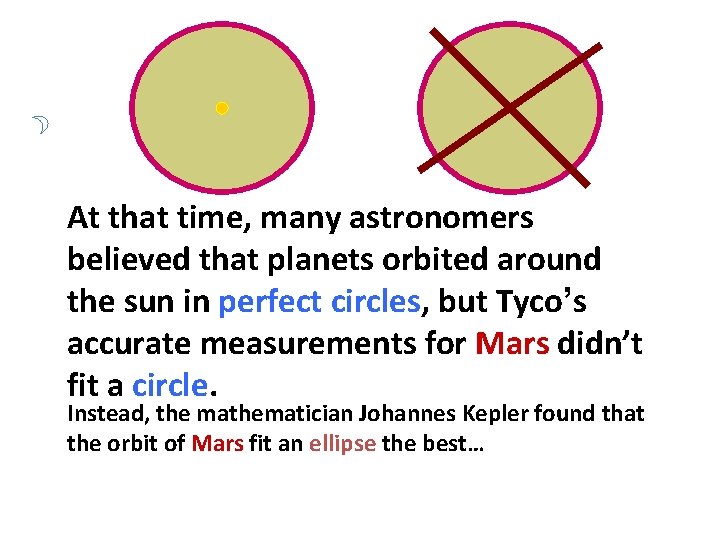
At that time, many astronomers believed that planets orbited around the sun in perfect circles, but Tyco’s accurate measurements for Mars didn’t fit a circle. Instead, the mathematician Johannes Kepler found that the orbit of Mars fit an ellipse the best…
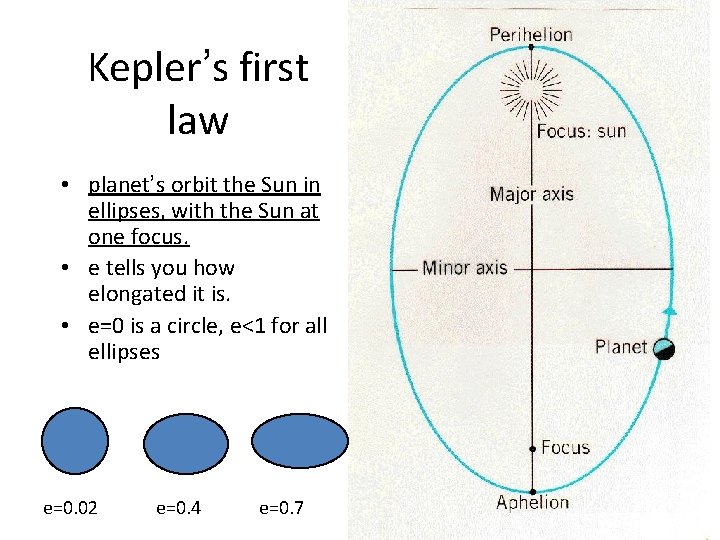
Kepler’s first law • planet’s orbit the Sun in ellipses, with the Sun at one focus. • e tells you how elongated it is. • e=0 is a circle, e<1 for all ellipses e=0. 02 e=0. 4 e=0. 7
Kepler’s First Law • https: //www. youtube. com/watch? v=q. DHn. Wp tz 5 Jo
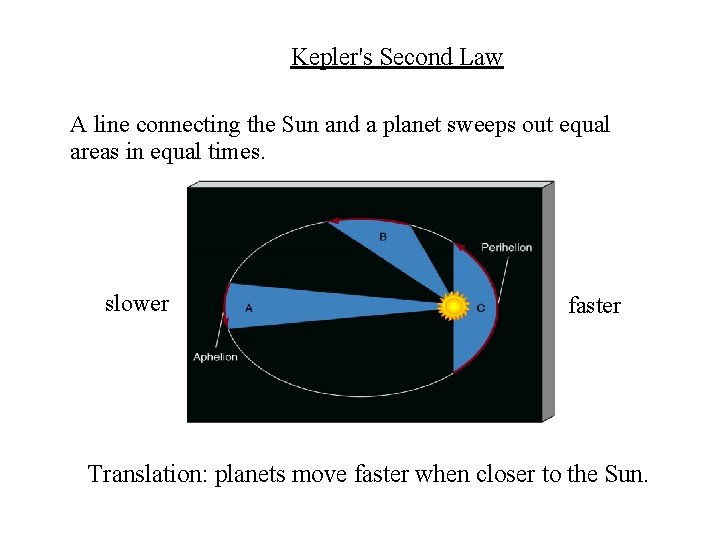
Kepler’s second law • As a result, planets move fastest when they are near the Sun (perihelion) and slowest when they are far from the Sun (aphelion).
Kepler’s Second Law • https: //www. youtube. com/watch? v=qd 3 d. IGJ q. RDU
Kepler's Second Law A line connecting the Sun and a planet sweeps out equal areas in equal times. slower faster Translation: planets move faster when closer to the Sun.
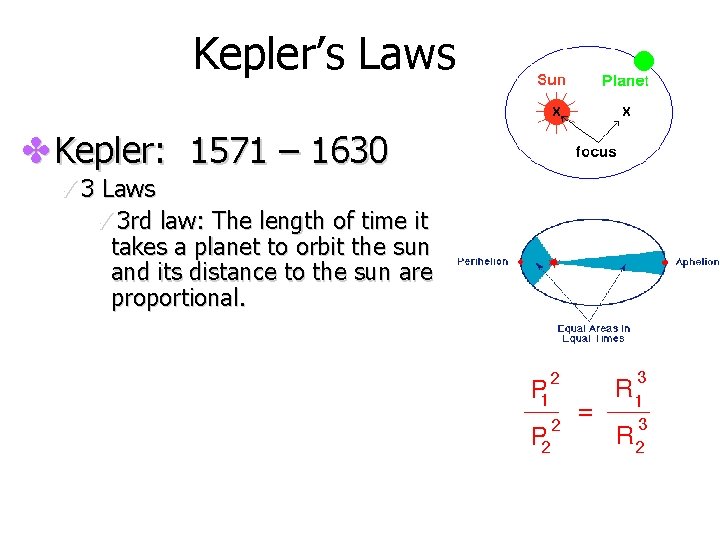
Kepler’s Laws ✤Kepler: 1571 – 1630 ✓ 3 Laws ✓ 3 rd law: The length of time it takes a planet to orbit the sun and its distance to the sun are proportional.
Kepler’s Laws apply to any celestial body orbiting any other celestial body. • • • Any planet around a sun The moon around the Earth Any satellite around the Earth The international space station Any rings around any planet
Turn and Talk • List and explain Kepler’s Three Laws • 60 seconds….
Earth’s Motions • • • Rotation UNIT 2 Revolution UNIT 2 Precession Nutation Barycenter
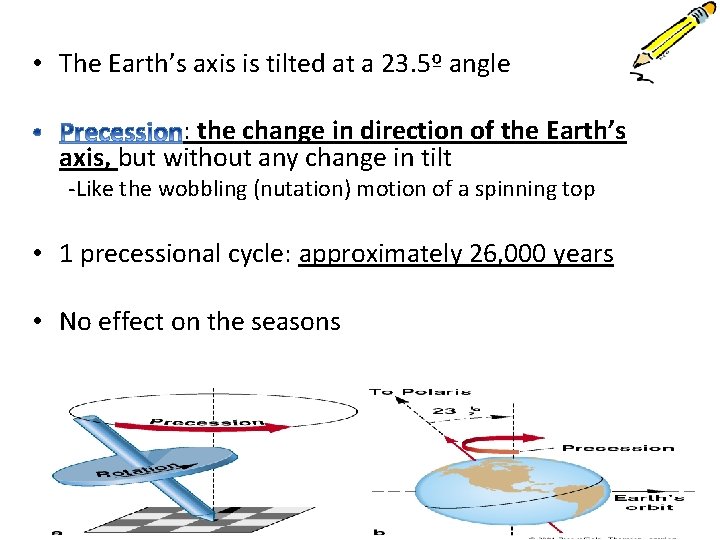
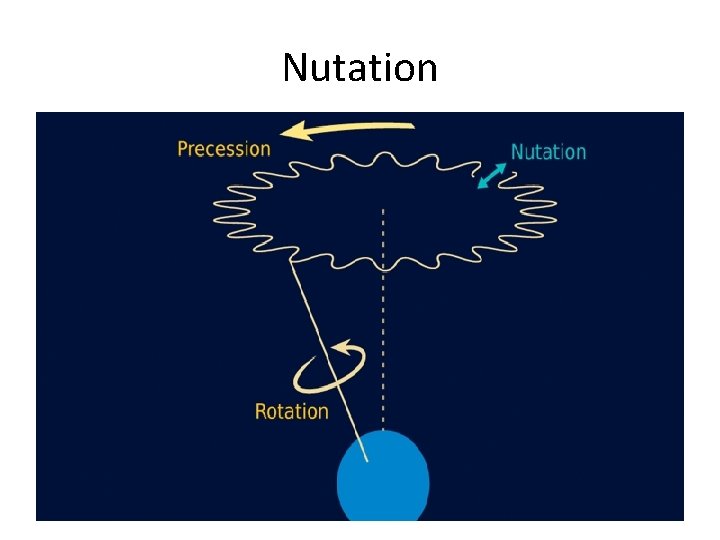
• The Earth’s axis is tilted at a 23. 5º angle : the change in direction of the Earth’s axis, but without any change in tilt -Like the wobbling (nutation) motion of a spinning top • 1 precessional cycle: approximately 26, 000 years • No effect on the seasons
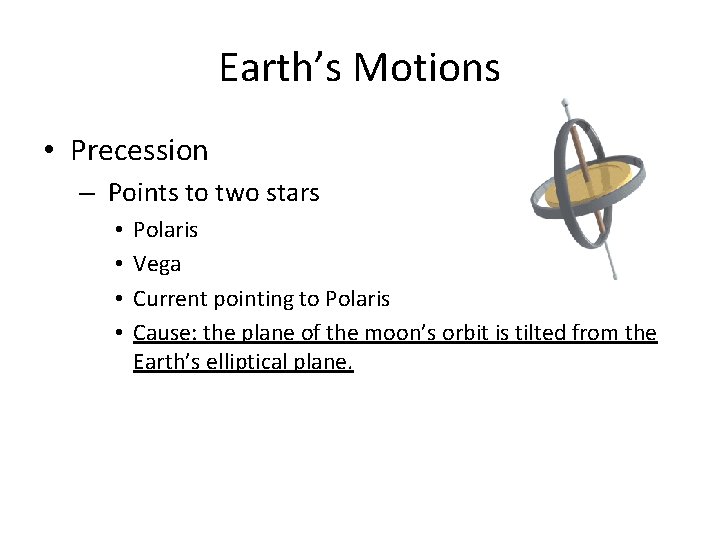
Earth’s Motions • Precession – Points to two stars • • Polaris Vega Current pointing to Polaris Cause: the plane of the moon’s orbit is tilted from the Earth’s elliptical plane.
Earth’s Motions • Nutation – Oscillatory movement of the axis of a rotating body (wobble) – Observed during precession – Occurs about 18. 6 years
Nutation
Precession/Nutation: • https: //www. youtube. com/watch? v=0 q. Hjtp 4 c d. CA
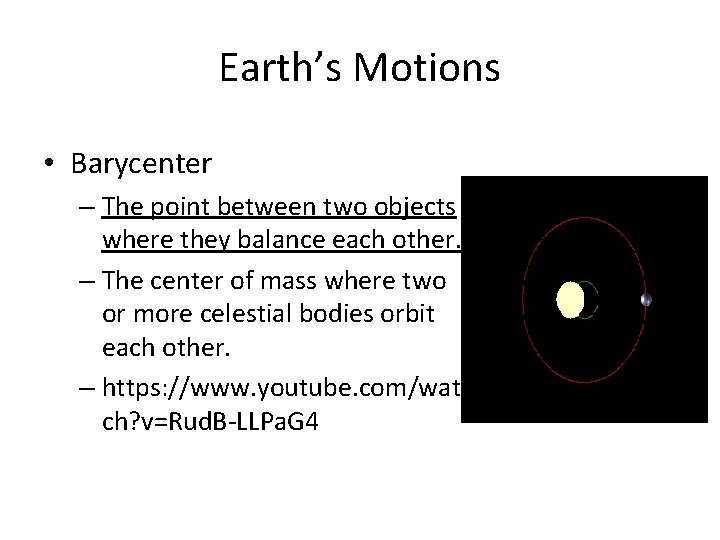
Earth’s Motions • Barycenter – The point between two objects where they balance each other. – The center of mass where two or more celestial bodies orbit each other. – https: //www. youtube. com/wat ch? v=Rud. B-LLPa. G 4
Turn and Talk Define the following: • Precession • Nutation • Barycenter • 45 seconds starts now…. .
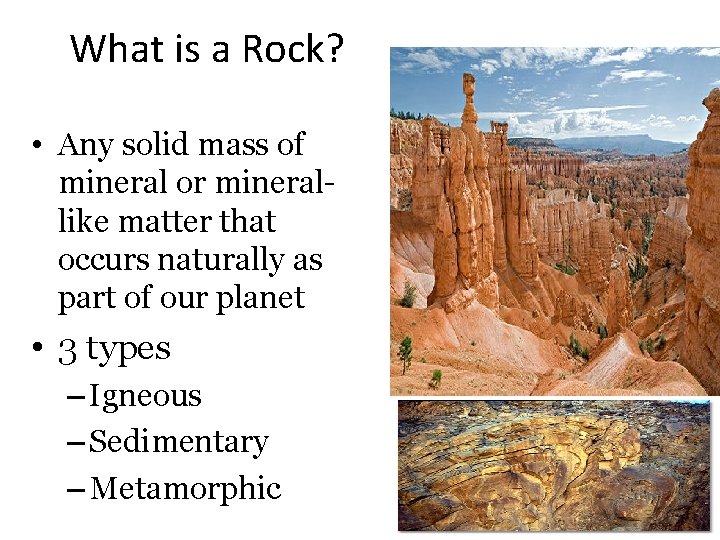
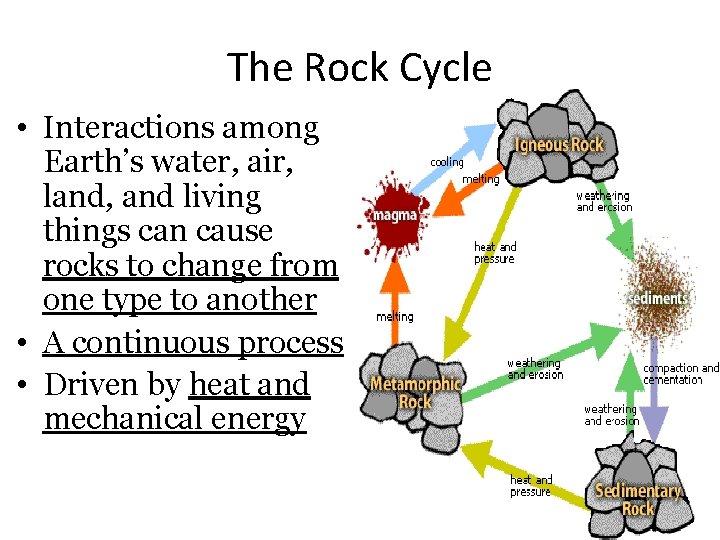
What is a Rock? • Any solid mass of mineral or minerallike matter that occurs naturally as part of our planet • 3 types – Igneous – Sedimentary – Metamorphic
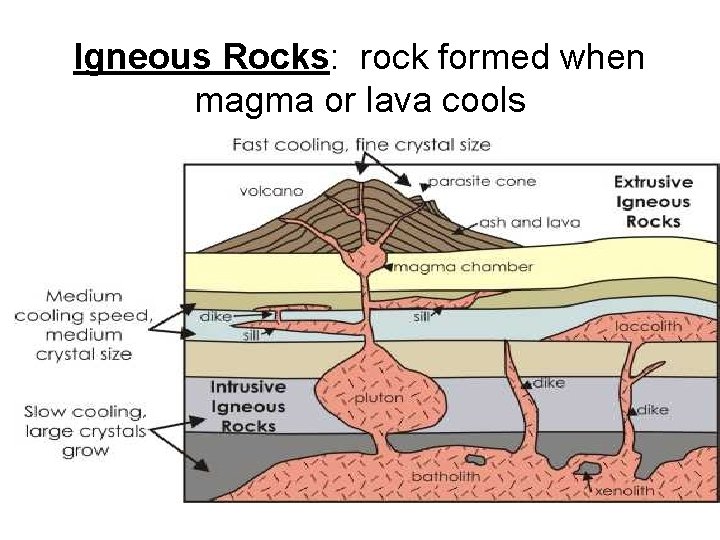
Igneous Rocks: rock formed when magma or lava cools
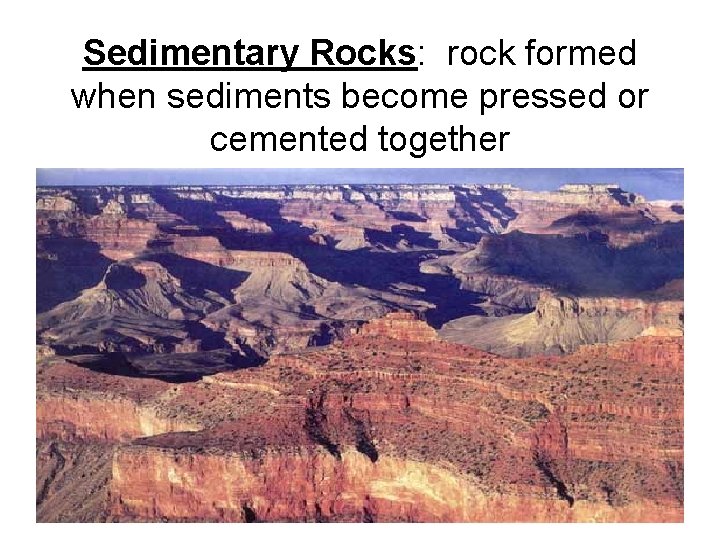
Sedimentary Rocks: rock formed when sediments become pressed or cemented together
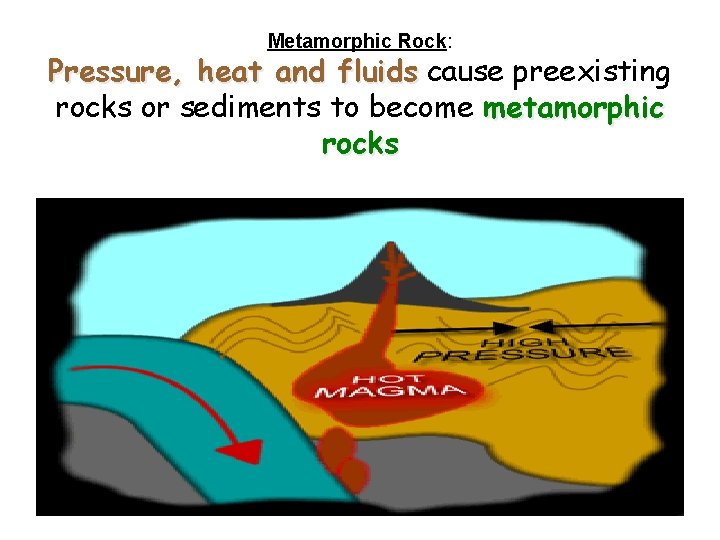
Metamorphic Rock: Pressure, heat and fluids cause preexisting rocks or sediments to become metamorphic rocks
The Rock Cycle • Interactions among Earth’s water, air, land, and living things can cause rocks to change from one type to another • A continuous process • Driven by heat and mechanical energy
Videos • https: //www. youtube. com/watch? v=u. AAe. FB 7 Tv 5 A - Rock Cycle • https: //www. youtube. com/watch? v=RIak 3 Wvh 9 c • Weather and Er
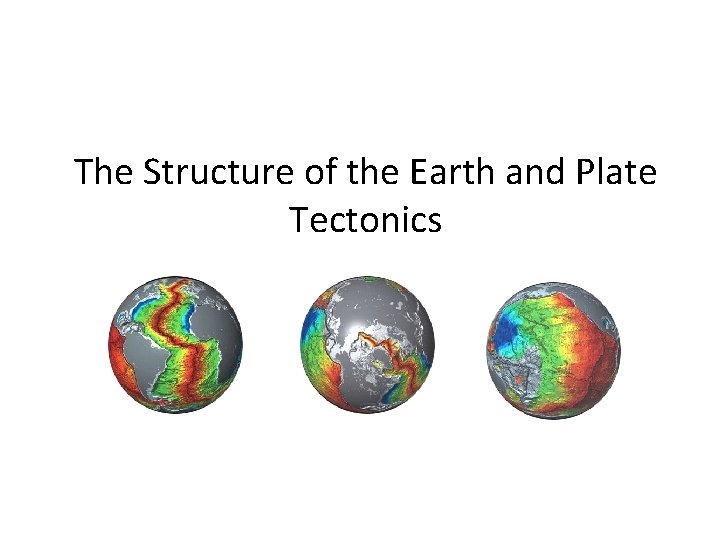
The Structure of the Earth and Plate Tectonics
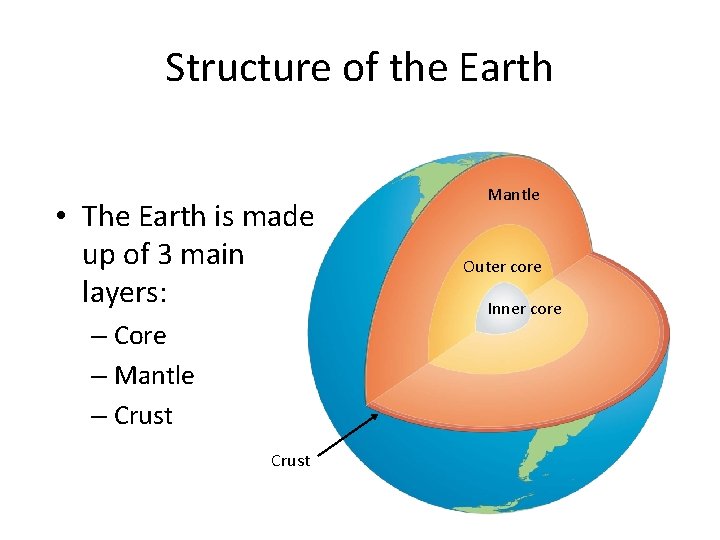
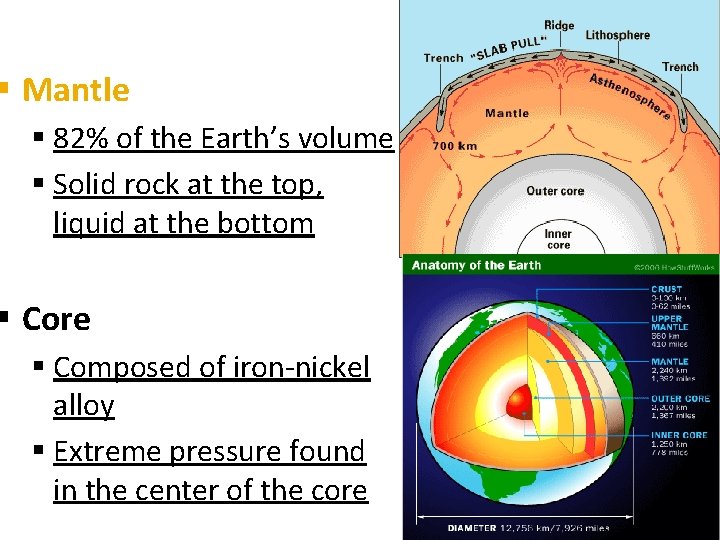
Structure of the Earth • The Earth is made up of 3 main layers: – Core – Mantle – Crust Mantle Outer core Inner core
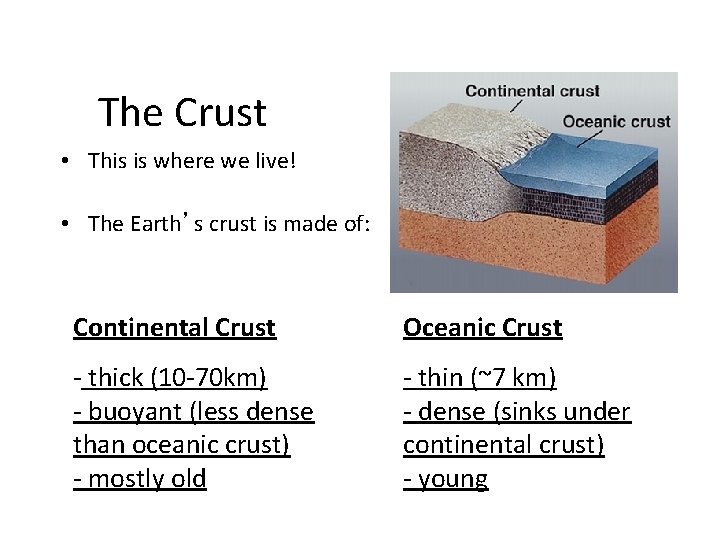
The Crust • This is where we live! • The Earth’s crust is made of: Continental Crust Oceanic Crust - thick (10 -70 km) - buoyant (less dense than oceanic crust) - mostly old - thin (~7 km) - dense (sinks under continental crust) - young
§ Mantle § 82% of the Earth’s volume § Solid rock at the top, liquid at the bottom § Core § Composed of iron-nickel alloy § Extreme pressure found in the center of the core
Layers of the Earth • https: //www. youtube. com/watch? v=NAHY 69 65 o 08
Turn and Talk • List the layers of the Earth • Which is more buoyant Continental Crust Or Oceanic Crust 45 seconds…
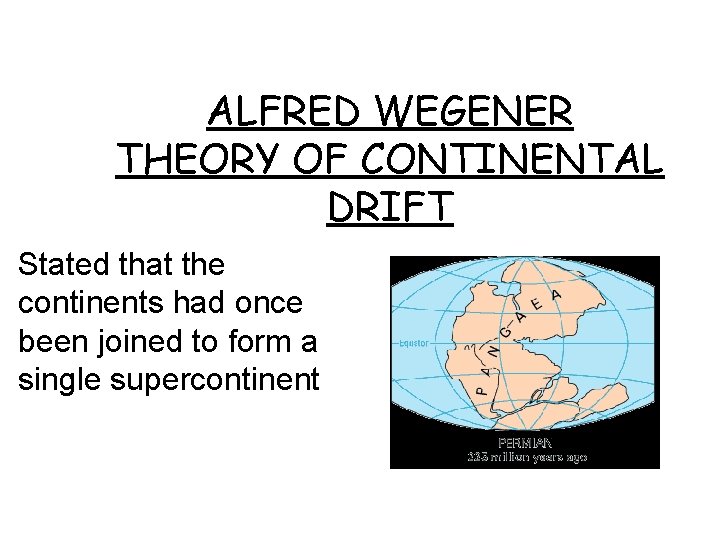
ALFRED WEGENER THEORY OF CONTINENTAL DRIFT Stated that the continents had once been joined to form a single supercontinent
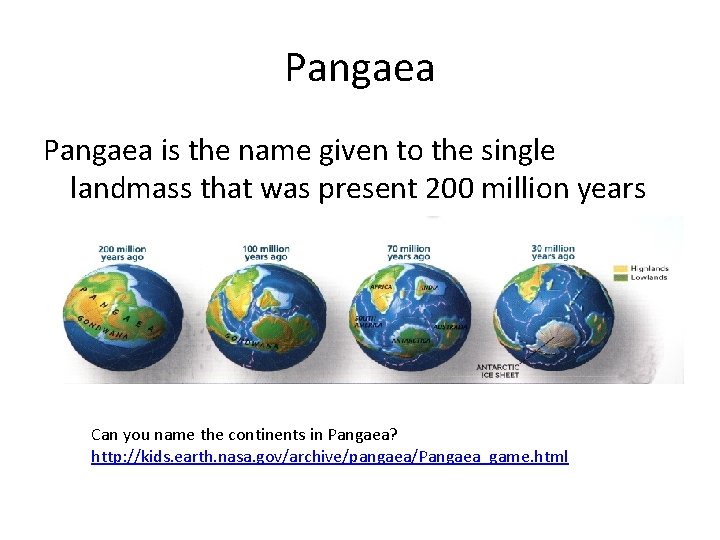
Pangaea is the name given to the single landmass that was present 200 million years ago Can you name the continents in Pangaea? http: //kids. earth. nasa. gov/archive/pangaea/Pangaea_game. html
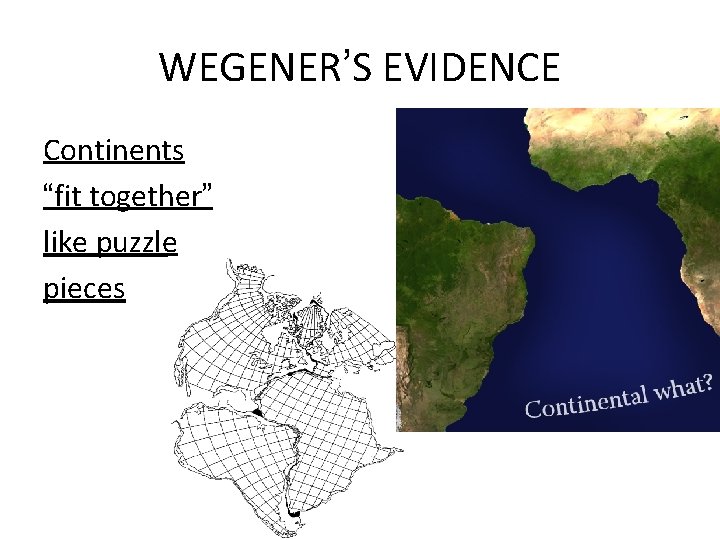
WEGENER’S EVIDENCE Continents “fit together” like puzzle pieces
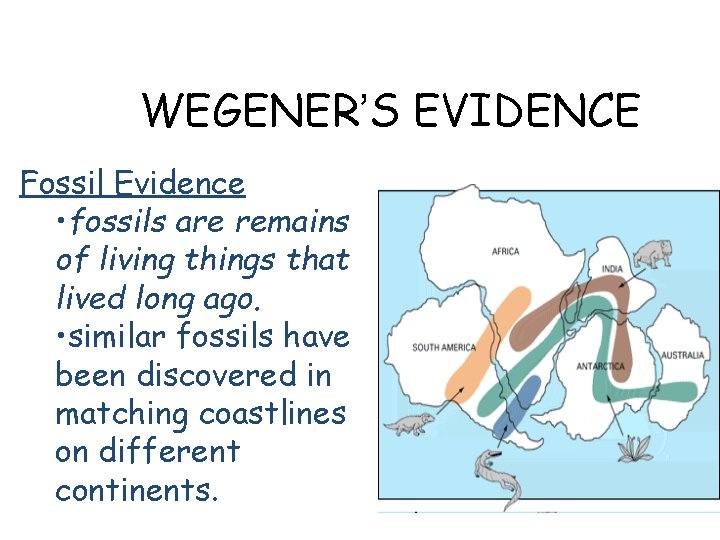
WEGENER’S EVIDENCE Fossil Evidence • fossils are remains of living things that lived long ago. • similar fossils have been discovered in matching coastlines on different continents.
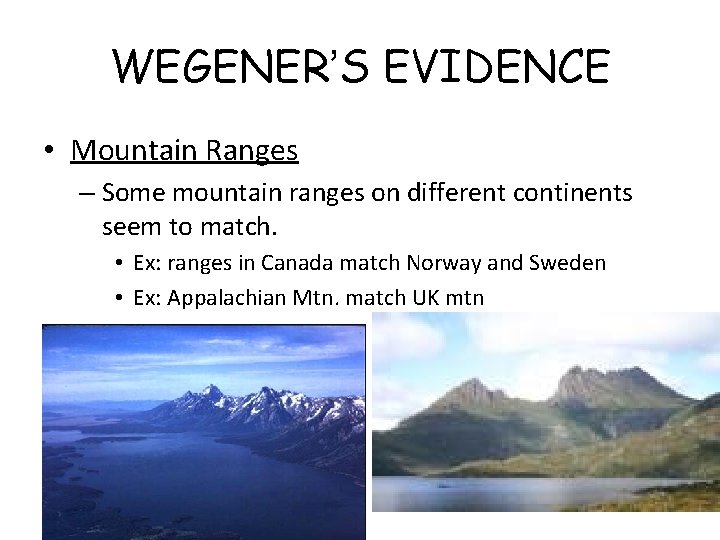
WEGENER’S EVIDENCE • Mountain Ranges – Some mountain ranges on different continents seem to match. • Ex: ranges in Canada match Norway and Sweden • Ex: Appalachian Mtn. match UK mtn
Continental Drift Video • https: //www. youtube. com/watch? v=_5 q 8 hz. F 9 VVE
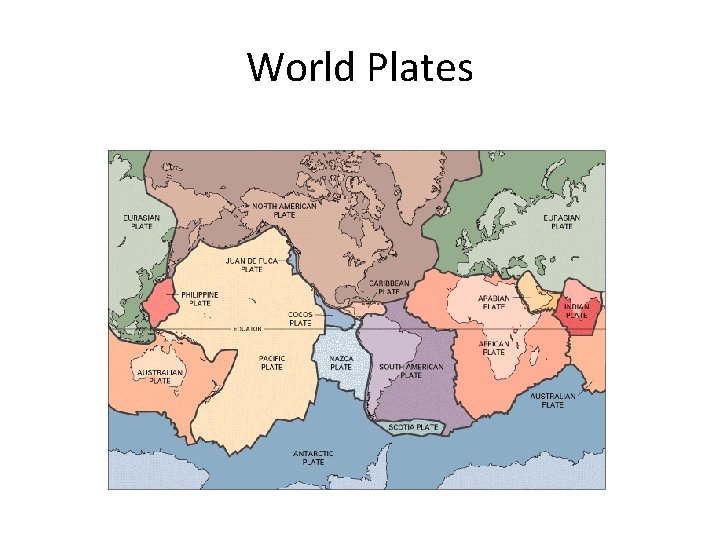
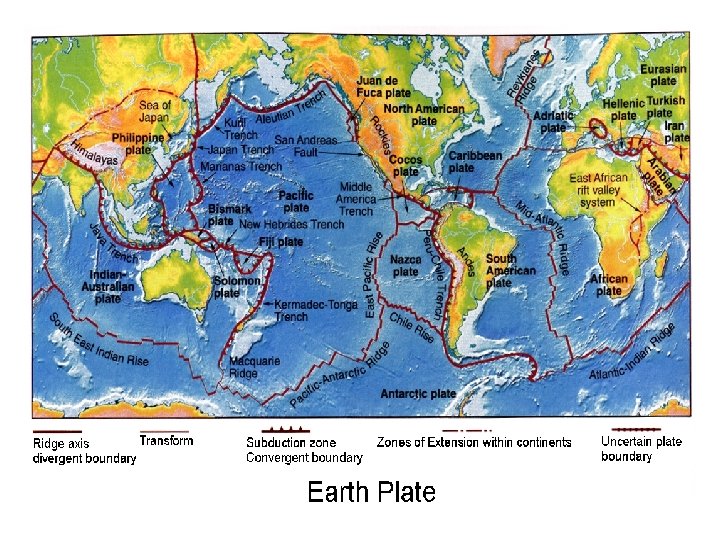
Plate Tectonics • The Earth’s crust is divided into 12 major plates which are moved in various directions. • This plate motion causes them to collide, pull apart, or scrape against each other.
World Plates
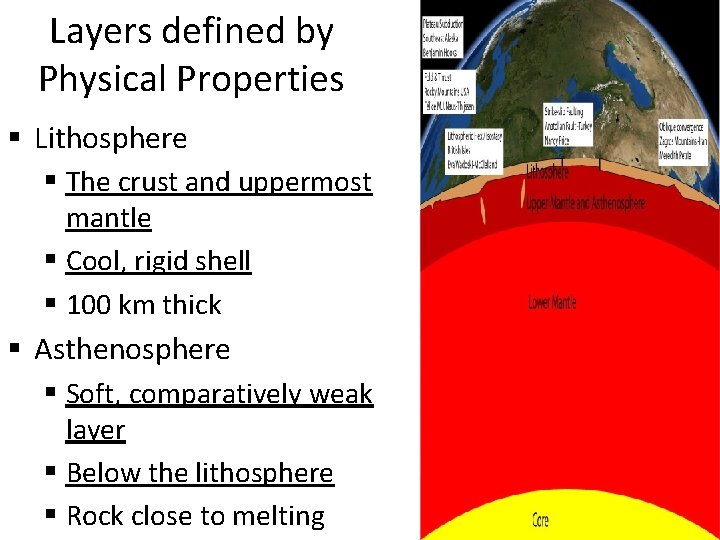
Layers defined by Physical Properties § Lithosphere § The crust and uppermost mantle § Cool, rigid shell § 100 km thick § Asthenosphere § Soft, comparatively weak layer § Below the lithosphere § Rock close to melting
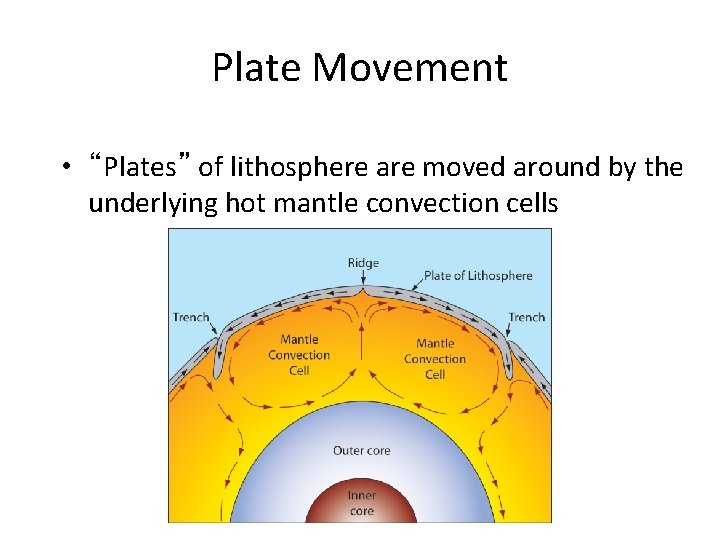
Plate Movement • “Plates” of lithosphere are moved around by the underlying hot mantle convection cells
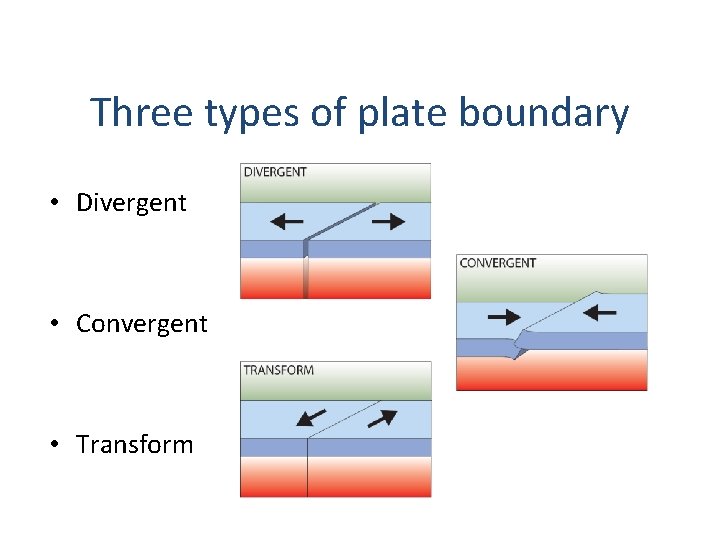
Three types of plate boundary • Divergent • Convergent • Transform
Plate Tectonics • https: //www. youtube. com/watch? v=kwf. NGat x. UJI
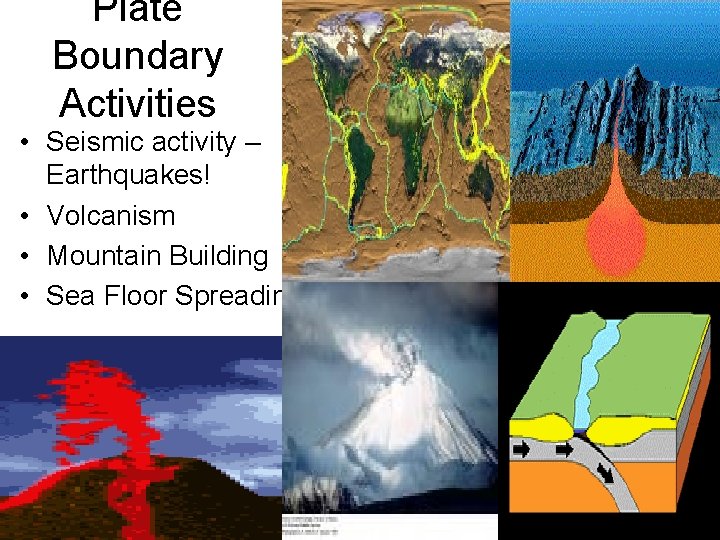
Plate Boundary Activities • Seismic activity – Earthquakes! • Volcanism • Mountain Building • Sea Floor Spreading
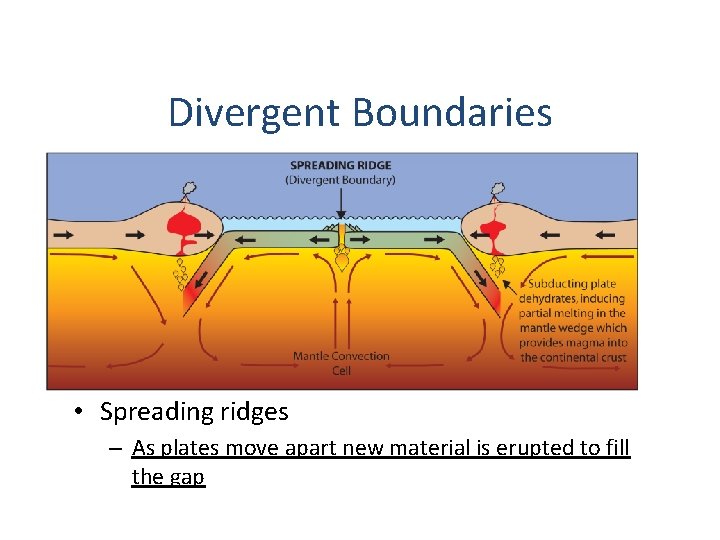
Divergent Boundaries • Spreading ridges – As plates move apart new material is erupted to fill the gap
Age of Oceanic Crust Courtesy of www. ngdc. noaa. gov
Sea Floor Spreading Video • https: //www. youtube. com/watch? v=Gy. MLl. Lx bfa 4
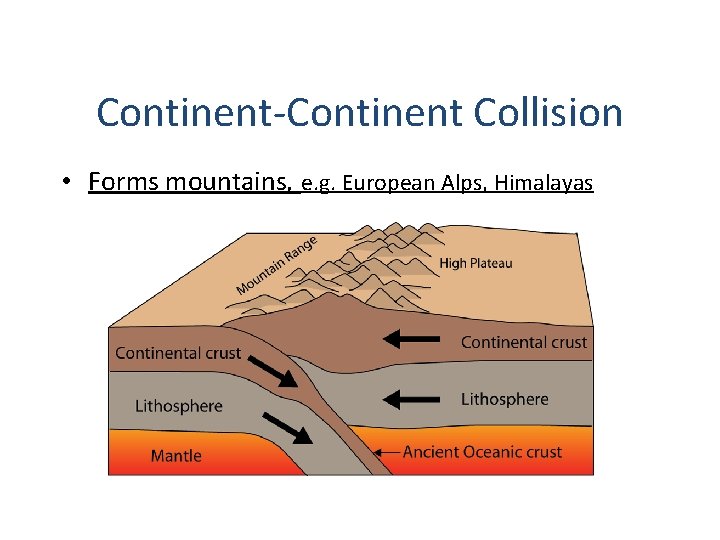
Convergent Boundaries • There are three styles of convergent plate boundaries – Continent-continent collision – Continent-oceanic crust collision – Ocean-ocean collision
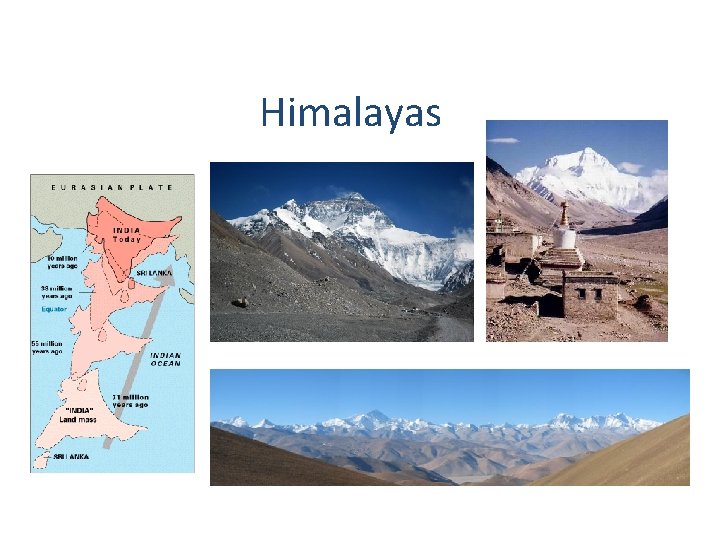
Continent-Continent Collision • Forms mountains, e. g. European Alps, Himalayas
Himalayas
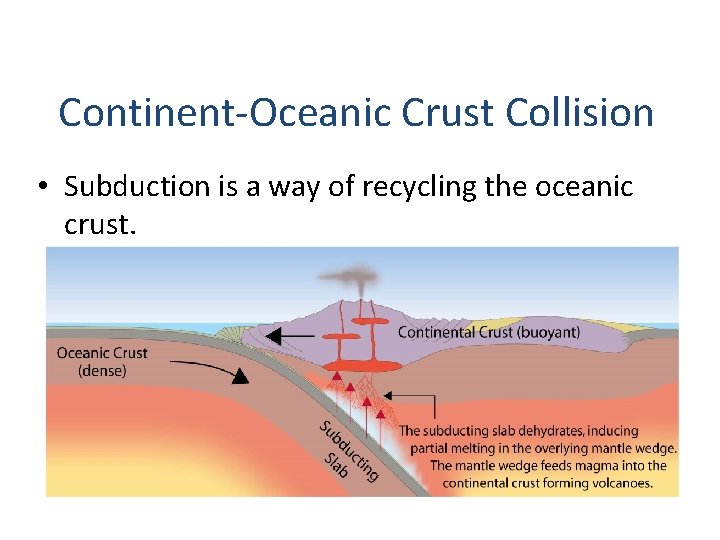
Continent-Oceanic Crust Collision • Subduction is a way of recycling the oceanic crust.
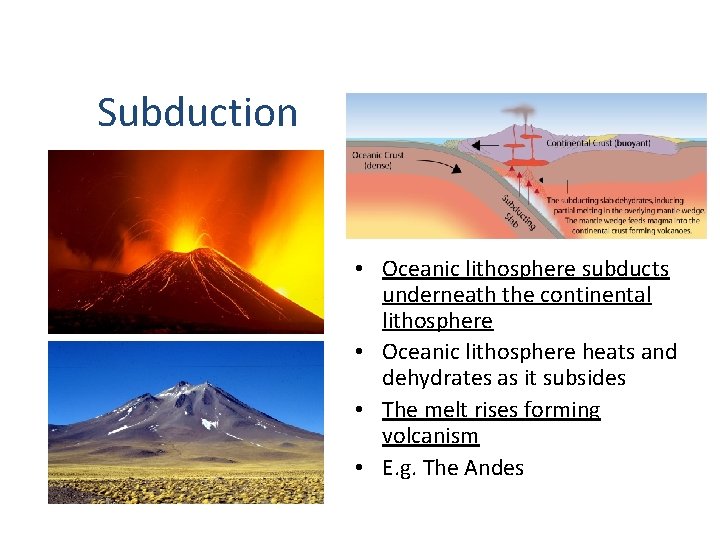
Subduction • Oceanic lithosphere subducts underneath the continental lithosphere • Oceanic lithosphere heats and dehydrates as it subsides • The melt rises forming volcanism • E. g. The Andes
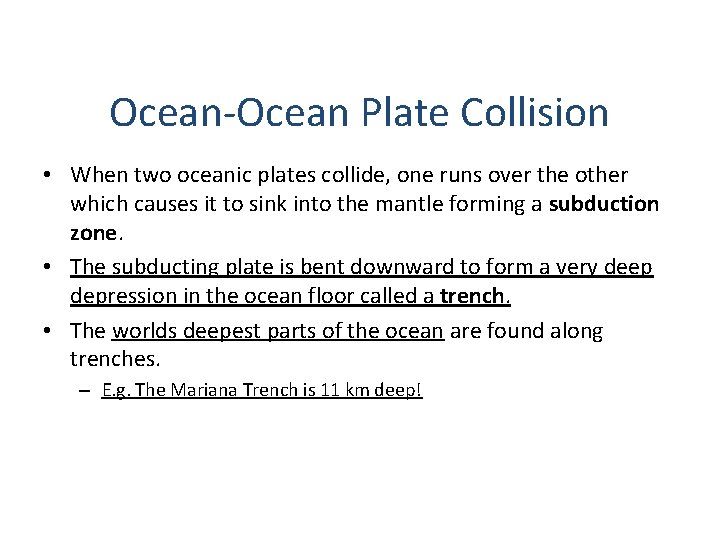
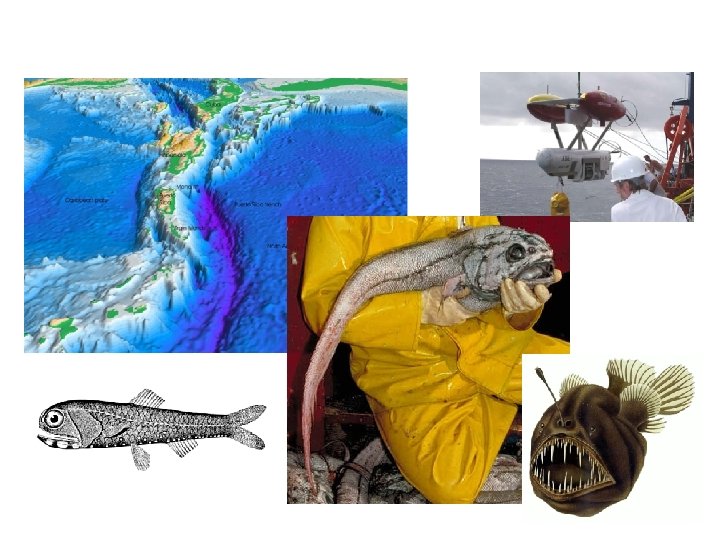
Ocean-Ocean Plate Collision • When two oceanic plates collide, one runs over the other which causes it to sink into the mantle forming a subduction zone. • The subducting plate is bent downward to form a very deep depression in the ocean floor called a trench. • The worlds deepest parts of the ocean are found along trenches. – E. g. The Mariana Trench is 11 km deep!
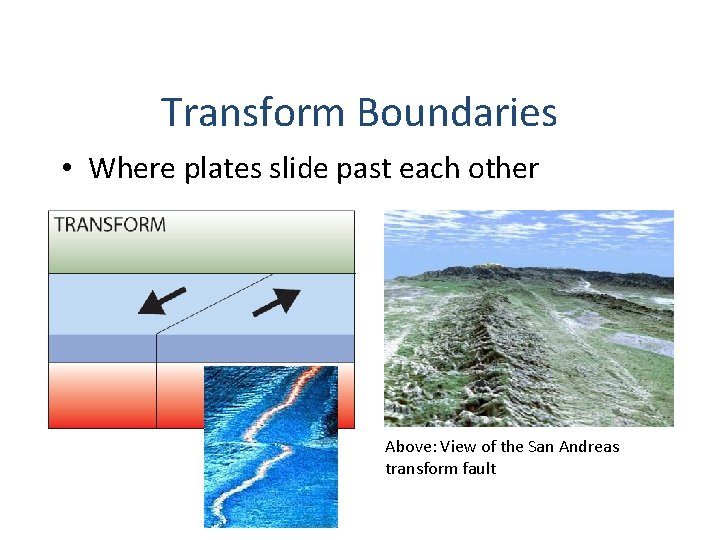
Transform Boundaries • Where plates slide past each other Above: View of the San Andreas transform fault
Boundaries • https: //www. youtube. com/watch? v=Y 0 e. Wn. O Zp. Sp. Q