
Unit 4 Europe Human Geography Mediterranean Europe History


- Slides: 44
Unit 4: Europe Human Geography
Mediterranean Europe
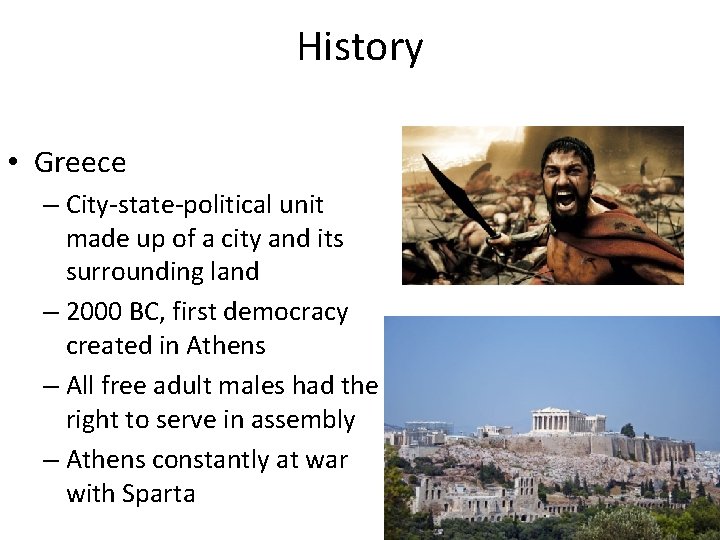
History • Greece – City-state-political unit made up of a city and its surrounding land – 2000 BC, first democracy created in Athens – All free adult males had the right to serve in assembly – Athens constantly at war with Sparta
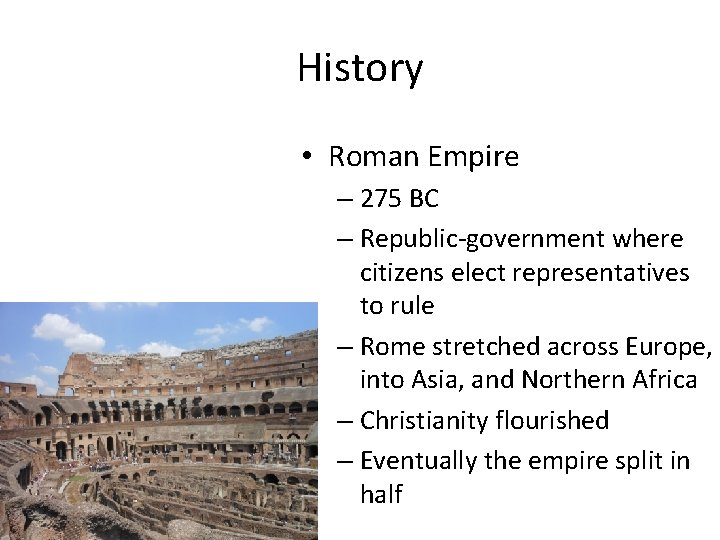
History • Roman Empire – 275 BC – Republic-government where citizens elect representatives to rule – Rome stretched across Europe, into Asia, and Northern Africa – Christianity flourished – Eventually the empire split in half
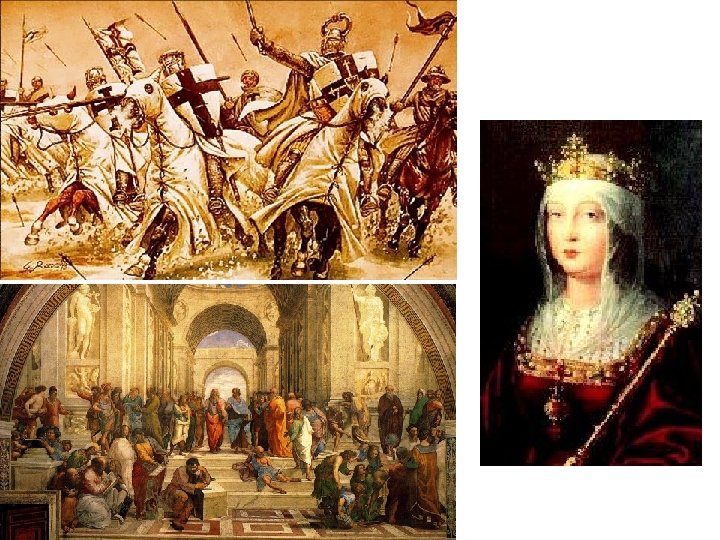
Progress Through Time • Crusades • Renaissance • Spain’s Empire – 700 s – Muslims and Catholic rulers fought for control of the area – Catholic rulers won out, expanded their control to colonies in South America and North America
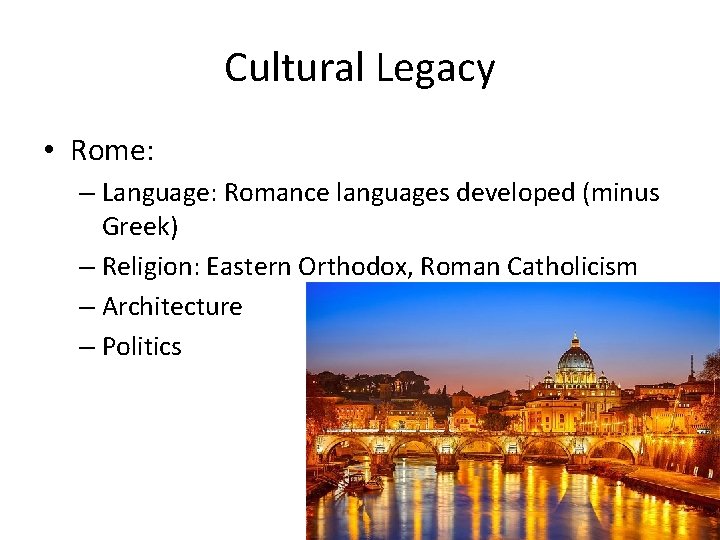
Cultural Legacy • Rome: – Language: Romance languages developed (minus Greek) – Religion: Eastern Orthodox, Roman Catholicism – Architecture – Politics
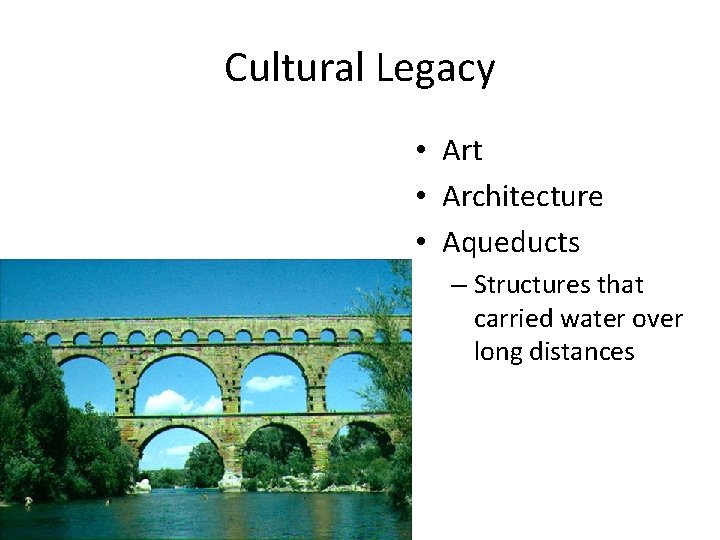
Cultural Legacy • Art • Architecture • Aqueducts – Structures that carried water over long distances
Economic Change • Agriculture to Industry – Mediterranean nations were focused more on fishing and agriculture – Eventually, manufacturing increased • Textiles, automobiles, clothing, shoes – 1980 s: Greece, Portugal, Spain joined the European Union
Economic Change • Economic Problems – Northern region is more developed than southern area • North is closer to other industrial countries of Europe • South has poorer transportation system • Government tried to promote growth in south, but made bad choices
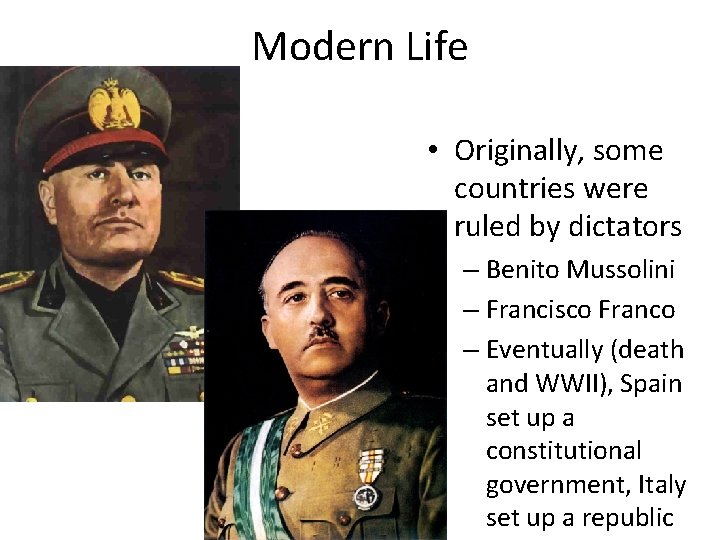
Modern Life • Originally, some countries were ruled by dictators – Benito Mussolini – Francisco Franco – Eventually (death and WWII), Spain set up a constitutional government, Italy set up a republic
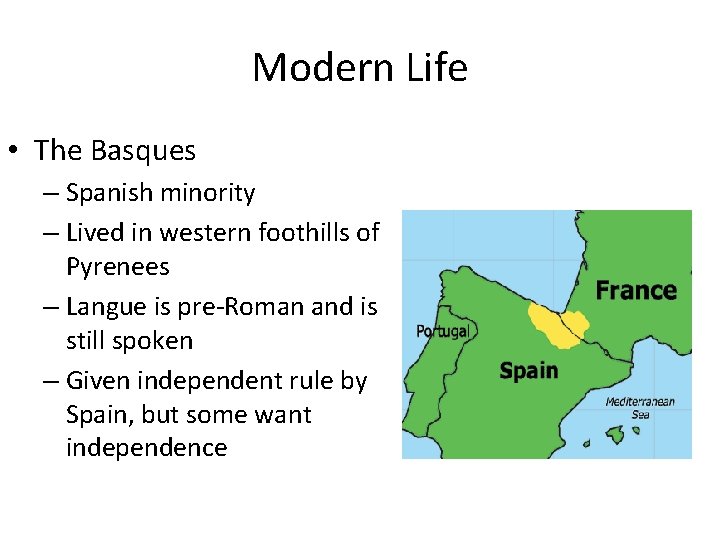
Modern Life • The Basques – Spanish minority – Lived in western foothills of Pyrenees – Langue is pre-Roman and is still spoken – Given independent rule by Spain, but some want independence
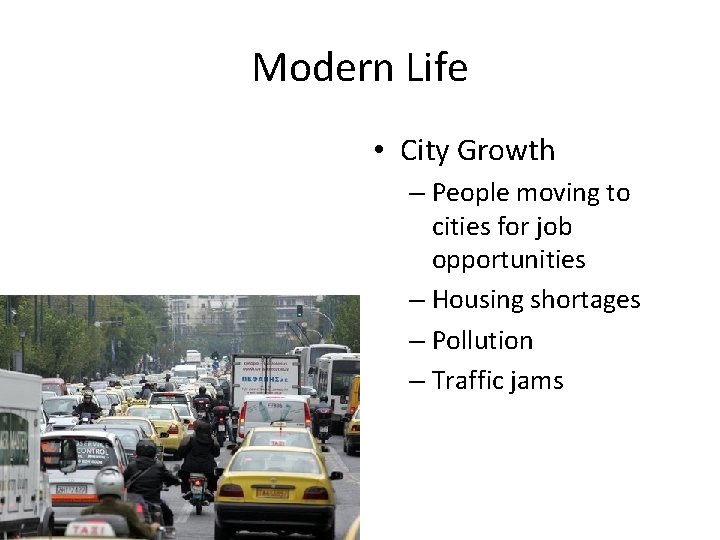
Modern Life • City Growth – People moving to cities for job opportunities – Housing shortages – Pollution – Traffic jams
Western Europe
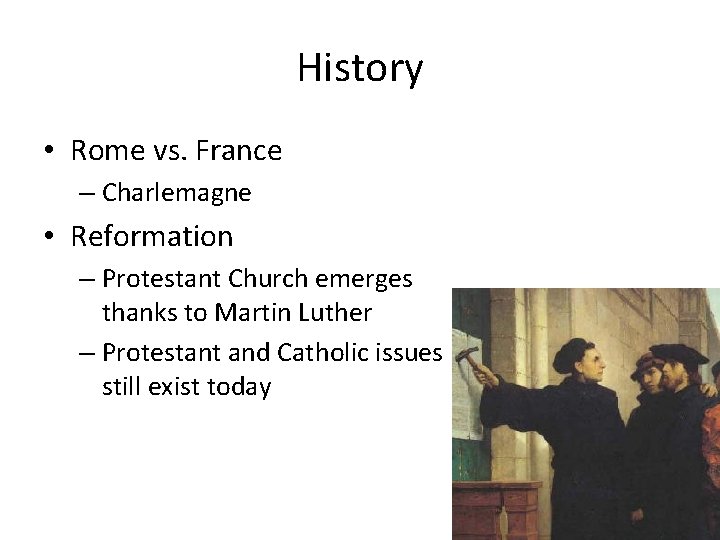
History • Rome vs. France – Charlemagne • Reformation – Protestant Church emerges thanks to Martin Luther – Protestant and Catholic issues still exist today
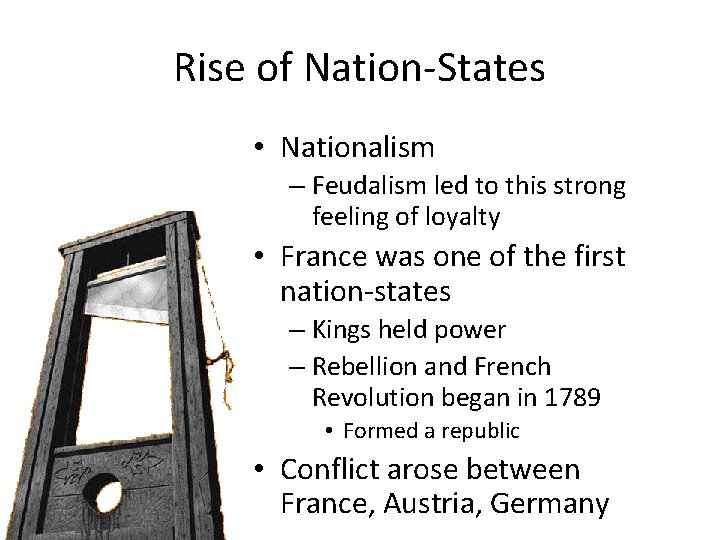
Rise of Nation-States • Nationalism – Feudalism led to this strong feeling of loyalty • France was one of the first nation-states – Kings held power – Rebellion and French Revolution began in 1789 • Formed a republic • Conflict arose between France, Austria, Germany
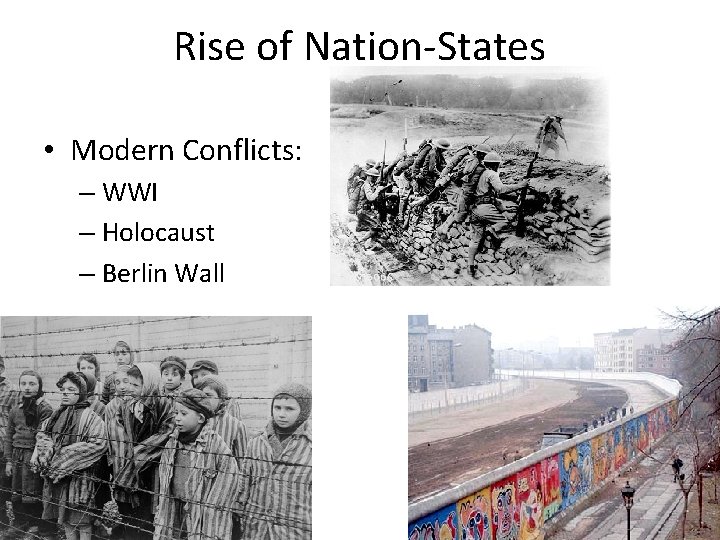
Rise of Nation-States • Modern Conflicts: – WWI – Holocaust – Berlin Wall
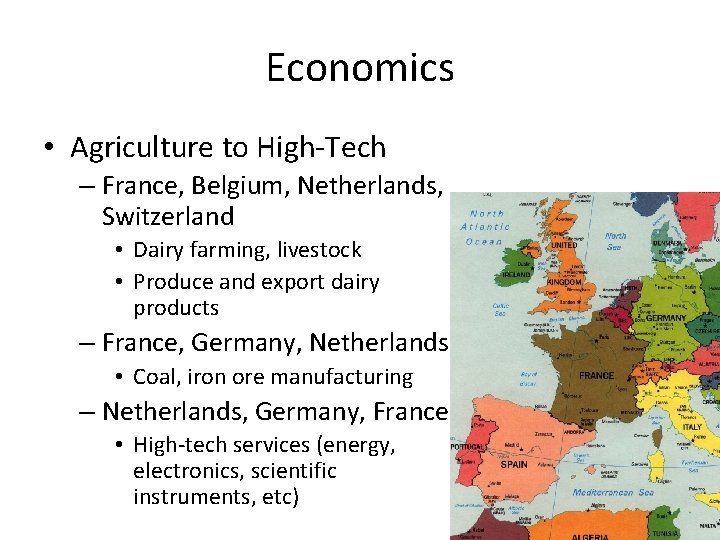
Economics • Agriculture to High-Tech – France, Belgium, Netherlands, Switzerland • Dairy farming, livestock • Produce and export dairy products – France, Germany, Netherlands • Coal, iron ore manufacturing – Netherlands, Germany, France • High-tech services (energy, electronics, scientific instruments, etc)
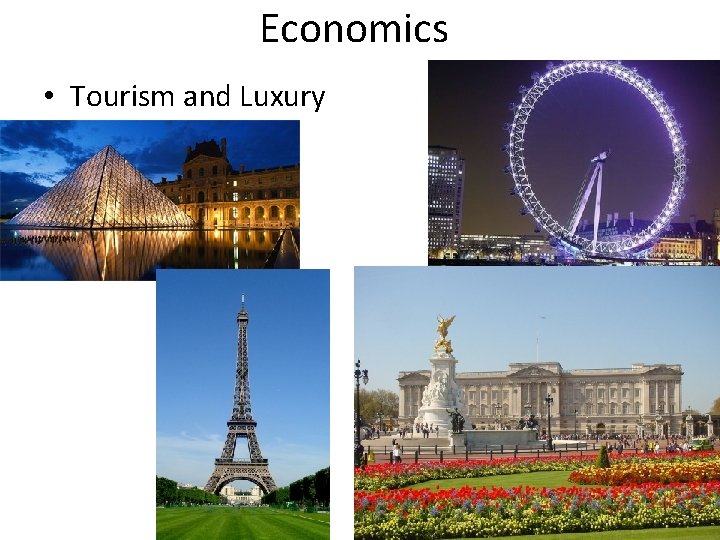
Economics • Tourism and Luxury
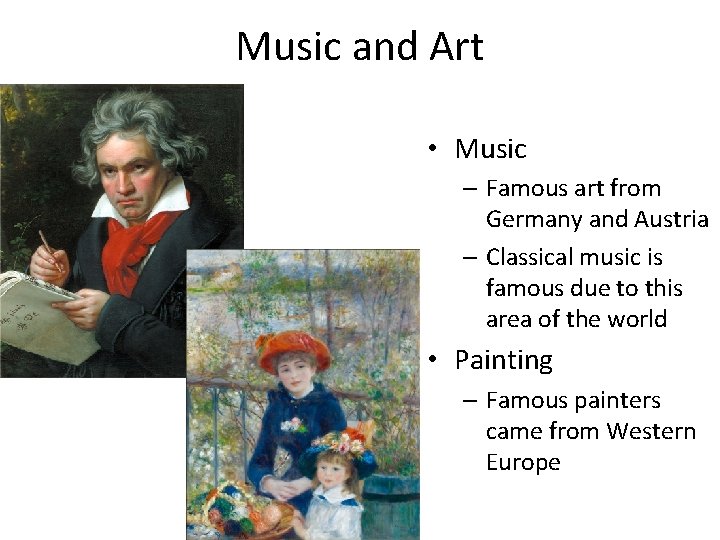
Music and Art • Music – Famous art from Germany and Austria – Classical music is famous due to this area of the world • Painting – Famous painters came from Western Europe
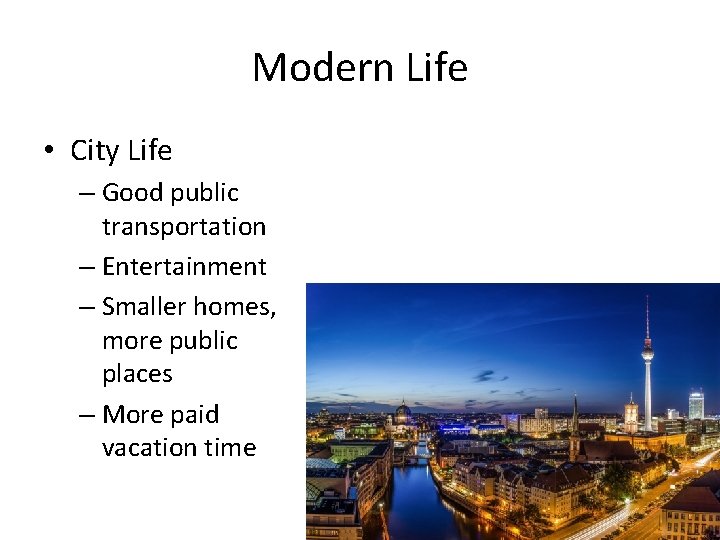
Modern Life • City Life – Good public transportation – Entertainment – Smaller homes, more public places – More paid vacation time
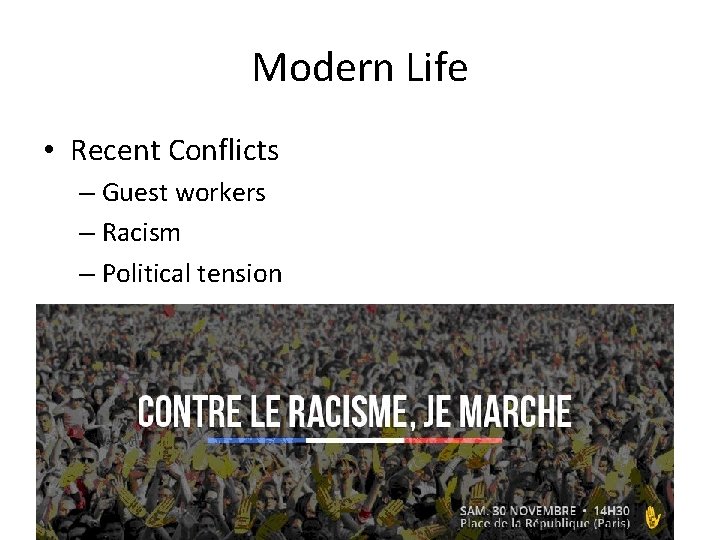
Modern Life • Recent Conflicts – Guest workers – Racism – Political tension
Northern Europe
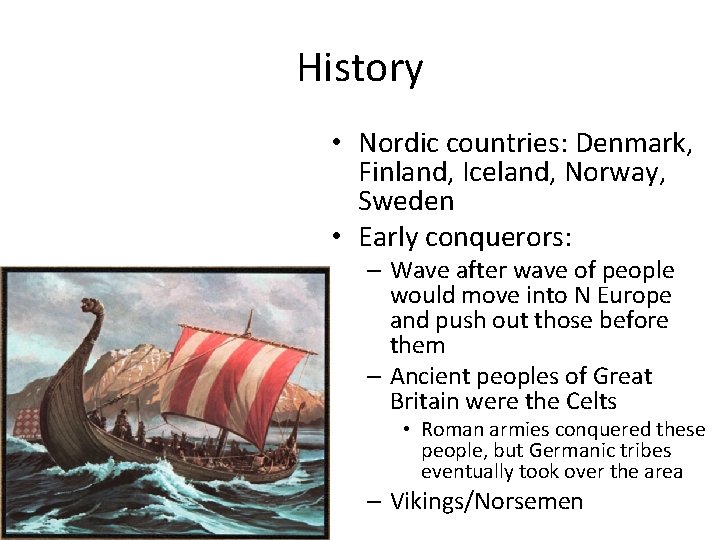
History • Nordic countries: Denmark, Finland, Iceland, Norway, Sweden • Early conquerors: – Wave after wave of people would move into N Europe and push out those before them – Ancient peoples of Great Britain were the Celts • Roman armies conquered these people, but Germanic tribes eventually took over the area – Vikings/Norsemen
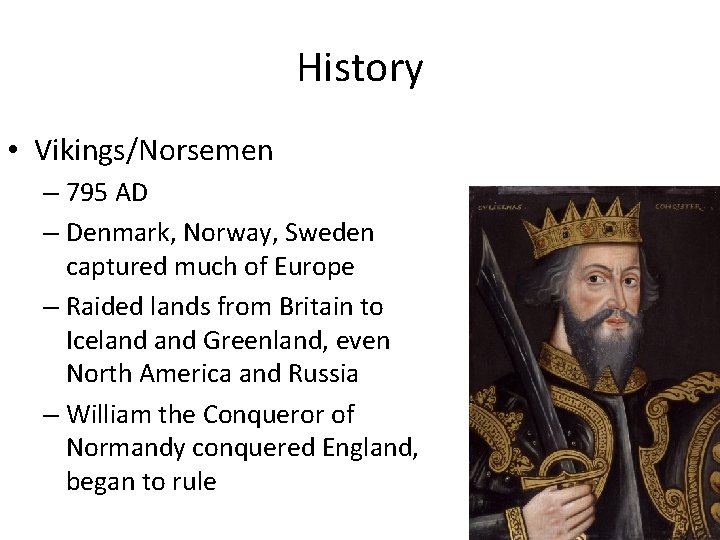
History • Vikings/Norsemen – 795 AD – Denmark, Norway, Sweden captured much of Europe – Raided lands from Britain to Iceland Greenland, even North America and Russia – William the Conqueror of Normandy conquered England, began to rule
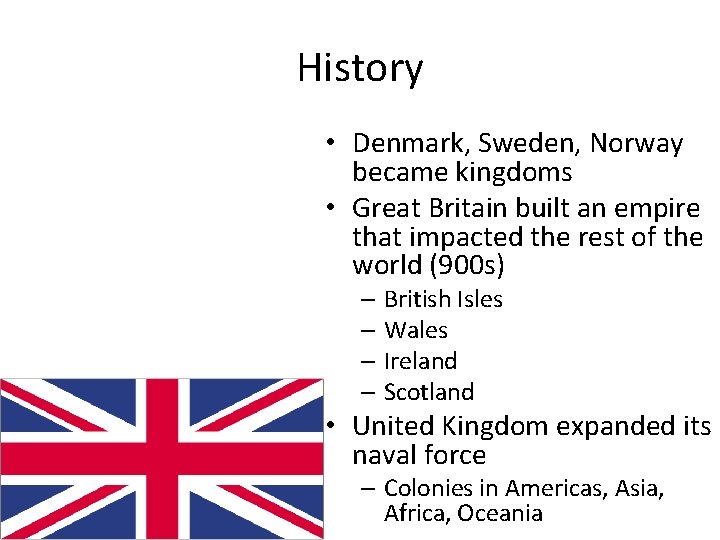
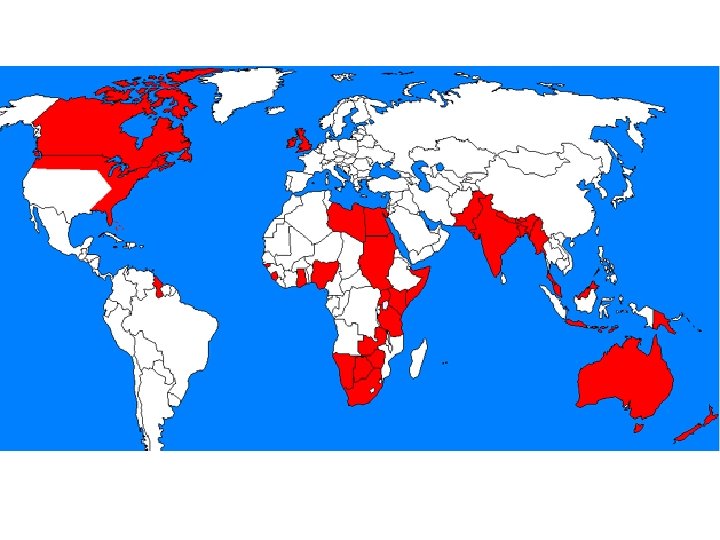
History • Denmark, Sweden, Norway became kingdoms • Great Britain built an empire that impacted the rest of the world (900 s) – British Isles – Wales – Ireland – Scotland • United Kingdom expanded its naval force – Colonies in Americas, Asia, Africa, Oceania
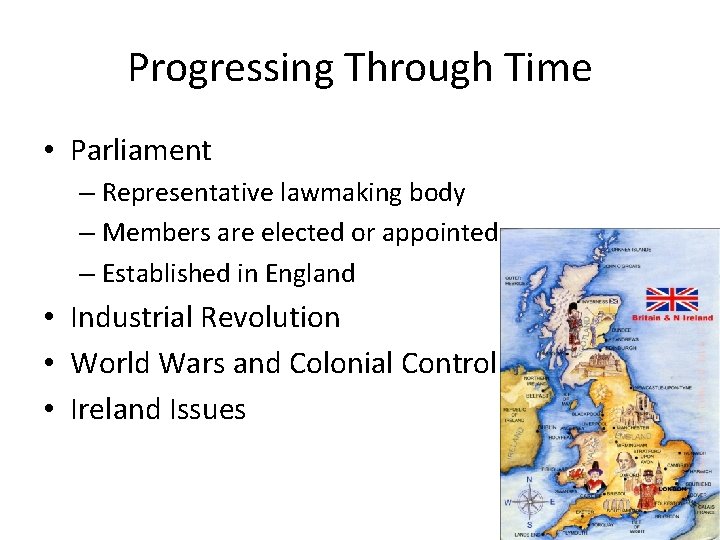
Progressing Through Time • Parliament – Representative lawmaking body – Members are elected or appointed – Established in England • Industrial Revolution • World Wars and Colonial Control • Ireland Issues
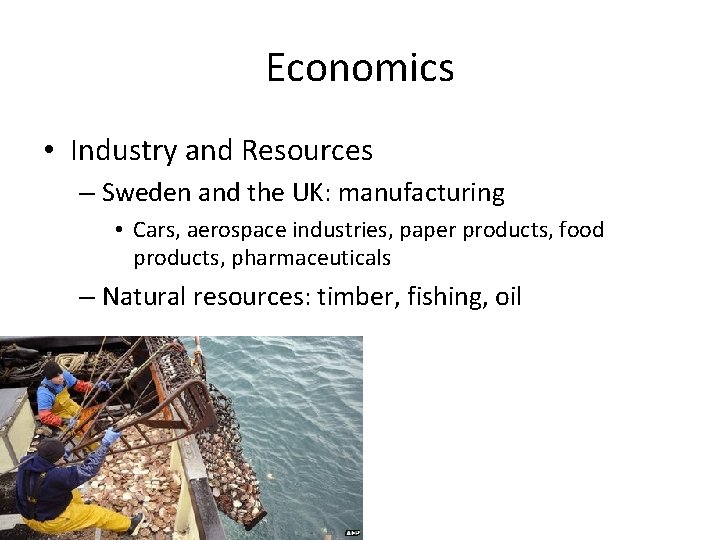
Economics • Industry and Resources – Sweden and the UK: manufacturing • Cars, aerospace industries, paper products, food products, pharmaceuticals – Natural resources: timber, fishing, oil
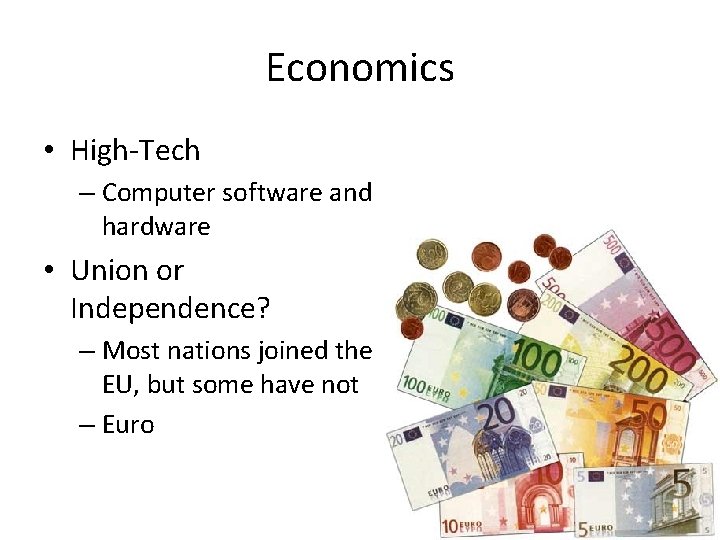
Economics • High-Tech – Computer software and hardware • Union or Independence? – Most nations joined the EU, but some have not – Euro
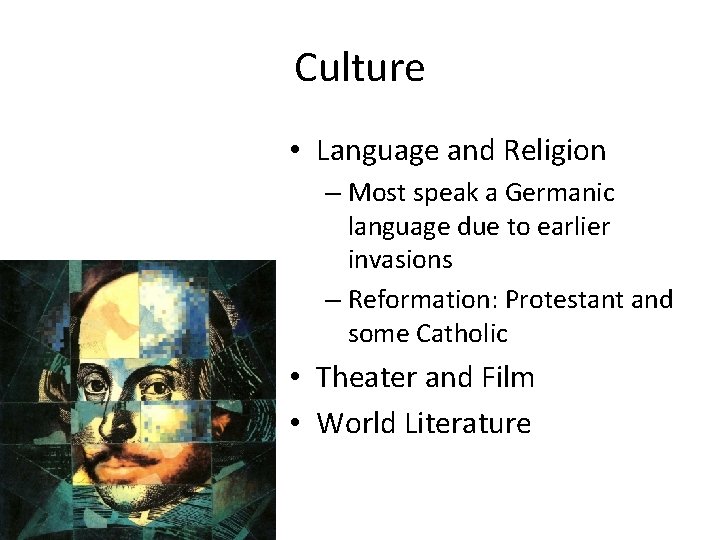
Culture • Language and Religion – Most speak a Germanic language due to earlier invasions – Reformation: Protestant and some Catholic • Theater and Film • World Literature
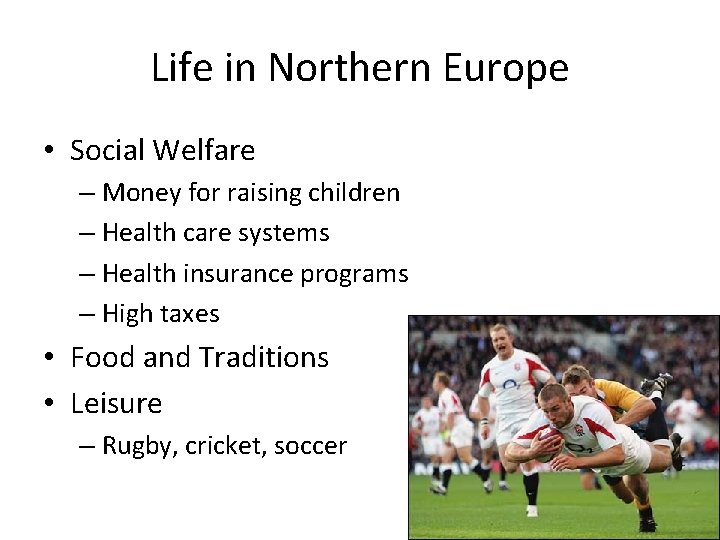
Life in Northern Europe • Social Welfare – Money for raising children – Health care systems – Health insurance programs – High taxes • Food and Traditions • Leisure – Rugby, cricket, soccer
Eastern Europe
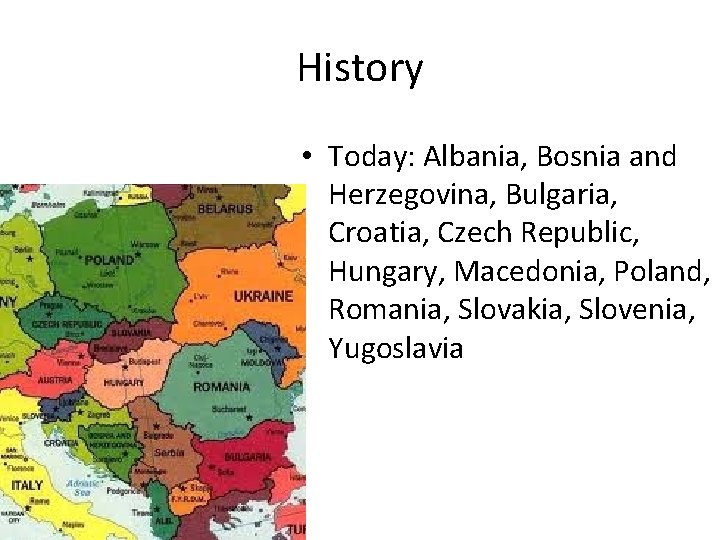
History • Today: Albania, Bosnia and Herzegovina, Bulgaria, Croatia, Czech Republic, Hungary, Macedonia, Poland, Romania, Slovakia, Slovenia, Yugoslavia
History • Cultural Crossroads – People moved between Asia and Europe; lots of diversity – Traders, nomads, migrants, armies – Language, religion, politics, art, literature • Empires – – – Rome had control over most of the area (100 AD) Byzantine Empire followed Slavic groups established rule through the late 800 s Ottomans later conquered the area Eventually, Austria, Prussia, and Russia divided up much of the territory (especially Poland)
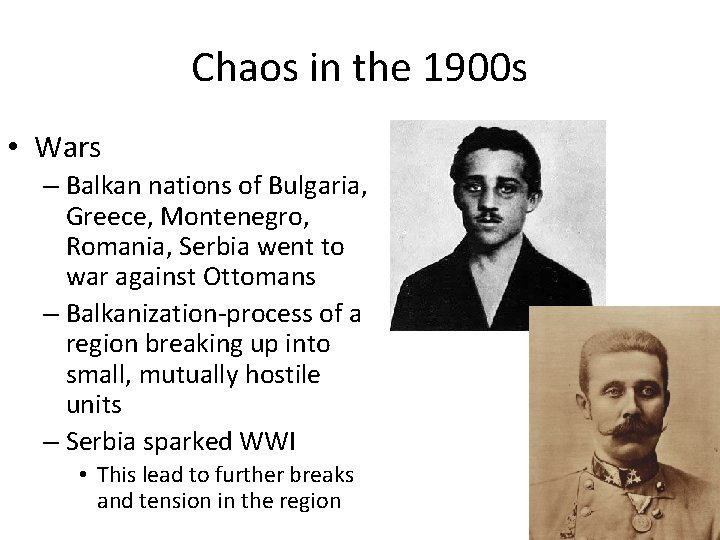
Chaos in the 1900 s • Wars – Balkan nations of Bulgaria, Greece, Montenegro, Romania, Serbia went to war against Ottomans – Balkanization-process of a region breaking up into small, mutually hostile units – Serbia sparked WWI • This lead to further breaks and tension in the region
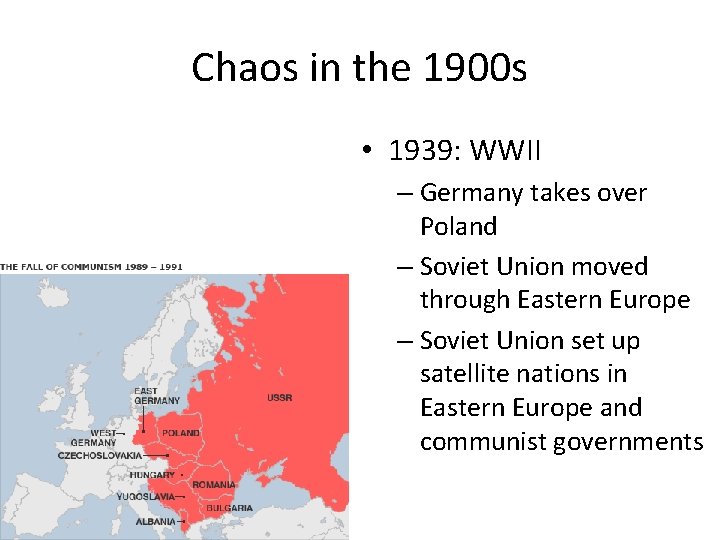
Chaos in the 1900 s • 1939: WWII – Germany takes over Poland – Soviet Union moved through Eastern Europe – Soviet Union set up satellite nations in Eastern Europe and communist governments
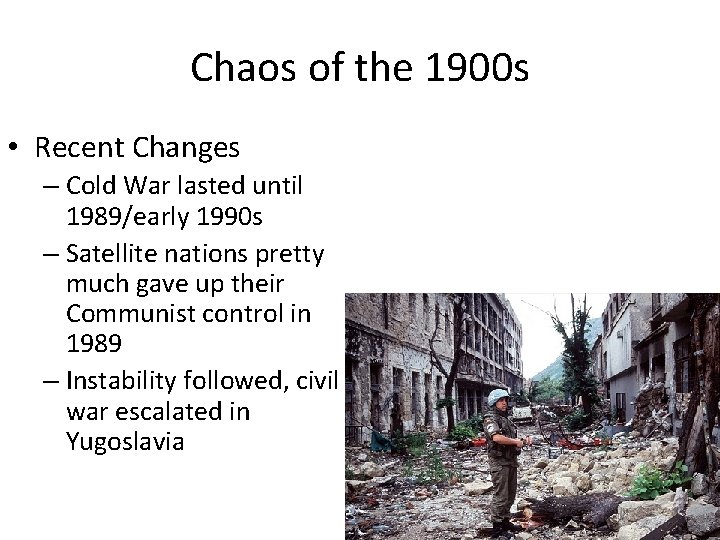
Chaos of the 1900 s • Recent Changes – Cold War lasted until 1989/early 1990 s – Satellite nations pretty much gave up their Communist control in 1989 – Instability followed, civil war escalated in Yugoslavia
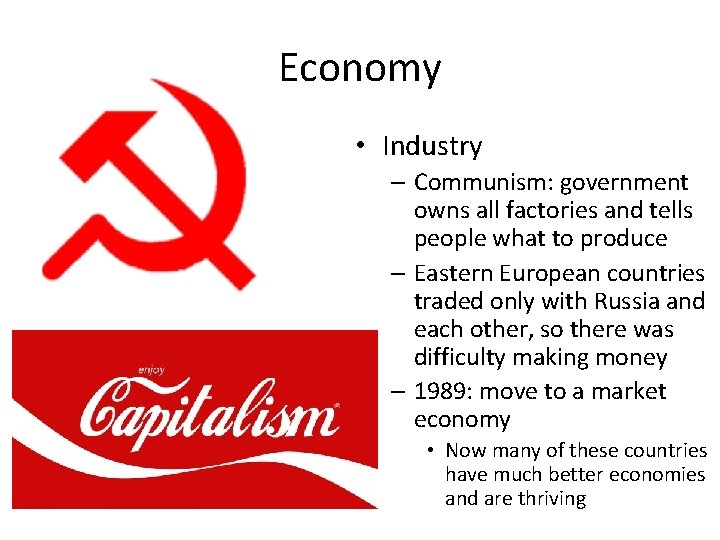
Economy • Industry – Communism: government owns all factories and tells people what to produce – Eastern European countries traded only with Russia and each other, so there was difficulty making money – 1989: move to a market economy • Now many of these countries have much better economies and are thriving
Economy • Remaining Problems: – Albania’s economy growth has slowed due to old equipment, lack of materials, less educated workers – Romania’s citizens don’t have money to invest in business – Civil wars of the 1990 s damaged Yugoslavia and others, lots of destruction
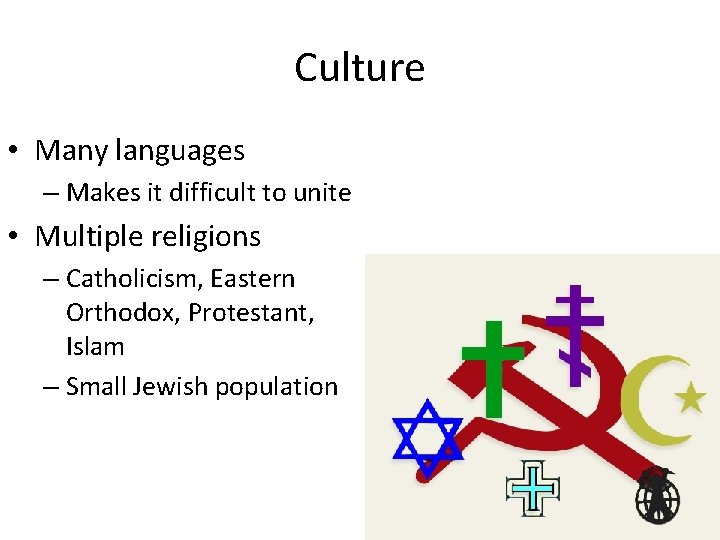
Culture • Many languages – Makes it difficult to unite • Multiple religions – Catholicism, Eastern Orthodox, Protestant, Islam – Small Jewish population
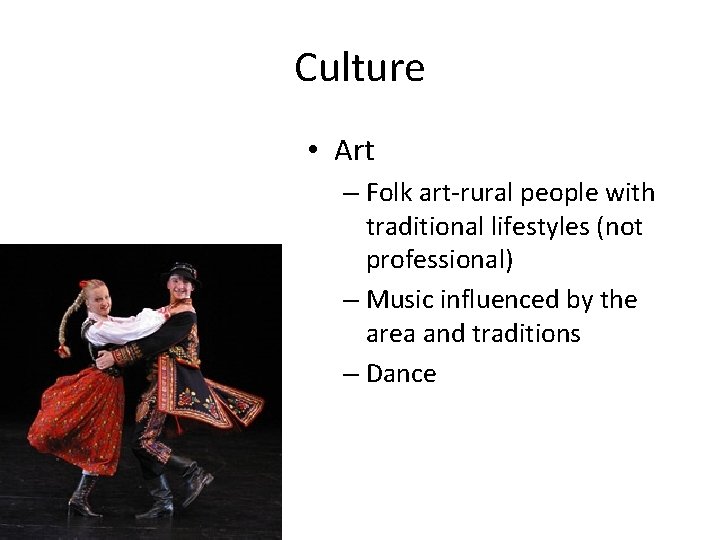
Culture • Art – Folk art-rural people with traditional lifestyles (not professional) – Music influenced by the area and traditions – Dance
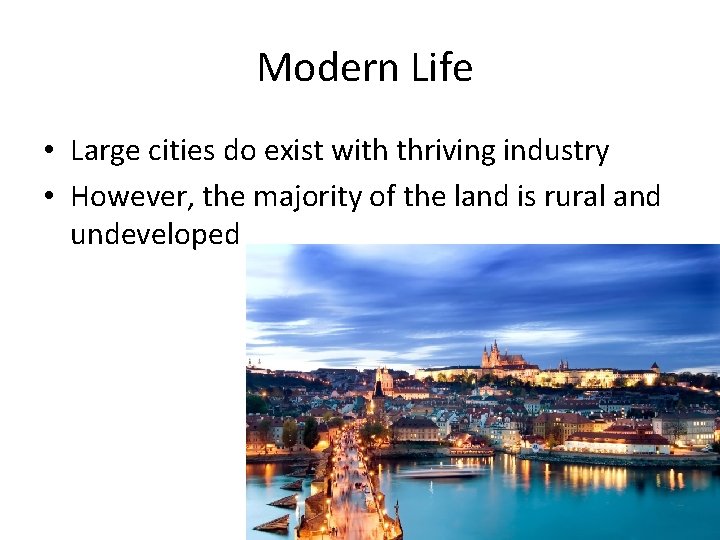
Modern Life • Large cities do exist with thriving industry • However, the majority of the land is rural and undeveloped
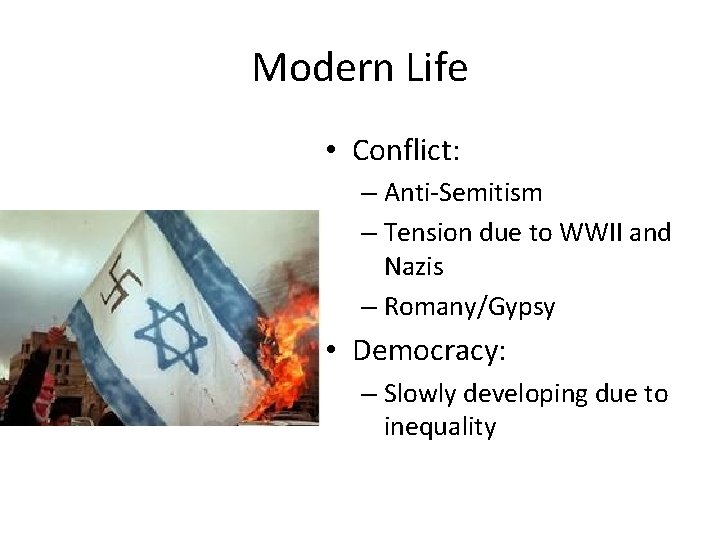
Modern Life • Conflict: – Anti-Semitism – Tension due to WWII and Nazis – Romany/Gypsy • Democracy: – Slowly developing due to inequality