
Unit 4 Deformation of the Crust Mr Ross

- Slides: 65
Unit 4: Deformation of the Crust Mr. Ross Brown Brooklyn School for Law and Technology
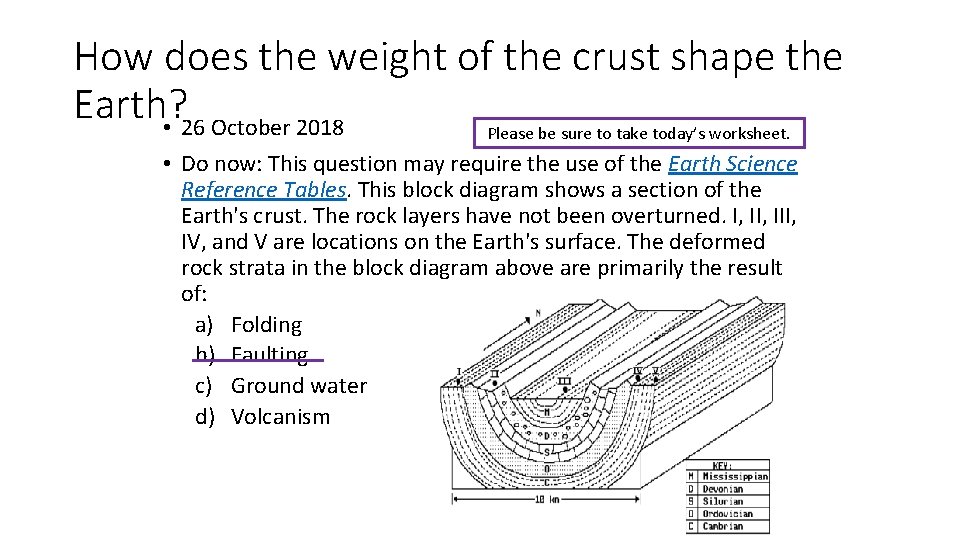
How does the weight of the crust shape the Earth? • 26 October 2018 Please be sure to take today’s worksheet. • Do now: This question may require the use of the Earth Science Reference Tables. This block diagram shows a section of the Earth's crust. The rock layers have not been overturned. I, III, IV, and V are locations on the Earth's surface. The deformed rock strata in the block diagram above are primarily the result of: a) Folding b) Faulting c) Ground water d) Volcanism
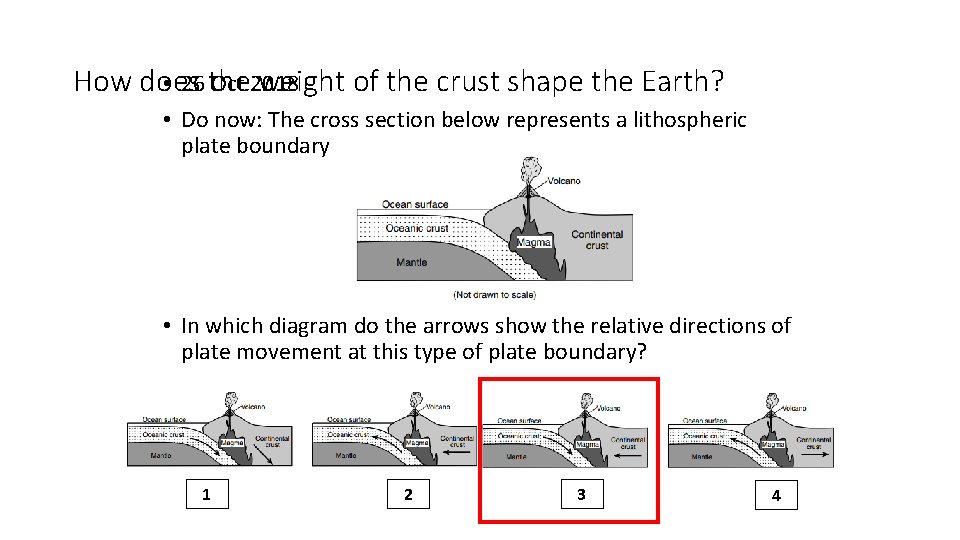
How does the weight of the crust shape the Earth? • 26 Oct 2018 • Do now: The cross section below represents a lithospheric plate boundary • In which diagram do the arrows show the relative directions of plate movement at this type of plate boundary? 1 2 3 4
In this unit we will learn about: • How isostatic adjustment causes stress on the crust • How this stress leads to faulting and folding • How mountains formed as a result of plate tectonics and other Earth activity
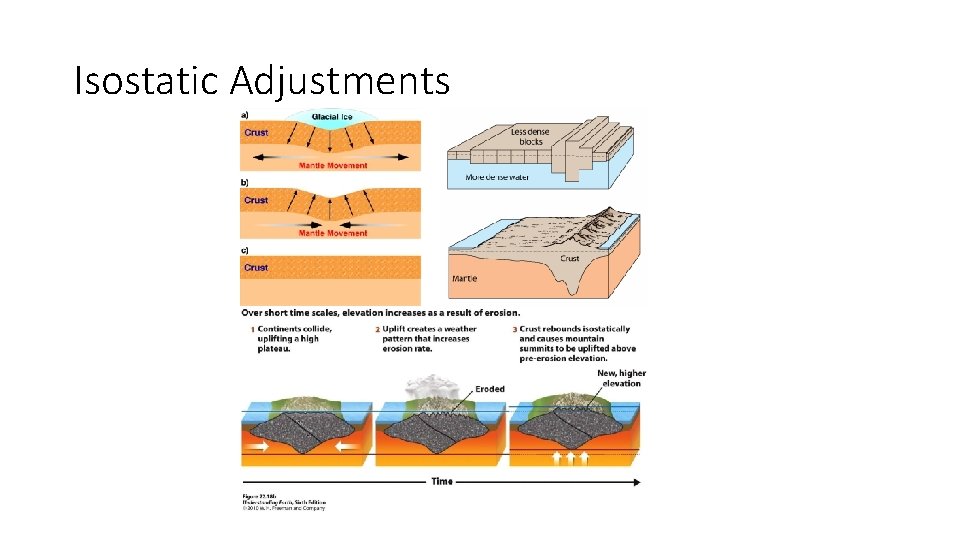
How does the weight of the crust shape the Earth? • We said the crust ‘rides’ on the asthenosphere • Heavier crust (mountains) sinks down • Lighter crust rises • Crust presses down, mantle presses up • The balance is called isostasy • Isostatic adjustments lead to bending and deformation
Isostatic Adjustments
Homework #2 (only 2? ? ? ) • 26 Oct 2018 • Define and contrast geologic stress and geologic strain. • Name and describe the 3 main types of geological stress. You must describe them. • Have these at the top of the next page in your notebook. Do not tear this work out; I will check it at the beginning of class on Monday.
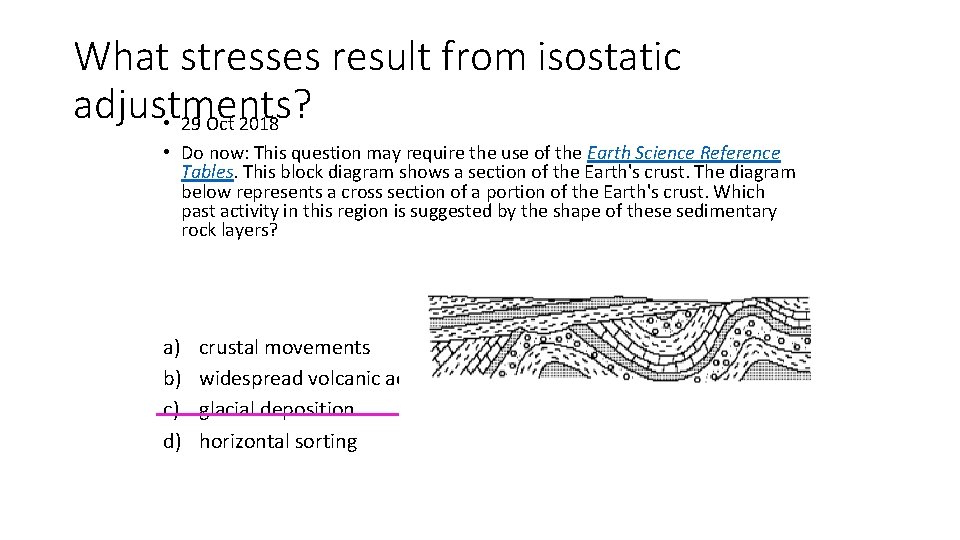
What stresses result from isostatic adjustments? • 29 Oct 2018 • Do now: This question may require the use of the Earth Science Reference Tables. This block diagram shows a section of the Earth's crust. The diagram below represents a cross section of a portion of the Earth's crust. Which past activity in this region is suggested by the shape of these sedimentary rock layers? a) b) c) d) crustal movements widespread volcanic activity glacial deposition horizontal sorting
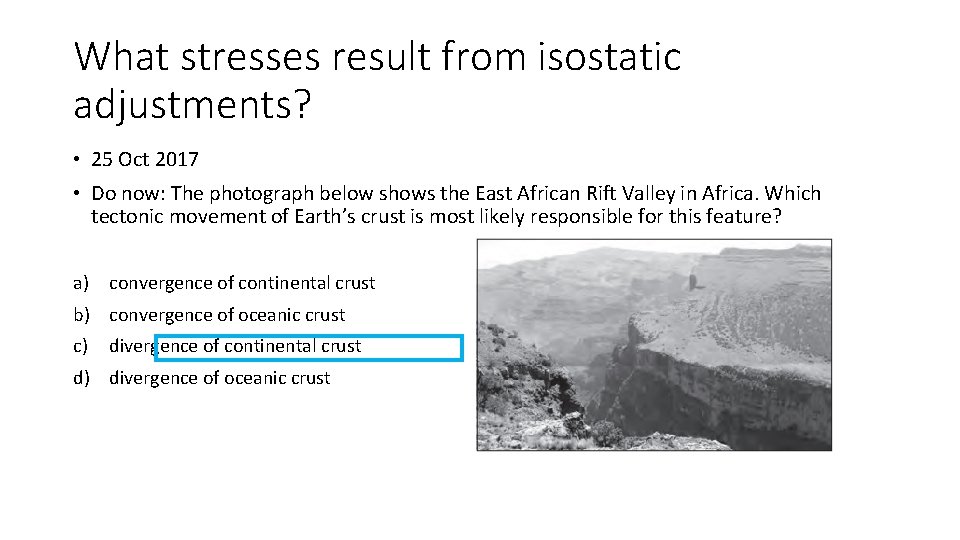
What stresses result from isostatic adjustments? • 25 Oct 2017 • Do now: The photograph below shows the East African Rift Valley in Africa. Which tectonic movement of Earth’s crust is most likely responsible for this feature? a) convergence of continental crust b) convergence of oceanic crust c) divergence of continental crust d) divergence of oceanic crust
What stresses result from isostatic adjustments? • Stress: the amount of force per unit of area applied to a given material • Strain: change in shape or volume of rocks resulting from stress
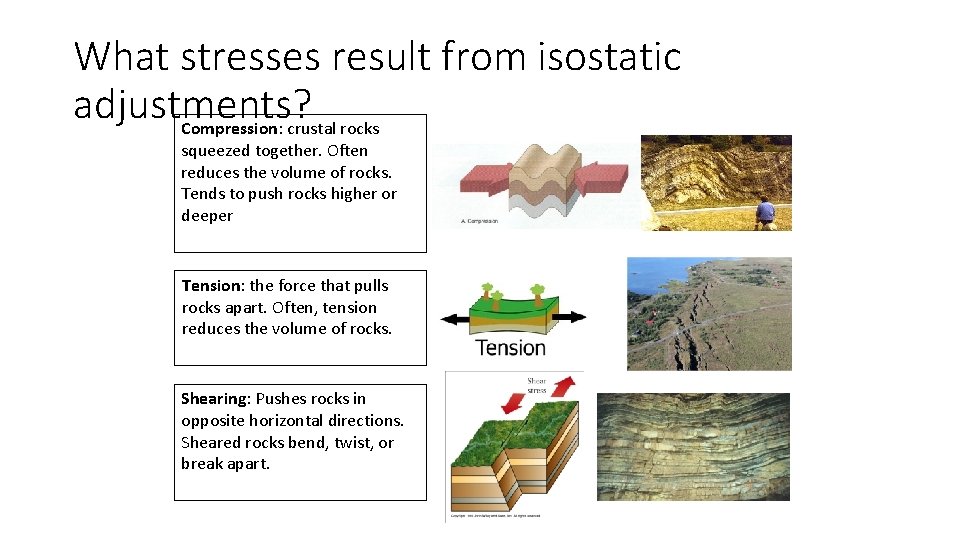
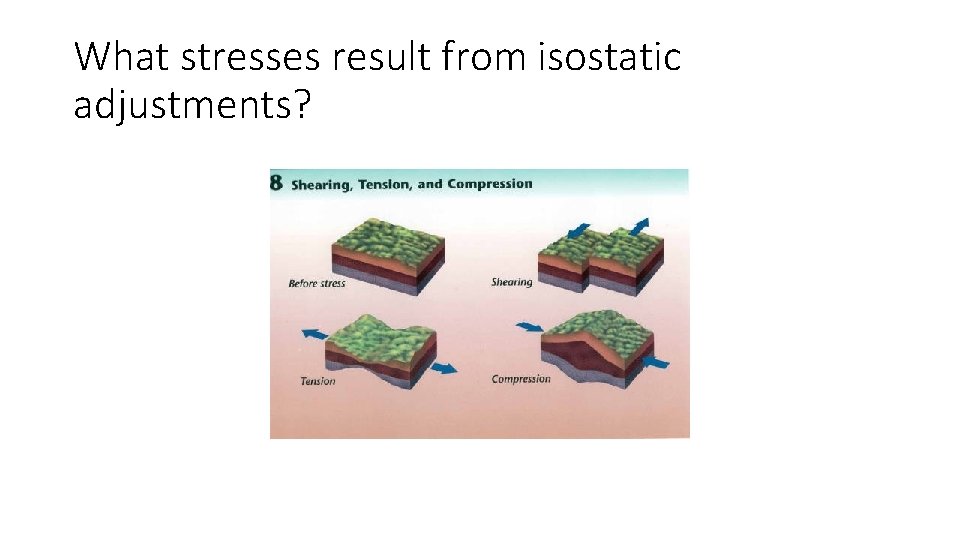
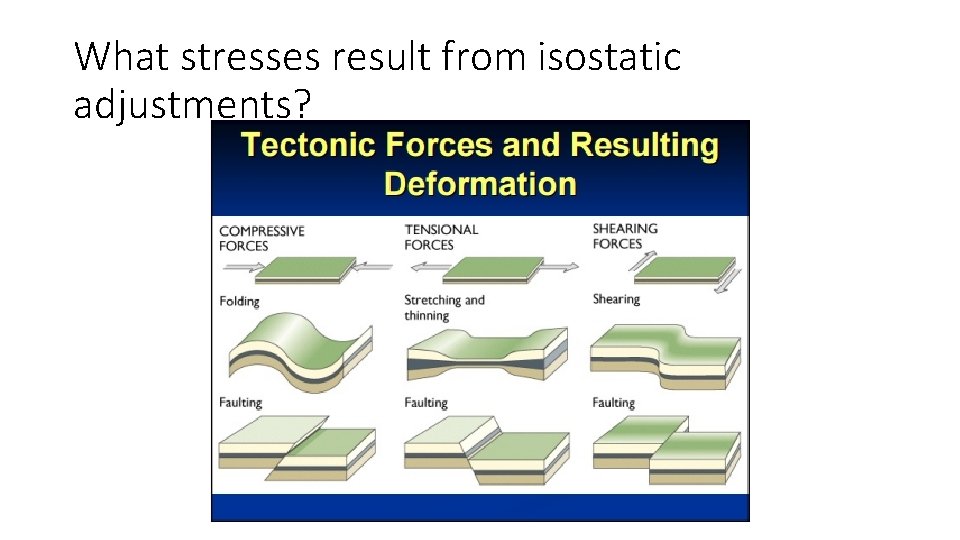
What stresses result from isostatic adjustments? Compression: crustal rocks squeezed together. Often reduces the volume of rocks. Tends to push rocks higher or deeper Tension: the force that pulls rocks apart. Often, tension reduces the volume of rocks. Shearing: Pushes rocks in opposite horizontal directions. Sheared rocks bend, twist, or break apart.
What stresses result from isostatic adjustments?
What stresses result from isostatic adjustments?
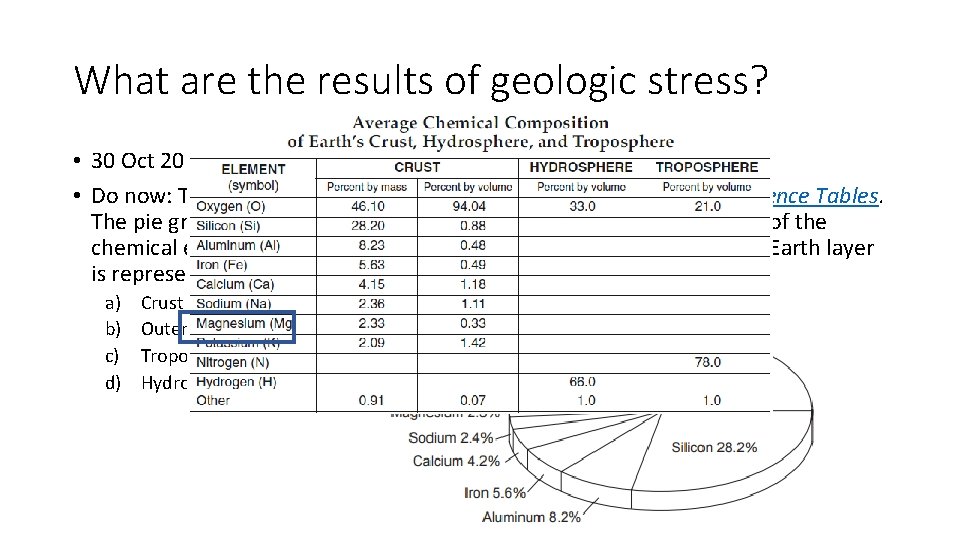
What are the results of geologic stress? • 30 Oct 2018 • Do now: This question may require the use of the Earth Science Reference Tables. The pie graph below represents the composition, in percent by mass, of the chemical elements found in an Earth layer. The composition of which Earth layer is represented by the pie graph? a) b) c) d) Crust Outer core Troposphere Hydrosphere
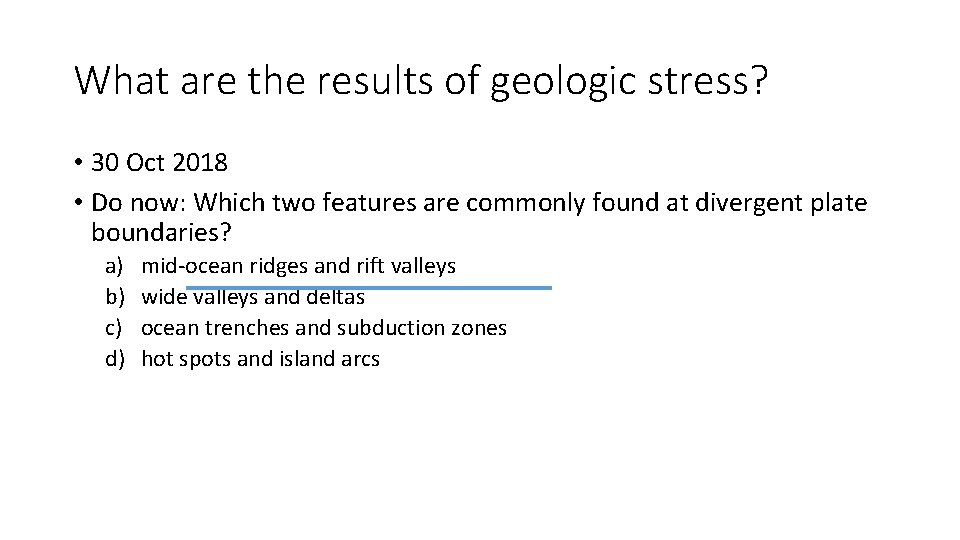
What are the results of geologic stress? • 30 Oct 2018 • Do now: Which two features are commonly found at divergent plate boundaries? a) b) c) d) mid-ocean ridges and rift valleys wide valleys and deltas ocean trenches and subduction zones hot spots and island arcs
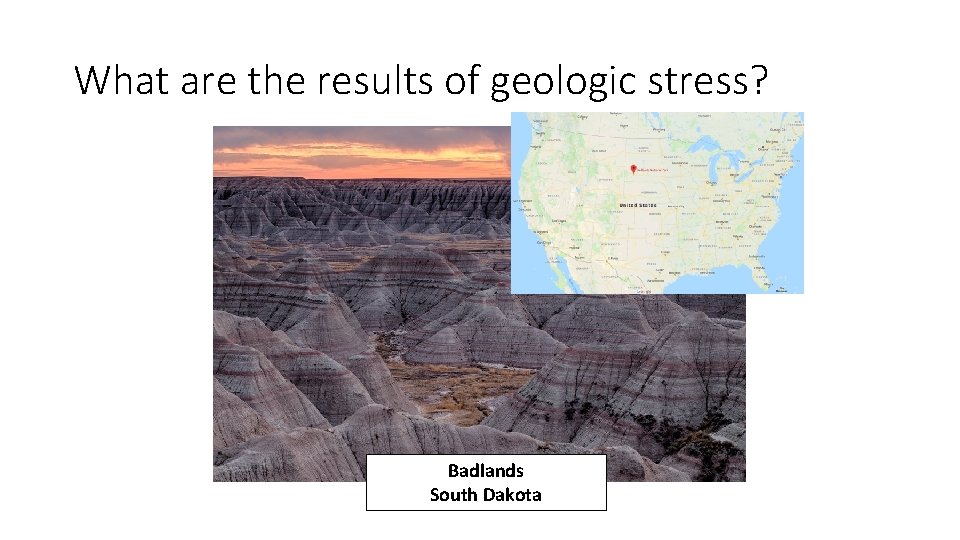
What are the results of geologic stress? Badlands South Dakota
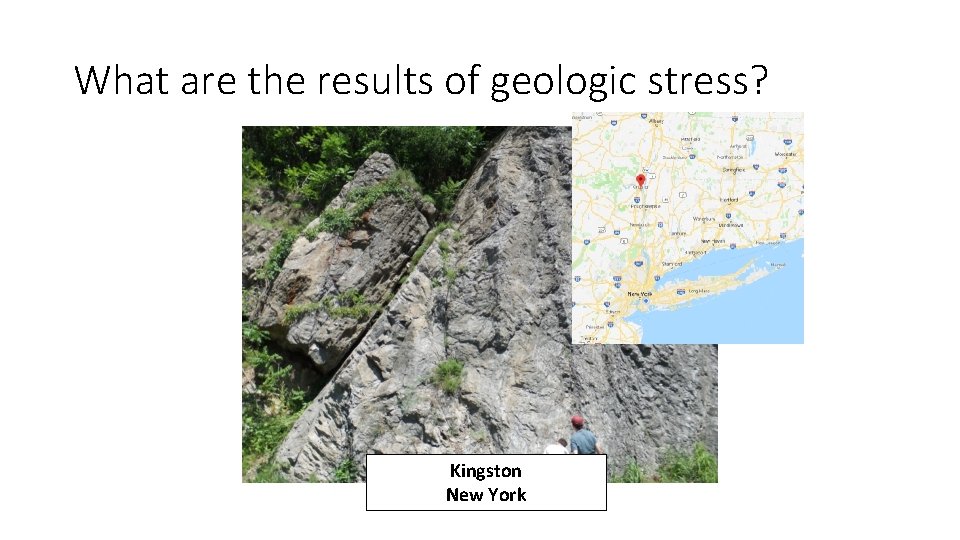
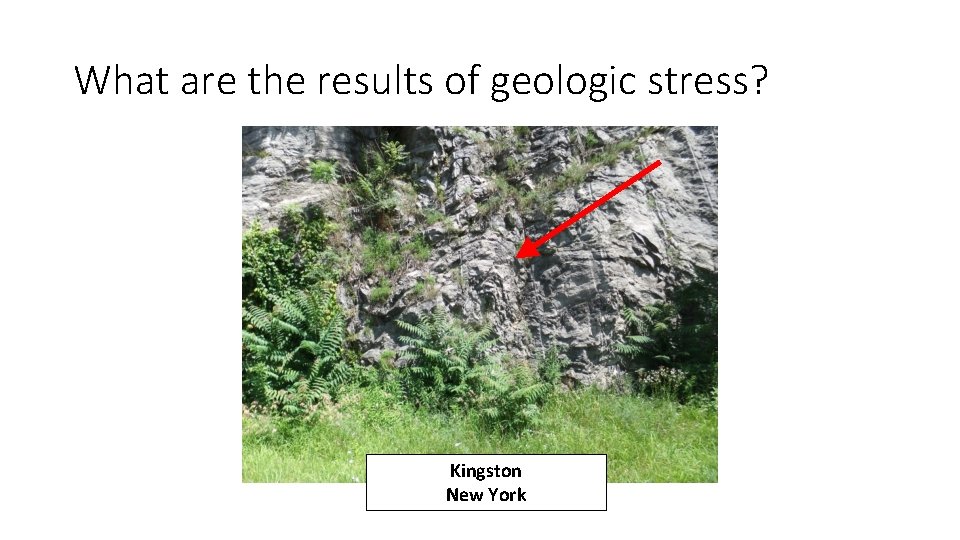
What are the results of geologic stress? Kingston New York
What are the results of geologic stress? Kingston New York
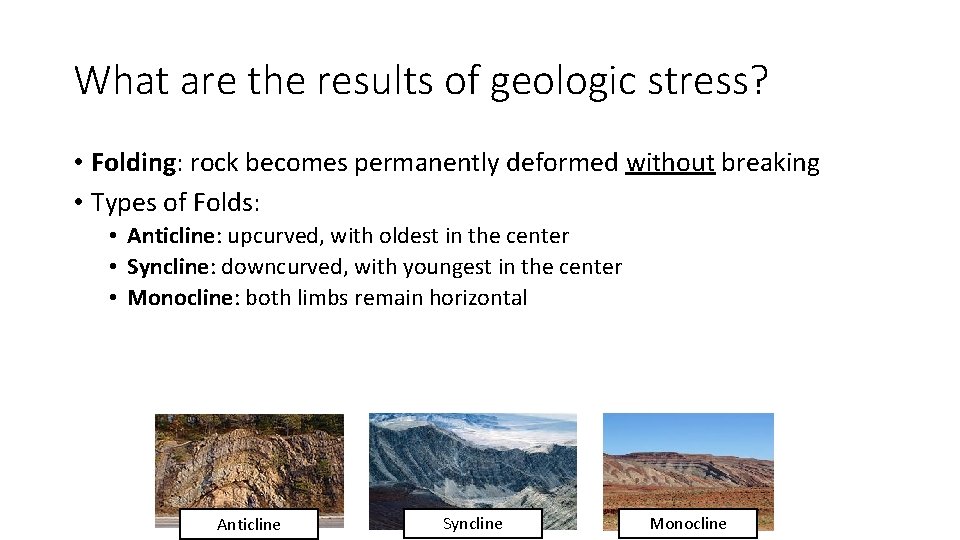
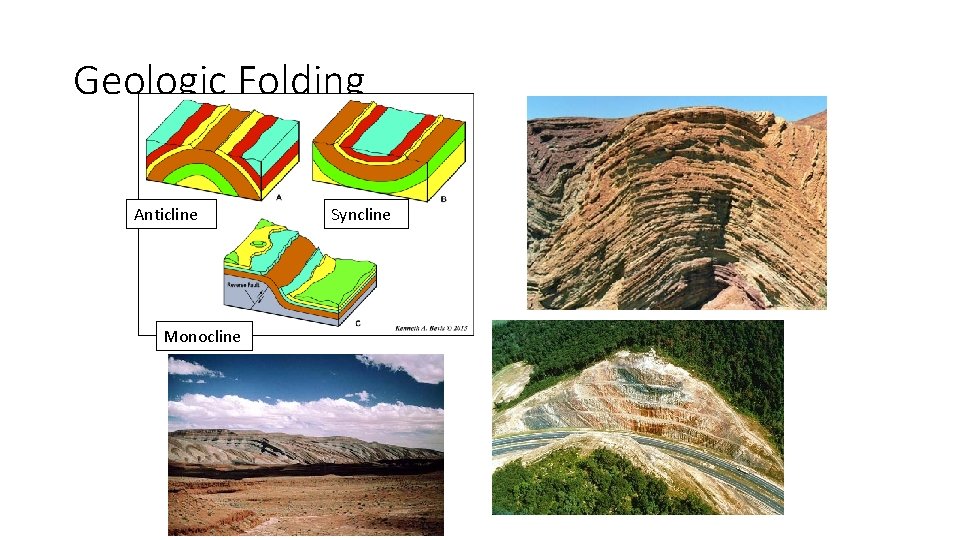
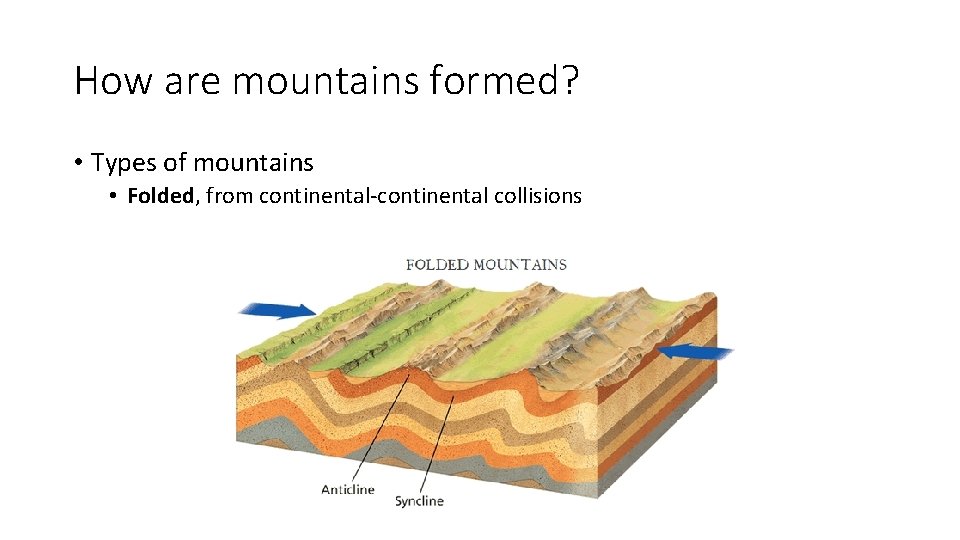
What are the results of geologic stress? • Folding: rock becomes permanently deformed without breaking • Types of Folds: • Anticline: upcurved, with oldest in the center • Syncline: downcurved, with youngest in the center • Monocline: both limbs remain horizontal Anticline Syncline Monocline
Geologic Folding Anticline Monocline Syncline
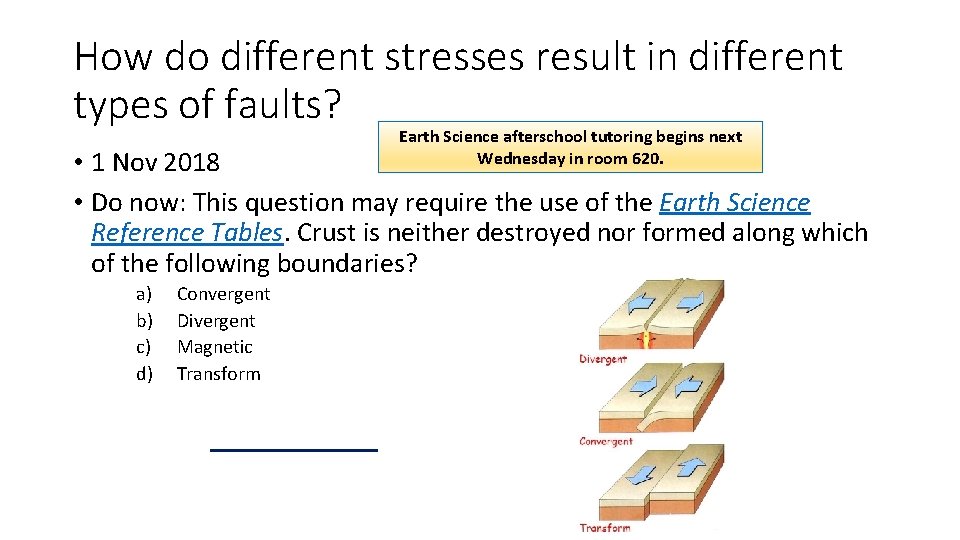
How do different stresses result in different types of faults? Earth Science afterschool tutoring begins next Wednesday in room 620. • 1 Nov 2018 • Do now: This question may require the use of the Earth Science Reference Tables. Crust is neither destroyed nor formed along which of the following boundaries? a) b) c) d) Convergent Divergent Magnetic Transform
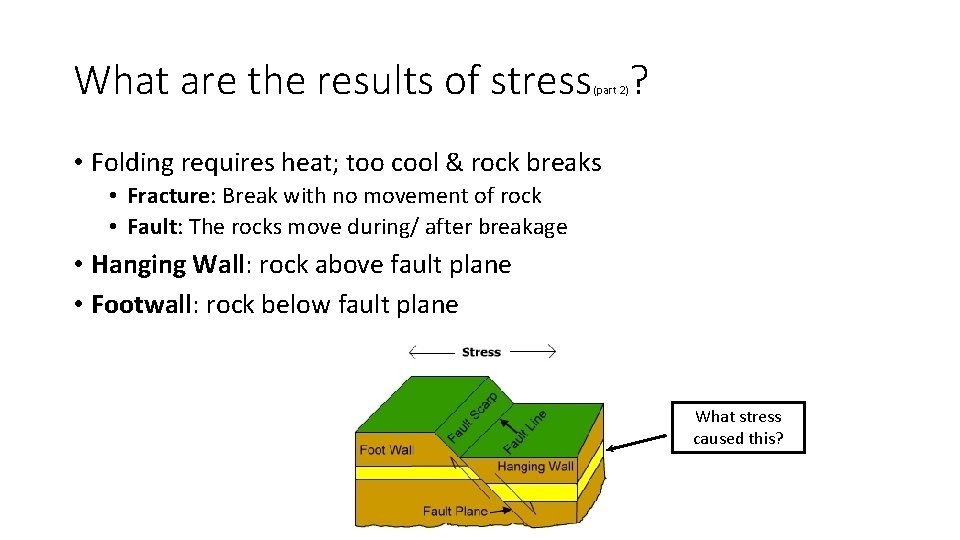
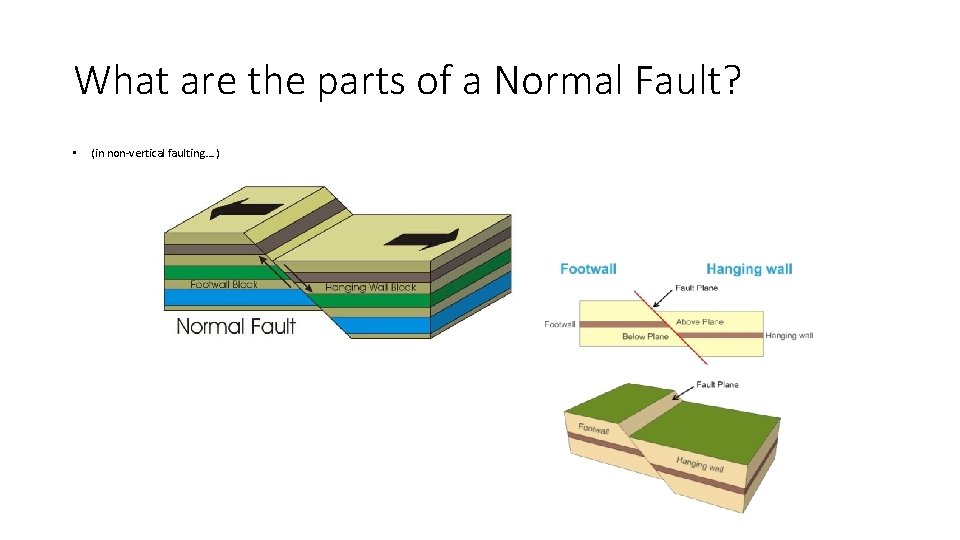
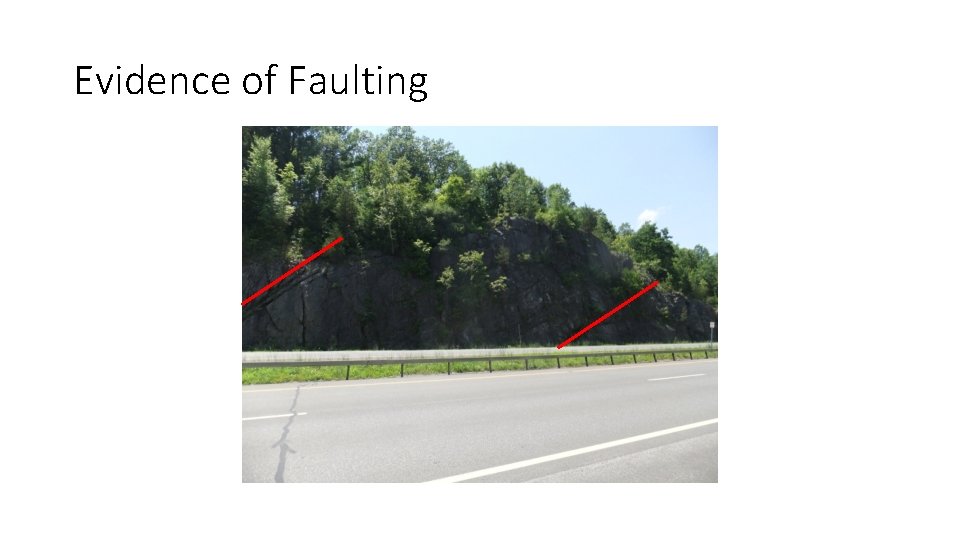
What are the results of stress ? (part 2) • Folding requires heat; too cool & rock breaks • Fracture: Break with no movement of rock • Fault: The rocks move during/ after breakage • Hanging Wall: rock above fault plane • Footwall: rock below fault plane What stress caused this?
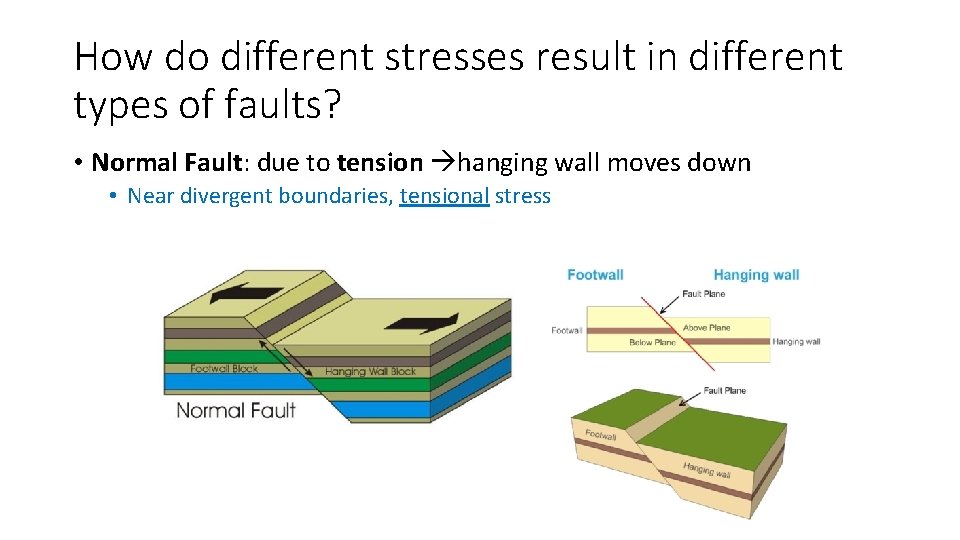
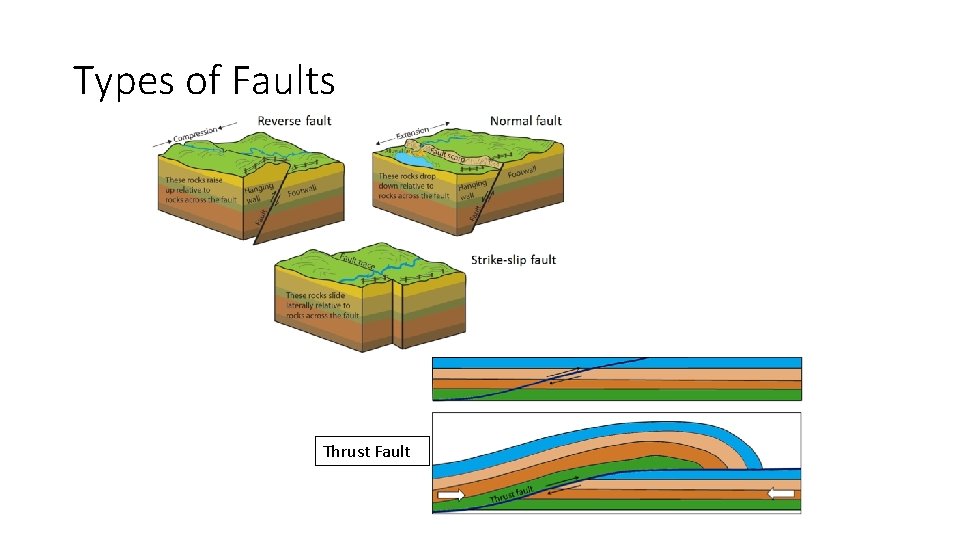
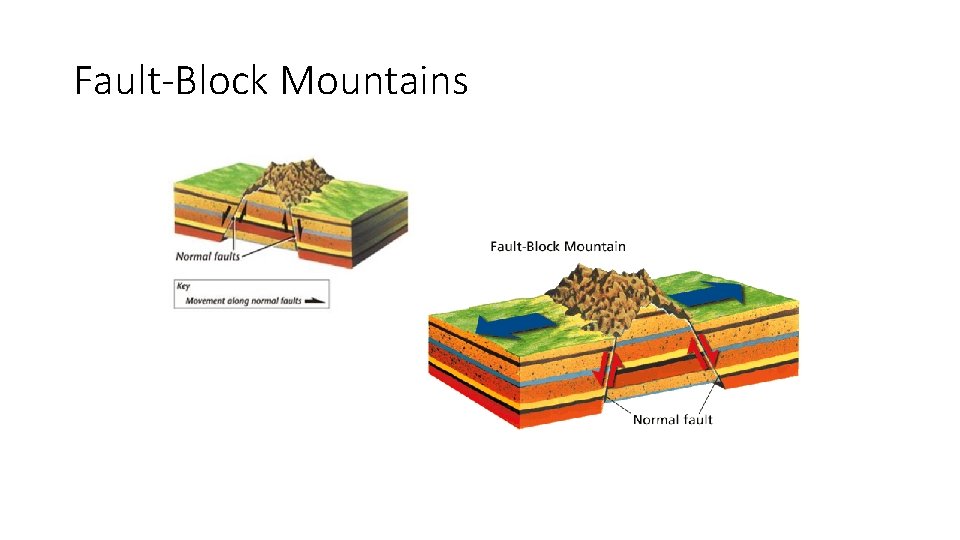
How do different stresses result in different types of faults? • Normal Fault: due to tension hanging wall moves down • Near divergent boundaries, tensional stress
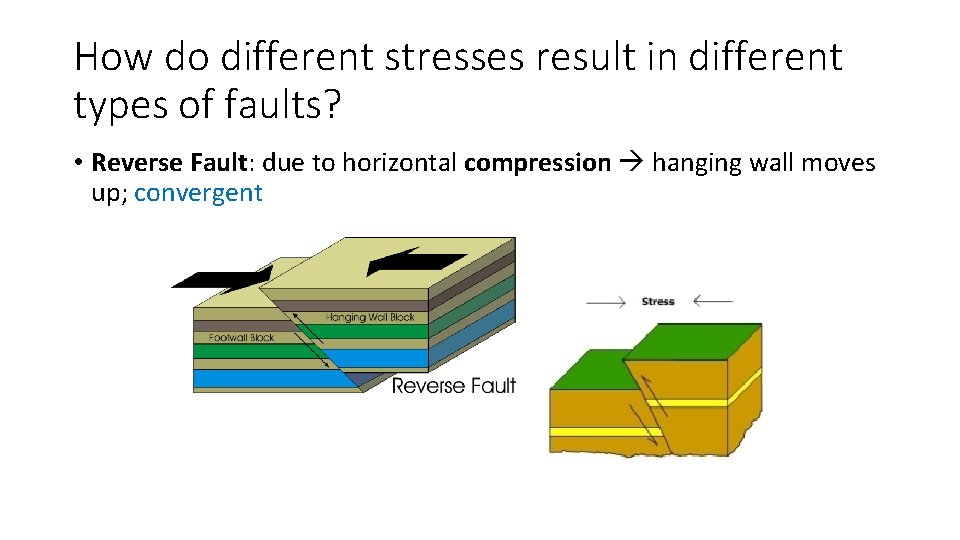
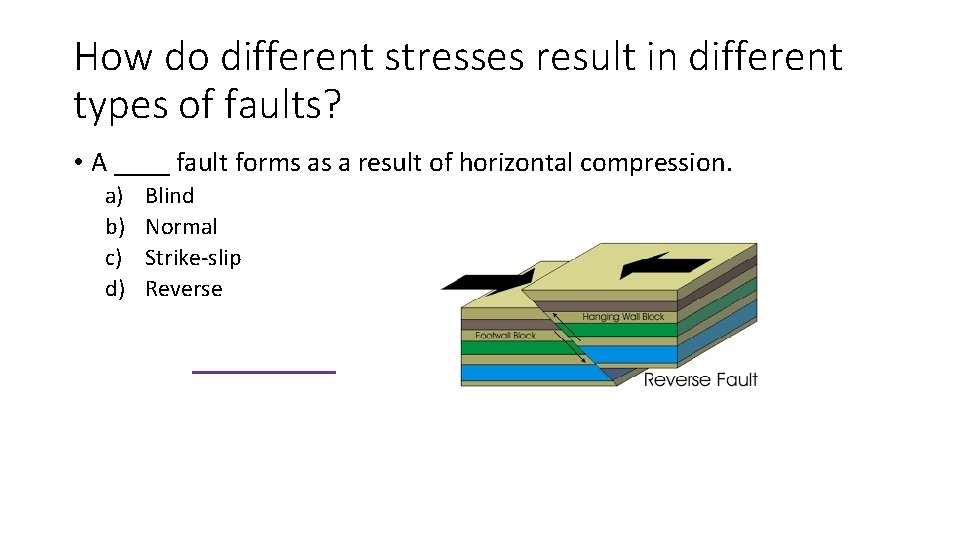
How do different stresses result in different types of faults? • Reverse Fault: due to horizontal compression hanging wall moves up; convergent
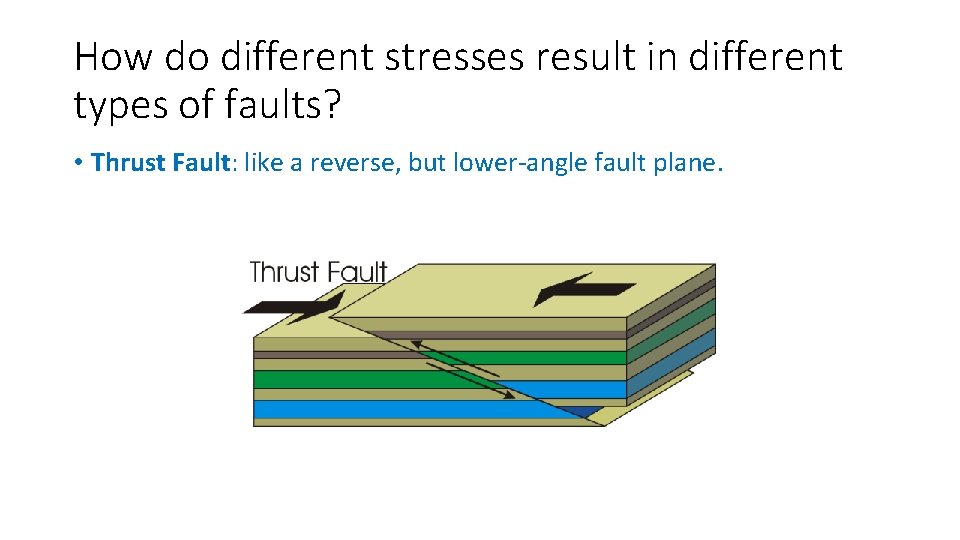
How do different stresses result in different types of faults? • Thrust Fault: like a reverse, but lower-angle fault plane.
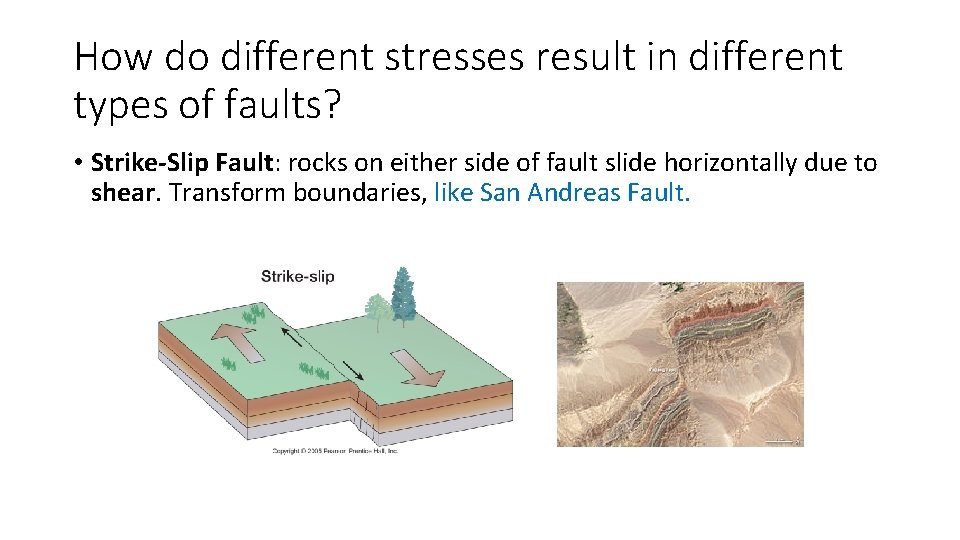
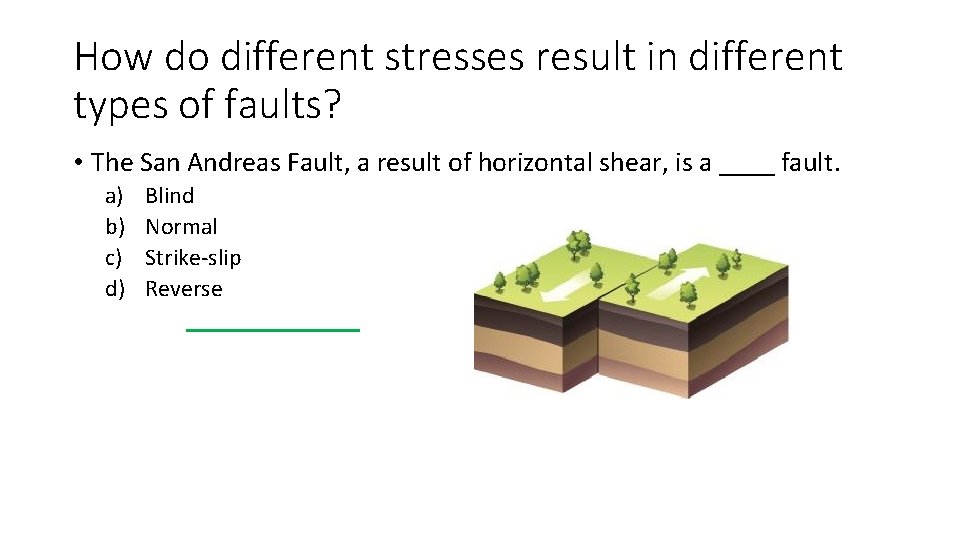
How do different stresses result in different types of faults? • Strike-Slip Fault: rocks on either side of fault slide horizontally due to shear. Transform boundaries, like San Andreas Fault.
What are the parts of a Normal Fault? • (in non-vertical faulting…. )
Types of Faults Thrust Fault
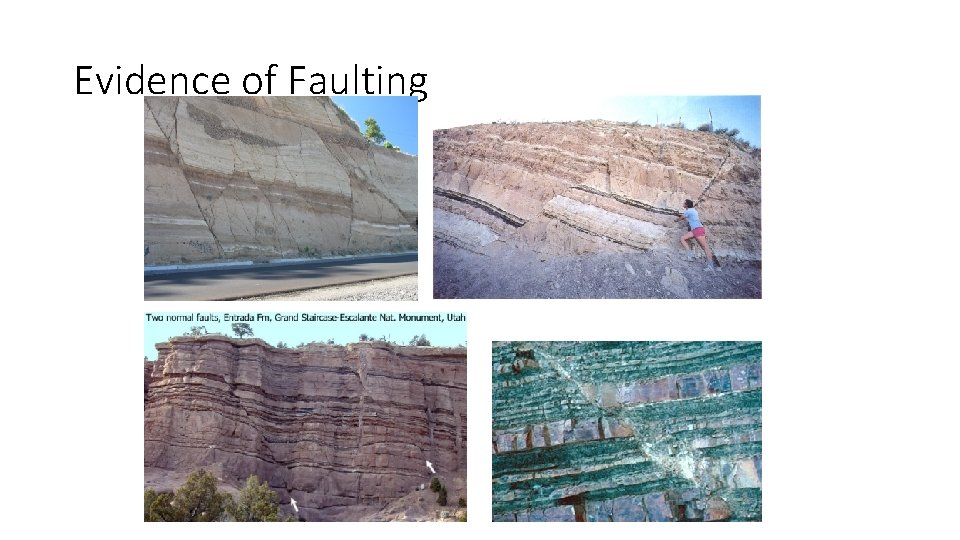
Evidence of Faulting
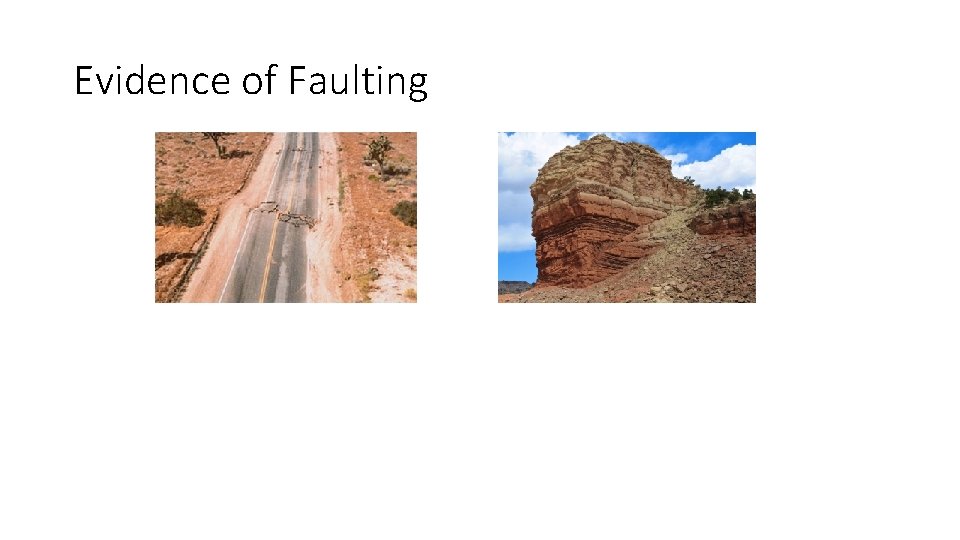
Evidence of Faulting
Evidence of Faulting
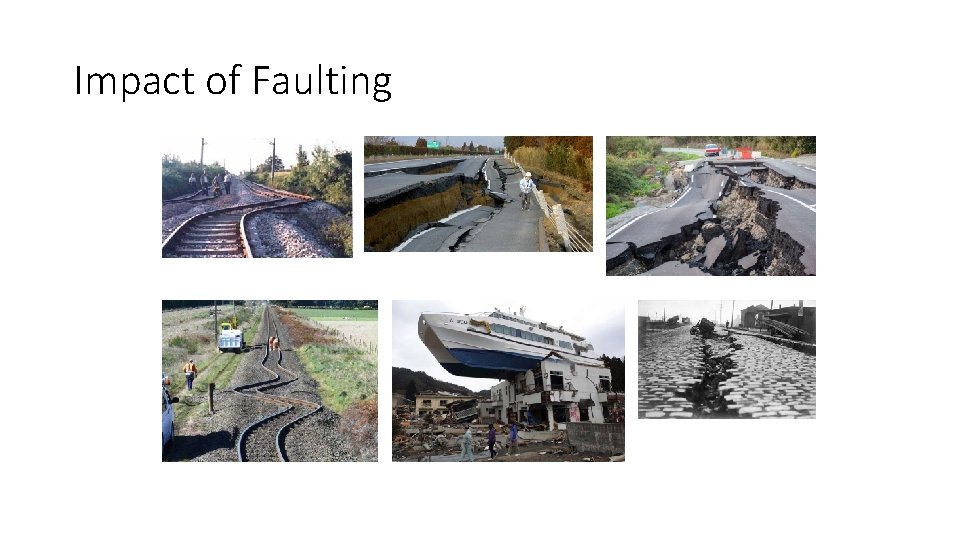
Impact of Faulting
How do different stresses result in different types of faults? • A ____ fault forms as a result of horizontal compression. a) b) c) d) Blind Normal Strike-slip Reverse
How do different stresses result in different types of faults? • The San Andreas Fault, a result of horizontal shear, is a ____ fault. a) b) c) d) Blind Normal Strike-slip Reverse
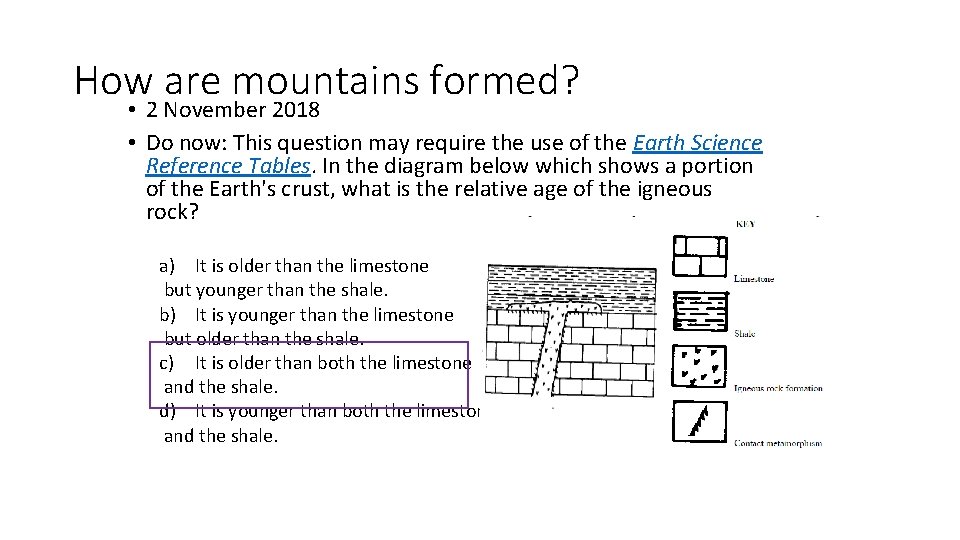
How are mountains formed? • 2 November 2018 • Do now: This question may require the use of the Earth Science Reference Tables. In the diagram below which shows a portion of the Earth's crust, what is the relative age of the igneous rock? a) It is older than the limestone but younger than the shale. b) It is younger than the limestone but older than the shale. c) It is older than both the limestone and the shale. d) It is younger than both the limestone and the shale.
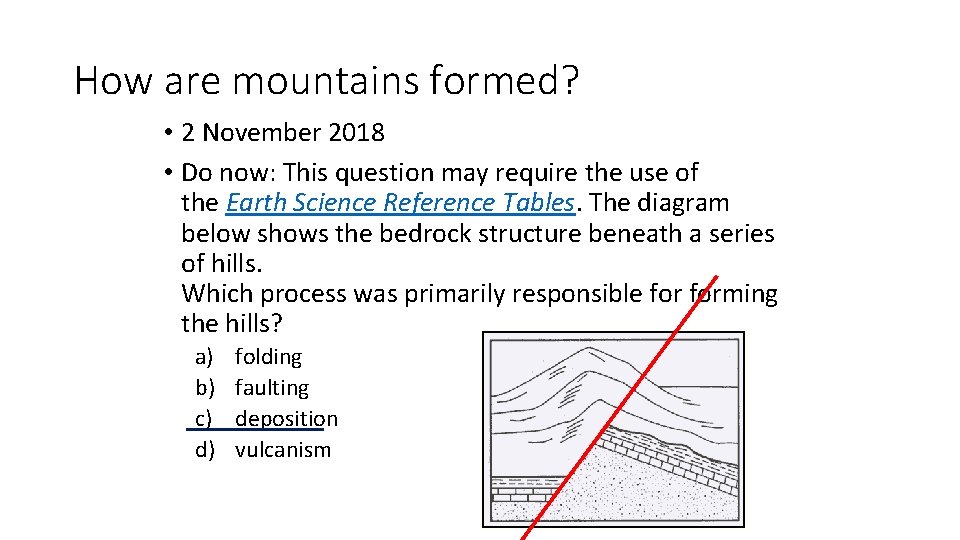
How are mountains formed? • 2 November 2018 • Do now: This question may require the use of the Earth Science Reference Tables. The diagram below shows the bedrock structure beneath a series of hills. Which process was primarily responsible forming the hills? a) b) c) d) folding faulting deposition vulcanism
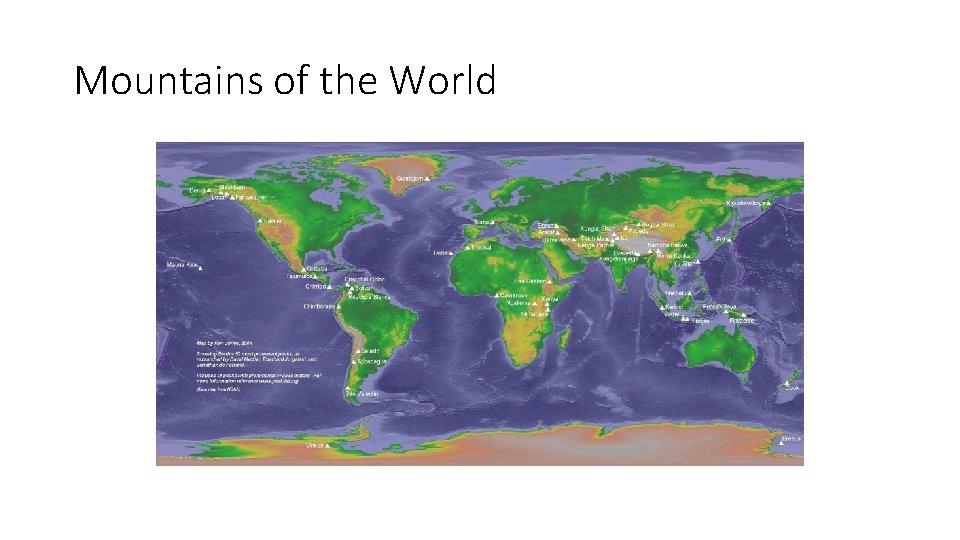
Mountains of the World
How are mountains formed?
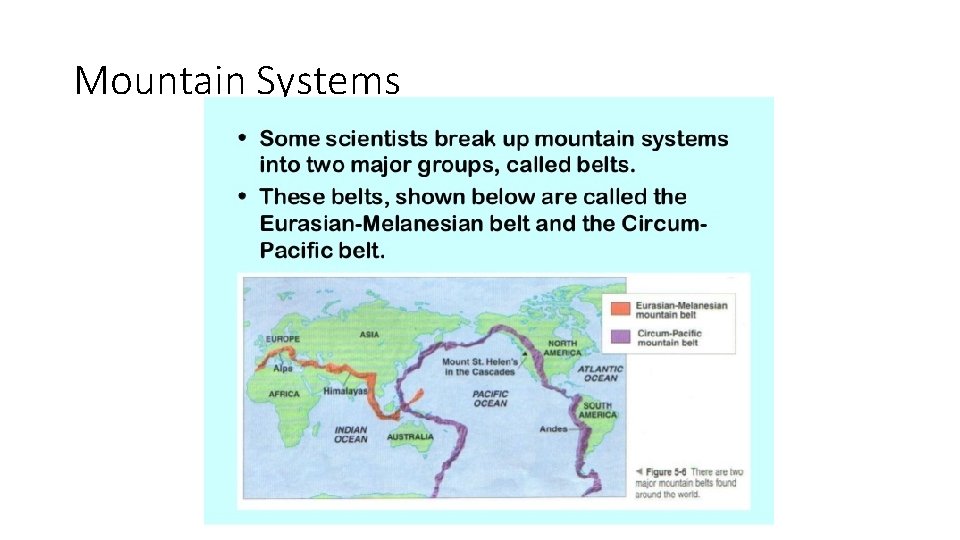
Mountain Systems
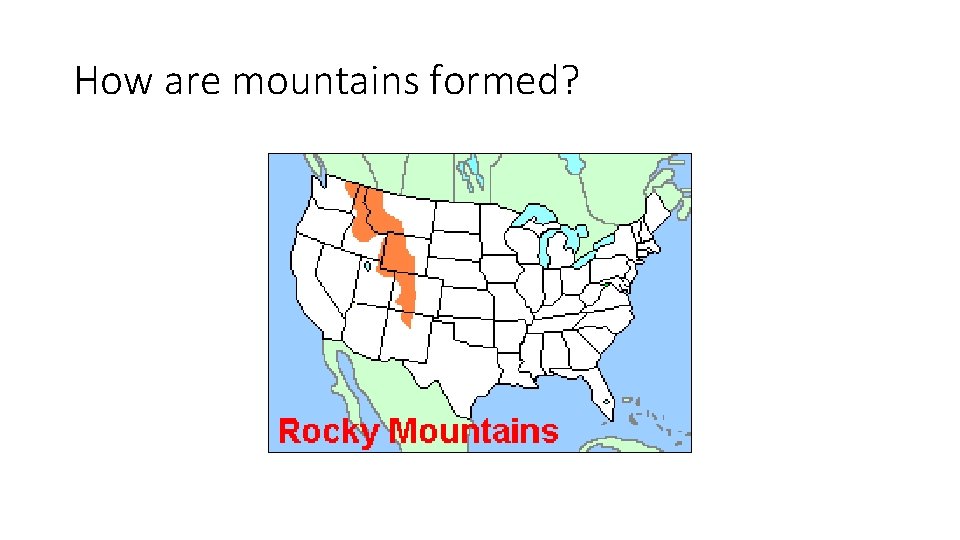
How are mountains formed? • Mountain range: group of adjacent mountains with same general shape and structure • Cascades, Alps • Mountain system: group of adjacent mountain ranges • Rockies, Appalachians • Mountain Belts: made up of mountain systems
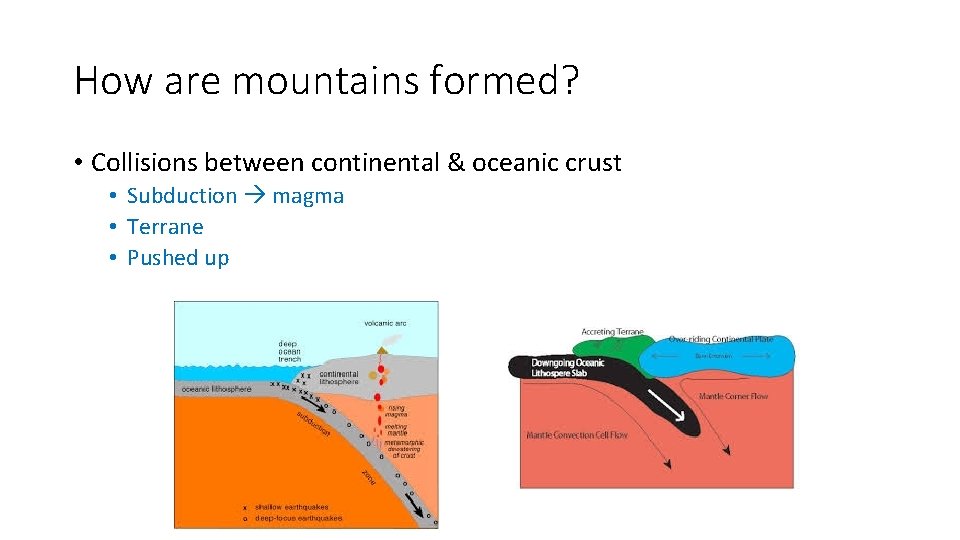
How are mountains formed? • Collisions between continental & oceanic crust • Subduction magma • Terrane • Pushed up
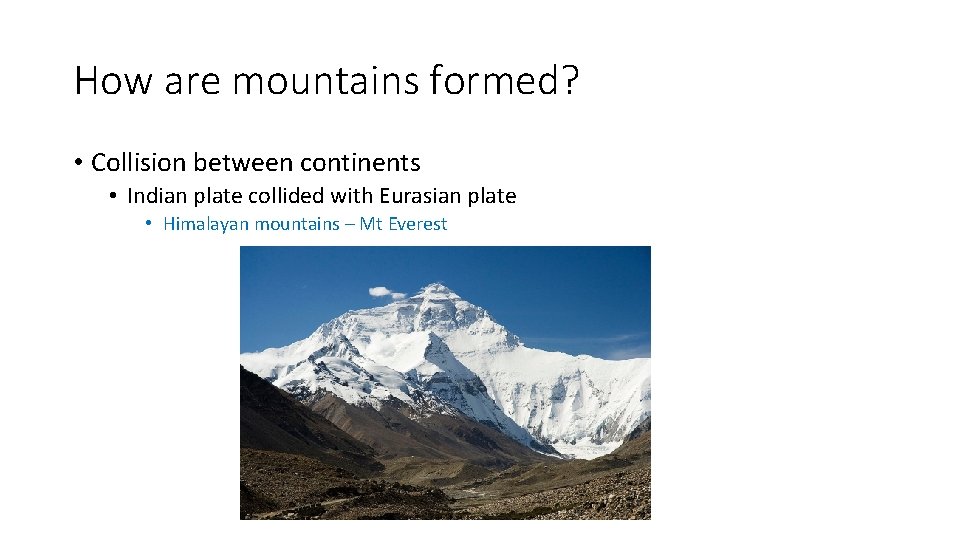
How are mountains formed? • Collision between continents • Indian plate collided with Eurasian plate • Himalayan mountains – Mt Everest
How are mountains formed? • Types of mountains • Folded, from continental-continental collisions
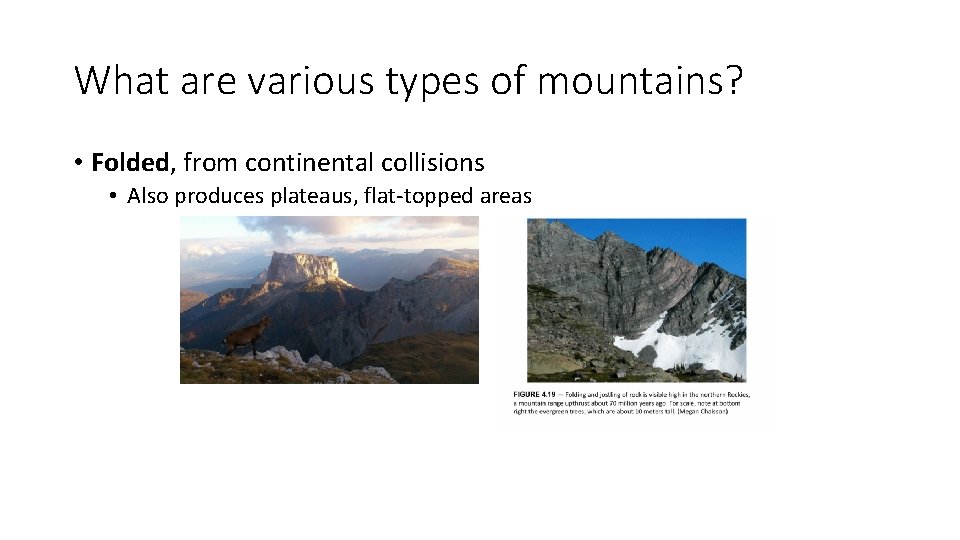
What are various types of mountains? • Folded, from continental collisions • Also produces plateaus, flat-topped areas
How are mountains formed?
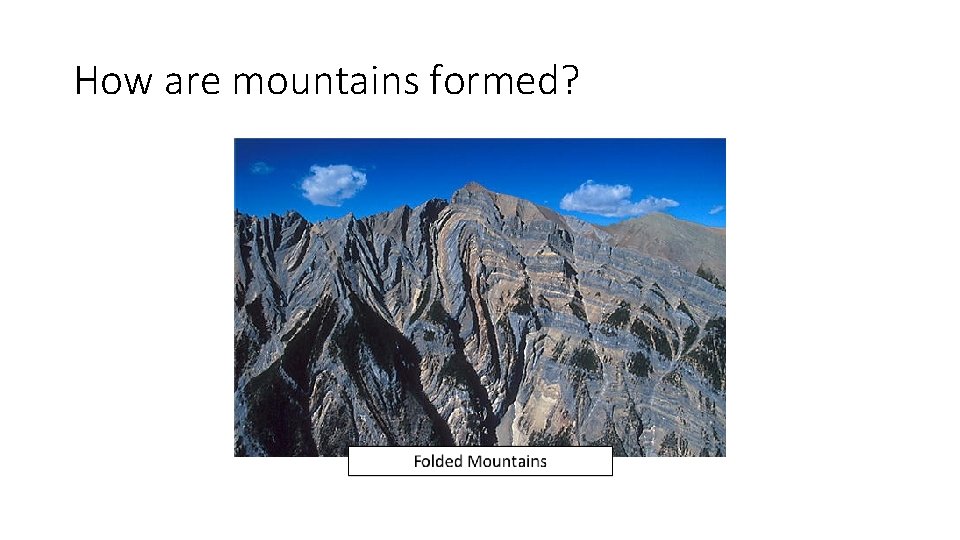
How are mountains formed? Folded Mountains
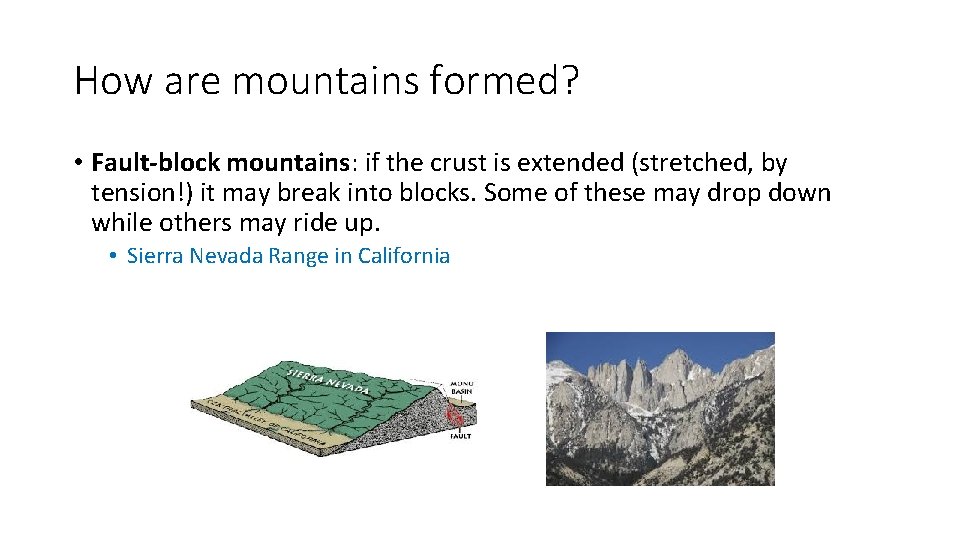
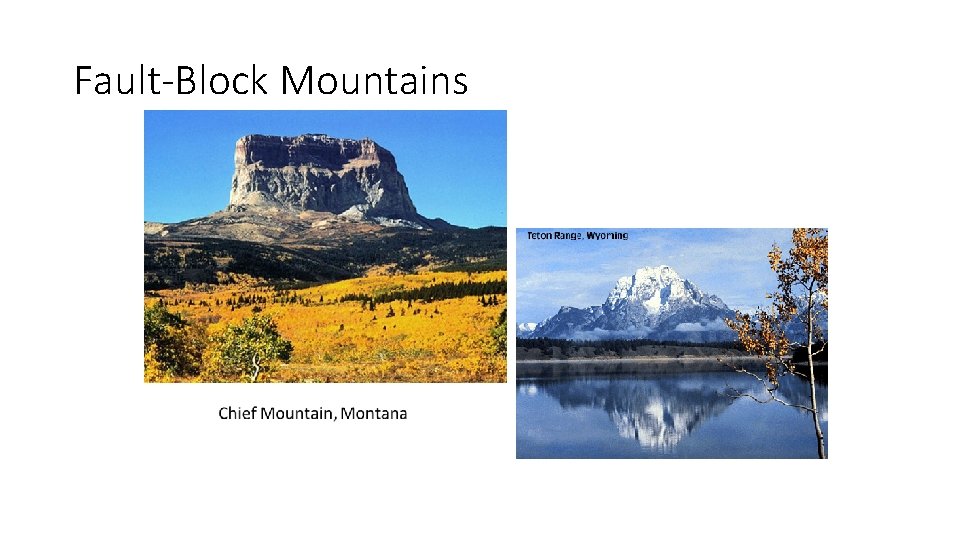
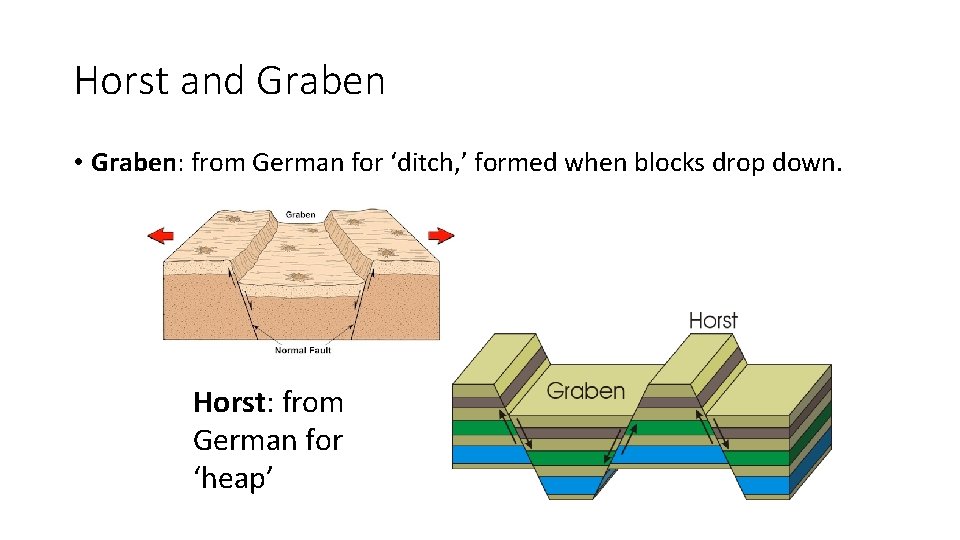
How are mountains formed? • Fault-block mountains: if the crust is extended (stretched, by tension!) it may break into blocks. Some of these may drop down while others may ride up. • Sierra Nevada Range in California
Fault-Block Mountains
Fault-Block Mountains
Horst and Graben • Graben: from German for ‘ditch, ’ formed when blocks drop down. Horst: from German for ‘heap’
Lab #4, Locating Tectonic Boundaries • 5 November 2018 • Kindly take a copy of today’s lab from my low desk. Also, immediately take out your Reference Tables. • You may work with tablemates, but this is absolutely due by end of period today. • Wherever you see the symbol, please indicate the relative direction in which that plate is moving (N, S, E, or W)
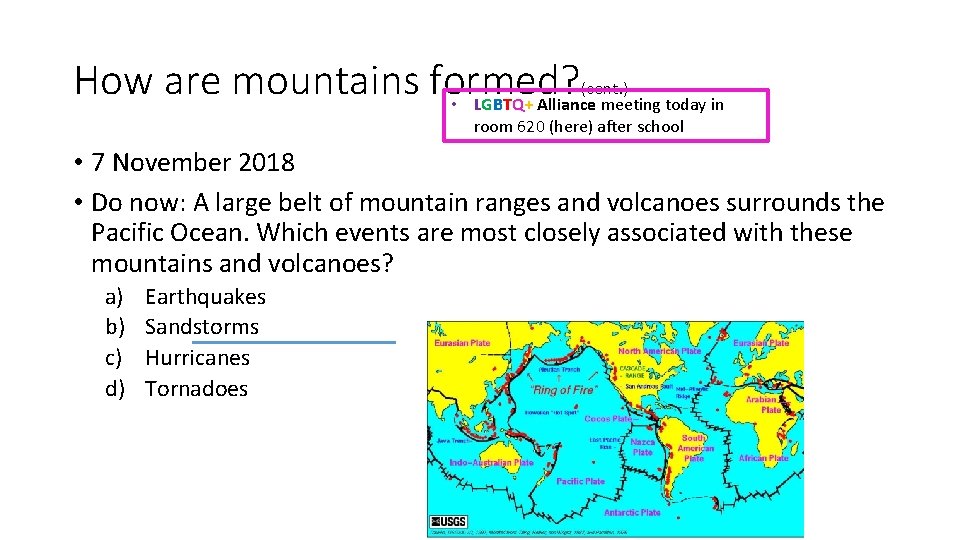
How are mountains formed? (cont. ) • LGBTQ+ Alliance meeting today in room 620 (here) after school • 7 November 2018 • Do now: A large belt of mountain ranges and volcanoes surrounds the Pacific Ocean. Which events are most closely associated with these mountains and volcanoes? a) b) c) d) Earthquakes Sandstorms Hurricanes Tornadoes
How are mountains formed? • 7 November 2018 • Do now: Which best describes a major characteristic of both volcanoes and earthquakes? a) b) c) d) They are related to the formation of glaciers. They are restricted to the Southern Hemisphere. They are located in the same geographic areas. They are centered at the poles.
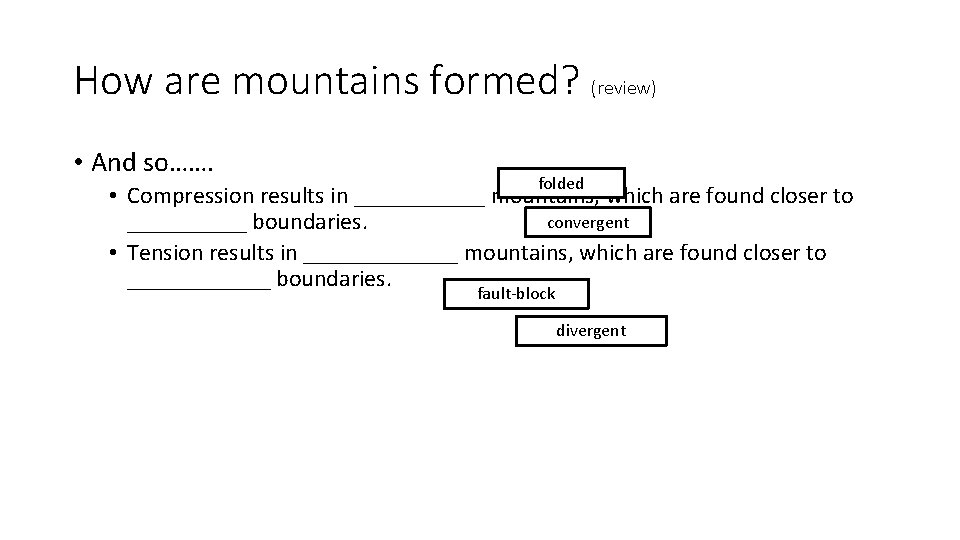
How are mountains formed? (review) • And so……. folded • Compression results in ______ mountains, which are found closer to convergent _____ boundaries. • Tension results in _______ mountains, which are found closer to ______ boundaries. fault-block divergent
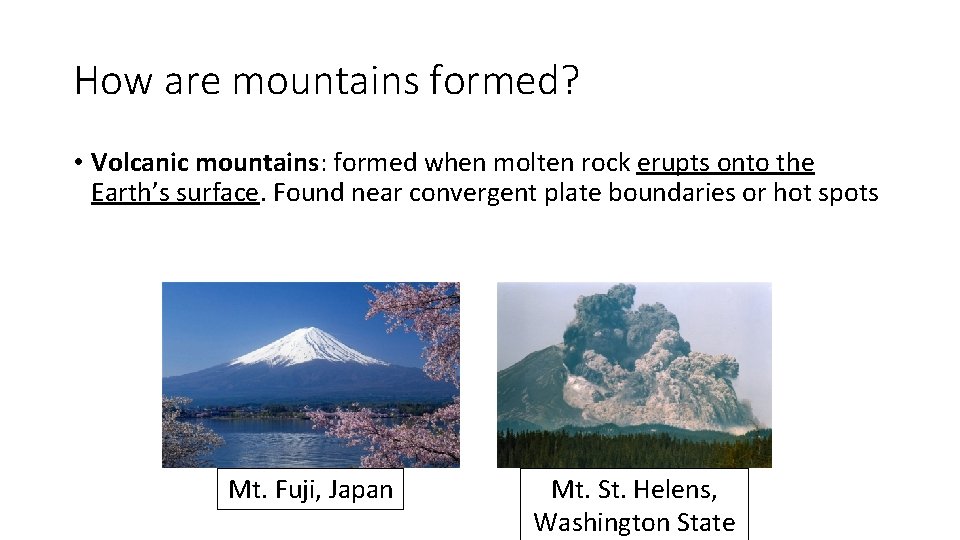
How are mountains formed? • Volcanic mountains: formed when molten rock erupts onto the Earth’s surface. Found near convergent plate boundaries or hot spots Mt. Fuji, Japan Mt. St. Helens, Washington State
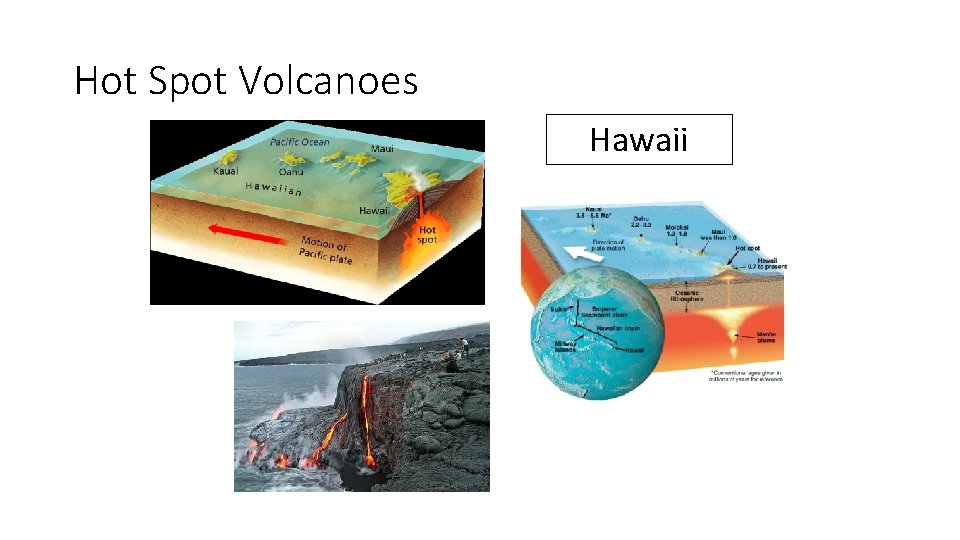
Hot Spot Volcanoes Hawaii
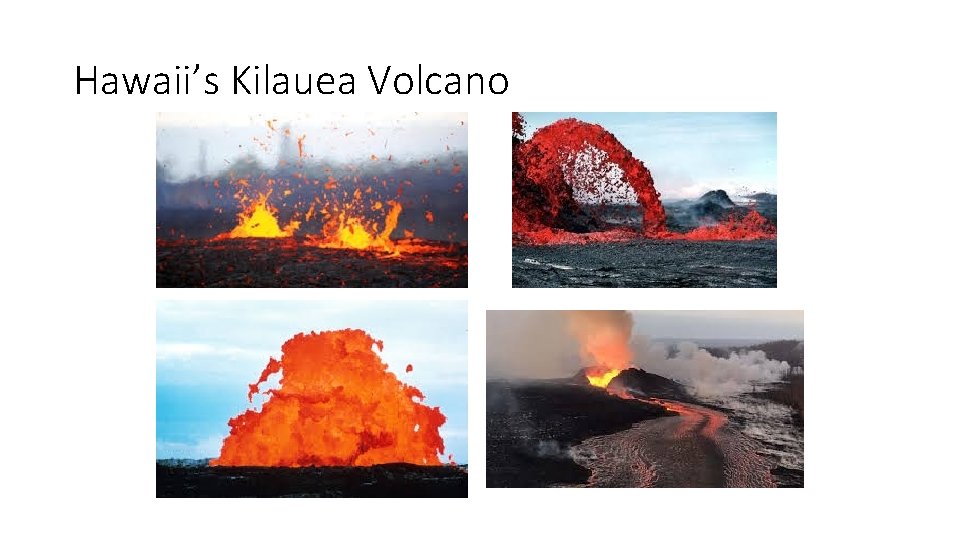
Hawaii’s Kilauea Volcano
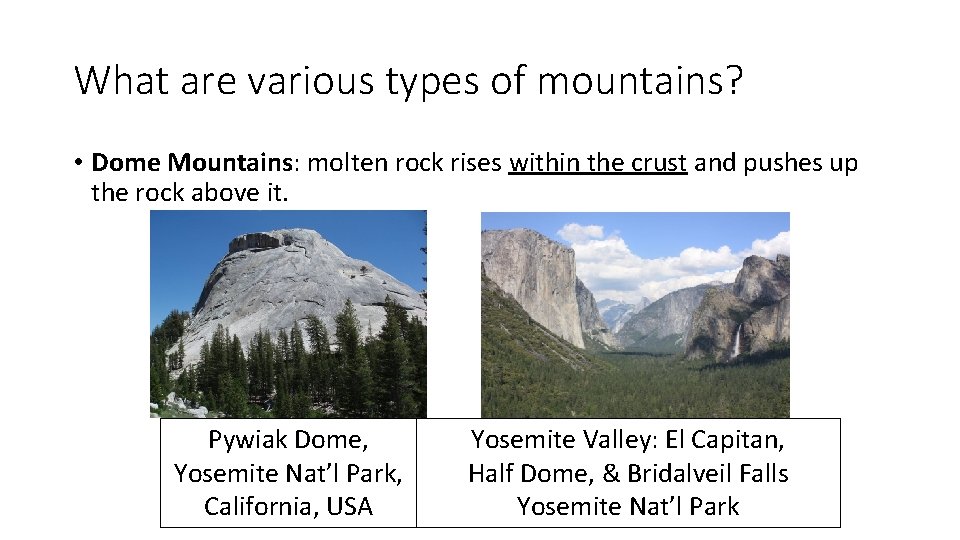
What are various types of mountains? • Dome Mountains: molten rock rises within the crust and pushes up the rock above it. Pywiak Dome, Yosemite Nat’l Park, California, USA Yosemite Valley: El Capitan, Half Dome, & Bridalveil Falls Yosemite Nat’l Park
How does the change in magnetic polarity provide evidence of seafloor spread? Kindly take a copy of our review sheet from my low desk. • 8 November 2018 • Do now: This question may require the use of the Earth Science Reference Tables. Compared to ocean crust near deep-sea trenches, crust near ocean ridges is ______. a) b) c) d) Younger Older Same age Magnetically reversed Reminder: tutoring today after school. Even if you can only come for 15 minutes we can review for Tuesday’s exam.
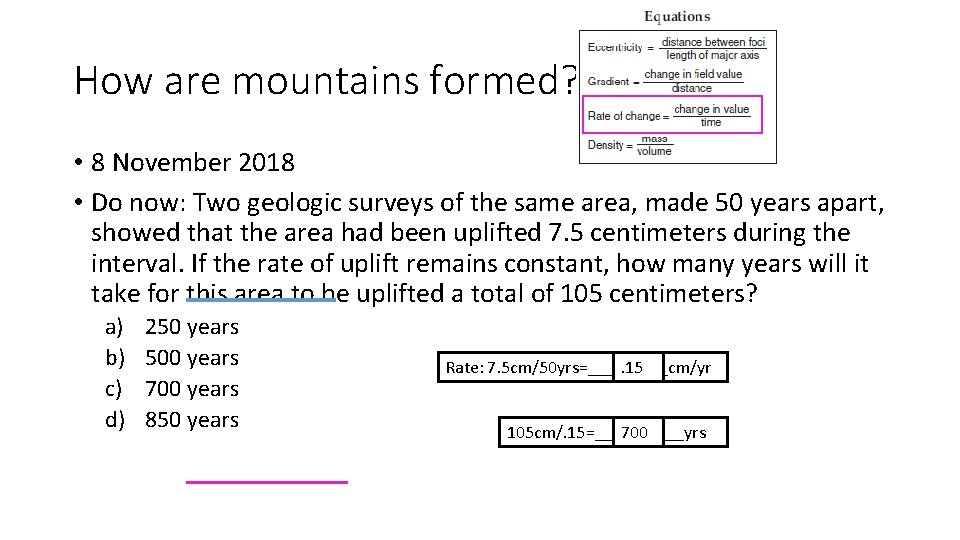
How are mountains formed? • 8 November 2018 • Do now: Two geologic surveys of the same area, made 50 years apart, showed that the area had been uplifted 7. 5 centimeters during the interval. If the rate of uplift remains constant, how many years will it take for this area to be uplifted a total of 105 centimeters? a) b) c) d) 250 years 500 years 700 years 850 years Rate: 7. 5 cm/50 yrs=_____cm/yr. 15 105 cm/. 15=_____yrs 700
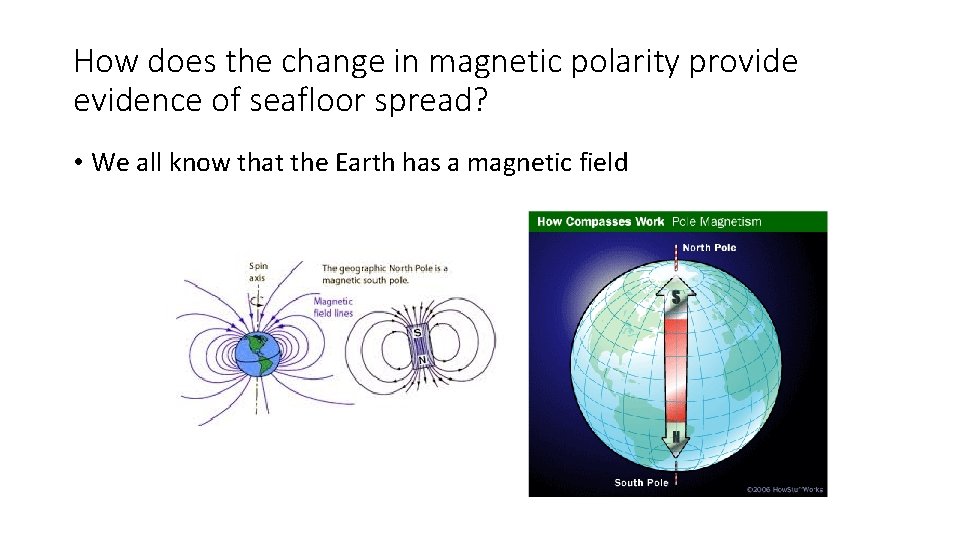
How does the change in magnetic polarity provide evidence of seafloor spread? • We all know that the Earth has a magnetic field
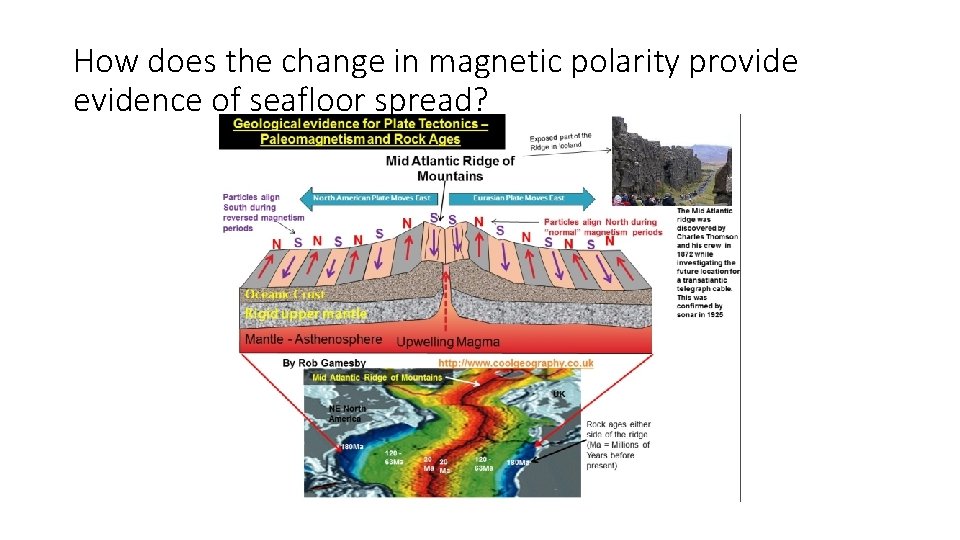
How does the change in magnetic polarity provide evidence of seafloor spread? • New rock that forms cools, hardens, and retains the magnetic orientation of the Earth. • Scientists discovered that the rock record showed the magnetic orientation (north-south) changed many times throughout the Earth’s history. • Also, this pattern was mirrored on opposite sides of the Mid-Atlantic Ridge
How does the change in magnetic polarity provide evidence of seafloor spread?
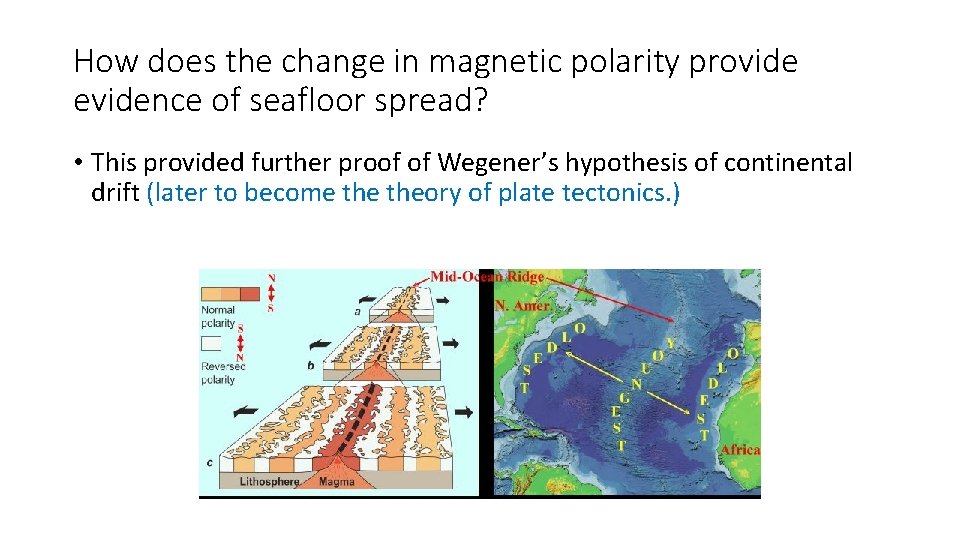
How does the change in magnetic polarity provide evidence of seafloor spread? • This provided further proof of Wegener’s hypothesis of continental drift (later to become theory of plate tectonics. )
How does the change in magnetic polarity provide evidence of seafloor spread? • 8 November 2018 • Do now: Earth’s magnetic field has reversed itself several times during the past. This pattern of magnetic reversal is best preserved in: a) b) c) d) metamorphic bedrock in mountain ranges bedrock with fossils containing radioactive carbon-14 layers of sedimentary bedrock of the Grand Canyon igneous bedrock of the oceanic crust