
Unit 4 Chapter 7 Lesson 2 Pages 188




- Slides: 21
Unit 4 Chapter 7 Lesson 2 Pages 188 -191
The Revolutionary War did not go well for the patriots in the beginning.
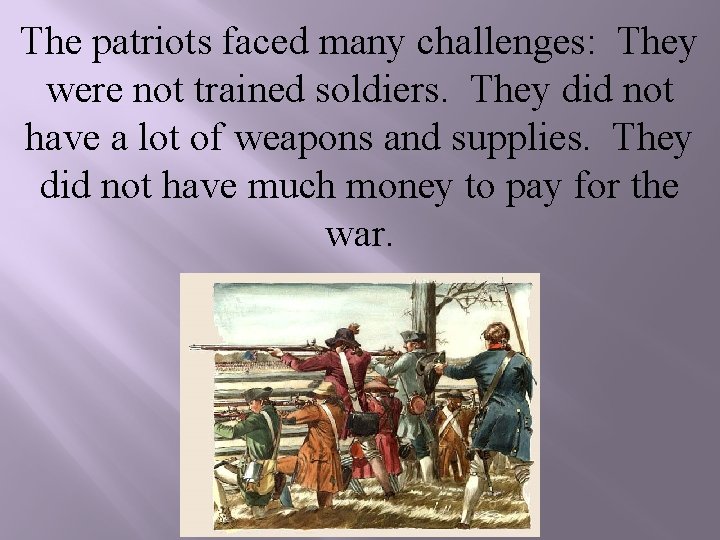
The patriots faced many challenges: They were not trained soldiers. They did not have a lot of weapons and supplies. They did not have much money to pay for the war.
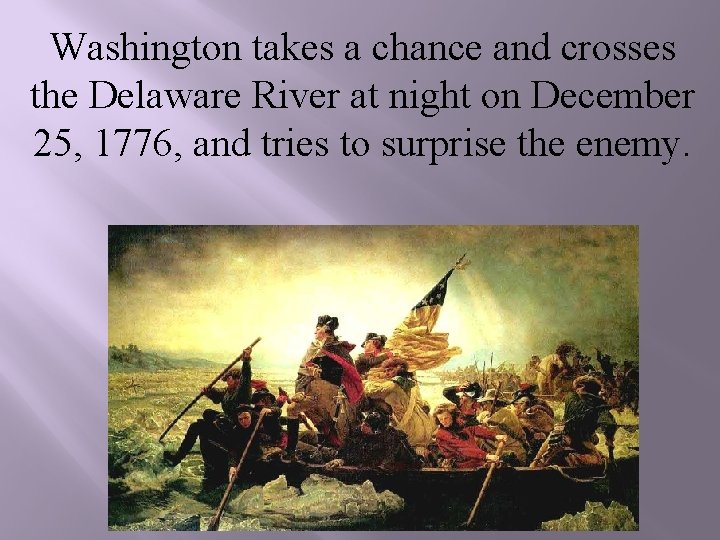
Washington takes a chance and crosses the Delaware River at night on December 25, 1776, and tries to surprise the enemy.
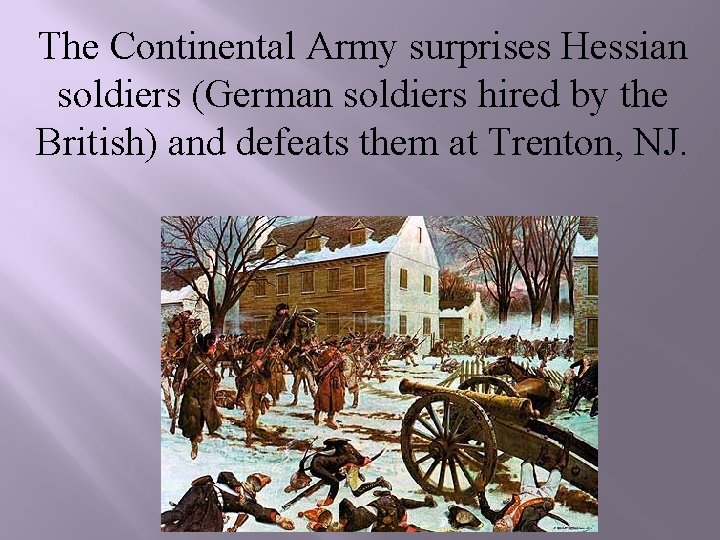
The Continental Army surprises Hessian soldiers (German soldiers hired by the British) and defeats them at Trenton, NJ.
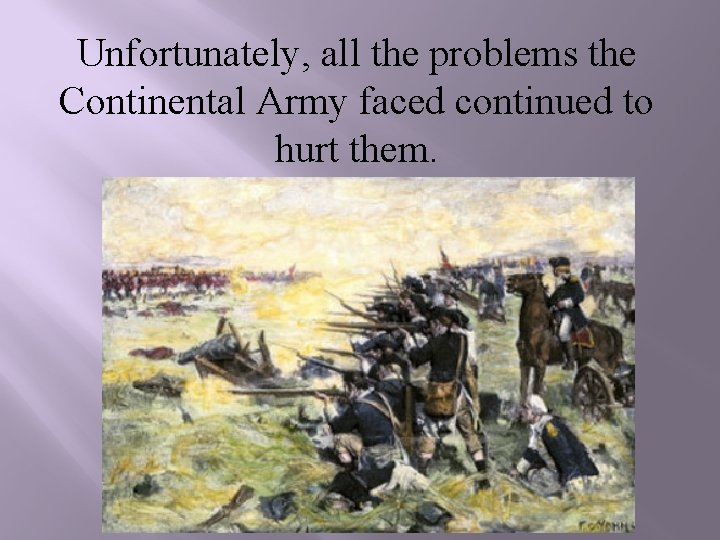
Unfortunately, all the problems the Continental Army faced continued to hurt them.
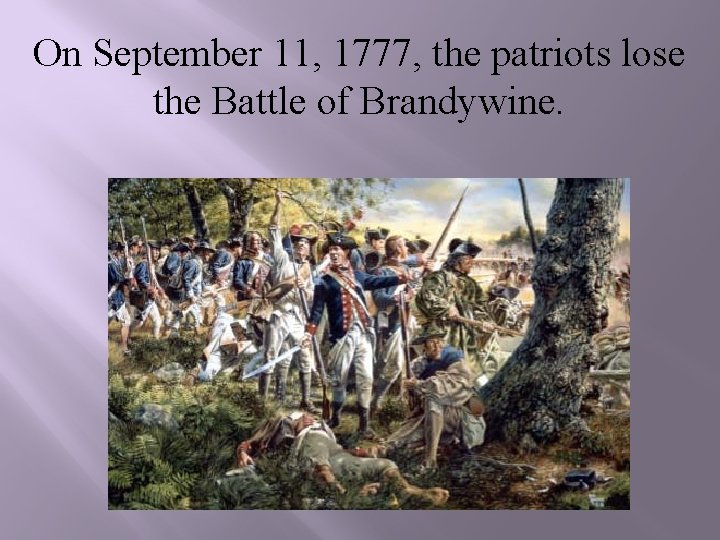
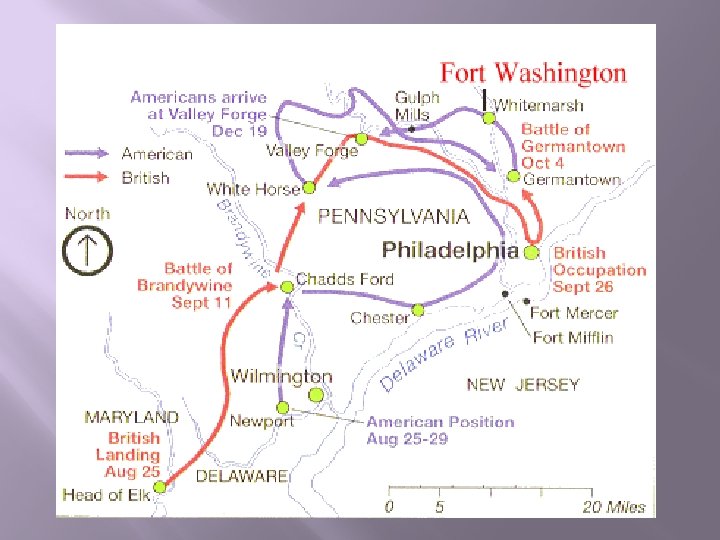
On September 11, 1777, the patriots lose the Battle of Brandywine.
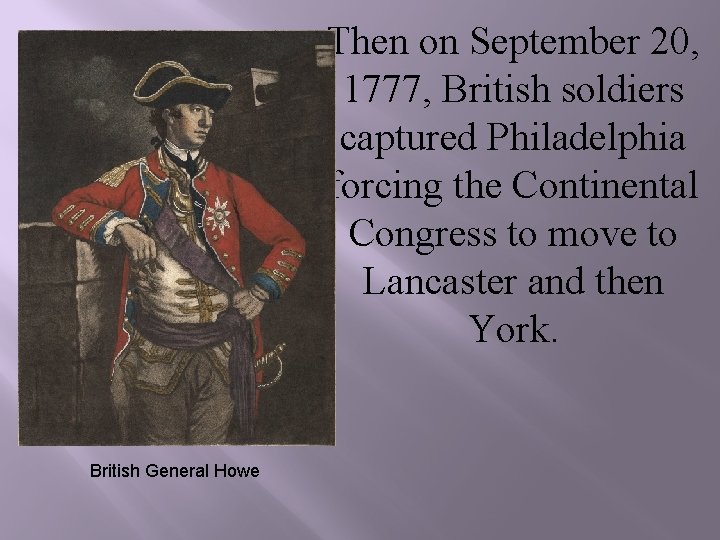
Then on September 20, 1777, British soldiers captured Philadelphia forcing the Continental Congress to move to Lancaster and then York. British General Howe
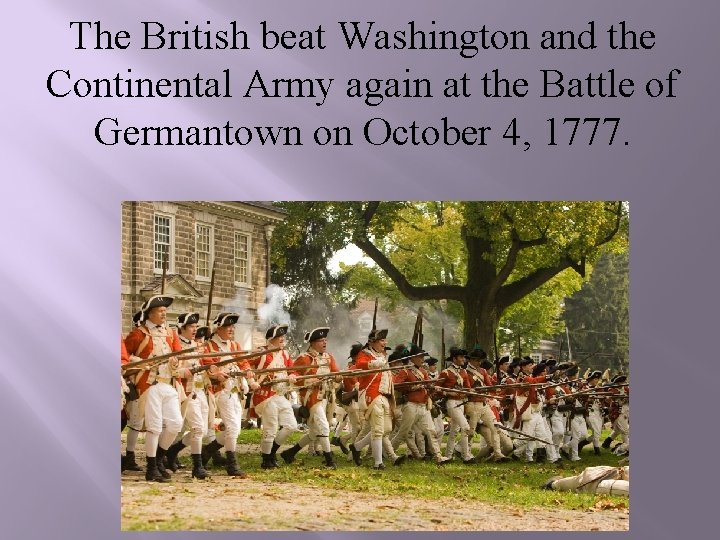
The British beat Washington and the Continental Army again at the Battle of Germantown on October 4, 1777.
Washington chose Valley Forge as a good place to spend the winter with his army because from there they could prevent the British from capturing manufacturing plants and supplies.
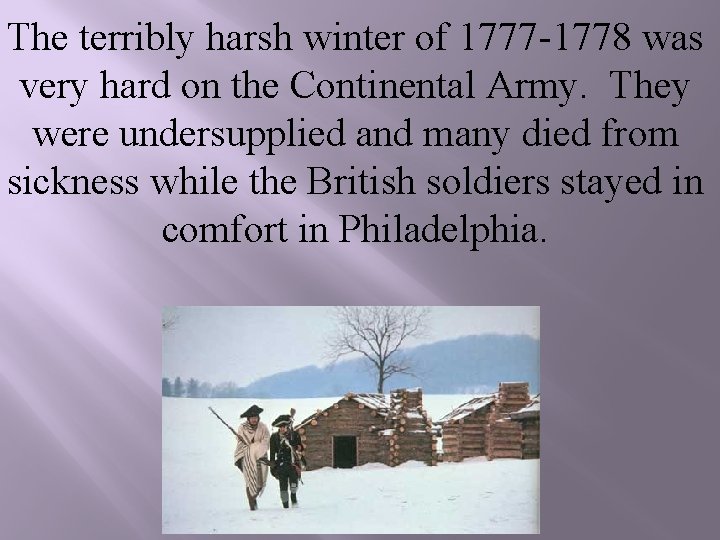
The terribly harsh winter of 1777 -1778 was very hard on the Continental Army. They were undersupplied and many died from sickness while the British soldiers stayed in comfort in Philadelphia.
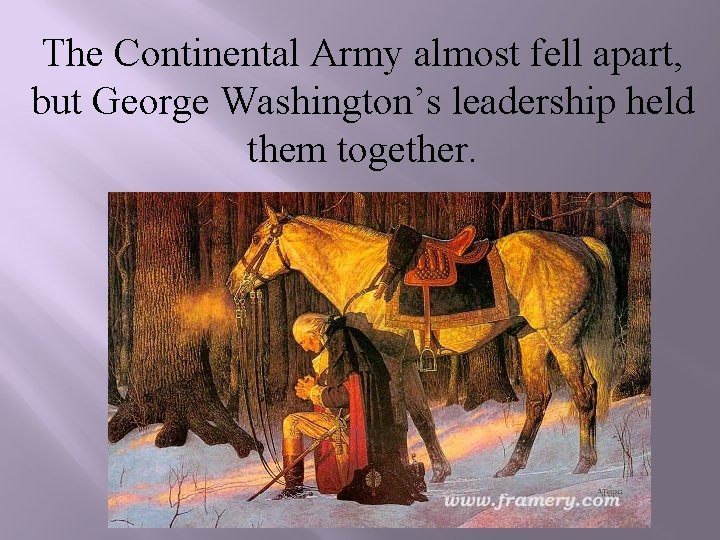
The Continental Army almost fell apart, but George Washington’s leadership held them together.
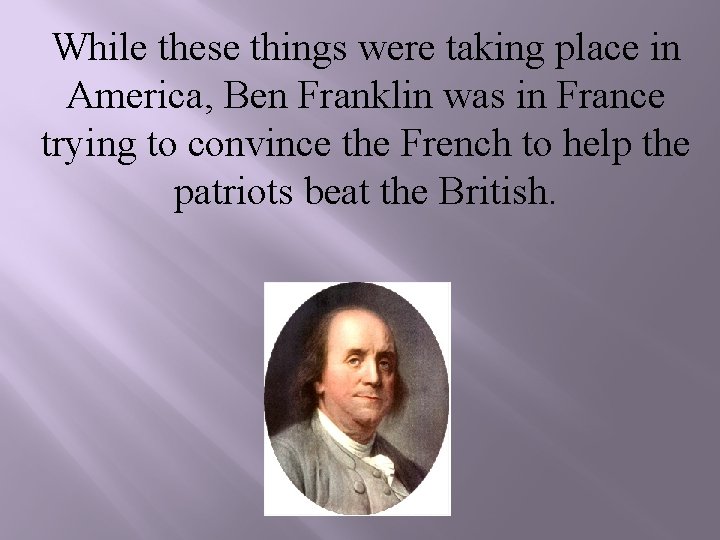
While these things were taking place in America, Ben Franklin was in France trying to convince the French to help the patriots beat the British.
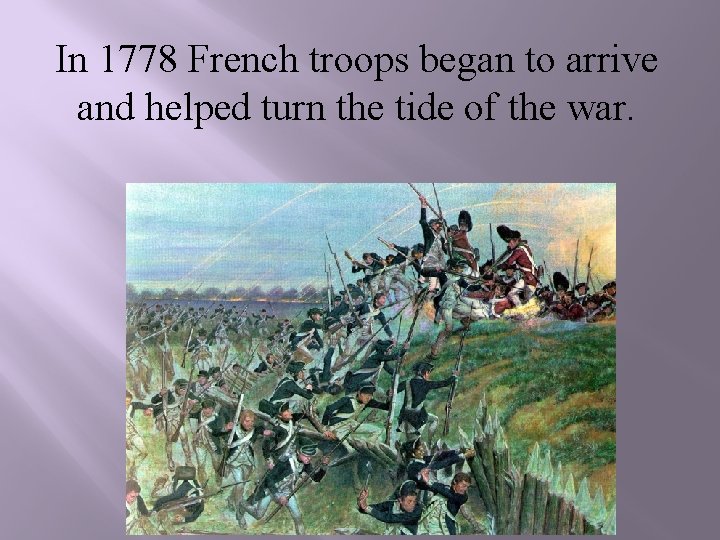
In 1778 French troops began to arrive and helped turn the tide of the war.
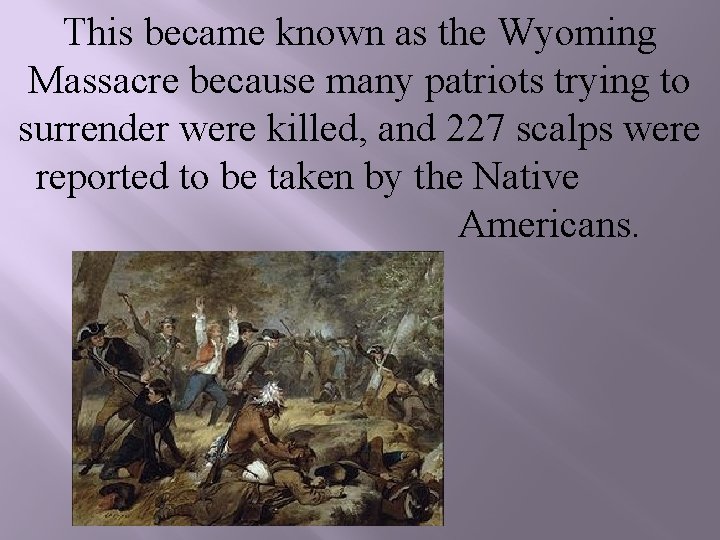
On July 3, 1778, loyalist (Tory) soldiers and Native American allies attacked patriot militia in Pennsylvania’s Wyoming Valley. Over 300 patriots were killed.
This became known as the Wyoming Massacre because many patriots trying to surrender were killed, and 227 scalps were reported to be taken by the Native Americans.
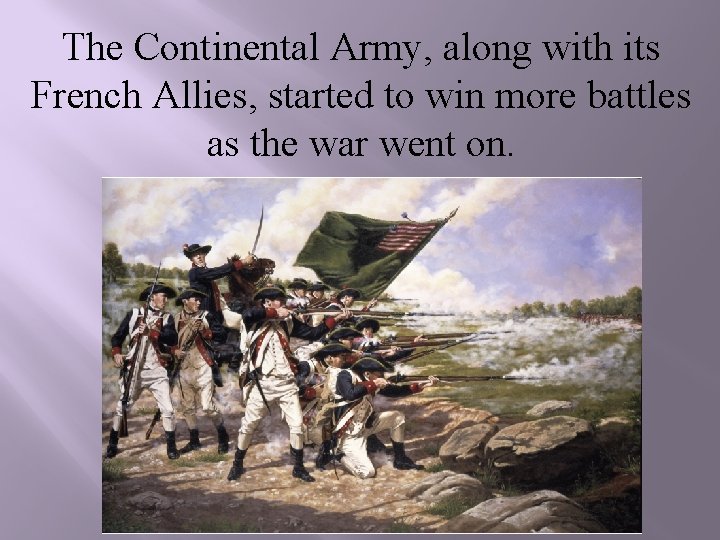
The Continental Army, along with its French Allies, started to win more battles as the war went on.
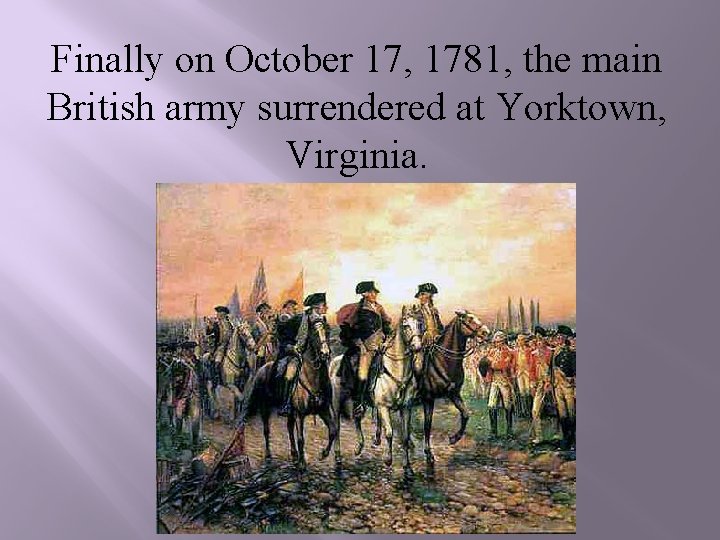
Finally on October 17, 1781, the main British army surrendered at Yorktown, Virginia.
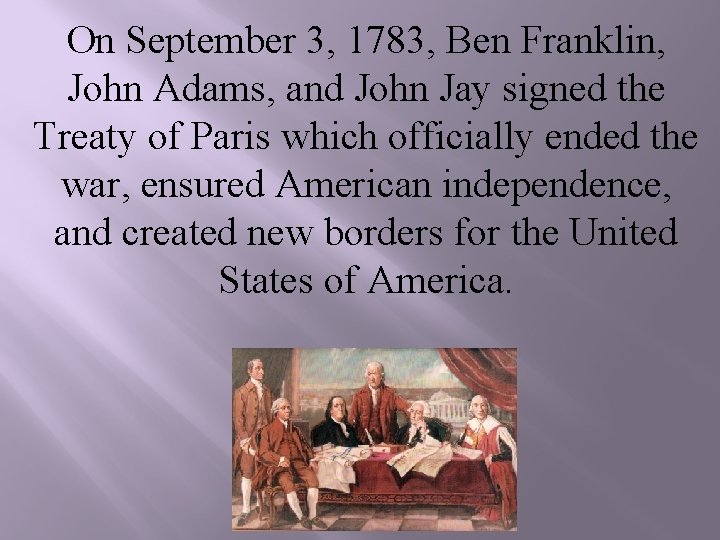
On September 3, 1783, Ben Franklin, John Adams, and John Jay signed the Treaty of Paris which officially ended the war, ensured American independence, and created new borders for the United States of America.
American Independence was costly in money and lives: 50, 000 Americans were killed or wounded; 6, 000 French were killed; 48, 000 British and Germans were killed or wounded.