
Unit 4 Chapter 16 Section 1 Political Parties


- Slides: 38
Unit 4 Chapter 16, Section 1 Political Parties Mr. Young American Government
Essential Questions u Even though George Washington did not want political parties, why did they eventually become prevalent? u What is the importance of third parties in America today?
I CAN: 1. 2. 3. Define Political Parties Explain the difference between One Party, Two Party, and Multiparty System Analyze the role of third parties in American History
Political Parties Video u http: //www. youtube. com/watch? v= BVdu. US 24 DUE u US Gov’t Political Parties System u Play from beginning to 1: 57
Political Parties Definition A group of people who organize to promote common beliefs and goals by electing officials who share their views. u An ongoing coalition of interests joined together to try to get their candidates for public office elected under a common label u An organization designed to elect government office holders under a given label u An organization that runs candidates for public office under the party’s name. u
Parties and Party Systems u Political Partygroup of people with broad common interests who organize to win elections, control government, and thereby influence government policies
One-Party System The Party is the government u Political differences arise only within the party itself u Usually found in authoritarian governments, come to power by force u
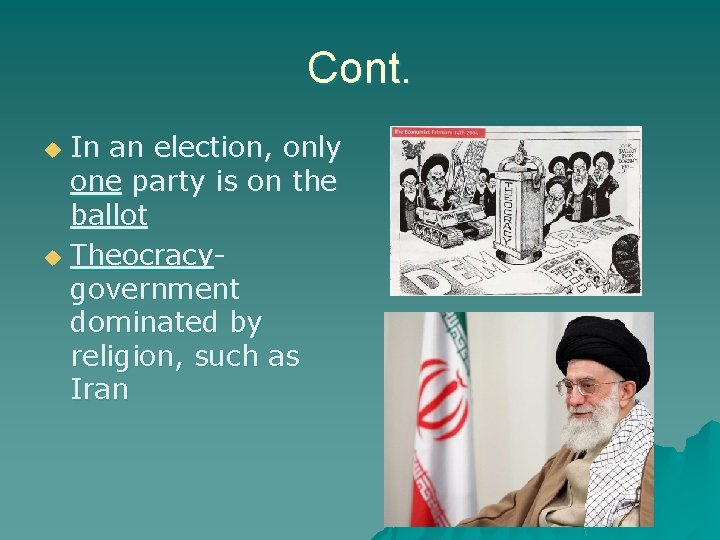
Cont. In an election, only one party is on the ballot u Theocracygovernment dominated by religion, such as Iran u
Multiparty Systems Most common political system among democracies and nations allowing more than one party u Ideologies- basic beliefs about government u
Cont One party rarely gets enough support to control the government u Will form a coalition government- when several parties combine forces to make the majority u Usually the nation is very politically unstable u
Two-Party System When only two major parties usually can control the government u Sometimes called “big tent theory, ” many different approaches and polices fall under same umbrella u Examples: United States, Jamaica, and Malta u
Two Party System Video u http: //www. youtube. com/watch? v= KOL 0 hz. UWn 7 I&feature=related u 5 minutes
Quote by John Ellis (pg. 15) u “I mean that the (American) revolutionary generation found a way to contain the explosive energies of the debate in the form of an ongoing argument or dialogue that was eventually institutionalized and rendered safe by the creation of political parties. ”
History of Political Parties Video u http: //www. youtube. com/watch? v= VH 46 Ogc 3 UN 0&feature=related u 6: 48 min
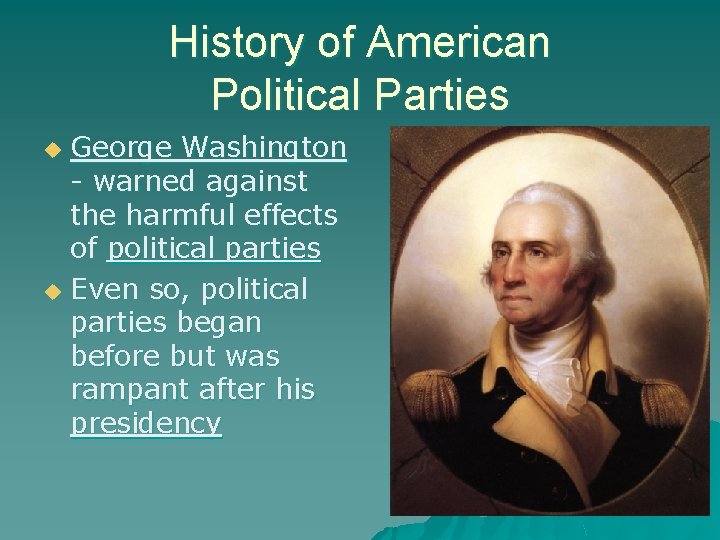
History of American Political Parties George Washington - warned against the harmful effects of political parties u Even so, political parties began before but was rampant after his presidency u
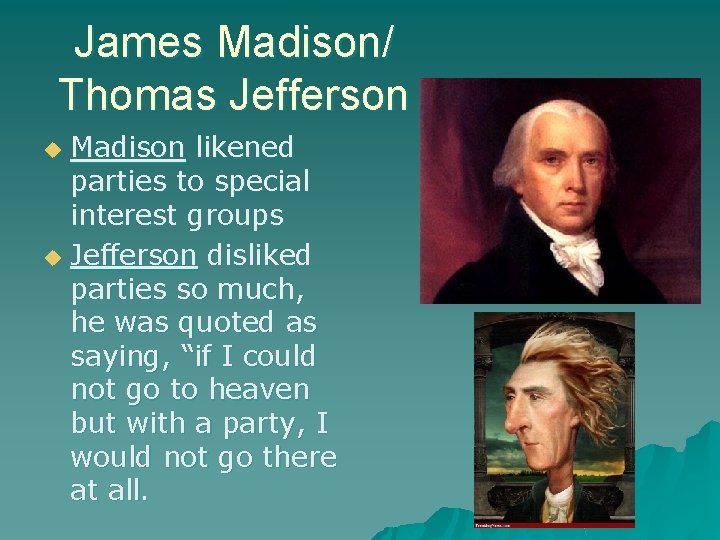
James Madison/ Thomas Jefferson Madison likened parties to special interest groups u Jefferson disliked parties so much, he was quoted as saying, “if I could not go to heaven but with a party, I would not go there at all. u
Federalist View u u Favored the Constitution Merchants and Cities Strong national government Bill of Rights not needed, 8 states already had one Anti-Federalist View Opposed the Constitution Farmers and Laborers Constitution drafted in secrecy Extralegal (not sanctioned by law) States Rights Wanted a Bill of Rights Pre-Party Era Federalist vs. Anti-Federalist
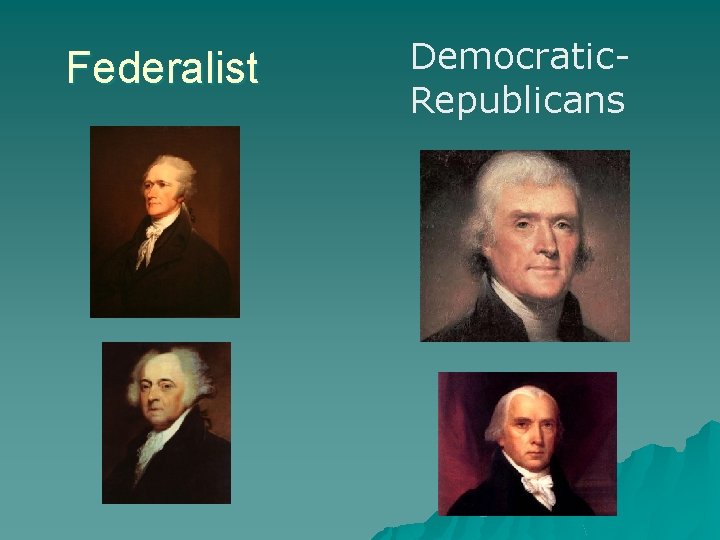
The Split and Start of Parties (1796 -1800) Jeffersonian Federalist u Alexander Hamilton u Manufacture and Commercial Interest u Northeastern/New England States u Strong National Government u Broad/ Loose Interpretation of the Constitution u Only Elite in politics Democratic-Republican u u u Thomas Jefferson and James Madison Farmers and small debtors Southern States Weak Central Government, stronger state’s rights Strict interpretation of the Constitution Only Elite in politics
Federalist Democratic. Republicans
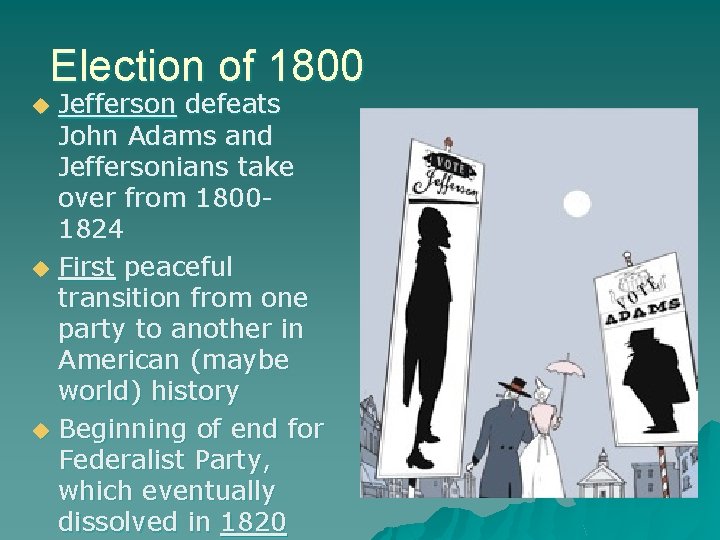
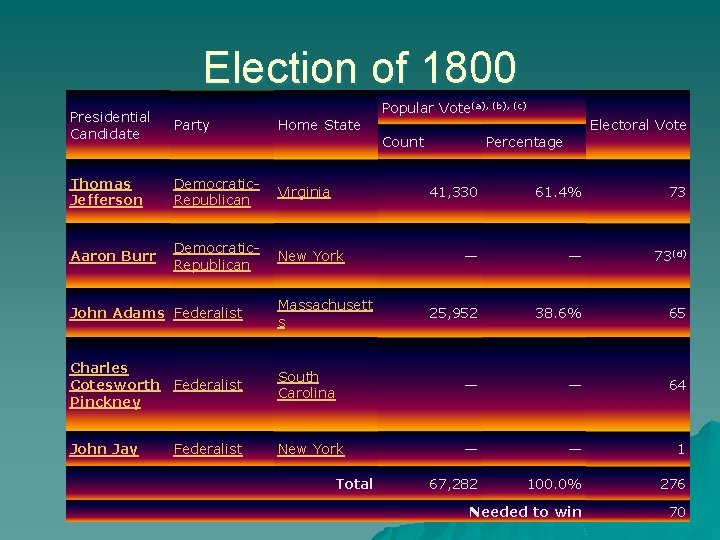
Election of 1800 u u u Jefferson defeats John Adams and Jeffersonians take over from 18001824 First peaceful transition from one party to another in American (maybe world) history Beginning of end for Federalist Party, which eventually dissolved in 1820
Election of 1800 Popular Vote(a), (b), (c) Presidential Candidate Party Thomas Jefferson Democratic. Republican Virginia Aaron Burr Democratic. Republican New York Home State Electoral Vote Count Percentage 41, 330 61. 4% 73 — — 73(d) 25, 952 38. 6% 65 John Adams Federalist Massachusett s Charles Cotesworth Federalist Pinckney South Carolina — — 64 John Jay New York — — 1 67, 282 100. 0% 276 Needed to win 70 Federalist Total
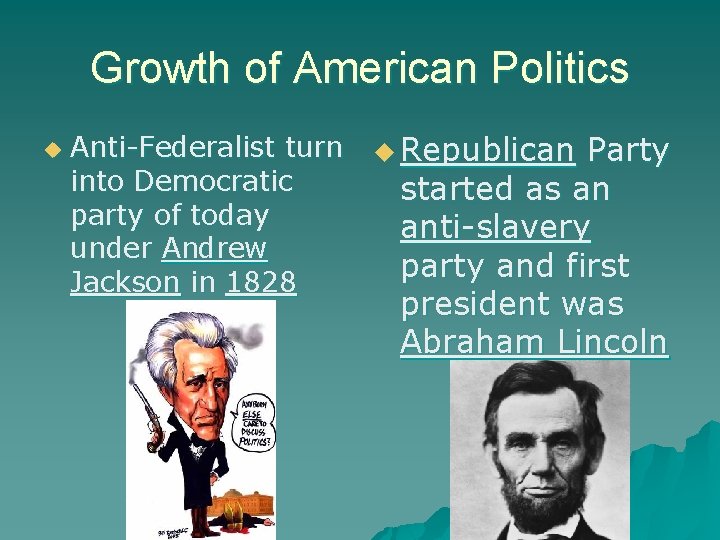
Growth of American Politics u Anti-Federalist turn into Democratic party of today under Andrew Jackson in 1828 u Republican Party started as an anti-slavery party and first president was Abraham Lincoln
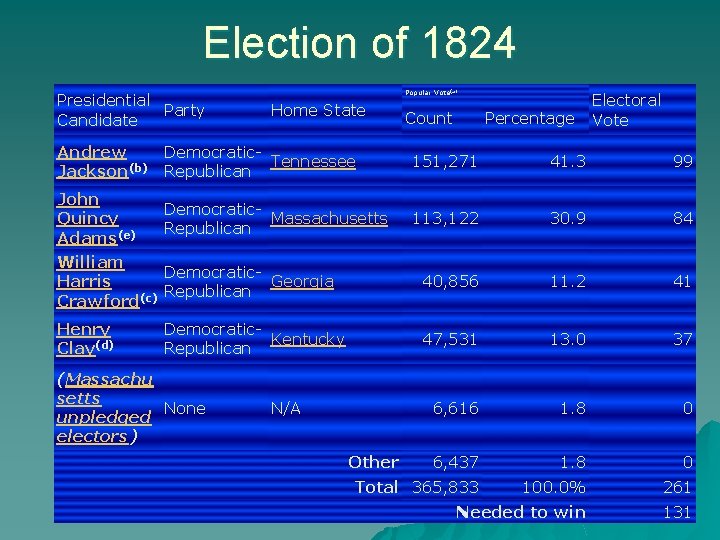
Election of 1824 Presidential Party Candidate Popular Vote(a) Home State Count Percentage Electoral Vote Andrew Jackson(b) Democratic. Tennessee Republican 151, 271 41. 3 99 John Quincy Adams(e) Democratic. Massachusetts Republican 113, 122 30. 9 84 William Democratic. Harris Georgia Republican Crawford(c) 40, 856 11. 2 41 Henry Clay(d) 47, 531 13. 0 37 6, 616 1. 8 0 6, 437 1. 8 0 Total 365, 833 100. 0% 261 Needed to win 131 Democratic. Kentucky Republican (Massachu setts None unpledged electors) N/A Other
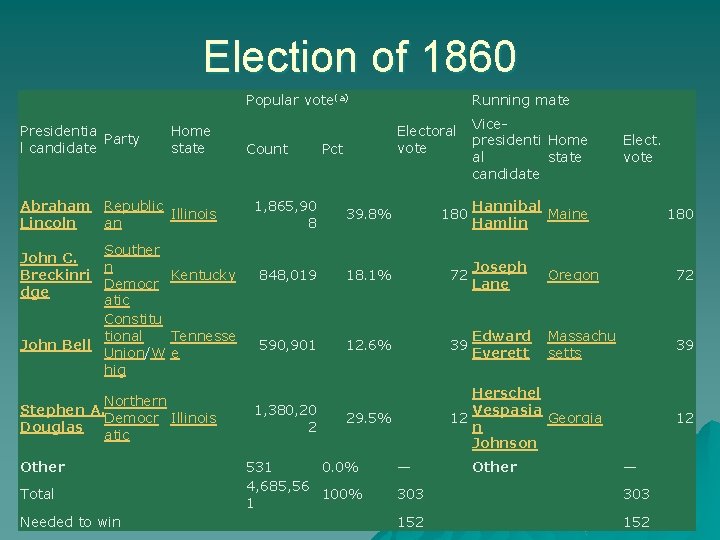
Election of 1860 Popular vote(a) Presidentia Party l candidate Home state Abraham Republic Illinois Lincoln an Souther John C. n Breckinri Kentucky Democr dge atic Constitu tional Tennesse John Bell Union/W e hig Northern Stephen A. Democr Illinois Douglas atic Other Total Needed to win Count Running mate Electoral vote Pct Vicepresidenti Home al state candidate Elect. vote 1, 865, 90 8 39. 8% 180 848, 019 18. 1% 72 Joseph Lane Oregon 72 590, 901 12. 6% 39 Edward Everett Massachu setts 39 29. 5% Herschel Vespasia 12 Georgia n Johnson 1, 380, 20 2 531 0. 0% 4, 685, 56 100% 1 — Hannibal Maine Hamlin Other 180 12 — 303 152
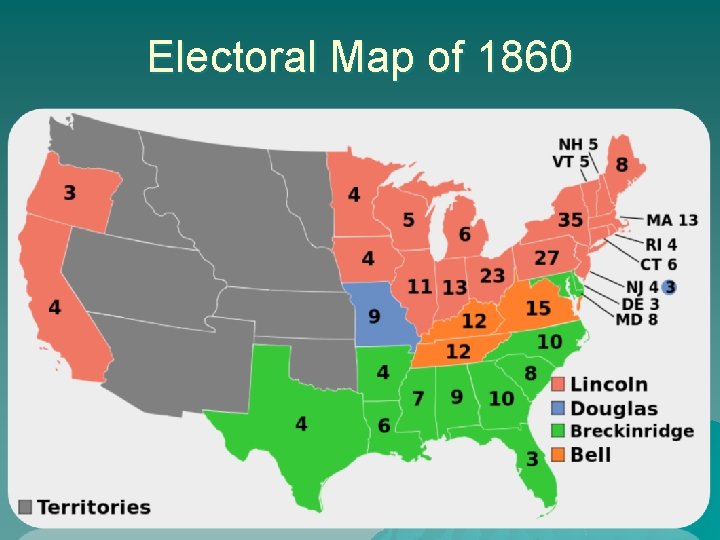
Electoral Map of 1860
Role of Minor Parties u u u Third Party- any party other than one of the two major parties All have one thing in common: believe that neither party is meeting certain needs Want to propose remedy to this situation
Role of third parties u http: //www. youtube. com/watch? v= RUm. Gqx. DSnxs u 3: 11 minutes
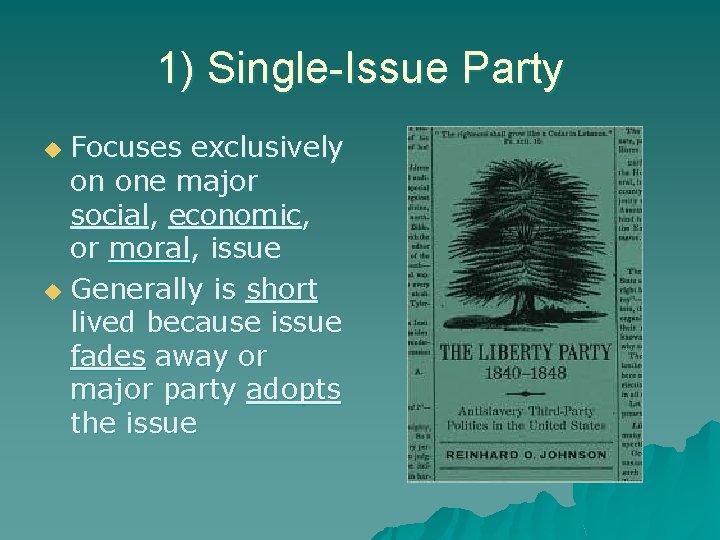
1) Single-Issue Party Focuses exclusively on one major social, economic, or moral, issue u Generally is short lived because issue fades away or major party adopts the issue u
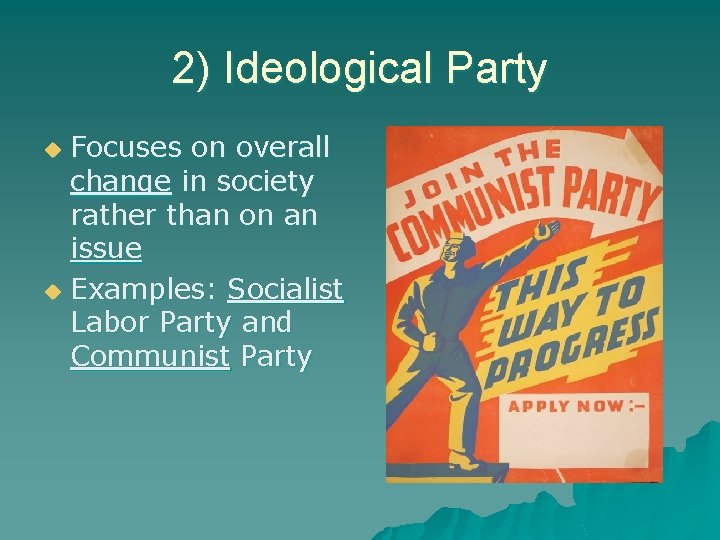
2) Ideological Party Focuses on overall change in society rather than on an issue u Examples: Socialist Labor Party and Communist Party u
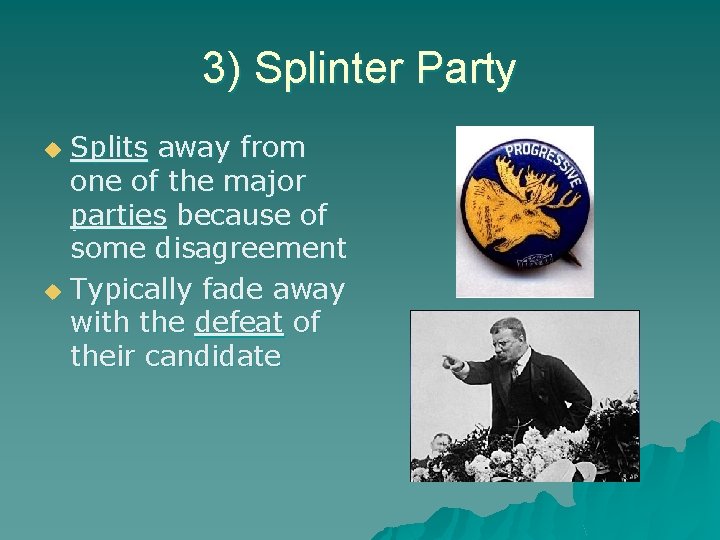
3) Splinter Party Splits away from one of the major parties because of some disagreement u Typically fade away with the defeat of their candidate u
Role of Minor Party Video u Watch Taft Presidency video start at 41: 33 and end at 43: 25. u Watch beginning of Wilson Presidency video
Impact of Third Parties u u u Have influenced the outcome of national elections Have often promoted ideas that were at first unpopular or hotly debated Example: minimum wage, five-day workweek, unemployment insurance, and health insurance
Obstacles of Third Parties u Third party candidates are usually required to obtain a large number of voter signatures in a short time u Single-member districts- no matter how number of candidates, only one person will win u Proportional representation- offices are filled in proportion to the votes that each party’s candidates receive
Cont u u u One major problem is financing a campaign Americans are reluctant to support or contribute to a campaign that they don’t think has a chance of winning Third Parties must plant political roots at the national level, and few can
Political Parties Video u http: //www. youtube. com/watch? v=F XJcm. Fe. IZBY u Cram for the exam (start at 3: 27 for third parties)
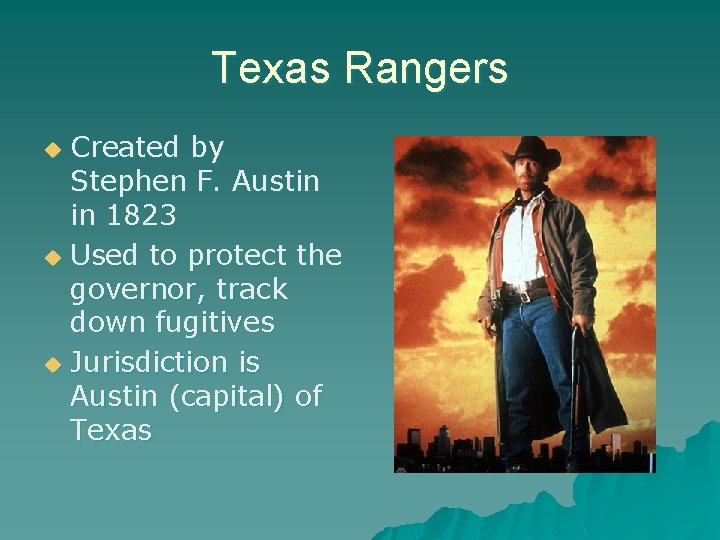
Texas Rangers Created by Stephen F. Austin in 1823 u Used to protect the governor, track down fugitives u Jurisdiction is Austin (capital) of Texas u
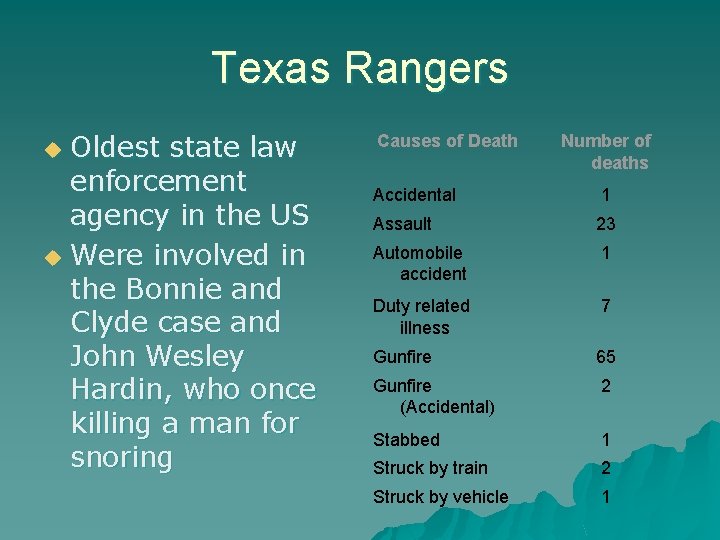
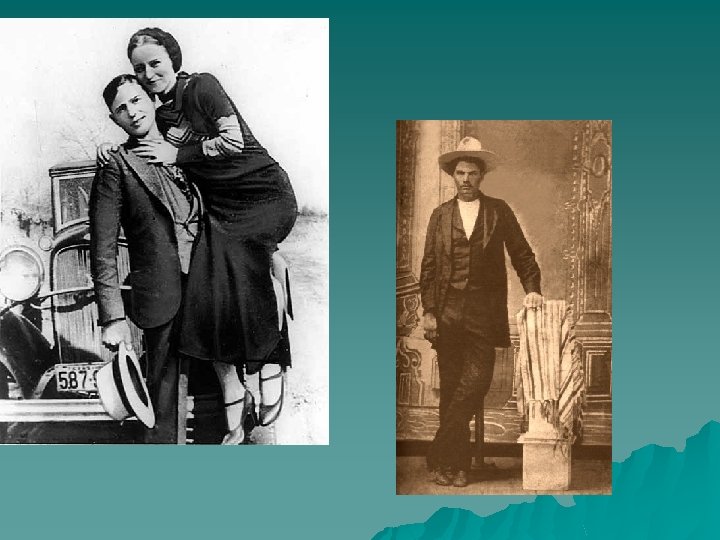
Texas Rangers Oldest state law enforcement agency in the US u Were involved in the Bonnie and Clyde case and John Wesley Hardin, who once killing a man for snoring u Causes of Death Number of deaths Accidental 1 Assault 23 Automobile accident 1 Duty related illness 7 Gunfire 65 Gunfire (Accidental) 2 Stabbed 1 Struck by train 2 Struck by vehicle 1