
Unit 4 Cell Structure and Function The Discovery
- Slides: 35
Unit 4: Cell Structure and Function
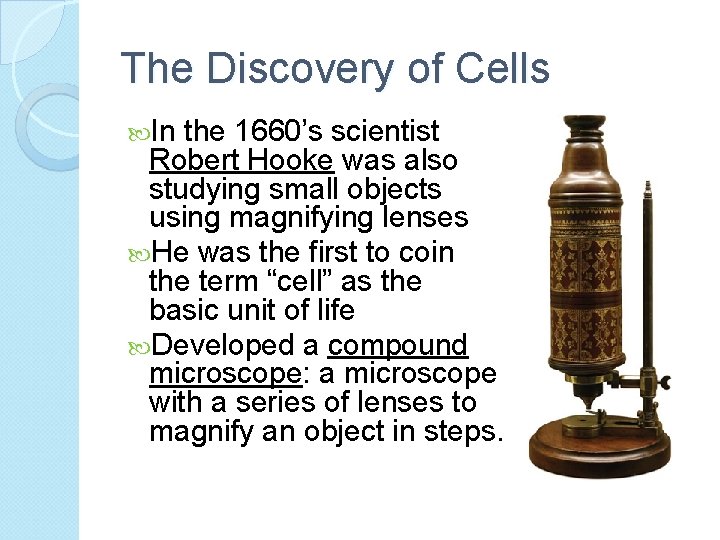
The Discovery of Cells In the 1660’s scientist Robert Hooke was also studying small objects using magnifying lenses He was the first to coin the term “cell” as the basic unit of life Developed a compound microscope: a microscope with a series of lenses to magnify an object in steps.
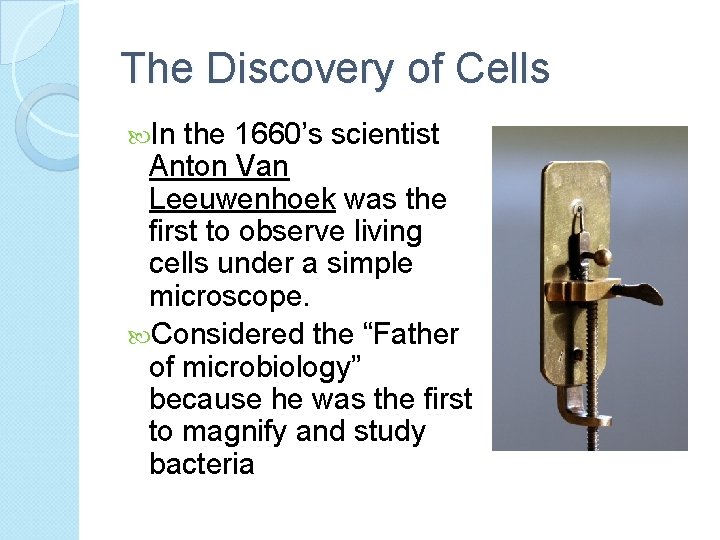
The Discovery of Cells In the 1660’s scientist Anton Van Leeuwenhoek was the first to observe living cells under a simple microscope. Considered the “Father of microbiology” because he was the first to magnify and study bacteria
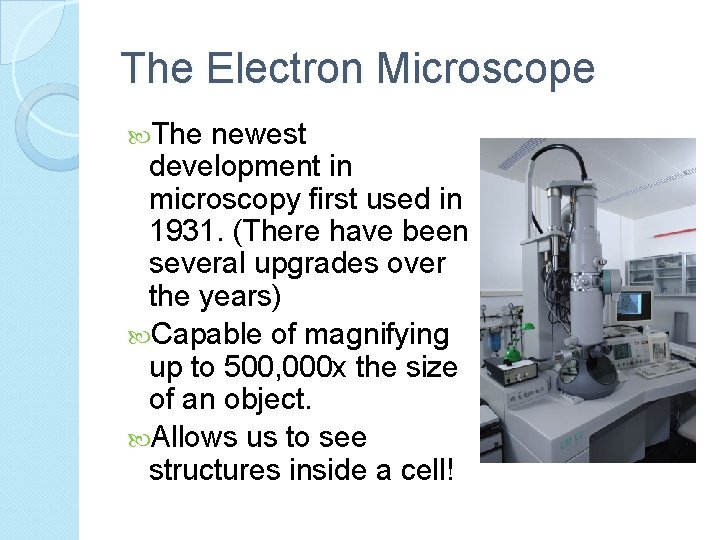
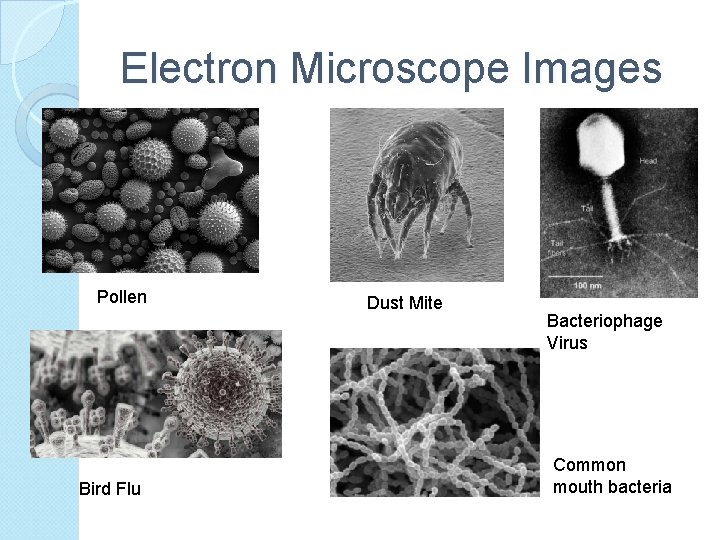
The Electron Microscope The newest development in microscopy first used in 1931. (There have been several upgrades over the years) Capable of magnifying up to 500, 000 x the size of an object. Allows us to see structures inside a cell!
Electron Microscope Images Pollen Bird Flu Dust Mite Bacteriophage Virus Common mouth bacteria
Scientists Contributing to the Cell Theory Mattias Schleiden (1838) ◦ discovers that plants are made of cells Theodor Schwann (1839) ◦ discovers that animals are made of cells Rudolf Virchow (1855) ◦ stated that cells come only from other cells
The Cell Theory Basic theory of “requirements to be a cell” developed by Schleiden, Schwann and Virchow Rules: 1. All organisms are made of one or more cells 2. The cell is the basic unit of organization 3. All cells come from pre-existing cells
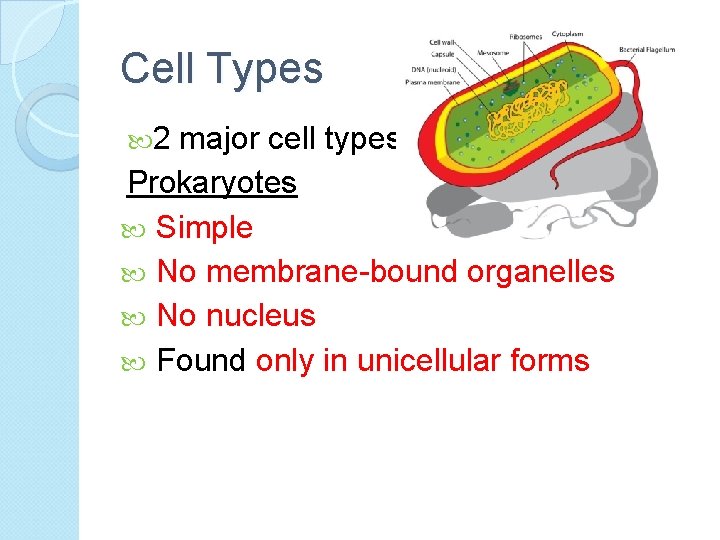
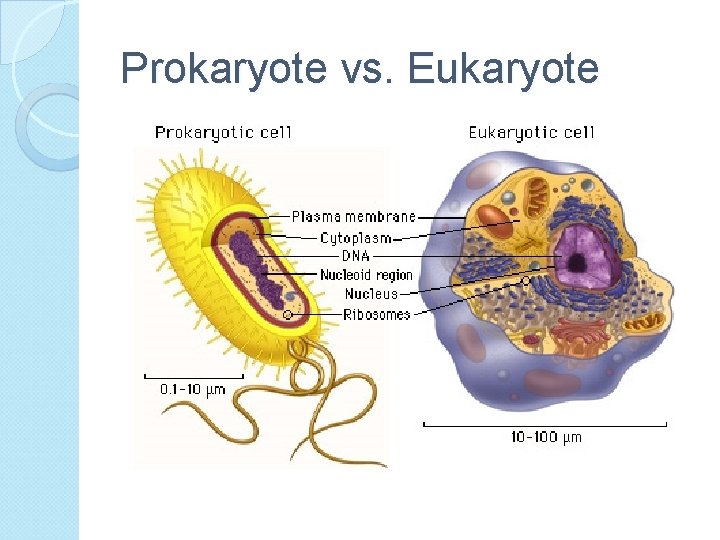
Cell Types 2 major cell types: Prokaryotes Simple No membrane-bound organelles No nucleus Found only in unicellular forms
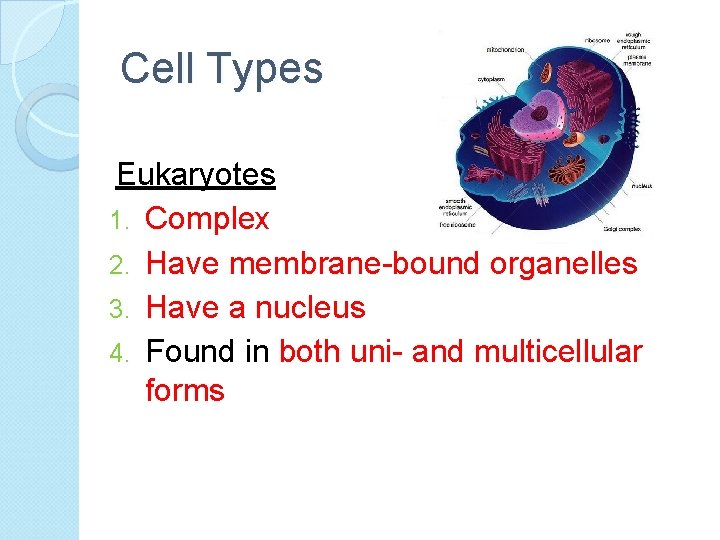
Cell Types Eukaryotes 1. Complex 2. Have membrane-bound organelles 3. Have a nucleus 4. Found in both uni- and multicellular forms
Cell Types ALL cells have: Cell membrane 2. Cytoplasm 3. DNA 4. Ribosomes 1.
Prokaryote vs. Eukaryote
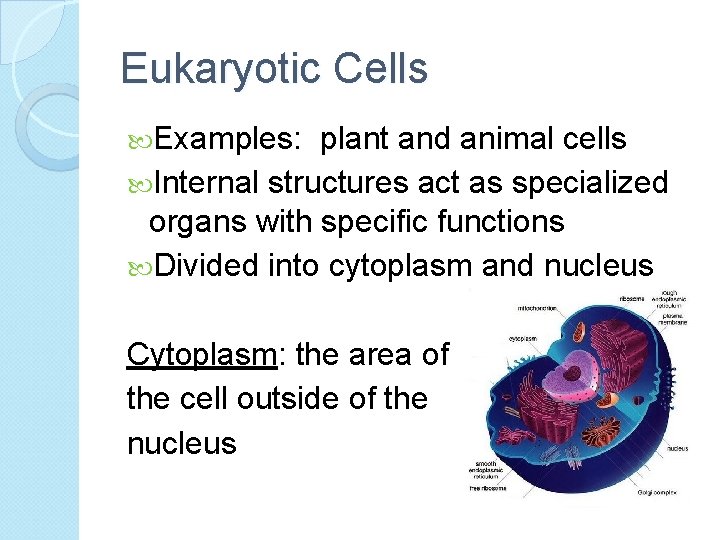
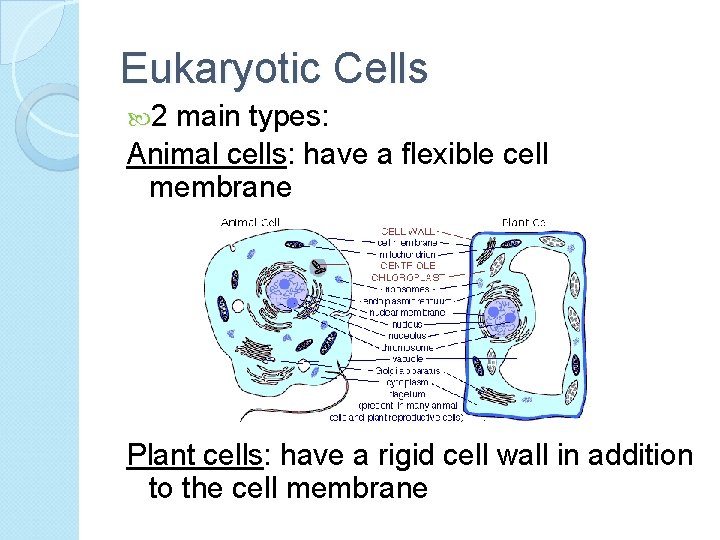
Eukaryotic Cells Examples: plant and animal cells Internal structures act as specialized organs with specific functions Divided into cytoplasm and nucleus Cytoplasm: the area of the cell outside of the nucleus
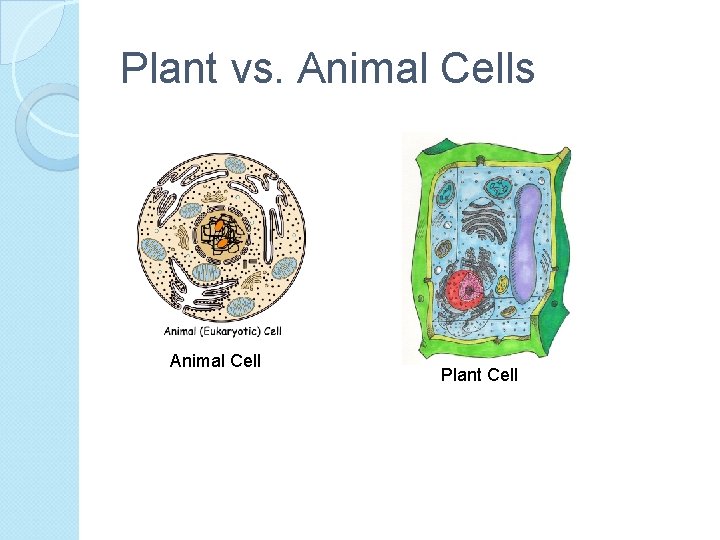
Eukaryotic Cells 2 main types: Animal cells: have a flexible cell membrane Plant cells: have a rigid cell wall in addition to the cell membrane
Plant vs. Animal Cells Animal Cell Plant Cell
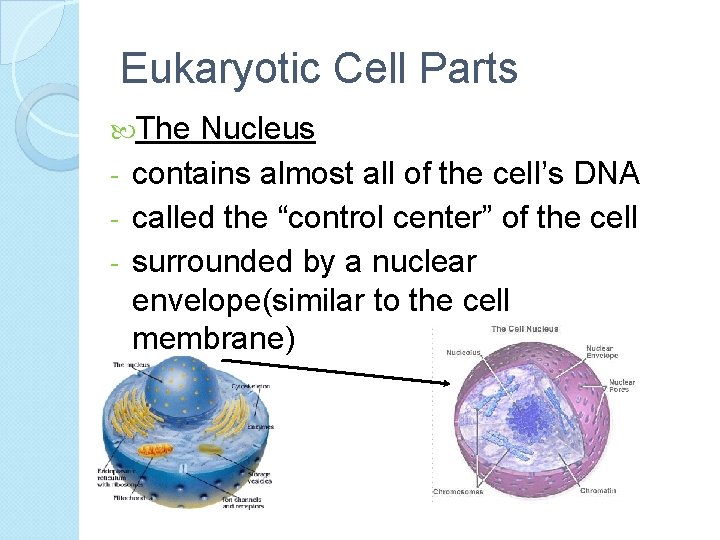
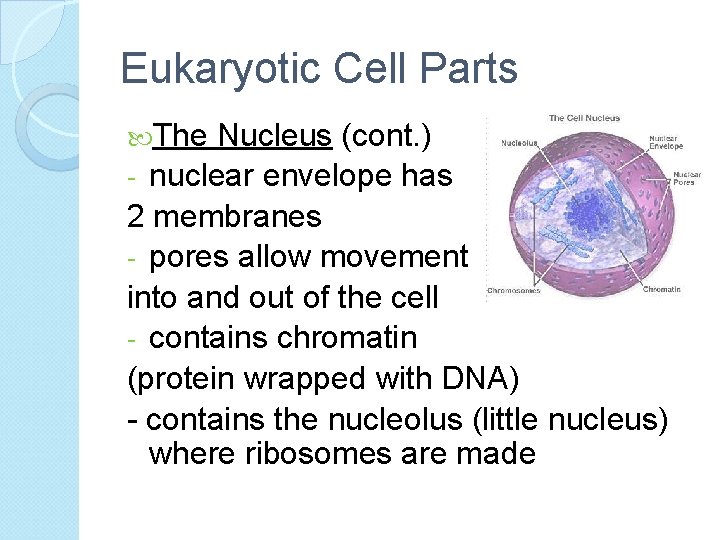
Eukaryotic Cell Parts The Nucleus - contains almost all of the cell’s DNA - called the “control center” of the cell - surrounded by a nuclear envelope(similar to the cell membrane)
Eukaryotic Cell Parts The Nucleus (cont. ) - nuclear envelope has 2 membranes - pores allow movement into and out of the cell - contains chromatin (protein wrapped with DNA) - contains the nucleolus (little nucleus) where ribosomes are made
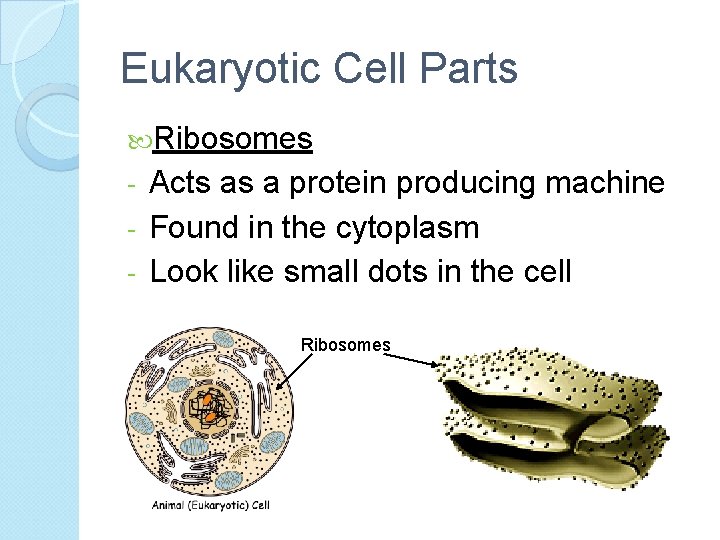
Eukaryotic Cell Parts Ribosomes Acts as a protein producing machine - Found in the cytoplasm - Look like small dots in the cell - Ribosomes
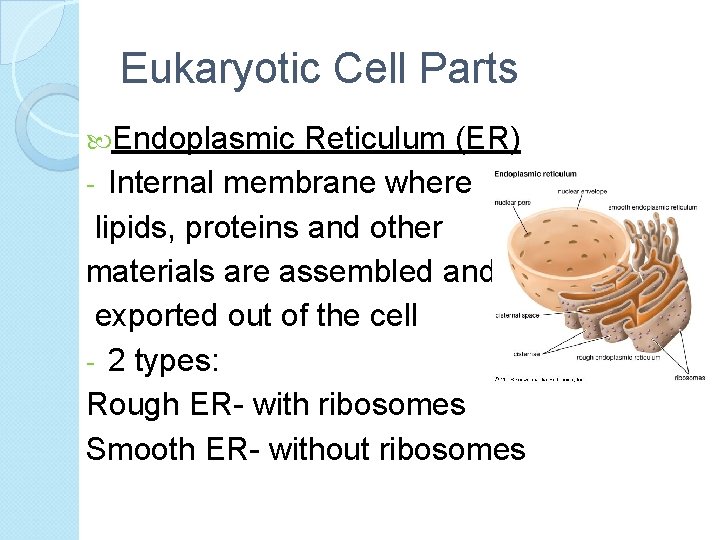
Eukaryotic Cell Parts Endoplasmic Reticulum (ER) - Internal membrane where lipids, proteins and other materials are assembled and exported out of the cell - 2 types: Rough ER- with ribosomes Smooth ER- without ribosomes
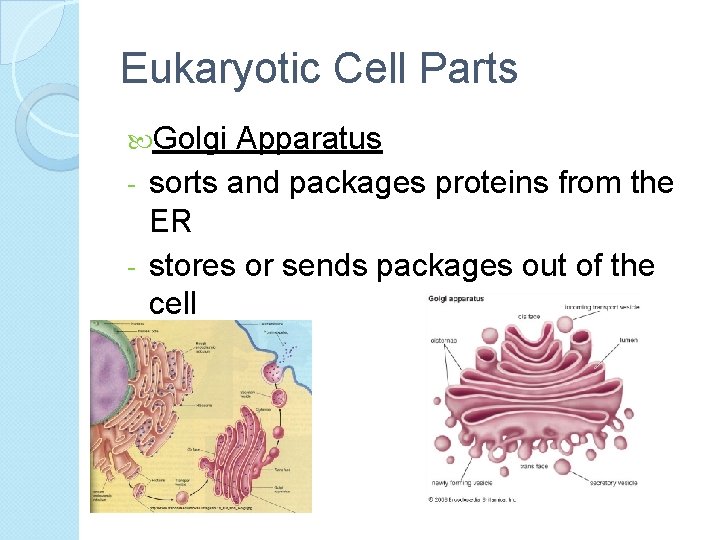
Eukaryotic Cell Parts Golgi Apparatus - sorts and packages proteins from the ER - stores or sends packages out of the cell
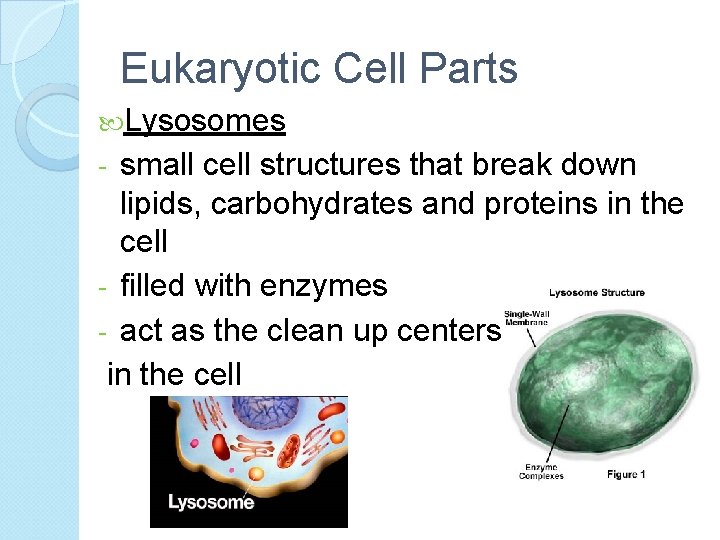
Eukaryotic Cell Parts Lysosomes small cell structures that break down lipids, carbohydrates and proteins in the cell - filled with enzymes - act as the clean up centers in the cell -
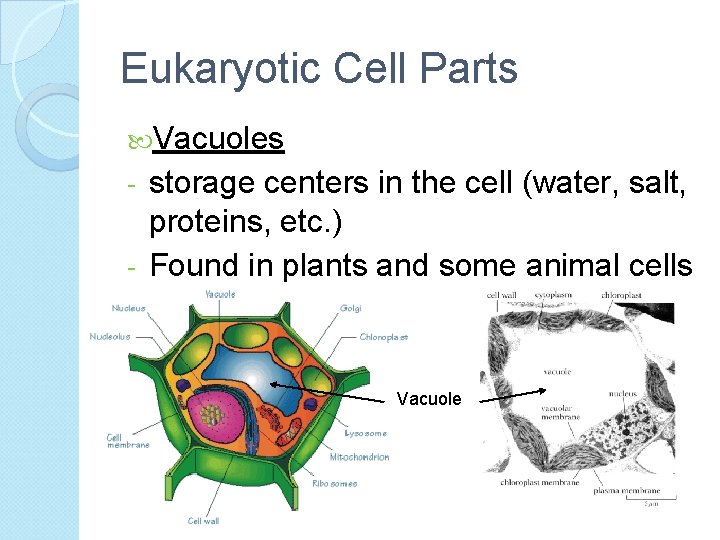
Eukaryotic Cell Parts Vacuoles storage centers in the cell (water, salt, proteins, etc. ) - Found in plants and some animal cells - Vacuole
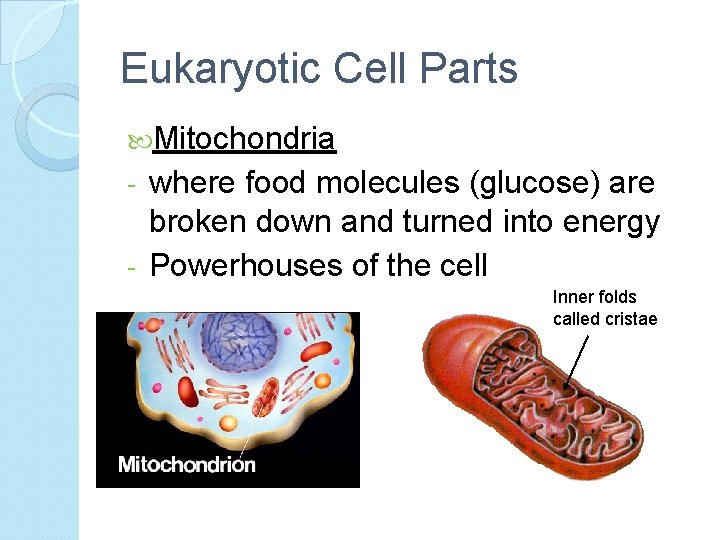
Eukaryotic Cell Parts Mitochondria where food molecules (glucose) are broken down and turned into energy - Powerhouses of the cell - Inner folds called cristae
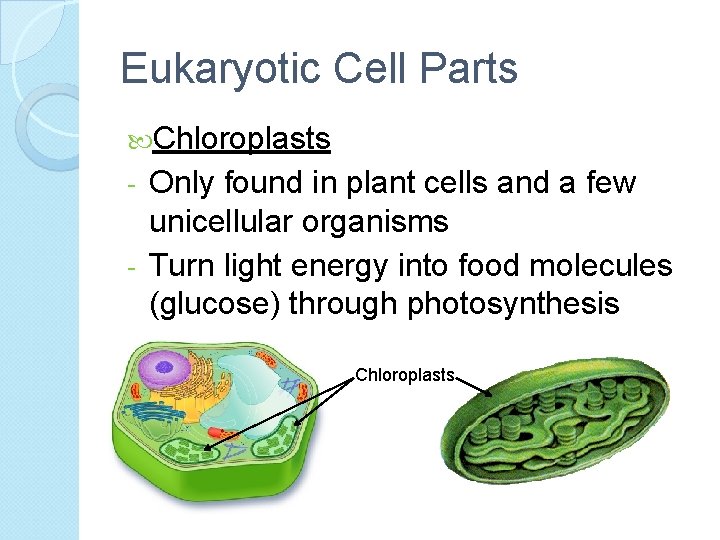
Eukaryotic Cell Parts Chloroplasts Only found in plant cells and a few unicellular organisms - Turn light energy into food molecules (glucose) through photosynthesis - Chloroplasts
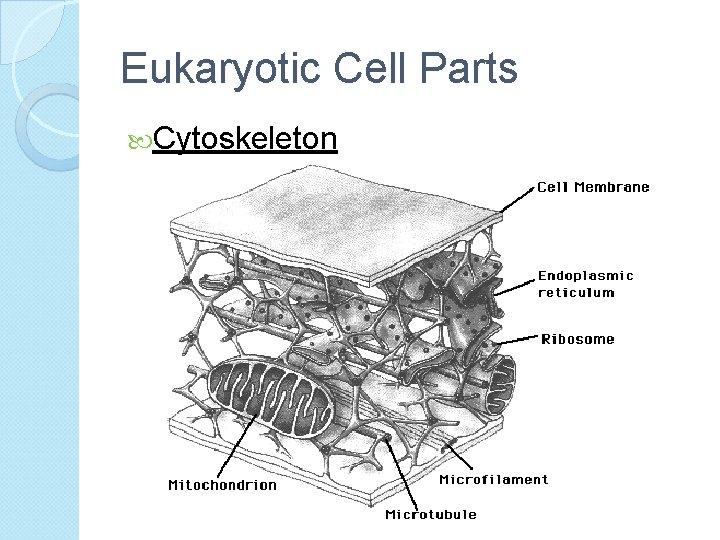
Eukaryotic Cell Parts Cytoskeleton - A network of thin, fibrous elements that provide support for organelles and helps the cell maintain its shape. ◦ Microtubules: Thin, hollow cylinders of protein. ◦ Microfilaments: Thin, solid protein fibers. - Both work together to provide support.
Eukaryotic Cell Parts Cytoskeleton
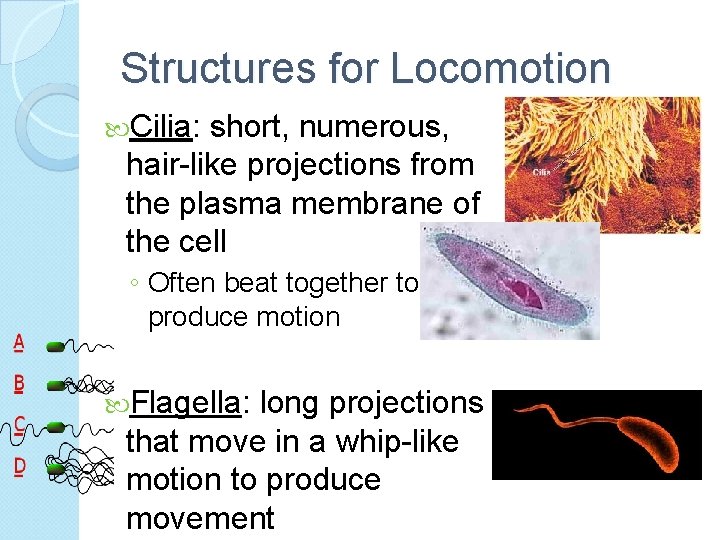
Structures for Locomotion Cilia: short, numerous, hair-like projections from the plasma membrane of the cell ◦ Often beat together to produce motion Flagella: long projections that move in a whip-like motion to produce movement
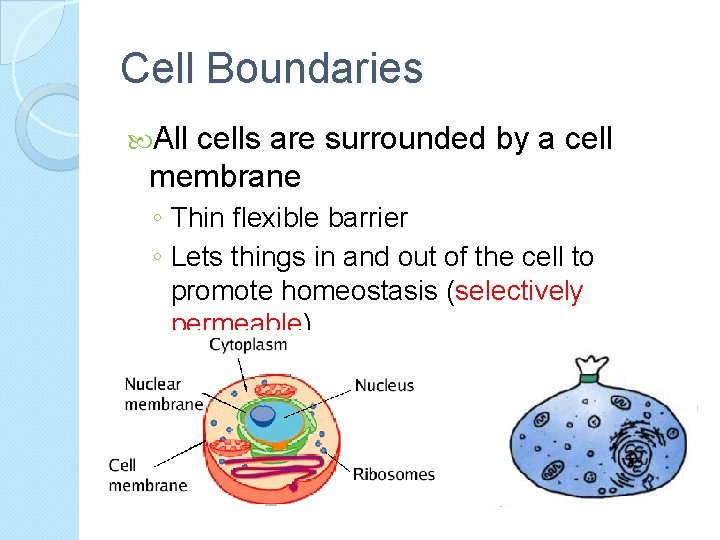
Cell Boundaries All cells are surrounded by a cell membrane ◦ Thin flexible barrier ◦ Lets things in and out of the cell to promote homeostasis (selectively permeable)
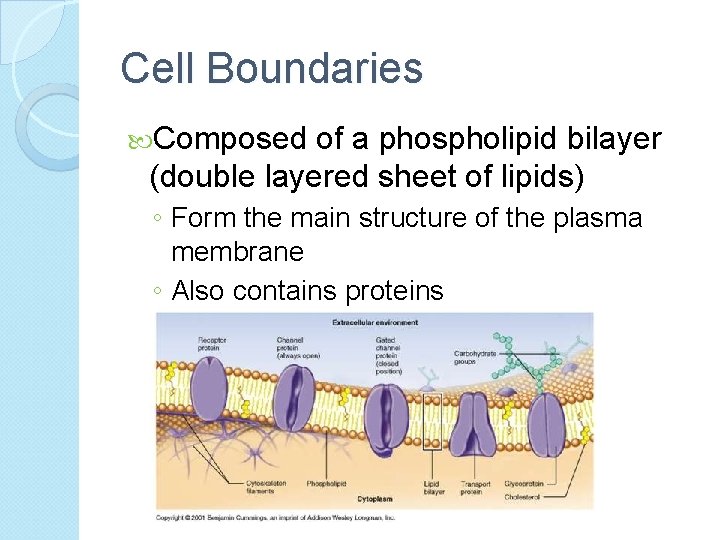
Cell Boundaries Composed of a phospholipid bilayer (double layered sheet of lipids) ◦ Form the main structure of the plasma membrane ◦ Also contains proteins
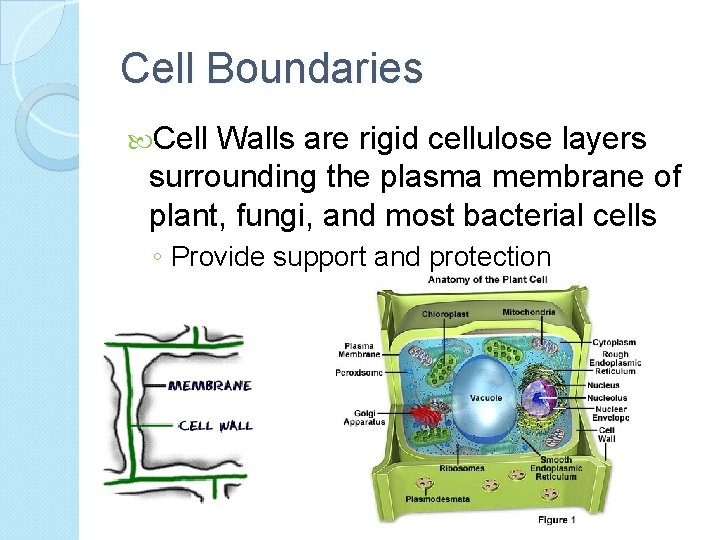
Cell Boundaries Cell Walls are rigid cellulose layers surrounding the plasma membrane of plant, fungi, and most bacterial cells ◦ Provide support and protection
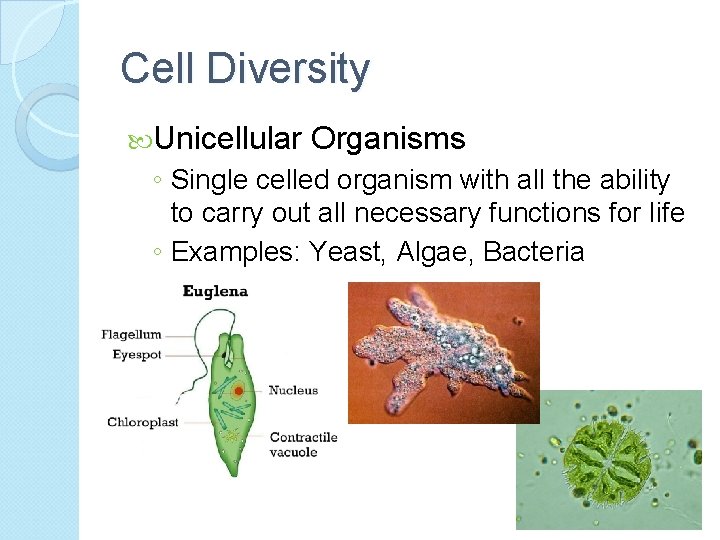
Cell Diversity Unicellular Organisms ◦ Single celled organism with all the ability to carry out all necessary functions for life ◦ Examples: Yeast, Algae, Bacteria
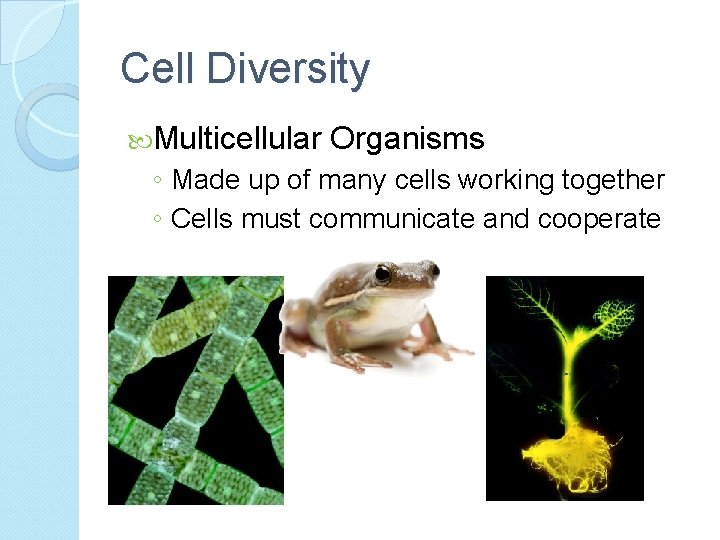
Cell Diversity Multicellular Organisms ◦ Made up of many cells working together ◦ Cells must communicate and cooperate
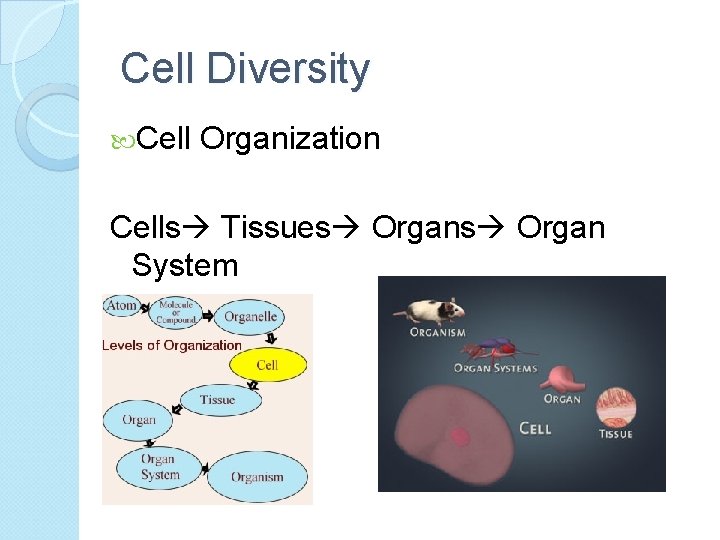
Cell Diversity Cell Organization Cells Tissues Organ System
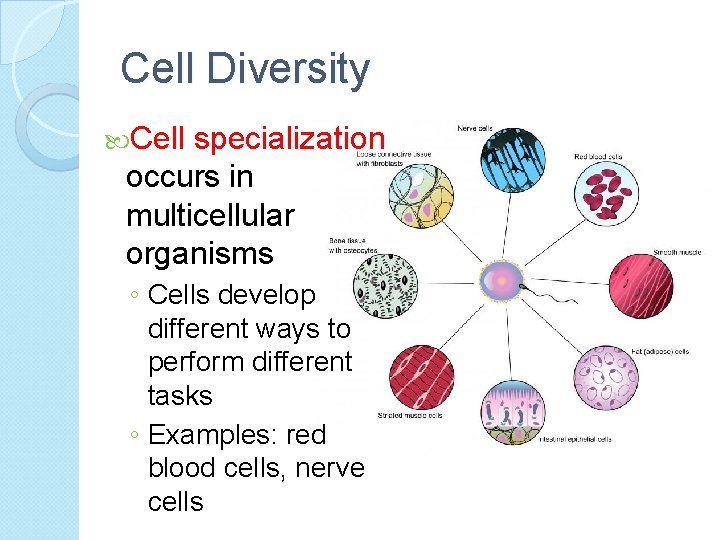
Cell Diversity Cell specialization occurs in multicellular organisms ◦ Cells develop different ways to perform different tasks ◦ Examples: red blood cells, nerve cells
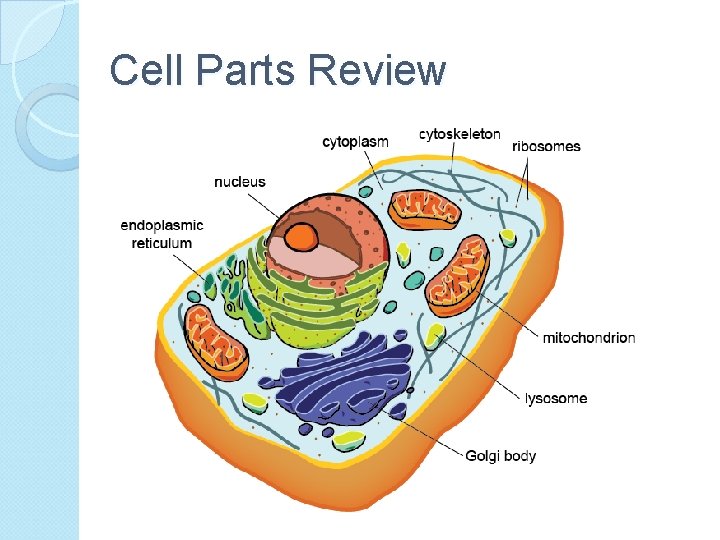
Cell Parts Review
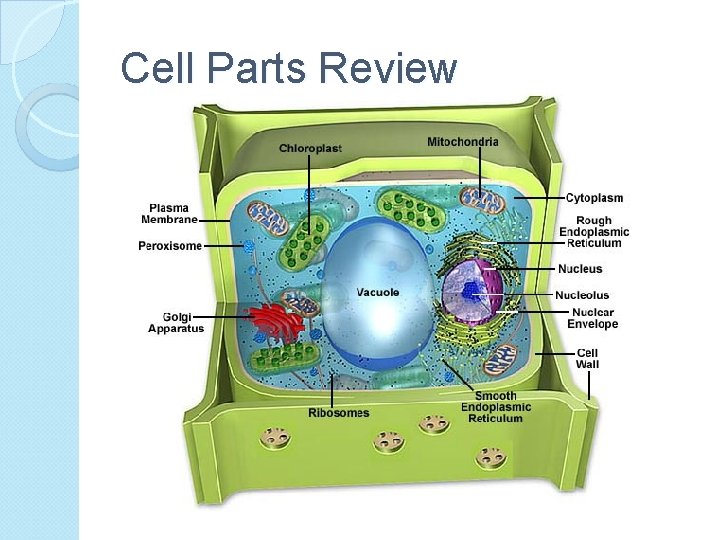
Cell Parts Review