
Unit 4 C Foam and Foam Proportioning Equipment
- Slides: 32
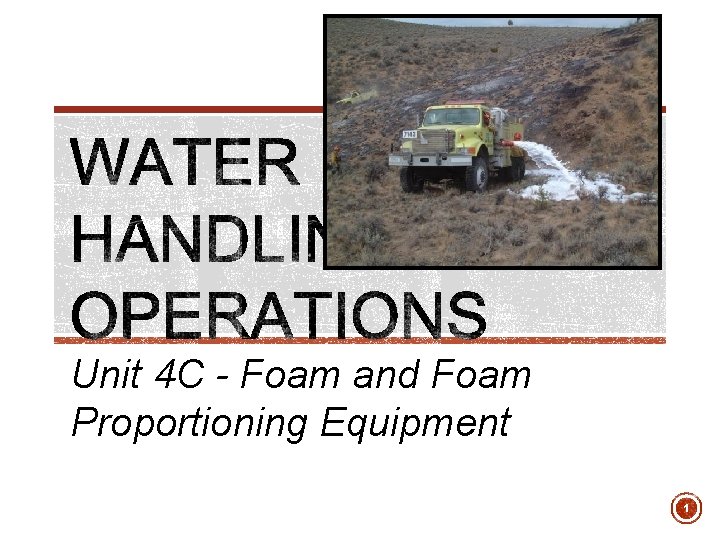
Unit 4 C - Foam and Foam Proportioning Equipment 1
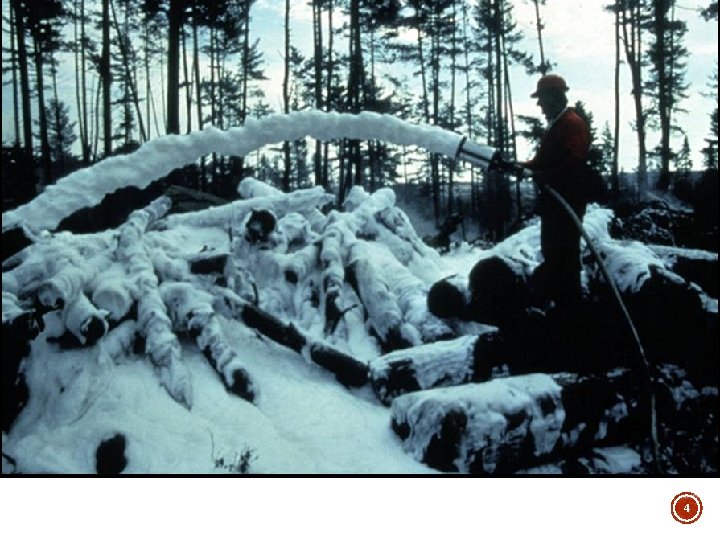
§ Discuss why foam is more effective than plain water when performing wildland fire suppression operations. § Discuss foam safety, including guidelines for handling foam products. § Identify and discuss the advantages and disadvantages of two manual foam proportioning methods used when performing wildland fire suppression operations. 2
§ Identify various operational components of the Foam. Pro® 1600/1601 and Waterous Aquis 1. 5. § Demonstrate the ability to set up, run, have foam solution pumped to a nozzle person, and shut down a foam proportioner. 3
4
5
6
7
8
9
10
11
12
13
§ Operators manually adjust the device to maintain a constant mix ratio when water flow and pressure changes. o Cannot maintain constant mix ratio over various flow and pressure rates 14
15
16
17
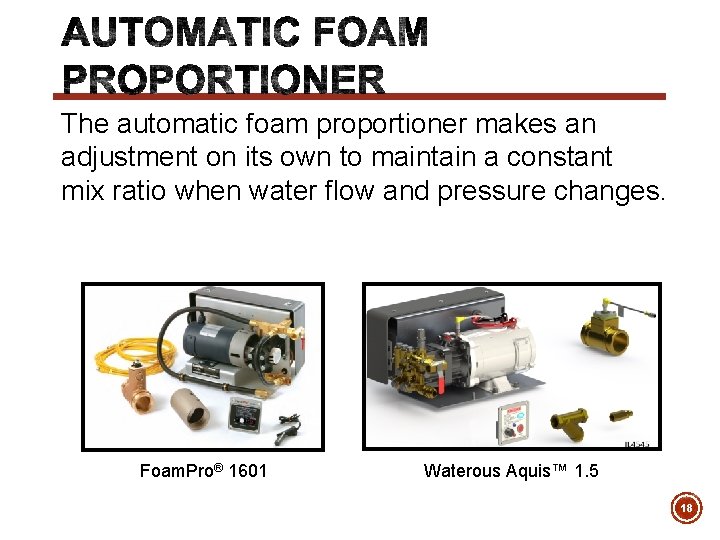
The automatic foam proportioner makes an adjustment on its own to maintain a constant mix ratio when water flow and pressure changes. Foam. Pro® 1601 Waterous Aquis™ 1. 5 18
s 19
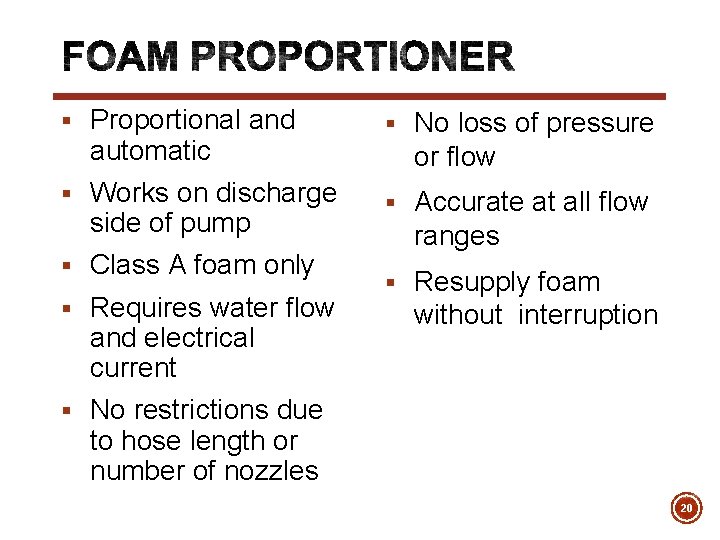
§ Proportional and automatic § Works on discharge side of pump § Class A foam only § Requires water flow and electrical current § No loss of pressure or flow § Accurate at all flow ranges § Resupply foam without interruption § No restrictions due to hose length or number of nozzles 20
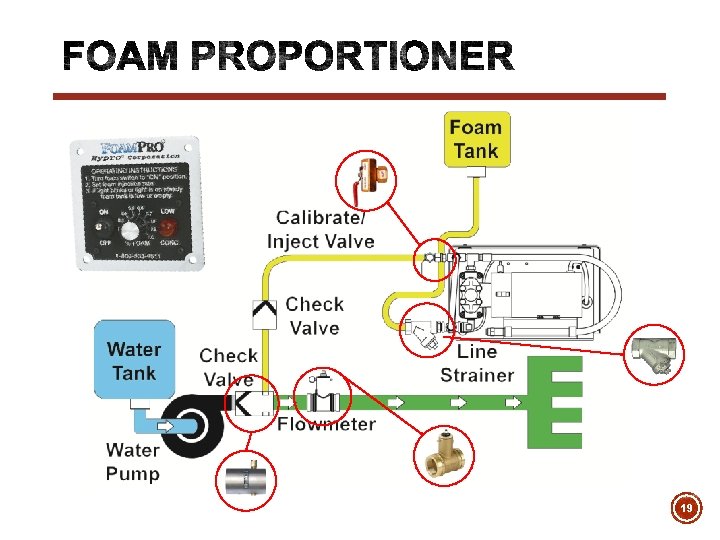
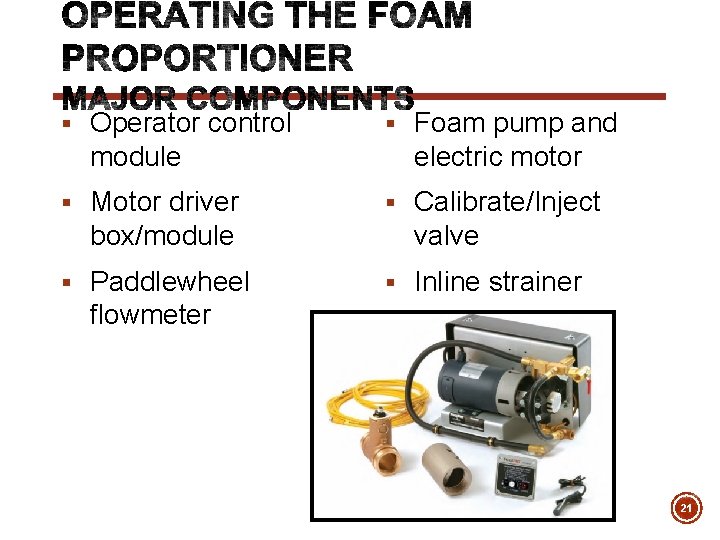
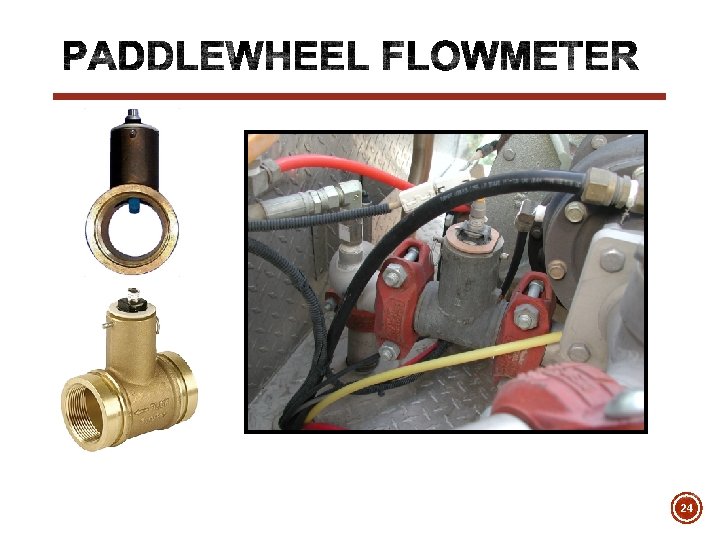
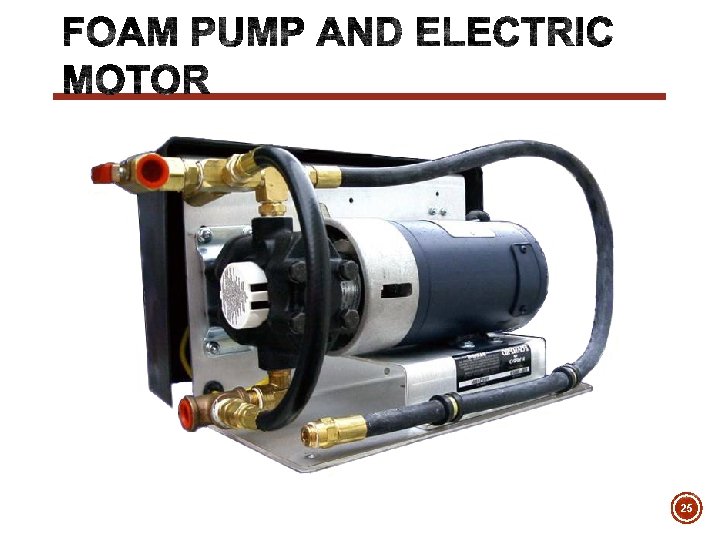
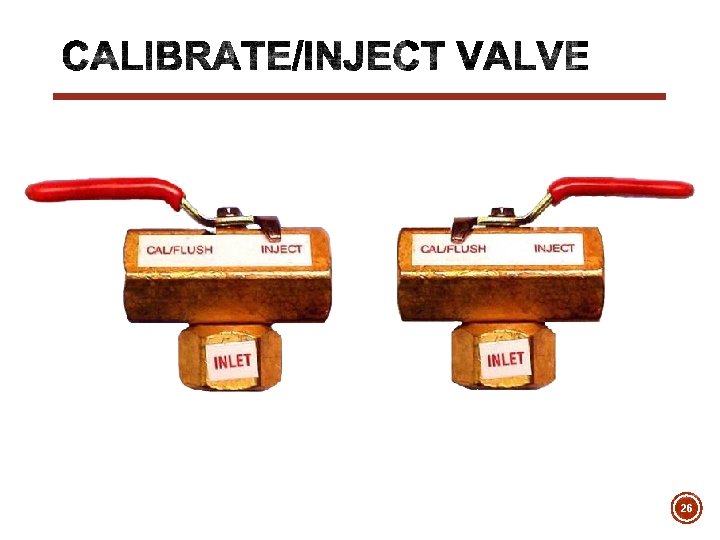
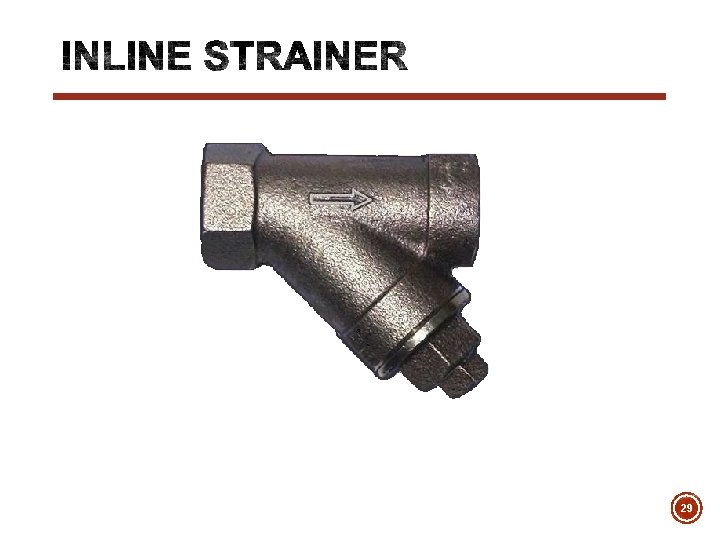
§ Operator control module § Motor driver box/module § Paddlewheel § Foam pump and electric motor § Calibrate/Inject valve § Inline strainer flowmeter 21
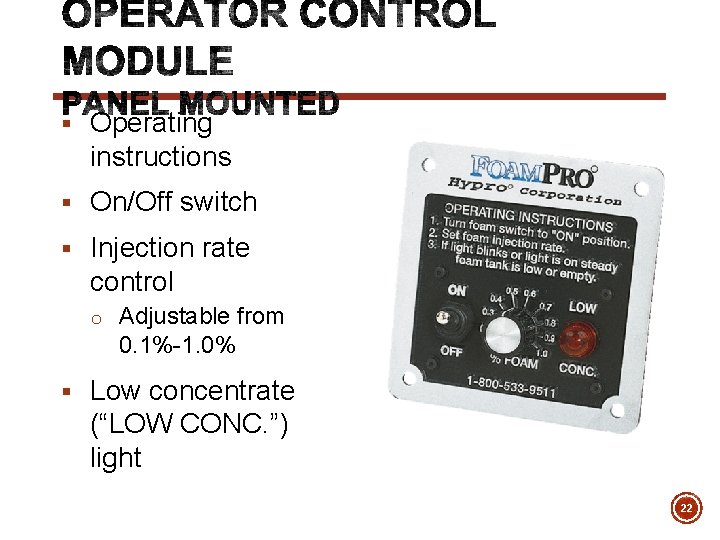
§ Operating instructions § On/Off switch § Injection rate control o Adjustable from 0. 1%-1. 0% § Low concentrate (“LOW CONC. ”) light 22
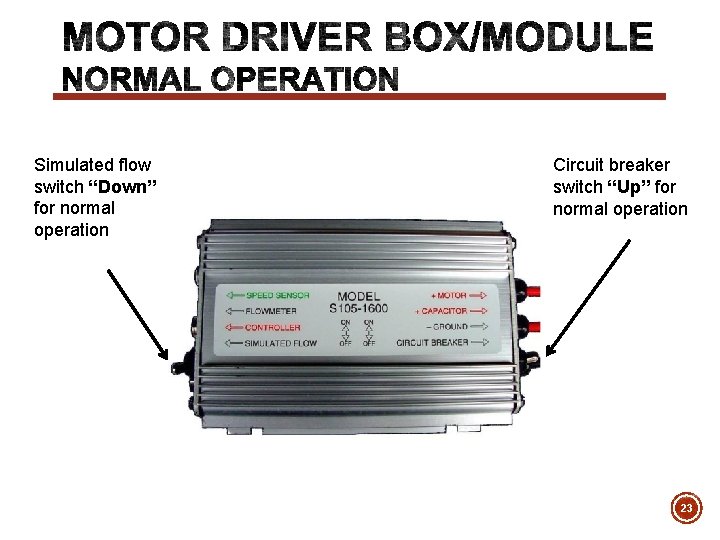
Simulated flow switch “Down” for normal operation Circuit breaker switch “Up” for normal operation 23
24
25
26
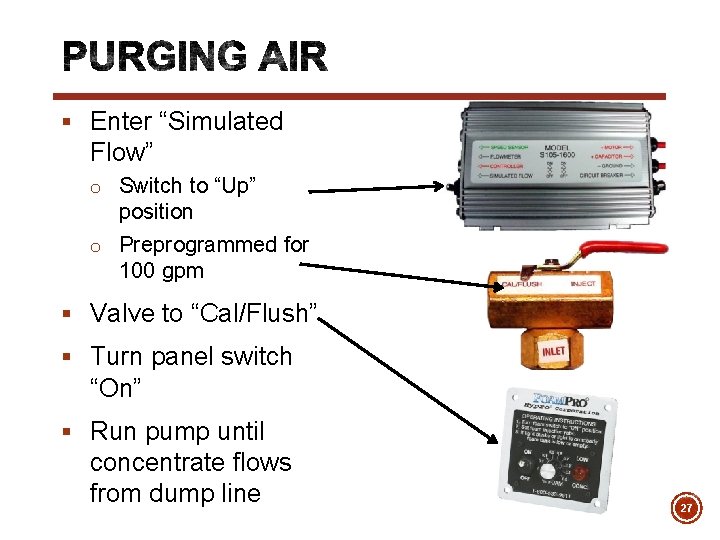
§ Enter “Simulated Flow” o Switch to “Up” position o Preprogrammed for 100 gpm § Valve to “Cal/Flush” § Turn panel switch “On” § Run pump until concentrate flows from dump line 27
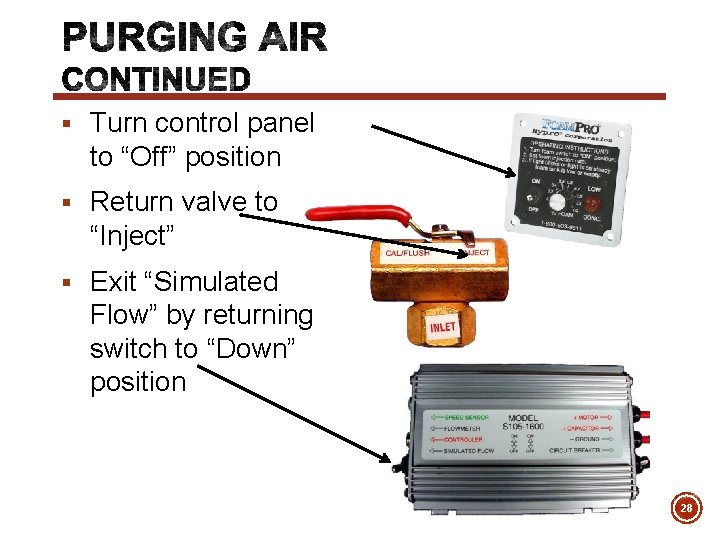
§ Turn control panel to “Off” position § Return valve to “Inject” § Exit “Simulated Flow” by returning switch to “Down” position 28
29
30
§ Discuss why foam is more effective than plain water when performing wildland fire suppression operations. § Discuss foam safety, including guidelines for handling foam products. § Identify and discuss the advantages and disadvantages of two manual foam proportioning methods used when performing wildland fire suppression operations. 31
§ Identify various operational components of the Foam. Pro® 1600/1601 and Waterous Aquis 1. 5. § Demonstrate the ability to set up, run, have foam solution pumped to a nozzle person, and shut down a foam proportioner. 32