
Unit 4 Bonding Nomenclature Molecular Structure V Lewis
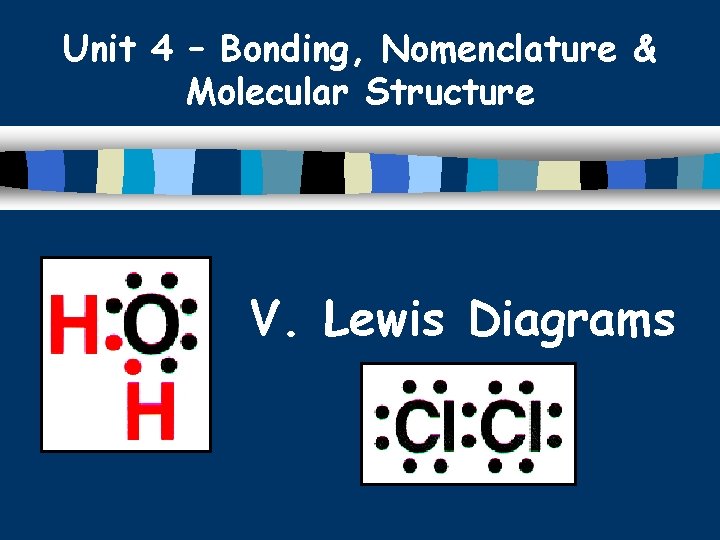
Unit 4 – Bonding, Nomenclature & Molecular Structure V. Lewis Diagrams
A. Octet Rule § Remember… § Most atoms form bonds in order to have 8 valence electrons.
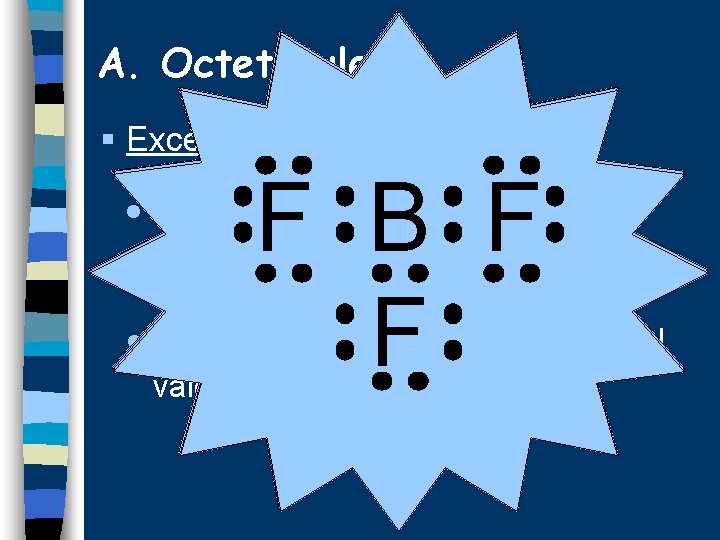
A. Octet Rule F F FF B F S H F HO F F F § Exceptions: · Hydrogen 2 total valence e· Groups 1, 2, 3 get 2, 4, 6 total valence e· Expanded octet more than 8 total valence e- (e. g. S, P, Xe)
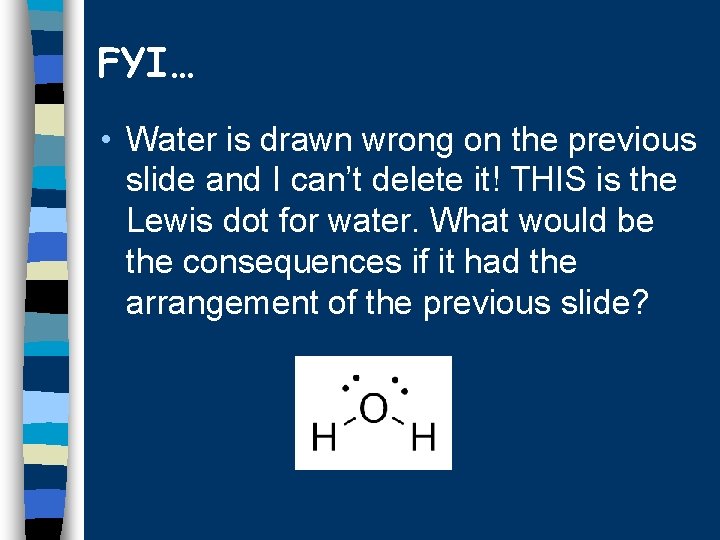
FYI… • Water is drawn wrong on the previous slide and I can’t delete it! THIS is the Lewis dot for water. What would be the consequences if it had the arrangement of the previous slide?
B. Drawing Lewis Diagrams • Place atom with lowest EN in the center (except H, which never goes in the center). • Then use N, A, S, R. § N = total number of valence electrons Needed (*What it needs) § A = total number of valence electrons Available (*What it has) § S = total Shared electrons = (N-A) § R = distribute Remaining electrons to fill octet = (A-S)
# of Covalent Bonds § Single – sharing of 2 electrons § Bond length- the longest § Double bond- sharing of 4 electrons § Bond length- intermediate § Triple bond- sharing of 6 electrons § Bond length- shortest § Which one do you think is the strongest?
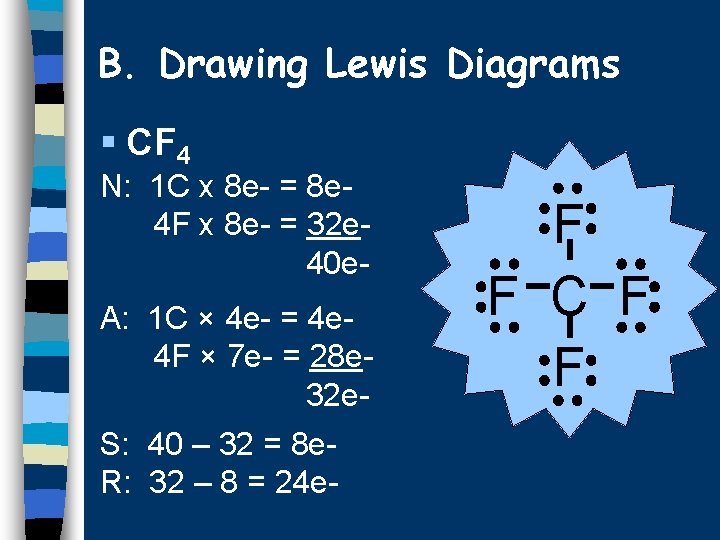
B. Drawing Lewis Diagrams § CF 4 N: 1 C x 8 e- = 8 e 4 F x 8 e- = 32 e 40 e. A: 1 C × 4 e- = 4 e 4 F × 7 e- = 28 e 32 e. S: 40 – 32 = 8 e. R: 32 – 8 = 24 e- F F C F F
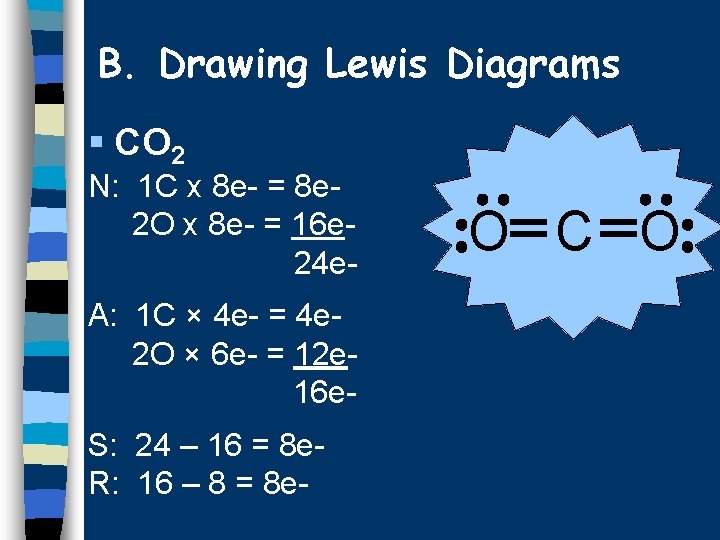
B. Drawing Lewis Diagrams § CO 2 N: 1 C x 8 e- = 8 e 2 O x 8 e- = 16 e 24 e. A: 1 C × 4 e- = 4 e 2 O × 6 e- = 12 e 16 e. S: 24 – 16 = 8 e. R: 16 – 8 = 8 e- O C O
C. Polyatomic Ions § To find total # of valence e-: § Add 1 e- for each negative charge. § Subtract 1 e- for each positive charge. § Place brackets around the ion and label the charge.
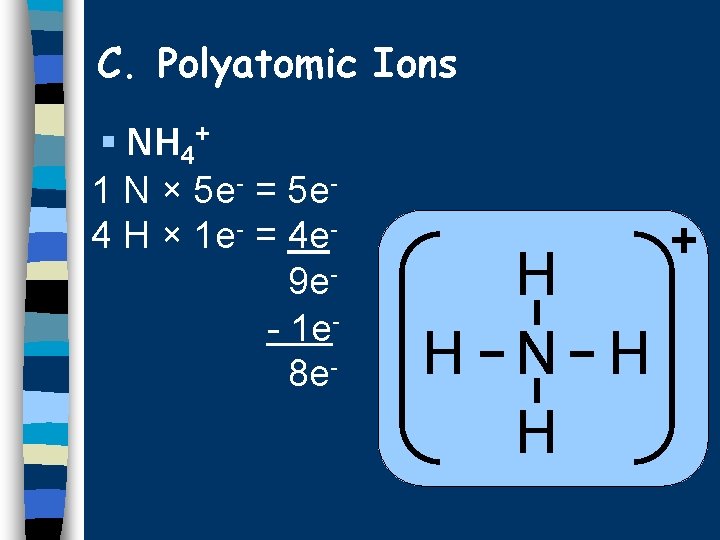
C. Polyatomic Ions § NH 4+ 1 N × 5 e- = 5 e 4 H × 1 e- = 4 e 9 e- 1 e 8 e- H H N H H
How would you do? • OH • Give it a try!

Answer: Remember…. you must put a bracket around the structure and indicate the charge!
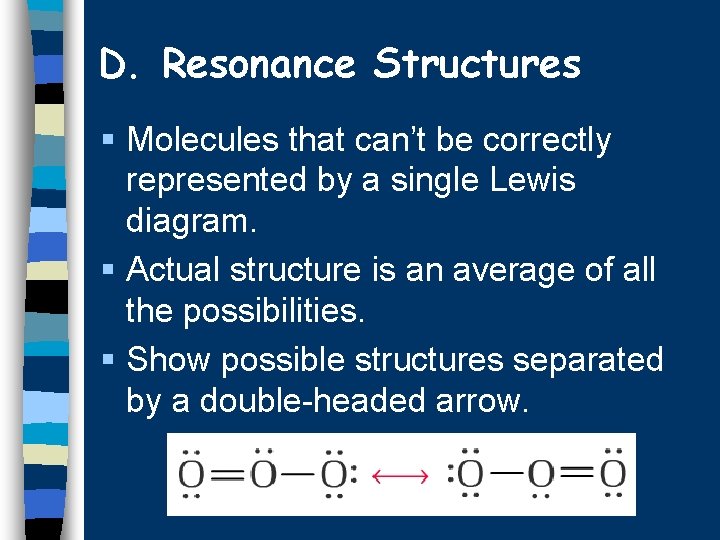
D. Resonance Structures § Molecules that can’t be correctly represented by a single Lewis diagram. § Actual structure is an average of all the possibilities. § Show possible structures separated by a double-headed arrow.
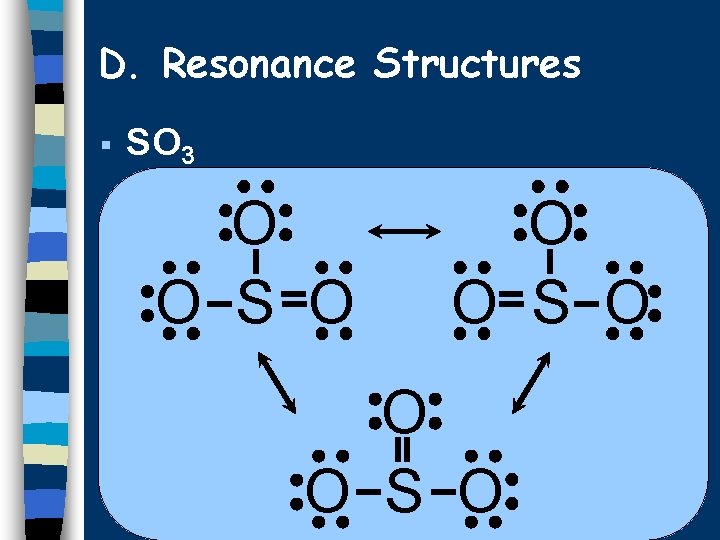
D. Resonance Structures § SO 3 O O S O
Unit 4 – Bonding, Nomenclature & Molecular Structure VI. Molecular Geometry
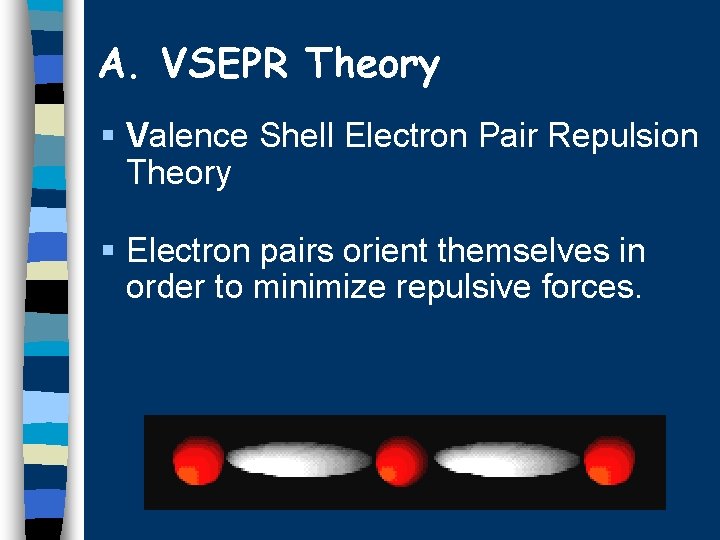
A. VSEPR Theory § Valence Shell Electron Pair Repulsion Theory § Electron pairs orient themselves in order to minimize repulsive forces.
A. VSEPR Theory § Types of e- Pairs § Bonding pairs - form bonds § Lone pairs - nonbonding e- Lone pairs repel more strongly than bonding pairs!!!
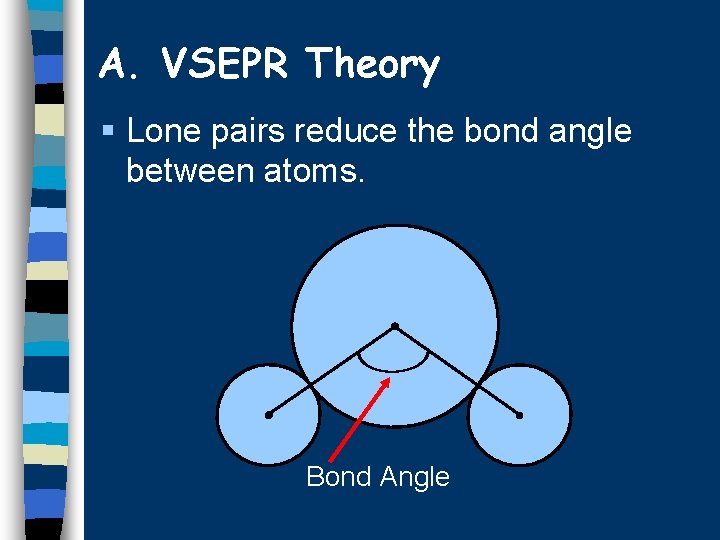
A. VSEPR Theory § Lone pairs reduce the bond angle between atoms. Bond Angle
B. Determining Molecular Shape § Draw the Lewis Diagram. § Tally up e- pairs on central atom. § double/triple bonds = ONE pair § Shape is determined by the # of bonding pairs and lone pairs.
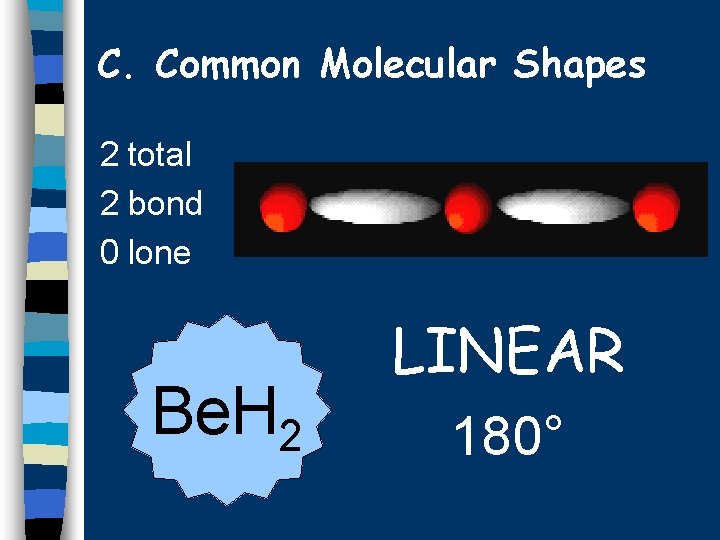
C. Common Molecular Shapes 2 total 2 bond 0 lone Be. H 2 LINEAR 180°
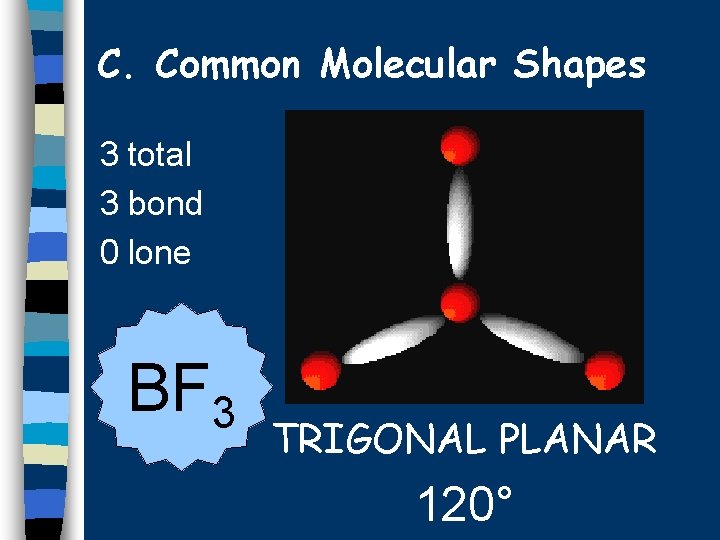
C. Common Molecular Shapes 3 total 3 bond 0 lone BF 3 TRIGONAL PLANAR 120°
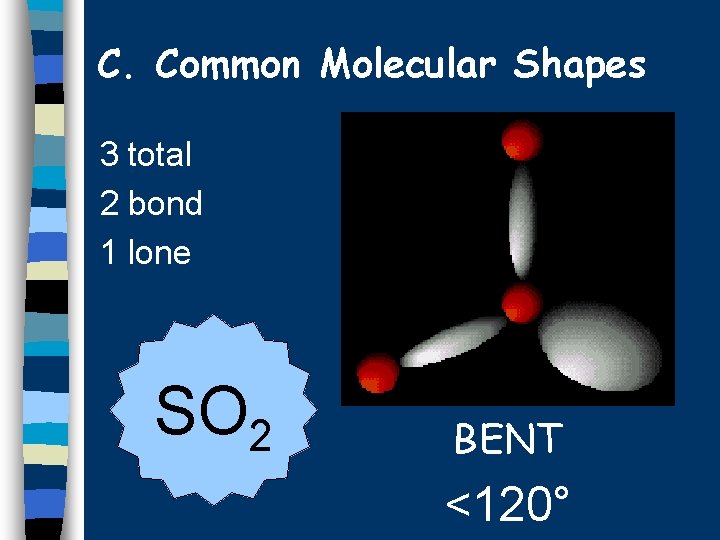
C. Common Molecular Shapes 3 total 2 bond 1 lone SO 2 BENT <120°
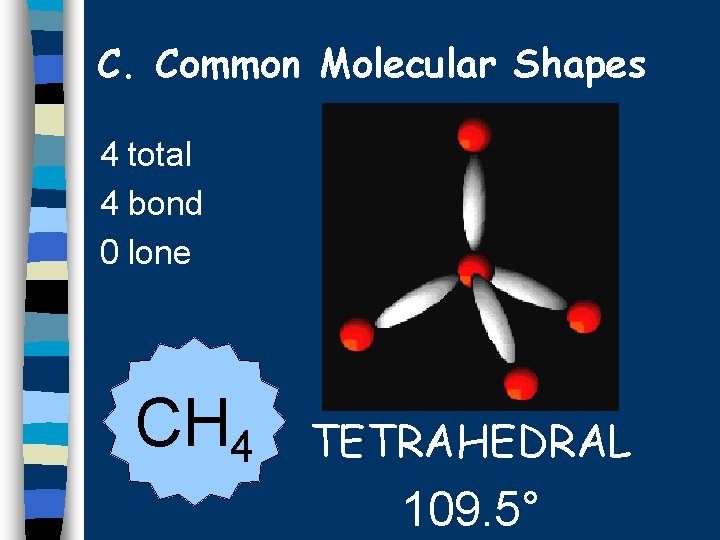
C. Common Molecular Shapes 4 total 4 bond 0 lone CH 4 TETRAHEDRAL 109. 5°
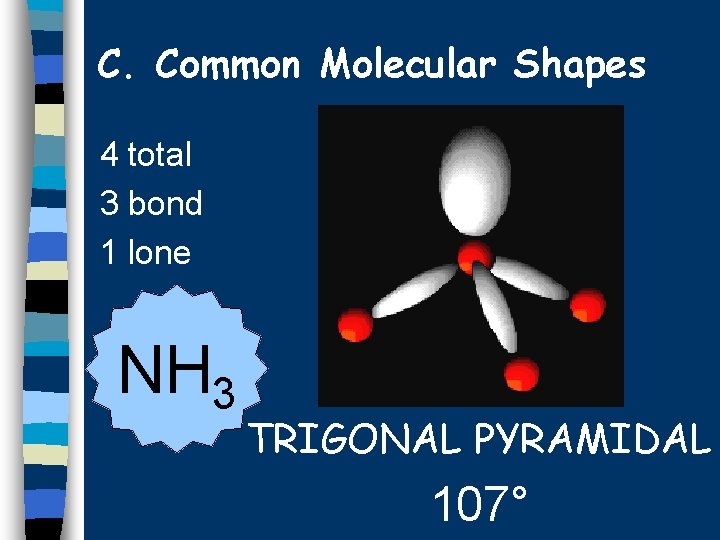
C. Common Molecular Shapes 4 total 3 bond 1 lone NH 3 TRIGONAL PYRAMIDAL 107°
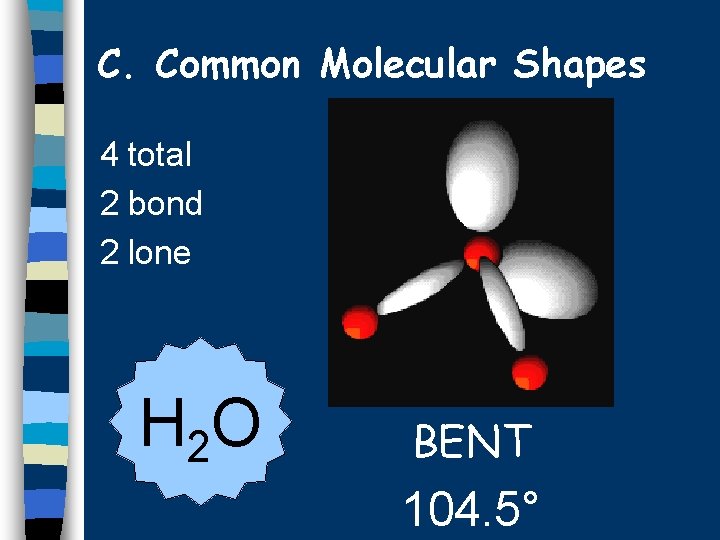
C. Common Molecular Shapes 4 total 2 bond 2 lone H 2 O BENT 104. 5°
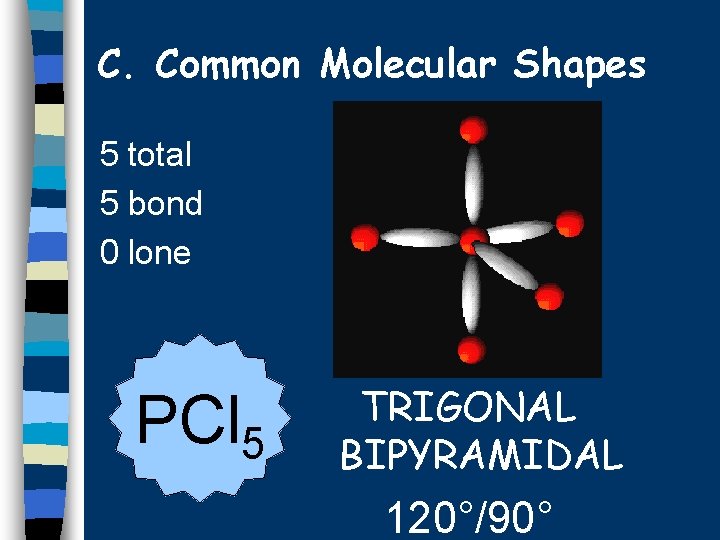
C. Common Molecular Shapes 5 total 5 bond 0 lone PCl 5 TRIGONAL BIPYRAMIDAL 120°/90°
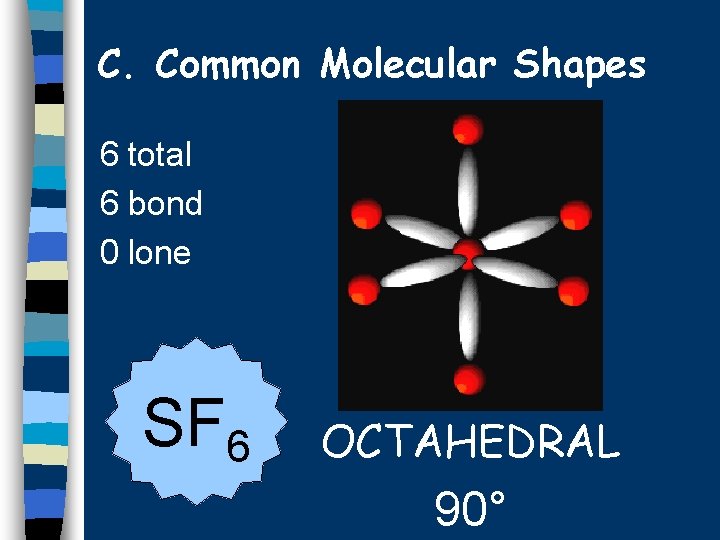
C. Common Molecular Shapes 6 total 6 bond 0 lone SF 6 OCTAHEDRAL 90°
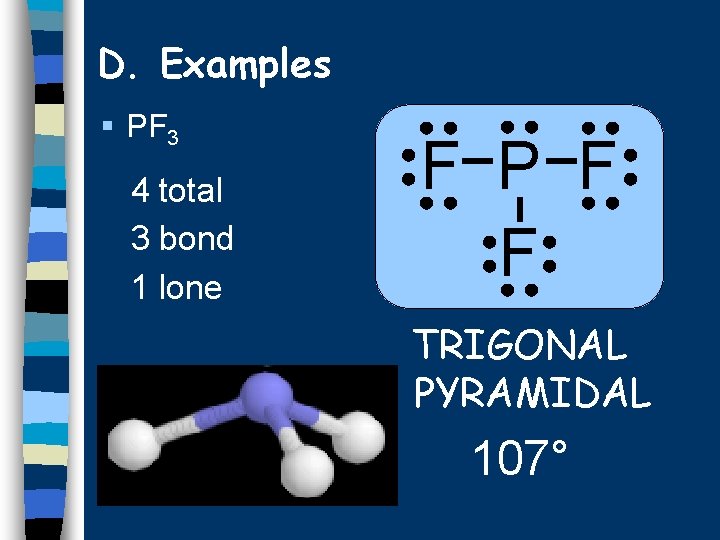
D. Examples § PF 3 4 total 3 bond 1 lone F P F F TRIGONAL PYRAMIDAL 107°
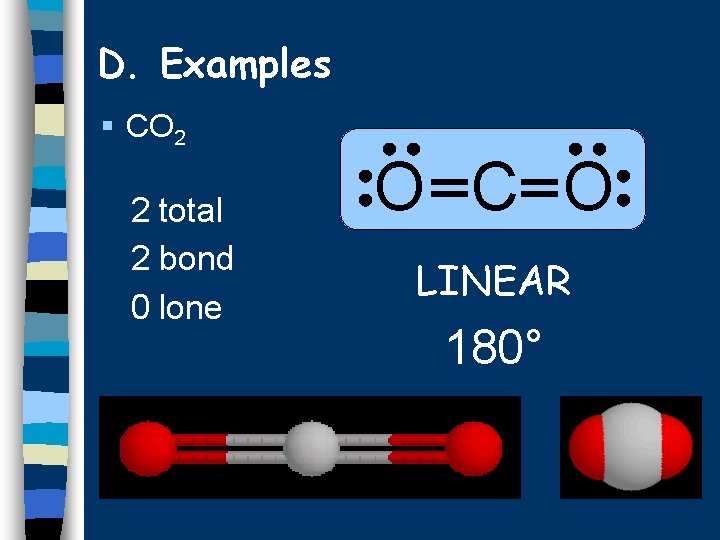
D. Examples § CO 2 2 total 2 bond 0 lone O C O LINEAR 180°
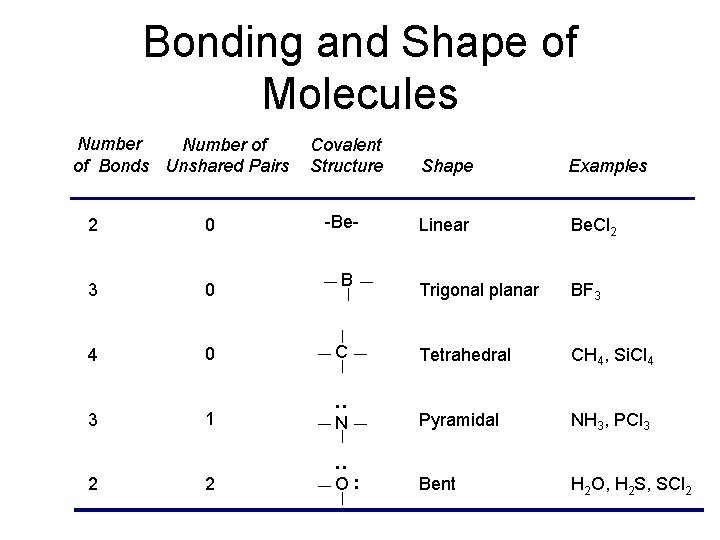
Bonding and Shape of Molecules Covalent Structure Shape Examples -Be- Linear Be. Cl 2 Trigonal planar BF 3 2 0 3 0 4 0 C Tetrahedral CH 4, Si. Cl 4 3 1 : Number of of Bonds Unshared Pairs Pyramidal NH 3, PCl 3 2 2 Bent H 2 O, H 2 S, SCl 2 B : N O:
Unit 4 – Bonding, Nomenclature & Molecular Geometry VII. Molecular Polarity
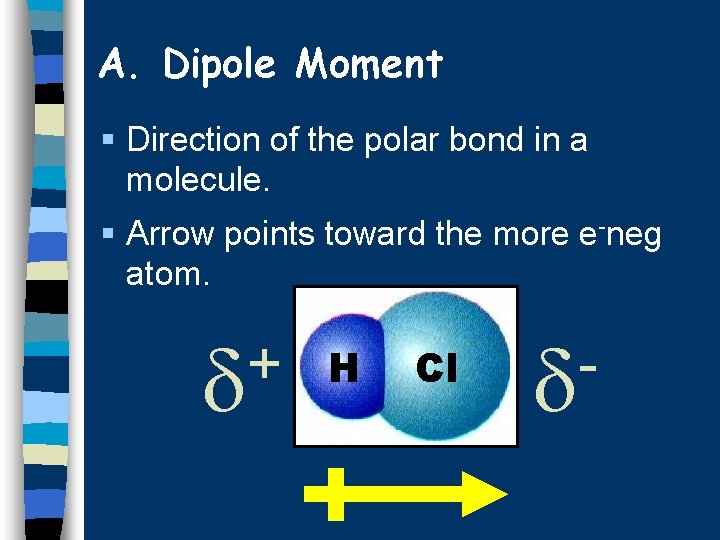
A. Dipole Moment § Direction of the polar bond in a molecule. § Arrow points toward the more e-neg atom. + H Cl
B. Determining Molecular Polarity § Depends on: § dipole moments § molecular shape
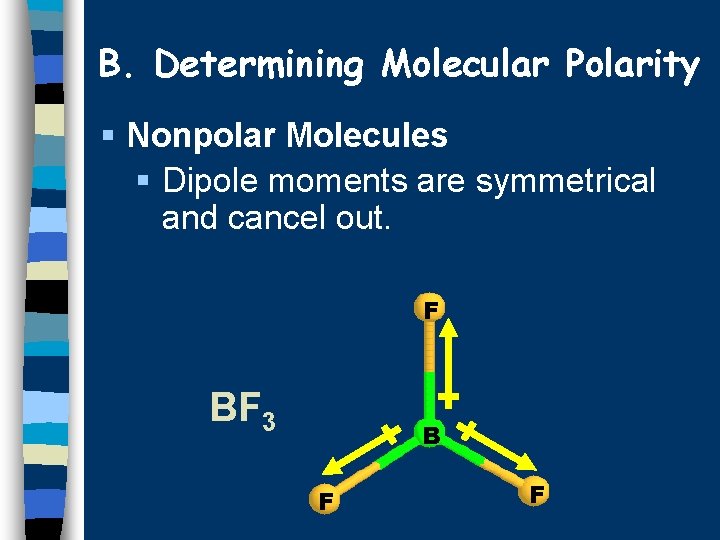
B. Determining Molecular Polarity § Nonpolar Molecules § Dipole moments are symmetrical and cancel out. F BF 3 B F F
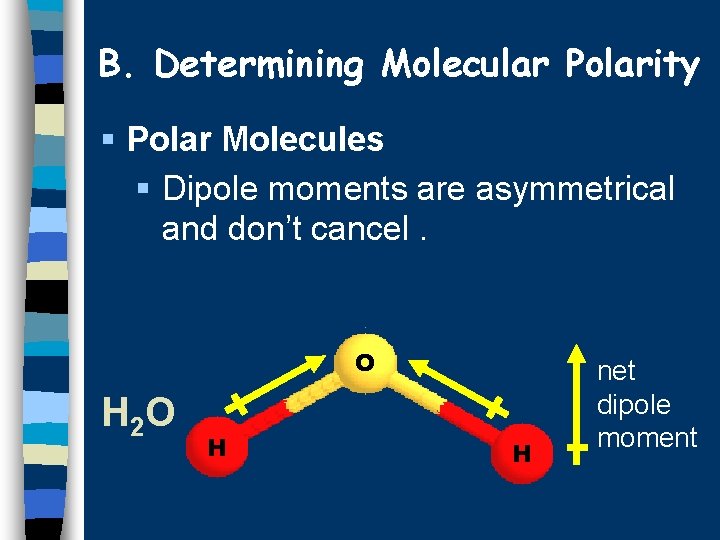
B. Determining Molecular Polarity § Polar Molecules § Dipole moments are asymmetrical and don’t cancel. O H 2 O H H net dipole moment
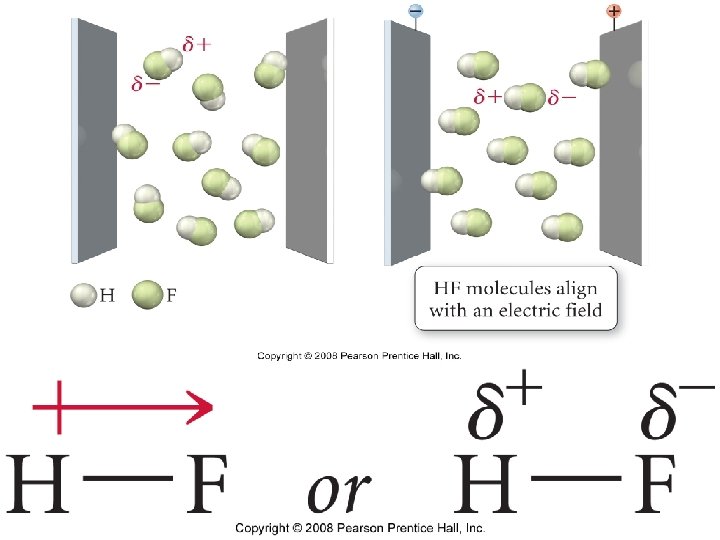
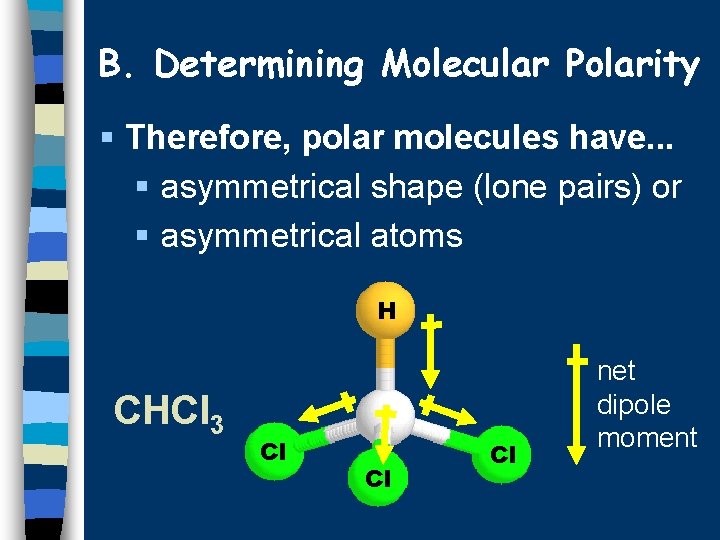
B. Determining Molecular Polarity § Therefore, polar molecules have. . . § asymmetrical shape (lone pairs) or § asymmetrical atoms H CHCl 3 Cl Cl Cl net dipole moment

Molecular Polarity Practice Problems: Determine if the following molecules are polar or nonpolar based on their shape. a) CH 4 symmetrical tetrahedral nonpolar b) NH 3 asymmetrical trigonal pyramidal polar c) H 2 O asymmetrical bent polar d) HCl e) BF 3 asymmetrical linear symmetrical trigonal planar polar nonpolar Dipole of NH 3 Dipole of H 2 O

Polar Bonds. . F N O Cl H . . H H Polar F Polar H B Polar Cl F F Cl Polar F F Cl Xe F H F Nonpolar H C C Cl Cl Nonpolar H H Polar A molecule has a zero dipole moment if its dipoles cancel one another.
- Slides: 39