
Unit 4 A UPPER AND LOWER CANADA THE



- Slides: 33
Unit 4 A UPPER AND LOWER CANADA (THE CANADAS) 1815 -1850 s
Part One Immigration
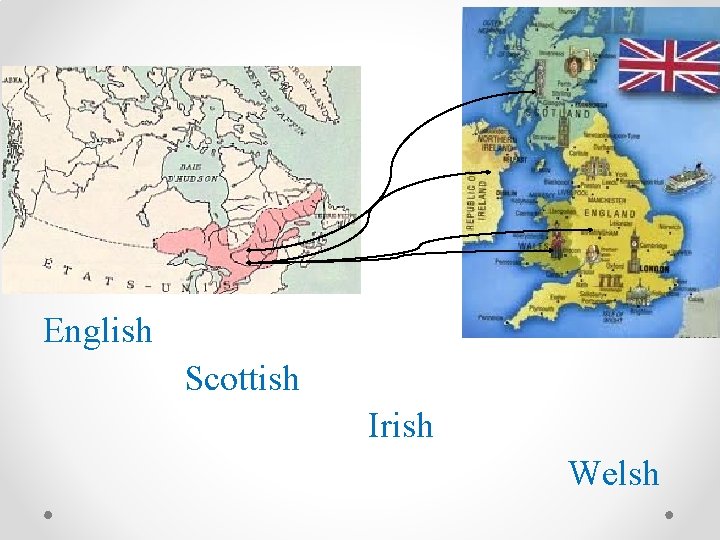
English Scottish Irish Welsh
Why did so many British people immigrate? Most immigrated to Upper and Lower Canada or the Maritimes because of POVERTY or, at least for economic reasons!
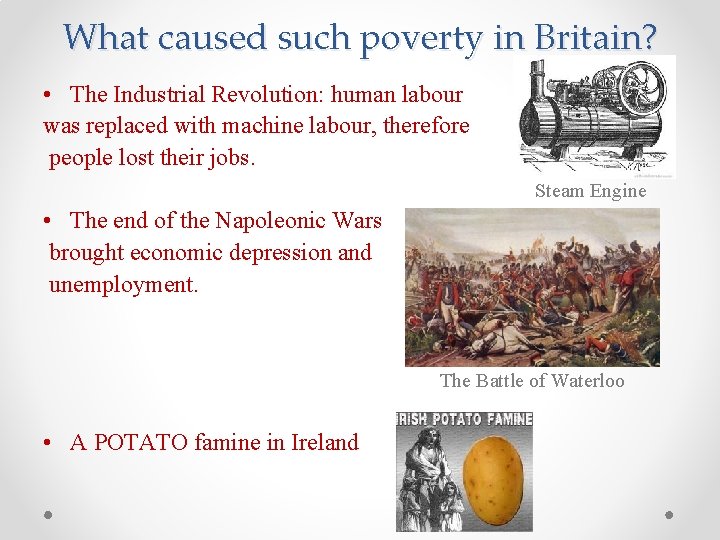
What caused such poverty in Britain? • The Industrial Revolution: human labour was replaced with machine labour, therefore people lost their jobs. Steam Engine • The end of the Napoleonic Wars brought economic depression and unemployment. The Battle of Waterloo • A POTATO famine in Ireland
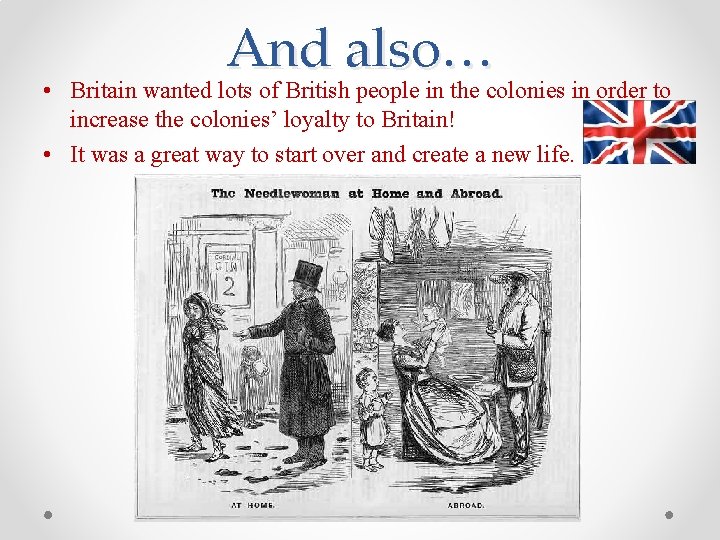
And also… • Britain wanted lots of British people in the colonies in order to increase the colonies’ loyalty to Britain! • It was a great way to start over and create a new life.
However, the trip was not a pleasure cruise… People endured BAD FOOD AND WATER POOR SANITATION VERY LITTLE SPACE DISEASE And therefore, many did not survive the voyage.
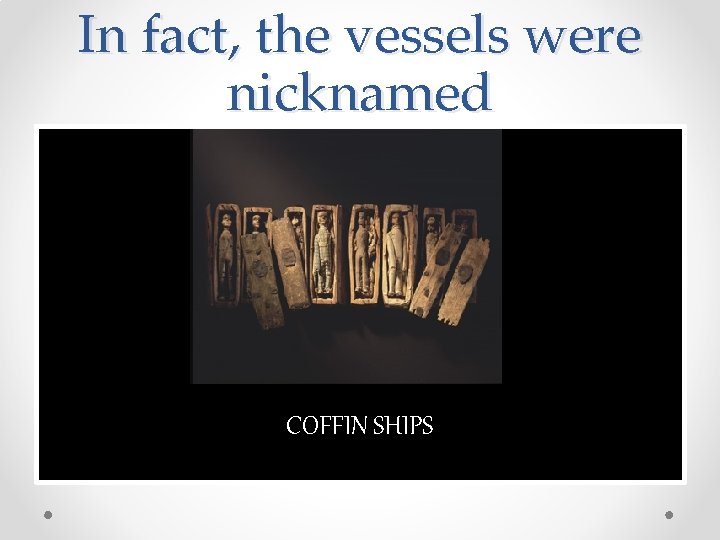
In fact, the vessels were nicknamed COFFIN SHIPS
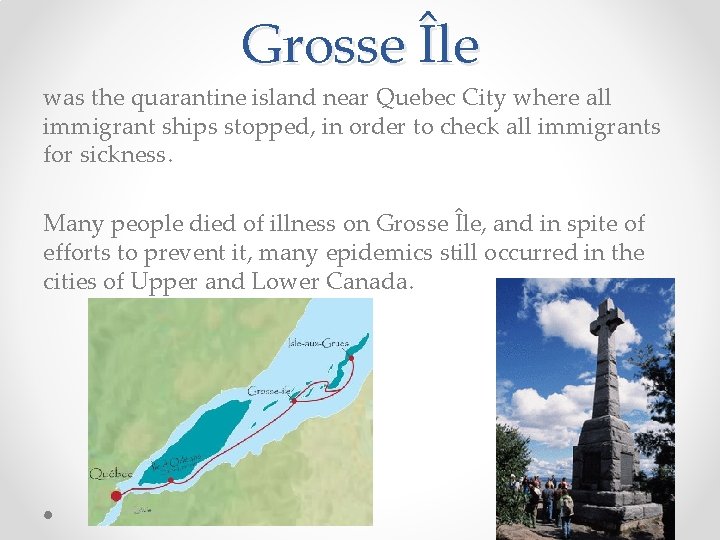
Grosse Île was the quarantine island near Quebec City where all immigrant ships stopped, in order to check all immigrants for sickness. Many people died of illness on Grosse Île, and in spite of efforts to prevent it, many epidemics still occurred in the cities of Upper and Lower Canada.
Part Two Politics in Upper and Lower Canada
Was the colonial government in “the Canadas” a democracy? Sort of, but not really…
Although there was an elected assembly, as in all British-run colonies, very few people could vote. You had to be Male Over 21 A property owner (or a widow who owned property)
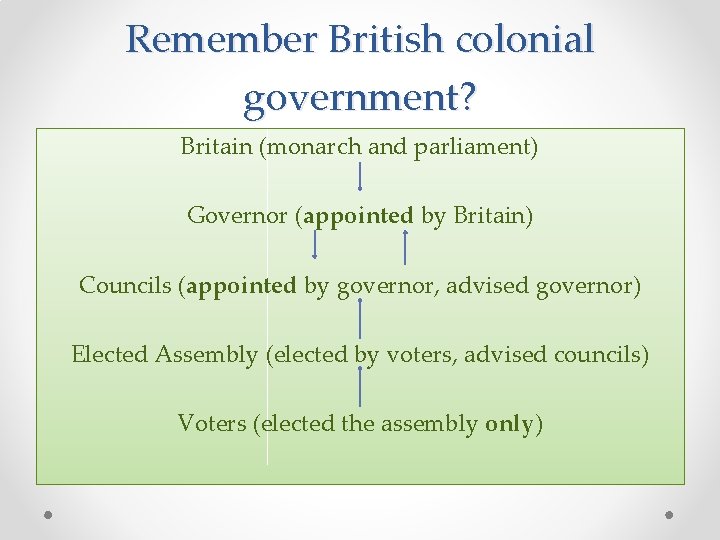
Remember British colonial government? Britain (monarch and parliament) Governor (appointed by Britain) Councils (appointed by governor, advised governor) Elected Assembly (elected by voters, advised councils) Voters (elected the assembly only)
Was everyone in Upper and Lower Canada happy with their government? NO!
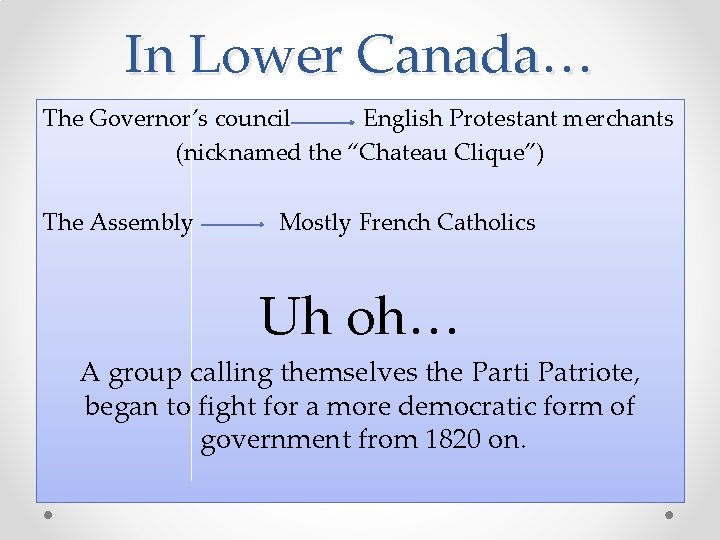
In Lower Canada… The Governor’s council English Protestant merchants (nicknamed the “Chateau Clique”) The Assembly Mostly French Catholics Uh oh… A group calling themselves the Parti Patriote, began to fight for a more democratic form of government from 1820 on.
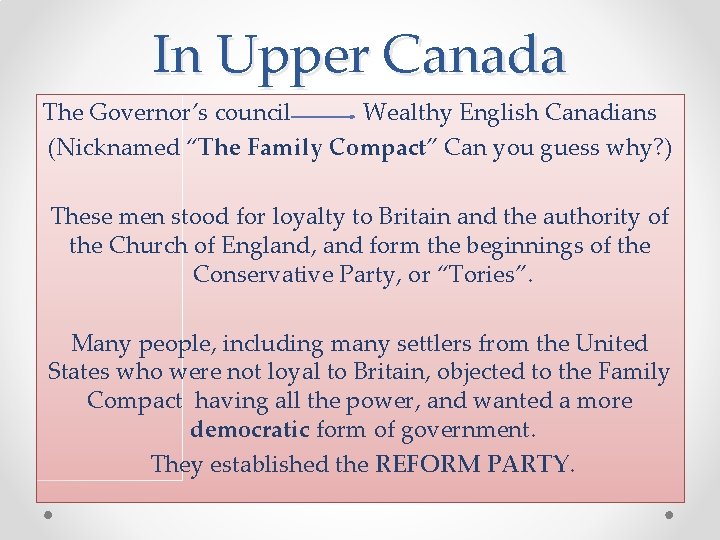
In Upper Canada The Governor’s council Wealthy English Canadians (Nicknamed “The Family Compact” Can you guess why? ) These men stood for loyalty to Britain and the authority of the Church of England, and form the beginnings of the Conservative Party, or “Tories”. Many people, including many settlers from the United States who were not loyal to Britain, objected to the Family Compact having all the power, and wanted a more democratic form of government. They established the REFORM PARTY.
The result of all this discontent in Upper and Lower Canada was… VIOLENT REBELLION
What, by the way, IS a DEMOCRACY? Look in the glossary of your blue textbook, find the definition of democracy, and write the definition here. Open blue textbooks to pp. 210 -211, and read various PERSPECTIVES on democracy.
REBELLIONS of 1837 -38 I LOWER CANADA 1. Lower Canada in 1800 s made up of: Francophones (Canadiens): Habitants, Fr. Middle Class, R. C. Clergy Anglophones: Br. Merchants 2. The governing “council”: Controlled by Anglophone Protestants (CHATEAU CLIQUE) The Assembly: mostly Francophone Catholics UH OH, THIS MEANS TROUBLE!
3. From 1820 s on, there were parties demanding a more democratic gov’t, mostly madae up of Canadiens: Eg. the Parti Patriotes, who had most of the seats in the Assembly. Violent divisions in gov’t led to 3 Canadiens being shot during an election. 4. Adding to the discontent with gov’t. , Br. Immigrants travelling to or through Quebec brought a cholera epidemic, killing almost 5000 people. Lower Canada also suffered four years of crop failures, so that in the winter of 1837 many faced starvation. (Hungry people become ANGRY people!)
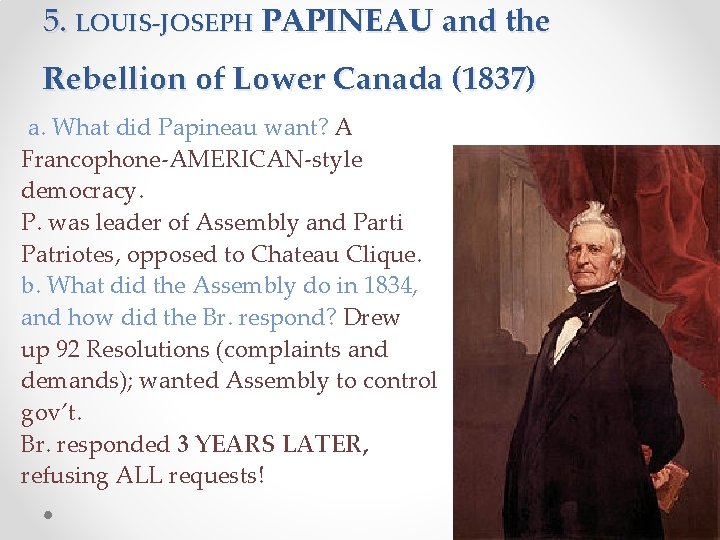
5. LOUIS-JOSEPH PAPINEAU and the Rebellion of Lower Canada (1837) a. What did Papineau want? A Francophone-AMERICAN-style democracy. P. was leader of Assembly and Parti Patriotes, opposed to Chateau Clique. b. What did the Assembly do in 1834, and how did the Br. respond? Drew up 92 Resolutions (complaints and demands); wanted Assembly to control gov’t. Br. responded 3 YEARS LATER, refusing ALL requests!
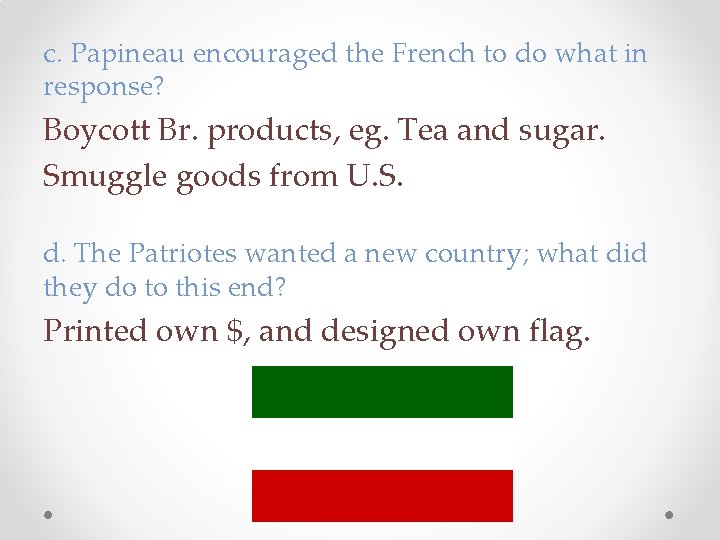
c. Papineau encouraged the French to do what in response? Boycott Br. products, eg. Tea and sugar. Smuggle goods from U. S. d. The Patriotes wanted a new country; what did they do to this end? Printed own $, and designed own flag.
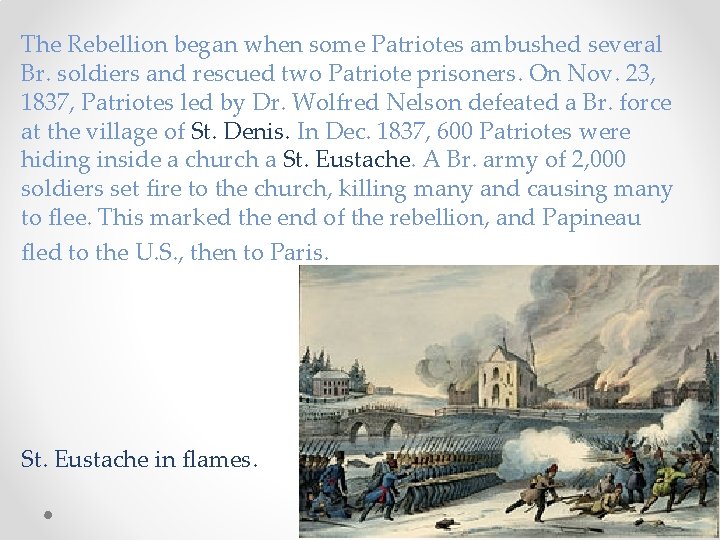
The Rebellion began when some Patriotes ambushed several Br. soldiers and rescued two Patriote prisoners. On Nov. 23, 1837, Patriotes led by Dr. Wolfred Nelson defeated a Br. force at the village of St. Denis. In Dec. 1837, 600 Patriotes were hiding inside a church a St. Eustache. A Br. army of 2, 000 soldiers set fire to the church, killing many and causing many to flee. This marked the end of the rebellion, and Papineau fled to the U. S. , then to Paris. St. Eustache in flames.
YOU TUBE CLIP: 1837 LOWER CANADA REBELLION
II UPPER CANADA 1. Who controlled the gov’t in Upper Canada? Family Compact 2. The Family Compact believed: a. In the superiority of everything Br. , especially its political institutions, the Church of England, and the Br. Empire. b. That leaders should be men of high character, wealthy, knowledgeable, intelligent, and loyal. c. That ordinary people cd not be trusted. d. That democracy was BAD.
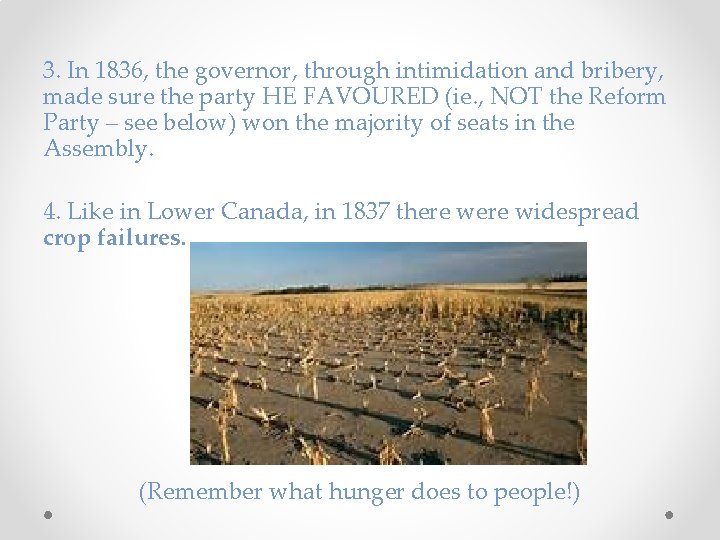
3. In 1836, the governor, through intimidation and bribery, made sure the party HE FAVOURED (ie. , NOT the Reform Party – see below) won the majority of seats in the Assembly. 4. Like in Lower Canada, in 1837 there widespread crop failures. (Remember what hunger does to people!)
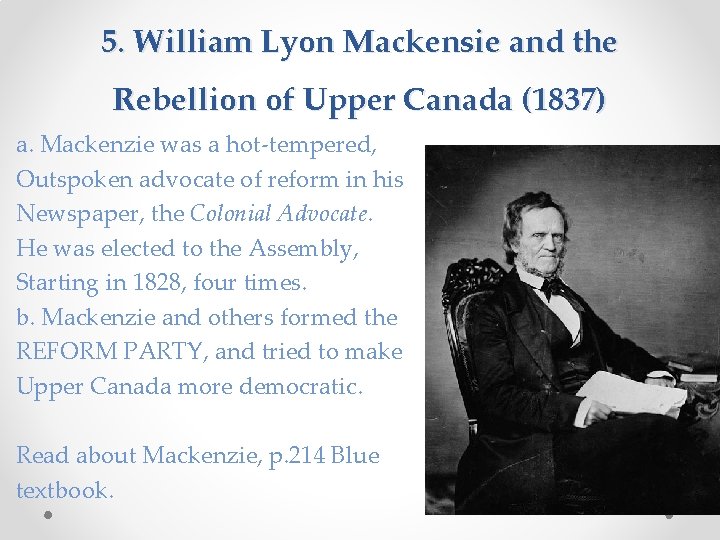
5. William Lyon Mackensie and the Rebellion of Upper Canada (1837) a. Mackenzie was a hot-tempered, Outspoken advocate of reform in his Newspaper, the Colonial Advocate. He was elected to the Assembly, Starting in 1828, four times. b. Mackenzie and others formed the REFORM PARTY, and tried to make Upper Canada more democratic. Read about Mackenzie, p. 214 Blue textbook.
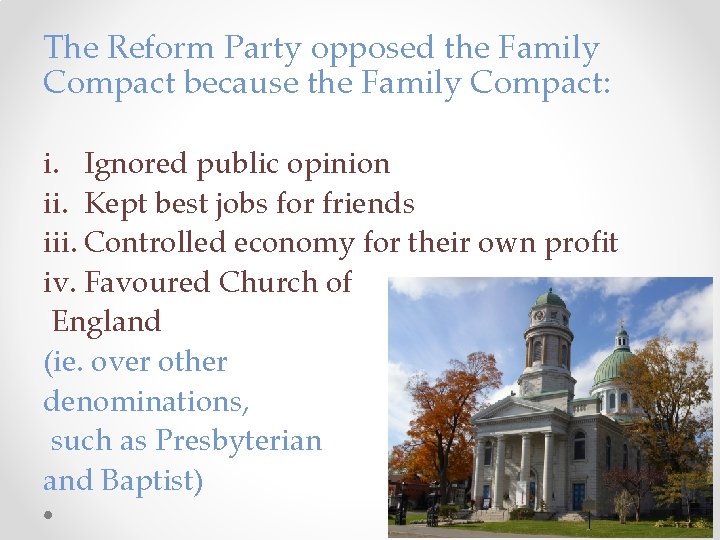
The Reform Party opposed the Family Compact because the Family Compact: i. Ignored public opinion ii. Kept best jobs for friends iii. Controlled economy for their own profit iv. Favoured Church of England (ie. over other denominations, such as Presbyterian and Baptist)
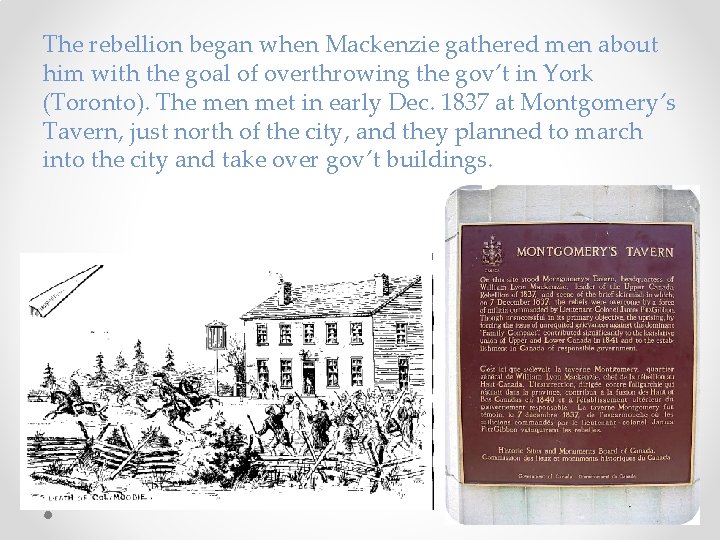
The rebellion began when Mackenzie gathered men about him with the goal of overthrowing the gov’t in York (Toronto). The men met in early Dec. 1837 at Montgomery’s Tavern, just north of the city, and they planned to march into the city and take over gov’t buildings.
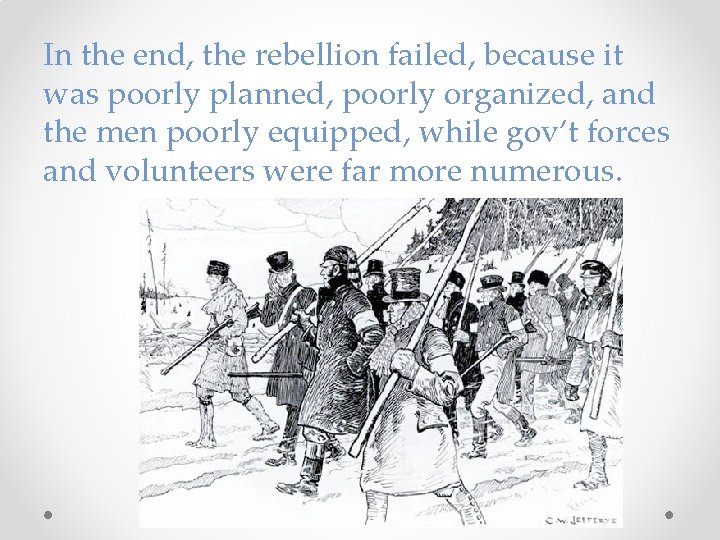
In the end, the rebellion failed, because it was poorly planned, poorly organized, and the men poorly equipped, while gov’t forces and volunteers were far more numerous.
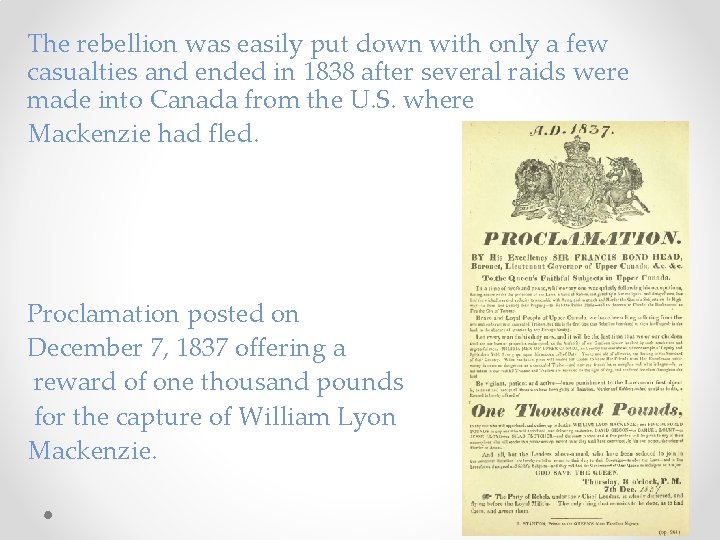
The rebellion was easily put down with only a few casualties and ended in 1838 after several raids were made into Canada from the U. S. where Mackenzie had fled. Proclamation posted on December 7, 1837 offering a reward of one thousand pounds for the capture of William Lyon Mackenzie.
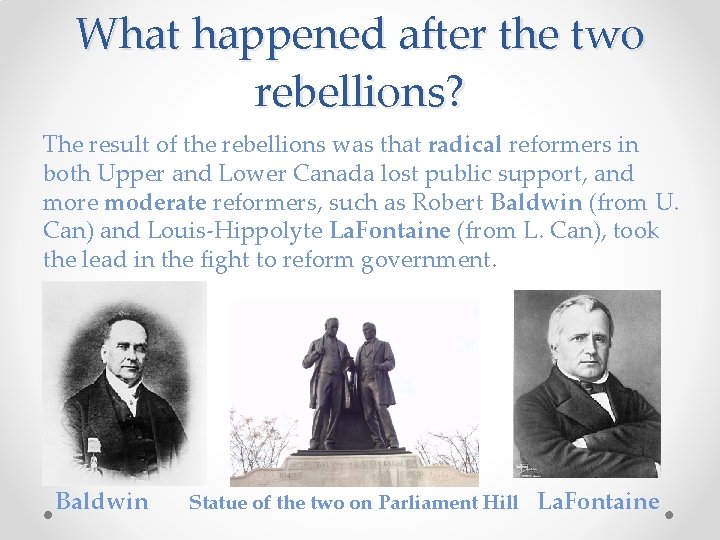
What happened after the two rebellions? The result of the rebellions was that radical reformers in both Upper and Lower Canada lost public support, and more moderate reformers, such as Robert Baldwin (from U. Can) and Louis-Hippolyte La. Fontaine (from L. Can), took the lead in the fight to reform government. Baldwin Statue of the two on Parliament Hill La. Fontaine
END OF UNIT 4 A NOTES