
Unit 4 6 Diagram Book Ecology Trophic Levels

Unit 4 -6 Diagram Book Ecology, Trophic Levels, ATP /ADP, Flower Anatomy, Anatomy of a Leaf, Photosynthesis, and Cellular Respiration
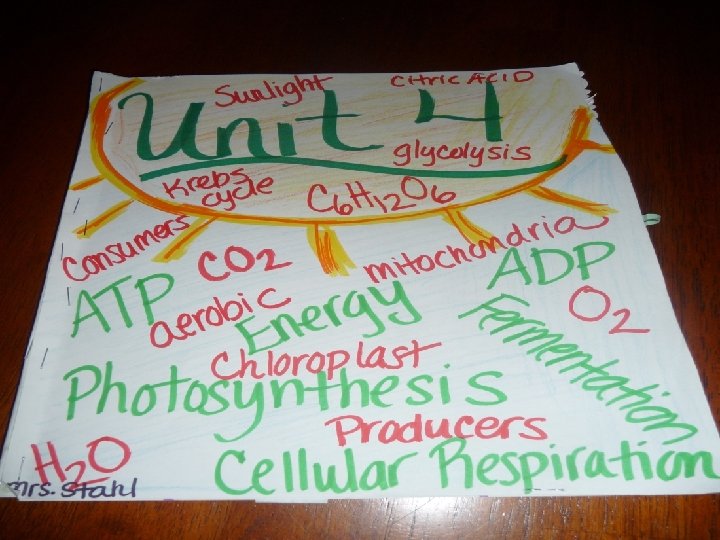
Create a cover!!!!! �The cover should represent theme of Unit 4 -6 -> Ecology, Plant Anatomy, Photosynthesis and Cellular Respiration. �Consider the vocab: Consumers, Producers, Autotrophs, Heterotrophs, Sunlight, Kreb’s Cycle, Calvin Cycle, Cellular Respiration, ATP, ADP, Glycolysis, H 2 O, O 2, C 6 H 12 O 6, CO 2, Chloroplast, Mitochondria, Fermentation, and Energy.
Page 1 - Cut out the diagrams and charts to fit appropriately. �Define food web. �Under the food web picture write “The arrows show the direction in which energy flows. ” �On the trophic level chart fill in the correct animals from the food web that fit each category.
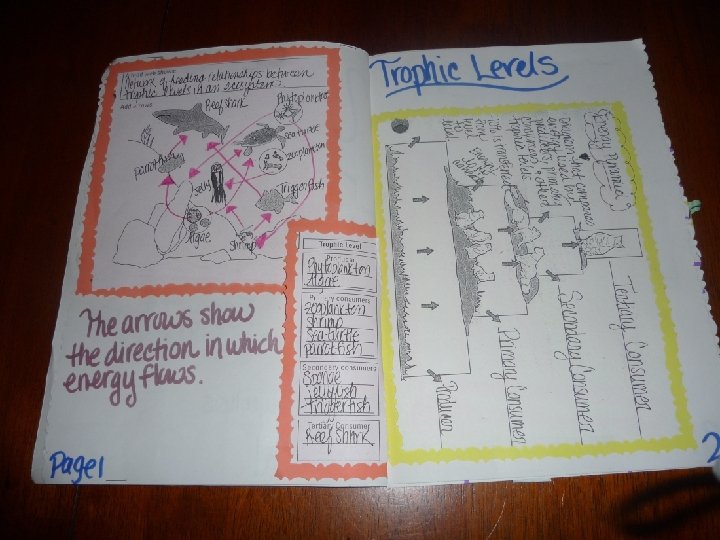
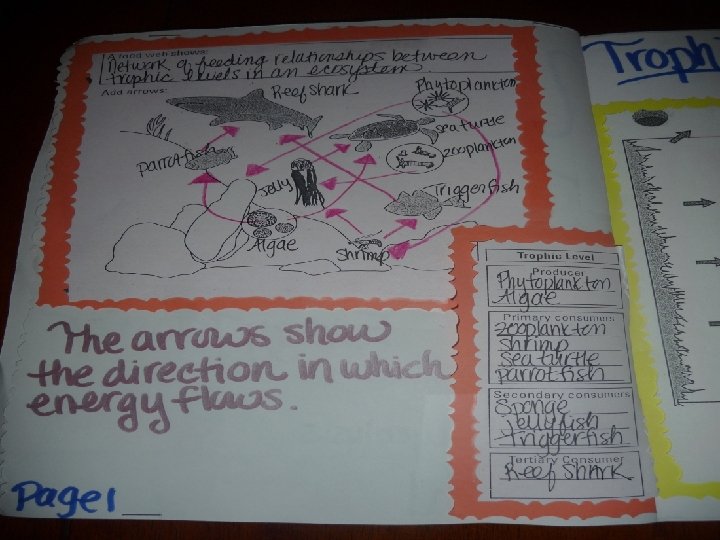
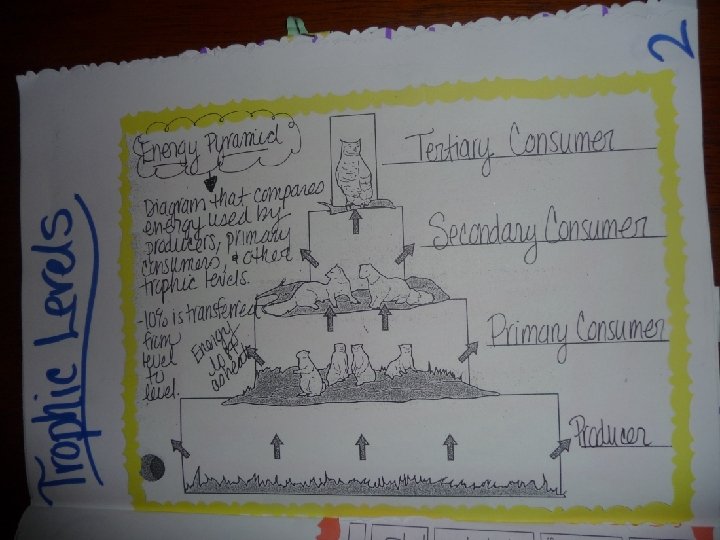
Page 2 - Trophic Levels �Label the levels producer, primary consumer, secondary consumer, and tertiary consumer. �Define Energy Pyramid. �How much energy is transferred from trophic level to trophic level? Write this on the page.
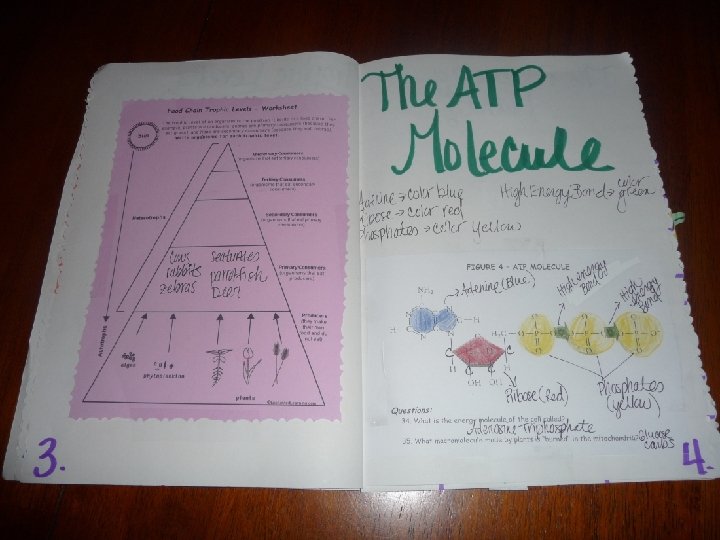
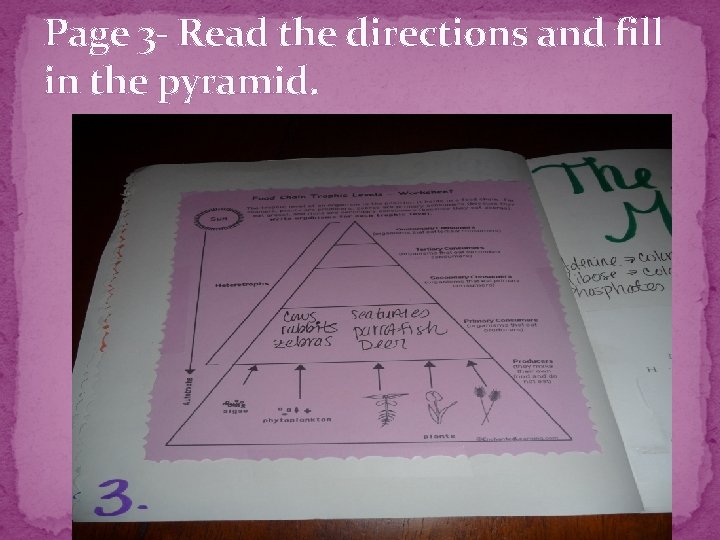
Page 3 - Read the directions and fill in the pyramid.
Page 4 - ATP Molecule �Color and label Adenine blue �Color and label ribose red �Color and label the phosphates yellow �Color and label the high energy bonds green �Answer the questions.

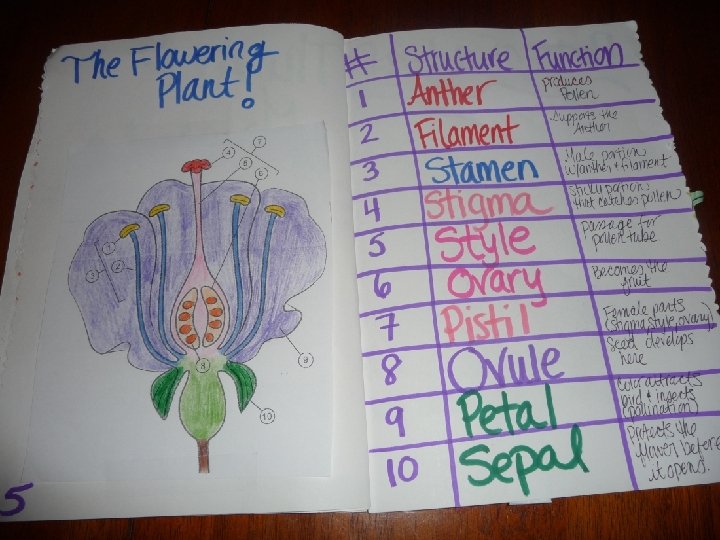
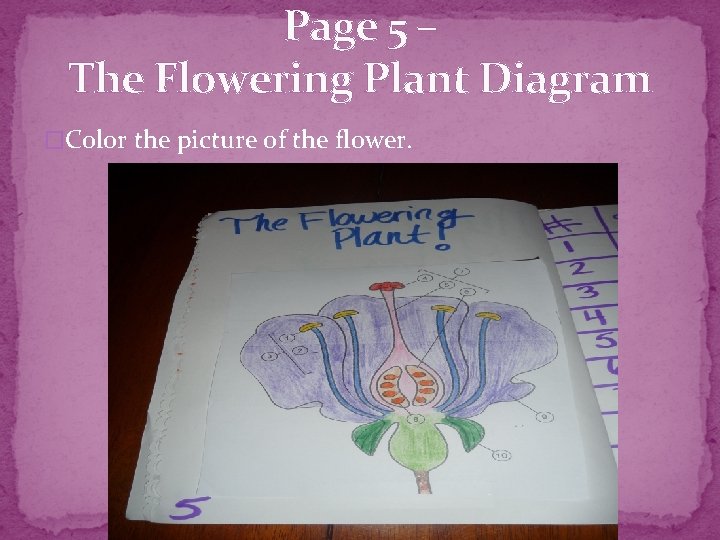
Page 5 – The Flowering Plant Diagram �Color the picture of the flower.
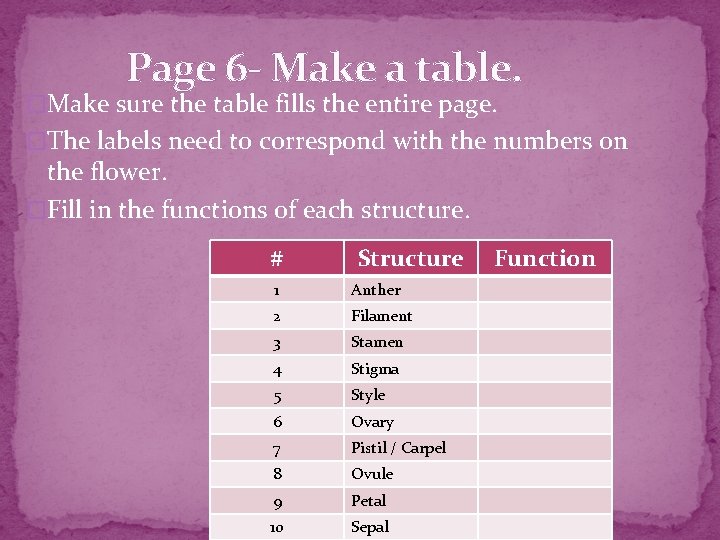
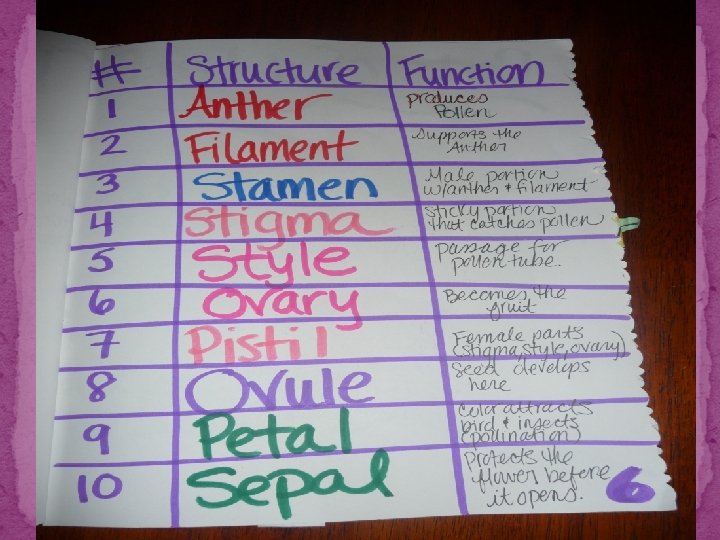
Page 6 - Make a table. �Make sure the table fills the entire page. �The labels need to correspond with the numbers on the flower. �Fill in the functions of each structure. # Structure 1 Anther 2 Filament 3 Stamen 4 Stigma 5 Style 6 Ovary 7 Pistil / Carpel 8 Ovule 9 Petal 10 Sepal Function
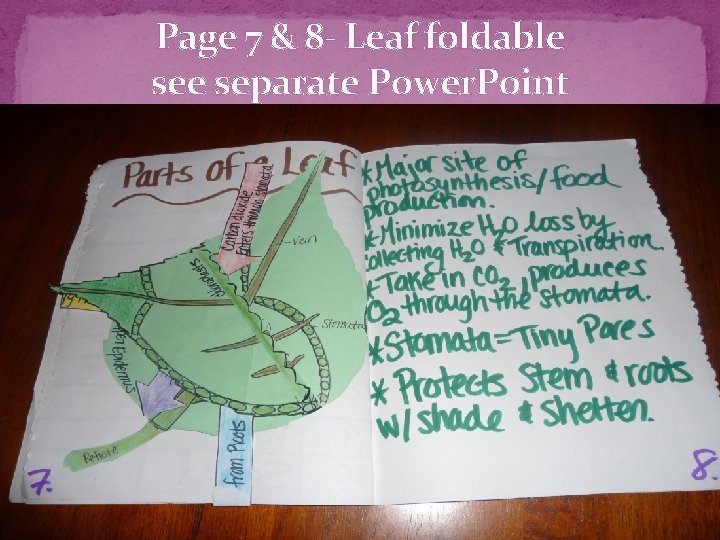
Page 7 & 8 - Leaf foldable separate Power. Point
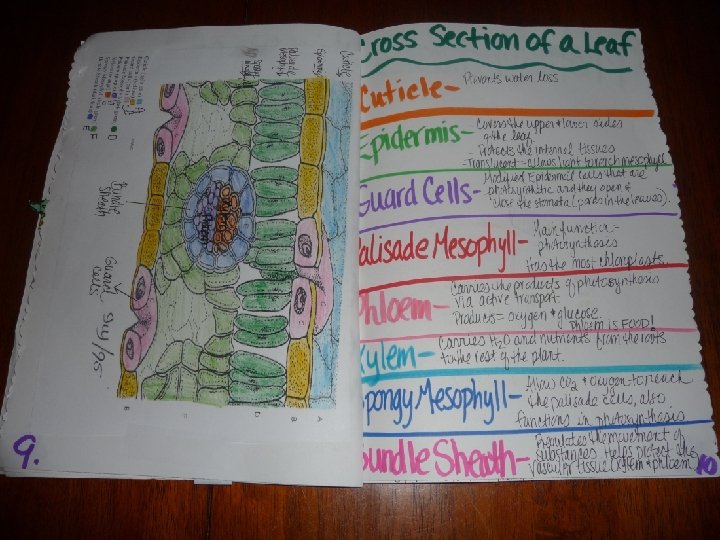
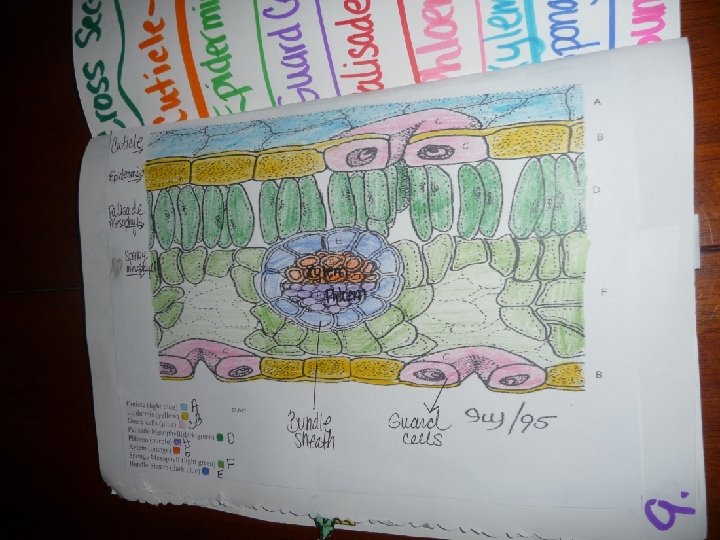
Page 9 - Cross Section of a Leaf �Color the anatomy of the leaf according to the key. �Cuticle, labeled A- color light blue �Epidermis, labeled B- color yellow �Guard Cells, labeled C- color pink �Palisade Mesophyll, labeled D, color dark green �Phloem, labeled H, color purple �Xylem, labeled G, color orange �Spongy Mesophyll, labeled F, color light green �Bundle Sheath, labeled E, color dark blue
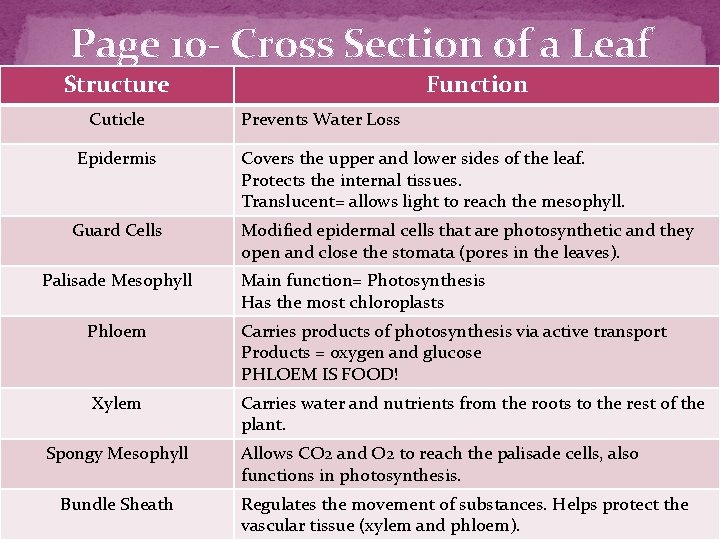
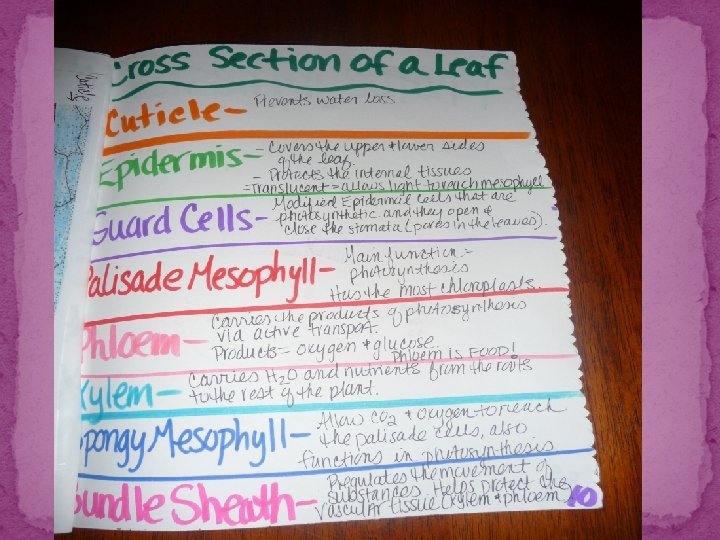
Page 10 - Cross Section of a Leaf Structure Cuticle Epidermis Guard Cells Palisade Mesophyll Function Prevents Water Loss Covers the upper and lower sides of the leaf. Protects the internal tissues. Translucent= allows light to reach the mesophyll. Modified epidermal cells that are photosynthetic and they open and close the stomata (pores in the leaves). Main function= Photosynthesis Has the most chloroplasts Phloem Carries products of photosynthesis via active transport Products = oxygen and glucose PHLOEM IS FOOD! Xylem Carries water and nutrients from the roots to the rest of the plant. Spongy Mesophyll Bundle Sheath Allows CO 2 and O 2 to reach the palisade cells, also functions in photosynthesis. Regulates the movement of substances. Helps protect the vascular tissue (xylem and phloem).
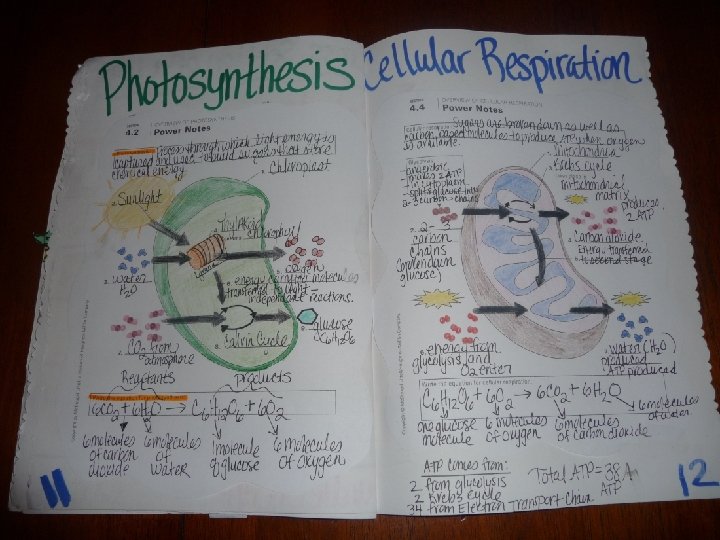
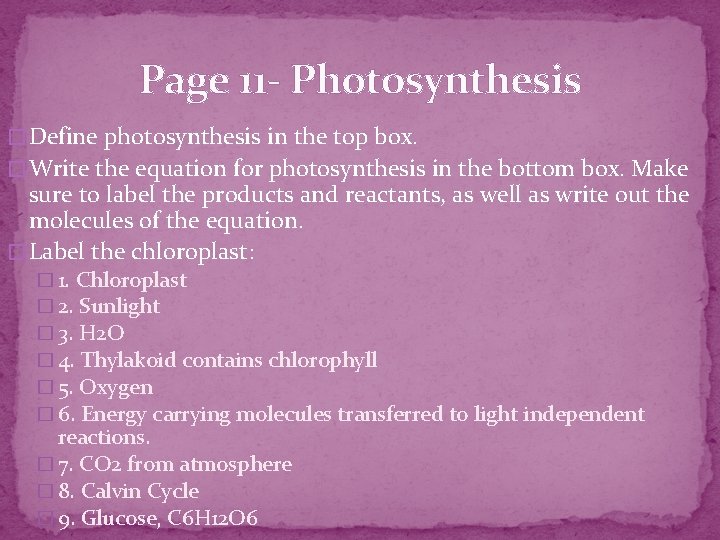
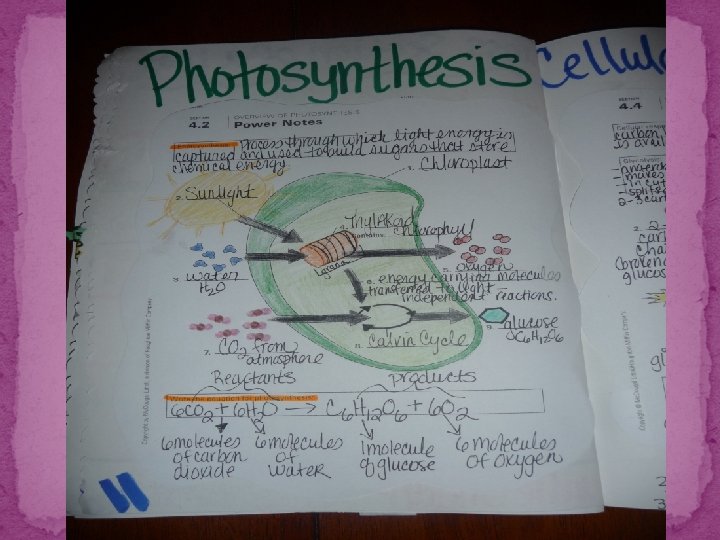
Page 11 - Photosynthesis � Define photosynthesis in the top box. � Write the equation for photosynthesis in the bottom box. Make sure to label the products and reactants, as well as write out the molecules of the equation. � Label the chloroplast: � 1. Chloroplast � 2. Sunlight � 3. H 2 O � 4. Thylakoid contains chlorophyll � 5. Oxygen � 6. Energy carrying molecules transferred to light independent reactions. � 7. CO 2 from atmosphere � 8. Calvin Cycle � 9. Glucose, C 6 H 12 O 6
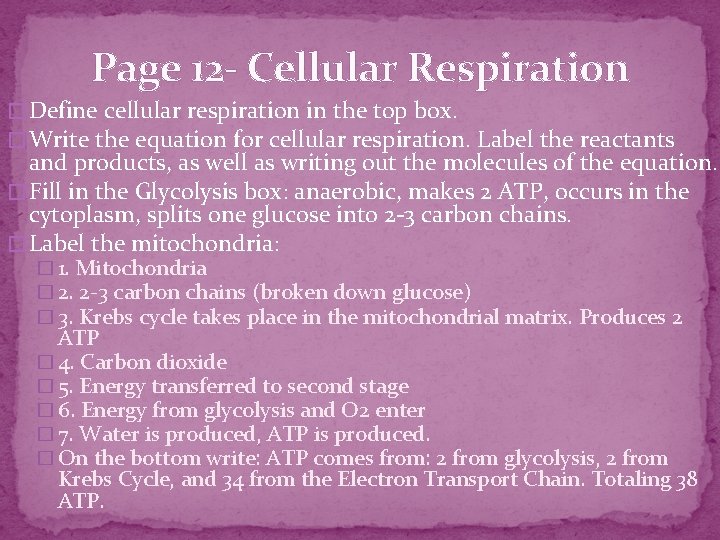
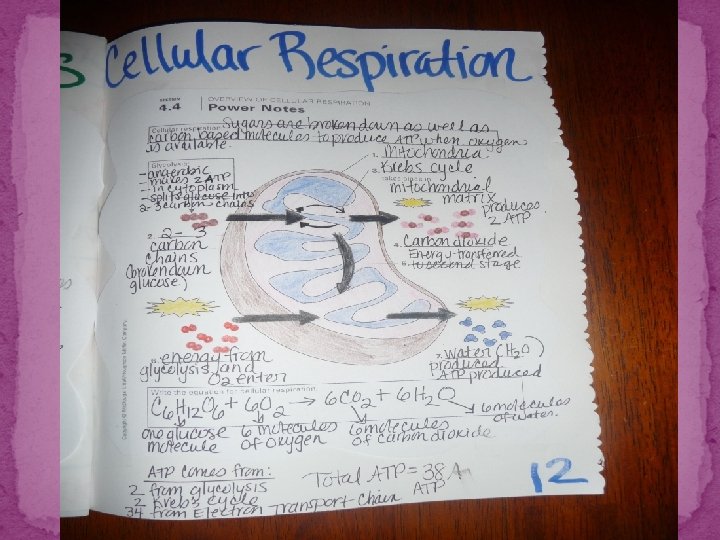
Page 12 - Cellular Respiration � Define cellular respiration in the top box. � Write the equation for cellular respiration. Label the reactants and products, as well as writing out the molecules of the equation. � Fill in the Glycolysis box: anaerobic, makes 2 ATP, occurs in the cytoplasm, splits one glucose into 2 -3 carbon chains. � Label the mitochondria: � 1. Mitochondria � 2. 2 -3 carbon chains (broken down glucose) � 3. Krebs cycle takes place in the mitochondrial matrix. Produces 2 ATP � 4. Carbon dioxide � 5. Energy transferred to second stage � 6. Energy from glycolysis and O 2 enter � 7. Water is produced, ATP is produced. � On the bottom write: ATP comes from: 2 from glycolysis, 2 from Krebs Cycle, and 34 from the Electron Transport Chain. Totaling 38 ATP.

- Slides: 28