
UNIT 3 TOPIC 3 CELL TRANSPORT By the
UNIT 3 TOPIC 3: CELL TRANSPORT By the end of this topic, you should be able to… 1. Label a cell membrane with its components and explain the function of each component (carbohydrates, phospholipid head/tail, proteins) 2. Explain what “a cell membrane is selectively permeable means” 3. Explain why the cell membrane is known as the Fluid Mosaic Model 4. Compare and contrast passive transport (diffusion, facilitated diffusion, osmosis) with active transport (endocytosis, exocytosis) 5. Discuss the importance of surface area to volume ratio
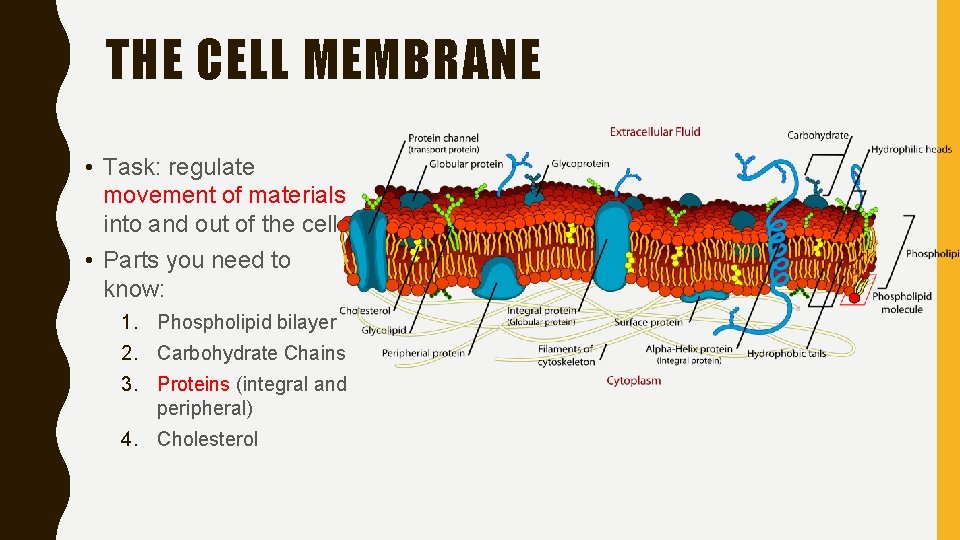
THE CELL MEMBRANE • Task: regulate movement of materials into and out of the cell • Parts you need to know: 1. Phospholipid bilayer 2. Carbohydrate Chains 3. Proteins (integral and peripheral) 4. Cholesterol
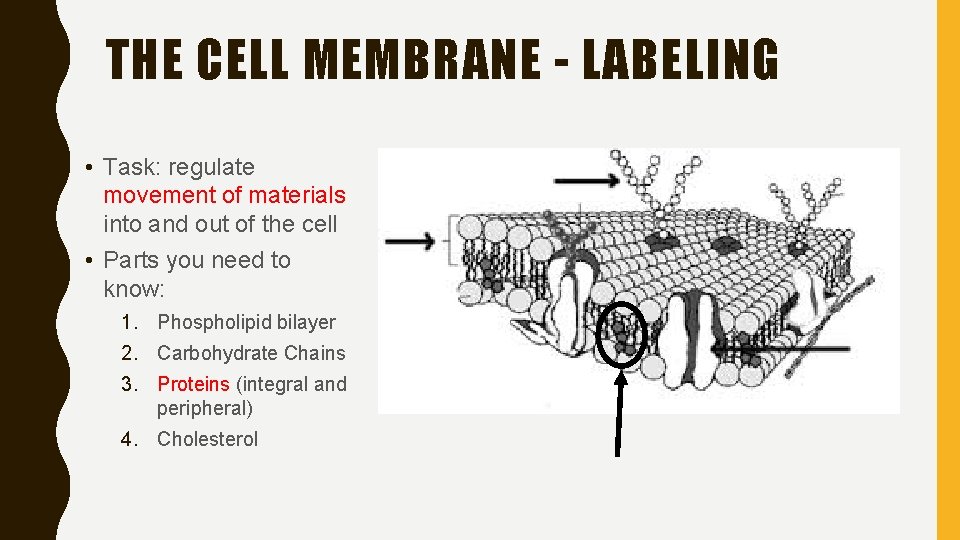
THE CELL MEMBRANE - LABELING • Task: regulate movement of materials into and out of the cell • Parts you need to know: 1. Phospholipid bilayer 2. Carbohydrate Chains 3. Proteins (integral and peripheral) 4. Cholesterol
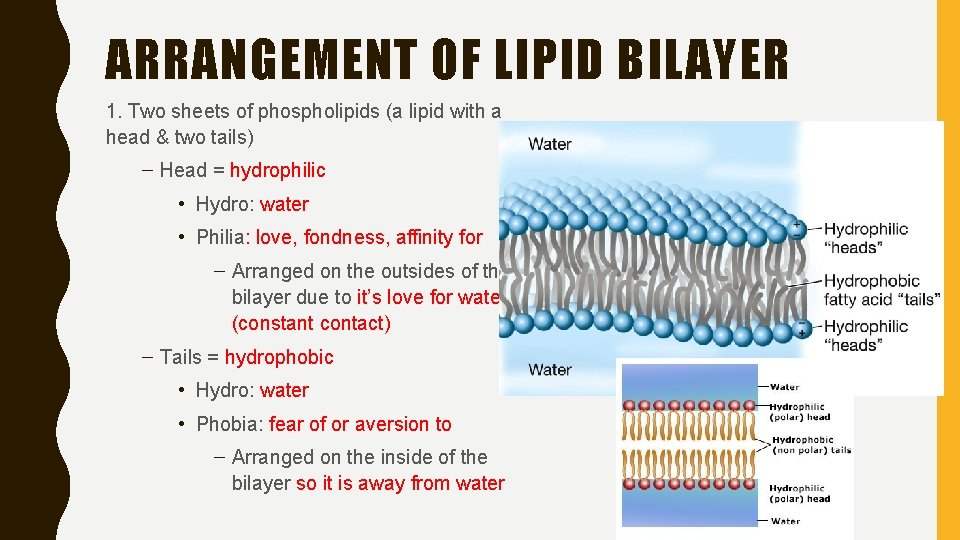
ARRANGEMENT OF LIPID BILAYER 1. Two sheets of phospholipids (a lipid with a head & two tails) – Head = hydrophilic • Hydro: water • Philia: love, fondness, affinity for – Arranged on the outsides of the bilayer due to it’s love for water (constant contact) – Tails = hydrophobic • Hydro: water • Phobia: fear of or aversion to – Arranged on the inside of the bilayer so it is away from water
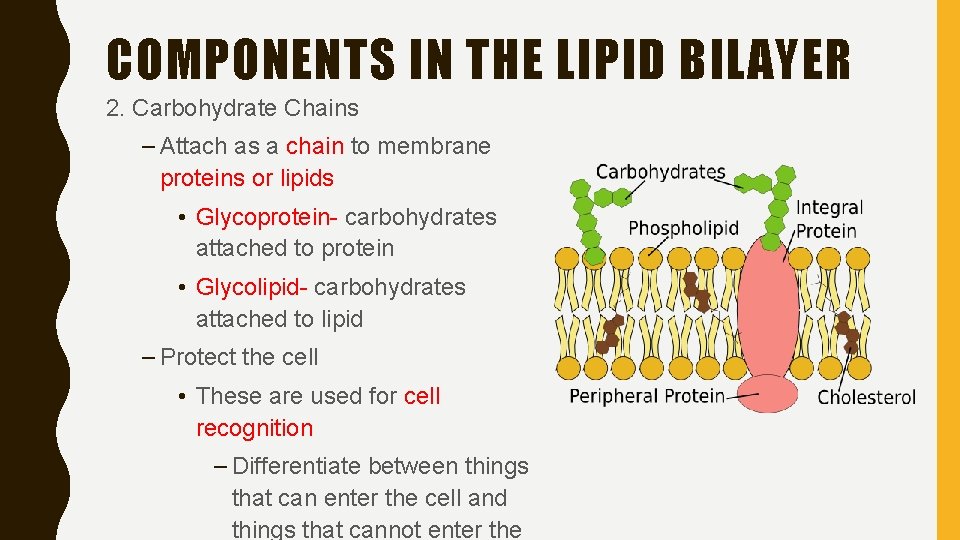
COMPONENTS IN THE LIPID BILAYER 2. Carbohydrate Chains – Attach as a chain to membrane proteins or lipids • Glycoprotein- carbohydrates attached to protein • Glycolipid- carbohydrates attached to lipid – Protect the cell • These are used for cell recognition – Differentiate between things that can enter the cell and things that cannot enter the
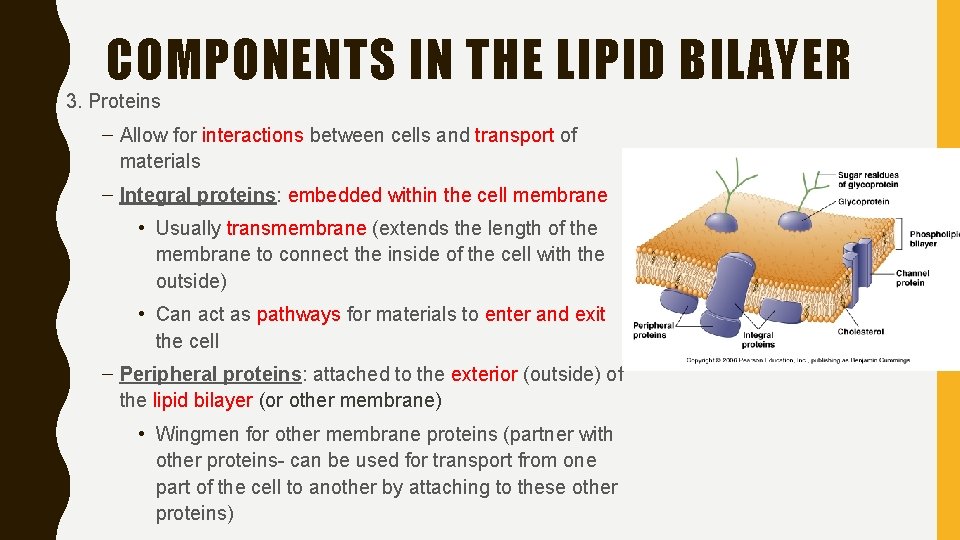
COMPONENTS IN THE LIPID BILAYER 3. Proteins – Allow for interactions between cells and transport of materials – Integral proteins: embedded within the cell membrane • Usually transmembrane (extends the length of the membrane to connect the inside of the cell with the outside) • Can act as pathways for materials to enter and exit the cell – Peripheral proteins: attached to the exterior (outside) of the lipid bilayer (or other membrane) • Wingmen for other membrane proteins (partner with other proteins- can be used for transport from one part of the cell to another by attaching to these other proteins)
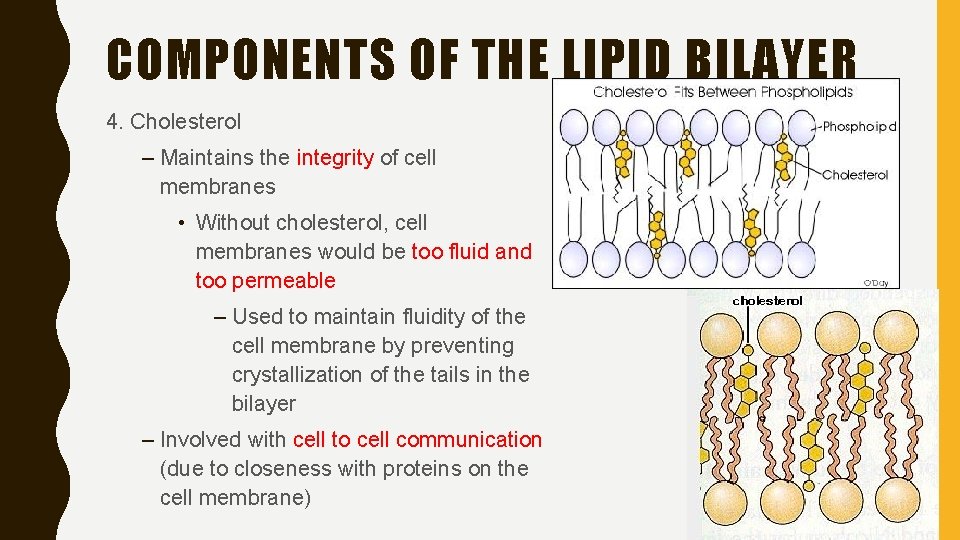
COMPONENTS OF THE LIPID BILAYER 4. Cholesterol – Maintains the integrity of cell membranes • Without cholesterol, cell membranes would be too fluid and too permeable – Used to maintain fluidity of the cell membrane by preventing crystallization of the tails in the bilayer – Involved with cell to cell communication (due to closeness with proteins on the cell membrane)
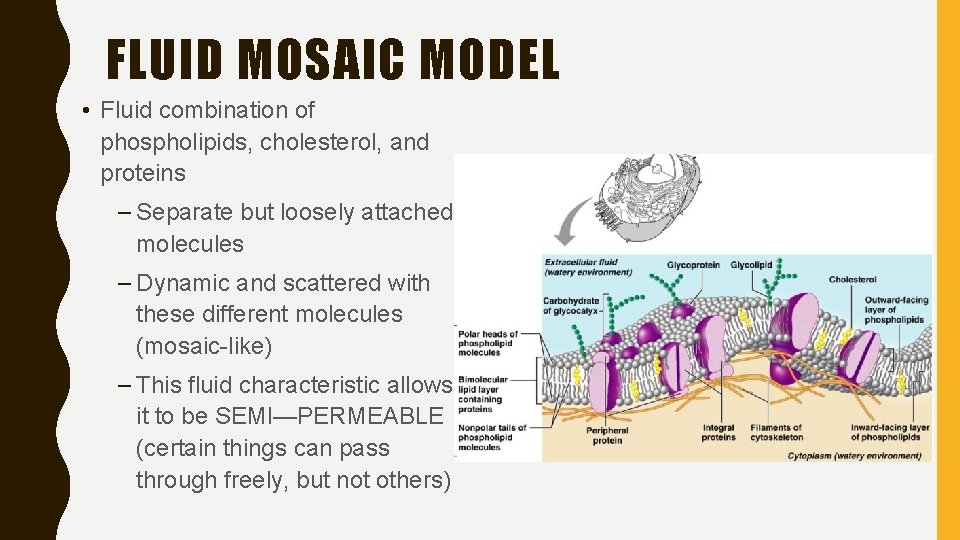
FLUID MOSAIC MODEL • Fluid combination of phospholipids, cholesterol, and proteins – Separate but loosely attached molecules – Dynamic and scattered with these different molecules (mosaic-like) – This fluid characteristic allows it to be SEMI—PERMEABLE (certain things can pass through freely, but not others)
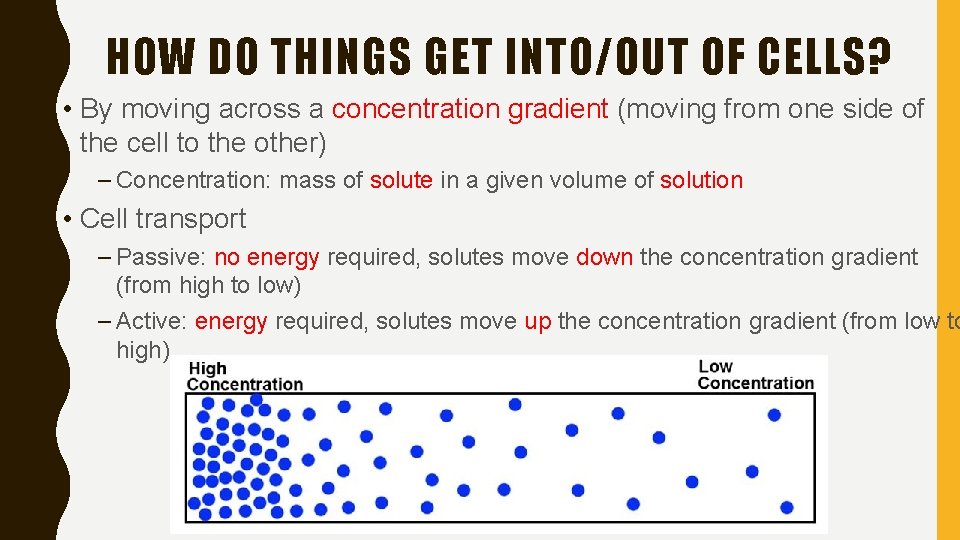
HOW DO THINGS GET INTO/OUT OF CELLS? • By moving across a concentration gradient (moving from one side of the cell to the other) – Concentration: mass of solute in a given volume of solution • Cell transport – Passive: no energy required, solutes move down the concentration gradient (from high to low) – Active: energy required, solutes move up the concentration gradient (from low to high)
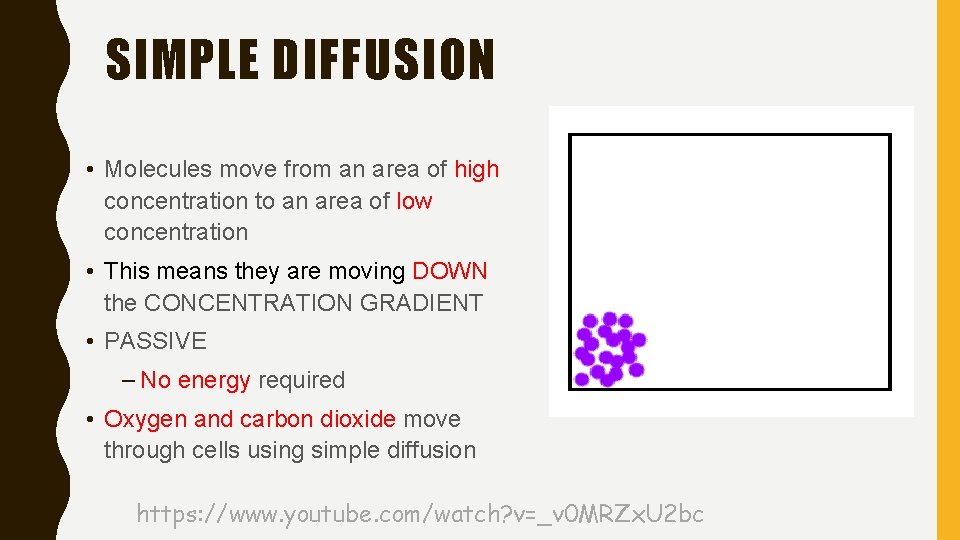
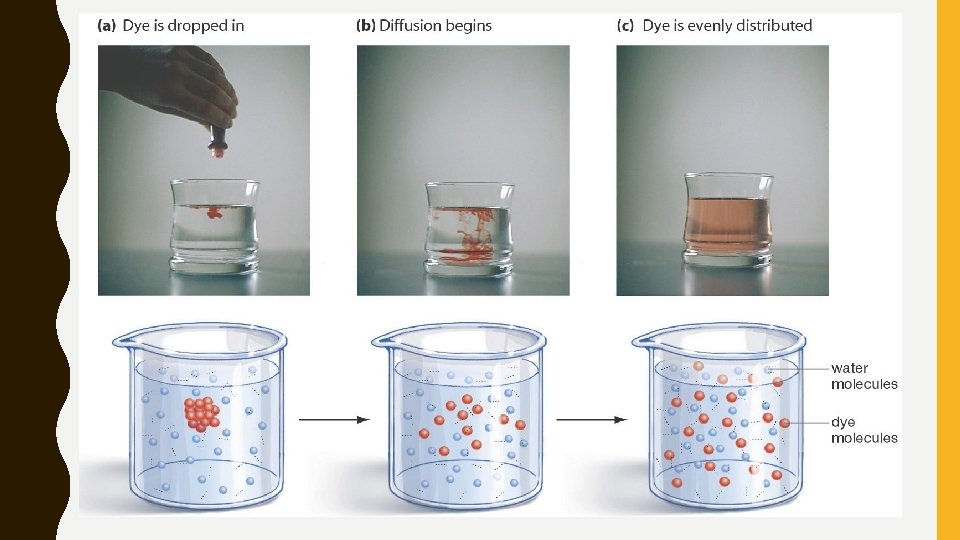
SIMPLE DIFFUSION • Molecules move from an area of high concentration to an area of low concentration • This means they are moving DOWN the CONCENTRATION GRADIENT • PASSIVE – No energy required • Oxygen and carbon dioxide move through cells using simple diffusion https: //www. youtube. com/watch? v=_v 0 MRZx. U 2 bc
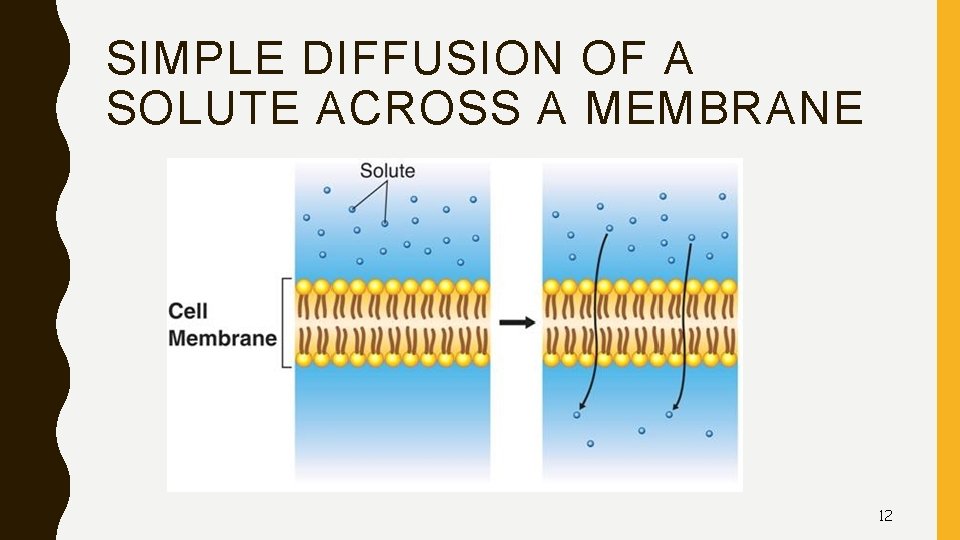
SIMPLE DIFFUSION OF A SOLUTE ACROSS A MEMBRANE 12
CAN ALL SOLUTES CROSS THE MEMBRANE BY SIMPLE DIFFUSION? • NO! • The membrane is selectively permeable, this means only certain solutes (typically small ones) can pass across by simple diffusion • The solution? – Channel Proteins! 13
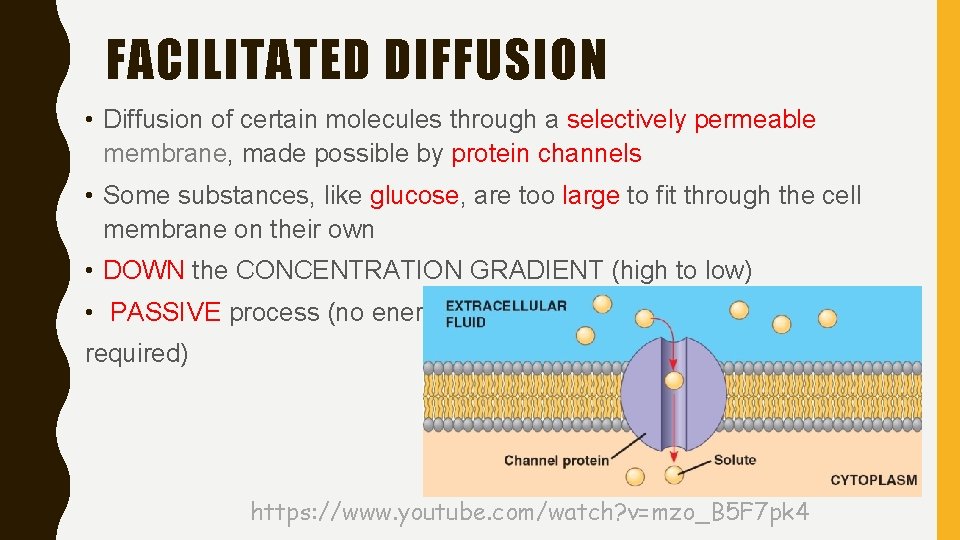
FACILITATED DIFFUSION • Diffusion of certain molecules through a selectively permeable membrane, made possible by protein channels • Some substances, like glucose, are too large to fit through the cell membrane on their own • DOWN the CONCENTRATION GRADIENT (high to low) • PASSIVE process (no energy required) https: //www. youtube. com/watch? v=mzo_B 5 F 7 pk 4
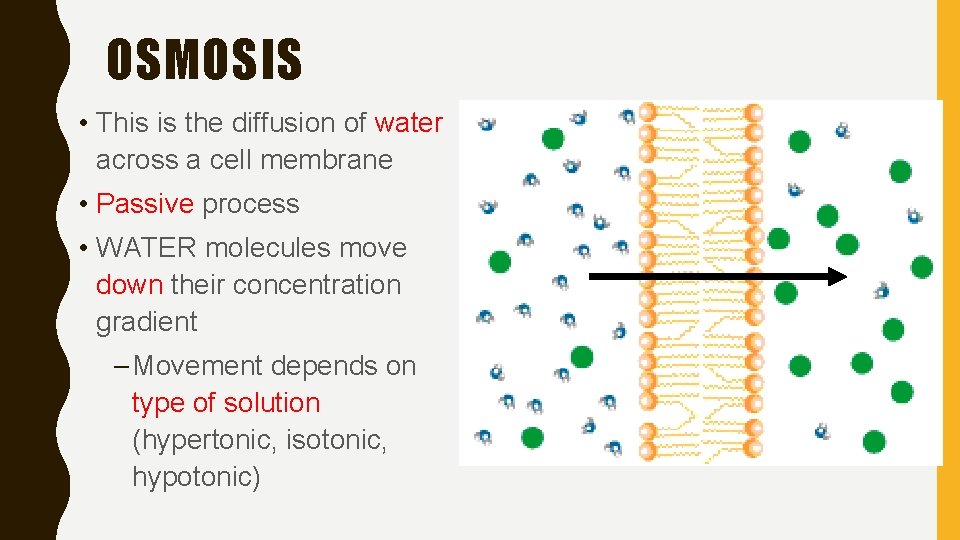
OSMOSIS • This is the diffusion of water across a cell membrane • Passive process • WATER molecules move down their concentration gradient – Movement depends on type of solution (hypertonic, isotonic, hypotonic)
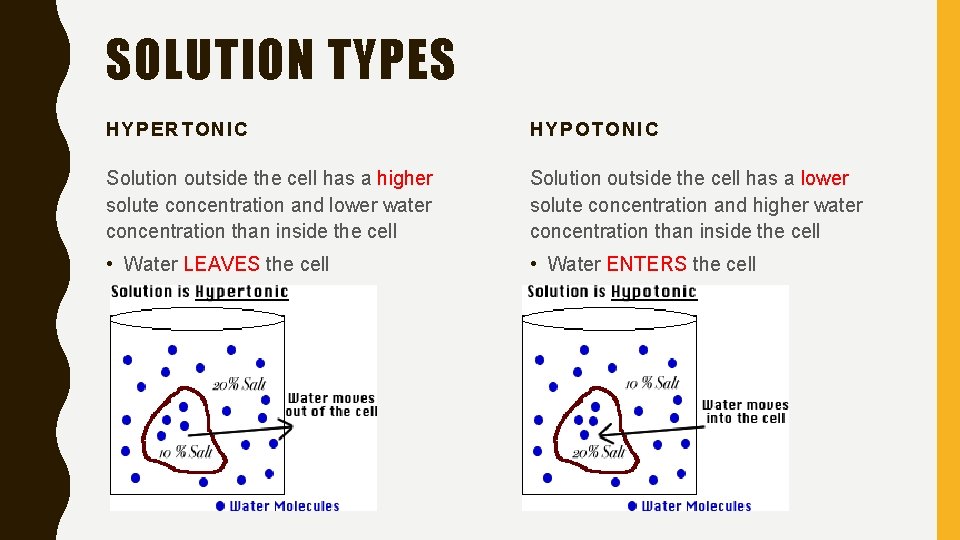
SOLUTION TYPES HYPERTONIC HYPOTONIC Solution outside the cell has a higher solute concentration and lower water concentration than inside the cell Solution outside the cell has a lower solute concentration and higher water concentration than inside the cell • Water LEAVES the cell • Water ENTERS the cell
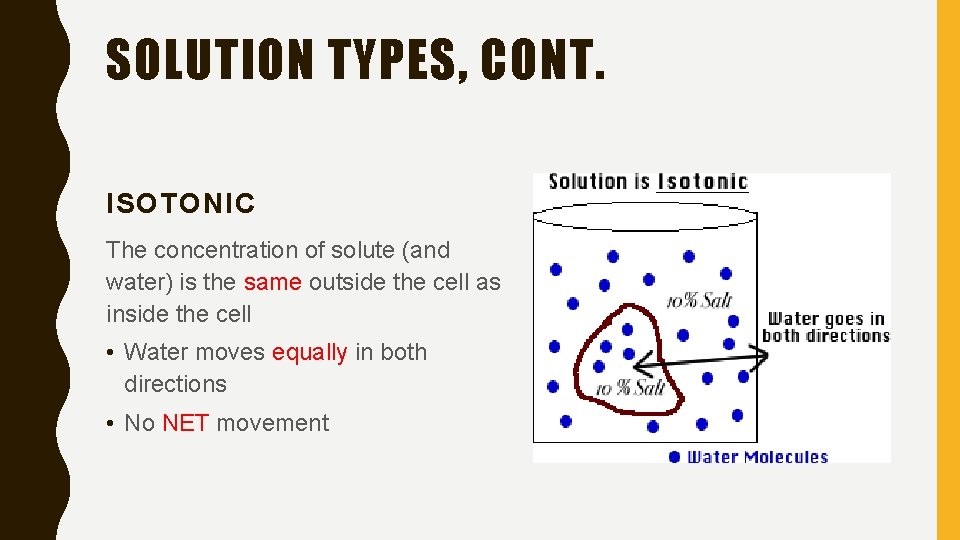
SOLUTION TYPES, CONT. ISOTONIC The concentration of solute (and water) is the same outside the cell as inside the cell • Water moves equally in both directions • No NET movement
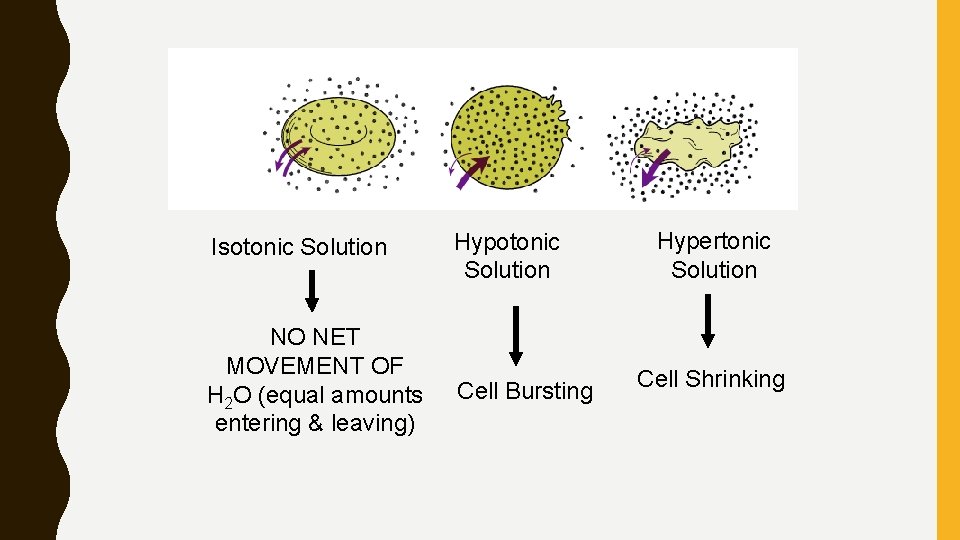
Isotonic Solution Hypotonic Solution NO NET MOVEMENT OF H 2 O (equal amounts entering & leaving) Cell Bursting Hypertonic Solution Cell Shrinking
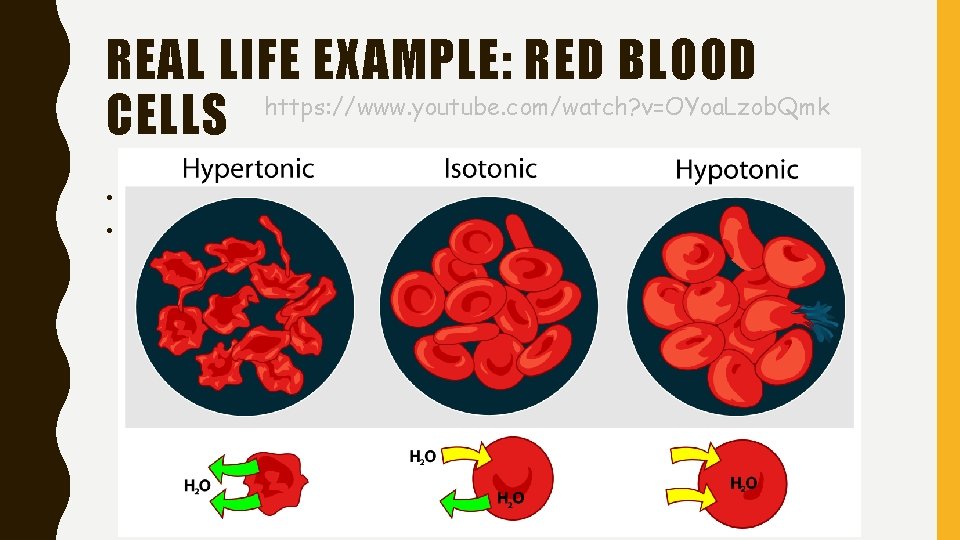
REAL LIFE EXAMPLE: RED BLOOD https: //www. youtube. com/watch? v=OYoa. Lzob. Qmk CELLS • Red blood cells • Plant cells
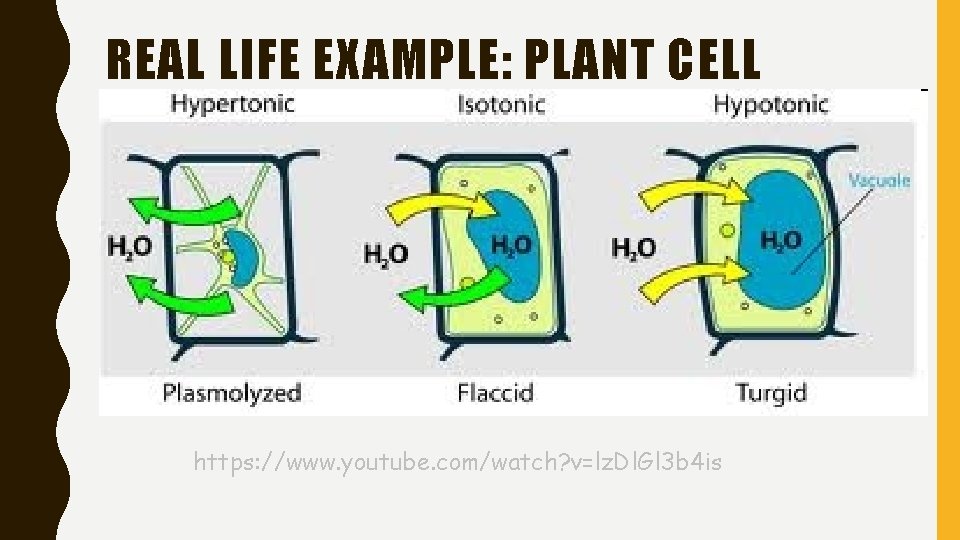
REAL LIFE EXAMPLE: PLANT CELL https: //www. youtube. com/watch? v=lz. Dl. Gl 3 b 4 is
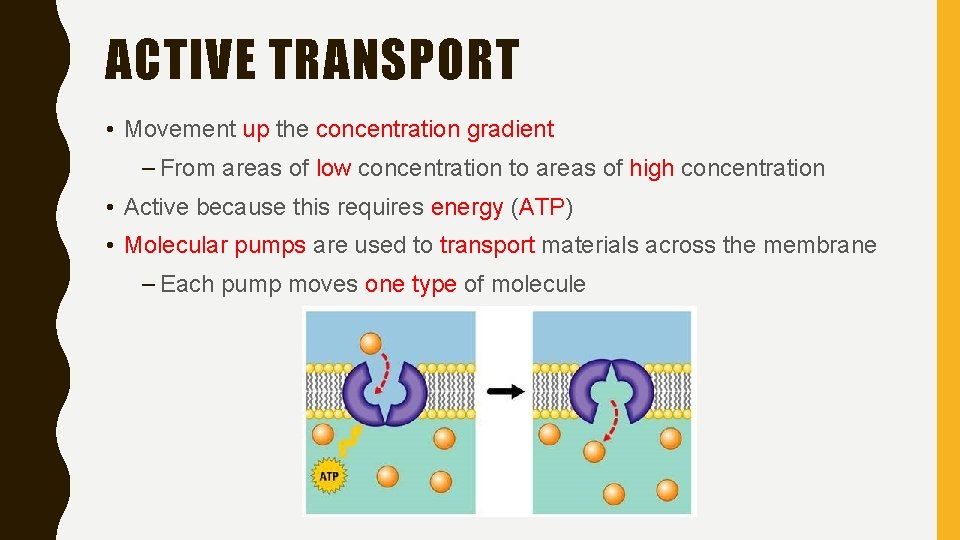
ACTIVE TRANSPORT • Movement up the concentration gradient – From areas of low concentration to areas of high concentration • Active because this requires energy (ATP) • Molecular pumps are used to transport materials across the membrane – Each pump moves one type of molecule
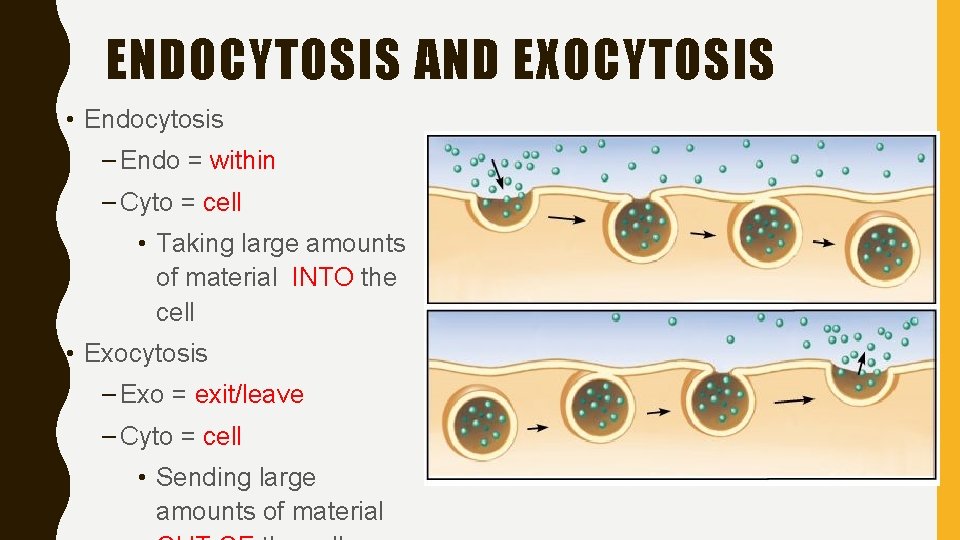
ENDOCYTOSIS AND EXOCYTOSIS • Endocytosis – Endo = within – Cyto = cell • Taking large amounts of material INTO the cell • Exocytosis – Exo = exit/leave – Cyto = cell • Sending large amounts of material
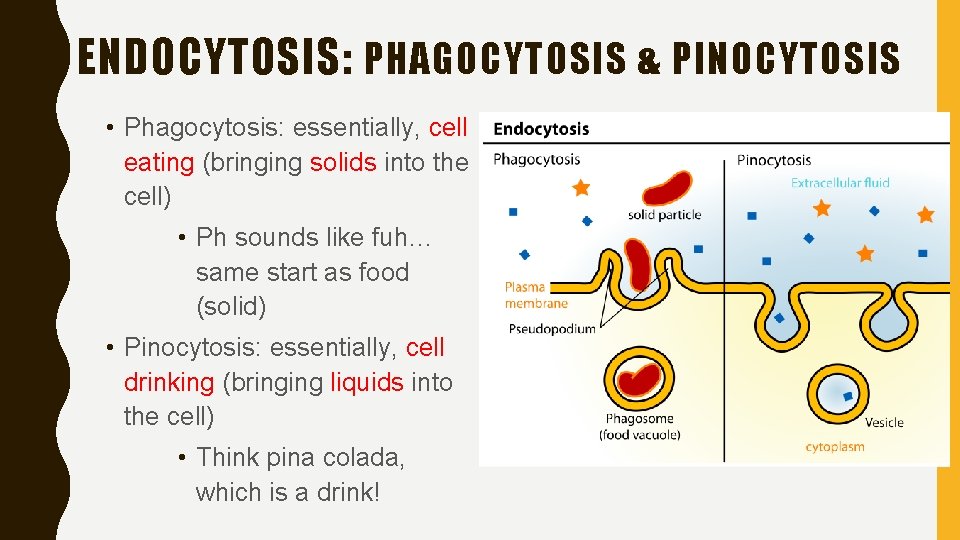
ENDOCYTOSIS: PHAGOCYTOSIS & PINOCYTOSIS • Phagocytosis: essentially, cell eating (bringing solids into the cell) • Ph sounds like fuh… same start as food (solid) • Pinocytosis: essentially, cell drinking (bringing liquids into the cell) • Think pina colada, which is a drink!
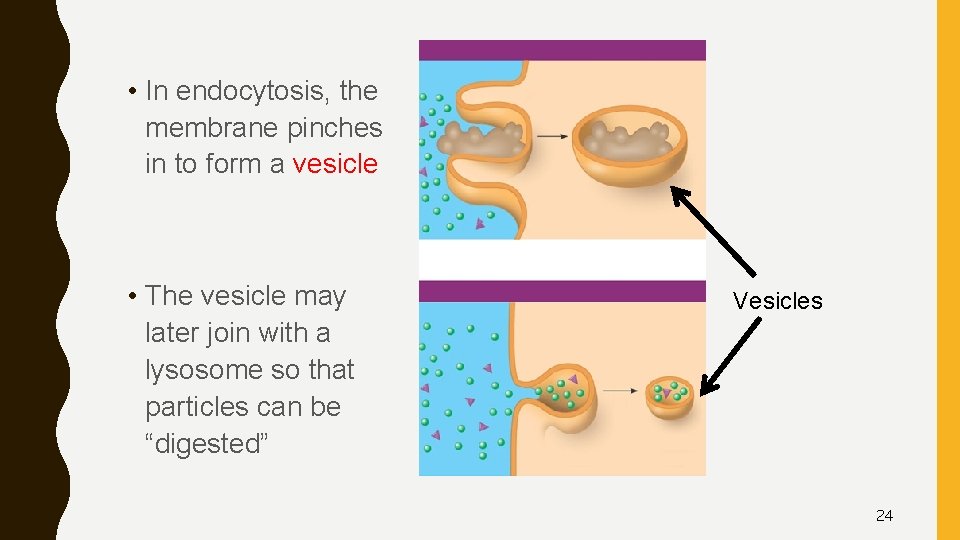
• In endocytosis, the membrane pinches in to form a vesicle • The vesicle may later join with a lysosome so that particles can be “digested” Vesicles 24
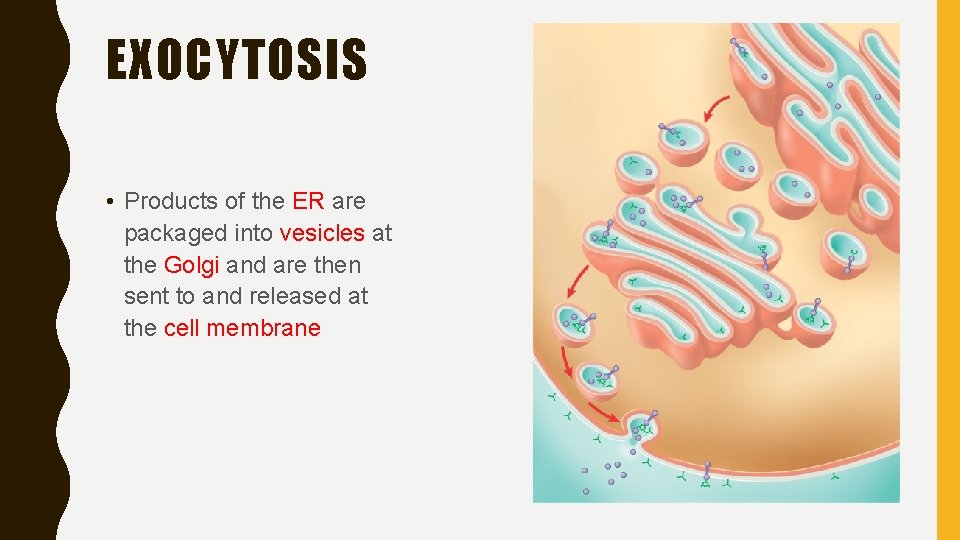
EXOCYTOSIS • Products of the ER are packaged into vesicles at the Golgi and are then sent to and released at the cell membrane
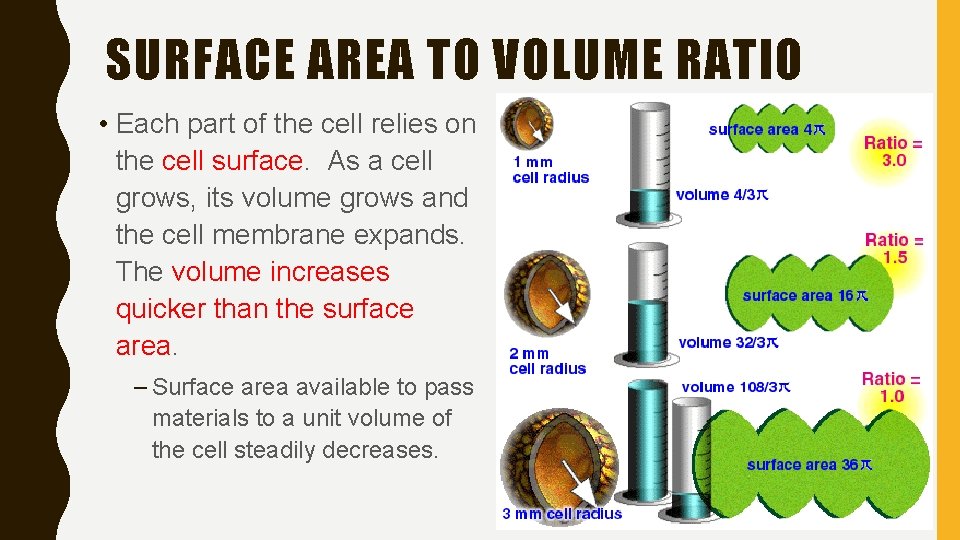
SURFACE AREA TO VOLUME RATIO • Each part of the cell relies on the cell surface. As a cell grows, its volume grows and the cell membrane expands. The volume increases quicker than the surface area. – Surface area available to pass materials to a unit volume of the cell steadily decreases.
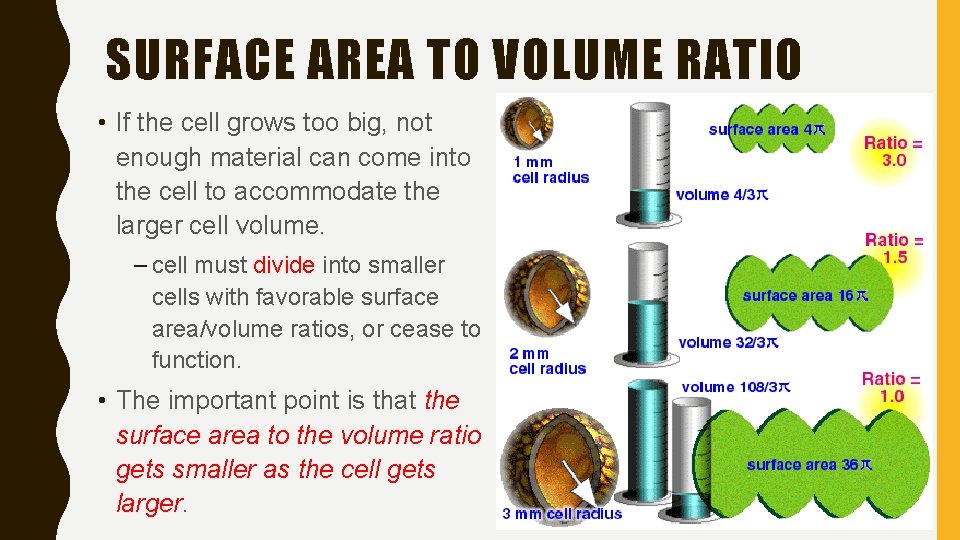
SURFACE AREA TO VOLUME RATIO • If the cell grows too big, not enough material can come into the cell to accommodate the larger cell volume. – cell must divide into smaller cells with favorable surface area/volume ratios, or cease to function. • The important point is that the surface area to the volume ratio gets smaller as the cell gets larger.
- Slides: 27