
Unit 3 The Life of a Cell Chapter

- Slides: 32
Unit 3 The Life of a Cell Chapter 6 Chemistry Chapter 7. 1/7. 3 Cells Chapter 6. 2/7. 2/8. 1 Diffusion, Plasma Membrane, Cellular transport 8. 2/8. 3 Cell Reproduction Ch 9 Energy (Photosynthesis, Respiration)
Chapter 7 - A View of a Cell 7. 1 Discovery of Cells- basic unit of life What caused sickness and disease? Bad Blood Curses Supernatural spirits
Microscope �Micro � 1 st- “small” scope “to look at” Anton van Leeuwenhoek �Simple “one lens” vs. compound “ 2+ lenses” Examples
Cell Theory �Robert Hooke (1665) ◦ “cell” looked like monk’s living quarters ◦ Cork from an Oak tree �Schleiden and Schwann (1830 s) ◦ All plants are composed of cells
Cell Theory 1. All organisms are composed of one or more cells 2. Cells are the basic unit of organization 3. Cells come from preexisting cells
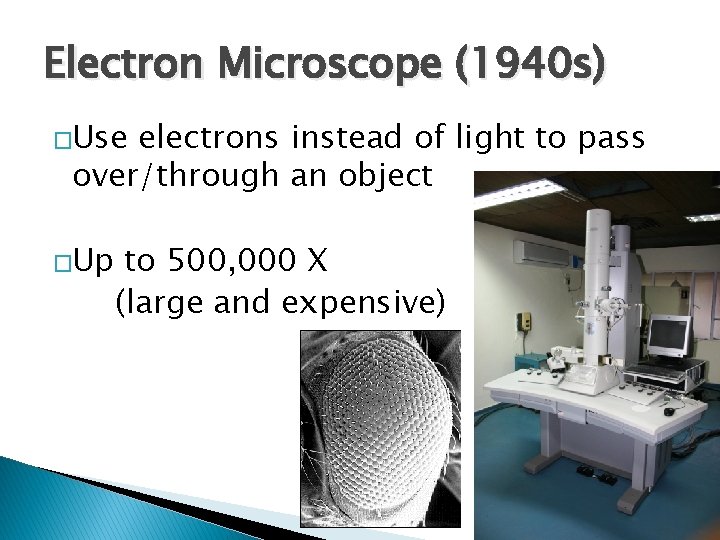
Electron Microscope (1940 s) �Use electrons instead of light to pass over/through an object �Up to 500, 000 X (large and expensive)
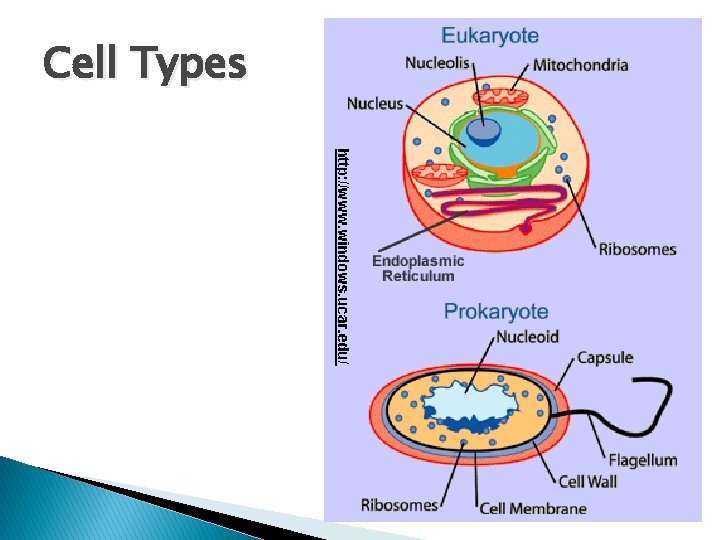
Two basic types of cells � All cells contain organelles, not all are surrounded by membranes. 1. Prokaryotic- without membrane-bound organelles 2. Eukaryotic- organelles clearly present all multicellular organisms are eukaryotes
Cell Types
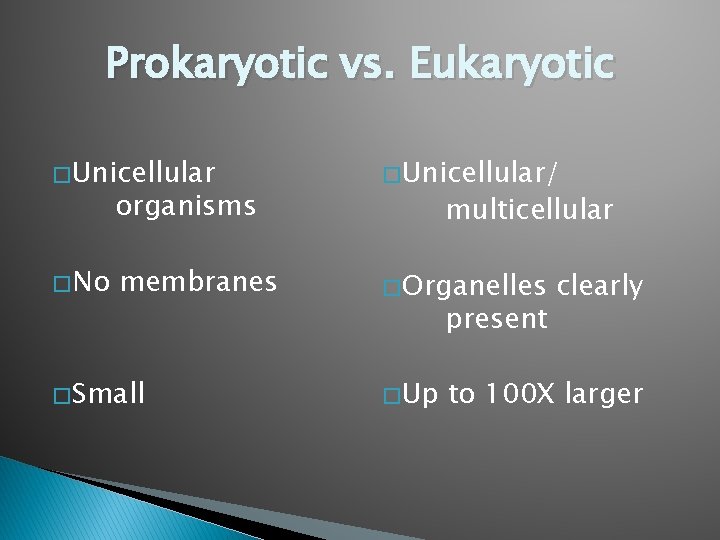
Prokaryotic vs. Eukaryotic � Unicellular/ � No � Organelles organisms membranes � Small multicellular present � Up clearly to 100 X larger
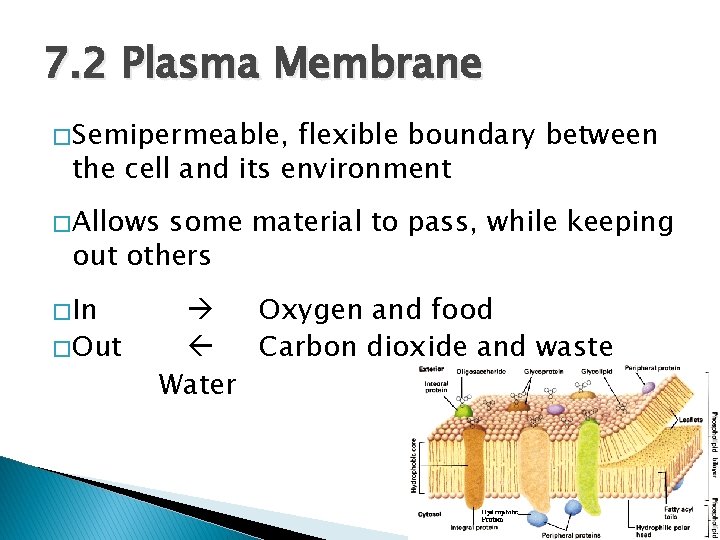
7. 2 Plasma Membrane � Semipermeable, flexible boundary between the cell and its environment � Allows some material to pass, while keeping out others � In � Out Oxygen and food Carbon dioxide and waste Water
7. 3 Eukaryotic Cell Structure � Organs perform specific functions in our body � Organelles have specific functions in a cell
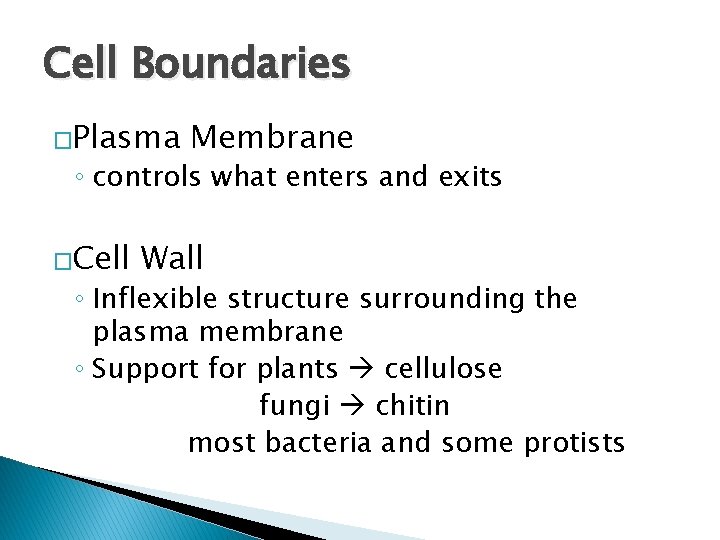
Cell Boundaries �Plasma Membrane ◦ controls what enters and exits �Cell Wall ◦ Inflexible structure surrounding the plasma membrane ◦ Support for plants cellulose fungi chitin most bacteria and some protists
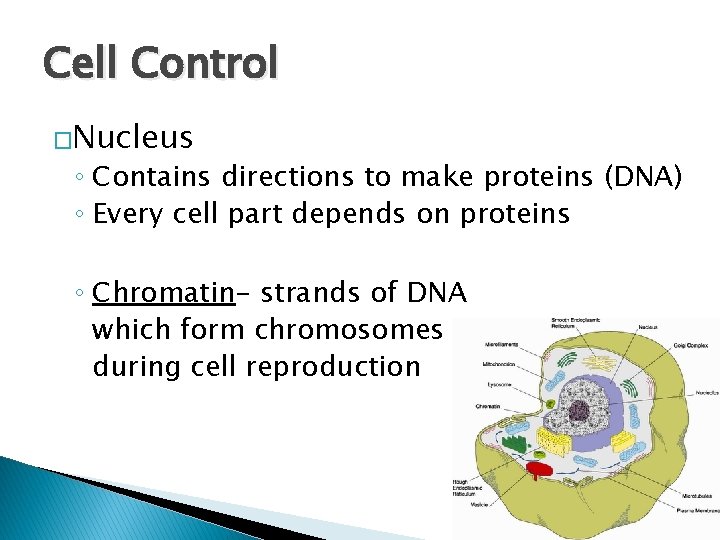
Cell Control �Nucleus ◦ Contains directions to make proteins (DNA) ◦ Every cell part depends on proteins ◦ Chromatin- strands of DNA which form chromosomes during cell reproduction
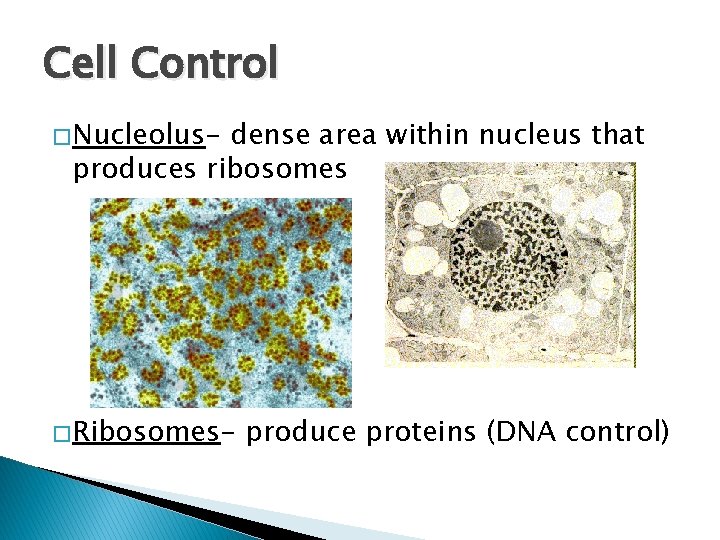
Cell Control � Nucleolus- dense area within nucleus that produces ribosomes � Ribosomes- produce proteins (DNA control)
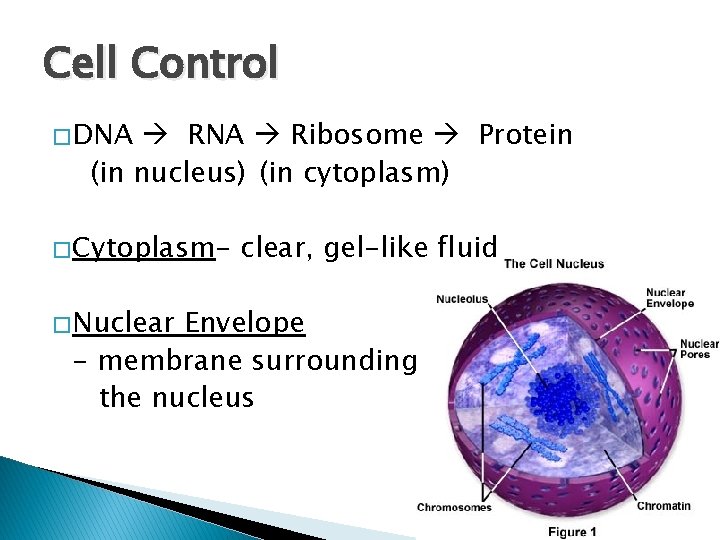
Cell Control � DNA Ribosome Protein (in nucleus) (in cytoplasm) � Cytoplasm� Nuclear, gel-like fluid Envelope - membrane surrounding the nucleus
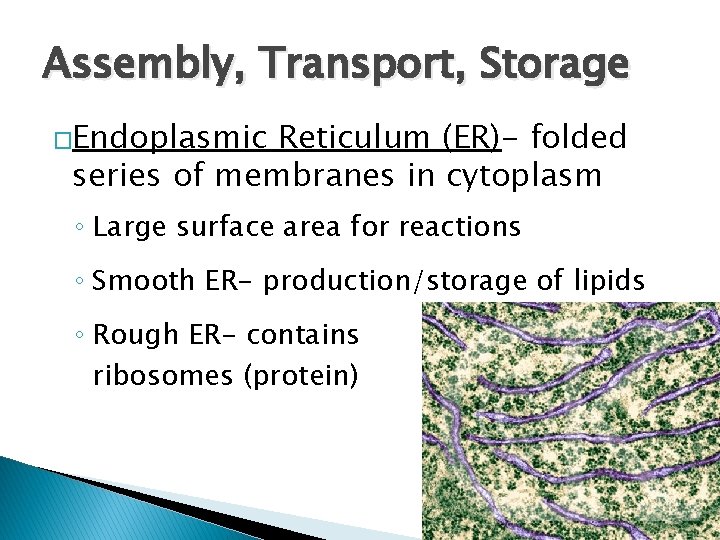
Assembly, Transport, Storage �Endoplasmic Reticulum (ER)- folded series of membranes in cytoplasm ◦ Large surface area for reactions ◦ Smooth ER- production/storage of lipids ◦ Rough ER- contains ribosomes (protein)
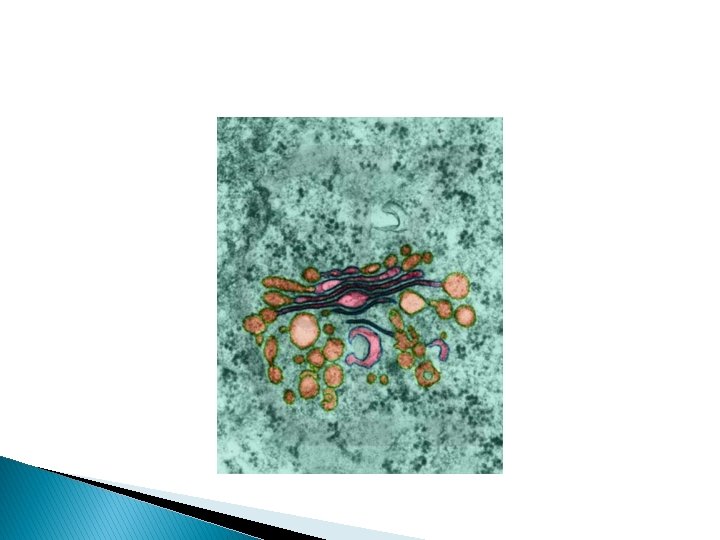
Assembly, Transport, Storage �Golgi Apparatus: ◦ Modifies, packages, and sends proteins ◦ Also the “bladder” of the cell (waste) �Vacuoles: ◦ compartments for temporary storage ◦ Plants one large central vacuole ◦ Animals many small vacuoles
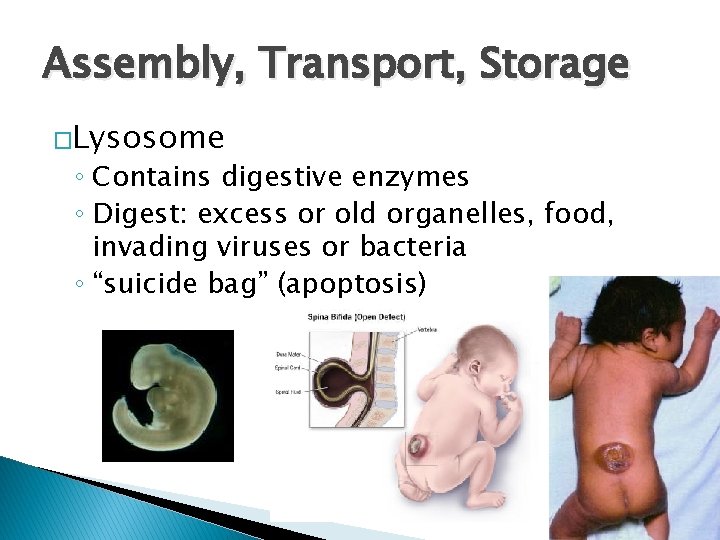
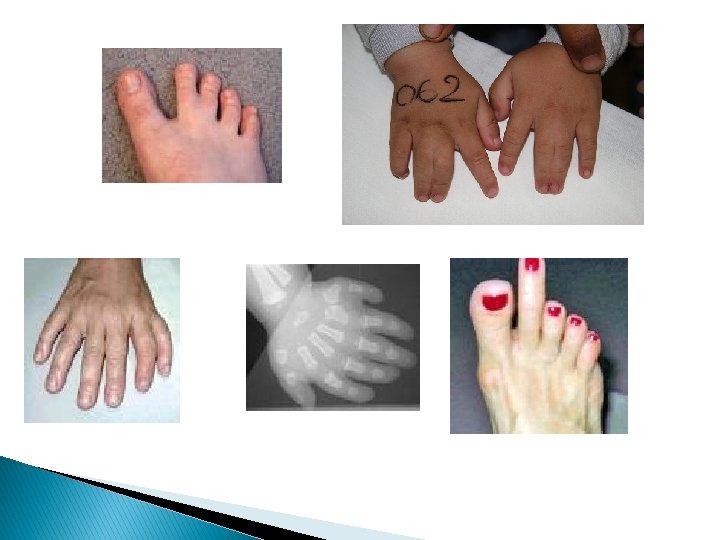
Assembly, Transport, Storage �Lysosome ◦ Contains digestive enzymes ◦ Digest: excess or old organelles, food, invading viruses or bacteria ◦ “suicide bag” (apoptosis)
Energy Transformers �How did you get the energy to be here? Sun plants animals respiration
Energy Transformers �Chloroplast- organelle that captures light and converts it into chemical energy Chlorophyll- green pigment that captures light energy
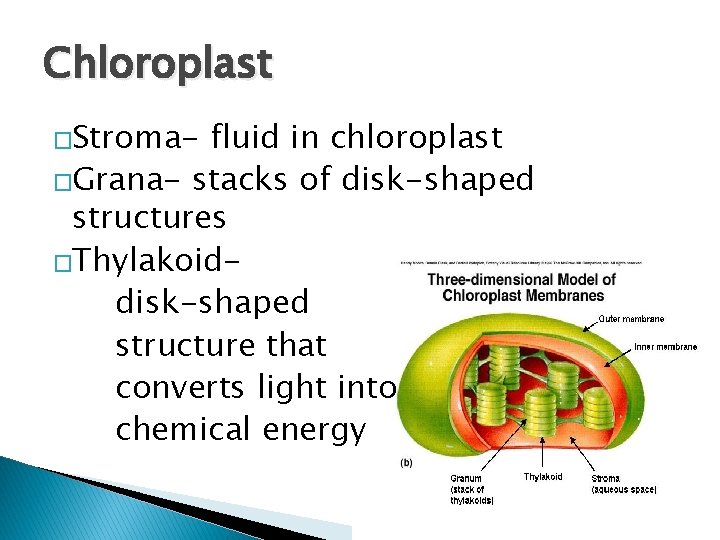
Chloroplast �Stroma- fluid in chloroplast �Grana- stacks of disk-shaped structures �Thylakoiddisk-shaped structure that converts light into chemical energy
Energy Transformers �Mitochondria ◦ Organelle that perform cellular respiration ◦ Breakdown food to release energy ◦ Only organelle other than nucleus with DNA ◦ Why? �Speeds up protein production
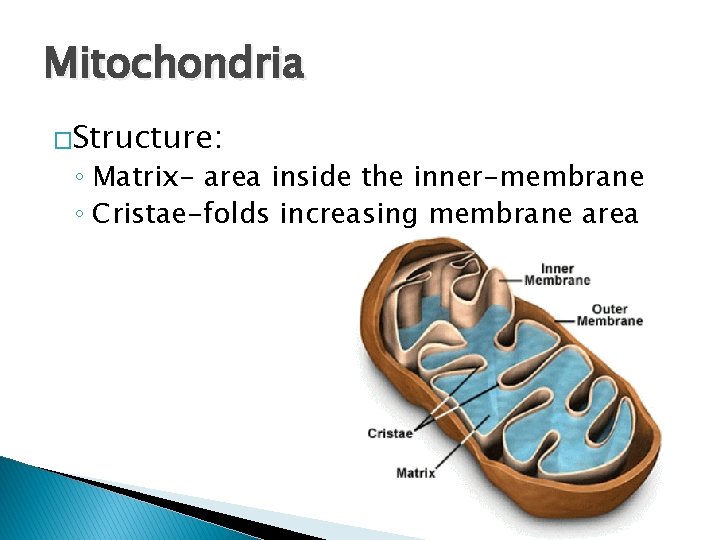
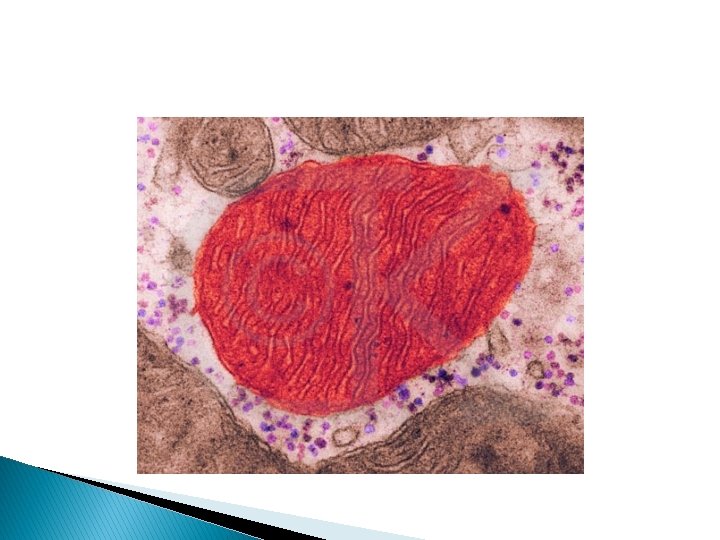
Mitochondria �Structure: ◦ Matrix- area inside the inner-membrane ◦ Cristae-folds increasing membrane area
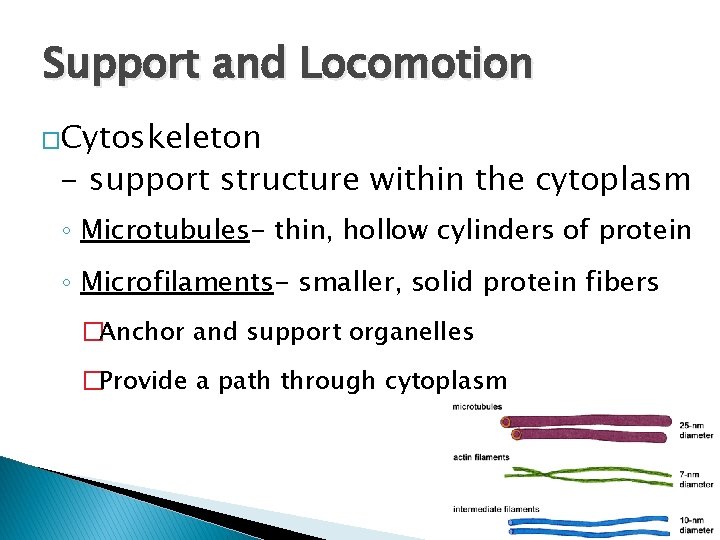
Support and Locomotion �Cytoskeleton - support structure within the cytoplasm ◦ Microtubules- thin, hollow cylinders of protein ◦ Microfilaments- smaller, solid protein fibers �Anchor and support organelles �Provide a path through cytoplasm
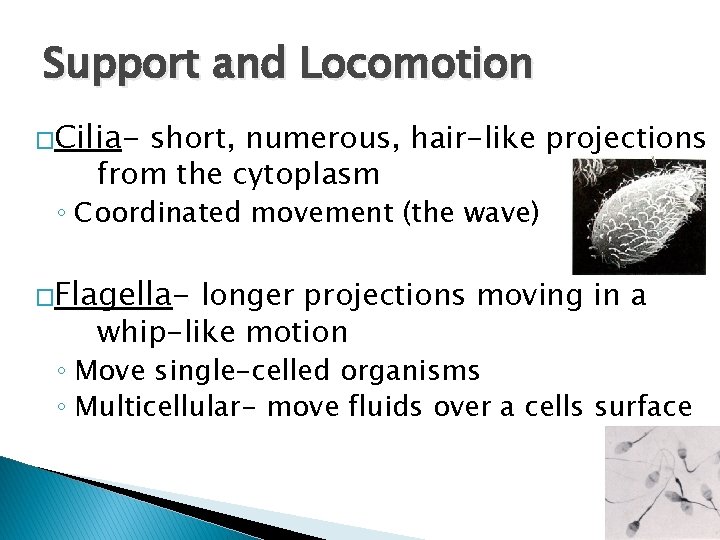
Support and Locomotion �Cilia- short, numerous, hair-like projections from the cytoplasm ◦ Coordinated movement (the wave) �Flagella- longer projections moving in a whip-like motion ◦ Move single-celled organisms ◦ Multicellular- move fluids over a cells surface
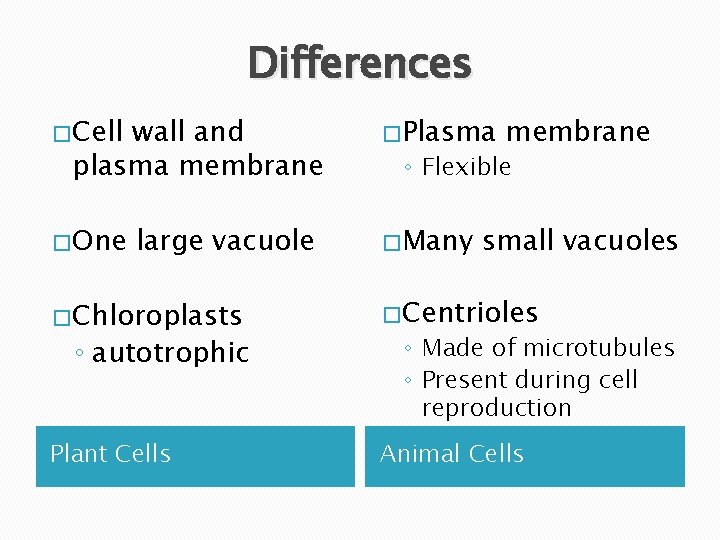
Differences � Cell wall and plasma membrane � One large vacuole � Plasma membrane ◦ Flexible � Many small vacuoles � Chloroplasts � Centrioles Plant Cells Animal Cells ◦ autotrophic ◦ Made of microtubules ◦ Present during cell reproduction
Cellular Organization �Unicellular ◦ All life functions are carried out within cell �Multicellular ◦ Individual cells have specialized functions
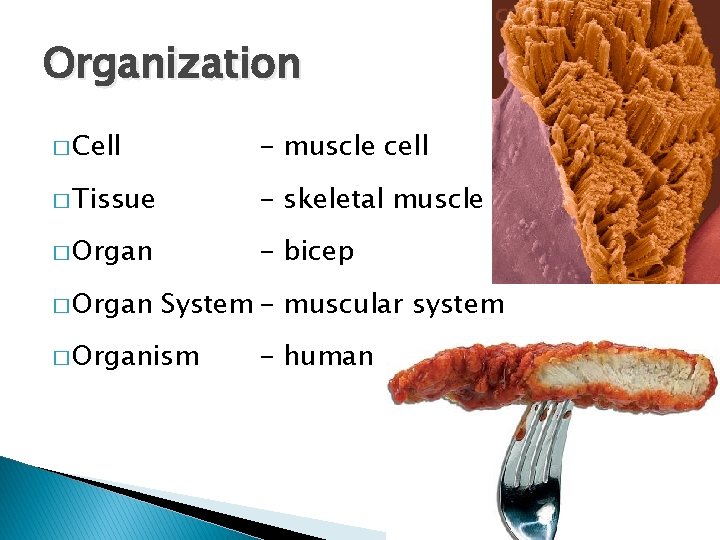
Organization � Cell - muscle cell � Tissue - skeletal muscle � Organ - bicep � Organ System - muscular system � Organism - human