
Unit 3 The Atom Evolution of the Structure
- Slides: 52
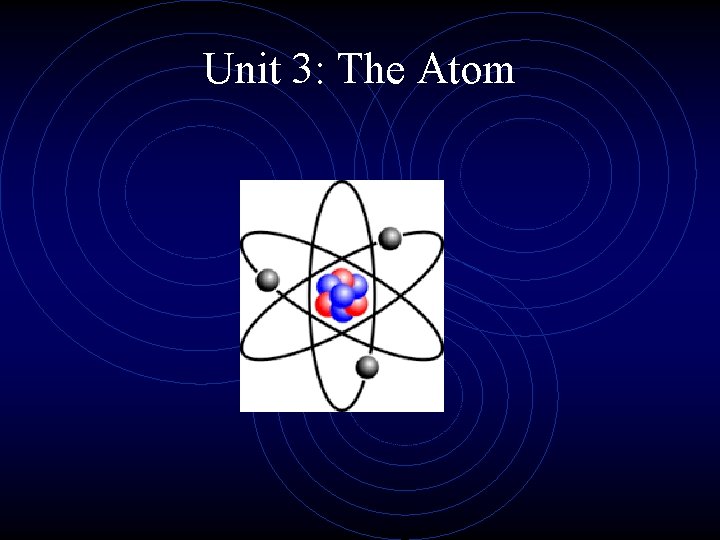
Unit 3: The Atom
Evolution of the Structure of an Atom
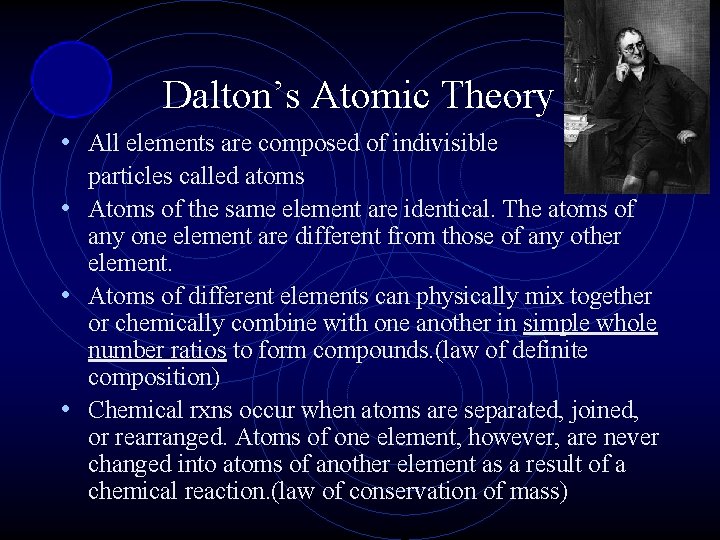
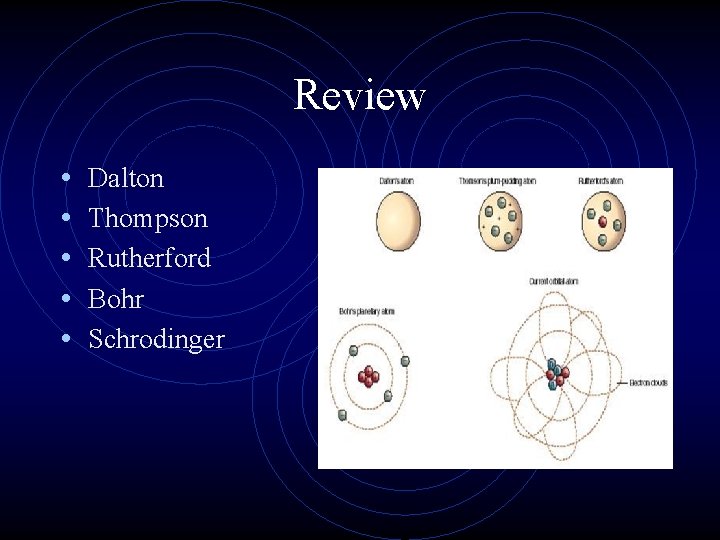
Dalton’s Atomic Theory • All elements are composed of indivisible particles called atoms • Atoms of the same element are identical. The atoms of any one element are different from those of any other element. • Atoms of different elements can physically mix together or chemically combine with one another in simple whole number ratios to form compounds. (law of definite composition) • Chemical rxns occur when atoms are separated, joined, or rearranged. Atoms of one element, however, are never changed into atoms of another element as a result of a chemical reaction. (law of conservation of mass)
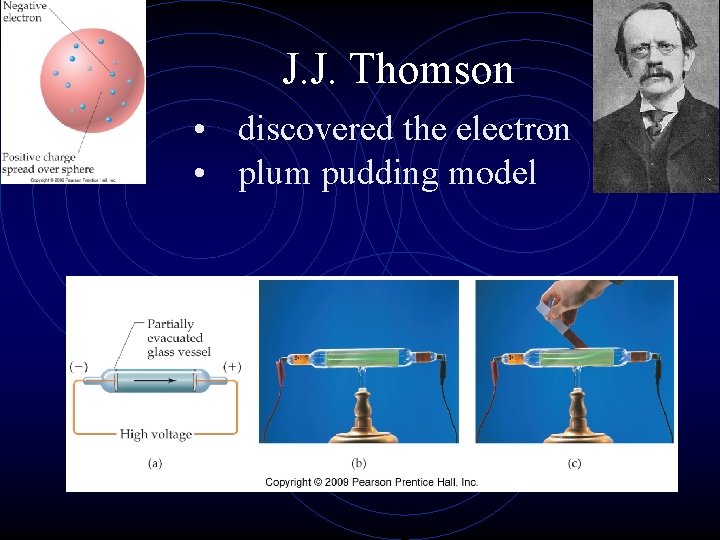
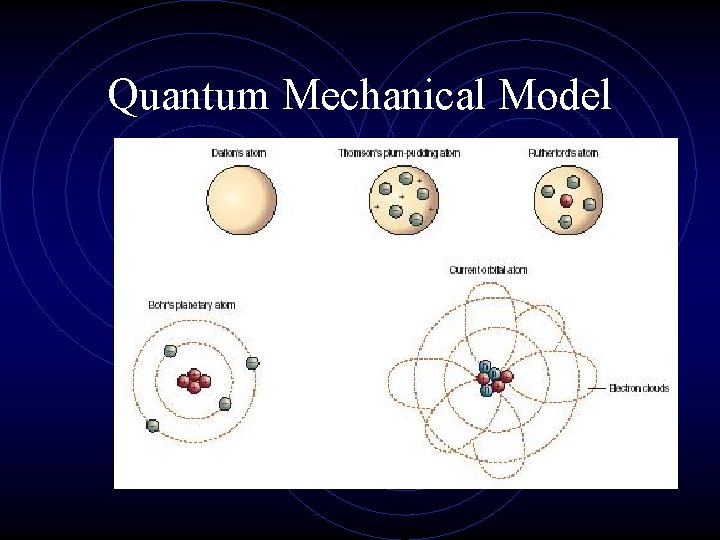
J. J. Thomson • discovered the electron • plum pudding model
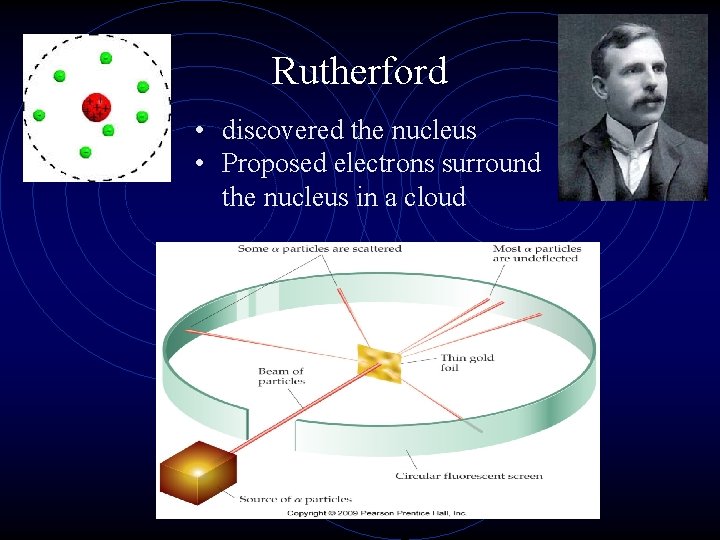
Rutherford • discovered the nucleus • Proposed electrons surround the nucleus in a cloud
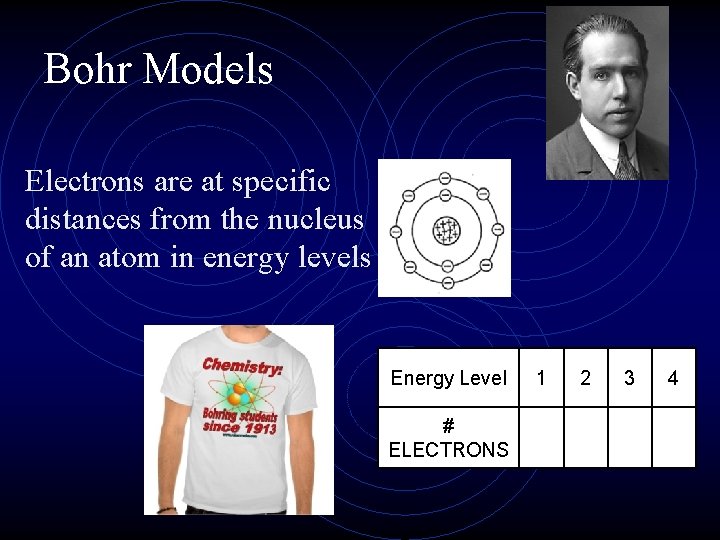
Bohr Models Electrons are at specific distances from the nucleus of an atom in energy levels Energy Level # ELECTRONS 1 2 3 4
Quantum Mechanical Model • The modern description of electrons in atoms proposed by Schrödinger
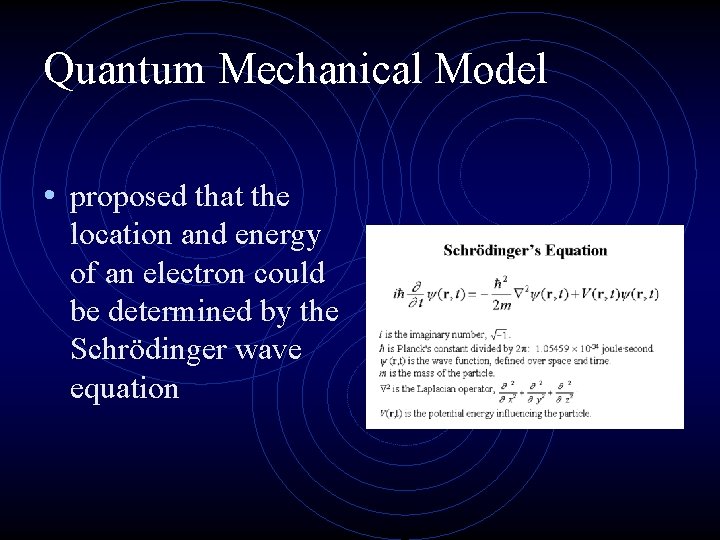
Quantum Mechanical Model • proposed that the location and energy of an electron could be determined by the Schrödinger wave equation
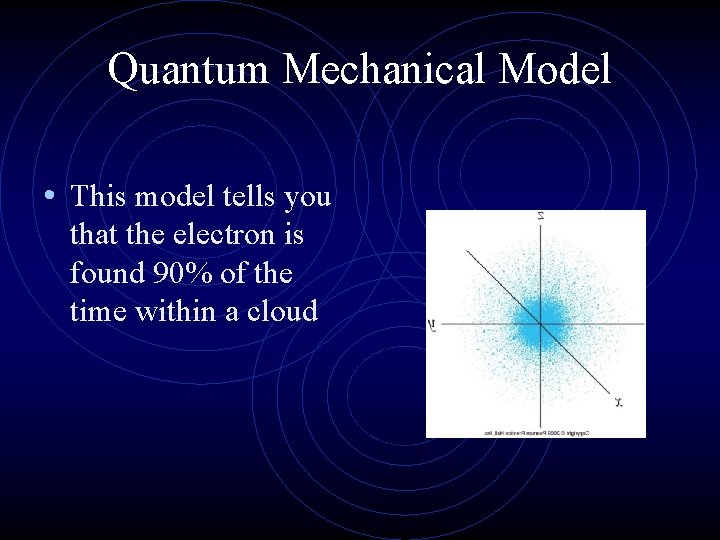
Quantum Mechanical Model • This model tells you that the electron is found 90% of the time within a cloud
The Atom Today • The atom is the smallest particle of an element that retains the properties of that element • Atoms can only be seen with proper instrumentation • Dalton’s Atomic Theory wasn’t completely correct • Atoms can be broken down into subatomic particles • Atoms of the same element are not identical
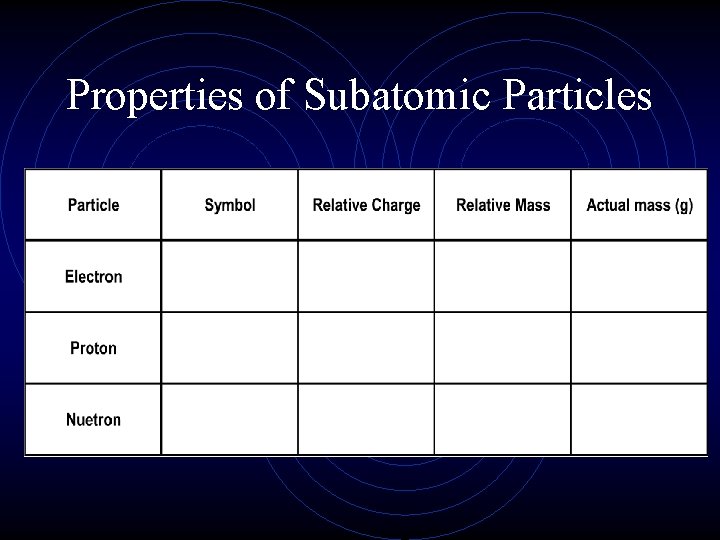
Properties of Subatomic Particles
Distinguishing Between Atoms
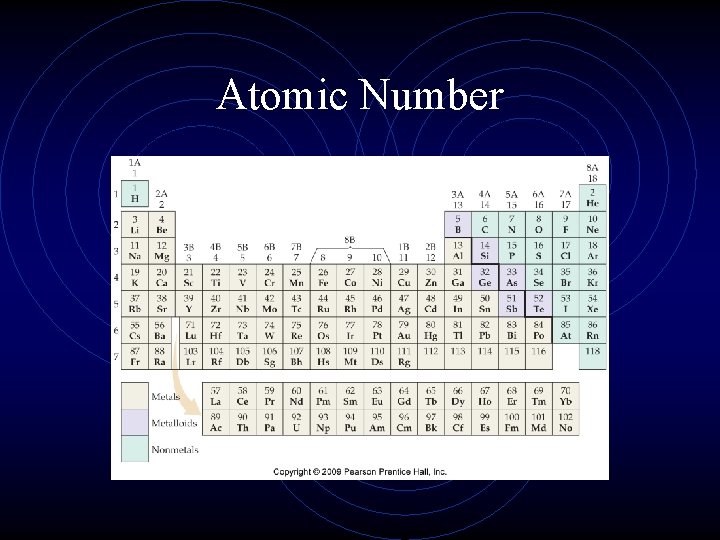
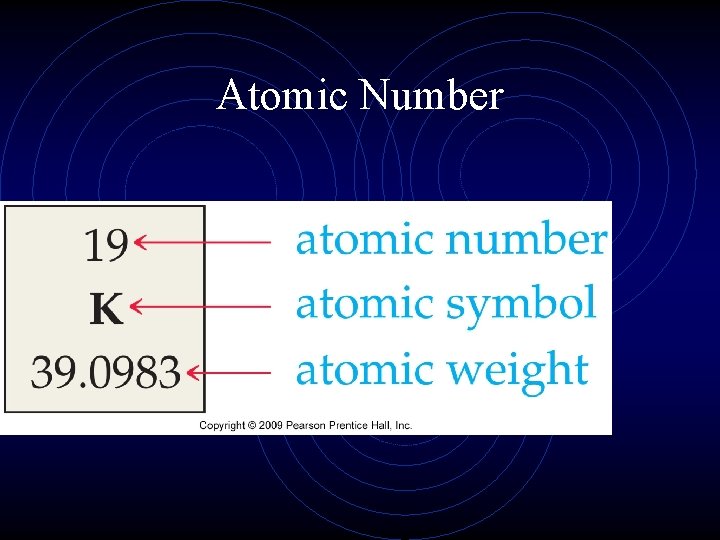
Atomic Number • Number of protons in the nucleus of an atom • Identifies the element • Elements are listed on periodic table according to atomic number
Atomic Number
Atomic Number
Atomic Number • atoms are electrically neutral • # protons = # electrons
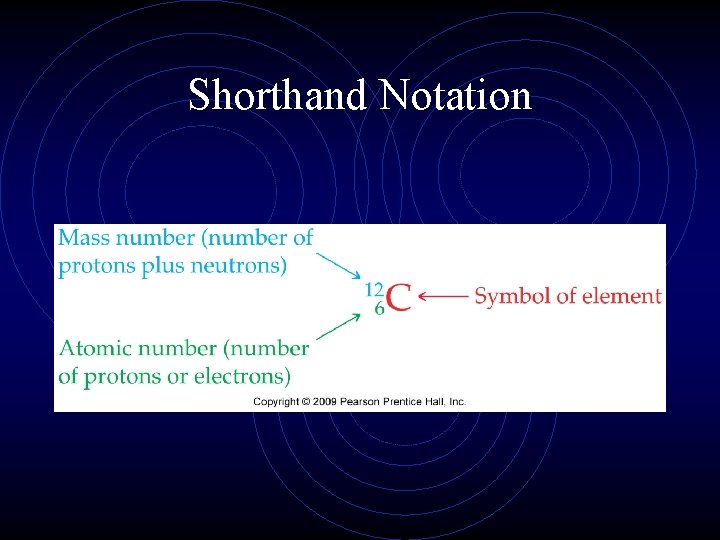
Mass Number • total number of protons and neutrons in an atom • It is not found on the periodic table but can be estimated
Shorthand Notation
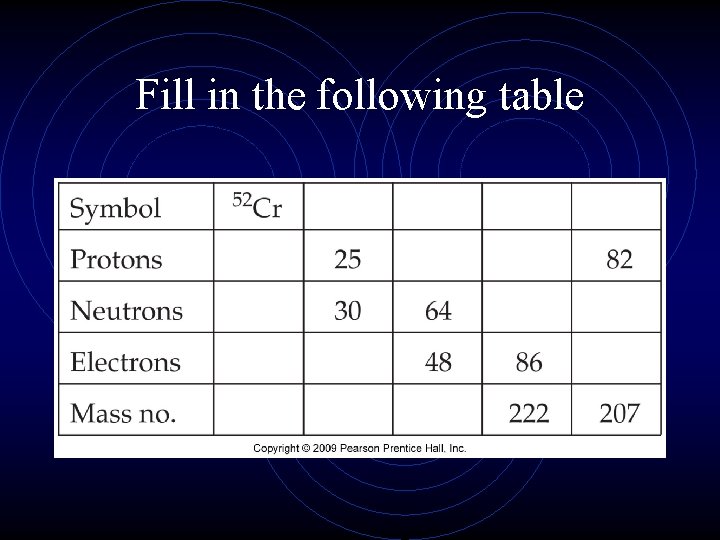
Fill in the following table
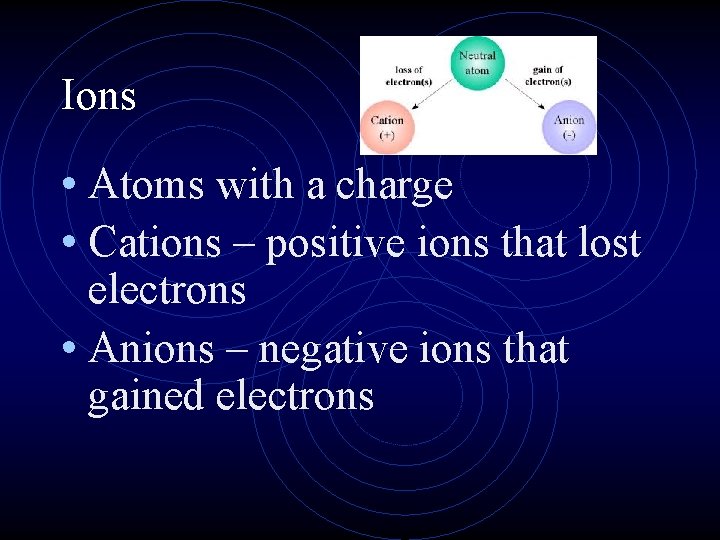
Ions • Atoms with a charge • Cations – positive ions that lost electrons • Anions – negative ions that gained electrons
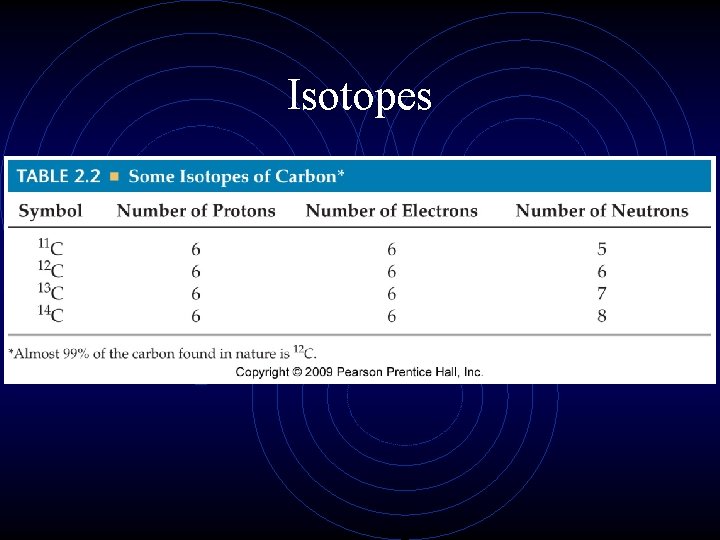
Isotopes • Atoms that have the same number of protons but different numbers of neutrons • Differ in their mass number
Isotopes • the existence of isotopes was not predicted by Dalton, who said atoms of the same element are the same
Isotopes • identified by their mass # , write the name of the element then a hyphen with the mass number
Isotopes
Uses of Isotopes • C-14 = archeological carbon dating • Am-241 = smoke alarms • I-131 = treating thyroid disorder • Co – 60 = cancer treatment
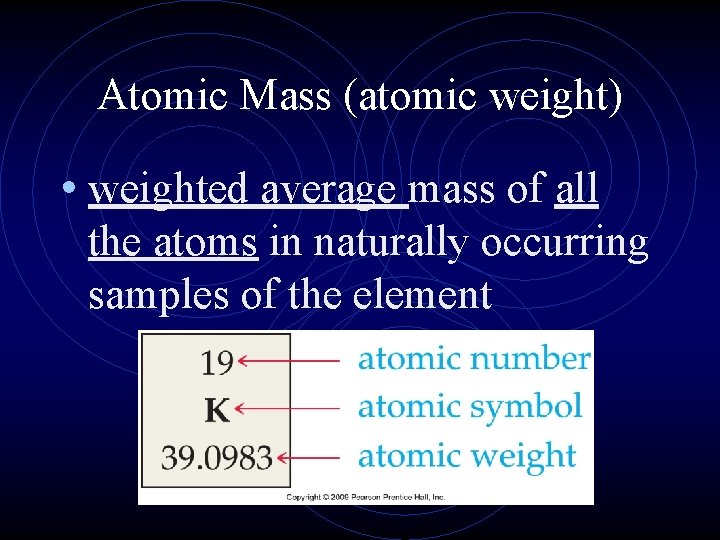
Atomic Mass (atomic weight) • weighted average mass of all the atoms in naturally occurring samples of the element
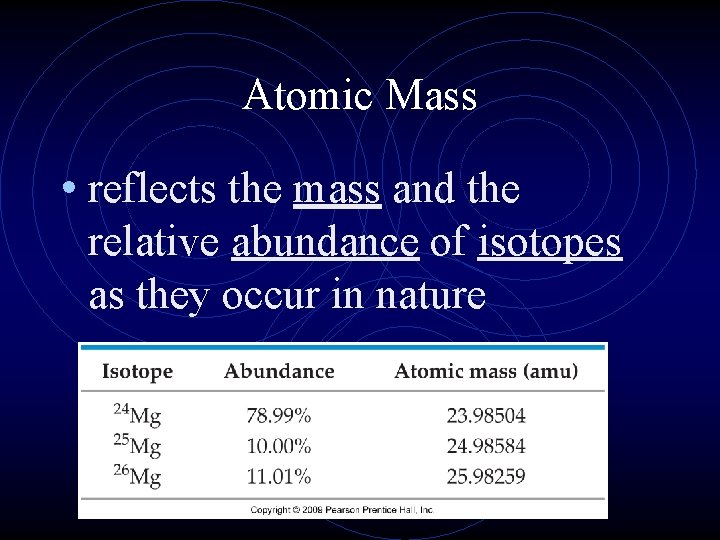
Atomic Mass • reflects the mass and the relative abundance of isotopes as they occur in nature
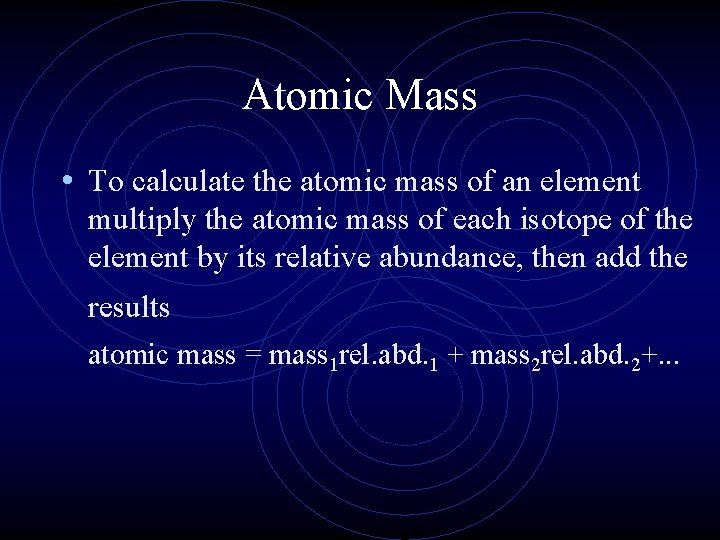
Atomic Mass • To calculate the atomic mass of an element multiply the atomic mass of each isotope of the element by its relative abundance, then add the results atomic mass = mass 1 rel. abd. 1 + mass 2 rel. abd. 2+. . .
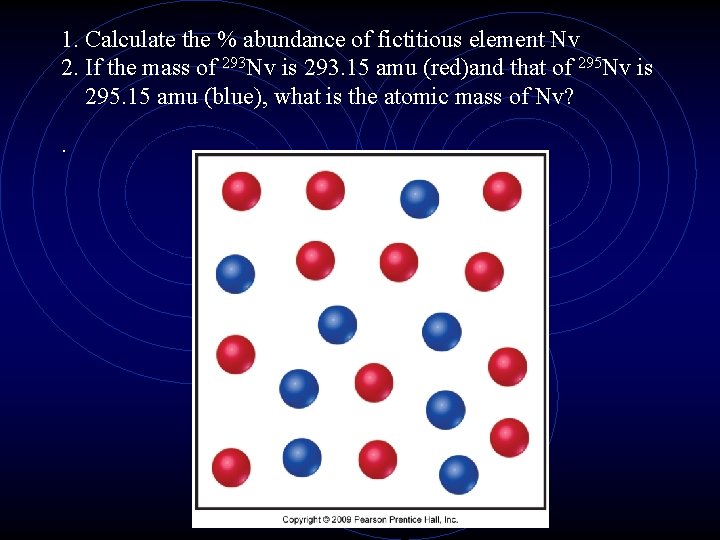
1. Calculate the % abundance of fictitious element Nv 2. If the mass of 293 Nv is 293. 15 amu (red)and that of 295 Nv is 295. 15 amu (blue), what is the atomic mass of Nv? .
Quantum Mechanical Model
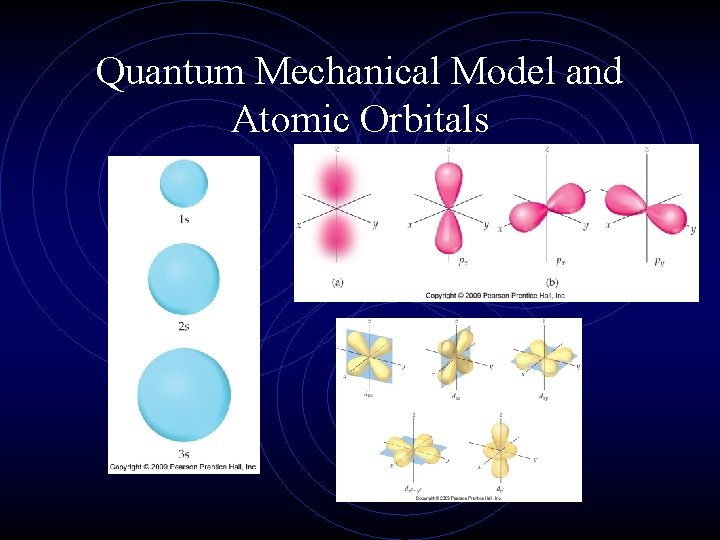
Quantum Mechanical Model and Atomic Orbitals • Principle Quantum Number (n) designates energy levels by n=1, 2, 3, 4…. as the electrons move away from the nucleus
Quantum Mechanical Model and Atomic Orbitals • Sublevels are found within each energy level and they are designated by s, p, d, and f
Quantum Mechanical Model and Atomic Orbitals
Quantum Mechanical Model and Atomic Orbitals • Atomic orbitals make up each sublevel
Quantum Mechanical Model and Atomic Orbitals • Each Atomic orbital holds 2 electrons
Quantum Mechanical Model and Atomic Orbitals • Chart
Electron Configuration • The way electrons are arranged around the nucleus of an atom according to the quantum mechanical model • Represented by orbital notation
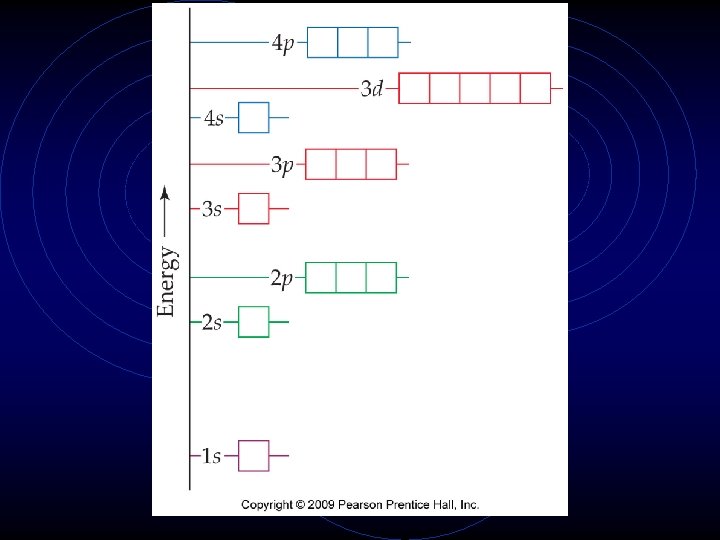
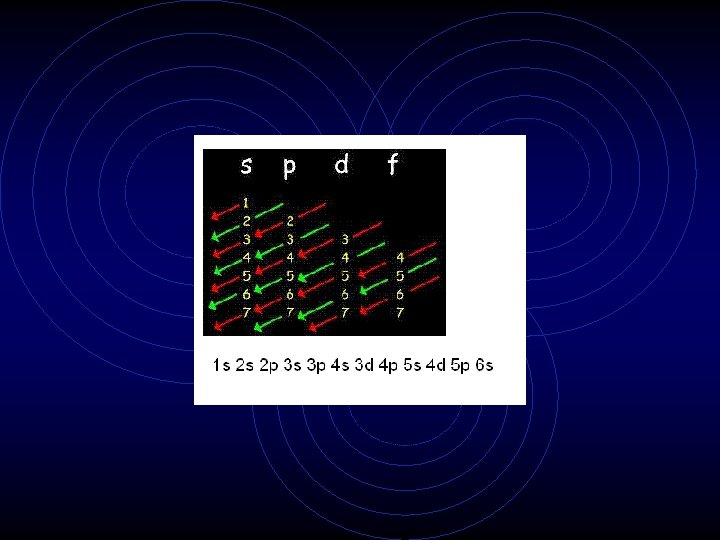
Electron Configuration • Guidelines: • 1. Aufbau Principle Electrons enter orbitals of lowest energy first
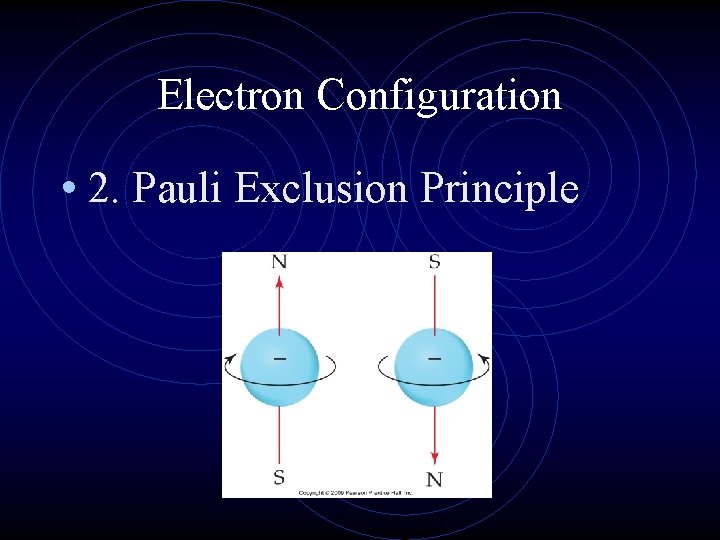
Electron Configuration • 2. Pauli Exclusion Principle • An atomic orbital at most describes 2 electrons, and they must be of opposite spin
Electron Configuration • 2. Pauli Exclusion Principle
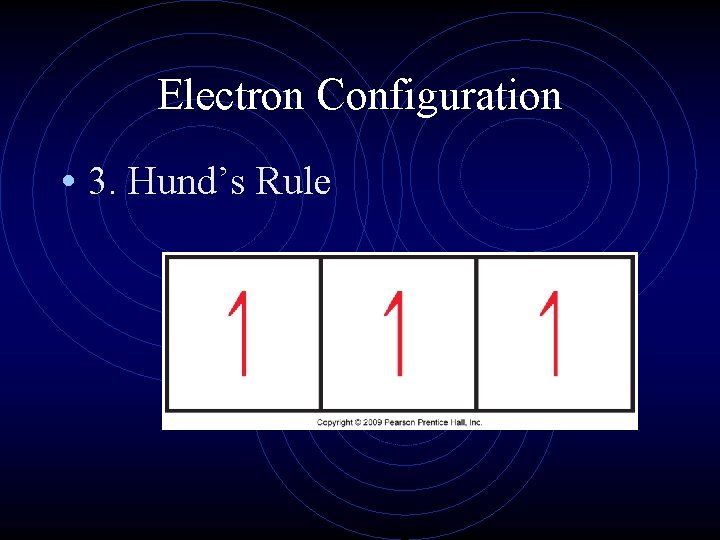
Electron Configuration • 3. Hund’s Rule • When electrons occupy orbitals of the same energy, one electron occupies each orbital until all electrons are of the same spin, then second electrons can be added
Electron Configuration • 3. Hund’s Rule
Electron Configuration • Exceptions to the rules • Cu and Cr
Electron Configuration • Shorthand Notation • Energy level (n=1, 2, 3, …) • symbol for sublevel (s, p, d, f) • Superscript for electrons • Superscripts sum = total electrons
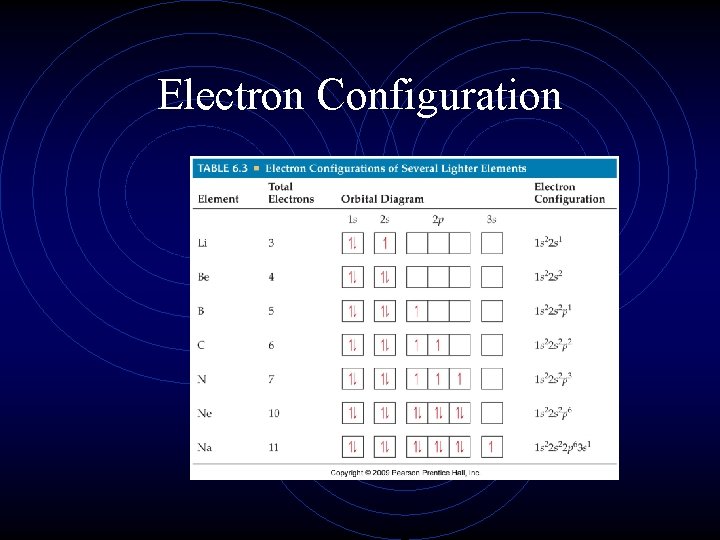
Electron Configuration
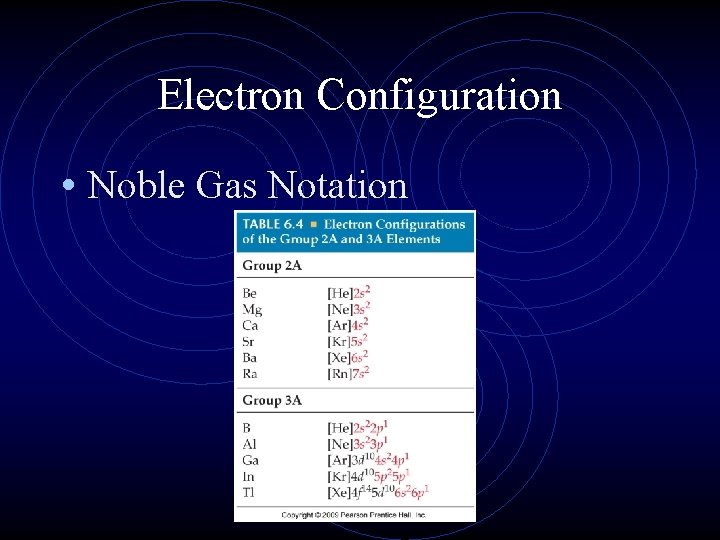
Electron Configuration • Noble Gas Notation • Previous noble gas symbol in brackets • Additional orbitals in shorthand
Electron Configuration • Noble Gas Notation
Review • Write the electron configuration for Sulfur in orbital, shorthand, and noble gas notation.
Review • Write the electron configuration for Chromium in orbital, shorthand, and noble gas notation.
Review • • • Dalton Thompson Rutherford Bohr Schrodinger