
Unit 3 Supply and Demand Introduction Supply the


- Slides: 12
Unit 3: Supply and Demand
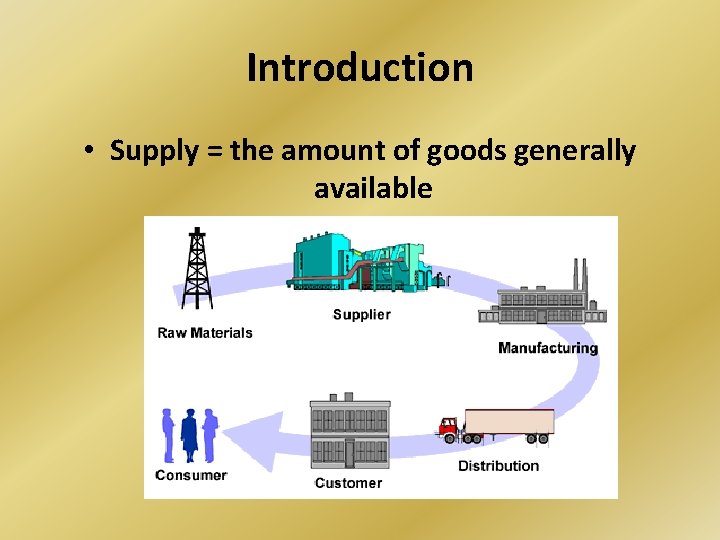
Introduction • Supply = the amount of goods generally available
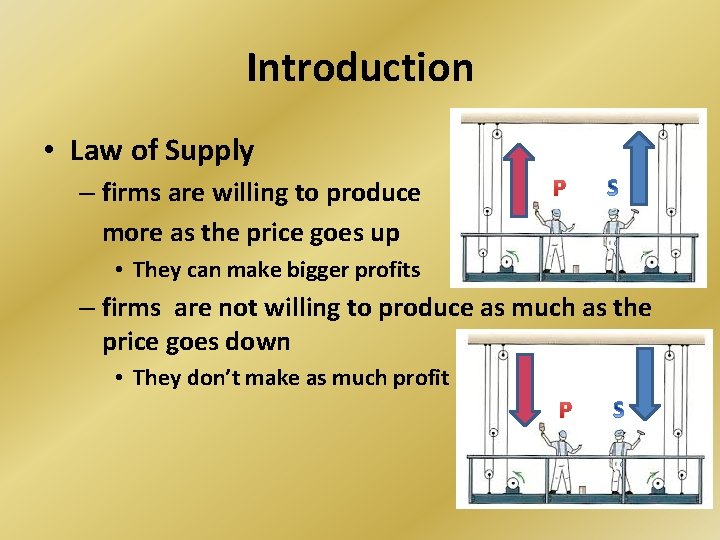
Introduction • Law of Supply – firms are willing to produce more as the price goes up P • They can make bigger profits – firms are not willing to produce as much as the price goes down • They don’t make as much profit P
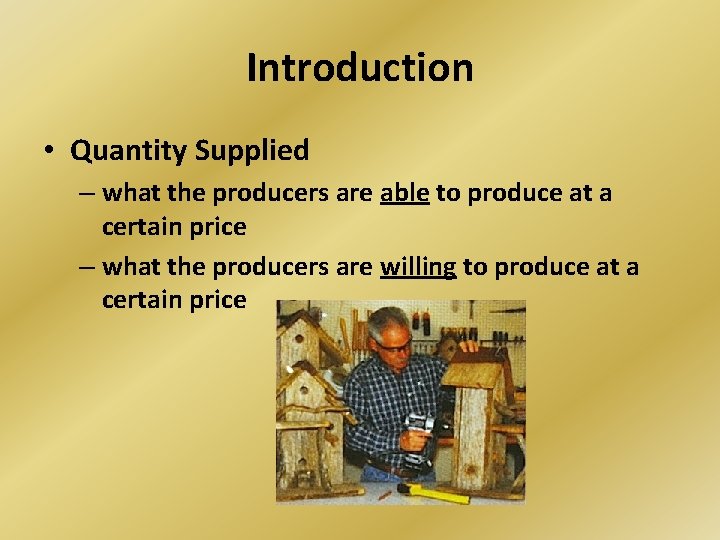
Introduction • Quantity Supplied – what the producers are able to produce at a certain price – what the producers are willing to produce at a certain price
Introduction • Methods to Increase Supply – Higher Production • existing firms increase output • get more profit – Market Entry • new firms enter the market • they want to get some of those profits
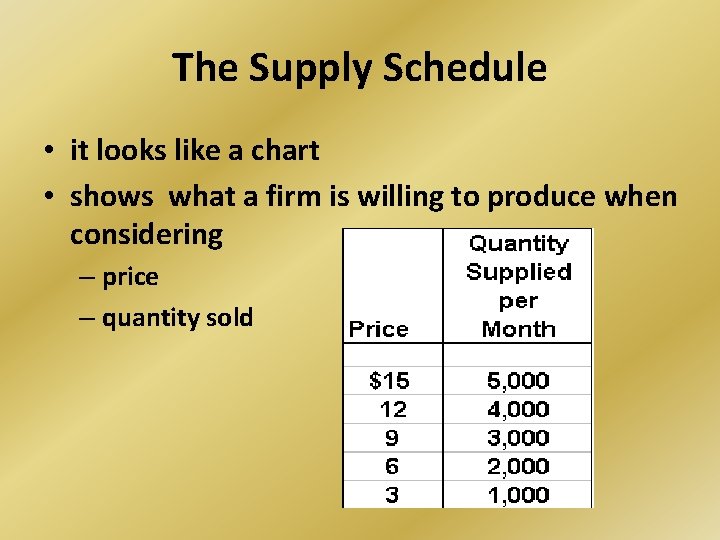
The Supply Schedule • it looks like a chart • shows what a firm is willing to produce when considering – price – quantity sold
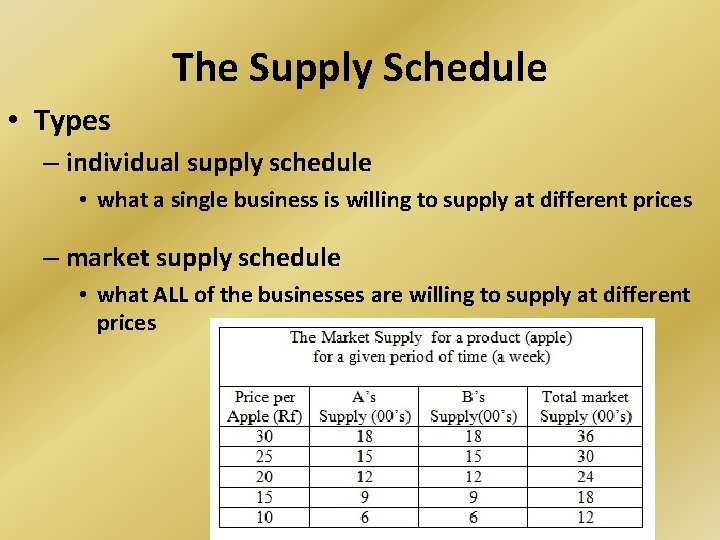
The Supply Schedule • Types – individual supply schedule • what a single business is willing to supply at different prices – market supply schedule • what ALL of the businesses are willing to supply at different prices
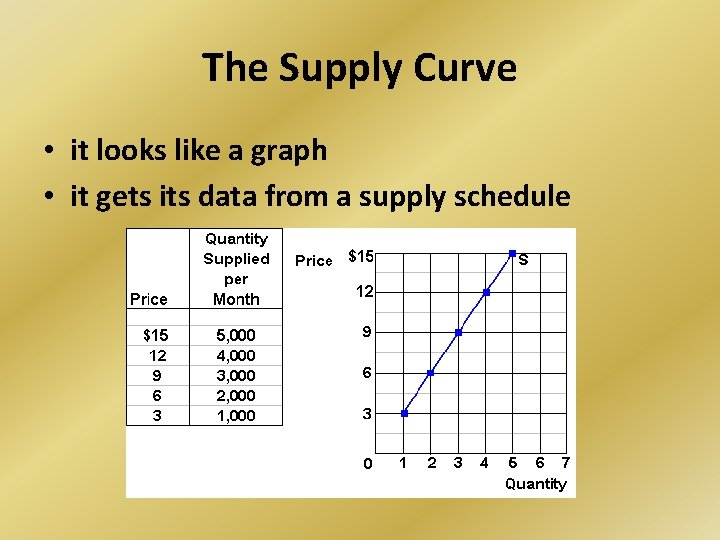
The Supply Curve • it looks like a graph • it gets its data from a supply schedule
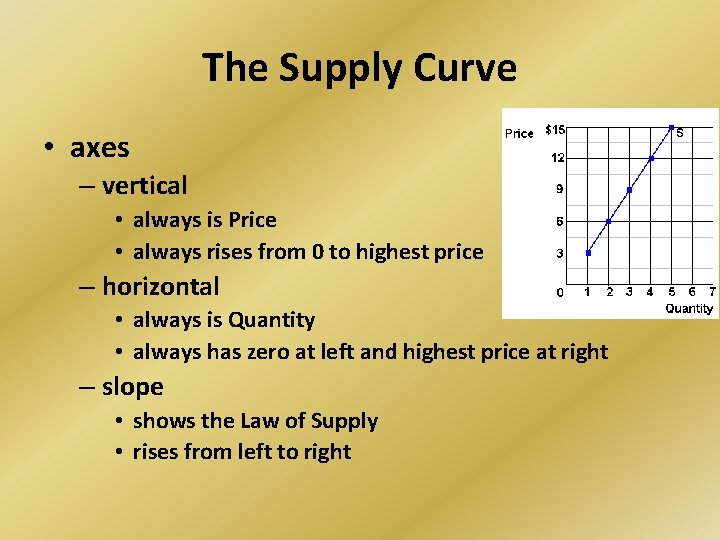
The Supply Curve • axes – vertical • always is Price • always rises from 0 to highest price – horizontal • always is Quantity • always has zero at left and highest price at right – slope • shows the Law of Supply • rises from left to right
Elasticity • measures how people react to change in prices • if reaction is extreme, it is elastic • if reaction is slight, it is inelastic
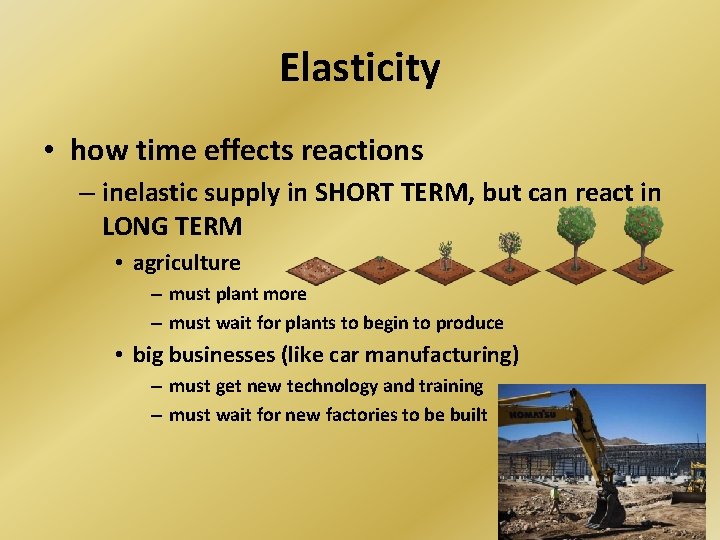
Elasticity • how time effects reactions – inelastic supply in SHORT TERM, but can react in LONG TERM • agriculture – must plant more – must wait for plants to begin to produce • big businesses (like car manufacturing) – must get new technology and training – must wait for new factories to be built
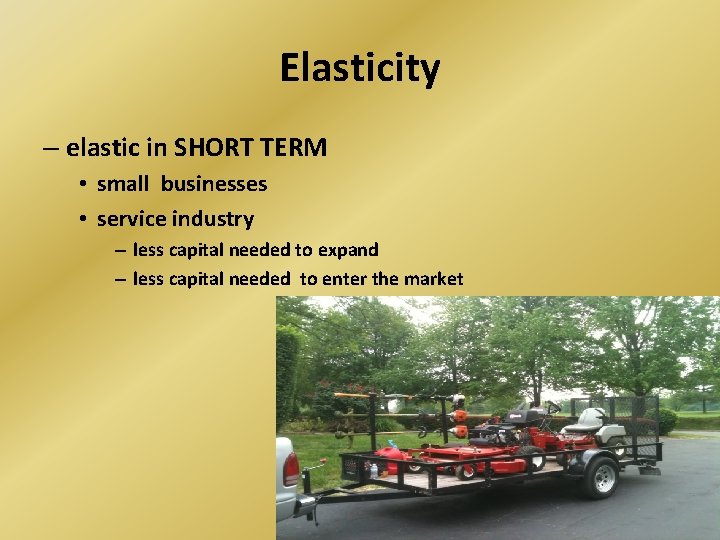
Elasticity – elastic in SHORT TERM • small businesses • service industry – less capital needed to expand – less capital needed to enter the market