
Unit 3 Reliability Culture of Safety HIT This
Unit 3: Reliability, Culture of Safety, & HIT This material was developed by Johns Hopkins University, funded by the Department of Health and Human Services, Office of the National Coordinator for Health Information Technology under Award Number IU 24 OC 000013.
Objectives • Discuss reliability as a tool for ensuring safety • Examine how ultra-safe organizations operate • Identify how teams make wise decisions Component 12/Unit 3 Health IT Workforce Curriculum Version 2. 0/Spring 2011 2

Reliability Video 1 Component 12/Unit 3 Health IT Workforce Curriculum Version 2. 0/Spring 2011 Image: http: //www. pakalertpress. com 3
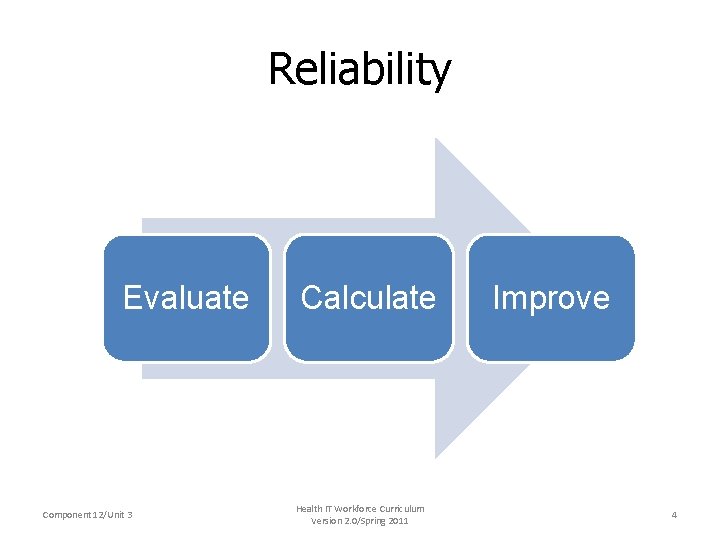
Reliability Evaluate Component 12/Unit 3 Calculate Health IT Workforce Curriculum Version 2. 0/Spring 2011 Improve 4
Reliability Prevent Failure • Best practice guidelines, tools, techniques • Awareness campaigns • Memory aids • Checklists • Making the desired action the default Component 12/Unit 3 Health IT Workforce Curriculum Version 2. 0/Spring 2011 5

Reliability Identify and Mitigate Failure • • Reduce fatigue and distraction Standing orders for best practice treatments Electronic flags Independent double-checks Redesign for Success • Understand where the failure is occurring • Determine the remedy Component 12/Unit 3 Health IT Workforce Curriculum Version 2. 0/Spring 2011 6
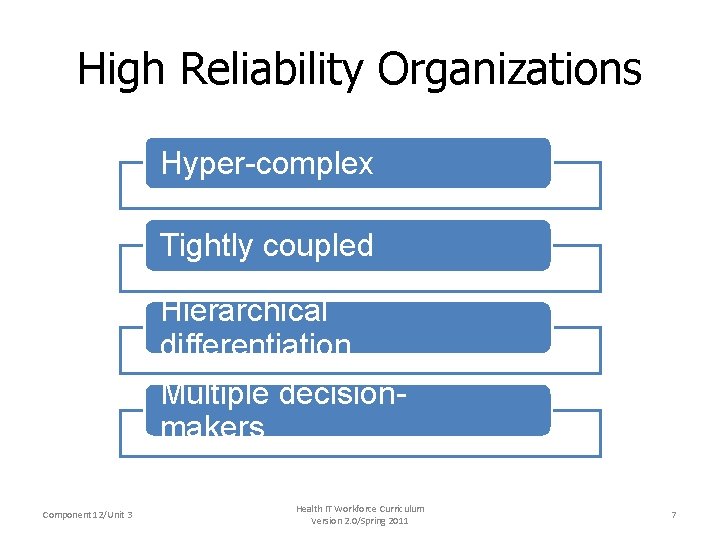
High Reliability Organizations Hyper-complex Tightly coupled Hierarchical differentiation Multiple decisionmakers Component 12/Unit 3 Health IT Workforce Curriculum Version 2. 0/Spring 2011 7

High Reliability Organizations Complex communication High accountability Need frequent, immediate feedback Compressed time constraints Component 12/Unit 3 Health IT Workforce Curriculum Version 2. 0/Spring 2011 8

High Reliability Organizations Mindfulness http: //www. ahrq. gov/qual/hroadvicefig 1 -6. htm Component 12/Unit 3 Health IT Workforce Curriculum Version 2. 0/Spring 2011 9
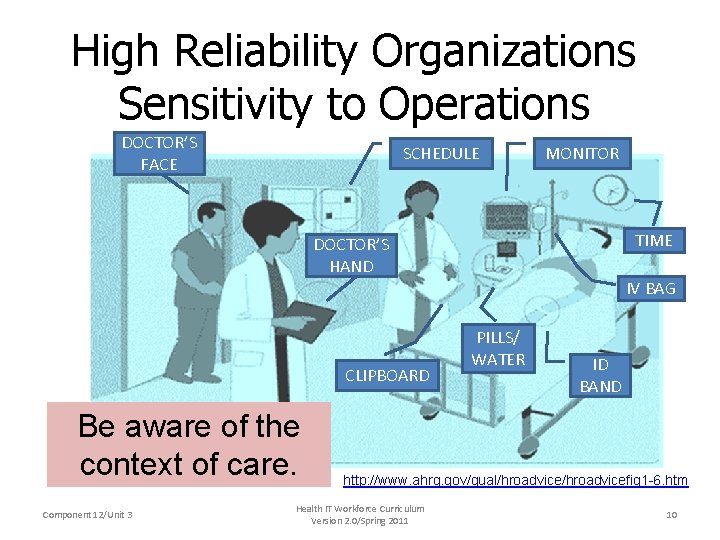
High Reliability Organizations Sensitivity to Operations DOCTOR’S FACE SCHEDULE MONITOR TIME DOCTOR’S HAND IV BAG CLIPBOARD Be aware of the context of care. Component 12/Unit 3 PILLS/ WATER ID BAND http: //www. ahrq. gov/qual/hroadvicefig 1 -6. htm Health IT Workforce Curriculum Version 2. 0/Spring 2011 10
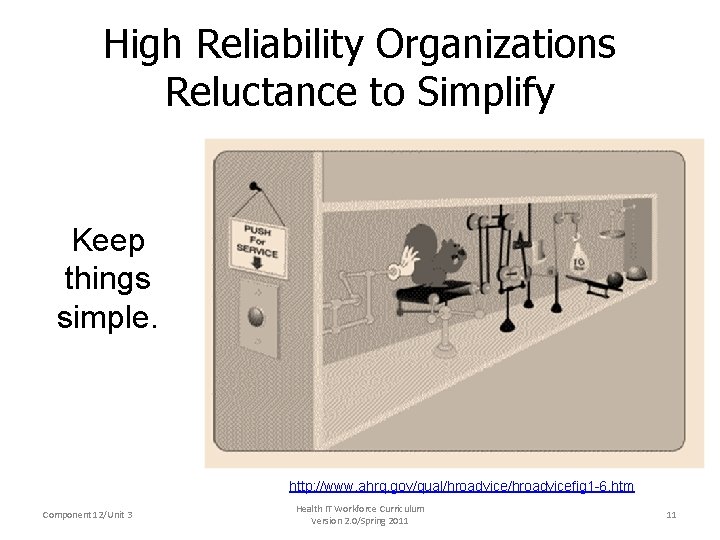
High Reliability Organizations Reluctance to Simplify Keep things simple. http: //www. ahrq. gov/qual/hroadvicefig 1 -6. htm Component 12/Unit 3 Health IT Workforce Curriculum Version 2. 0/Spring 2011 11

High Reliability Organizations Preoccupation with Failure Be preoccupied with failure. Don’t rely on good brakes to save you every time. http: //www. ahrq. gov/qual/hroadvicefig 1 -6. htm Component 12/Unit 3 Health IT Workforce Curriculum Version 2. 0/Spring 2011 12
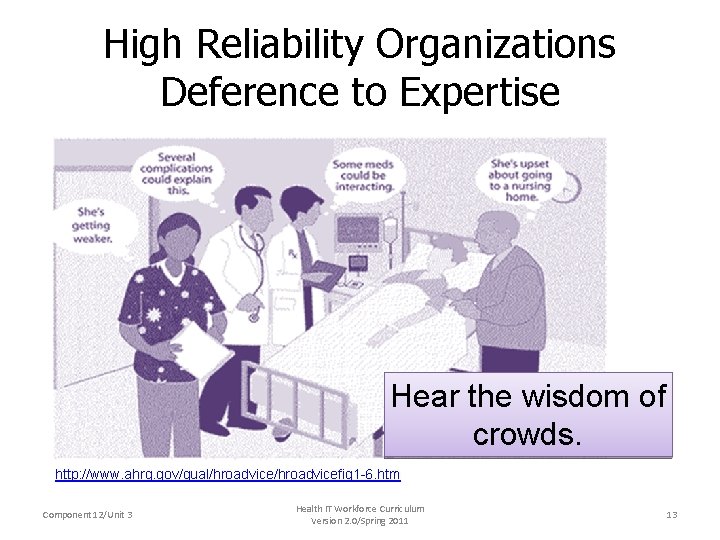
High Reliability Organizations Deference to Expertise Hear the wisdom of crowds. http: //www. ahrq. gov/qual/hroadvicefig 1 -6. htm Component 12/Unit 3 Health IT Workforce Curriculum Version 2. 0/Spring 2011 13
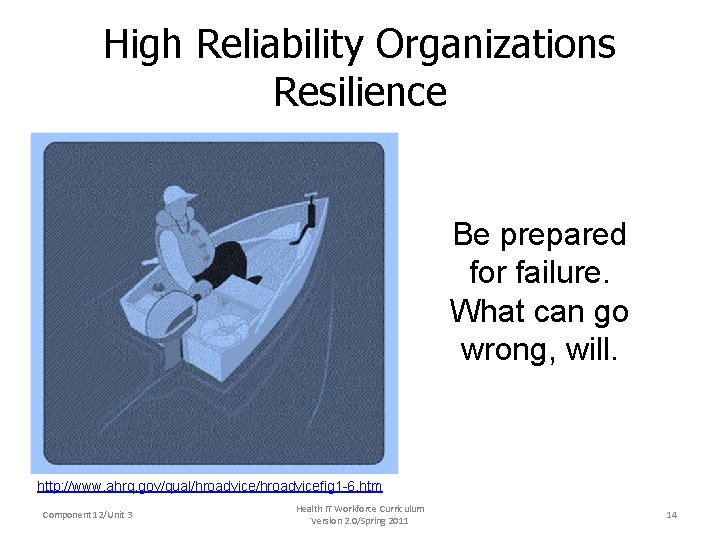
High Reliability Organizations Resilience Be prepared for failure. What can go wrong, will. http: //www. ahrq. gov/qual/hroadvicefig 1 -6. htm Component 12/Unit 3 Health IT Workforce Curriculum Version 2. 0/Spring 2011 14
CULTURE “the shared perceptions of the individuals within the team or an organization about what is good, right, important, valued, supported, or expected at any given time. ” Riley W. et al (2010) Component 12/Unit 3 Health IT Workforce Curriculum Version 2. 0/Spring 2011 15
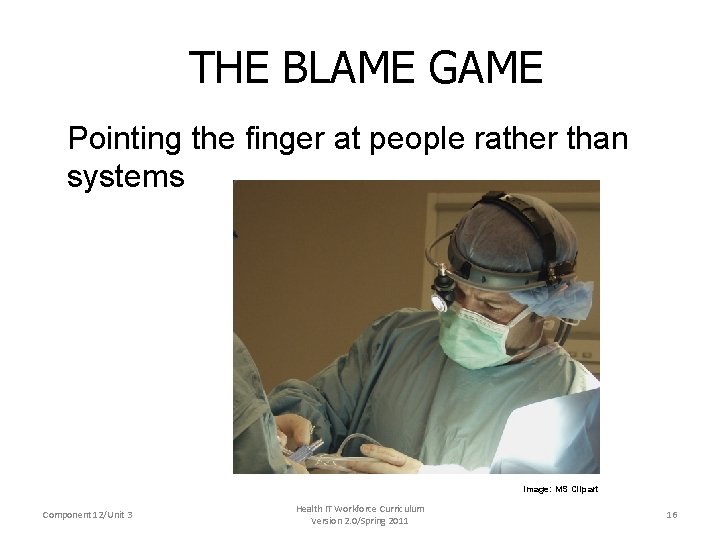
THE BLAME GAME Pointing the finger at people rather than systems Image: MS Clipart Component 12/Unit 3 Health IT Workforce Curriculum Version 2. 0/Spring 2011 16
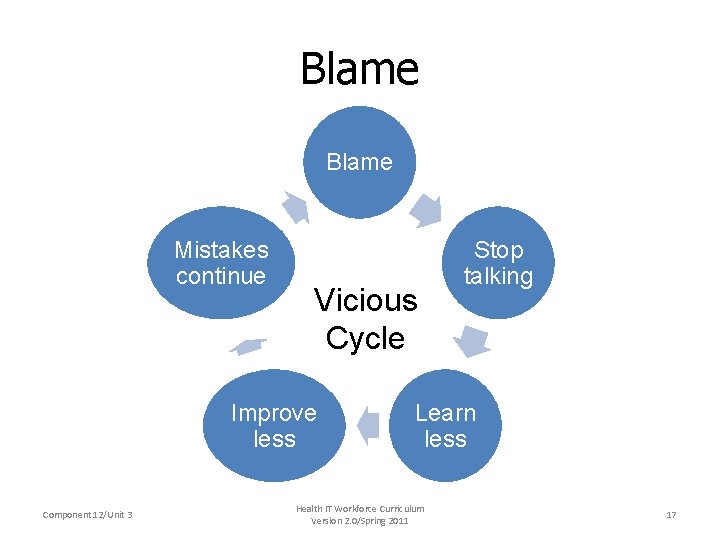
Blame Mistakes continue Vicious Cycle Improve less Component 12/Unit 3 Stop talking Learn less Health IT Workforce Curriculum Version 2. 0/Spring 2011 17
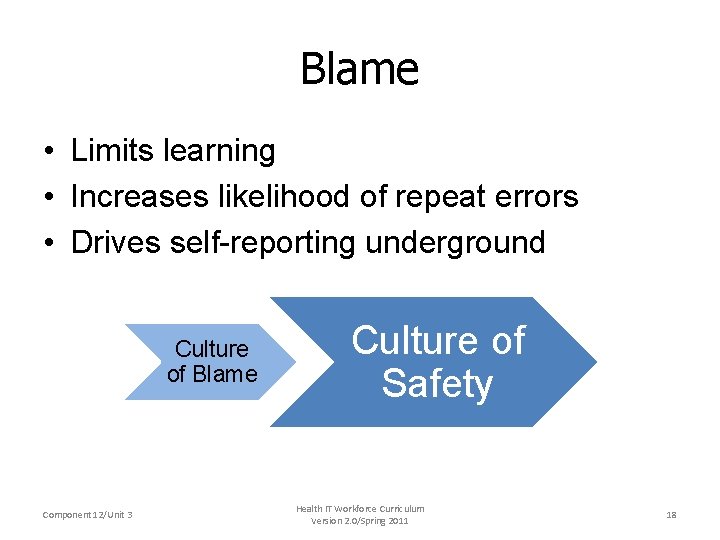
Blame • Limits learning • Increases likelihood of repeat errors • Drives self-reporting underground Culture of Blame Component 12/Unit 3 Culture of Safety Health IT Workforce Curriculum Version 2. 0/Spring 2011 18
Just Culture • Focuses on identifying and addressing systems issues that lead individuals to engage in unsafe behaviors • Maintains individual accountability by establishing zero tolerance for reckless behavior • Distinguished between human error, at-risk behavior, and reckless behavior • Response to error or near miss is predicated on the type of behavior associated with the error, not the severity of the event http: //psnet. ahrq. gov/primer. aspx? primer. ID=5 Component 12/Unit 3 Health IT Workforce Curriculum Version 2. 0/Spring 2011 19
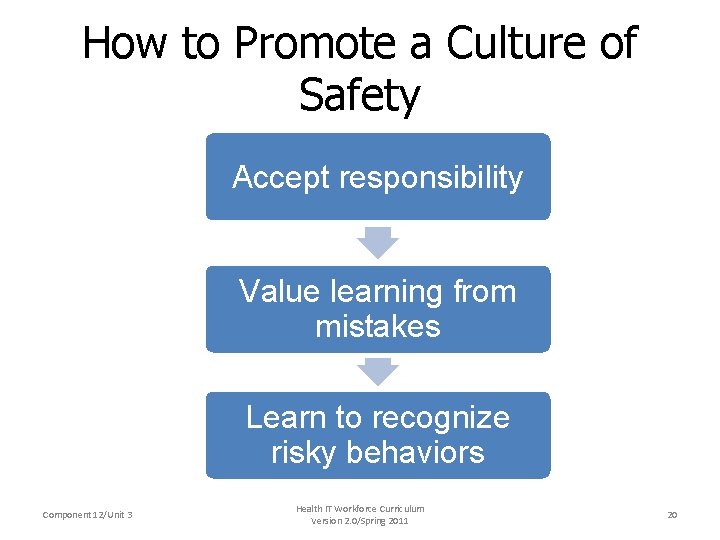
How to Promote a Culture of Safety Accept responsibility Value learning from mistakes Learn to recognize risky behaviors Component 12/Unit 3 Health IT Workforce Curriculum Version 2. 0/Spring 2011 20
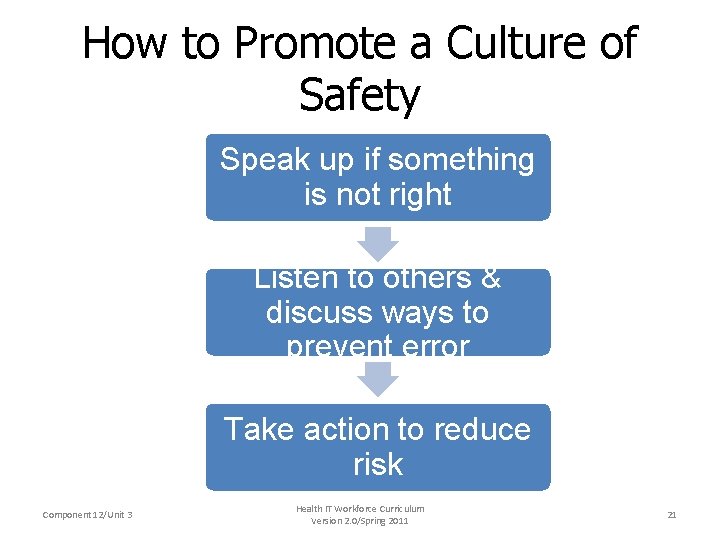
How to Promote a Culture of Safety Speak up if something is not right Listen to others & discuss ways to prevent error Take action to reduce risk Component 12/Unit 3 Health IT Workforce Curriculum Version 2. 0/Spring 2011 21
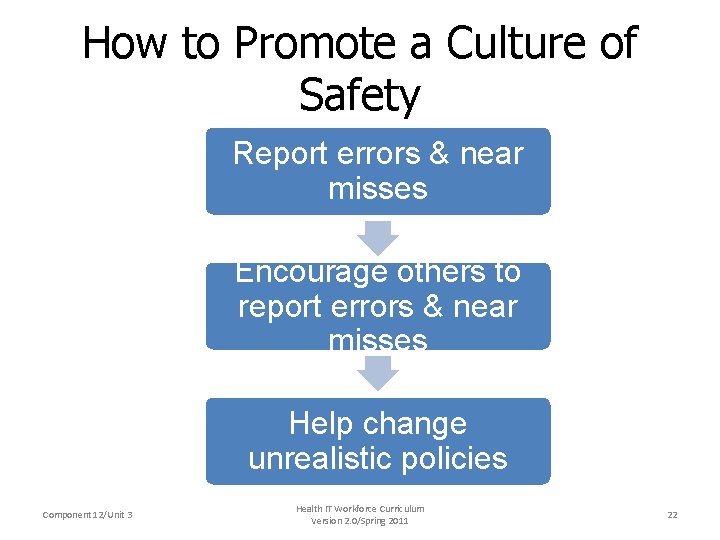
How to Promote a Culture of Safety Report errors & near misses Encourage others to report errors & near misses Help change unrealistic policies Component 12/Unit 3 Health IT Workforce Curriculum Version 2. 0/Spring 2011 22
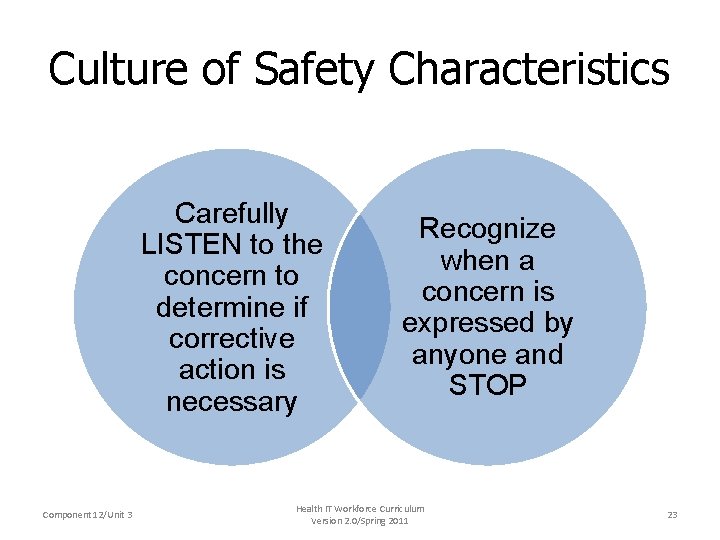
Culture of Safety Characteristics Carefully LISTEN to the concern to determine if corrective action is necessary Component 12/Unit 3 Recognize when a concern is expressed by anyone and STOP Health IT Workforce Curriculum Version 2. 0/Spring 2011 23
Culture of Safety http: //static. guim. co. uk/sys-images/Environment/Pix/pictures/2008/05/09/honeybee 460. jpg Video 2 Component 12/Unit 3 Health IT Workforce Curriculum Version 2. 0/Spring 2011 24
References • AHRQ Patient Safety Primers. Safety Culture. Available from: http: //psnet. ahrq. gov/primer. aspx? primer. ID=5 • Becoming a High Reliability Organization: Operational Advice for Hospital Leaders. Rockville, MD. AHRQ Publication No. 08 -0022, 2008 April. Agency for Healthcare Research and Quality. Available from: http: //www. ahrq. gov/qual/hroadvice/. • Riley W, Davis SE, Miller KK, & Mc. Cullough M. A model for developing high reliability teams. J Nurs Manag. 2010 Jul 18(5): 556563. • Reliability. Institute for Healthcare Improvement. Available from: http: //www. ihi. org/IHI/Topics/Reliability/ • When Good Enough Isn’t…Good Enough: The Case for Reliability. Institute for Healthcare Improvement. Available from: http: //www. ihi. org/IHI/Topics/Reliability. General/Improvement Stories/When. Good. Enough. Isnt. Good. Enough. The. Casefor. Reliability. htm Component 12/Unit 3 Health IT Workforce Curriculum Version 2. 0/Spring 2011 25
- Slides: 25