
Unit 3 Product Development What is a Product
- Slides: 18
Unit 3 “Product Development” What is a Product? Consumer Markets Product Design Process Product Planning Product Mix
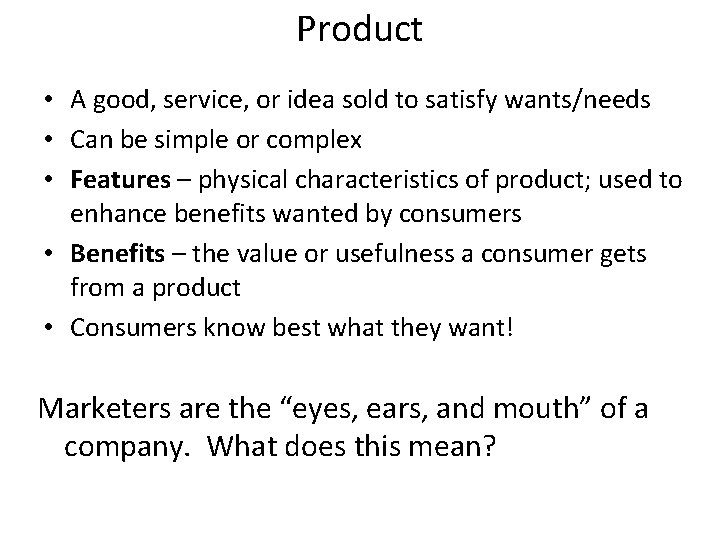
Product • A good, service, or idea sold to satisfy wants/needs • Can be simple or complex • Features – physical characteristics of product; used to enhance benefits wanted by consumers • Benefits – the value or usefulness a consumer gets from a product • Consumers know best what they want! Marketers are the “eyes, ears, and mouth” of a company. What does this mean?
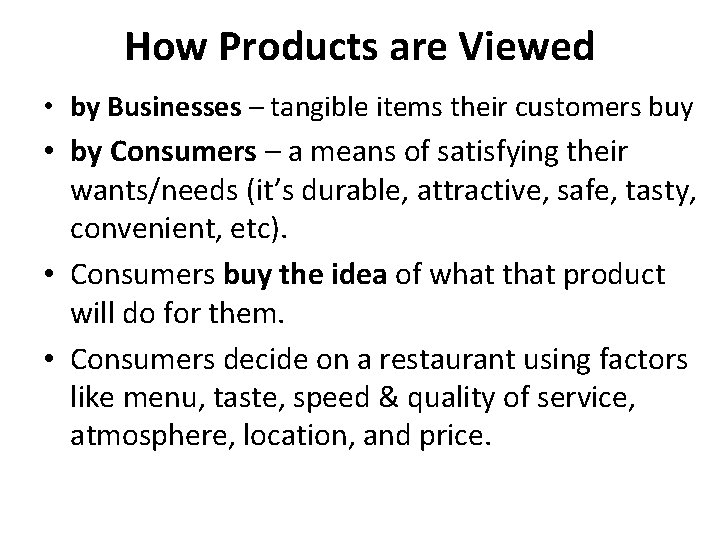
How Products are Viewed • by Businesses – tangible items their customers buy • by Consumers – a means of satisfying their wants/needs (it’s durable, attractive, safe, tasty, convenient, etc). • Consumers buy the idea of what that product will do for them. • Consumers decide on a restaurant using factors like menu, taste, speed & quality of service, atmosphere, location, and price.
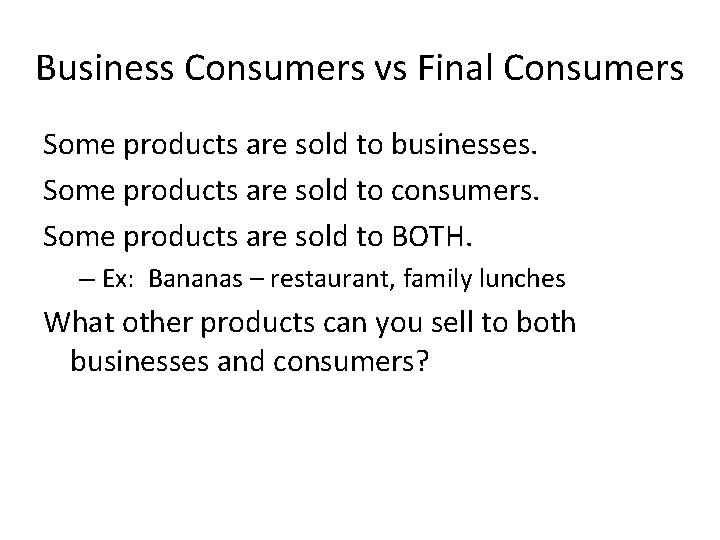
Business Consumers vs Final Consumers Some products are sold to businesses. Some products are sold to consumers. Some products are sold to BOTH. – Ex: Bananas – restaurant, family lunches What other products can you sell to both businesses and consumers?
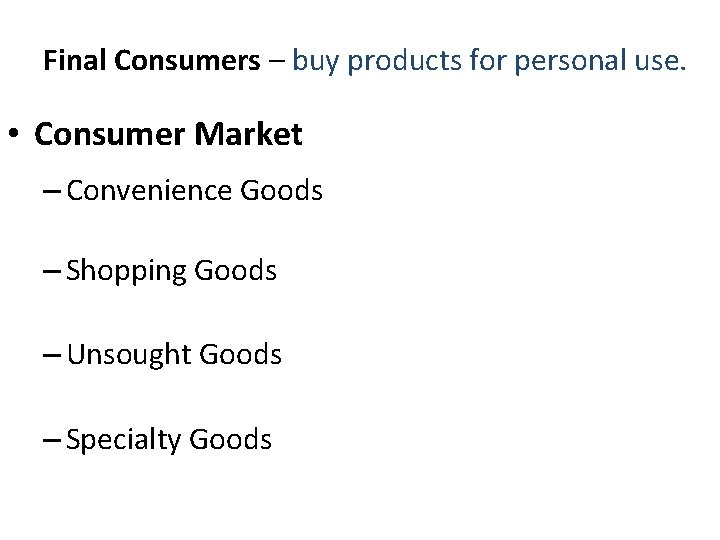
Final Consumers – buy products for personal use. • Consumer Market – Convenience Goods – Shopping Goods – Unsought Goods – Specialty Goods
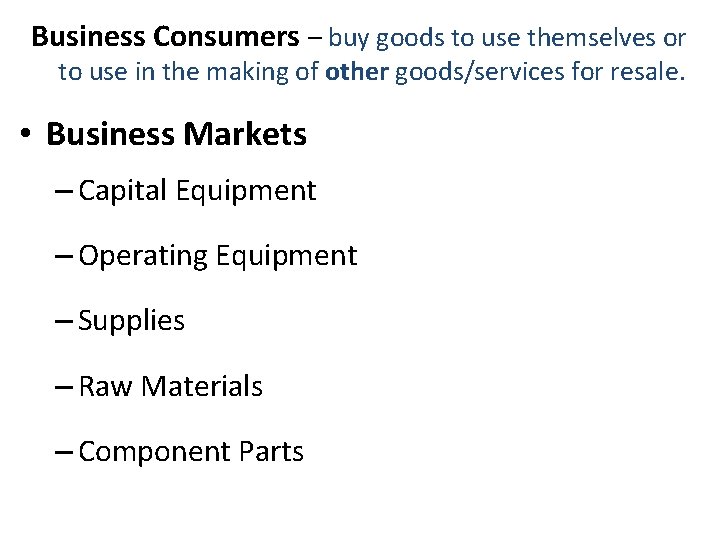
Business Consumers – buy goods to use themselves or to use in the making of other goods/services for resale. • Business Markets – Capital Equipment – Operating Equipment – Supplies – Raw Materials – Component Parts
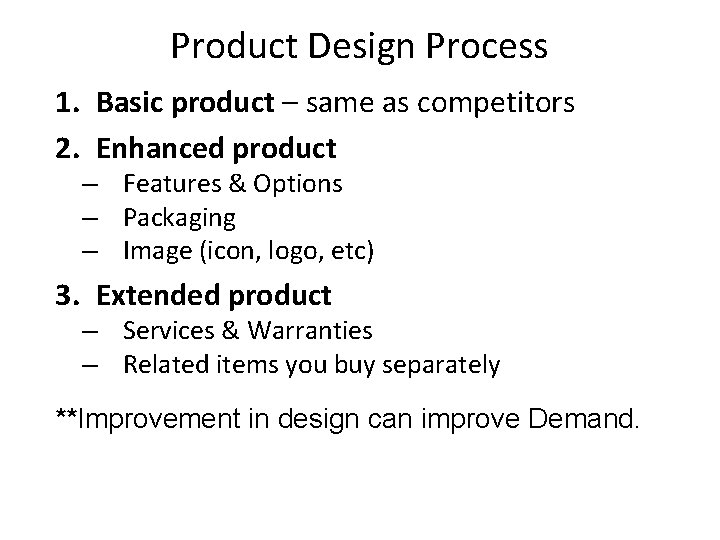
Product Design Process 1. Basic product – same as competitors 2. Enhanced product – Features & Options – Packaging – Image (icon, logo, etc) 3. Extended product – Services & Warranties – Related items you buy separately **Improvement in design can improve Demand.
Product Planning Strategy Consider: • Type of competition in marketplace (direct, intense, nonexistent). • Economic conditions. • Strengths/Weaknesses of own business. Product’s Life Cycle (or its life span) also helps planning
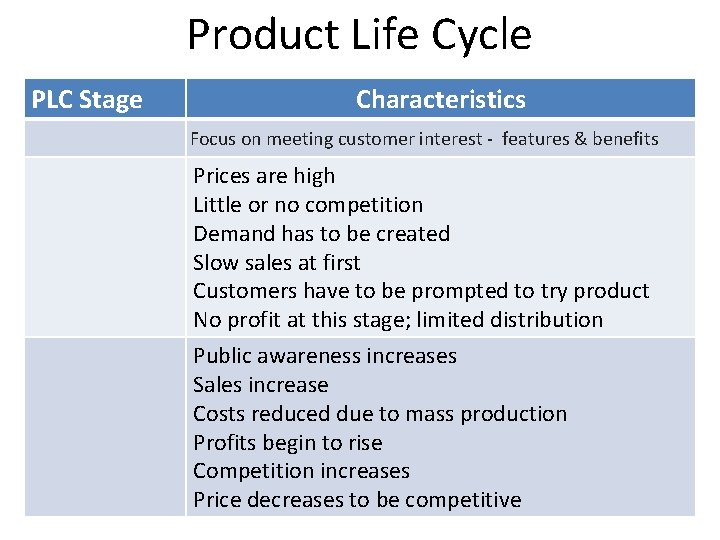
Product Life Cycle PLC Stage Characteristics Focus on meeting customer interest - features & benefits Prices are high Little or no competition Demand has to be created Slow sales at first Customers have to be prompted to try product No profit at this stage; limited distribution Public awareness increases Sales increase Costs reduced due to mass production Profits begin to rise Competition increases Price decreases to be competitive
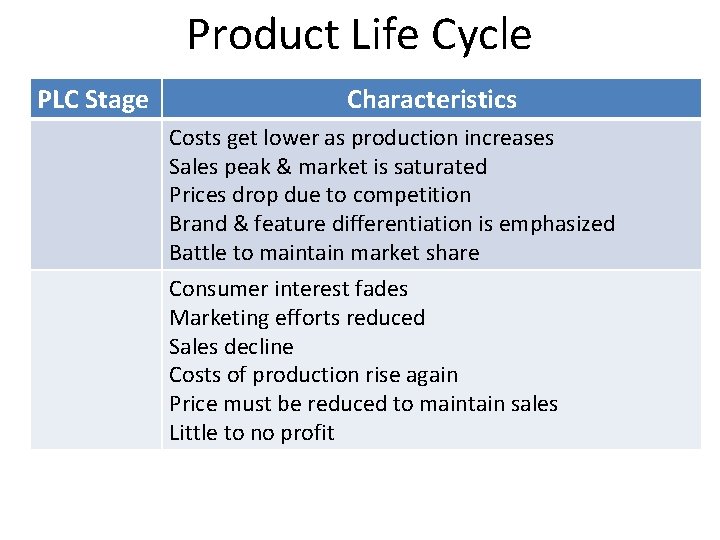
Product Life Cycle PLC Stage Characteristics Costs get lower as production increases Sales peak & market is saturated Prices drop due to competition Brand & feature differentiation is emphasized Battle to maintain market share Consumer interest fades Marketing efforts reduced Sales decline Costs of production rise again Price must be reduced to maintain sales Little to no profit
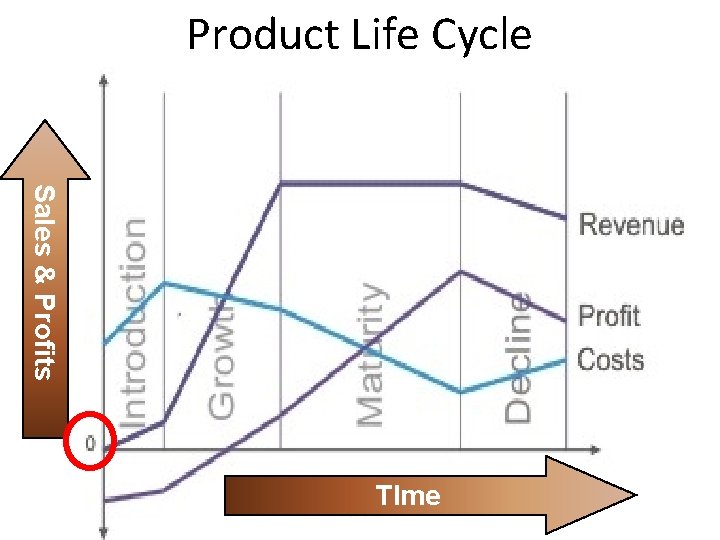
Product Life Cycle Sales & Profits TIme
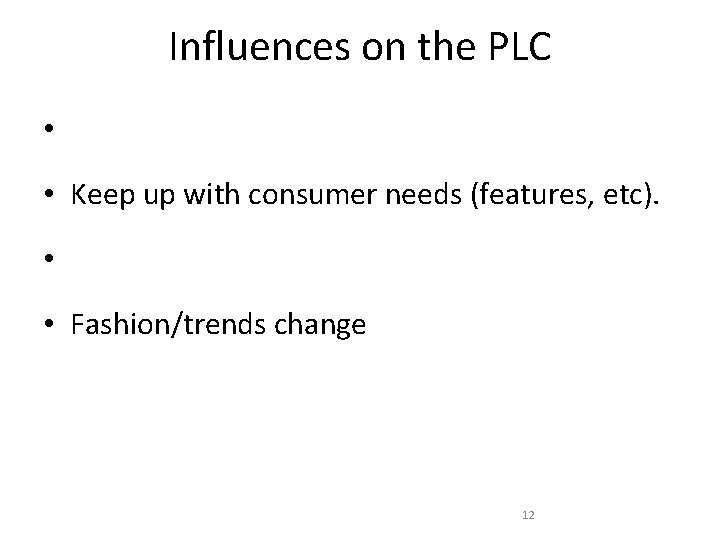
Influences on the PLC • • Keep up with consumer needs (features, etc). • • Fashion/trends change 12
Marketing Supports Product Development Companies want to build a “bridge” to reach their potential customers: new product development. Support for this “bridge” comes in 3 forms: • Gathering information to determine wants/needs(customer surveys & feedback, market research & analysis, etc) • Designing marketing strategies (4 Ps) • Testing the strategies before entering marketplace – (prototype, focus groups, limited distribution, etc)
Companies come up with “NEW” products to keep customers satisfied and to help maintain a profit. What is “New”? • New … or Modified/Improved? • Federal Trade Commission regulates use of “new. ” – “Entirely new or changed in a noticeable way. ” – Six-month time limit Note: ____% of new products fail!!!
Product Mix (Assortment) – the combination and make up of all the products a company has to offer. Includes 3 Parts: 1. Product Line – group of similar product items (soda). Can expand # of products easily by: • Varying quantity – singles, 12 -pak, 1 liter, 12 oz, etc • Varying quality – items priced by amount of features & options included; from basic to fully loaded.
2. Packaging – for what purpose? • • Information – identifies product, gives details • Promotion – attractive & attention-getting • Convenience – makes easier to carry and use. • •
3. Branding • • • Brand – anything that IDs a product or company. Brand Name – NIKE Brand Mark – Trademark – legal protection of the brand Licensed Brand – well-known name or symbol sold for use on other companies’ products.
Product Mix Strategies • Expansion – adding additional product items or lines; for current or new customers’ sake; beat competition. • Contraction – removal of some items or lines; business decision; losing profitability or lost consumer appeal. • Alteration – make changes to items or lines (style, flavor, packaging, size, pricing, etc). • Trading Up – add a higher priced item or line; enhance company image, attract new target market. • Trading Down – add a lower priced item or line; attract new target market or meet competition.