
Unit 3 Political Geography Because people LOVE to
Unit 3: Political Geography Because people LOVE to fight over who gets the most stuff!

Agenda 10/2/2018 Opening Session: “Politics” Thinking Map Work Session: Notes – Political Geography Foldable – Government Systems Closing Session Political Spectrum Quiz
Warm-Up (Part 1) Politics!
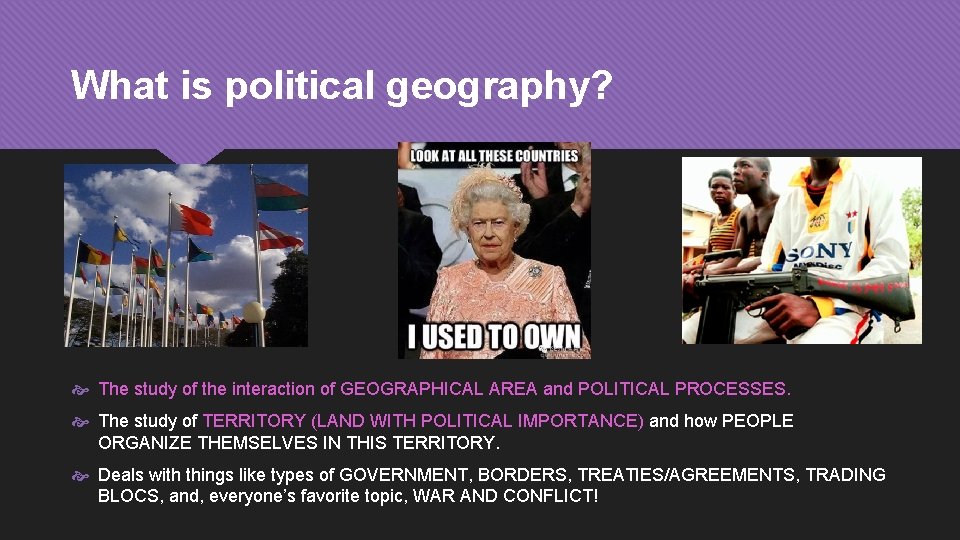
What is political geography? The study of the interaction of GEOGRAPHICAL AREA and POLITICAL PROCESSES. The study of TERRITORY (LAND WITH POLITICAL IMPORTANCE) and how PEOPLE ORGANIZE THEMSELVES IN THIS TERRITORY. Deals with things like types of GOVERNMENT, BORDERS, TREATIES/AGREEMENTS, TRADING BLOCS, and, everyone’s favorite topic, WAR AND CONFLICT!
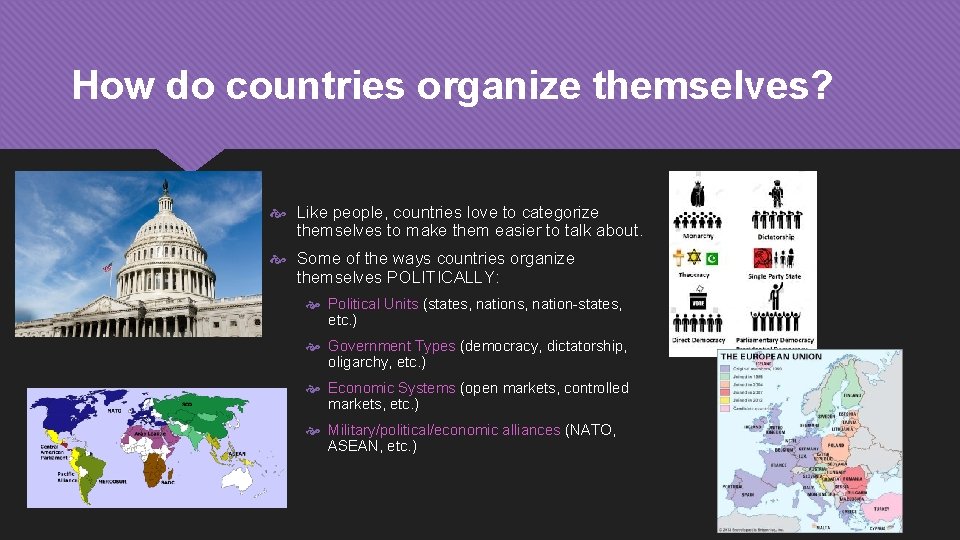
How do countries organize themselves? Like people, countries love to categorize themselves to make them easier to talk about. Some of the ways countries organize themselves POLITICALLY: Political Units (states, nation-states, etc. ) Government Types (democracy, dictatorship, oligarchy, etc. ) Economic Systems (open markets, controlled markets, etc. ) Military/political/economic alliances (NATO, ASEAN, etc. )

Nations vs. States vs. Nation-States ALL COUNTRIES ARE STATES BUT NOT ALL STATES ARE COUNTRIES. For example, Georgia is a state in the United States. The United States is a country which is a fancy name for a type of state. However, Georgia is not a country. States are any INDEPENDENT POLITICAL ENTITY with CLEARLY DEFINED BORDERS! Nations DO NOT have borders. A NATION usually refers to a loosely organized population with common cultural characteristics. Gotta have a LOT of people with the same culture. Like Basque, Kurdistan, etc! If a nation becomes a state by gaining territory and being recognized politically by other countries, it is actually a NATION-STATE (a state made up of culturally homogeneous population)
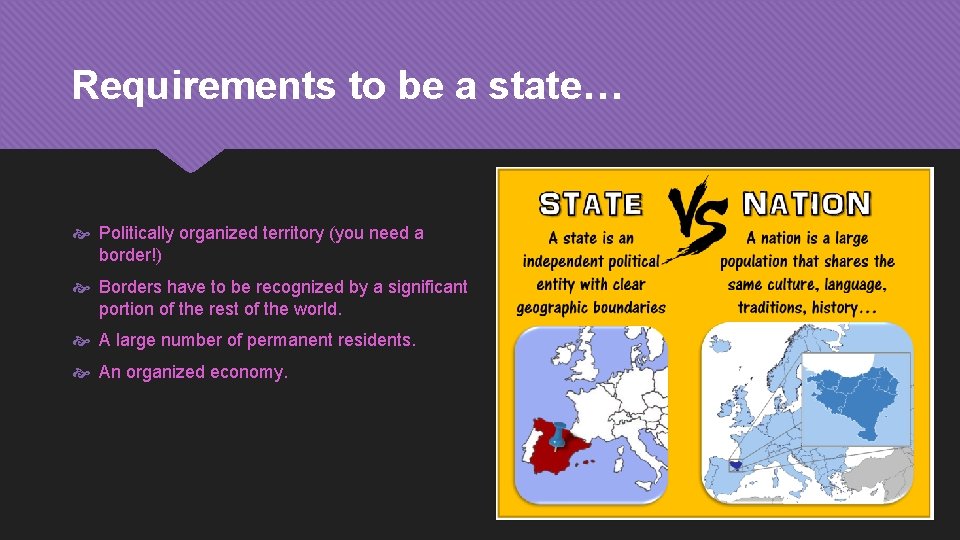
Requirements to be a state… Politically organized territory (you need a border!) Borders have to be recognized by a significant portion of the rest of the world. A large number of permanent residents. An organized economy.
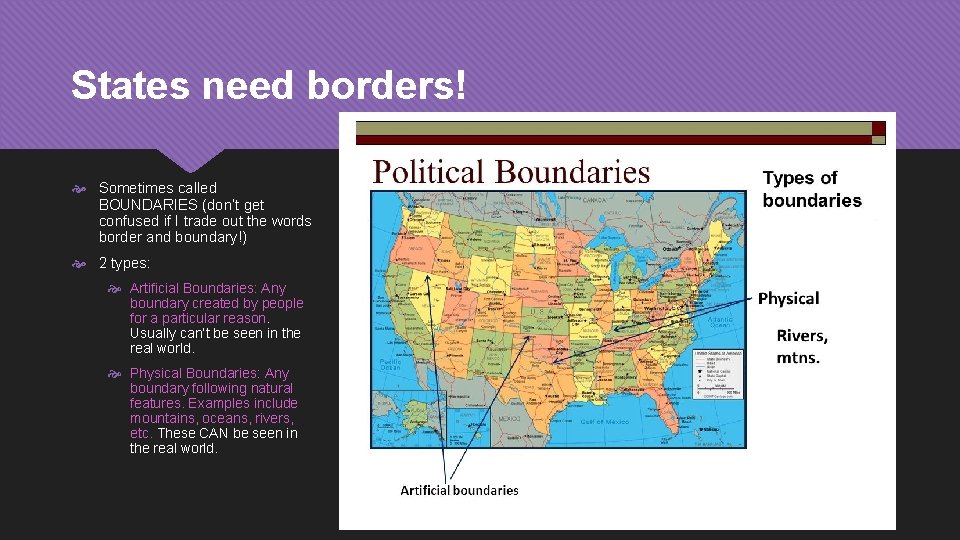
States need borders! Sometimes called BOUNDARIES (don’t get confused if I trade out the words border and boundary!) 2 types: Artificial Boundaries: Any boundary created by people for a particular reason. Usually can’t be seen in the real world. Physical Boundaries: Any boundary following natural features. Examples include mountains, oceans, rivers, etc. These CAN be seen in the real world.
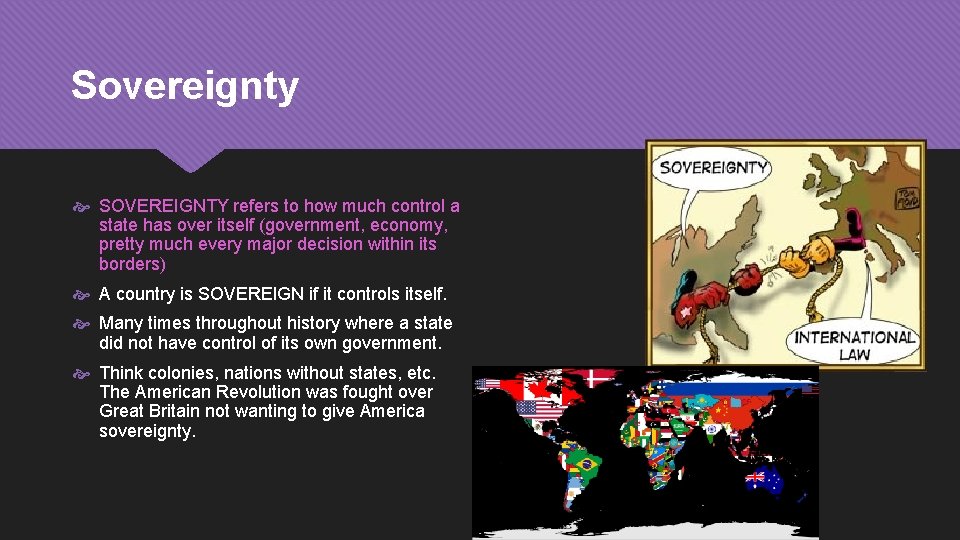
Sovereignty SOVEREIGNTY refers to how much control a state has over itself (government, economy, pretty much every major decision within its borders) A country is SOVEREIGN if it controls itself. Many times throughout history where a state did not have control of its own government. Think colonies, nations without states, etc. The American Revolution was fought over Great Britain not wanting to give America sovereignty.
So why do we study this? States need to work together in order to succeed. It is EXTREMELY DIFFICULT to be a powerful, successful nation without some degree of politically interaction (Think trade, military alliances, economic cooperation, etc) States fight… A LOT. We study political geography to help prevent these conflicts and help resolve issues when they pop up.
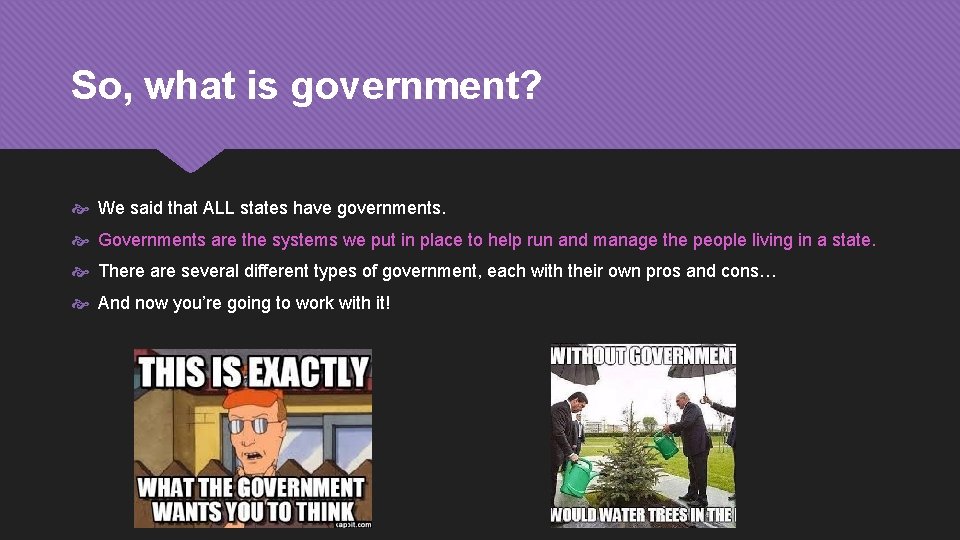
So, what is government? We said that ALL states have governments. Governments are the systems we put in place to help run and manage the people living in a state. There are several different types of government, each with their own pros and cons… And now you’re going to work with it!
Government System Foldable In order to help you understand these better, you will be making a foldable dealing with the different government systems used around the world. For each of the 7 government systems, fill out the following information: Name of the Government System Definition Country as an example (Ex. An example of democratic gov’t is the US) Chart with pros/cons of each system Picture/diagram explaining the government type
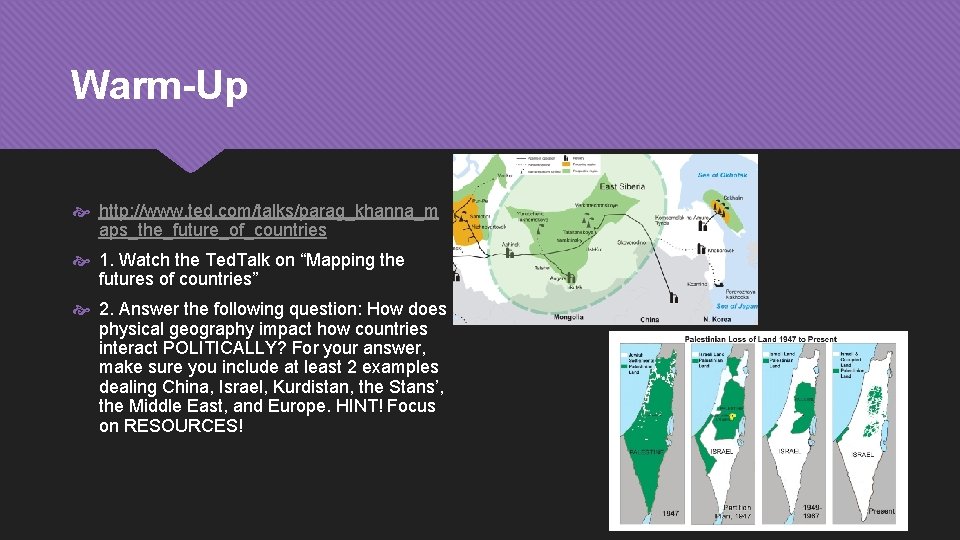
Warm-Up http: //www. ted. com/talks/parag_khanna_m aps_the_future_of_countries 1. Watch the Ted. Talk on “Mapping the futures of countries” 2. Answer the following question: How does physical geography impact how countries interact POLITICALLY? For your answer, make sure you include at least 2 examples dealing China, Israel, Kurdistan, the Stans’, the Middle East, and Europe. HINT! Focus on RESOURCES!
- Slides: 13