
Unit 3 Organization and development THE CELL CYCLE
- Slides: 22
Unit 3 Organization and development THE CELL CYCLE AND MITOSIS
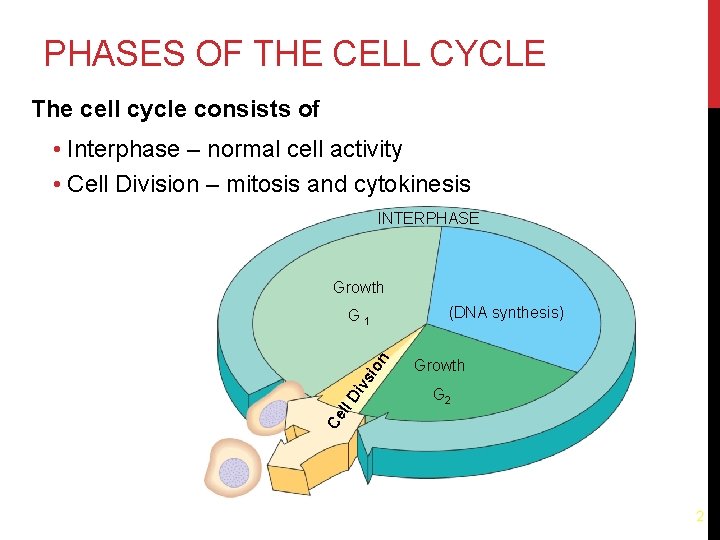
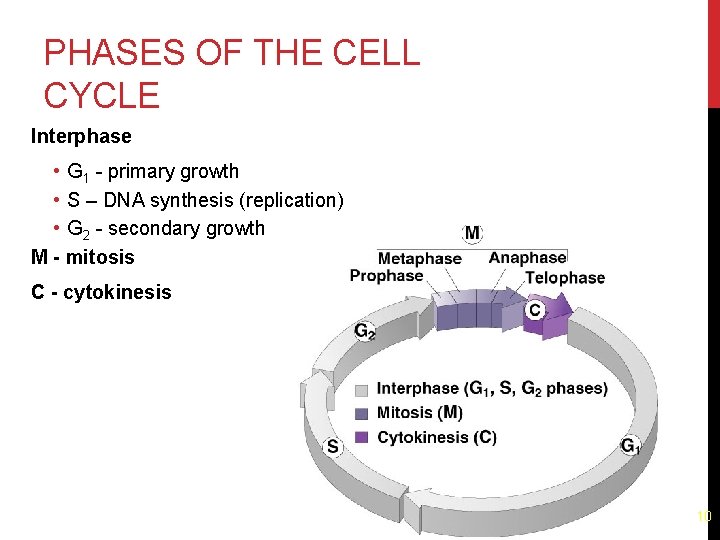
PHASES OF THE CELL CYCLE The cell cycle consists of • Interphase – normal cell activity • Cell Division – mitosis and cytokinesis INTERPHASE Growth (DNA synthesis) Growth G 2 Ce ll Di vs io n G 1 2
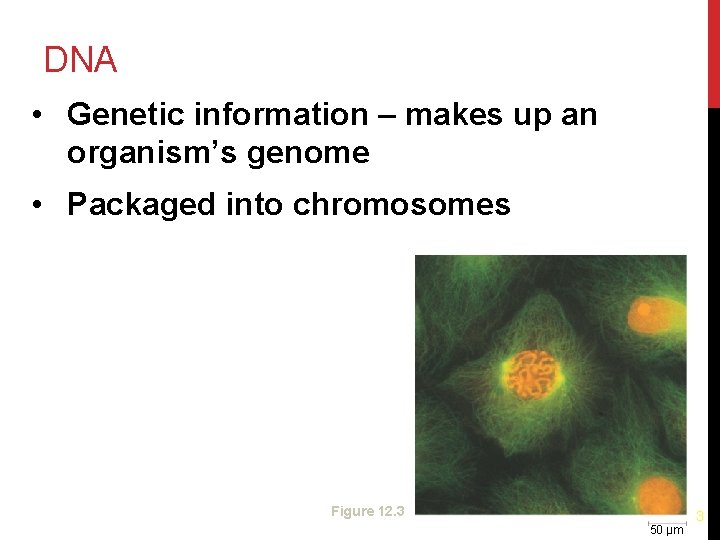
DNA • Genetic information – makes up an organism’s genome • Packaged into chromosomes Figure 12. 3 50 µm 3
MITOSIS AND CELL DIVISION • Mitosis makes new cells for repair; to replace old, damaged, or dead cells. • Mitosis makes new cells for growth. • Somatic (non sex cells) undergo mitosis. • In every mitotic division, 2 cells are made. • These cells are genetically identical to the parent cell. 4
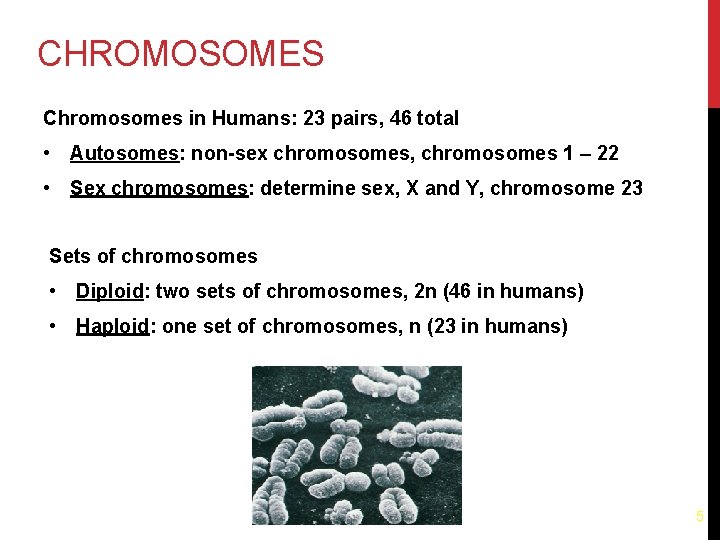
CHROMOSOMES Chromosomes in Humans: 23 pairs, 46 total • Autosomes: non-sex chromosomes, chromosomes 1 – 22 • Sex chromosomes: determine sex, X and Y, chromosome 23 Sets of chromosomes • Diploid: two sets of chromosomes, 2 n (46 in humans) • Haploid: one set of chromosomes, n (23 in humans) 5
STRUCTURE OF CHROMOSOMES • DNA is an extremely long double-stranded molecule. • One strand of DNA makes up a chromosome. • Before mitosis, the DNA exists in long, uncondensed strands called - chromatin • Each unduplicated chromosome contains one DNA molecule. • Duplicated chromosomes are called sister chromatids. 6
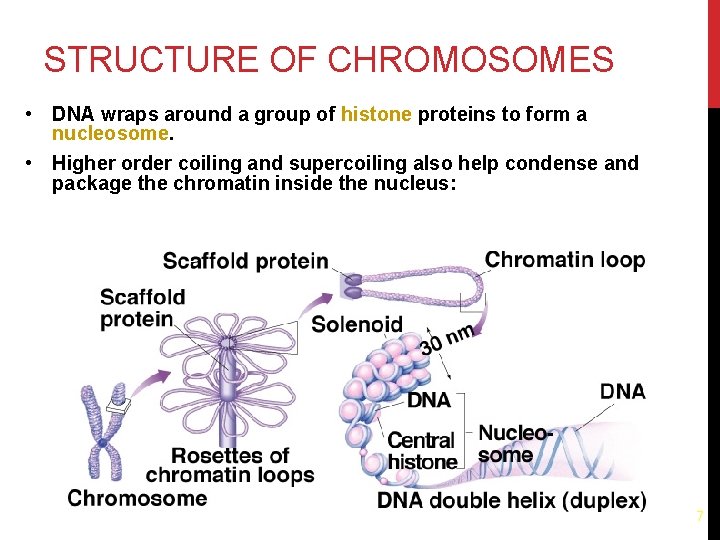
STRUCTURE OF CHROMOSOMES • DNA wraps around a group of histone proteins to form a nucleosome. • Higher order coiling and supercoiling also help condense and package the chromatin inside the nucleus: 7
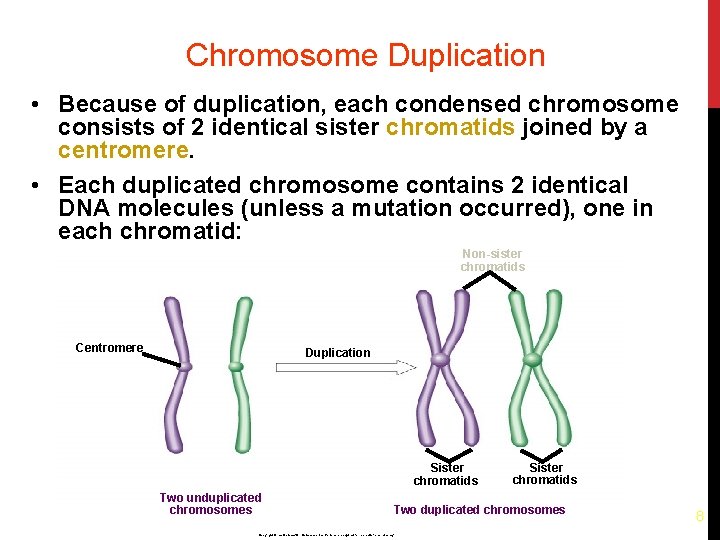
Chromosome Duplication • Because of duplication, each condensed chromosome consists of 2 identical sister chromatids joined by a centromere. • Each duplicated chromosome contains 2 identical DNA molecules (unless a mutation occurred), one in each chromatid: Non-sister chromatids Centromere Duplication Sister chromatids Two unduplicated chromosomes Sister chromatids Two duplicated chromosomes Copyright © The Mc. Graw-Hill Companies, Inc. Permission required for reproduction or display. 8
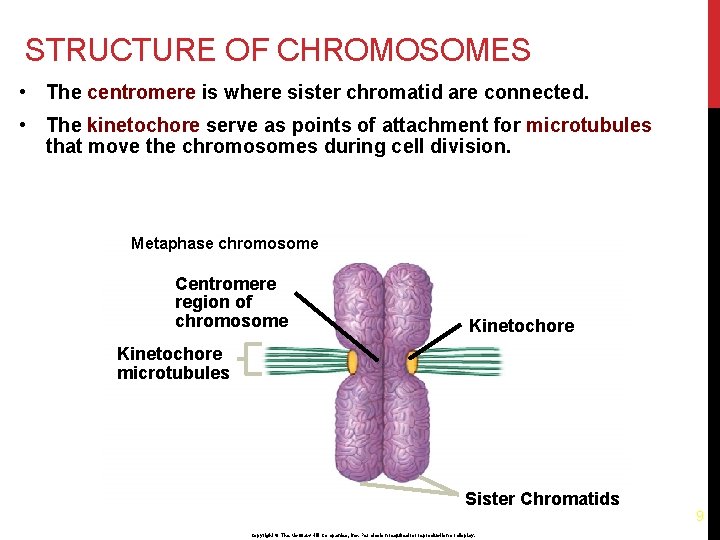
STRUCTURE OF CHROMOSOMES • The centromere is where sister chromatid are connected. • The kinetochore serve as points of attachment for microtubules that move the chromosomes during cell division. Metaphase chromosome Centromere region of chromosome Kinetochore microtubules Sister Chromatids 9 Copyright © The Mc. Graw-Hill Companies, Inc. Permission required for reproduction or display.
PHASES OF THE CELL CYCLE Interphase • G 1 - primary growth • S – DNA synthesis (replication) • G 2 - secondary growth M - mitosis C - cytokinesis 10
INTERPHASE G 1 – Growth 1 - Cells undergo majority of growth S – Synthesis - Each chromosome replicates (Synthesizes) to produce sister chromatids • Attached at centromere • Contains attachment site (kinetochore) G 2 – Growth 2 - Chromosomes condense Assemble machinery for division such as centrioles G 0 – cells exit the cell cycle from G 1 (they are not preparing for division. ** During interphase, the cells are also carrying out their function(s). 11
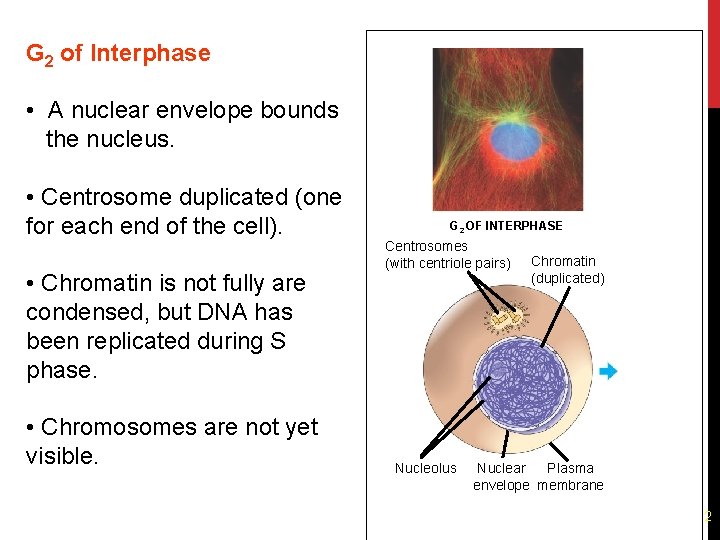
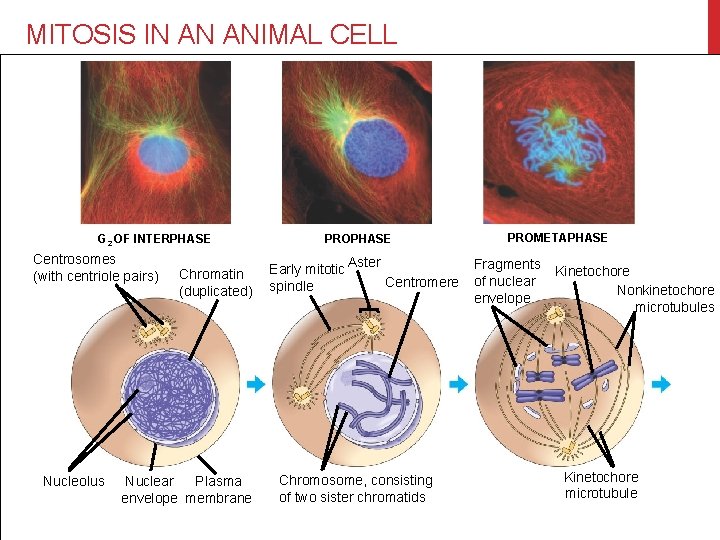
G 2 of Interphase • A nuclear envelope bounds the nucleus. • Centrosome duplicated (one for each end of the cell). • Chromatin is not fully are condensed, but DNA has been replicated during S phase. • Chromosomes are not yet visible. G 2 OF INTERPHASE Centrosomes (with centriole pairs) Nucleolus Chromatin (duplicated) Nuclear Plasma envelope membrane 12
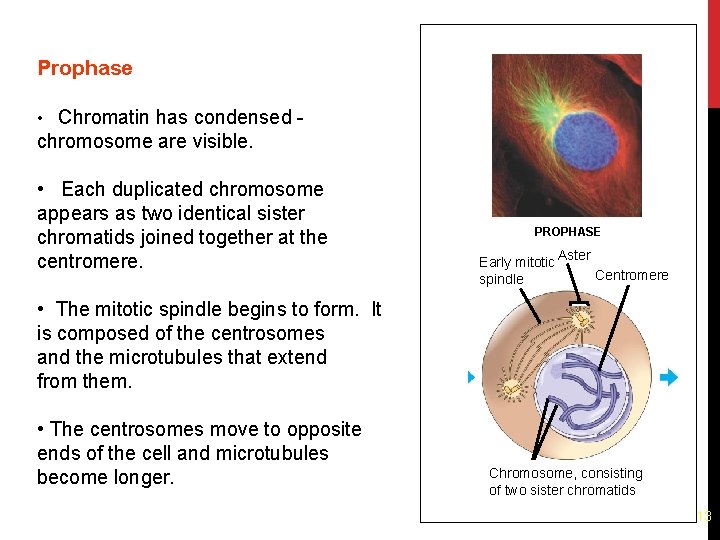
Prophase • Chromatin has condensed - chromosome are visible. • Each duplicated chromosome appears as two identical sister chromatids joined together at the centromere. PROPHASE Early mitotic spindle Aster Centromere • The mitotic spindle begins to form. It is composed of the centrosomes and the microtubules that extend from them. • The centrosomes move to opposite ends of the cell and microtubules become longer. Chromosome, consisting of two sister chromatids 13
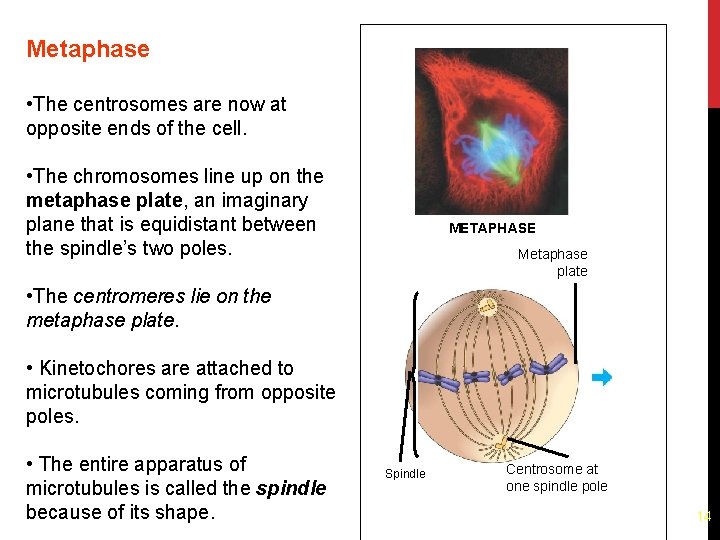
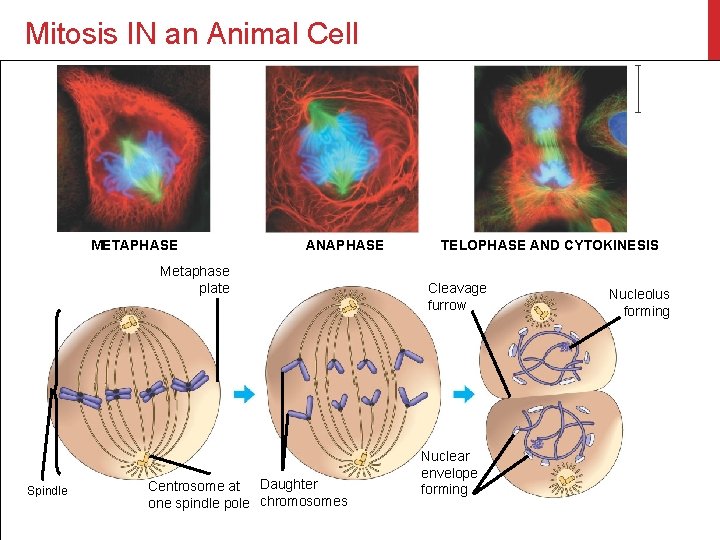
Metaphase • The centrosomes are now at opposite ends of the cell. • The chromosomes line up on the metaphase plate, an imaginary plane that is equidistant between the spindle’s two poles. METAPHASE Metaphase plate • The centromeres lie on the metaphase plate. • Kinetochores are attached to microtubules coming from opposite poles. • The entire apparatus of microtubules is called the spindle because of its shape. Spindle Centrosome at one spindle pole 14
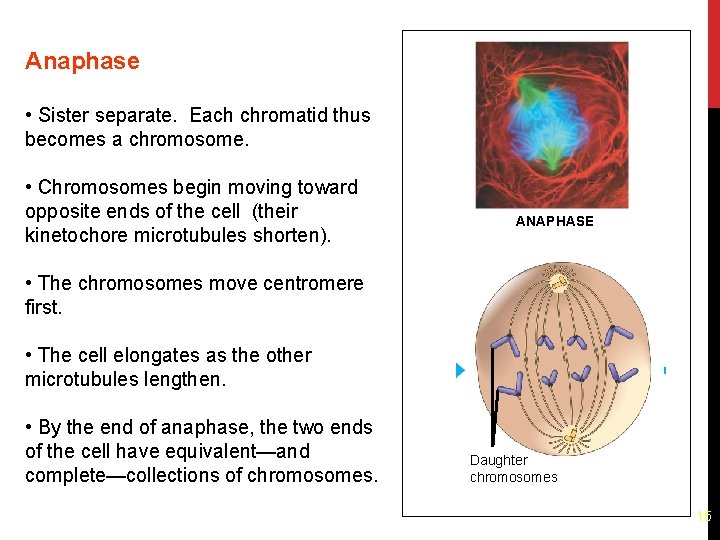
Anaphase • Sister separate. Each chromatid thus becomes a chromosome. • Chromosomes begin moving toward opposite ends of the cell (their kinetochore microtubules shorten). ANAPHASE • The chromosomes move centromere first. • The cell elongates as the other microtubules lengthen. • By the end of anaphase, the two ends of the cell have equivalent—and complete—collections of chromosomes. Daughter chromosomes 15
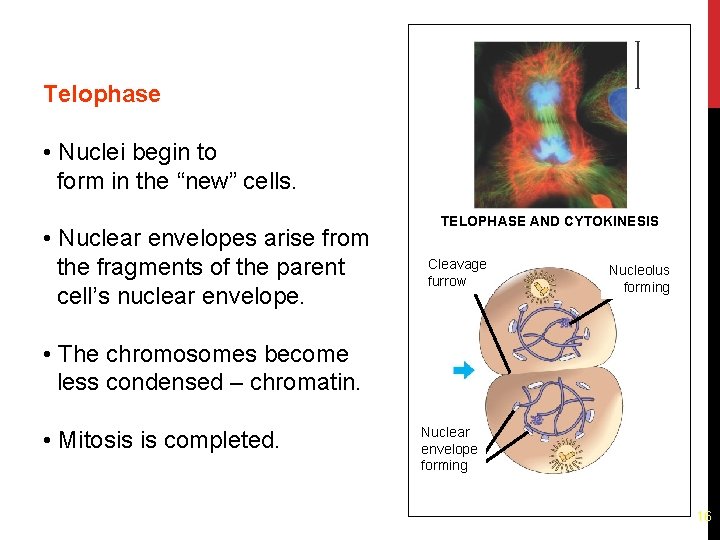
Telophase • Nuclei begin to form in the “new” cells. • Nuclear envelopes arise from the fragments of the parent cell’s nuclear envelope. TELOPHASE AND CYTOKINESIS Cleavage furrow Nucleolus forming • The chromosomes become less condensed – chromatin. • Mitosis is completed. Nuclear envelope forming 16
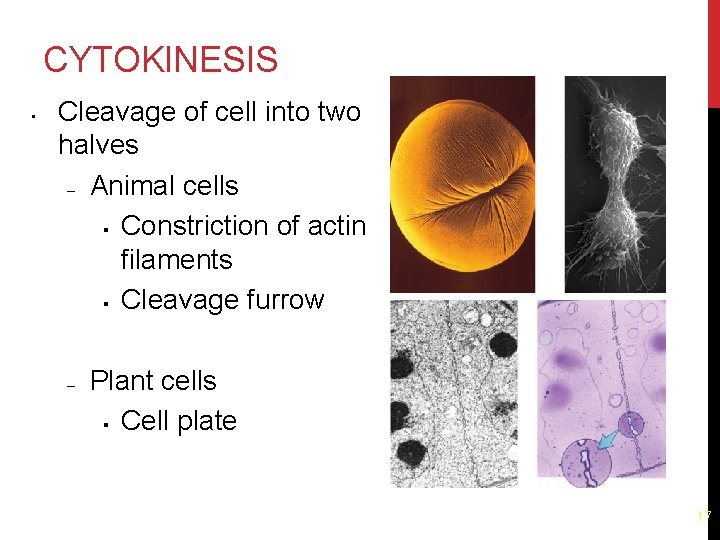
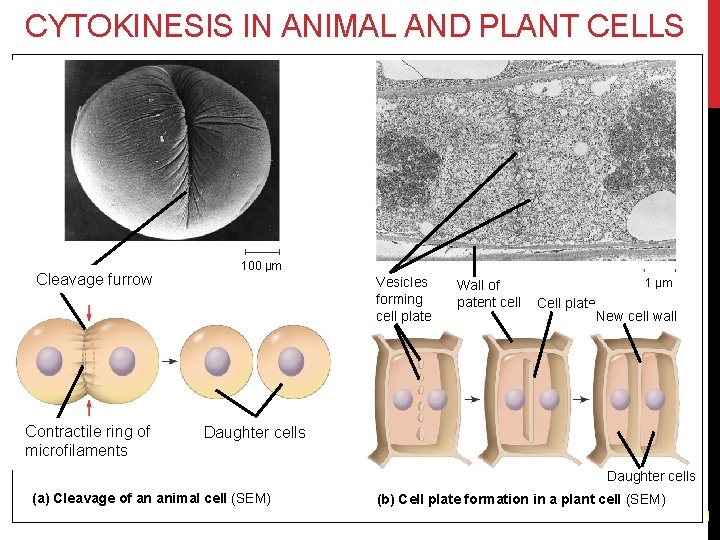
CYTOKINESIS • Cleavage of cell into two halves – Animal cells § Constriction of actin filaments § Cleavage furrow – Plant cells § Cell plate 17
MITOSIS IN AN ANIMAL CELL G 2 OF INTERPHASE Centrosomes (with centriole pairs) Nucleolus Chromatin (duplicated) Nuclear Plasma envelope membrane PROPHASE Early mitotic spindle Aster Centromere Chromosome, consisting of two sister chromatids PROMETAPHASE Fragments of nuclear envelope Kinetochore Nonkinetochore microtubules Kinetochore microtubule 18
Mitosis IN an Animal Cell METAPHASE ANAPHASE Metaphase plate Spindle Centrosome at Daughter one spindle pole chromosomes TELOPHASE AND CYTOKINESIS Cleavage furrow Nucleolus forming Nuclear envelope forming 19
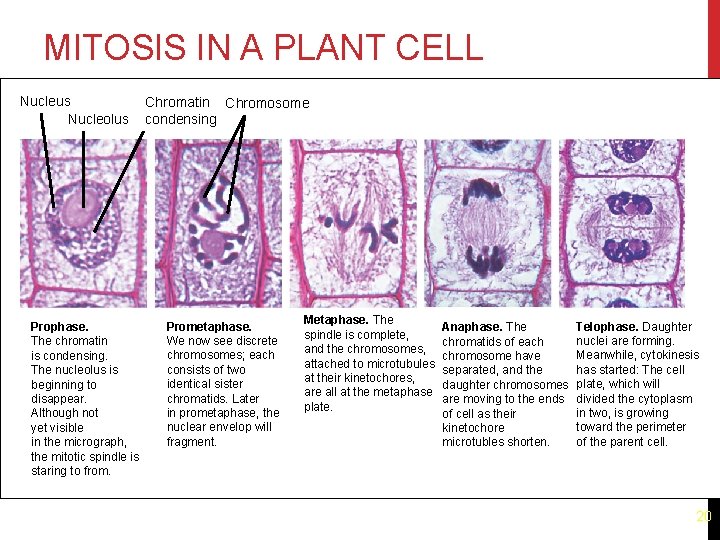
MITOSIS IN A PLANT CELL Nucleus Nucleolus Chromatin Chromosome condensing Metaphase. The 1 Prophase. 2 Prometaphase. 3 4 spindle is complete, We now see discrete The chromatin and the chromosomes, chromosomes; each is condensing. attached to microtubules consists of two The nucleolus is at their kinetochores, identical sister beginning to are all at the metaphase chromatids. Later disappear. plate. in prometaphase, the Although not nuclear envelop will yet visible fragment. in the micrograph, the mitotic spindle is staring to from. Anaphase. The 5 chromatids of each chromosome have separated, and the daughter chromosomes are moving to the ends of cell as their kinetochore microtubles shorten. Telophase. Daughter nuclei are forming. Meanwhile, cytokinesis has started: The cell plate, which will divided the cytoplasm in two, is growing toward the perimeter of the parent cell. 20
CYTOKINESIS IN ANIMAL AND PLANT CELLS Cleavage furrow Contractile ring of microfilaments 100 µm Vesicles forming cell plate Wall of patent cell 1 µm Cell plate New cell wall Daughter cells (a) Cleavage of an animal cell (SEM) (b) Cell plate formation in a plant cell (SEM) 21
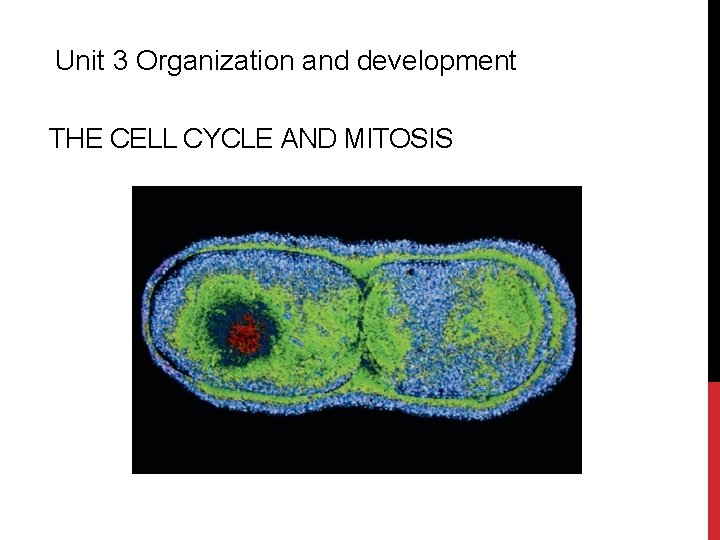
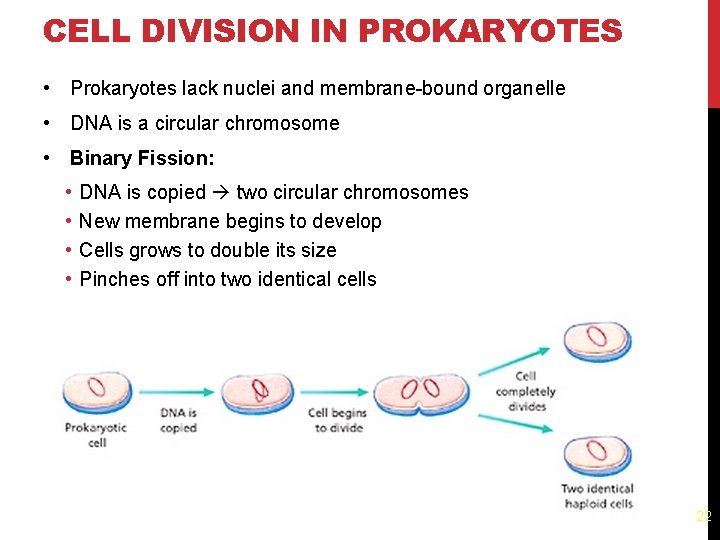
CELL DIVISION IN PROKARYOTES • Prokaryotes lack nuclei and membrane-bound organelle • DNA is a circular chromosome • Binary Fission: • • DNA is copied two circular chromosomes New membrane begins to develop Cells grows to double its size Pinches off into two identical cells 22