
Unit 3 Organization and Development Part 3 Homeostasis
- Slides: 27
Unit 3 Organization and Development Part 3: Homeostasis and Cell Transport (Chapter 5)
Passive Transport • Involves the movement of molecules across the cell membrane _________________. • ____________to move substances across membrane -- water, lipids, and other lipid soluble substances. • Types: 1. ___________ 2. ___________ 3. ___________ 4. ___________
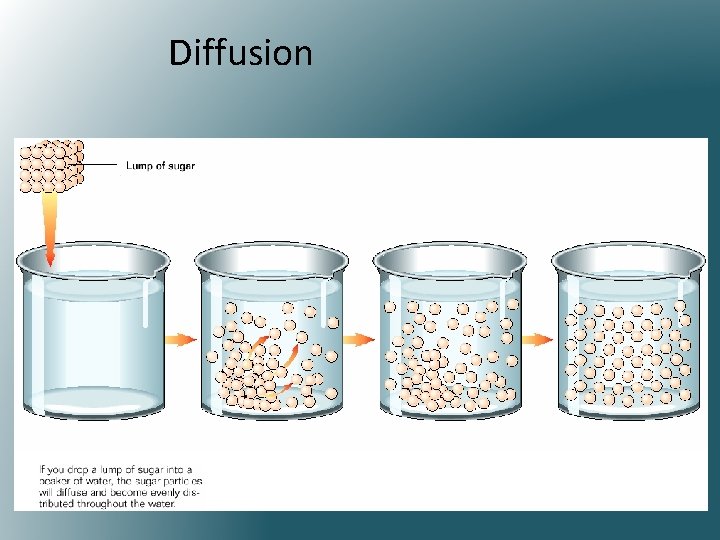
1. Diffusion • Diffusion is the movement of molecules from an area of _________to an area of _________(with the concentration gradient*) until ________** is reached • *Concentration gradient: __________________________ • **Equilibrium: _______________________________
Simple Diffusion: diffusion across a membrane • Cell Membrane = ___________ • Some materials can pass through, some cannot • Molecules will move ________________________________ • The membrane determines _______________________________
Diffusion
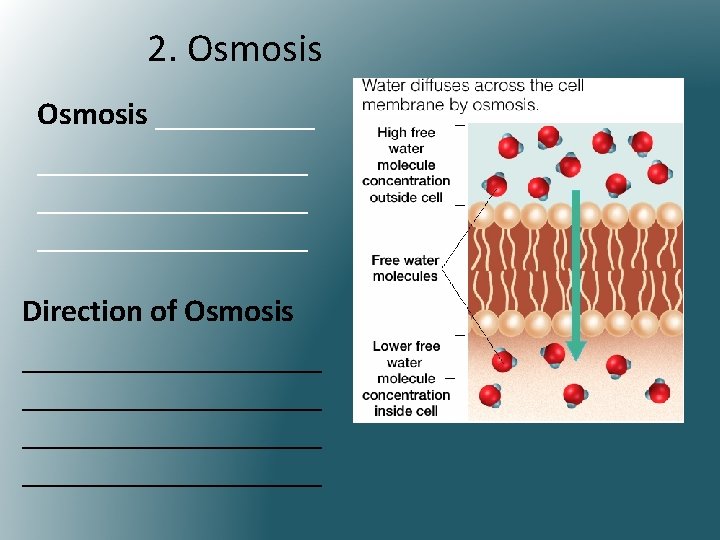
2. Osmosis _________________ Direction of Osmosis ___________________
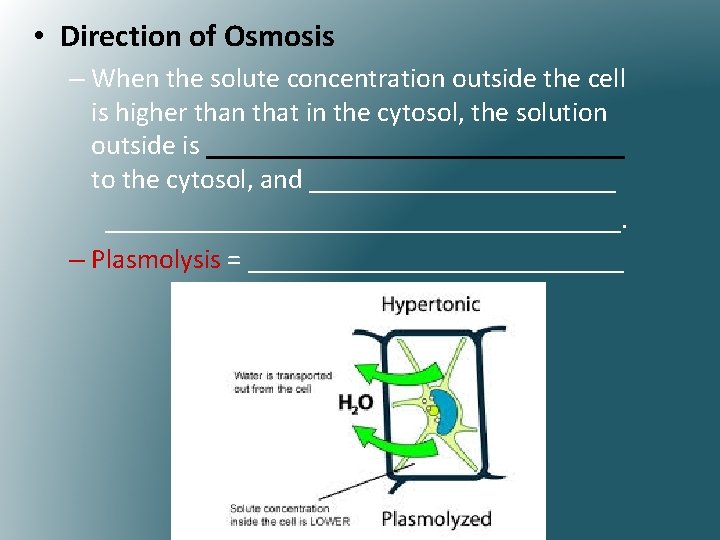
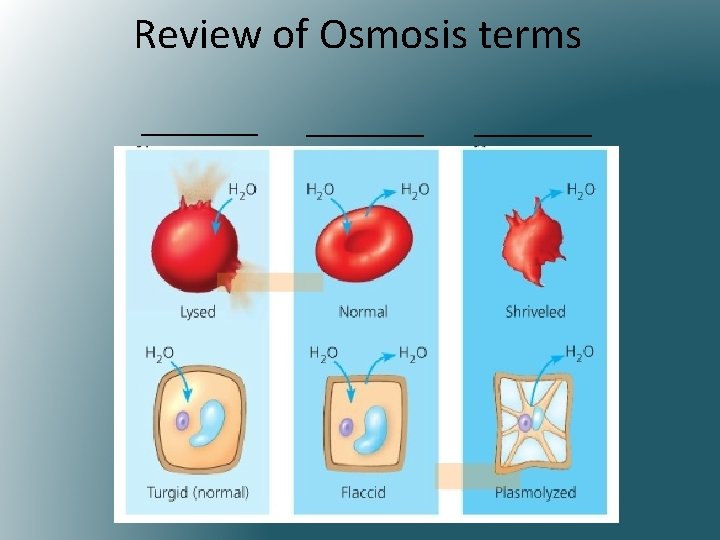
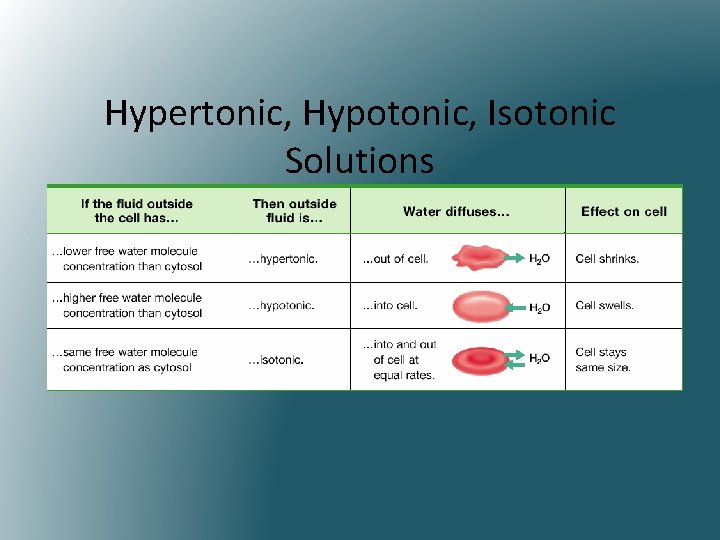
• Direction of Osmosis – When the solute concentration outside the cell is higher than that in the cytosol, the solution outside is _______________ to the cytosol, and ______________________________. – Plasmolysis = ______________
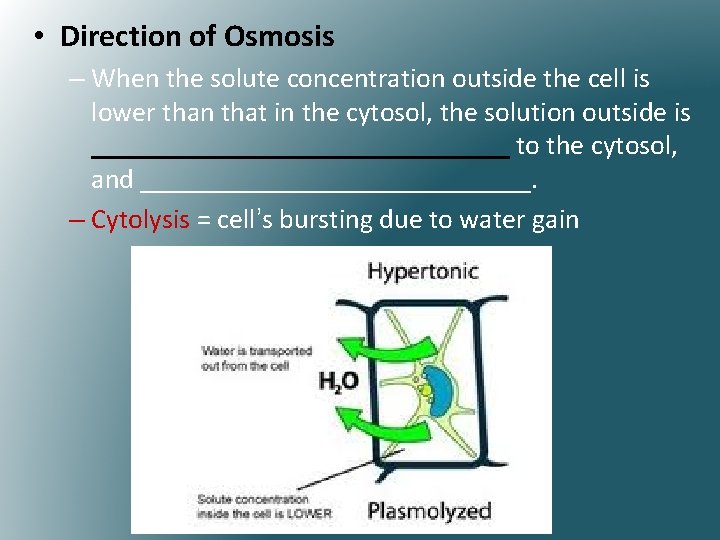
• Direction of Osmosis – When the solute concentration outside the cell is lower than that in the cytosol, the solution outside is _______________ to the cytosol, and ______________. – Cytolysis = cell’s bursting due to water gain
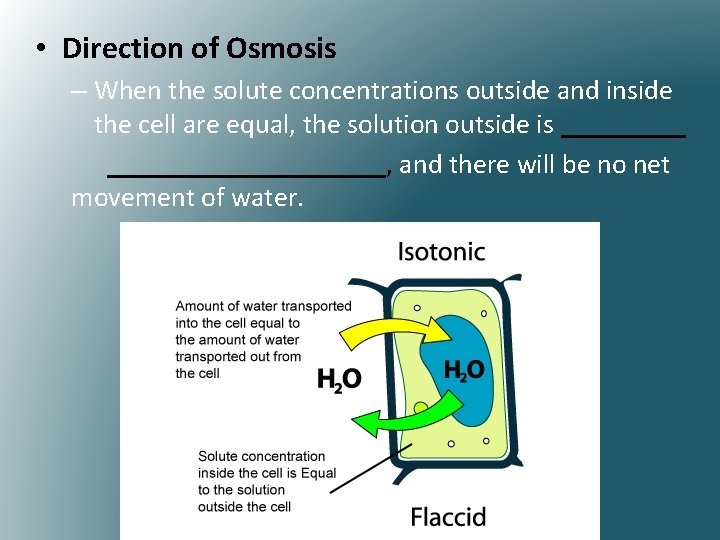
• Direction of Osmosis – When the solute concentrations outside and inside the cell are equal, the solution outside is _______________, and there will be no net movement of water.
Review of Osmosis terms ________
Hypertonic, Hypotonic, Isotonic Solutions
• How Cells Deal With Osmosis – Cells must compensate for the water that enters the cell in ________environments and leaves the cell in ________environments. – Multicellular organisms – cells respond to hypotonic environments by ___________________________ – *RBCs ________ compensate for changes in solute concentration – Unicellular organisms – May have _________: ________________________________
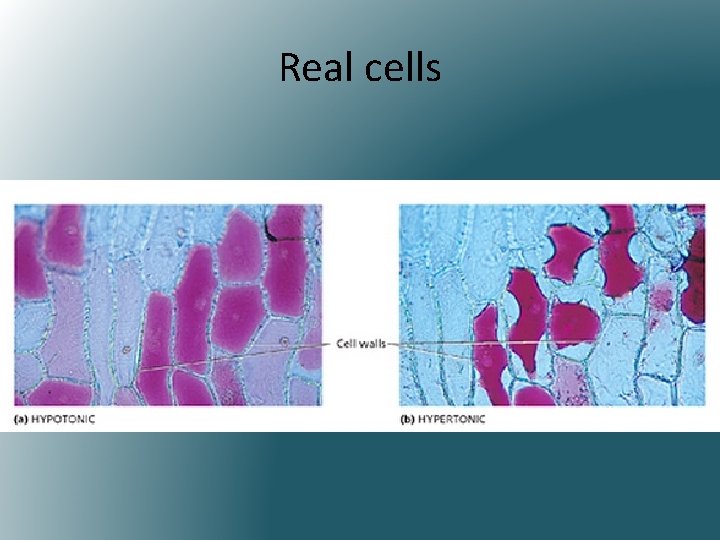
Real cells
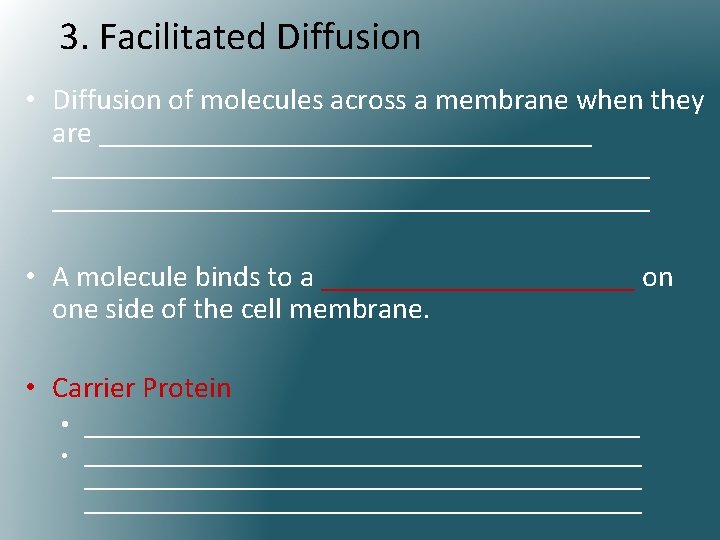
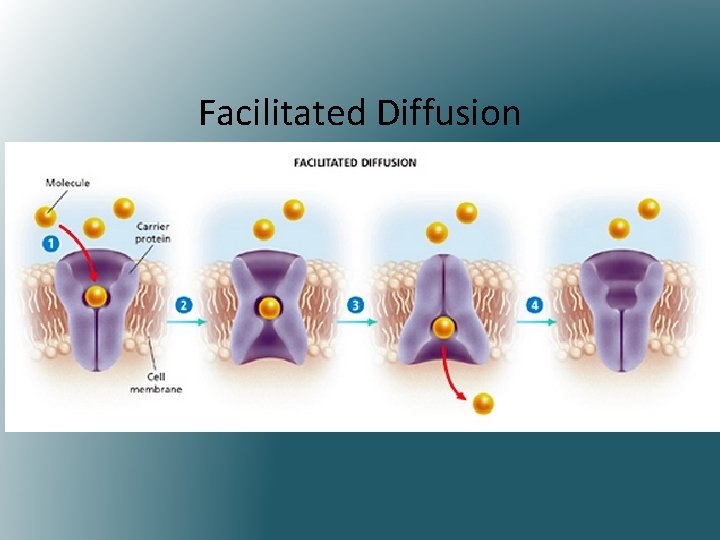
3. Facilitated Diffusion • Diffusion of molecules across a membrane when they are ________________________________________ • A molecule binds to a ___________ on one side of the cell membrane. • Carrier Protein • ___________________________________________________
Facilitated Diffusion
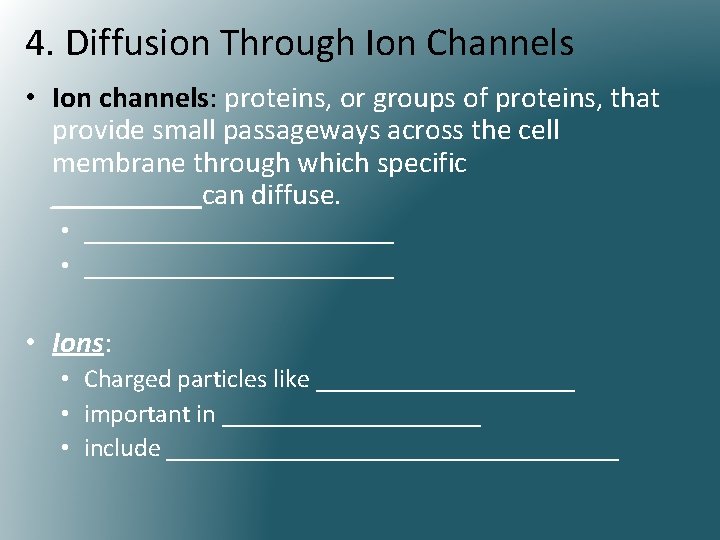
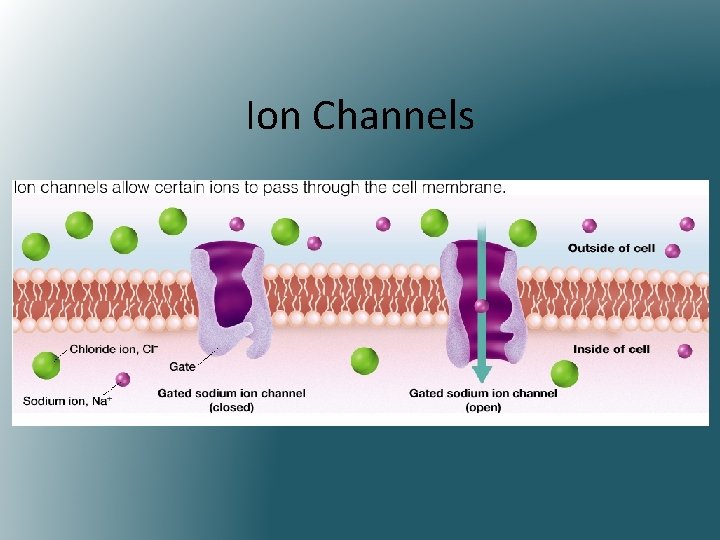
4. Diffusion Through Ion Channels • Ion channels: proteins, or groups of proteins, that provide small passageways across the cell membrane through which specific _____can diffuse. • ________________________ • Ions: • Charged particles like __________ • important in __________ • include __________________
Ion Channels
Active Transport Cell Membrane Pumps and Vesicles • Active transport • moves molecules across the cell membrane from an area of _______________________ ( ______concentration gradient) • requires cells to expend _______ • Some types of active transport are performed by ____________________________.
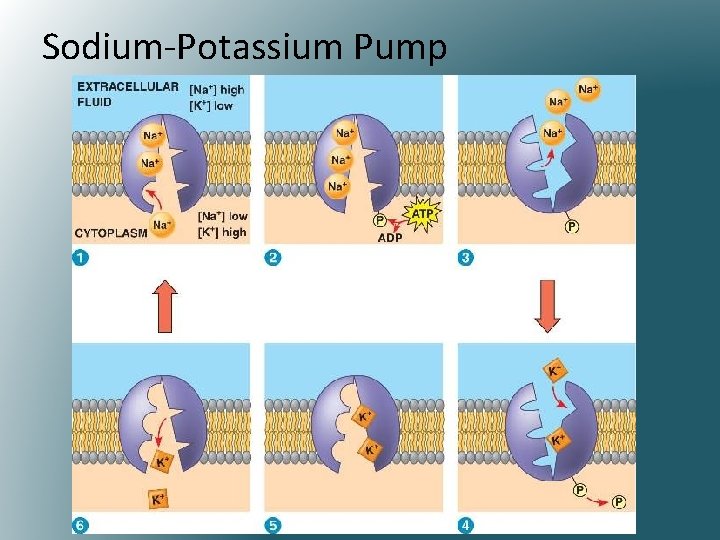
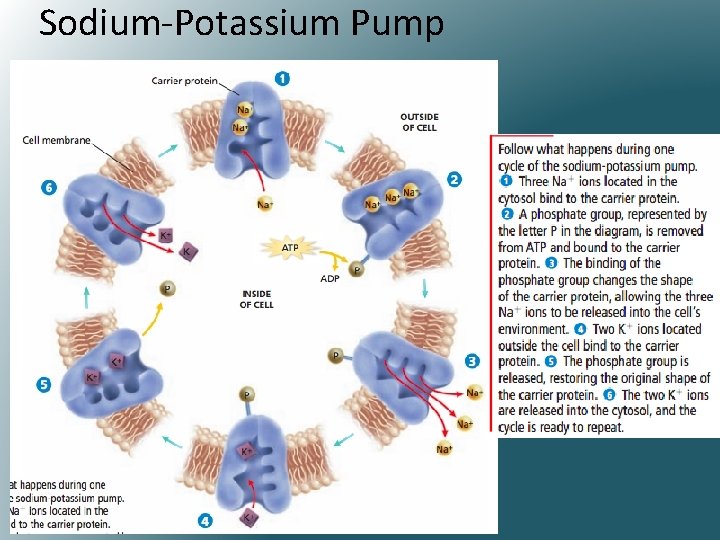
Cell Membrane Pumps • Sodium-Potassium Pump • moves _____Na+ ions into the cell’s ___________for every ______K+ ions it moves into the ______. • most animal cells must have a higher concentration of ______outside the cell and a higher concentration of ____ions inside the cell • The Na+/K- pump allows for the gradient • ATP supplies _____________.
More on the Sodium-Potassium Pump • The exchange of three Na+ ions for two K+ ions creates an _______________________________ • Outside becomes ___________ relative to the inside, which becomes _________ • Difference in electrical charge is _________________________
Sodium-Potassium Pump
Sodium-Potassium Pump
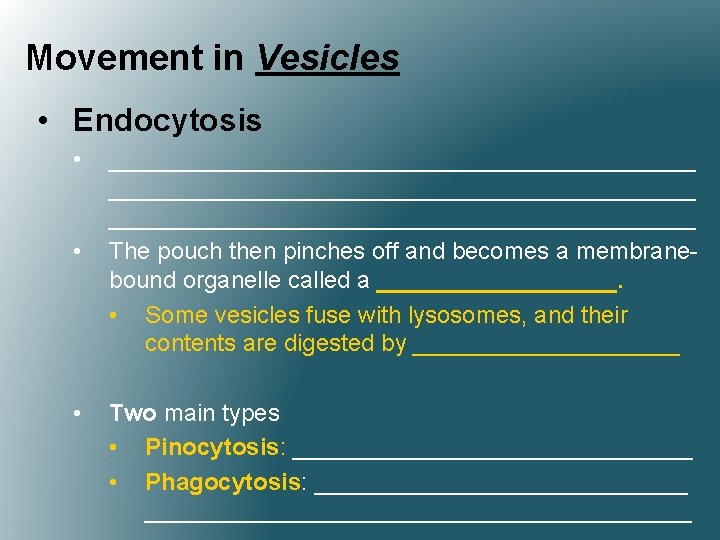
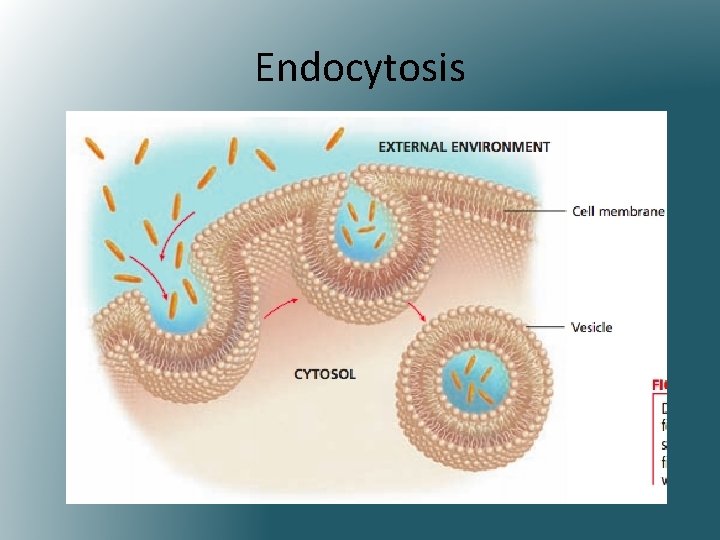
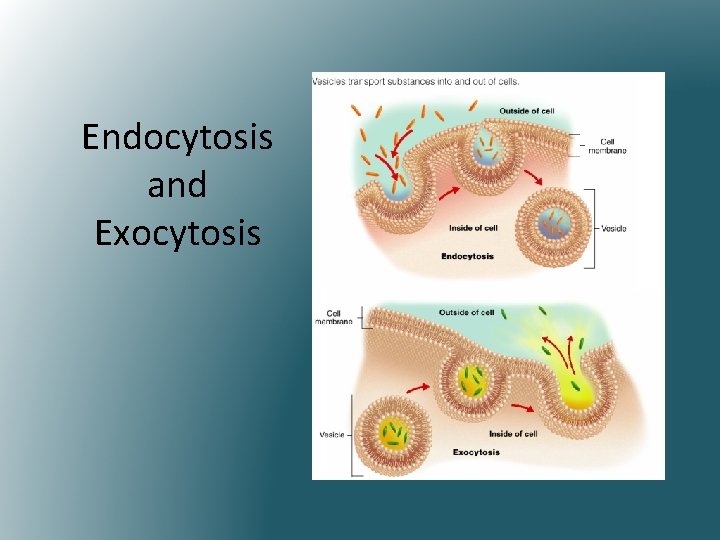
Movement in Vesicles • Endocytosis • • • ____________________________________________ The pouch then pinches off and becomes a membranebound organelle called a _________. • Some vesicles fuse with lysosomes, and their contents are digested by __________ Two main types • Pinocytosis: _______________ • Phagocytosis: ___________________________________
Endocytosis
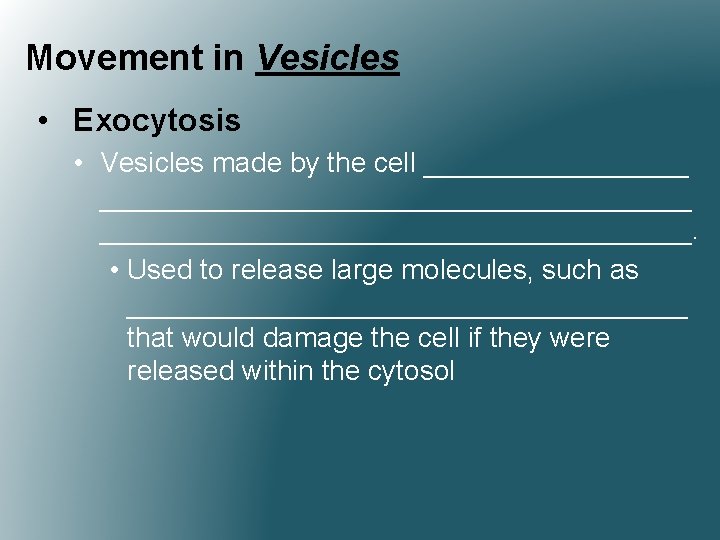
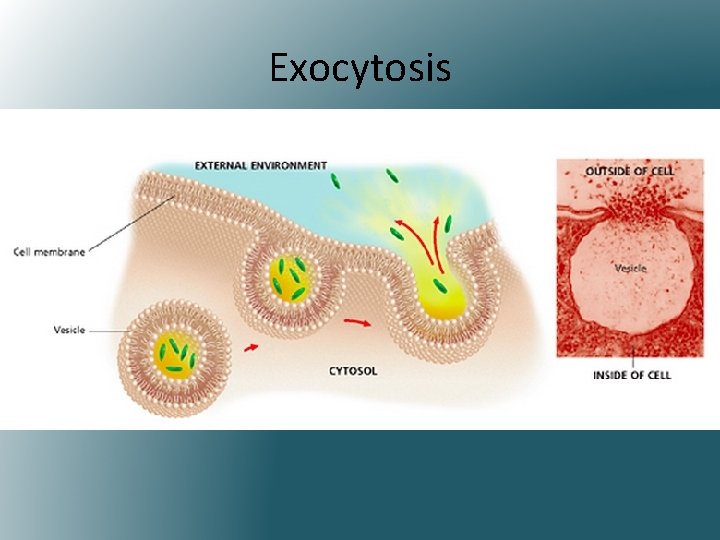
Movement in Vesicles • Exocytosis • Vesicles made by the cell ____________________________. • Used to release large molecules, such as __________________ that would damage the cell if they were released within the cytosol
Exocytosis
Endocytosis and Exocytosis