
UNIT 3 NOTES INTERPHASE AND MITOSIS New cells
- Slides: 29
UNIT 3 NOTES INTERPHASE AND MITOSIS
New cells are produced by division of existing cells. If many new cells are needed, cells go through a cycle of events again and again - this is called the cell cycle. The cell cycle describes the behavior of cells as they grow and divide.
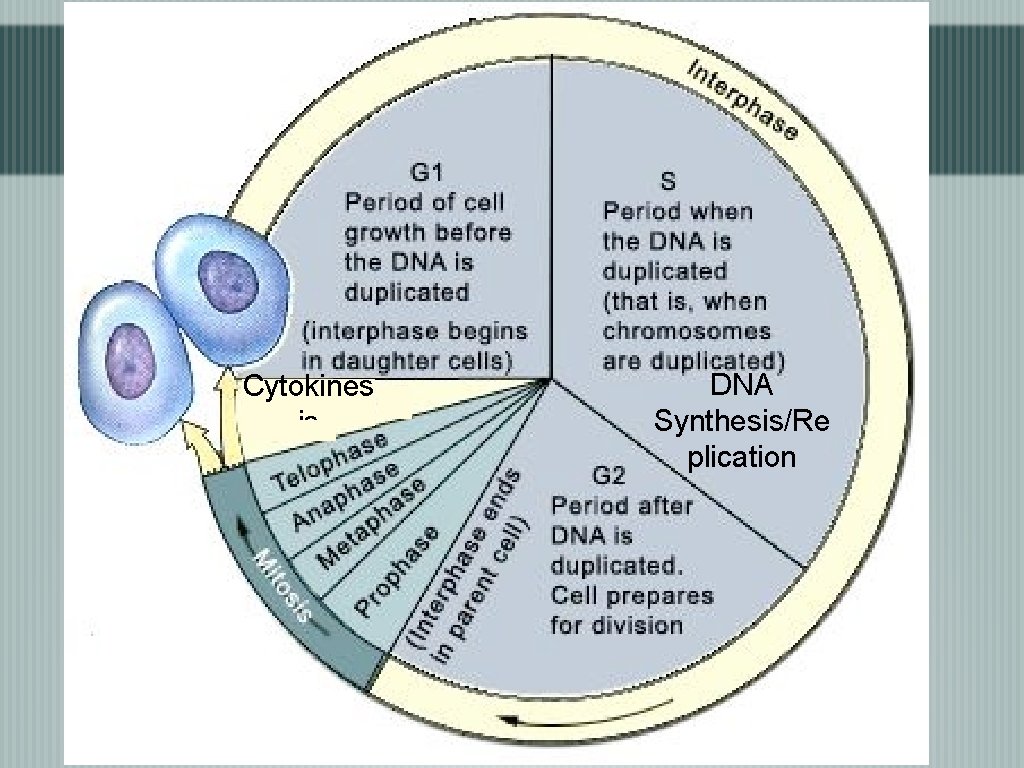
Cytokines is DNA Synthesis/Re plication
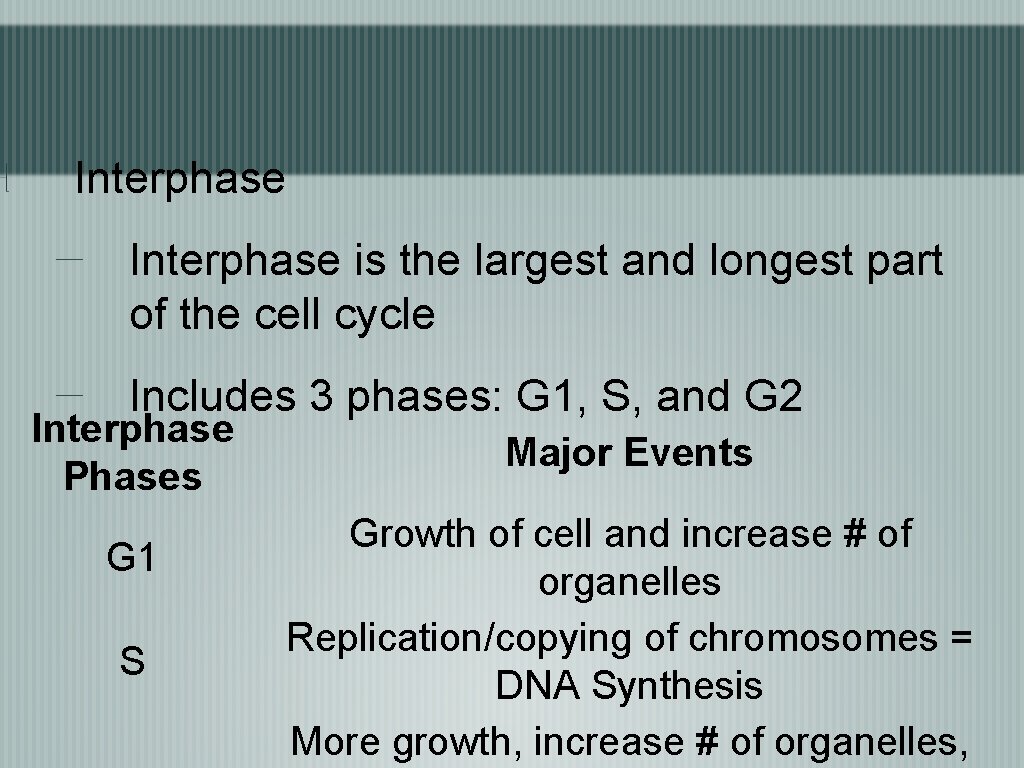
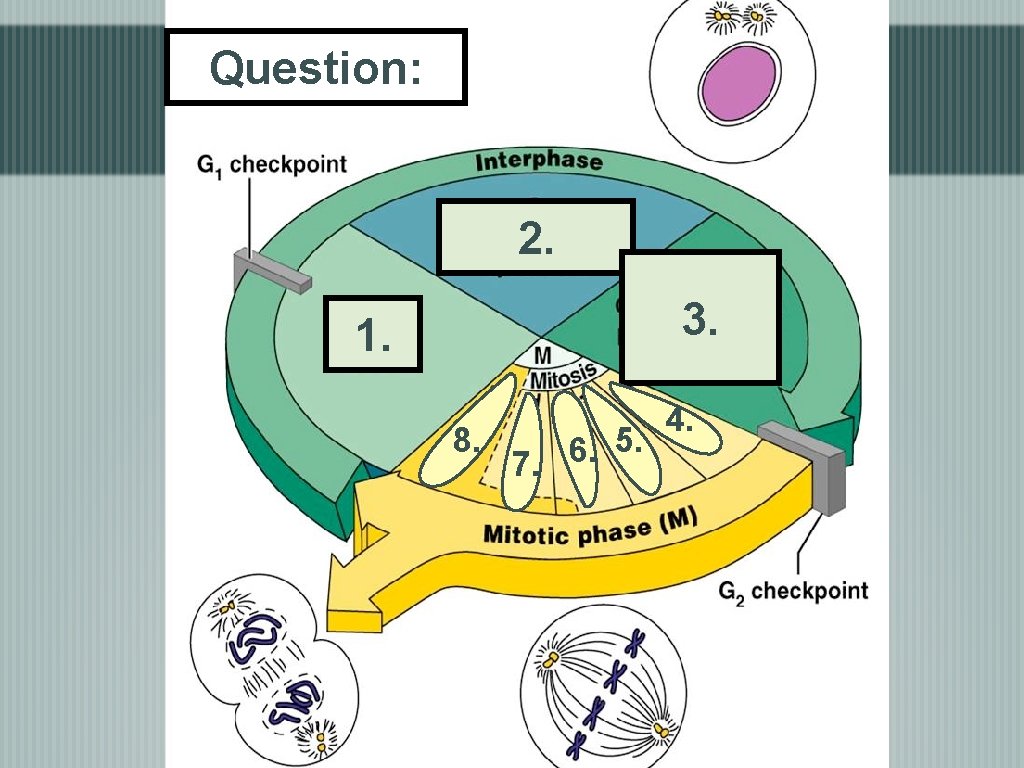
Interphase is the largest and longest part of the cell cycle Includes 3 phases: G 1, S, and G 2 Interphase Phases G 1 S Major Events Growth of cell and increase # of organelles Replication/copying of chromosomes = DNA Synthesis More growth, increase # of organelles,
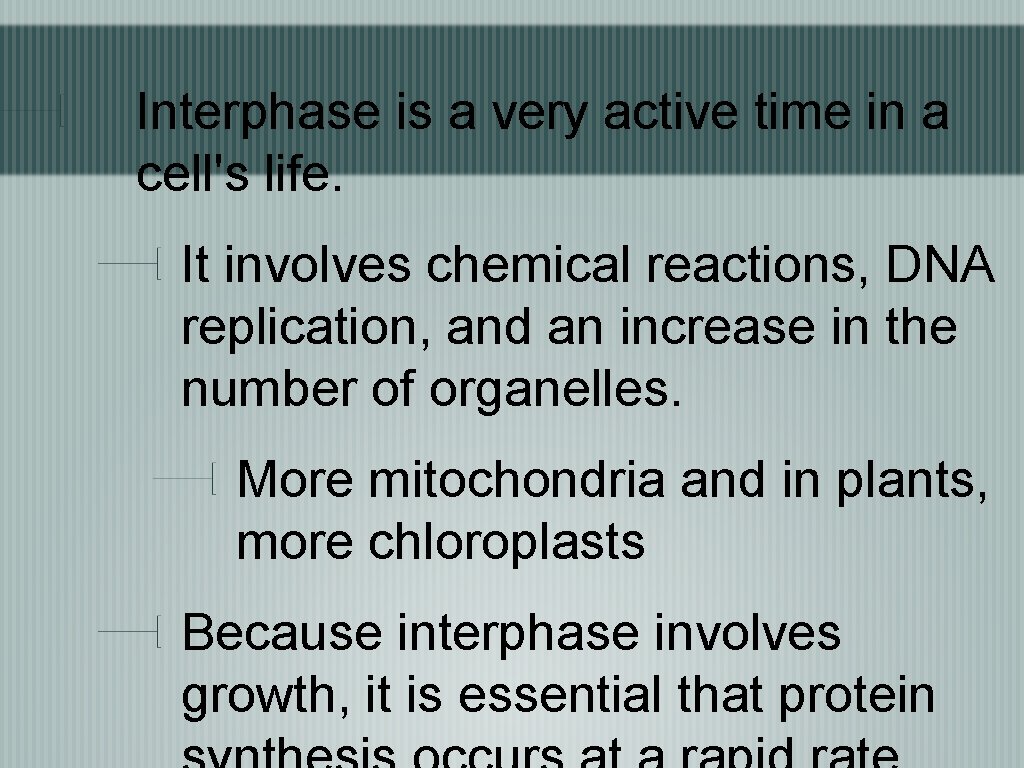
Interphase is a very active time in a cell's life. It involves chemical reactions, DNA replication, and an increase in the number of organelles. More mitochondria and in plants, more chloroplasts Because interphase involves growth, it is essential that protein
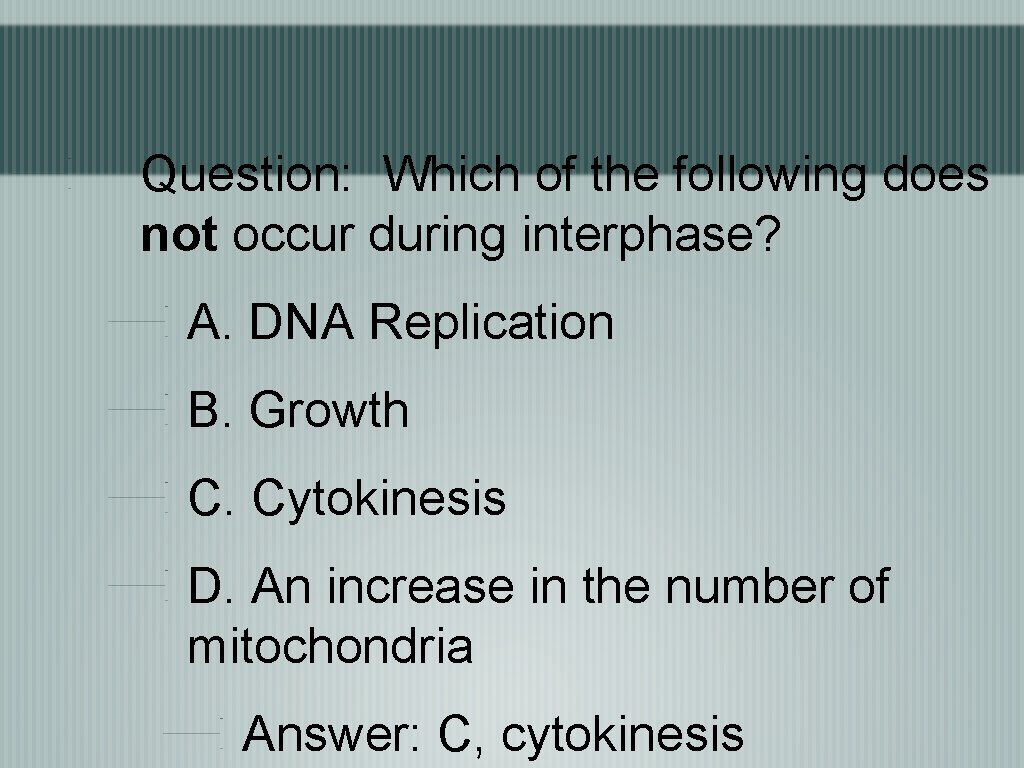
Question: Which of the following does not occur during interphase? A. DNA Replication B. Growth C. Cytokinesis D. An increase in the number of mitochondria Answer: C, cytokinesis
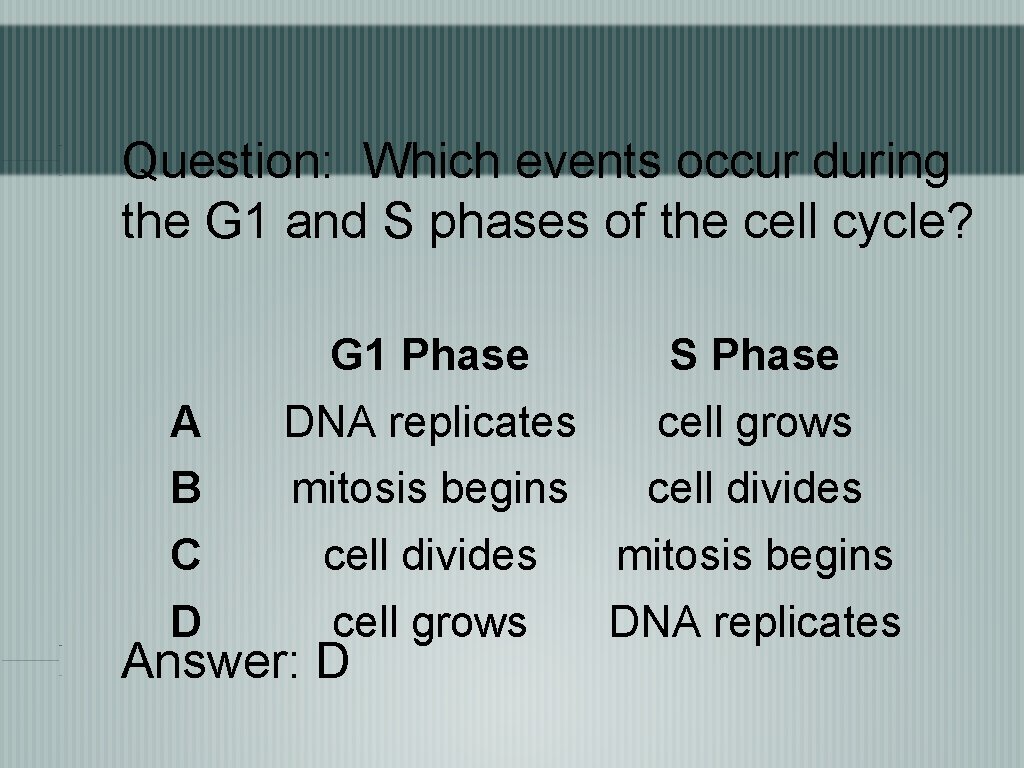
Question: Which events occur during the G 1 and S phases of the cell cycle? G 1 Phase S Phase A DNA replicates cell grows B mitosis begins cell divides C cell divides mitosis begins D cell grows DNA replicates Answer: D
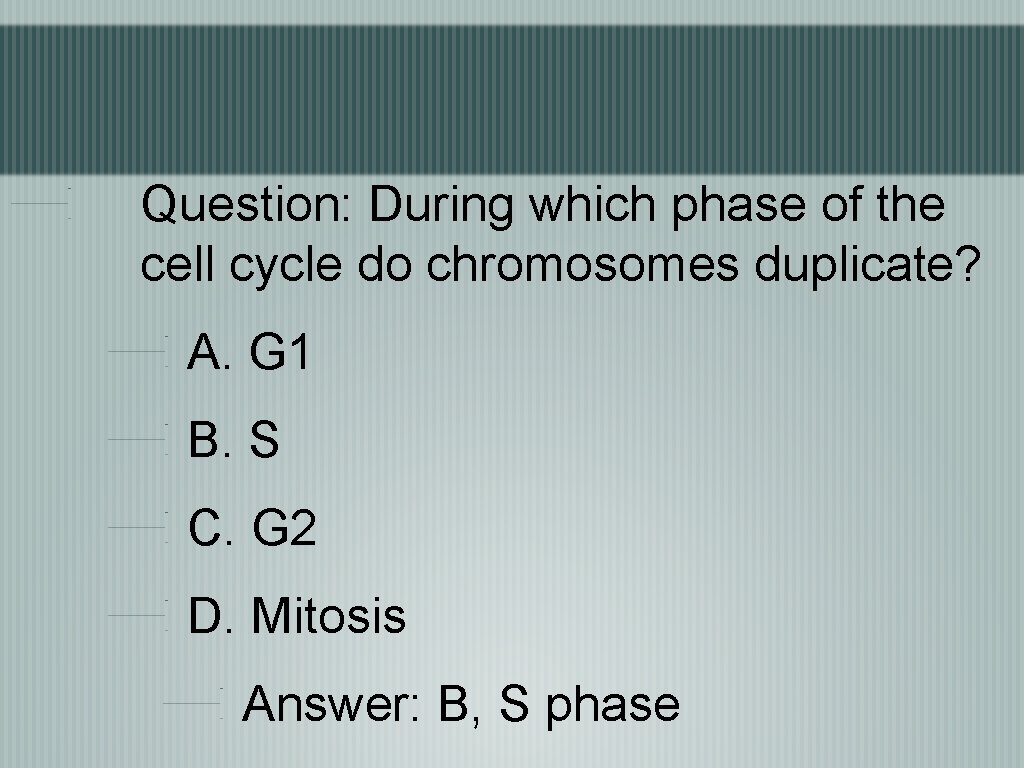
Question: During which phase of the cell cycle do chromosomes duplicate? A. G 1 B. S C. G 2 D. Mitosis Answer: B, S phase
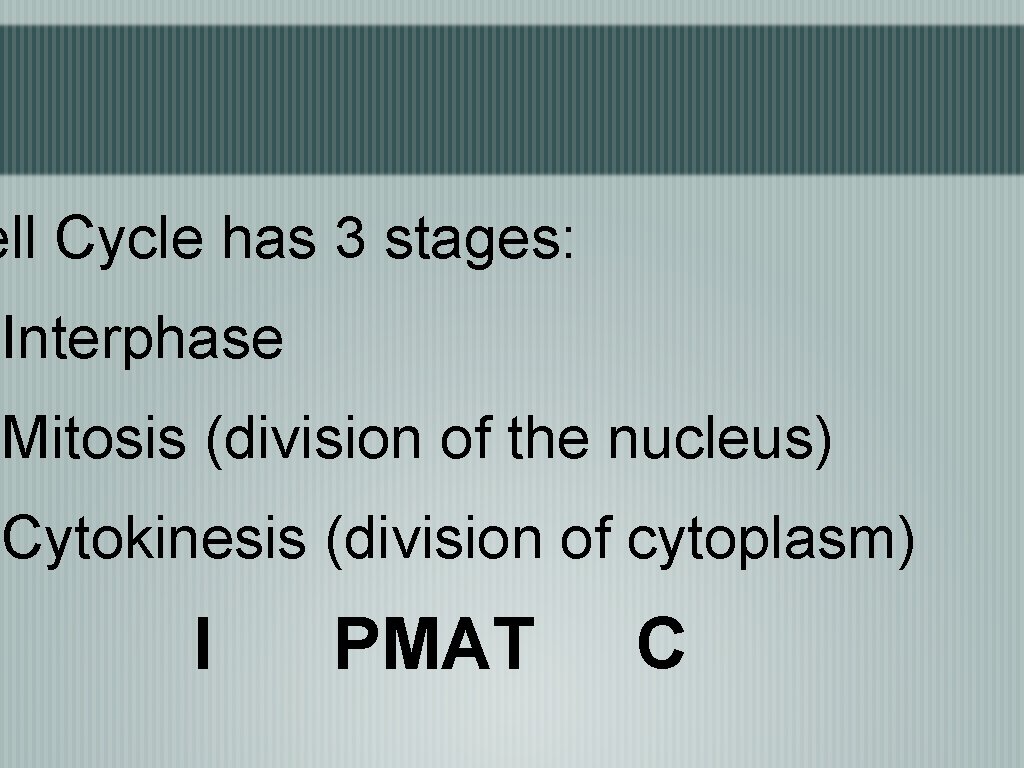
ell Cycle has 3 stages: Interphase Mitosis (division of the nucleus) Cytokinesis (division of cytoplasm) I PMAT C
At the end of interphase, the cell begins mitosis - the process by which the nucleus divides to form 2 genetically identical nuclei. After mitosis is completed, the cytoplasm of the cell starts to divide - known as cytokinesis. Eventually 2 cells are formed, each containing 1 nucleus. These cells are identical, called daughter cells The 2 cells begin interphase when
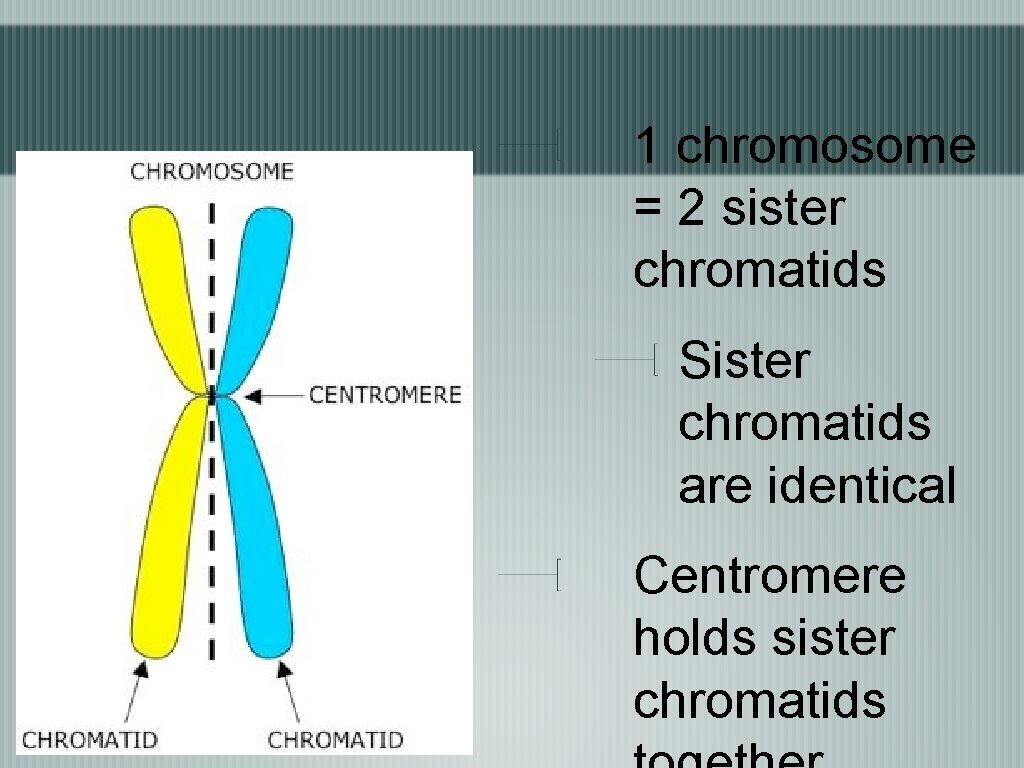
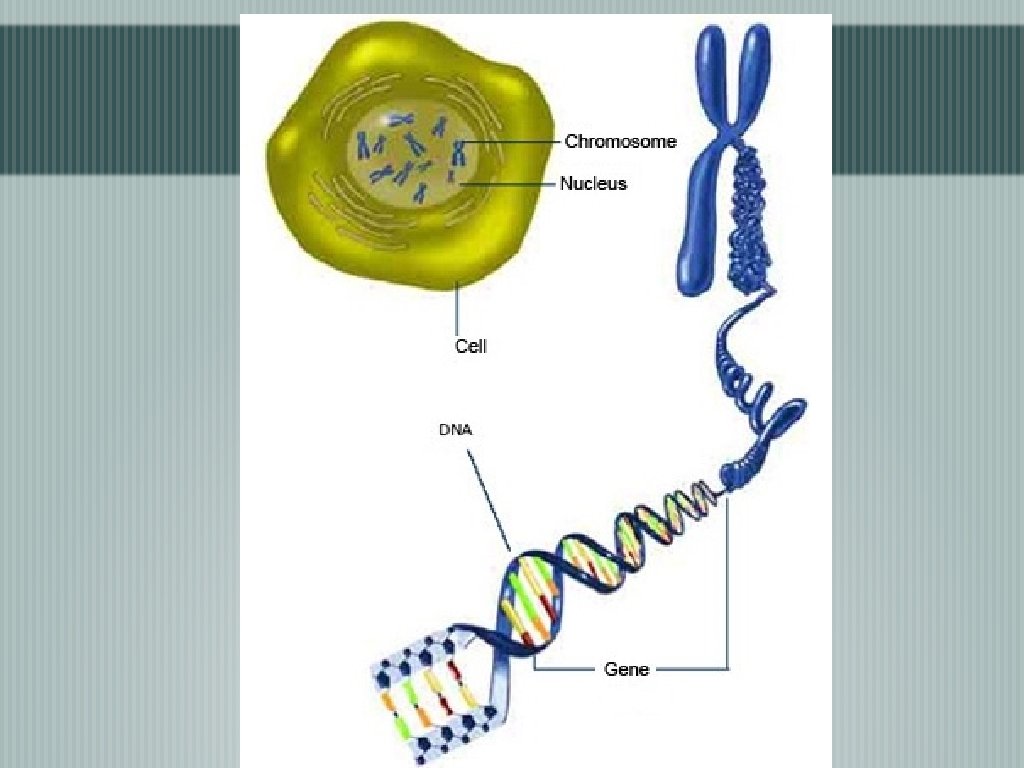
1 chromosome = 2 sister chromatids Sister chromatids are identical Centromere holds sister chromatids
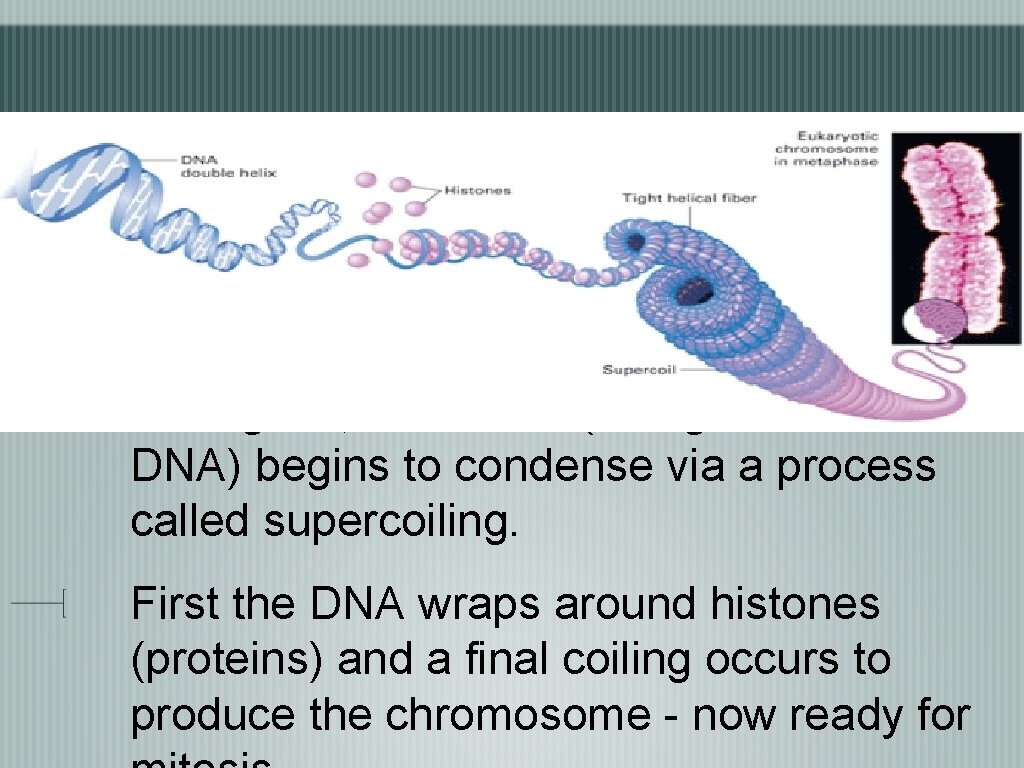
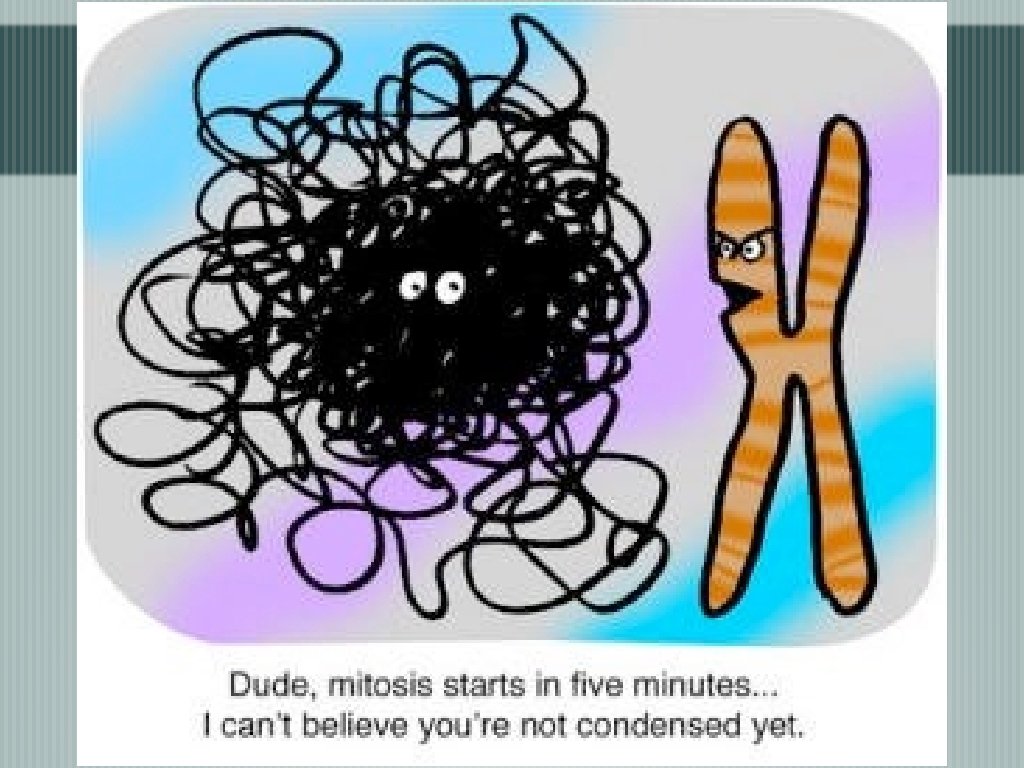
During G 2, chromatin (elongated/relaxed DNA) begins to condense via a process called supercoiling. First the DNA wraps around histones (proteins) and a final coiling occurs to produce the chromosome - now ready for
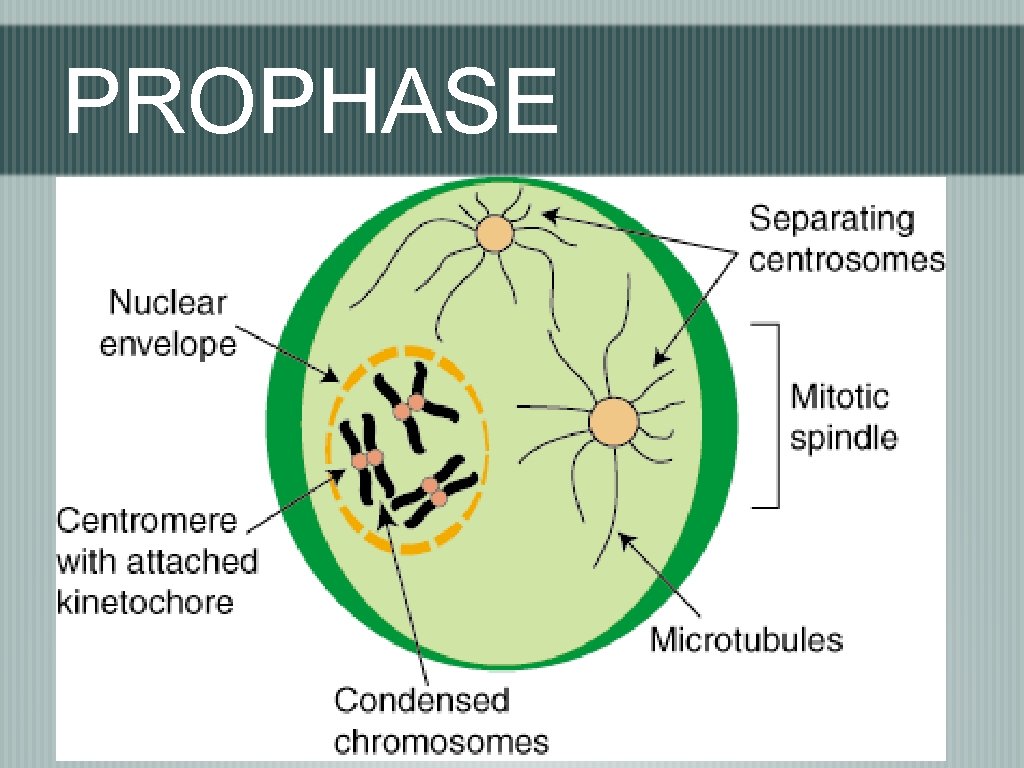
4 Phases in Mitosis 1. Prophase Chromatin condense to become tightly coiled chromosomes. Nucleolus and nuclear membrane start to disappear. Spindle fibers begins to form. Centrosomes move toward opposite poles of the cell due to lengthening of microtubules. These centrosomes are what spindle fibers are attached to.
PROPHASE
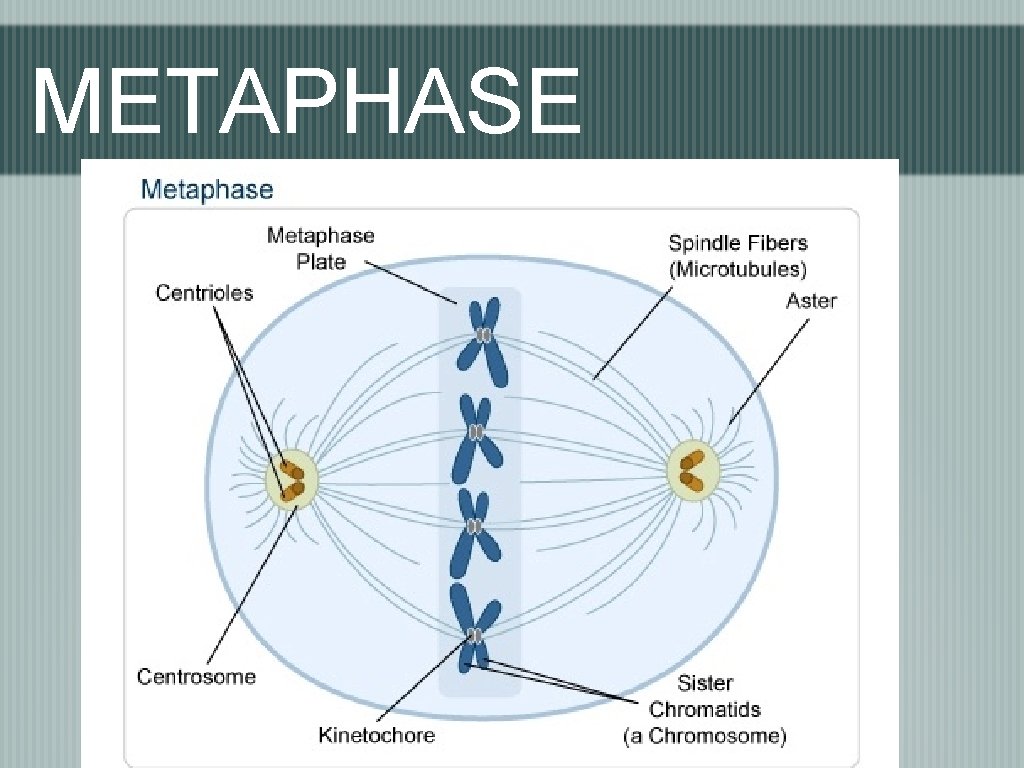
2. Metaphase All chromosomes move to the middle or equator of the cell. Chromosome's centromeres line up in the middle. Movement of the chromosomes is due to the action of the spindle which is made of microtubules. Centrosomes are now at the opposite
METAPHASE
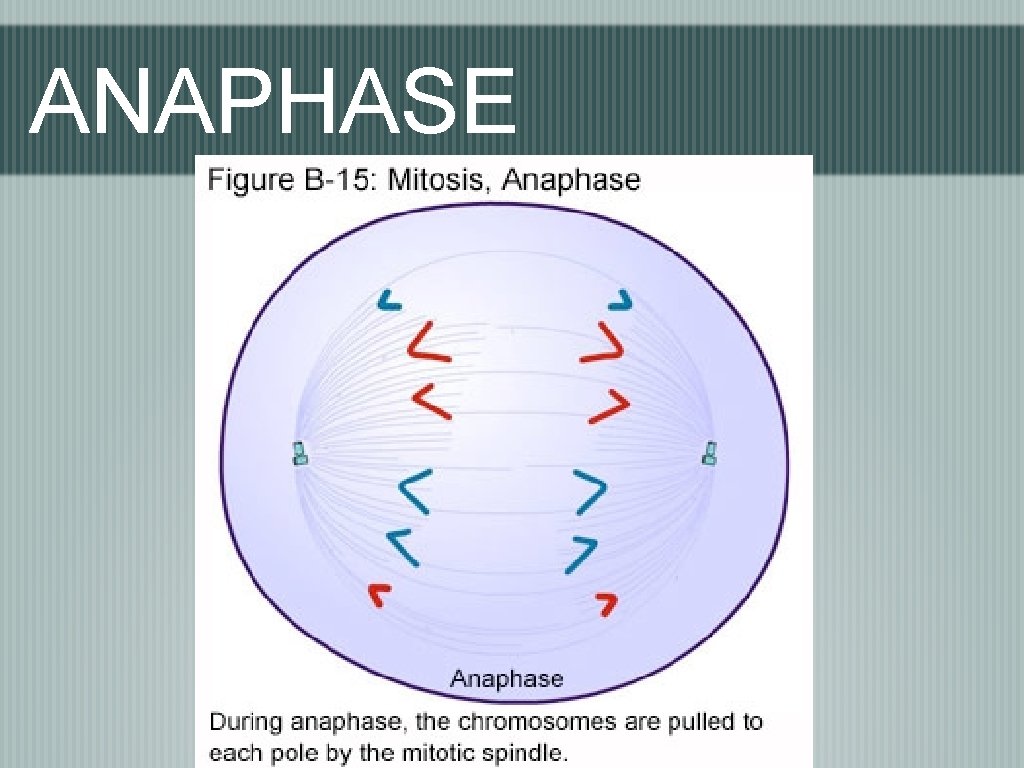
3. Anaphase Begins when the 2 sister chromatids of each chromosome are split. These chromatids, now called daughter chromosomes, move toward the opposite poles of the cell. The chromatid movement is due to shortening of the spindle fibers. At the end of Anaphase, each pole of the cell has a complete, identical set of chromosomes,
ANAPHASE
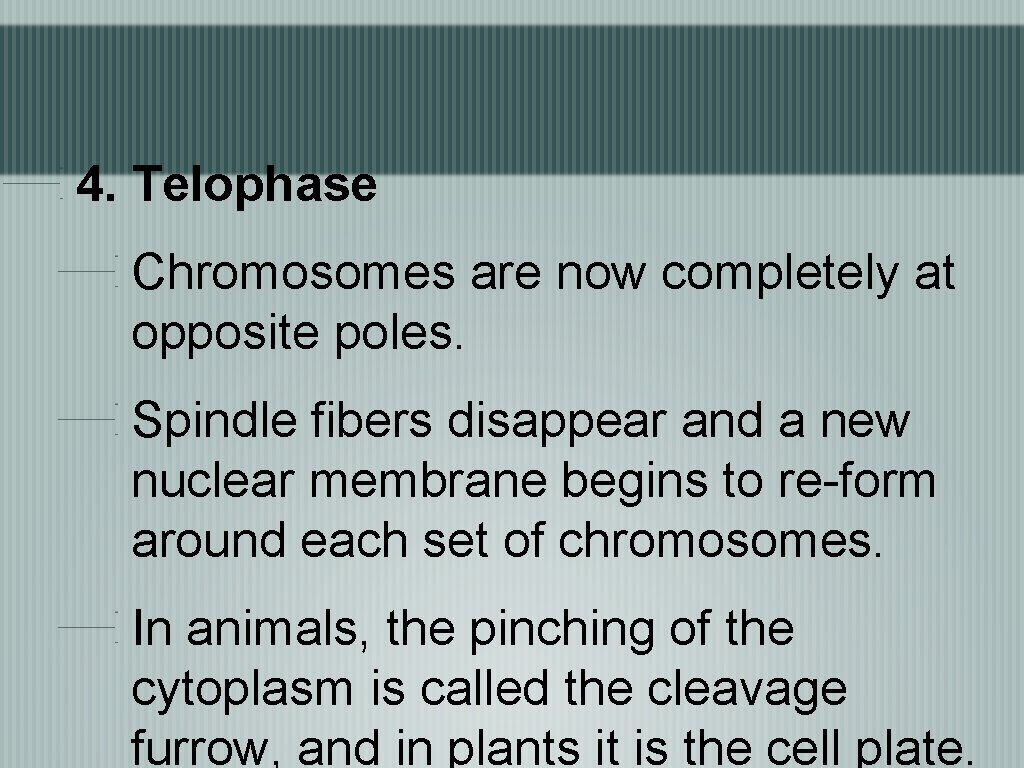
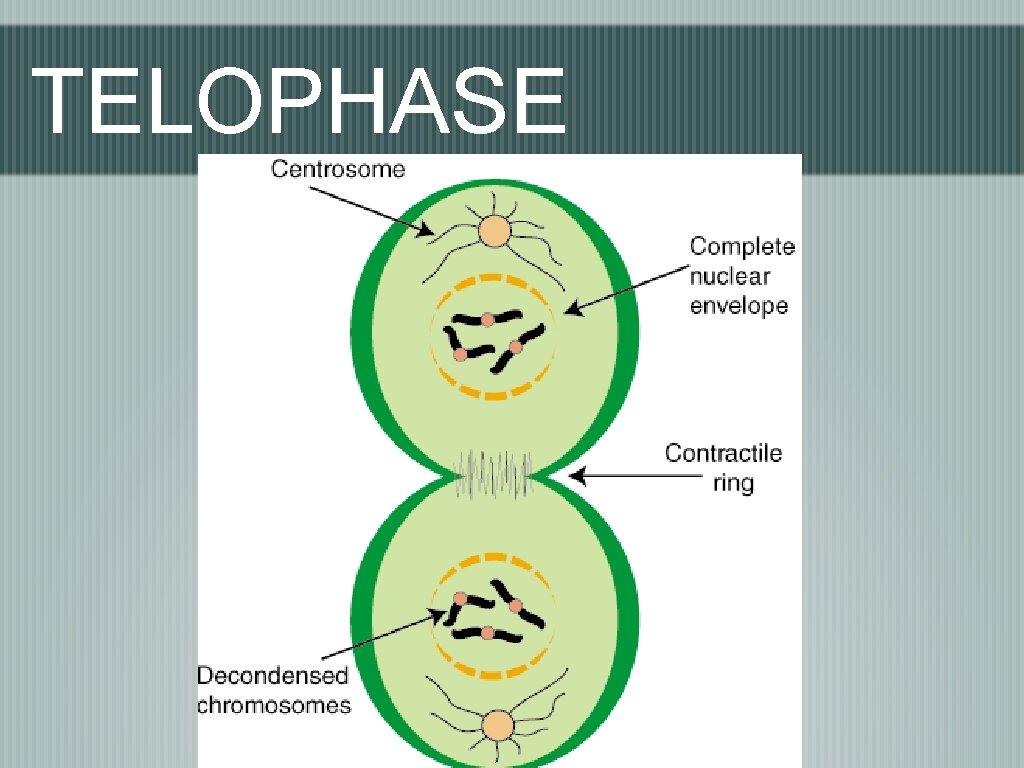
4. Telophase Chromosomes are now completely at opposite poles. Spindle fibers disappear and a new nuclear membrane begins to re-form around each set of chromosomes. In animals, the pinching of the cytoplasm is called the cleavage furrow, and in plants it is the cell plate.
TELOPHASE
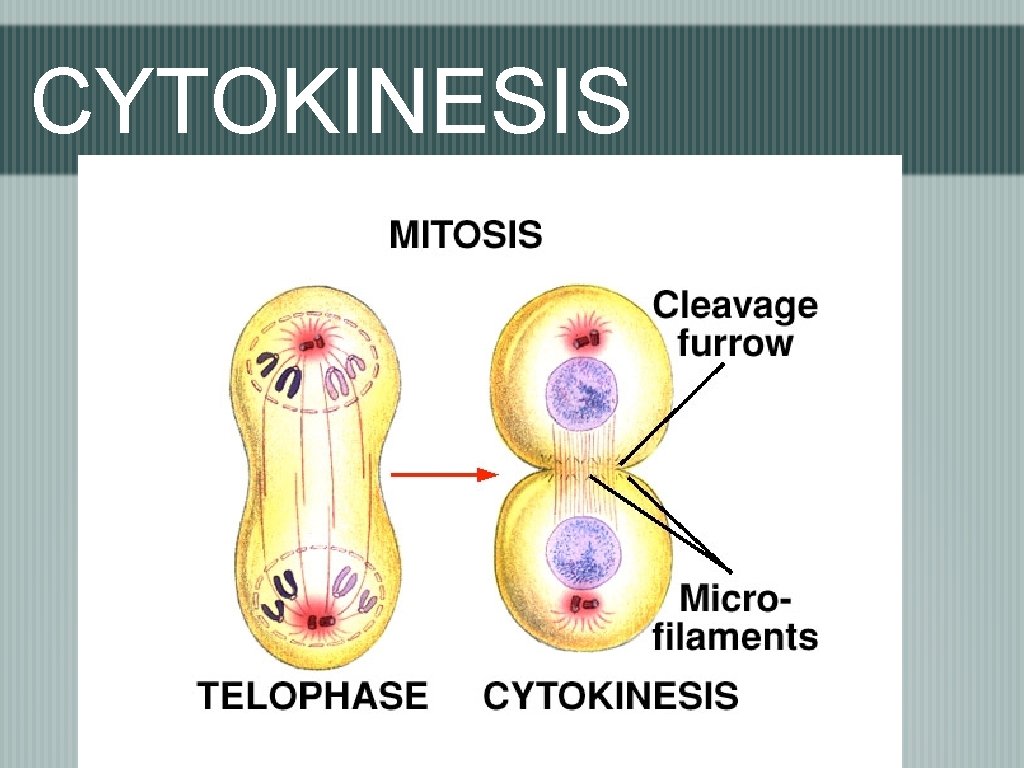
Cytokinesis Once nuclear division has occurred, the cell undergoes cytokinesis. cell division = mitosis + cytokinesis Both processes result in 2 daughter cells with genetically identical nuclei.
CYTOKINESIS
Question: 2. 3. 1. 8. 5. 6. 7. 4.
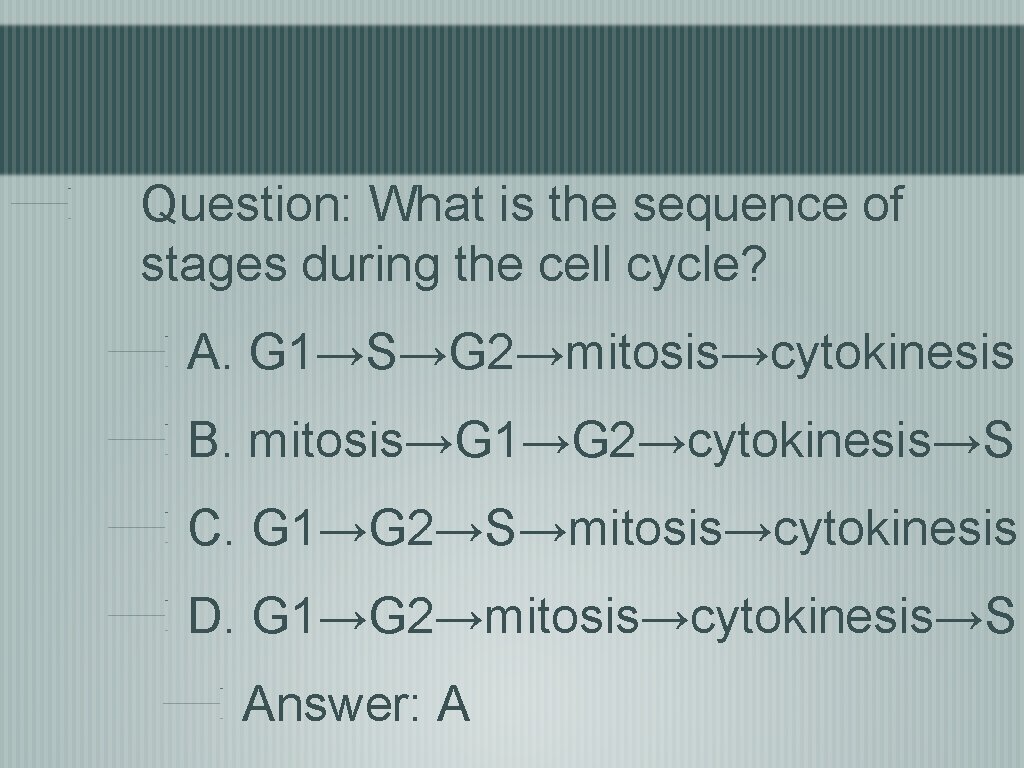
Question: What is the sequence of stages during the cell cycle? A. G 1→S→G 2→mitosis→cytokinesis B. mitosis→G 1→G 2→cytokinesis→S C. G 1→G 2→S→mitosis→cytokinesis D. G 1→G 2→mitosis→cytokinesis→S Answer: A
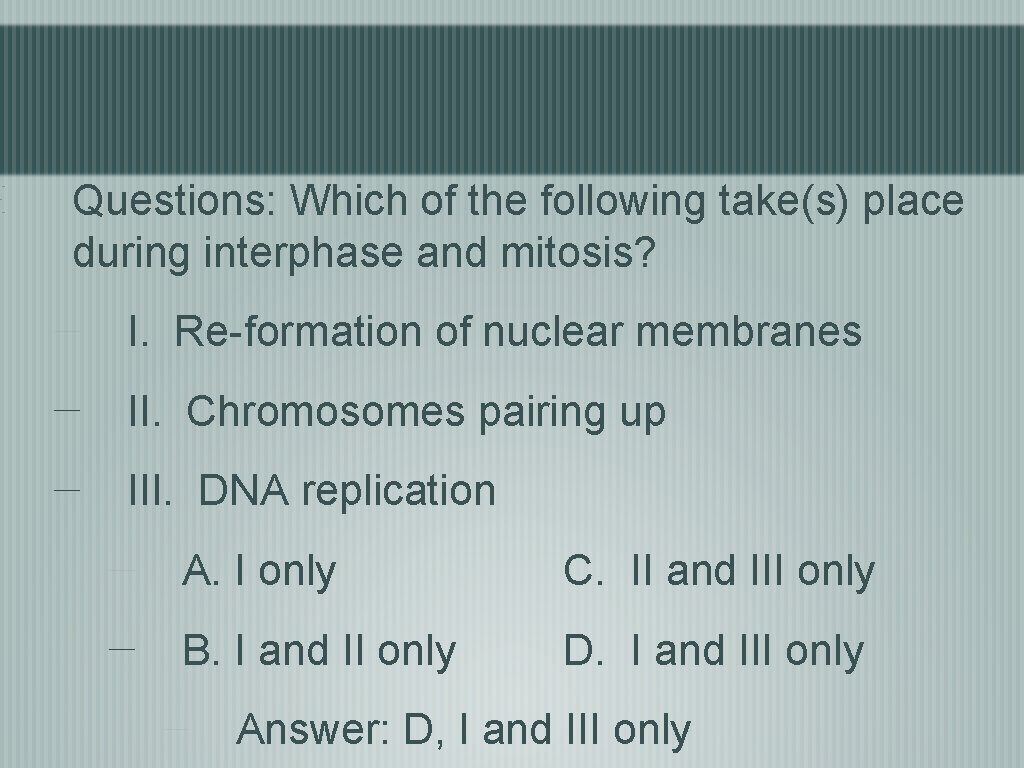
Questions: Which of the following take(s) place during interphase and mitosis? I. Re-formation of nuclear membranes II. Chromosomes pairing up III. DNA replication A. I only C. II and III only B. I and II only D. I and III only Answer: D, I and III only
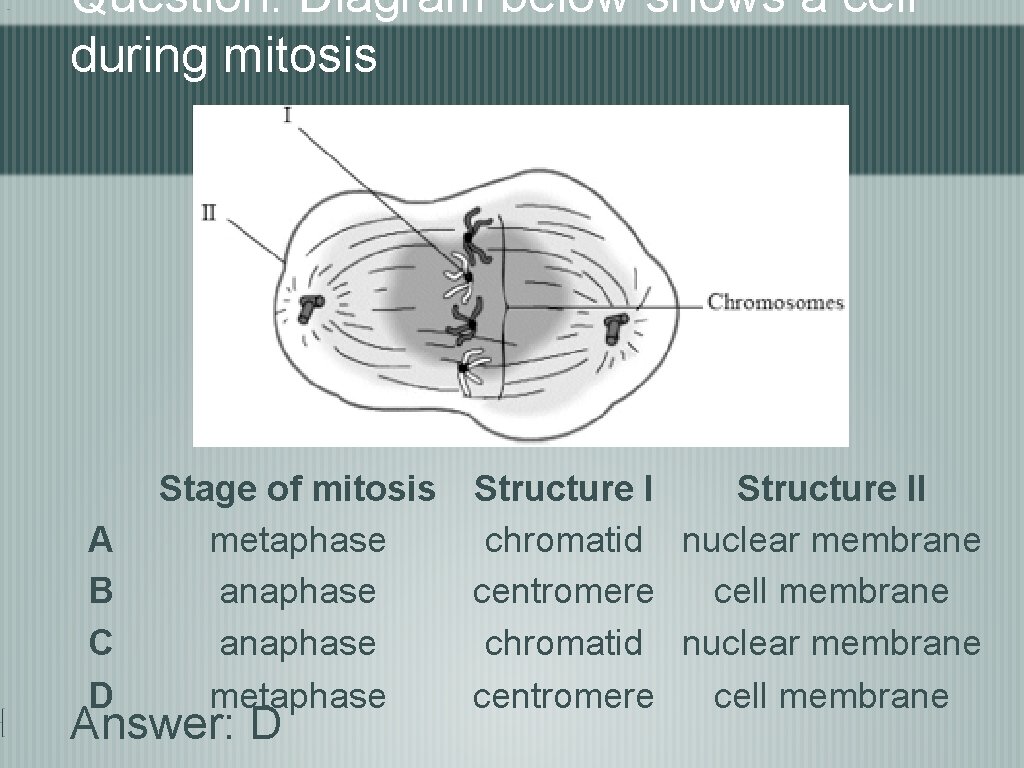
Question: Diagram below shows a cell during mitosis A B C D Stage of mitosis metaphase anaphase metaphase Answer: D Structure II chromatid nuclear membrane centromere cell membrane
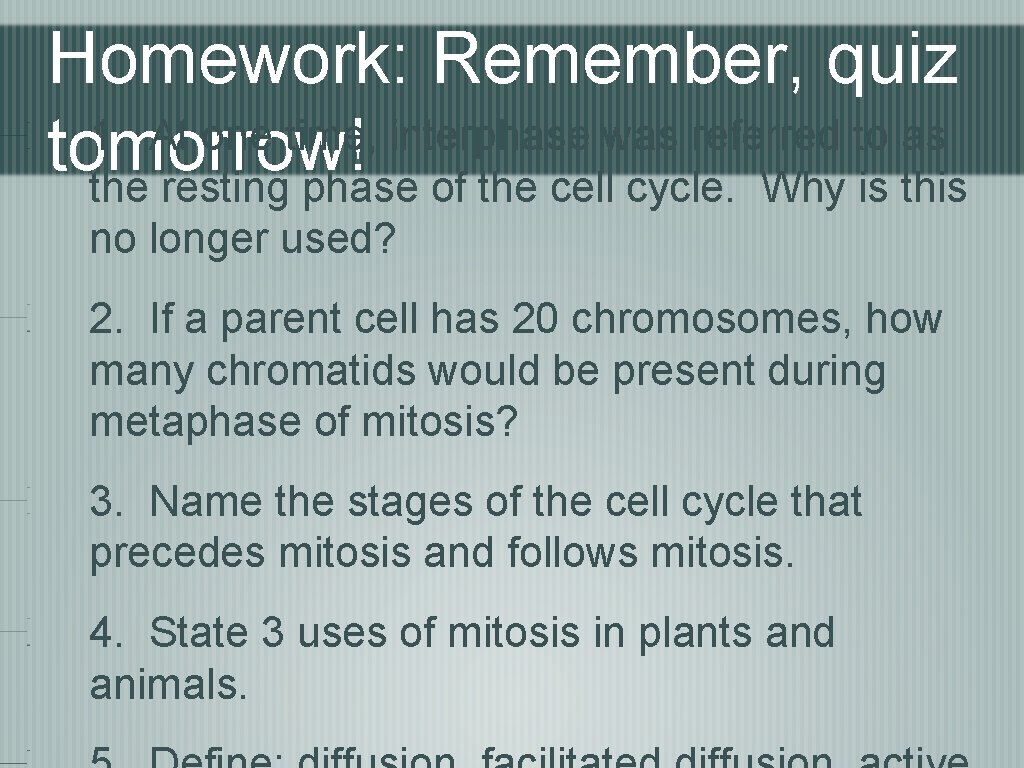
Homework: Remember, quiz 1. At one time, interphase was referred to as tomorrow! the resting phase of the cell cycle. Why is this no longer used? 2. If a parent cell has 20 chromosomes, how many chromatids would be present during metaphase of mitosis? 3. Name the stages of the cell cycle that precedes mitosis and follows mitosis. 4. State 3 uses of mitosis in plants and animals.