
Unit 3 Networks of Communication and Exchange The
- Slides: 24
Unit 3 Networks of Communication and Exchange
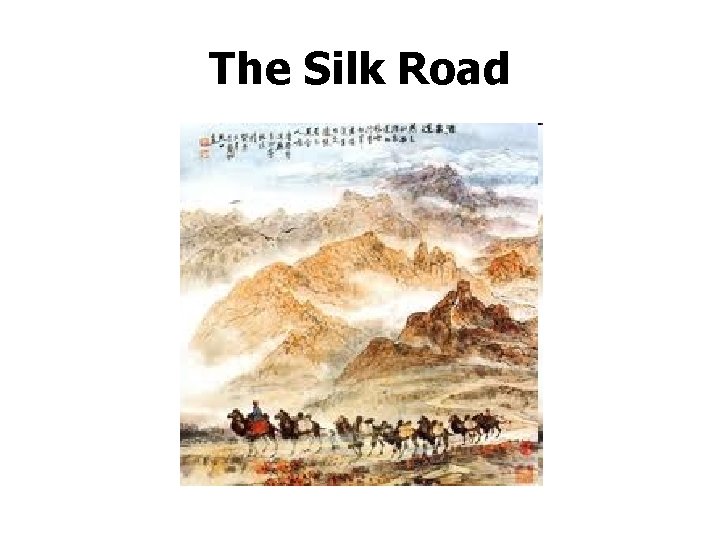
The Silk Road
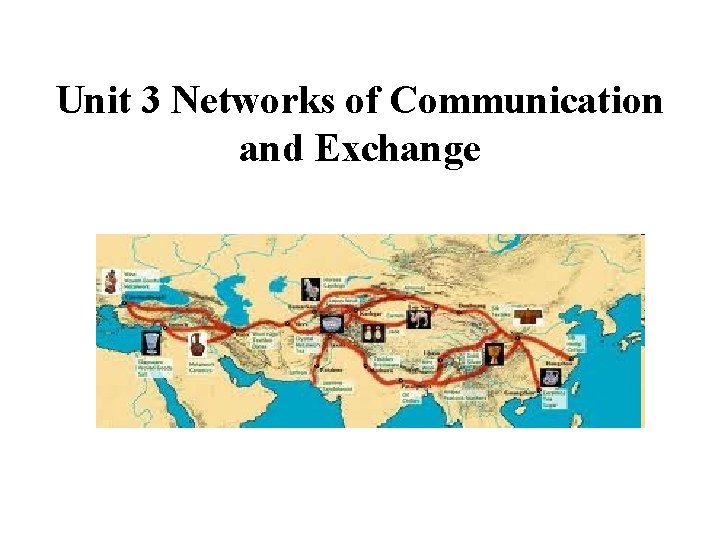
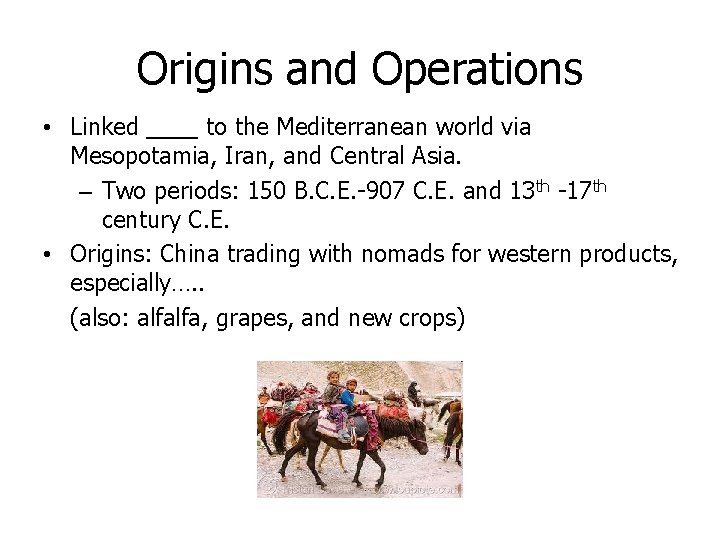
Origins and Operations • Linked ____ to the Mediterranean world via Mesopotamia, Iran, and Central Asia. – Two periods: 150 B. C. E. -907 C. E. and 13 th -17 th century C. E. • Origins: China trading with nomads for western products, especially…. . (also: alfalfa, grapes, and new crops)
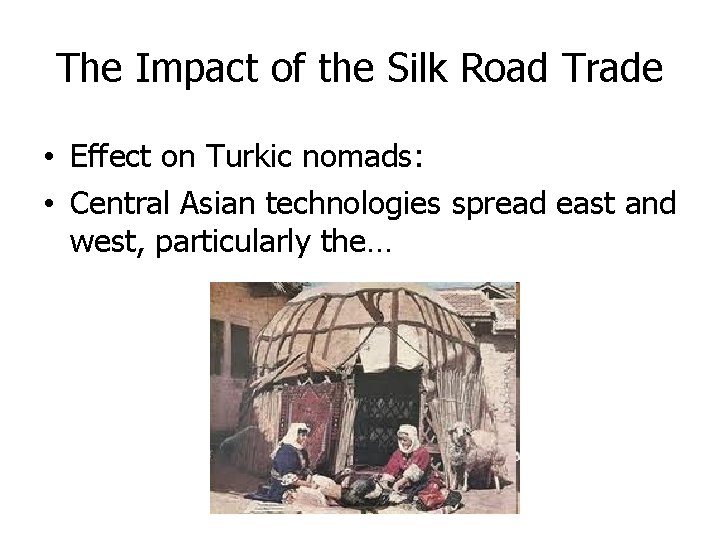
The Impact of the Silk Road Trade • Effect on Turkic nomads: • Central Asian technologies spread east and west, particularly the…
Silk Road • Spread of pathogens (germs) from epidemics, disease such as smallpox, measles and the bubonic plague from Central Asia to both Han Dynasty of China and Roman Empire • Results ¼ to 1/3 or population in both dies as a result of the epidemic diseases that moved along the Silk Roads • A major factor in the collapse of the Han and Roman empires
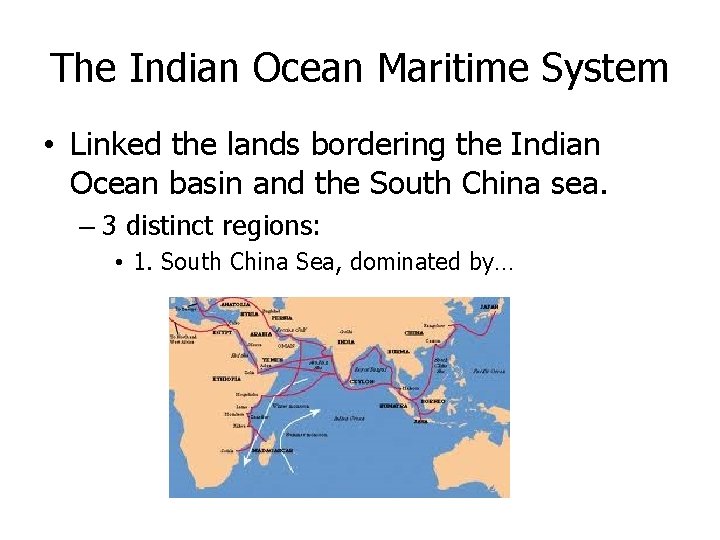
The Indian Ocean Maritime System • Linked the lands bordering the Indian Ocean basin and the South China sea. – 3 distinct regions: • 1. South China Sea, dominated by…
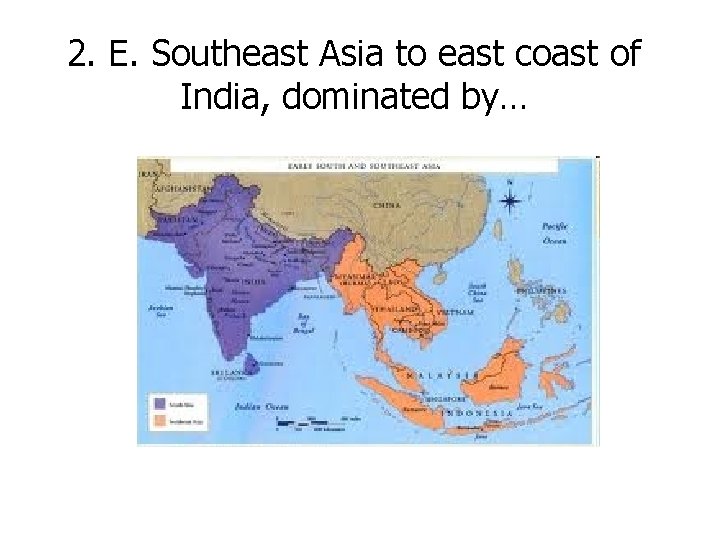
2. E. Southeast Asia to east coast of India, dominated by…
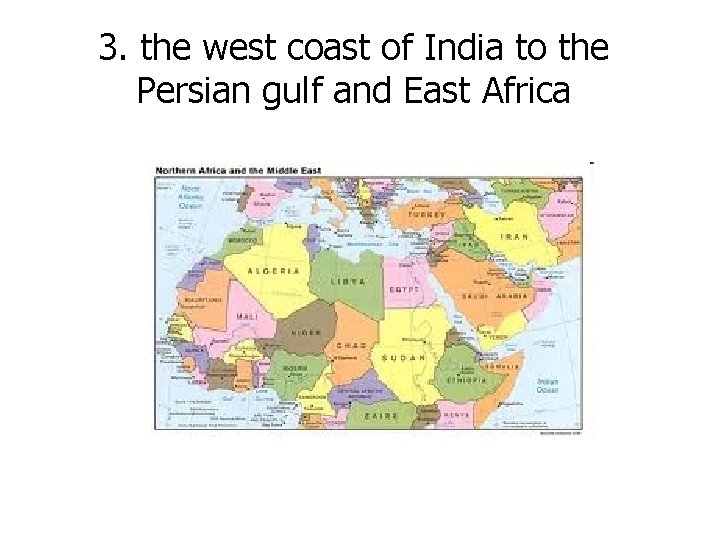
3. the west coast of India to the Persian gulf and East Africa
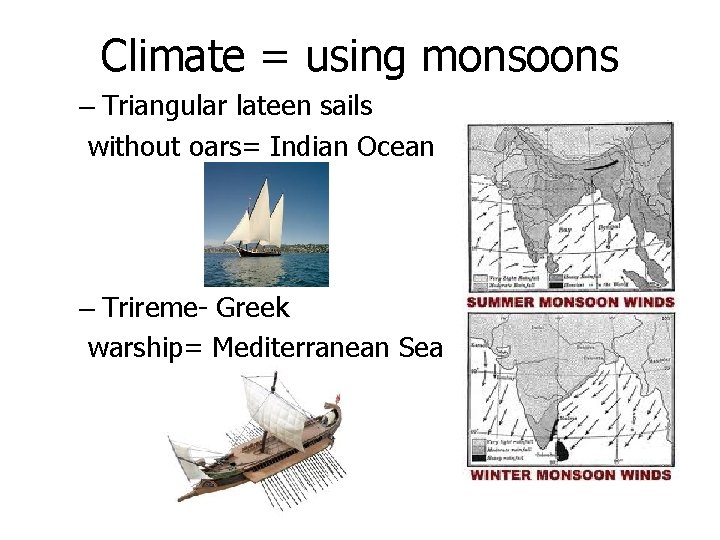
Climate = using monsoons – Triangular lateen sails without oars= Indian Ocean – Trireme- Greek warship= Mediterranean Sea
Origins of Contact and Trade • Regions connected by trade: – East Africa, Arabia, India, Southeast Asia, and South China • Early migrations – From S. E. Asia to Madagascar – Results= bananas, yams, and other S. E. Asian plants now in Africa
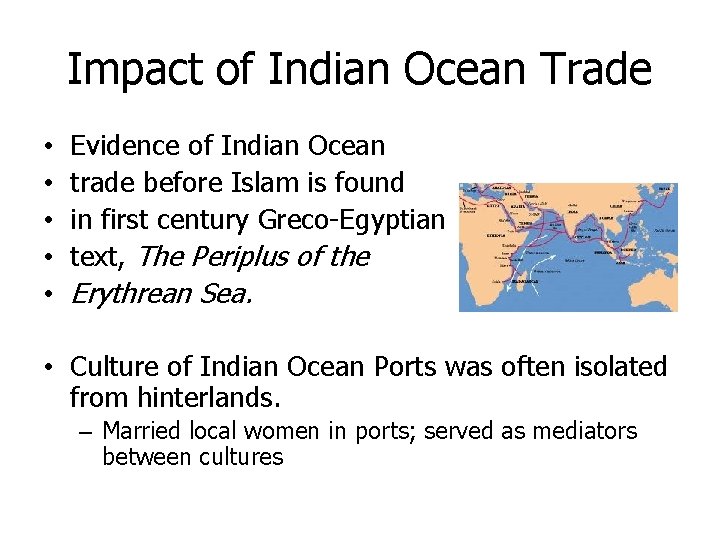
Impact of Indian Ocean Trade • • • Evidence of Indian Ocean trade before Islam is found in first century Greco-Egyptian text, The Periplus of the Erythrean Sea. • Culture of Indian Ocean Ports was often isolated from hinterlands. – Married local women in ports; served as mediators between cultures
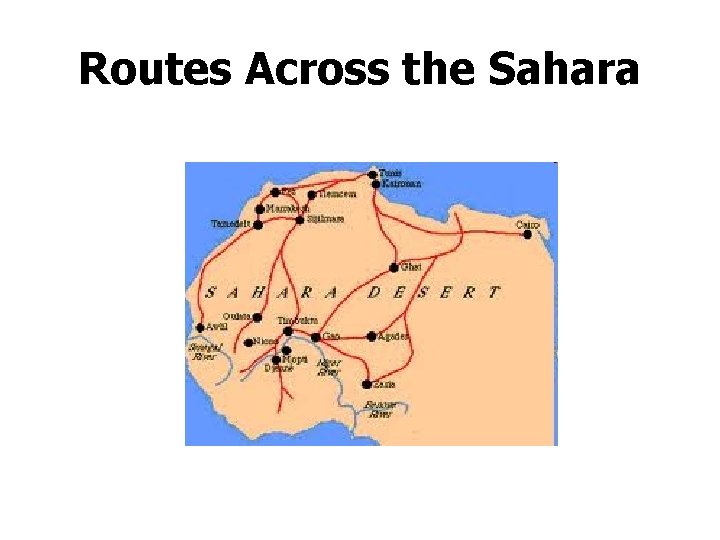
Routes Across the Sahara
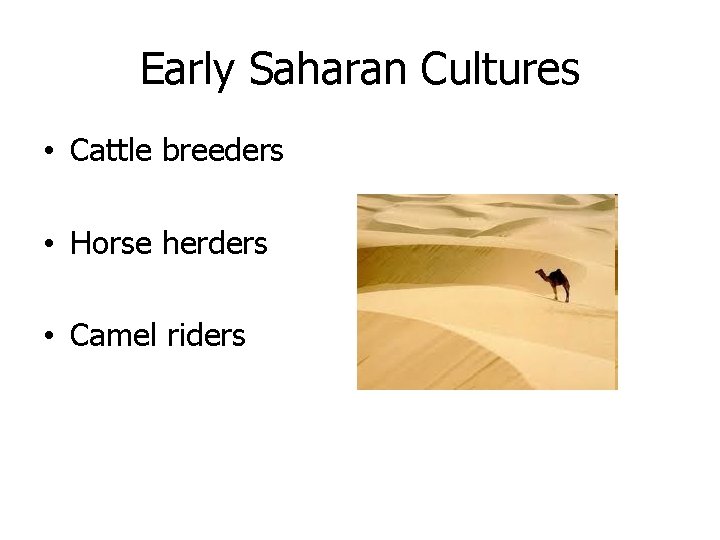
Early Saharan Cultures • Cattle breeders • Horse herders • Camel riders
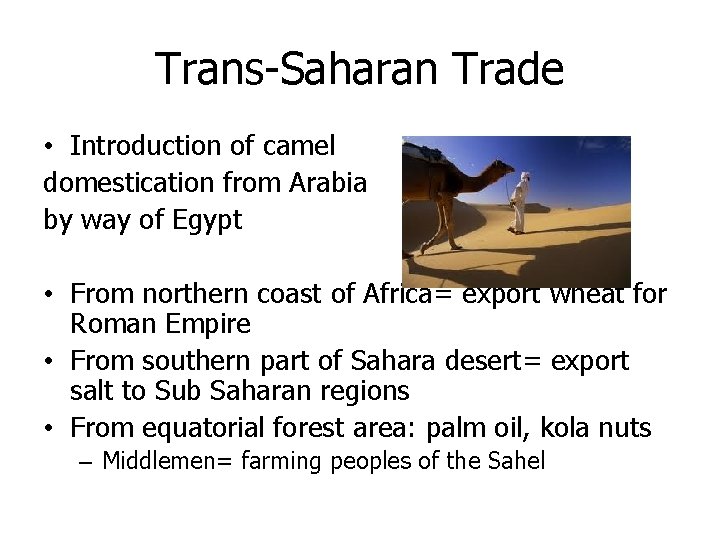
Trans-Saharan Trade • Introduction of camel domestication from Arabia by way of Egypt • From northern coast of Africa= export wheat for Roman Empire • From southern part of Sahara desert= export salt to Sub Saharan regions • From equatorial forest area: palm oil, kola nuts – Middlemen= farming peoples of the Sahel
• Arabs in North Africa in the 700 s established independent city states. These Berbers, of North Africa set up trade with nomads and West Africans (salt, copper, and gold).
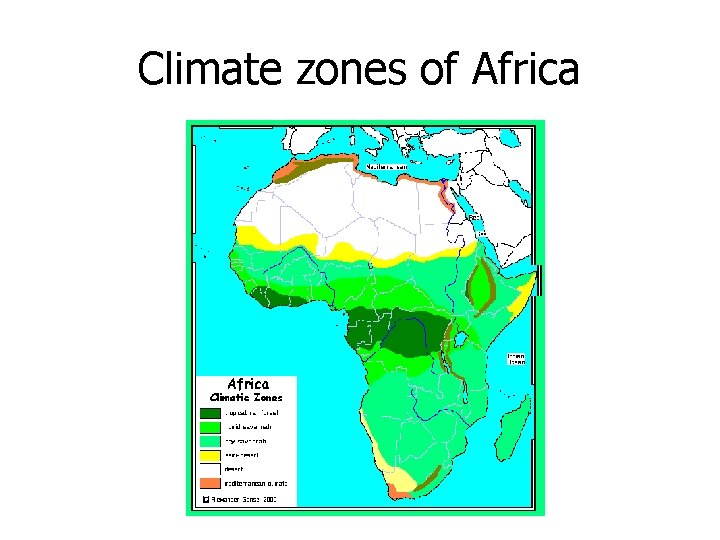
Climate zones of Africa
The Kingdom of Ghana • The kingdom of Ghana was one of the early sub-Saharan beneficiaries of this new trans-Saharan trade. – By 1076 defeated by invasion of Moroccan Almorvids.
Sub Saharan Africa • No overarching “great traditions” or ruling elite culture civilization. Many “small traditions” of the common people. – Two thousand languages – Numerous food production systems – Why the diversity?
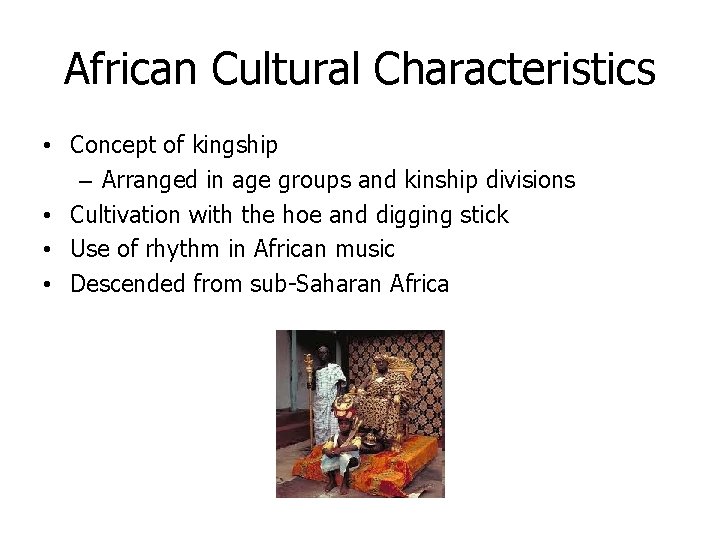
African Cultural Characteristics • Concept of kingship – Arranged in age groups and kinship divisions • Cultivation with the hoe and digging stick • Use of rhythm in African music • Descended from sub-Saharan Africa
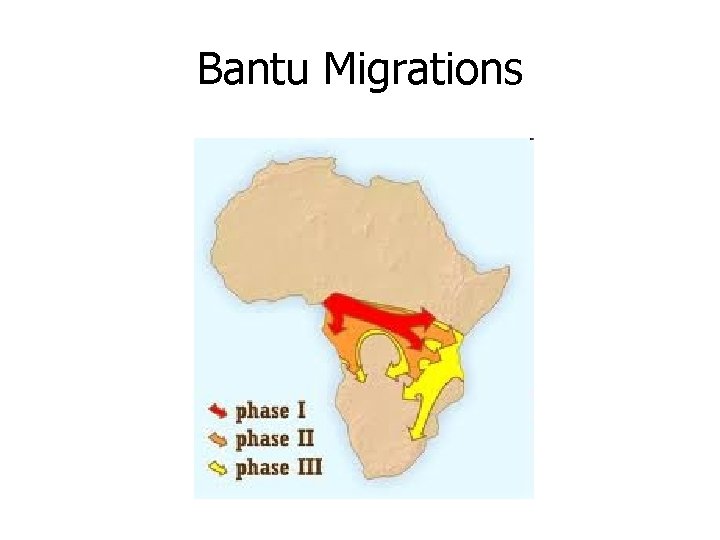
The Advent of Iron and the Bantu Migrations • Sub-Saharan agriculture had its origins north of the equator and then spread southward. Iron working also began north of the equator and spread southward, reaching Africa by 800. • Linguistic evidence suggest that the spread of iron and other technology in sub-Saharan Africa was the result of the Bantu Migrations. • Spread toward the south-east by 8 th century
Bantu Migrations
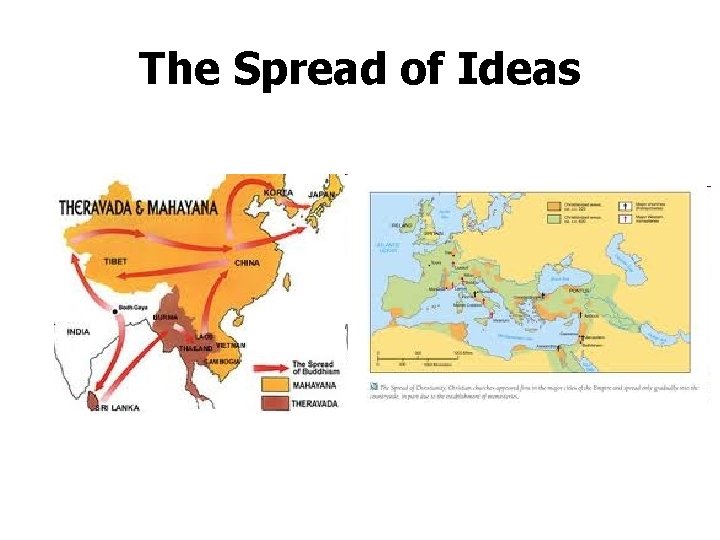
The Spread of Ideas
The Spread of Buddhism • Deliberate spread of religion was by three religions: – Buddhism was spread by royal sponsorship • Ashoka and Kanishka – and travels of ordinary pilgrims • Spread to: Syria, Egypt, Mesopotamia, Sri Lanka, SE Asia, and Tibet
The Spread of Christianity • Mediterranean states spread Christianity to Armenia in order to bring that kingdom over to its side and thus deprive Iran of control of this area. • Transmission of Christianity to Ethiopia to deprive Iran of trade.