
Unit 3 Measuring Maximizing Capacity Bus Capacity Materials
Unit 3: Measuring & Maximizing Capacity Bus Capacity Materials developed by K. Watkins, J. La. Mondia and C. Brakewood

Outline • Fundamentals. • Bus preferential treatments. • Urban street bus priority. • Transit signal priority treatment. • Operational tools. • Bus reliability. • Bus capacity methodology. Materials developed by K. Watkins, J. La. Mondia and C. Brakewood
FUNDAMENTALS Materials developed by K. Watkins, J. La. Mondia and C. Brakewood
Main operational terms • Capacity = how many people and buses can move past given location during given time • Speed = how quickly people and buses can move from one location to another • Reliability = how well the bus schedule can be maintained Materials developed by K. Watkins, J. La. Mondia and C. Brakewood
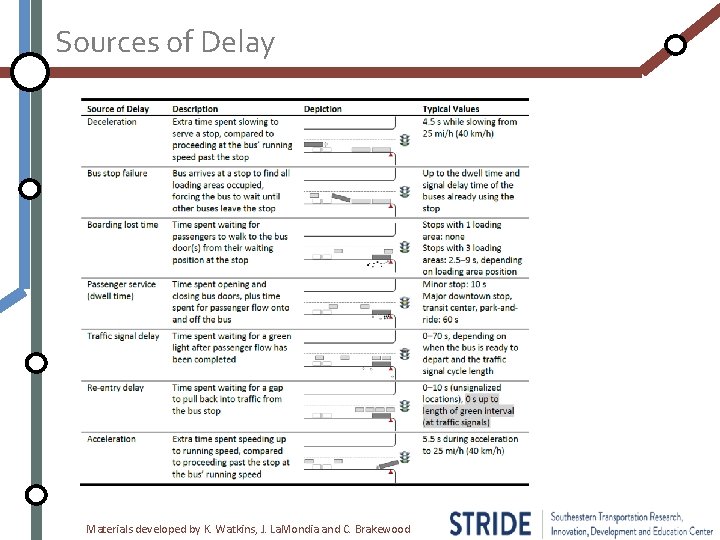
Sources of Delay Materials developed by K. Watkins, J. La. Mondia and C. Brakewood
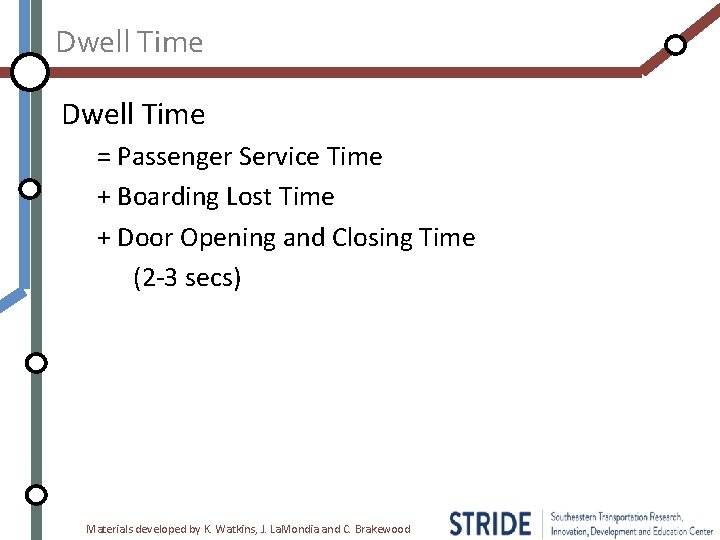
Dwell Time = Passenger Service Time + Boarding Lost Time + Door Opening and Closing Time (2 -3 secs) Materials developed by K. Watkins, J. La. Mondia and C. Brakewood
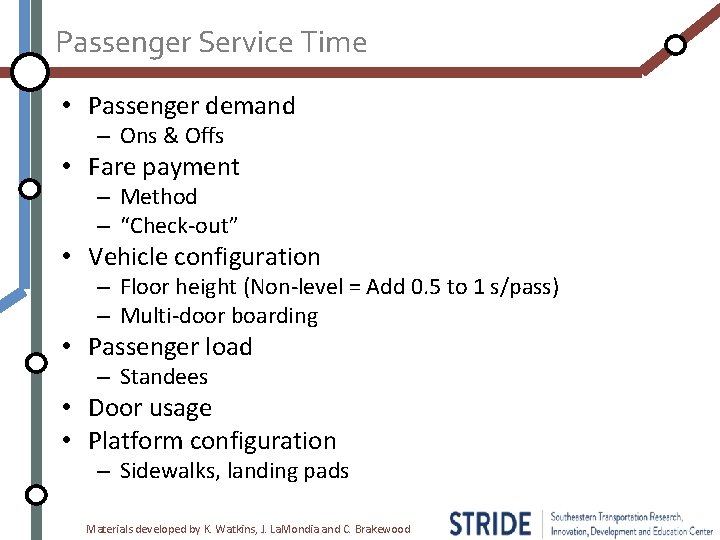
Passenger Service Time • Passenger demand – Ons & Offs • Fare payment – Method – “Check-out” • Vehicle configuration – Floor height (Non-level = Add 0. 5 to 1 s/pass) – Multi-door boarding • Passenger load – Standees • Door usage • Platform configuration – Sidewalks, landing pads Materials developed by K. Watkins, J. La. Mondia and C. Brakewood
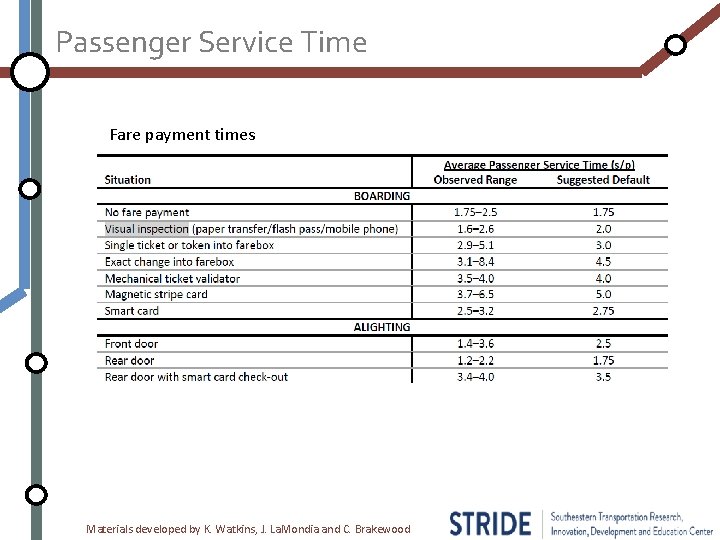
Passenger Service Time Fare payment times Materials developed by K. Watkins, J. La. Mondia and C. Brakewood
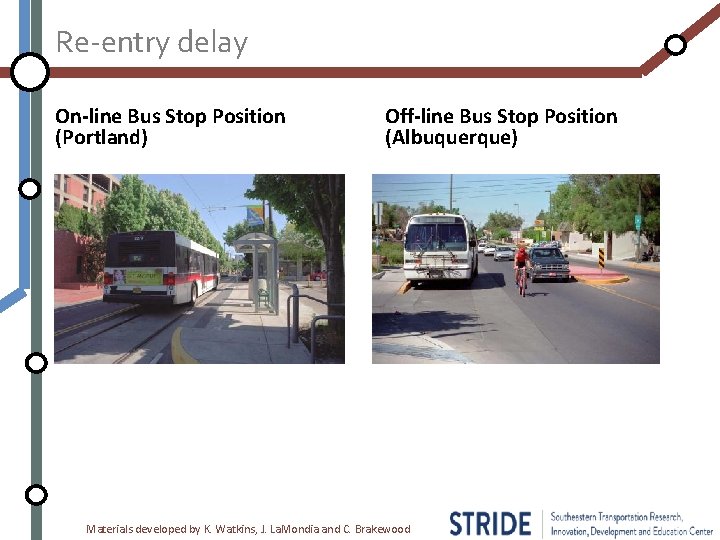
Re-entry delay On-line Bus Stop Position (Portland) Off-line Bus Stop Position (Albuquerque) Materials developed by K. Watkins, J. La. Mondia and C. Brakewood

Bus Facility Influences on Delay • Stop spacing – stops per distance • Exposure to general traffic – ROW Categories • Facility design – Bus Stop Location – Bus passing Materials developed by K. Watkins, J. La. Mondia and C. Brakewood
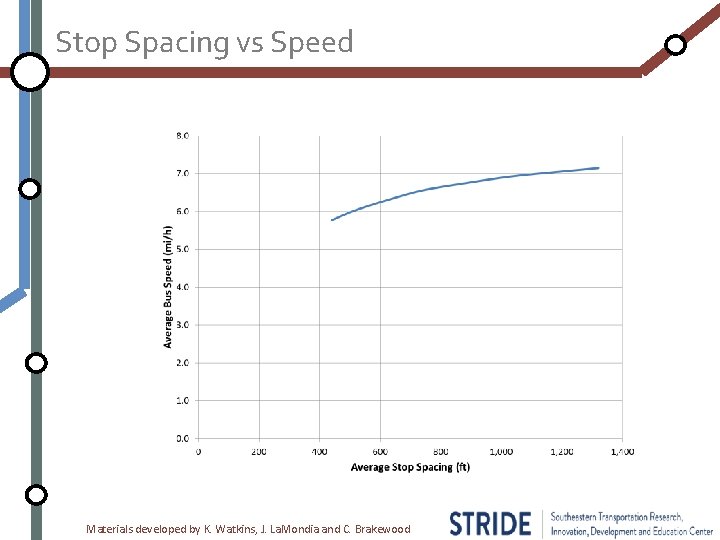
Stop Spacing vs Speed Materials developed by K. Watkins, J. La. Mondia and C. Brakewood
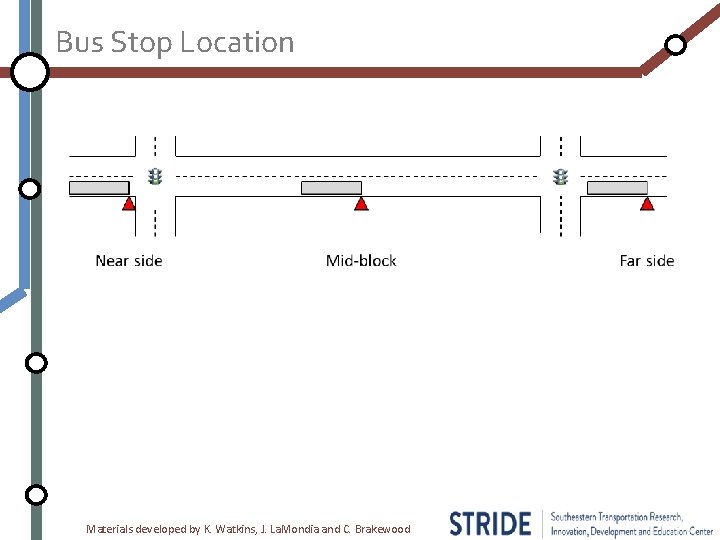
Bus Stop Location Materials developed by K. Watkins, J. La. Mondia and C. Brakewood
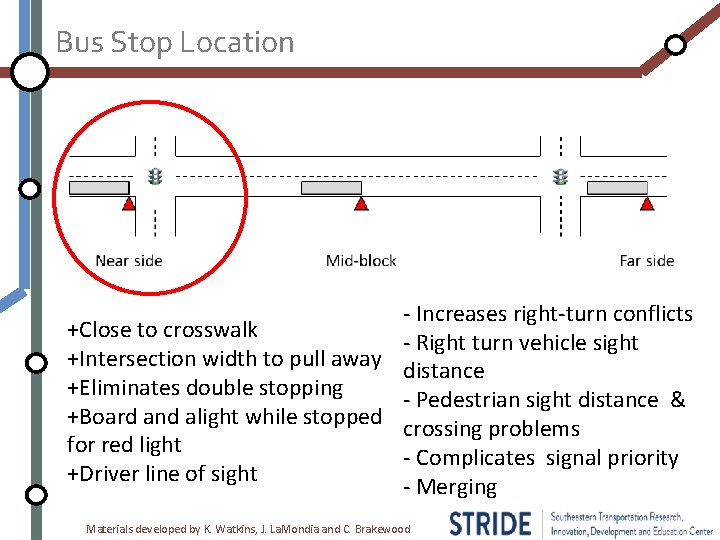
Bus Stop Location - Increases right-turn conflicts +Close to crosswalk - Right turn vehicle sight +Intersection width to pull away distance +Eliminates double stopping - Pedestrian sight distance & +Board and alight while stopped crossing problems for red light - Complicates signal priority +Driver line of sight - Merging Materials developed by K. Watkins, J. La. Mondia and C. Brakewood
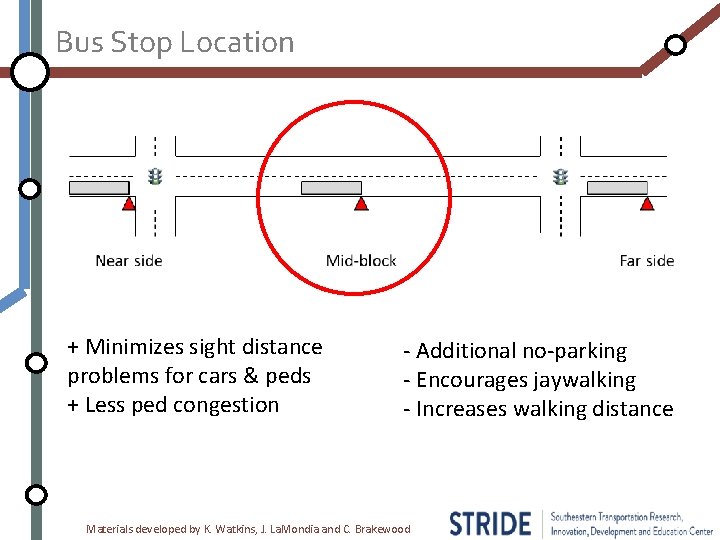
Bus Stop Location + Minimizes sight distance problems for cars & peds + Less ped congestion - Additional no-parking - Encourages jaywalking - Increases walking distance Materials developed by K. Watkins, J. La. Mondia and C. Brakewood
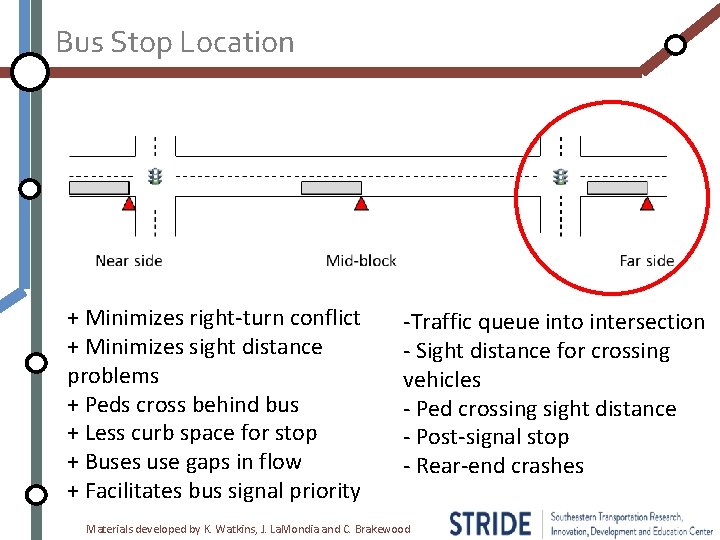
Bus Stop Location + Minimizes right-turn conflict + Minimizes sight distance problems + Peds cross behind bus + Less curb space for stop + Buses use gaps in flow + Facilitates bus signal priority -Traffic queue into intersection - Sight distance for crossing vehicles - Ped crossing sight distance - Post-signal stop - Rear-end crashes Materials developed by K. Watkins, J. La. Mondia and C. Brakewood

Loading Area Design Materials developed by K. Watkins, J. La. Mondia and C. Brakewood
BUS PREFERENTIAL TREATMENTS Materials developed by K. Watkins, J. La. Mondia and C. Brakewood

Busways Pittsburgh Curitiba, Brazil Materials developed by K. Watkins, J. La. Mondia and C. Brakewood
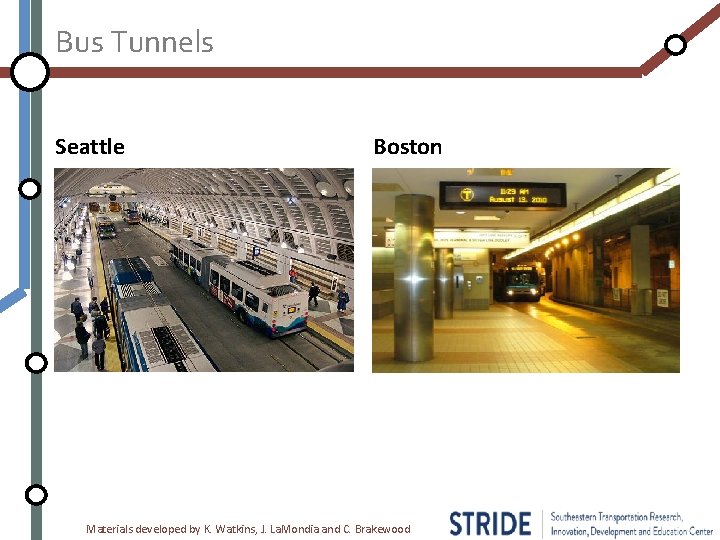
Bus Tunnels Seattle Boston Materials developed by K. Watkins, J. La. Mondia and C. Brakewood
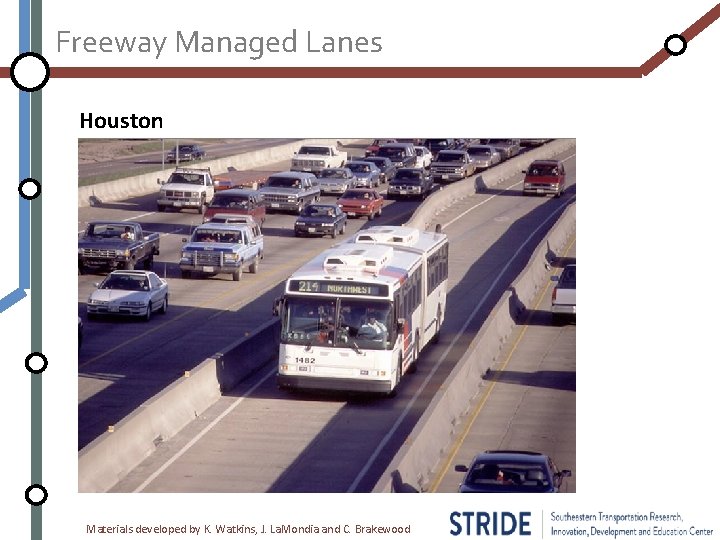
Freeway Managed Lanes Houston Materials developed by K. Watkins, J. La. Mondia and C. Brakewood
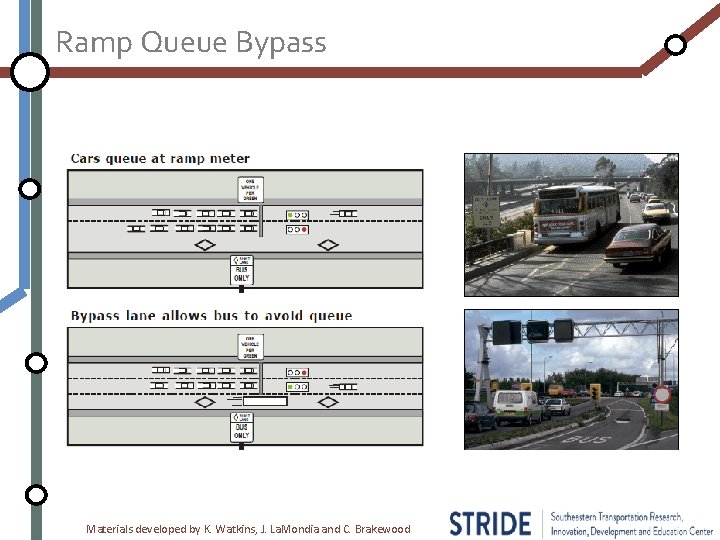
Ramp Queue Bypass Materials developed by K. Watkins, J. La. Mondia and C. Brakewood
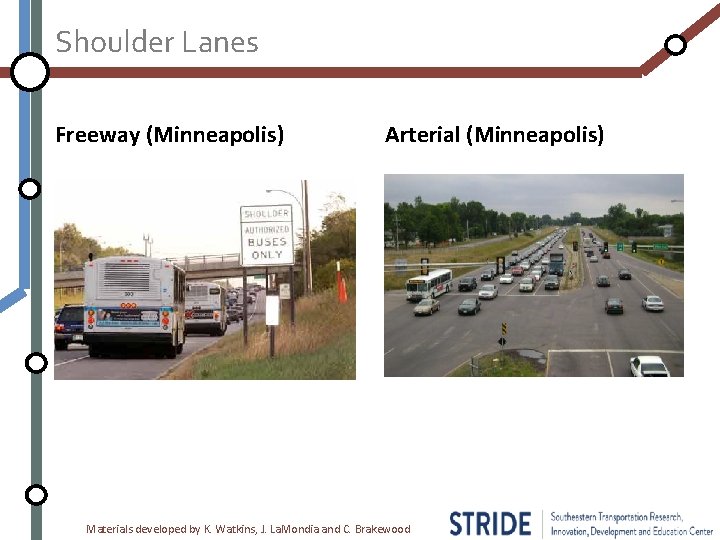
Shoulder Lanes Freeway (Minneapolis) Arterial (Minneapolis) Materials developed by K. Watkins, J. La. Mondia and C. Brakewood
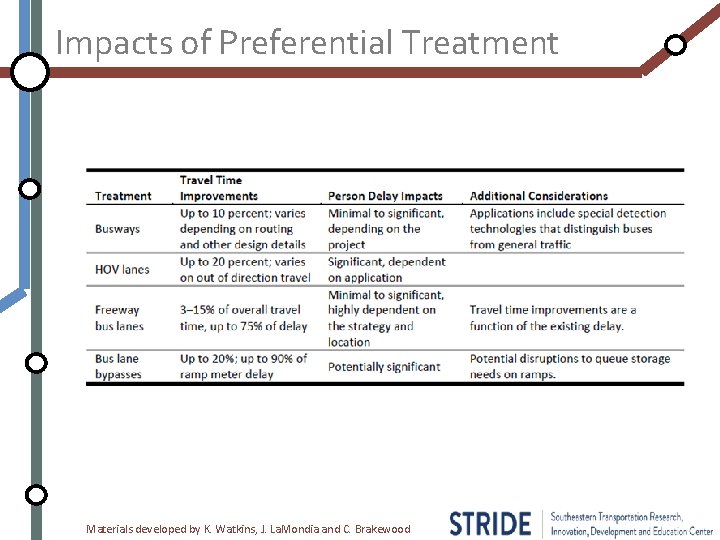
Impacts of Preferential Treatment Materials developed by K. Watkins, J. La. Mondia and C. Brakewood
URBAN STREET BUS PRIORITY Materials developed by K. Watkins, J. La. Mondia and C. Brakewood
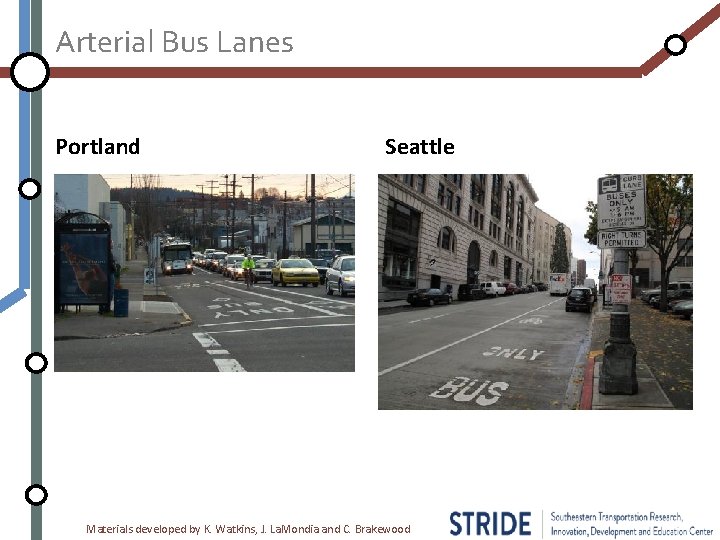
Arterial Bus Lanes Portland Seattle Materials developed by K. Watkins, J. La. Mondia and C. Brakewood
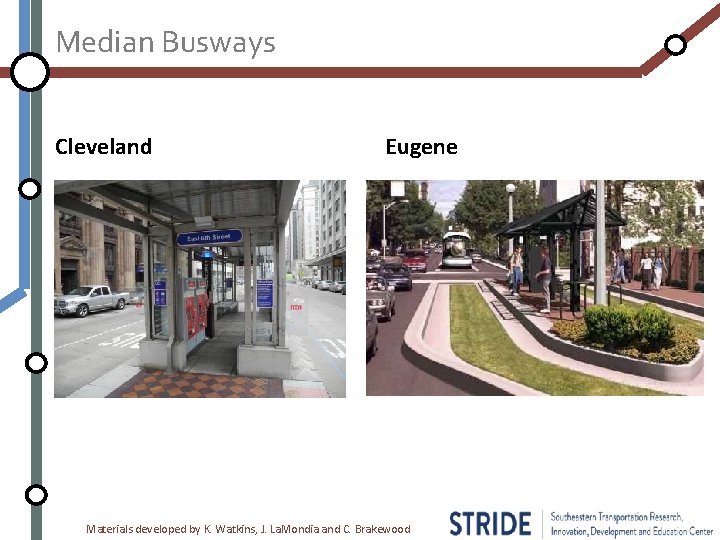
Median Busways Cleveland Eugene Materials developed by K. Watkins, J. La. Mondia and C. Brakewood
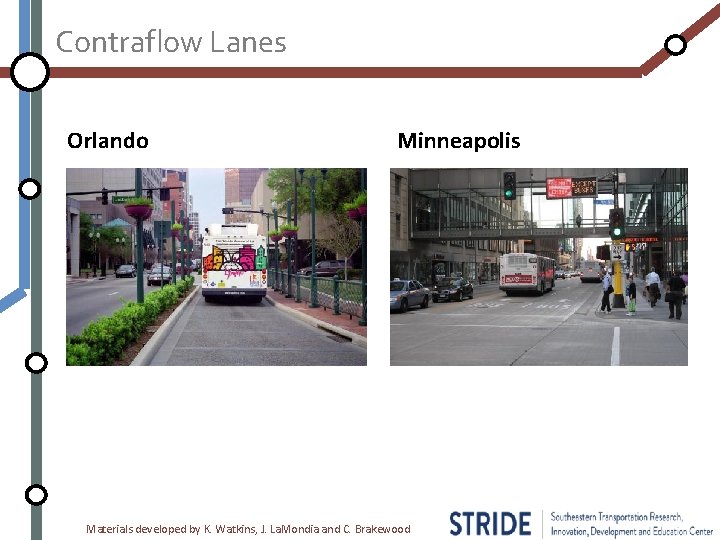
Contraflow Lanes Orlando Minneapolis Materials developed by K. Watkins, J. La. Mondia and C. Brakewood
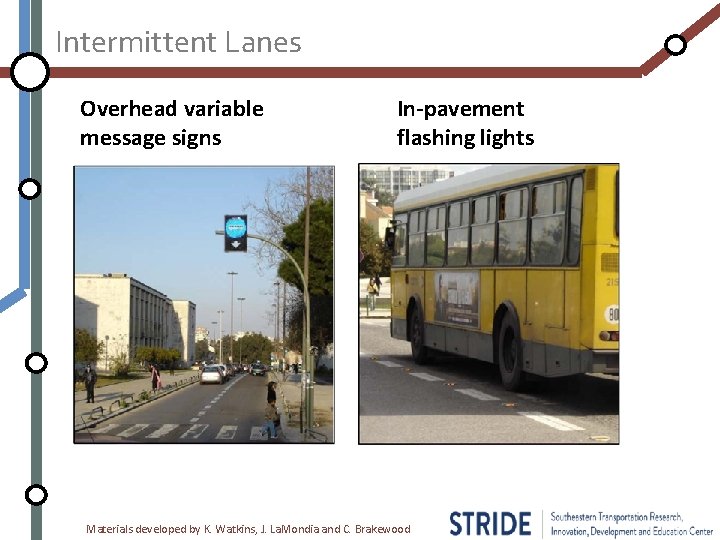
Intermittent Lanes Overhead variable message signs In-pavement flashing lights Materials developed by K. Watkins, J. La. Mondia and C. Brakewood
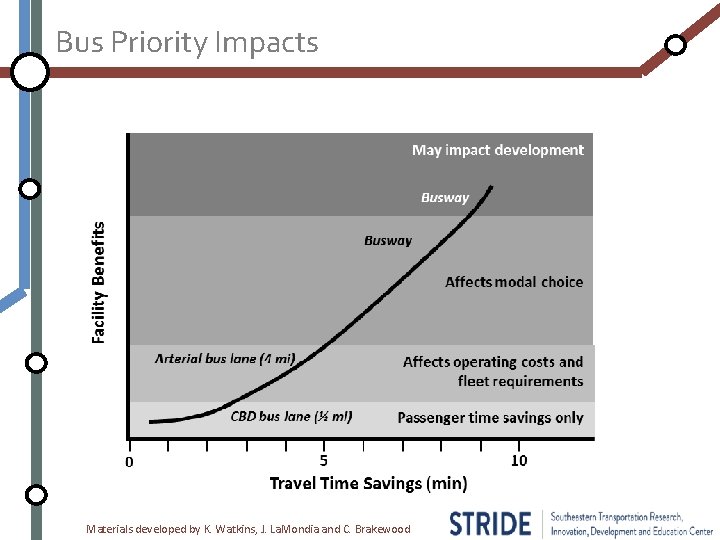
Bus Priority Impacts Materials developed by K. Watkins, J. La. Mondia and C. Brakewood
TRANSIT SIGNALS PRIORITY TREATMENTS Materials developed by K. Watkins, J. La. Mondia and C. Brakewood
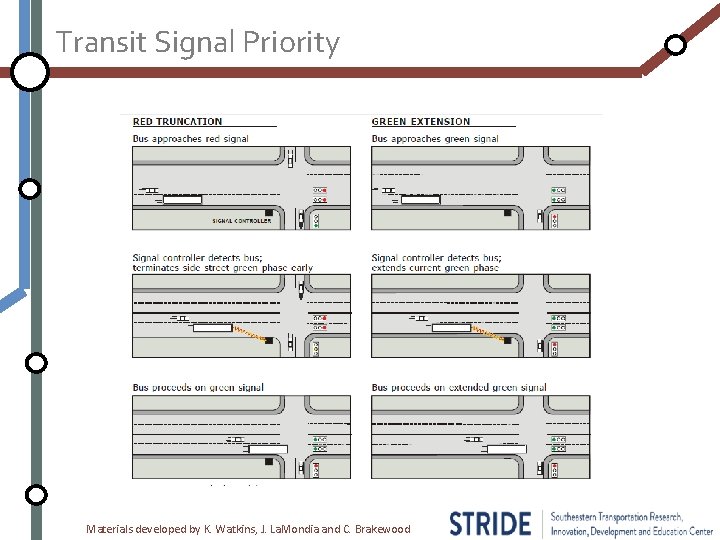
Transit Signal Priority Materials developed by K. Watkins, J. La. Mondia and C. Brakewood
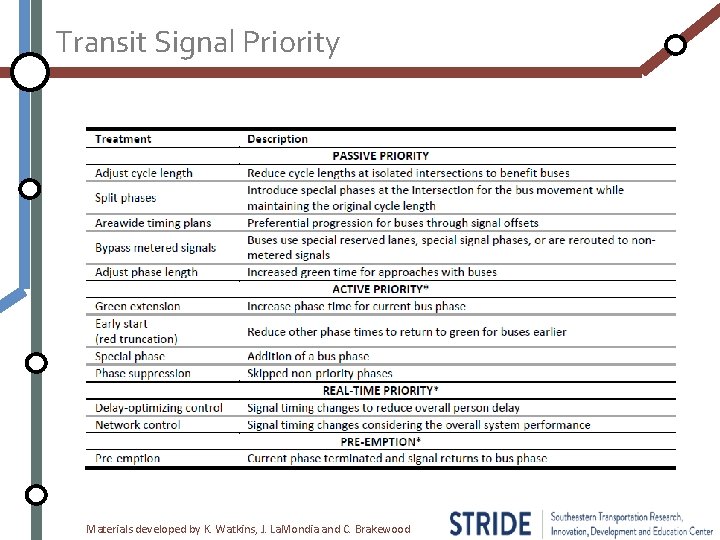
Transit Signal Priority Materials developed by K. Watkins, J. La. Mondia and C. Brakewood
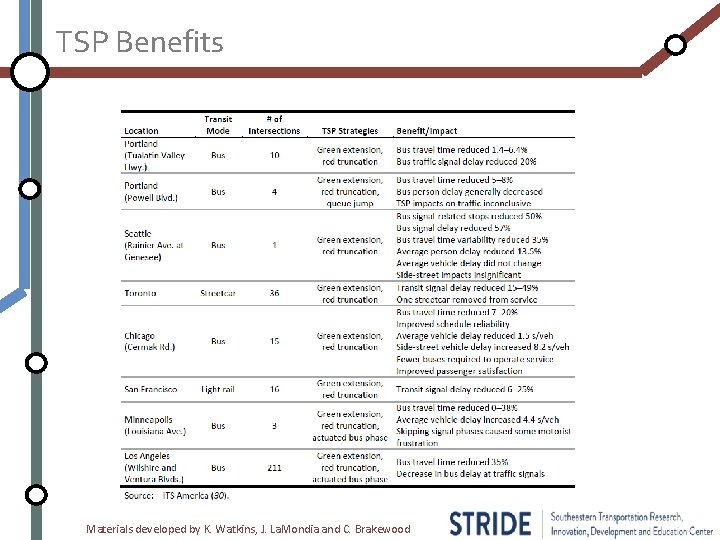
TSP Benefits Materials developed by K. Watkins, J. La. Mondia and C. Brakewood
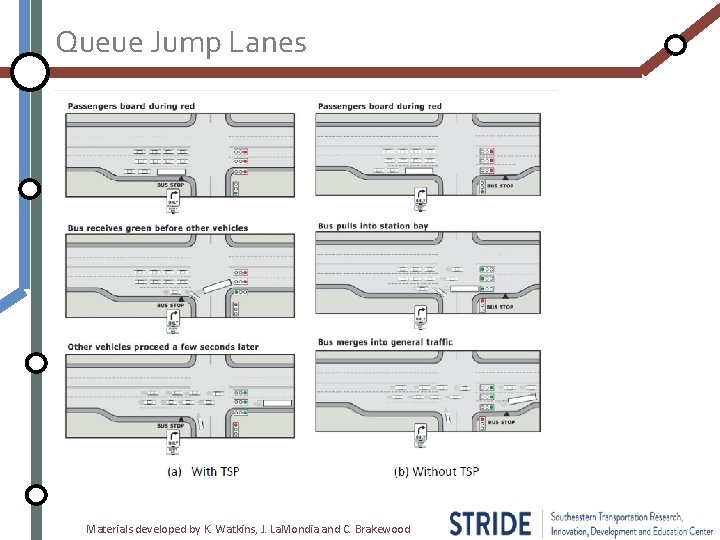
Queue Jump Lanes Materials developed by K. Watkins, J. La. Mondia and C. Brakewood
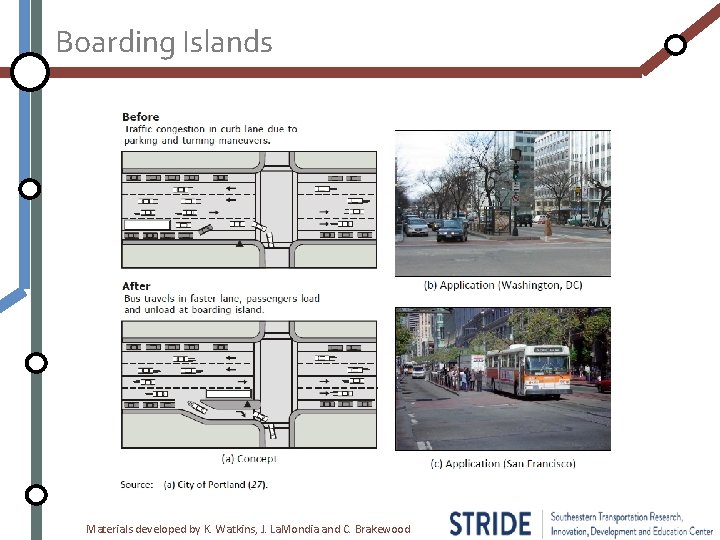
Boarding Islands Materials developed by K. Watkins, J. La. Mondia and C. Brakewood
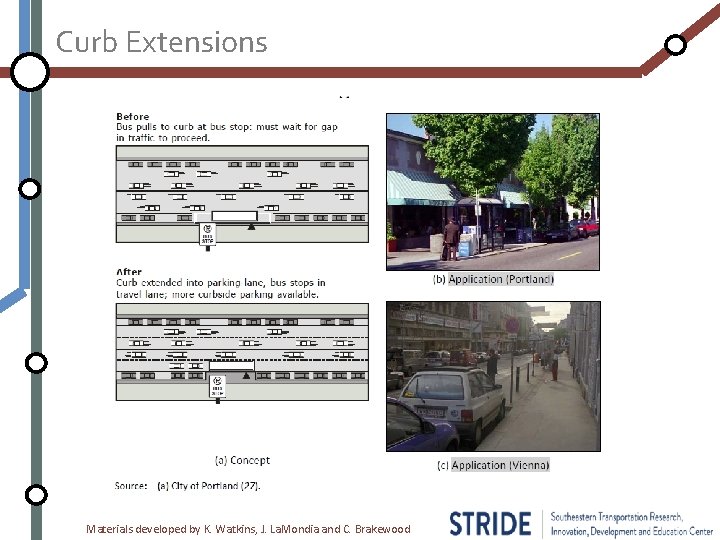
Curb Extensions Materials developed by K. Watkins, J. La. Mondia and C. Brakewood
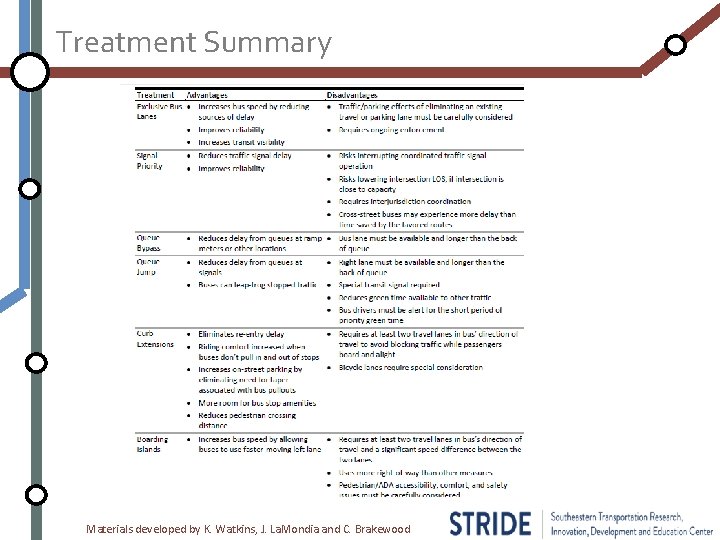
Treatment Summary Materials developed by K. Watkins, J. La. Mondia and C. Brakewood
OPERATIONAL TOOLS Materials developed by K. Watkins, J. La. Mondia and C. Brakewood
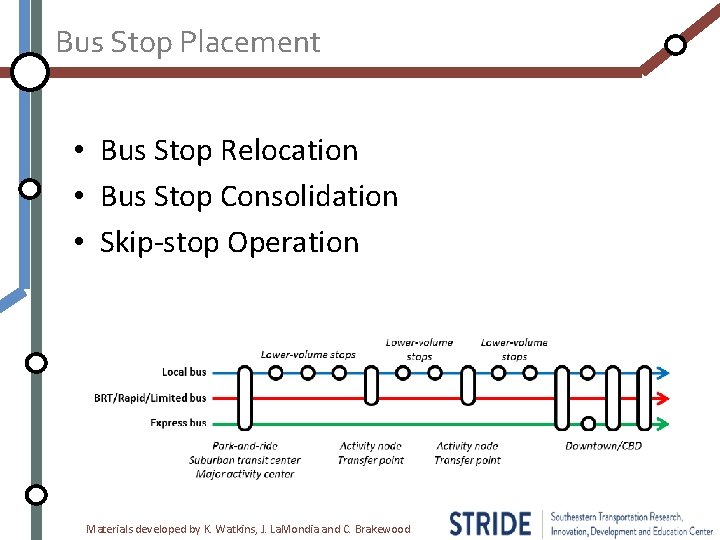
Bus Stop Placement • Bus Stop Relocation • Bus Stop Consolidation • Skip-stop Operation Materials developed by K. Watkins, J. La. Mondia and C. Brakewood
Route Design • Movement Restriction Exemptions • Parking Restrictions • Design Standards Materials developed by K. Watkins, J. La. Mondia and C. Brakewood
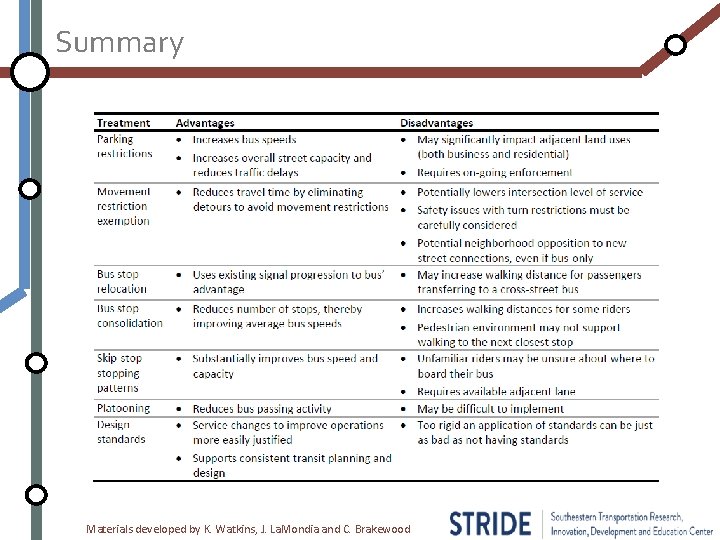
Summary Materials developed by K. Watkins, J. La. Mondia and C. Brakewood
BUS RELIABILITY Materials developed by K. Watkins, J. La. Mondia and C. Brakewood
Factors impacting reliability • Traffic conditions (mixed-traffic on-street) – Congestion, signals, parking • Construction – Delays and detours • Vehicle and maintenance quality – Break downs • Vehicle and staff availability – Sufficient for scheduled trips • Preferential treatments – Offset other items Materials developed by K. Watkins, J. La. Mondia and C. Brakewood
Factors impacting reliability • Schedule achievability – With layover and recovery time • Evenness of passenger demand – Vehicle to vehicle and day to day • Operator differences – Driving skills, route familiarity, and schedule adherence such as “hot” running • Wheelchair usage – Ramp deployment and time to secure wheelchairs • Route length and the number of stops – Exposure to events • Operations control strategies – minimize impact of the problems Materials developed by K. Watkins, J. La. Mondia and C. Brakewood
BUS CAPACITY METHODOLOGY Materials developed by K. Watkins, J. La. Mondia and C. Brakewood
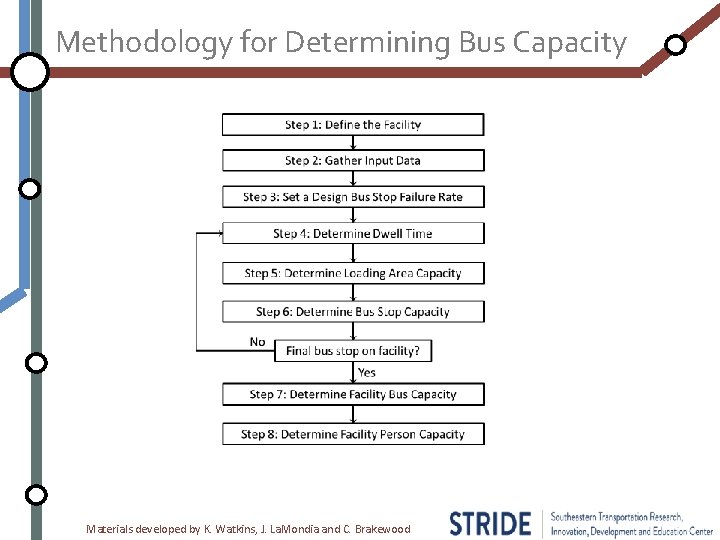
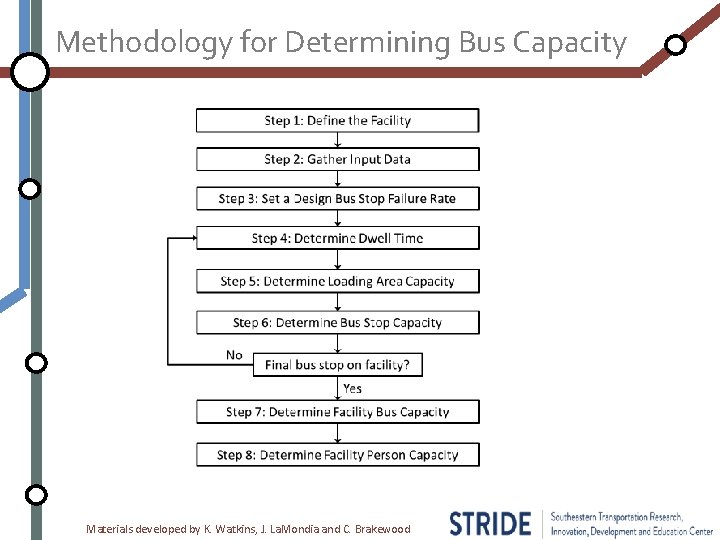
Methodology for Determining Bus Capacity Materials developed by K. Watkins, J. La. Mondia and C. Brakewood
Step 1: Define the Facility 1. Bus Loading Areas (berths): curbside spaces where a single bus can stop to load and unload passengers 2. Bus Stops: Consist of one or more adjacent loading areas 3. Bus Facility: Continuous sections of roadways used by buses that include at least one stop, but typically many more. Materials developed by K. Watkins, J. La. Mondia and C. Brakewood
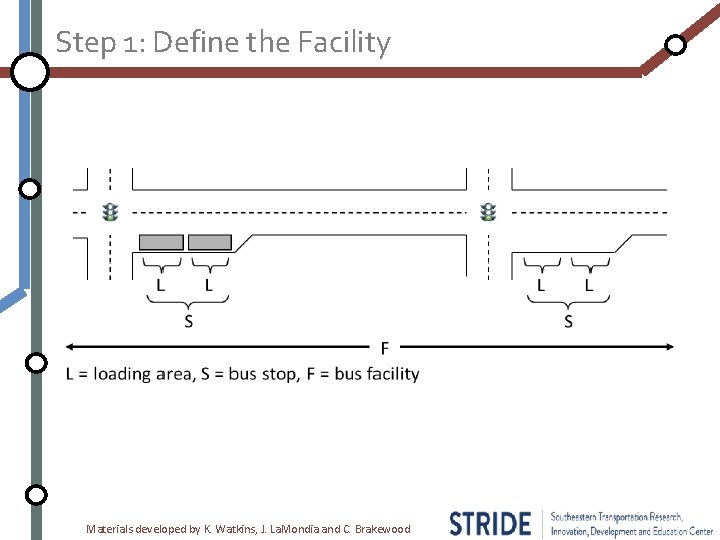
Step 1: Define the Facility Materials developed by K. Watkins, J. La. Mondia and C. Brakewood
Step 2: Gather Input Data (Bus Stop Level) • Average (mean) dwell time: The amount of time spent at a stop. This can be collected via field measurement (preferred for existing conditions), estimated based on passenger volumes, or default values can be used. • Dwell time variability: This is measured by the coefficient of variation of dwell times. The coefficient of variation ranges from 0 (all dwell times are the same) to 1. This can be collected via field measurement or default values can be used. Coefficient of Variation = Standard deviation of dwell times Average dwell time • Failure rate: The percentage of buses that arrive at the bus stop to find all available loading areas already occupied. • Traffic signal timing: For stops located by traffic signals, this is measured by the ratio of the average green time available for bus movement divided by the traffic signal cycle length, or g/C ratio. Materials developed by K. Watkins, J. La. Mondia and C. Brakewood
Step 3: Set Bus Stop Failure Rate • The concept of a failure rate that sets how often a bus should arrive at a stop only to find all loading areas occupied • However: • bus travel speeds are reduced, due to the time spent waiting for a loading area to become available; • bus schedule reliability suffers because of the additional delays; and • buses block traffic in the street while waiting to enter the bus stop. • Design Failure Rate Values: • In downtown areas, typically between 7. 5 and 15% • Outside downtown areas, typically 2. 5% Materials developed by K. Watkins, J. La. Mondia and C. Brakewood
Step 4: Determine Dwell Time Three methods can be used: 1. Field measurements 2. Default values 3. Calculations Materials developed by K. Watkins, J. La. Mondia and C. Brakewood
Step 4: Determine Dwell Time Collecting dwell time data can be done with ride checks by recording: • • • time that the vehicle comes to a complete stop time that the doors have fully opened the number of passengers alighting and boarding time that the major passenger flows end time when doors have fully closed the time when the vehicle starts to move Determining Dwell Time: • • Waiting at timepoints or at signalized intersections where the dwell is extended due to a red traffic signal should not included in the dwell time. A delay due to a driver responding to a passenger information request is an everyday event and should be included in the dwell time calculation. Materials developed by K. Watkins, J. La. Mondia and C. Brakewood
Step 4: Determine Dwell Time Default values for Dwell Times: § 60 seconds at a downtown stop, transit center or major park-and-ride stop § 30 seconds at a major outlying stop § 15 seconds at a typical outlying stop Materials developed by K. Watkins, J. La. Mondia and C. Brakewood
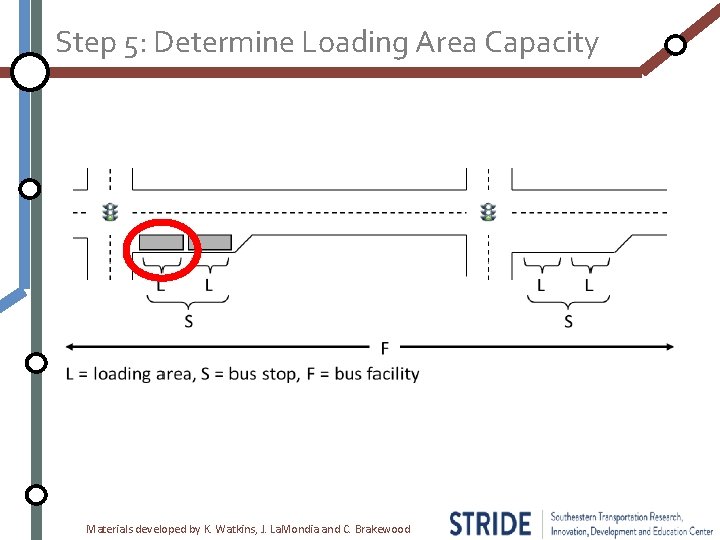
Step 5: Determine Loading Area Capacity Materials developed by K. Watkins, J. La. Mondia and C. Brakewood
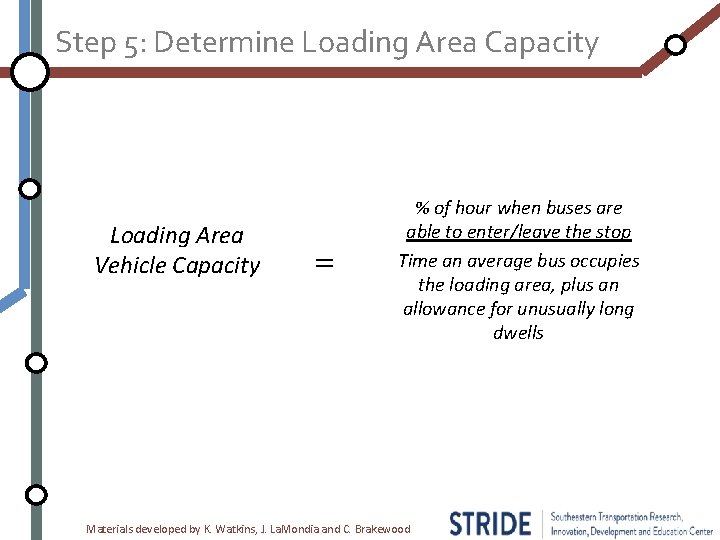
Step 5: Determine Loading Area Capacity Loading Area Vehicle Capacity = % of hour when buses are able to enter/leave the stop Time an average bus occupies the loading area, plus an allowance for unusually long dwells Materials developed by K. Watkins, J. La. Mondia and C. Brakewood
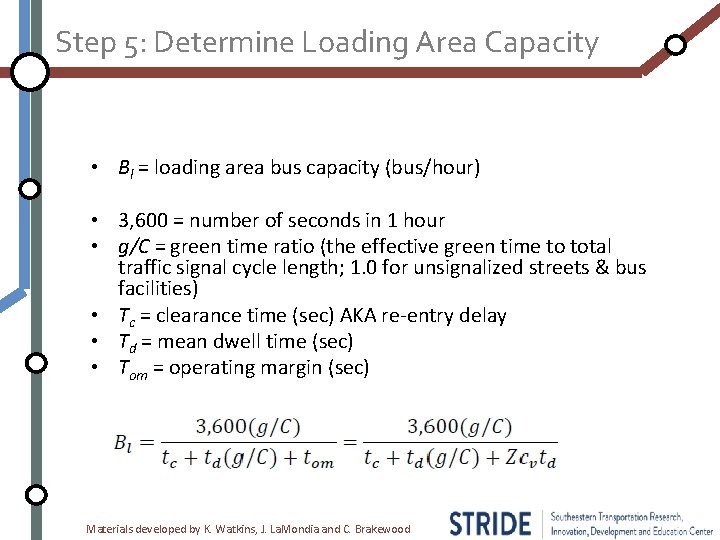
Step 5: Determine Loading Area Capacity • Bl = loading area bus capacity (bus/hour) • 3, 600 = number of seconds in 1 hour • g/C = green time ratio (the effective green time to total traffic signal cycle length; 1. 0 for unsignalized streets & bus facilities) • Tc = clearance time (sec) AKA re-entry delay • Td = mean dwell time (sec) • Tom = operating margin (sec) Materials developed by K. Watkins, J. La. Mondia and C. Brakewood
Methodology for Determining Bus Capacity Materials developed by K. Watkins, J. La. Mondia and C. Brakewood
Conclusion • TCQSM defines and identifies individual components of transit service that impact capacity and quality of service. • Transit should be designed to maximize capacity and quality of service. • Many preferential treatments can be used to provide high class transit at low cost. Materials developed by K. Watkins, J. La. Mondia and C. Brakewood
References • All materials for this lecture were taken from: – Chapter 6 of the TCRP “Transit Capacity and Quality of Service Manual, 3 rd edition”, 2013. – Lectures prepared by Dr. Robert Bertini, Portland State Materials developed by K. Watkins, J. La. Mondia and C. Brakewood
- Slides: 59