
Unit 3 Measurement and Calculations Cartoon courtesy of
- Slides: 31
Unit 3: Measurement and Calculations Cartoon courtesy of Nearing. Zero. net
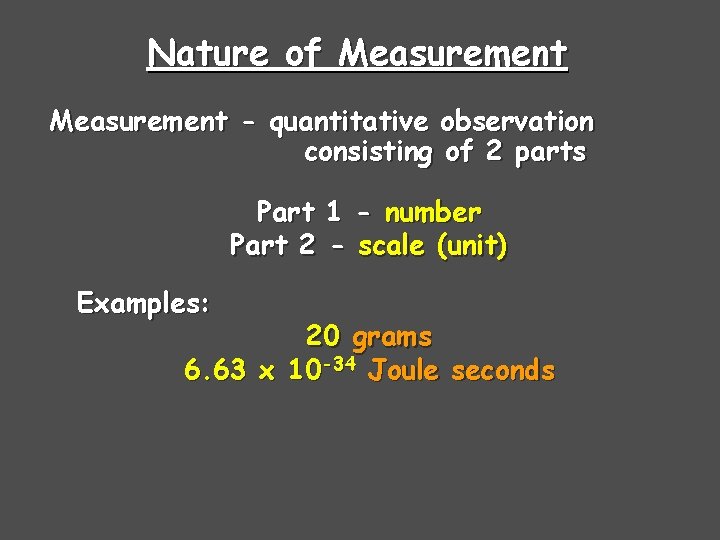
Nature of Measurement - quantitative observation consisting of 2 parts Part 1 - number Part 2 - scale (unit) Examples: 20 grams 6. 63 x 10 -34 Joule seconds
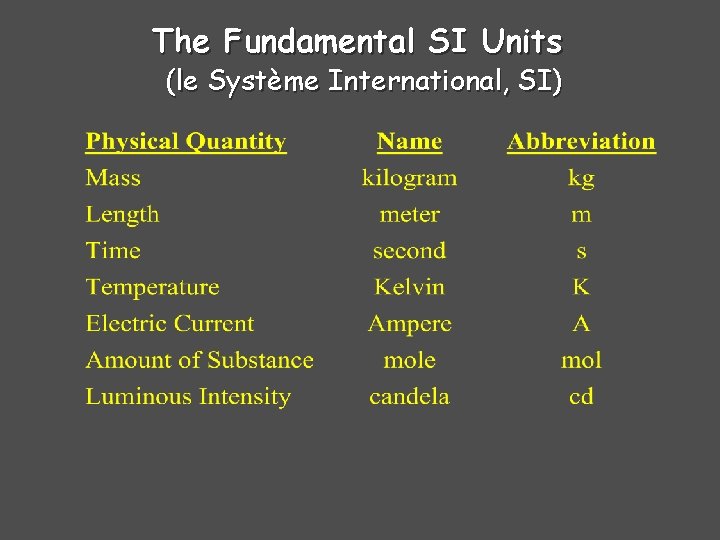
The Fundamental SI Units (le Système International, SI)
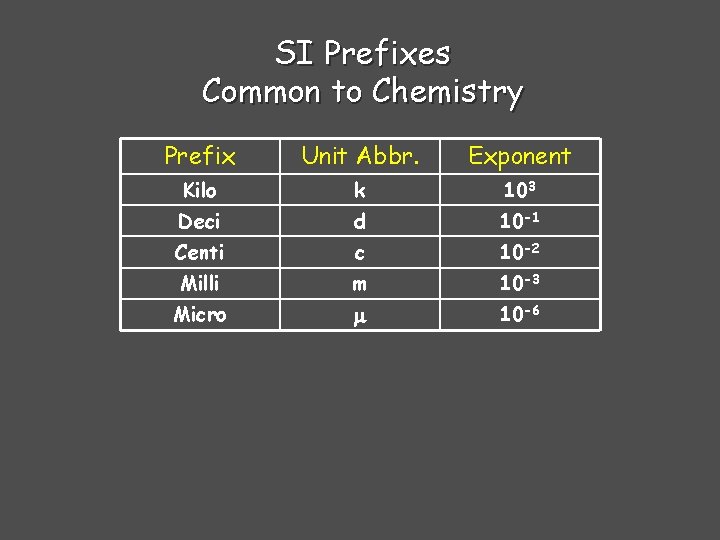
SI Prefixes Common to Chemistry Prefix Unit Abbr. Exponent Kilo k 103 Deci d 10 -1 Centi c 10 -2 Milli m 10 -3 Micro 10 -6
Uncertainty in Measurement A digit that must be estimated is called uncertain. A measurement always has some degree of uncertainty.
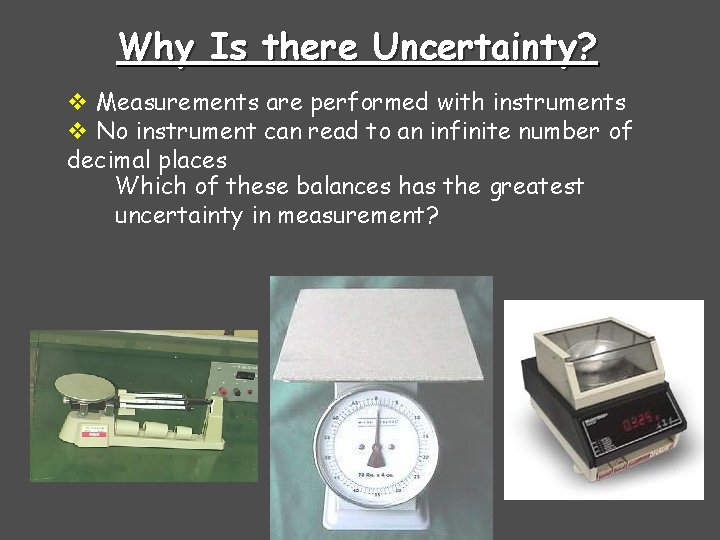
Why Is there Uncertainty? v Measurements are performed with instruments v No instrument can read to an infinite number of decimal places Which of these balances has the greatest uncertainty in measurement?
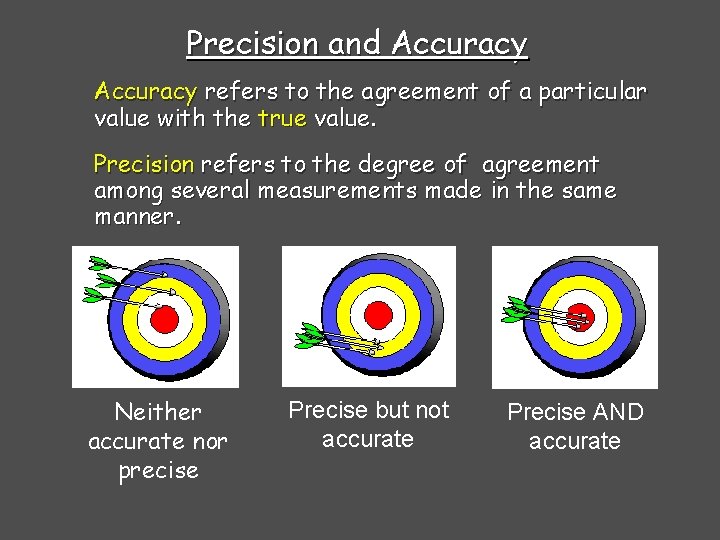
Precision and Accuracy refers to the agreement of a particular value with the true value. Precision refers to the degree of agreement among several measurements made in the same manner. Neither accurate nor precise Precise but not accurate Precise AND accurate
Rules for Counting Significant Figures - Details Nonzero integers always count as significant figures. 3456 has 4 sig figs.
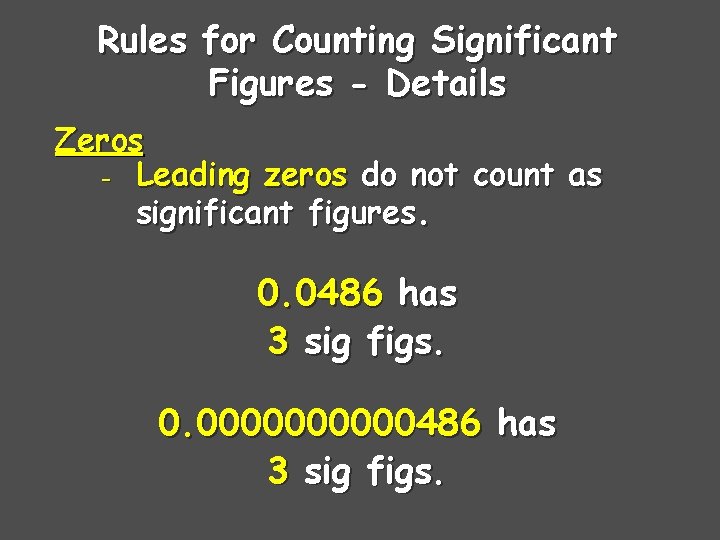
Rules for Counting Significant Figures - Details Zeros - Leading zeros do not count as significant figures. 0. 0486 has 3 sig figs. 0. 00000486 has 3 sig figs.
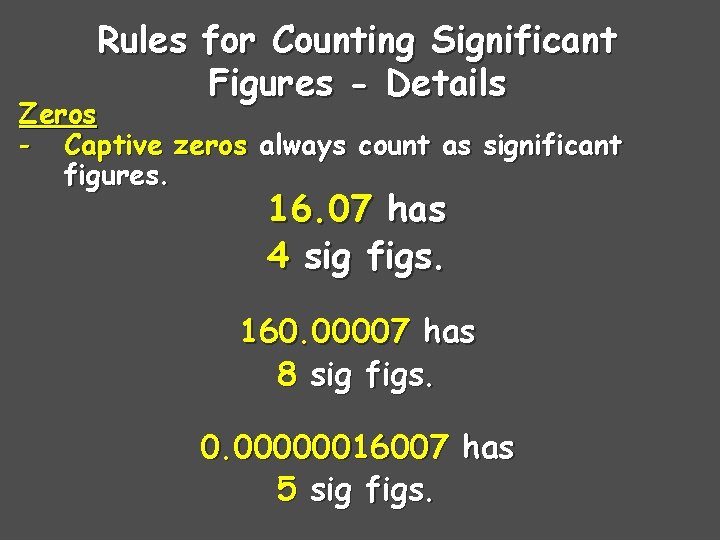
Rules for Counting Significant Figures - Details Zeros - Captive zeros always count as significant figures. 16. 07 has 4 sig figs. 160. 00007 has 8 sig figs. 0. 00000016007 has 5 sig figs.
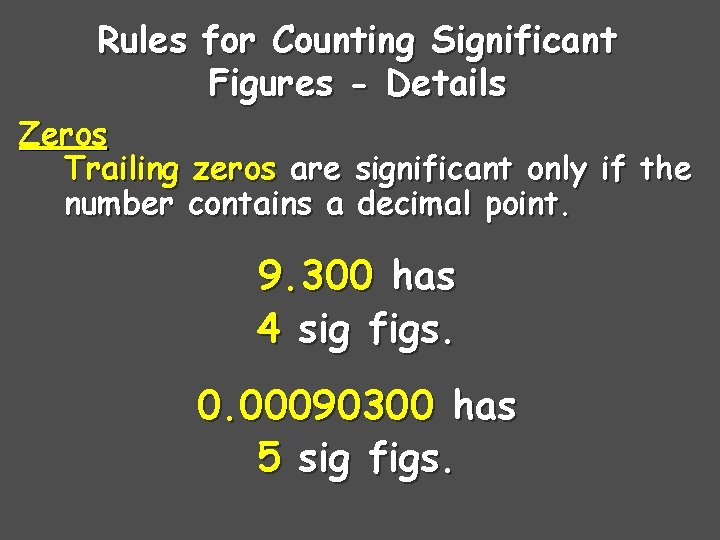
Rules for Counting Significant Figures - Details Zeros Trailing zeros are significant only if the number contains a decimal point. 9. 300 has 4 sig figs. 0. 00090300 has 5 sig figs.
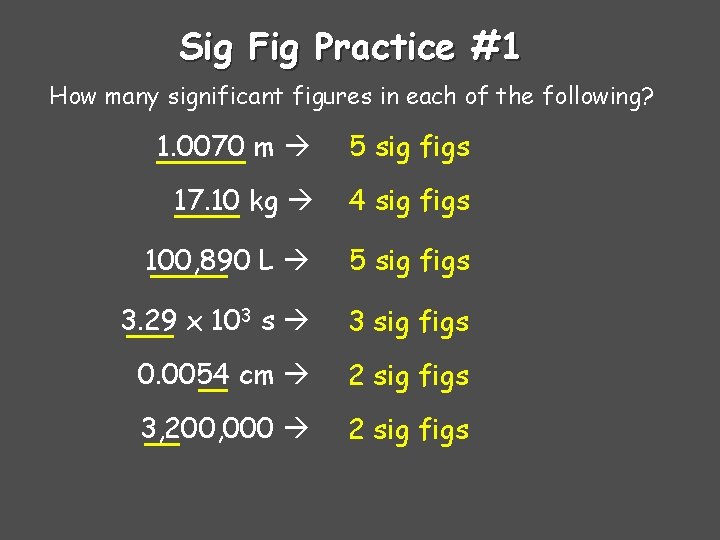
Sig Fig Practice #1 How many significant figures in each of the following? 1. 0070 m 5 sig figs 17. 10 kg 4 sig figs 100, 890 L 5 sig figs 3. 29 x 103 s 3 sig figs 0. 0054 cm 2 sig figs 3, 200, 000 2 sig figs
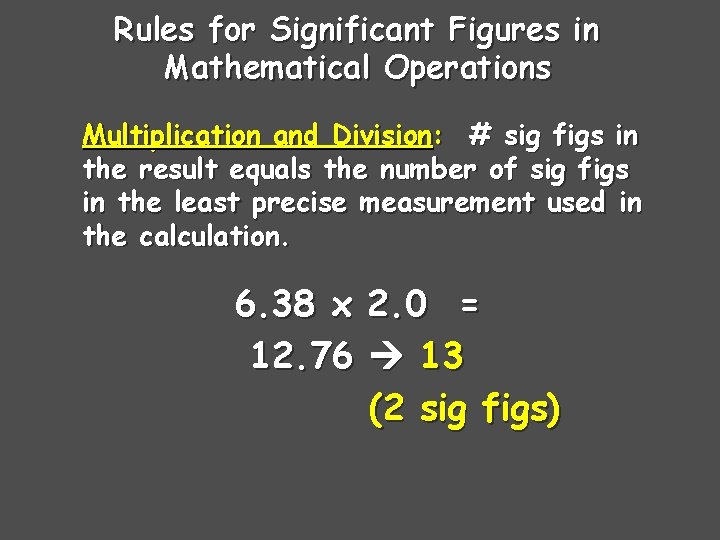
Rules for Significant Figures in Mathematical Operations Multiplication and Division: # sig figs in the result equals the number of sig figs in the least precise measurement used in the calculation. 6. 38 x 2. 0 = 12. 76 13 (2 sig figs)
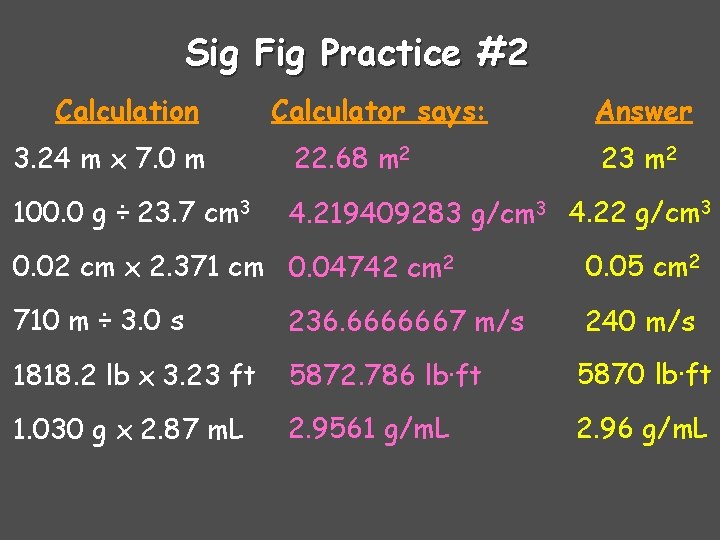
Sig Fig Practice #2 Calculation Calculator says: Answer 3. 24 m x 7. 0 m 22. 68 m 2 100. 0 g ÷ 23. 7 cm 3 4. 219409283 g/cm 3 4. 22 g/cm 3 23 m 2 0. 02 cm x 2. 371 cm 0. 04742 cm 2 0. 05 cm 2 710 m ÷ 3. 0 s 236. 6666667 m/s 240 m/s 1818. 2 lb x 3. 23 ft 5872. 786 lb·ft 5870 lb·ft 1. 030 g x 2. 87 m. L 2. 9561 g/m. L 2. 96 g/m. L
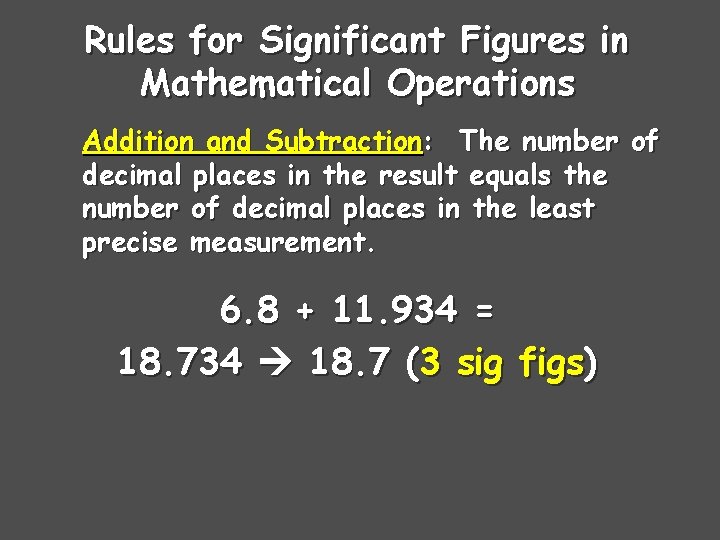
Rules for Significant Figures in Mathematical Operations Addition and Subtraction: The number of decimal places in the result equals the number of decimal places in the least precise measurement. 6. 8 + 11. 934 = 18. 734 18. 7 (3 sig figs)
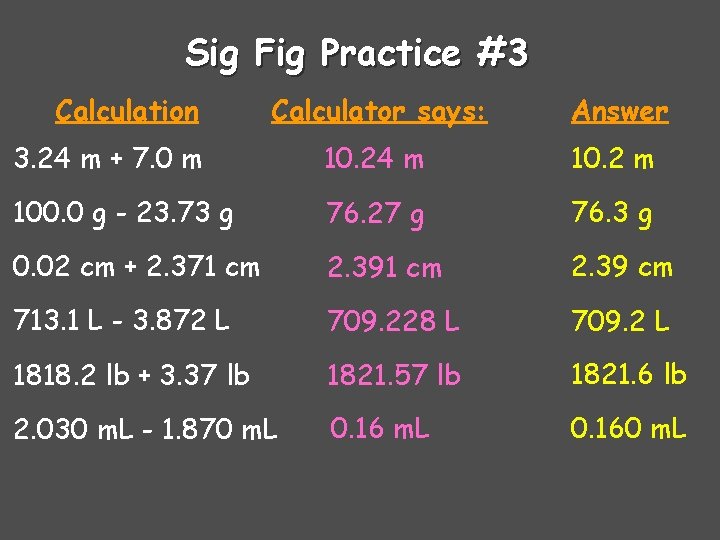
Sig Fig Practice #3 Calculation Calculator says: Answer 3. 24 m + 7. 0 m 10. 24 m 10. 2 m 100. 0 g - 23. 73 g 76. 27 g 76. 3 g 0. 02 cm + 2. 371 cm 2. 39 cm 713. 1 L - 3. 872 L 709. 228 L 709. 2 L 1818. 2 lb + 3. 37 lb 1821. 57 lb 1821. 6 lb 2. 030 m. L - 1. 870 m. L 0. 160 m. L
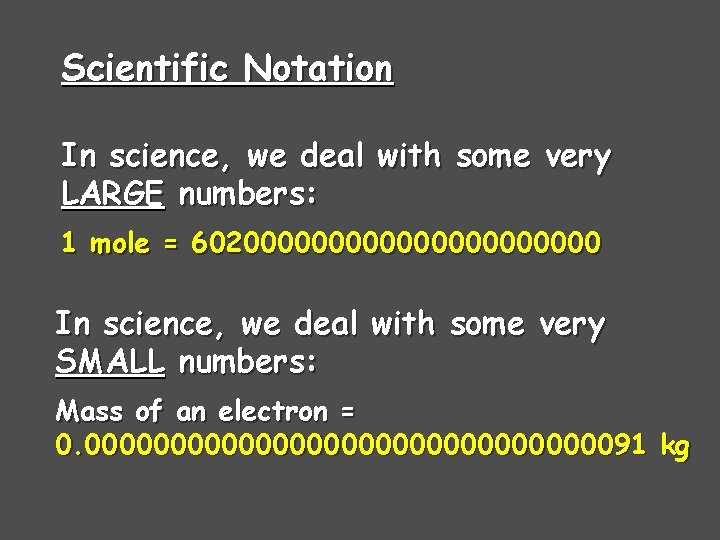
Scientific Notation In science, we deal with some very LARGE numbers: 1 mole = 60200000000000 In science, we deal with some very SMALL numbers: Mass of an electron = 0. 000000000000000091 kg
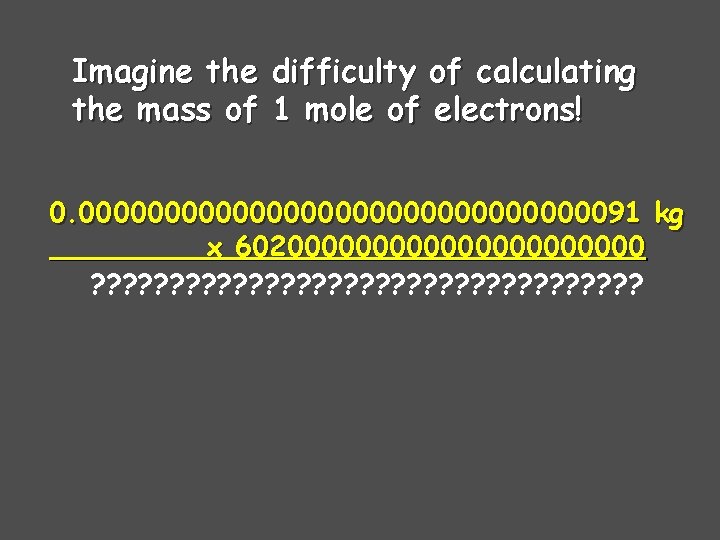
Imagine the difficulty of calculating the mass of 1 mole of electrons! 0. 000000000000000091 kg x 60200000000000 ? ? ? ? ? ? ? ? ?
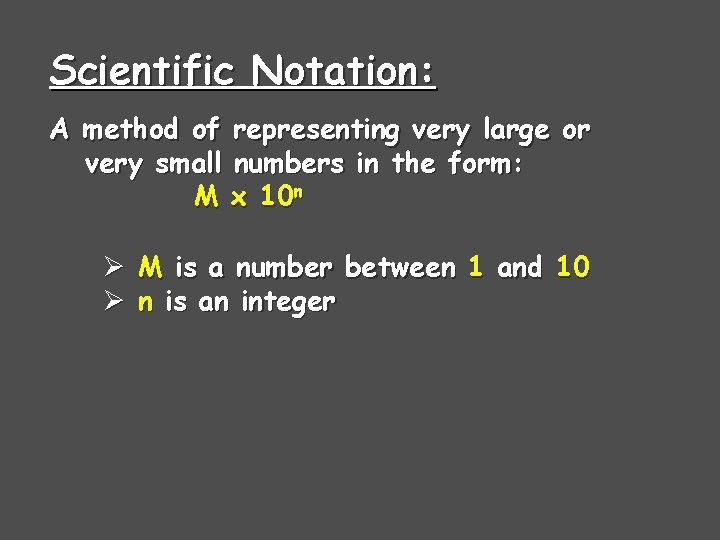
Scientific Notation: A method of representing very large or very small numbers in the form: M x 10 n Ø M is a number between 1 and 10 Ø n is an integer
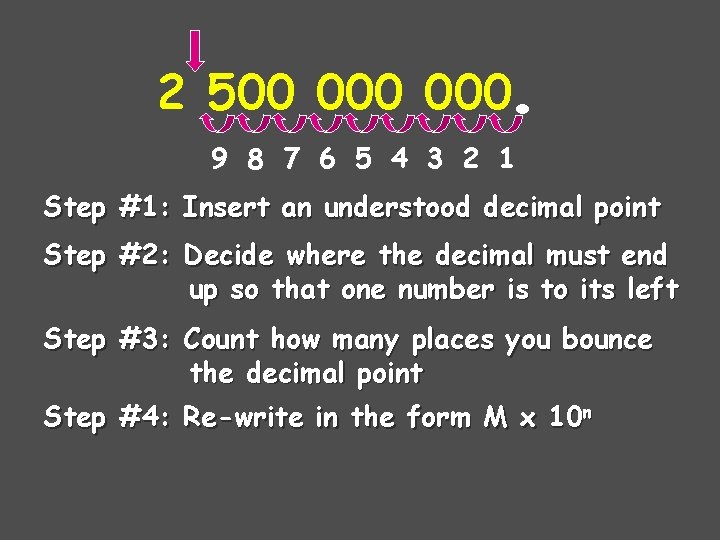
. 2 500 000 9 8 7 6 5 4 3 2 1 Step #1: Insert an understood decimal point Step #2: Decide where the decimal must end up so that one number is to its left Step #3: Count how many places you bounce the decimal point Step #4: Re-write in the form M x 10 n
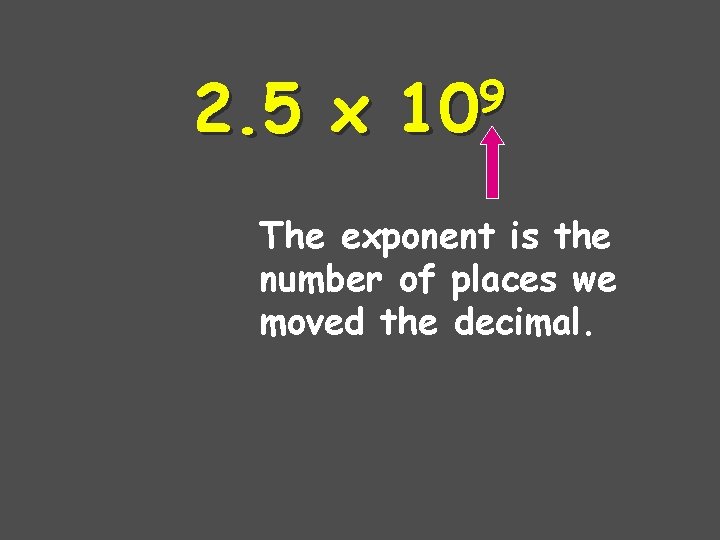
2. 5 x 9 10 The exponent is the number of places we moved the decimal.
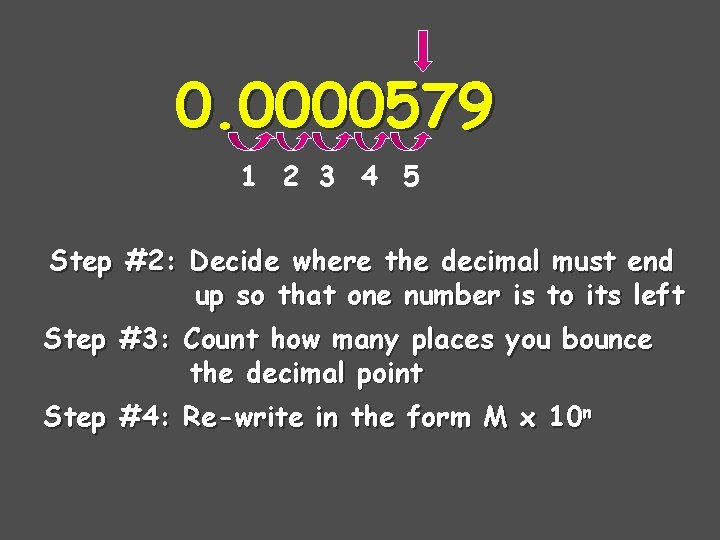
0. 0000579 1 2 3 4 5 Step #2: Decide where the decimal must end up so that one number is to its left Step #3: Count how many places you bounce the decimal point Step #4: Re-write in the form M x 10 n
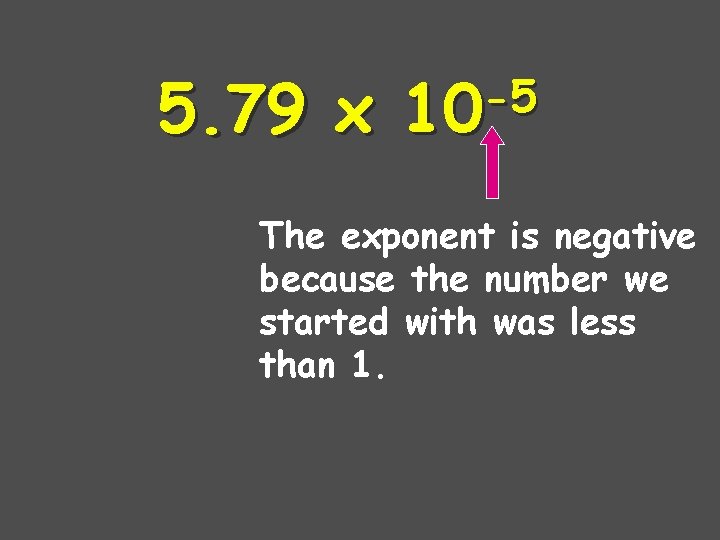
5. 79 x -5 10 The exponent is negative because the number we started with was less than 1.
PERFORMING CALCULATIONS IN SCIENTIFIC NOTATION ADDITION AND SUBTRACTION
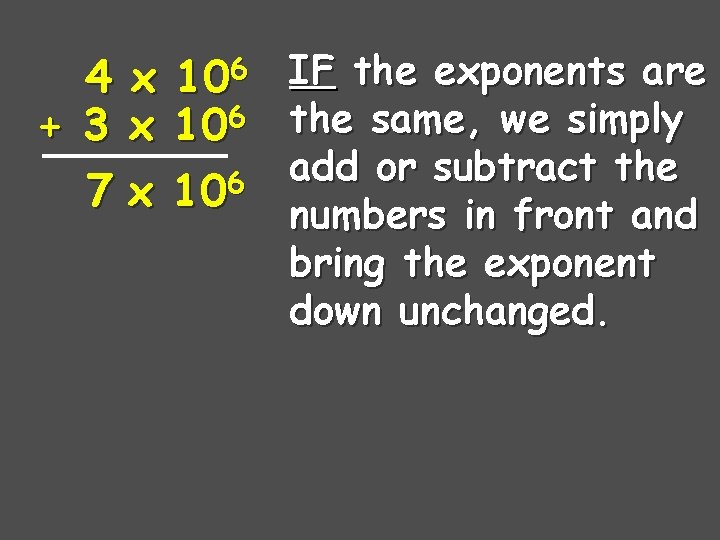
4 + 3 7 x x x 106 106 IF the exponents are the same, we simply add or subtract the numbers in front and bring the exponent down unchanged.
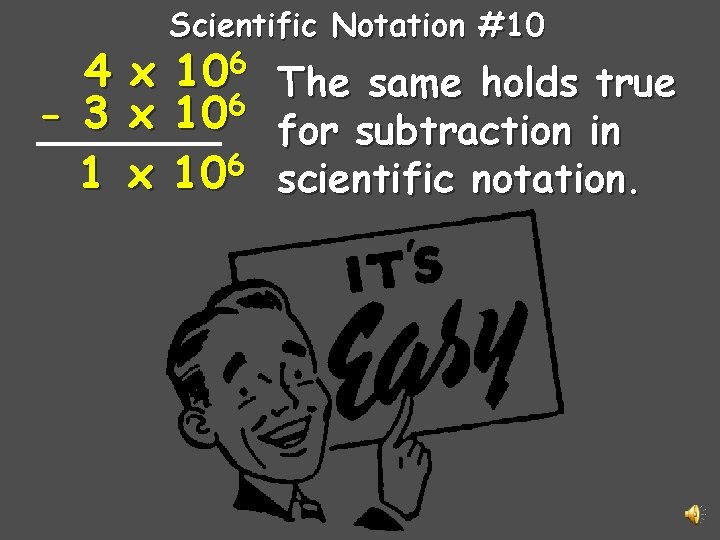
4 - 3 1 x x x Scientific Notation #10 106 106 The same holds true for subtraction in scientific notation.
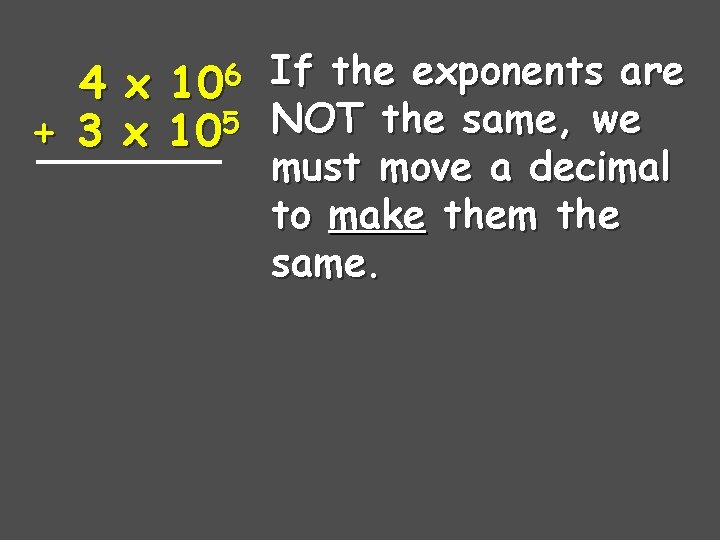
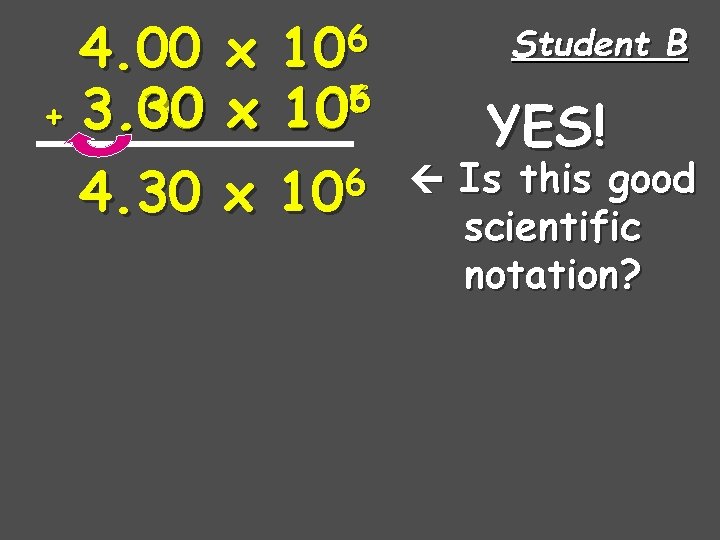
4 + 3 106 x x 105 If the exponents are NOT the same, we must move a decimal to make them the same.
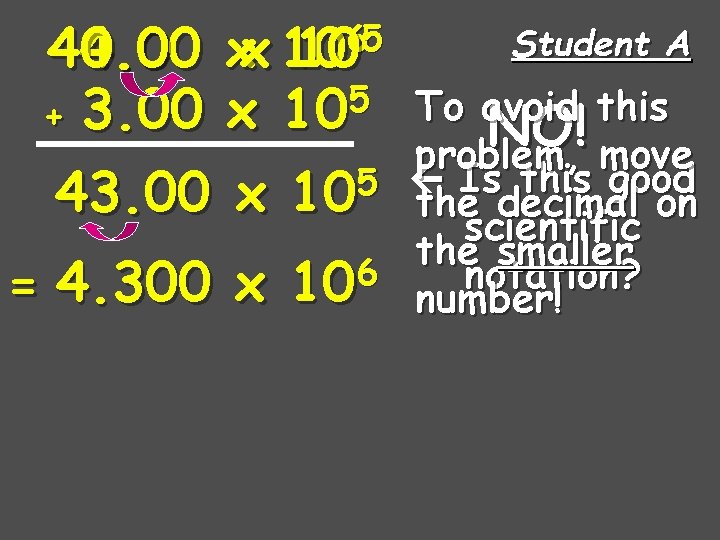
6 5 xx 10 10 40. 0 4. 00 5 + 3. 00 x 10 5 43. 00 x 10 = 4. 300 x Student A To avoid this NO! problem, move Is this good the decimal on scientific the smaller 6 notation? 10 number!
4. 00. 30 + 3. 00 6 10 x 6 5 x 10 6 4. 30 x 10 Student B YES! Is this good scientific notation?
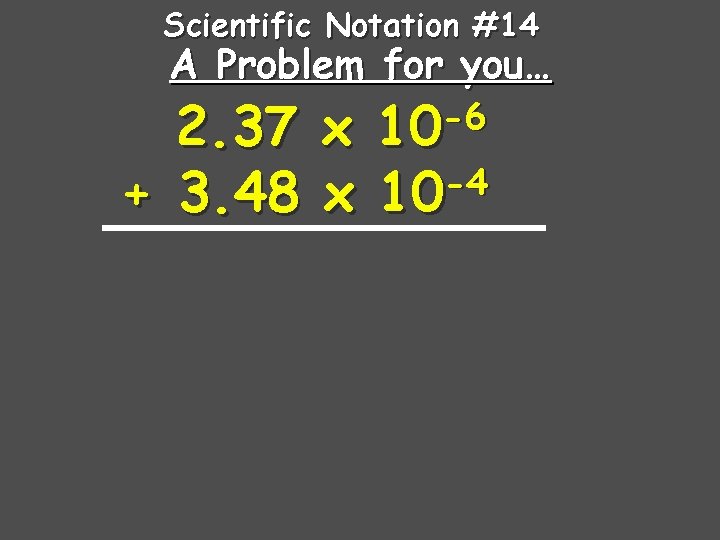
Scientific Notation #14 A Problem for you… -6 10 2. 37 x -4 + 3. 48 x 10
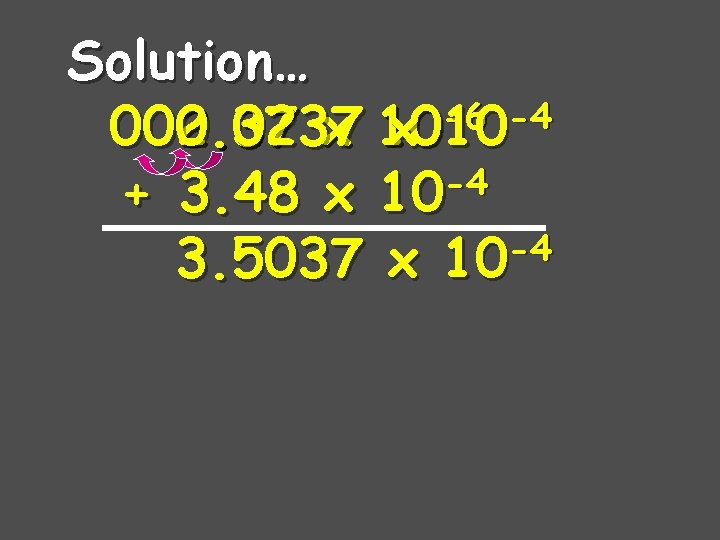
Solution… -6 -4 002. 37 x 10 0. 0237 x 10 -4 + 3. 48 x 10 -4 3. 5037 x 10