
Unit 3 Lesson 6 What Are Behavioral Adaptations
Unit 3 Lesson 6 What Are Behavioral Adaptations? Copyright © Houghton Mifflin Harcourt Publishing Company
Unit 3 Lesson 6 What Are Behavioral Adaptations? Know It or Learn It? • A behavior is anything an organism does. • Learned behaviors are behaviors that come from watching other animals or through experience. • Young animals learn how to behave by watching and copying adults. Copyright © Houghton Mifflin Harcourt Publishing Company
Unit 3 Lesson 6 What Are Behavioral Adaptations? Know It or Learn It? • An instinct is a behavior that an animal knows without learning it. • Animals are born with instincts. • Behaviors are adaptations that may help an animal survive its environment. Copyright © Houghton Mifflin Harcourt Publishing Company

Unit 3 Lesson 6 What Are Behavioral Adaptations? Know It or Learn It? • A mother lion teachers her cubs to hunt. • Searching for food is an instinct. • Knowing how to find and catch food is something cubs learn by copying their parents. Copyright © Houghton Mifflin Harcourt Publishing Company
Unit 3 Lesson 6 What Are Behavioral Adaptations? Know It or Learn It? • A mother sea turtle buries her eggs in the sand. When the baby turtles hatch at night, they move toward the bright ocean. Both behaviors are instincts. • Other instincts include spiders spinning their webs and moths using moonlight to find their way. • For some birds, singing is an instinct. Some birds learn their songs from other birds. Copyright © Houghton Mifflin Harcourt Publishing Company
Unit 3 Lesson 6 What Are Behavioral Adaptations? Know It or Learn It? Copyright © Houghton Mifflin Harcourt Publishing Company
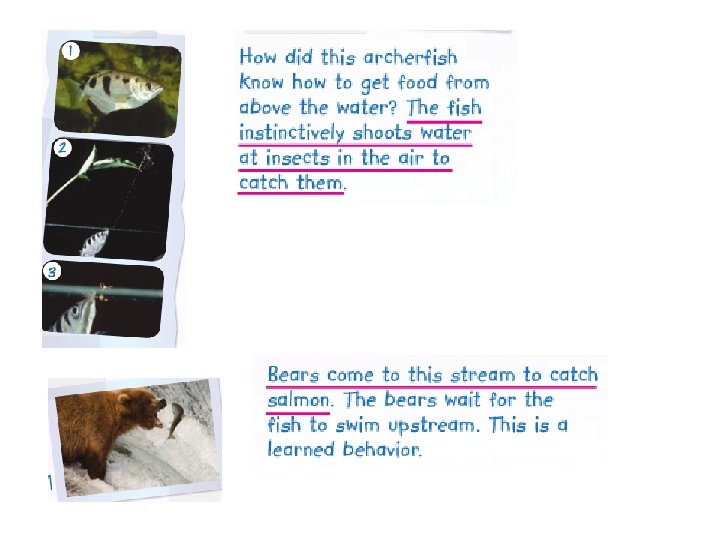
Unit 3 Lesson 6 What Are Behavioral Adaptations? Finding Food • Every animal looks for food when it’s hungry. This is an instinctual behavior. • Some animals learn from watching their parents or other adults. But some animals can learn by themselves, too. • Bears wait for fish to swim upstream to catch them. This is a learned behavior. Copyright © Houghton Mifflin Harcourt Publishing Company
Unit 3 Lesson 6 What Are Behavioral Adaptations? Finding Food Copyright © Houghton Mifflin Harcourt Publishing Company
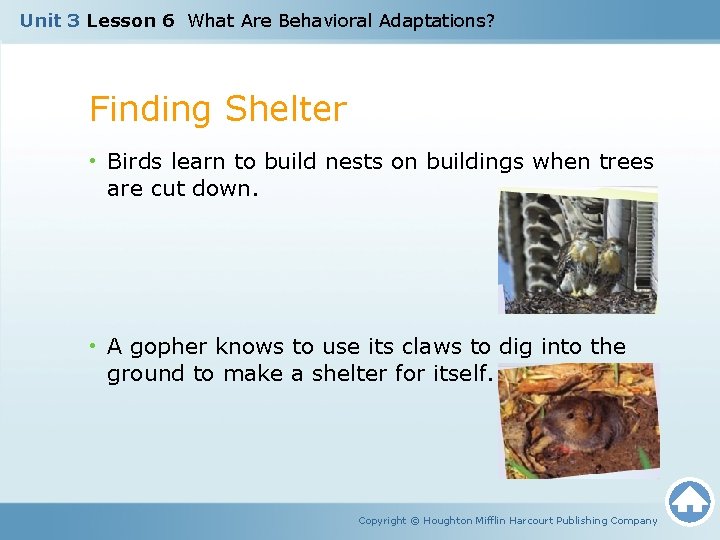
Unit 3 Lesson 6 What Are Behavioral Adaptations? Finding Shelter • Birds learn to build nests on buildings when trees are cut down. • A gopher knows to use its claws to dig into the ground to make a shelter for itself. Copyright © Houghton Mifflin Harcourt Publishing Company
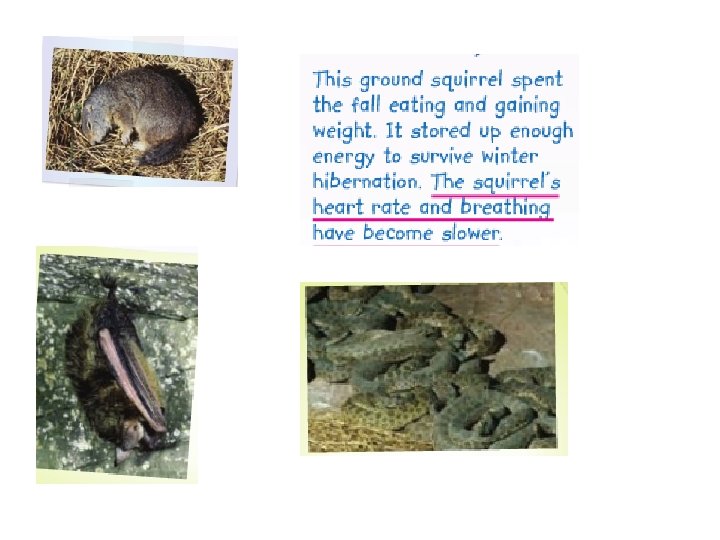
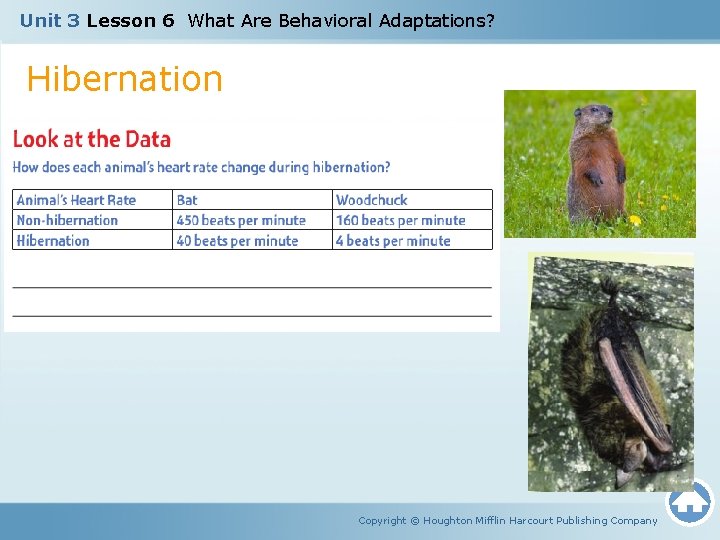
Unit 3 Lesson 6 What Are Behavioral Adaptations? Hibernation • Animals respond to cold winter weather in different ways. • Some animals find food or eat food they have hidden. • Other animals hibernate, or go into a deep, sleeplike state that helps them survive the cold winter conditions. Hibernating is an instinctive behavior. Copyright © Houghton Mifflin Harcourt Publishing Company
Unit 3 Lesson 6 What Are Behavioral Adaptations? Hibernation • During hibernation, normal body activities slow down. The heart beats slowly, and breathing almost stops. • A hibernating animal doesn’t use much energy, because the body is barely working. • There is enough fat stored in the animal’s body to keep it alive through the winter. Copyright © Houghton Mifflin Harcourt Publishing Company
Unit 3 Lesson 6 What Are Behavioral Adaptations? Hibernation Copyright © Houghton Mifflin Harcourt Publishing Company
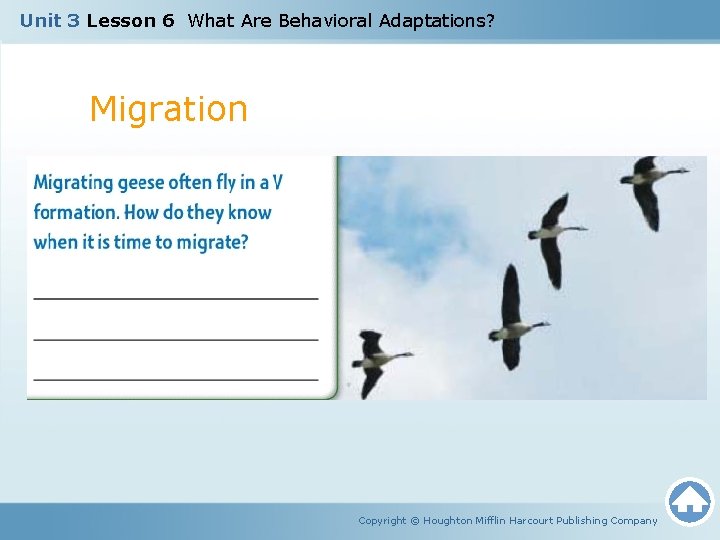
Unit 3 Lesson 6 What Are Behavioral Adaptations? Migration • Animals migrate when they move a long distance as a group from one region to another and back. • Many animals, including birds and fish, migrate. • The path the animals take is learned, but knowing when to migrate is an instinct. Copyright © Houghton Mifflin Harcourt Publishing Company
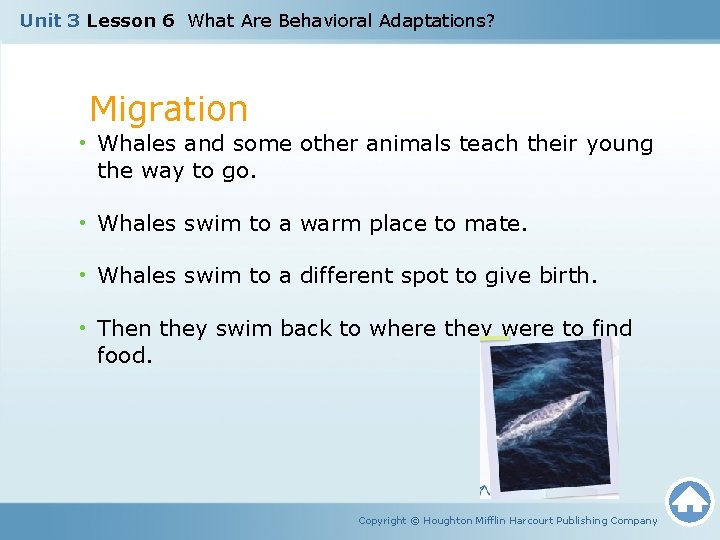
Unit 3 Lesson 6 What Are Behavioral Adaptations? Migration • Whales and some other animals teach their young the way to go. • Whales swim to a warm place to mate. • Whales swim to a different spot to give birth. • Then they swim back to where they were to find food. Copyright © Houghton Mifflin Harcourt Publishing Company
Unit 3 Lesson 6 What Are Behavioral Adaptations? Migration Copyright © Houghton Mifflin Harcourt Publishing Company
Unit 3 Lesson 6 What Are Behavioral Adaptations? Copyright © Houghton Mifflin Harcourt Publishing Company
- Slides: 18