
Unit 3 Lesson 2 Sociological Theorists Theory Conflict

- Slides: 25
Unit 3 Lesson 2: Sociological Theorists & Theory Conflict Theory
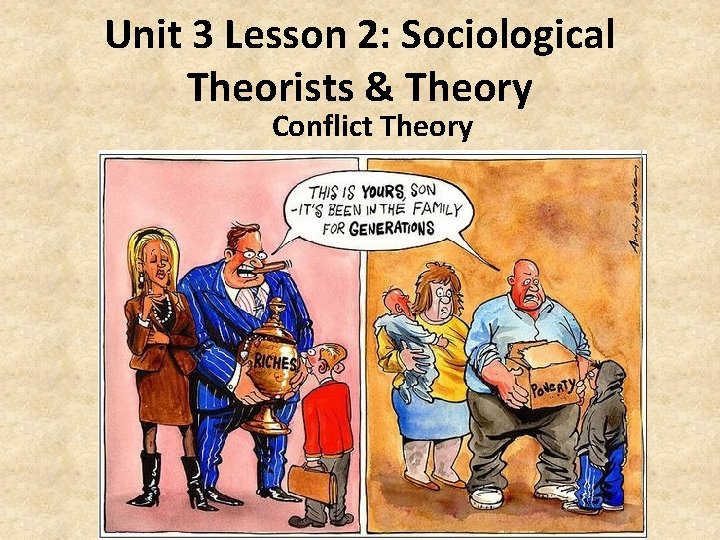
Conflict Theorist’s Worldview • Conflict theory: Theory that believes social life is a competition, and focuses on the distribution of resources, power, and inequality. – race, gender, social class, criminal justice, and international relations • Two main concerns for conflict theorists are economic wealth and power distribution.
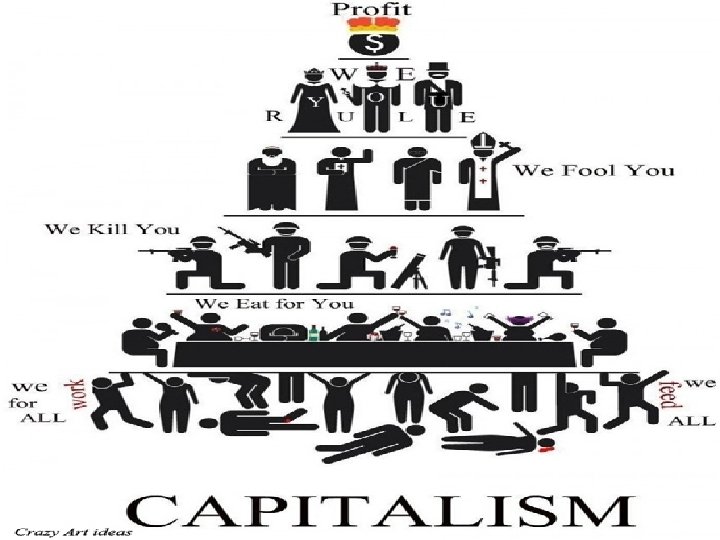
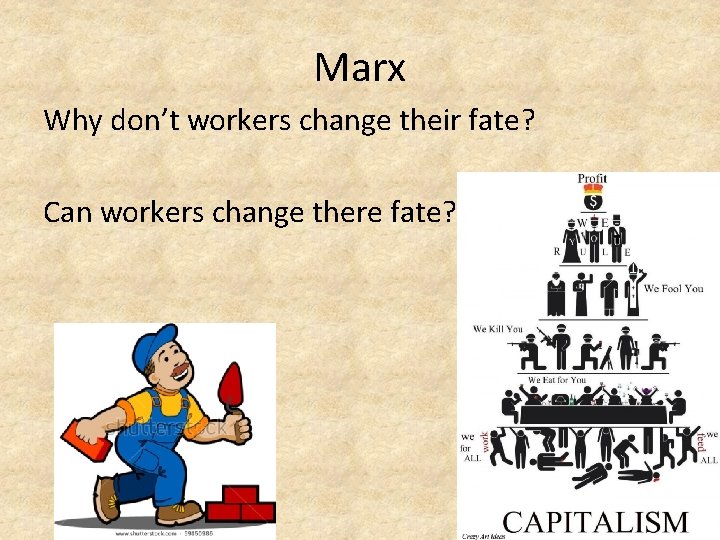
Conflict Theorists viewpoint • We’re all struggling for more “stuff” because the man/government keeps society struggling – Money, statues, power • In general, the essence of conflict theory suggests that a pyramid structure of power, and of wealth exists in society. • The elite at the top of the pyramid determine the rules for those below.
Conflict Theorists • • • Karl Marx Harriet Martineau W. E. B. du Bois Jane Addams John Bellamy Foster
Karl Marx • What is more important than what people in society THINK or BELIEVE?
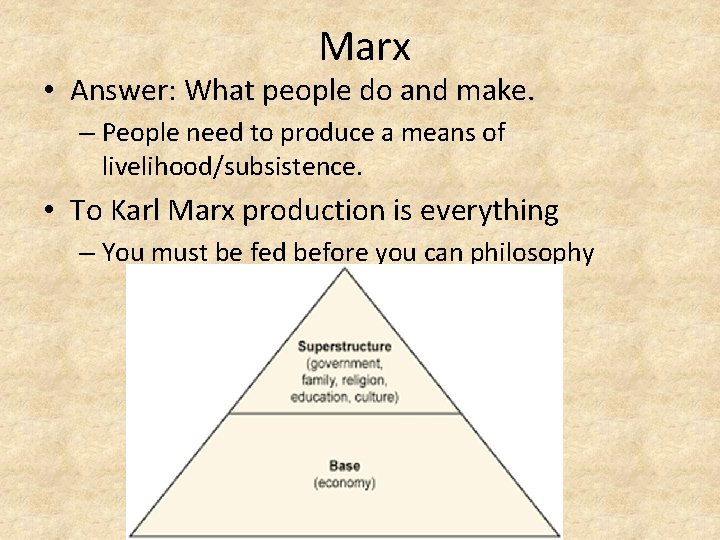
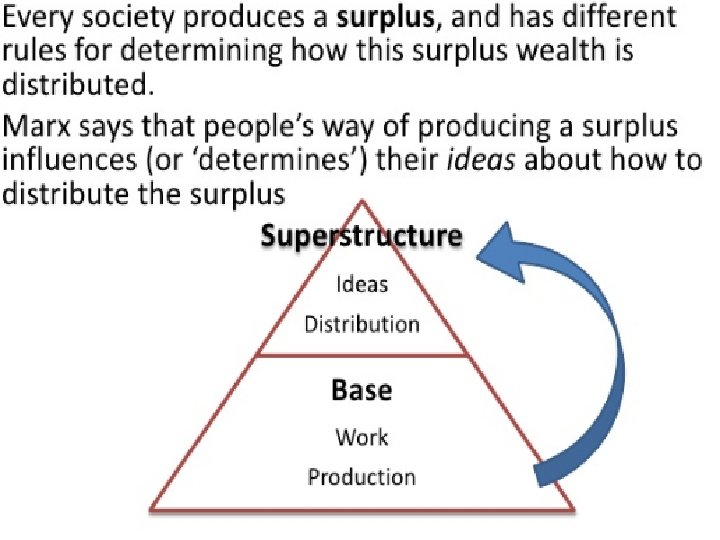
Marx • Answer: What people do and make. – People need to produce a means of livelihood/subsistence. • To Karl Marx production is everything – You must be fed before you can philosophy
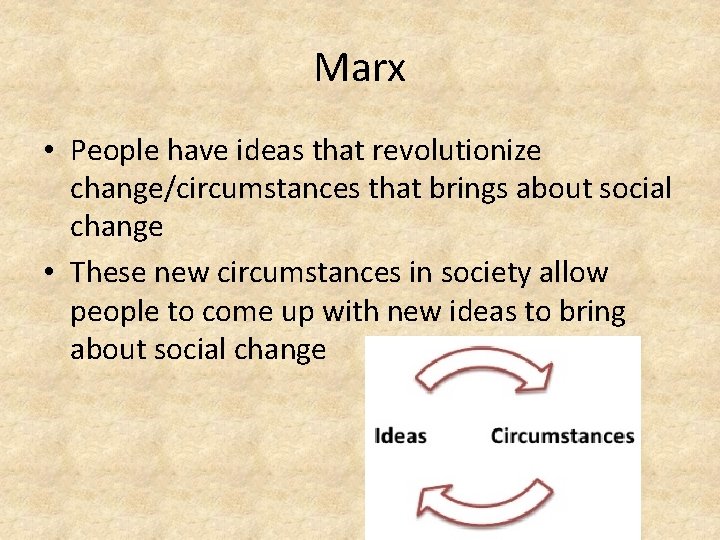
Marx • People have ideas that revolutionize change/circumstances that brings about social change • These new circumstances in society allow people to come up with new ideas to bring about social change
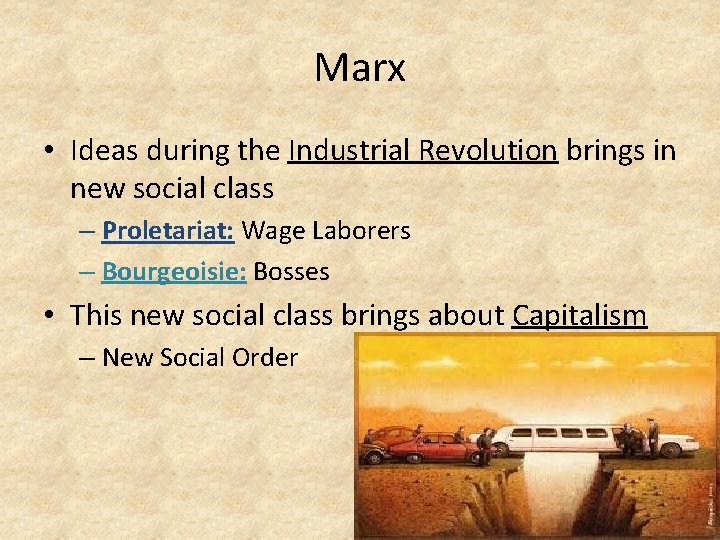
Marx • Ideas during the Industrial Revolution brings in new social class – Proletariat: Wage Laborers – Bourgeoisie: Bosses • This new social class brings about Capitalism – New Social Order
What is capitalism? ? ? - Marx 1. Commodities- Things produced/made for to be sold/bought for a profit. 2. Production- based on wage labor 1. People, in order to survive, must sell their capacity to work in exchange for salary or wage. 2. These workers DO NOT 1. Own the machines that they use 2. Own the wealth they produce 3. Receive the profits from the sale they produced WHAT PROBLEM WILL ARISE WITH THIS IDEA? ? ?
Marx • Capitalists compete for faster growth – Whoever produces faster gets more money $$$$ • Leads to expanding output and reducing expenses – Wages are an expense and can hurt profit – Try to keep wages as low as possible – Machines do not need wages • Takes people’s jobs causing unemployment to rise
Marx • The proletariat do all the work and the owners reap all the benefits. • According to Marx, workers will never get ahead if they do not share in the wealth they create.
Marx Why don’t workers change their fate? Can workers change there fate?
Marx • False consciousness: Proletariat lack of understanding of their position in society. – Think this is a great life, a way of life, or how things can only be. • Class consciousness: Proletariat are only able to rise if they develop an understanding of one’s position in the system.
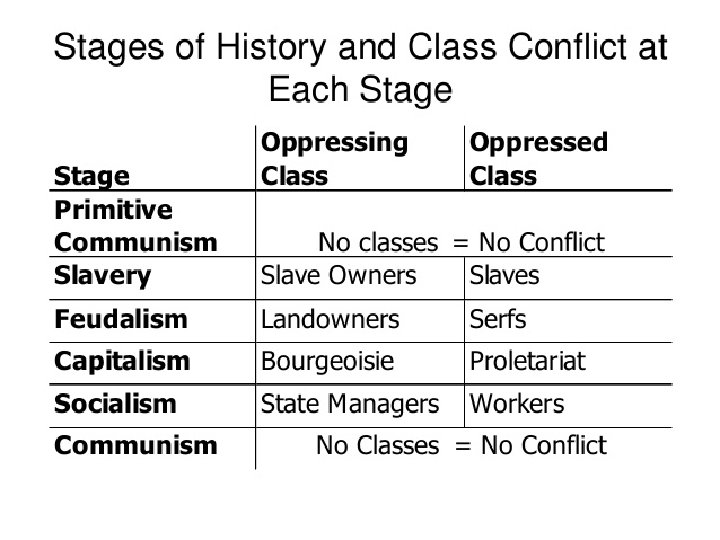
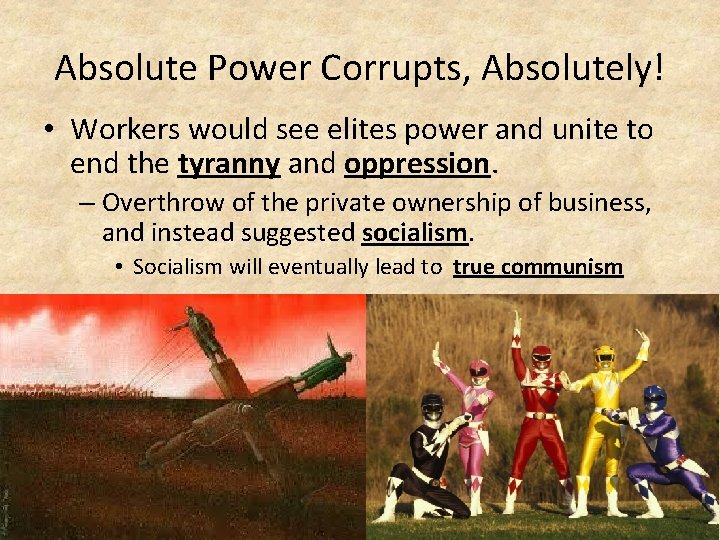
Absolute Power Corrupts, Absolutely! • Workers would see elites power and unite to end the tyranny and oppression. – Overthrow of the private ownership of business, and instead suggested socialism. • Socialism will eventually lead to true communism
Harriet Martineau • Martineau, one of the first female sociologists, – did not just examine the inequalities in the economic system, she also focused on the inequality between the sexes. – women in society, and the social customs in the US political and economic systems • these systems favor men who hold the power in society.
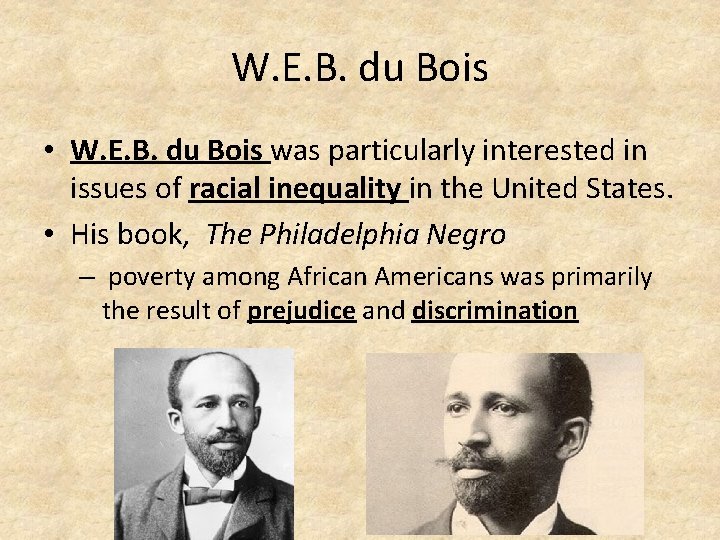
W. E. B. du Bois • W. E. B. du Bois was particularly interested in issues of racial inequality in the United States. • His book, The Philadelphia Negro – poverty among African Americans was primarily the result of prejudice and discrimination
W. E. B. du Bois • Implying that slavery and capitalism led to African Americans’ problems, – du Bois pointed out that history was influential over the present. • He also noted that African Americans of his time had to live in two worlds, a white one and a black one. – AKA: Segregation
Jane Addams • Part of the settlement house movement • The settlement house movement supported the idea that poverty results from ignorance and structural barriers, not from failings in the morality of the person. – People are not the problem, society is • The settlement house workers actually lived and worked in the slums.
Hull House Principles • Addams and a friend set up to open their own settlement house in Chicago in 1889 called Hull House with three principles: 1. Workers would live in the slums to better understand the problems there. 2. Every person had dignity and worth regardless of race/ethnicity, gender or social class. 3. Dedication, education, and service can overcome ignorance, disease, and the structures that perpetuate poverty.
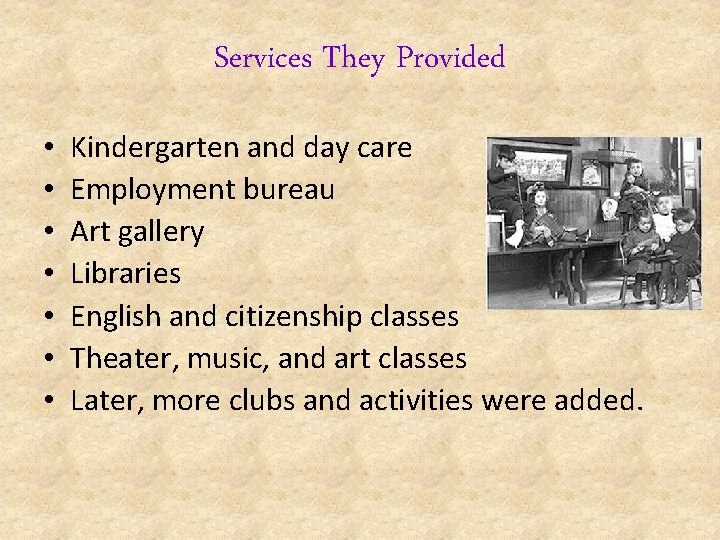
Services They Provided • • Kindergarten and day care Employment bureau Art gallery Libraries English and citizenship classes Theater, music, and art classes Later, more clubs and activities were added.
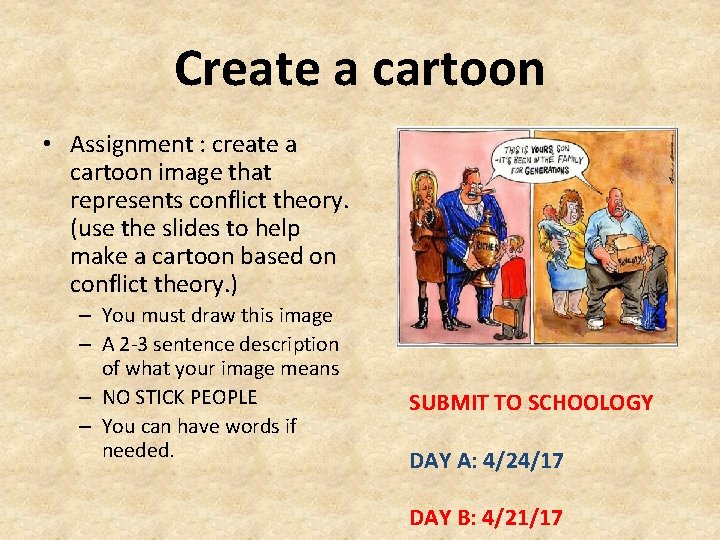
Create a cartoon • Assignment : create a cartoon image that represents conflict theory. (use the slides to help make a cartoon based on conflict theory. ) – You must draw this image – A 2 -3 sentence description of what your image means – NO STICK PEOPLE – You can have words if needed. SUBMIT TO SCHOOLOGY DAY A: 4/24/17 DAY B: 4/21/17