
Unit 3 Gene Therapy Word Formation adeno gland
- Slides: 61
Unit 3 Gene Therapy
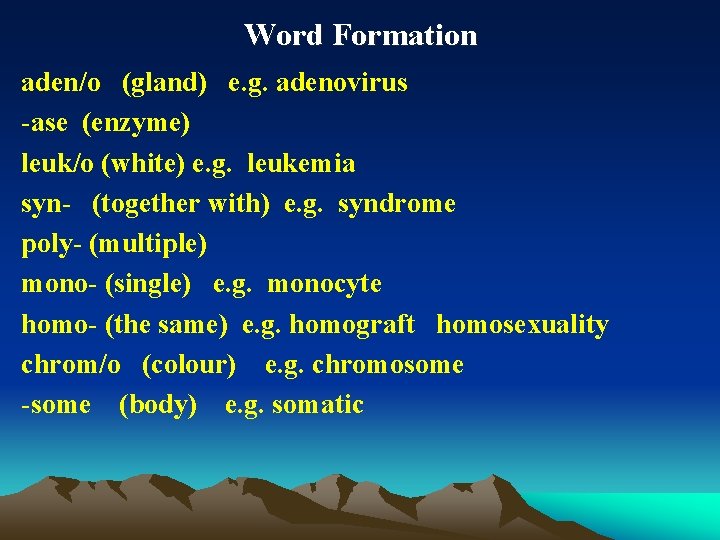
Word Formation aden/o (gland) e. g. adenovirus -ase (enzyme) leuk/o (white) e. g. leukemia syn- (together with) e. g. syndrome poly- (multiple) mono- (single) e. g. monocyte homo- (the same) e. g. homograft homosexuality chrom/o (colour) e. g. chromosome -some (body) e. g. somatic
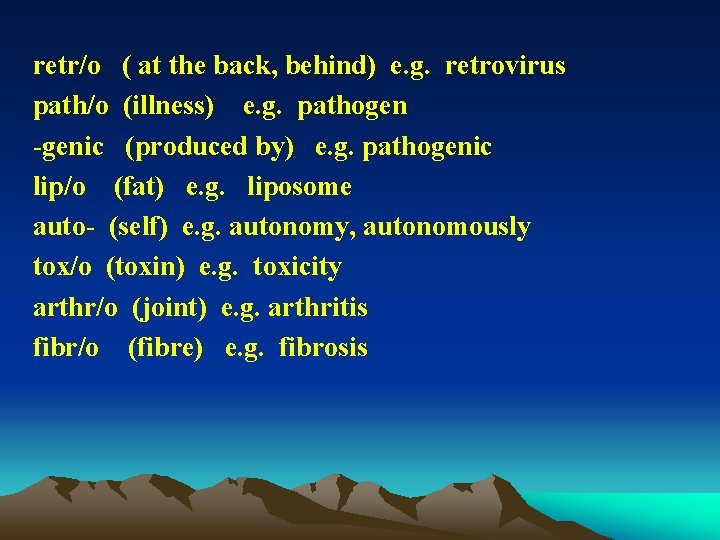
retr/o ( at the back, behind) e. g. retrovirus path/o (illness) e. g. pathogen -genic (produced by) e. g. pathogenic lip/o (fat) e. g. liposome auto- (self) e. g. autonomy, autonomously tox/o (toxin) e. g. toxicity arthr/o (joint) e. g. arthritis fibr/o (fibre) e. g. fibrosis
Questions to consider: 1. What is a gene ? 2. What is gene therapy ? 3. Give your personal comment on gene therapy.
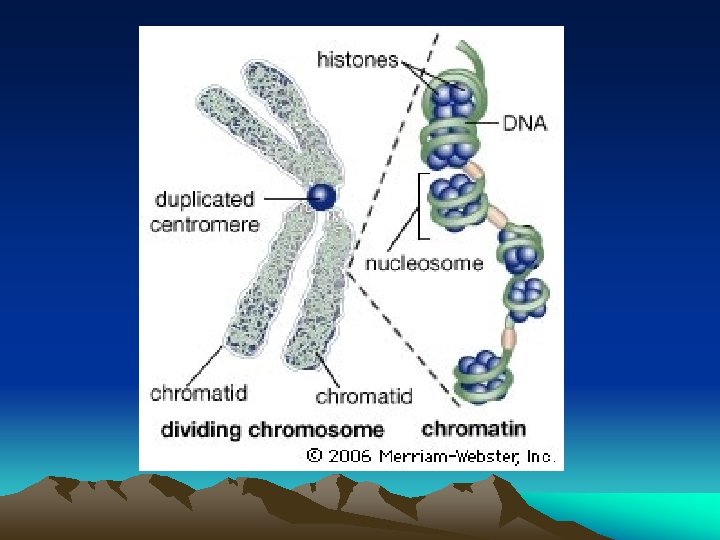
• What is a gene ? the basic unit of genetic material, which is carried at a particular place on a chromosome. Originally it was regarded as the unit of inheritance and mutation but is now usually defined as a sequence of DNA or RNA that acts as the unit controlling the formation of a single polypeptide chain.
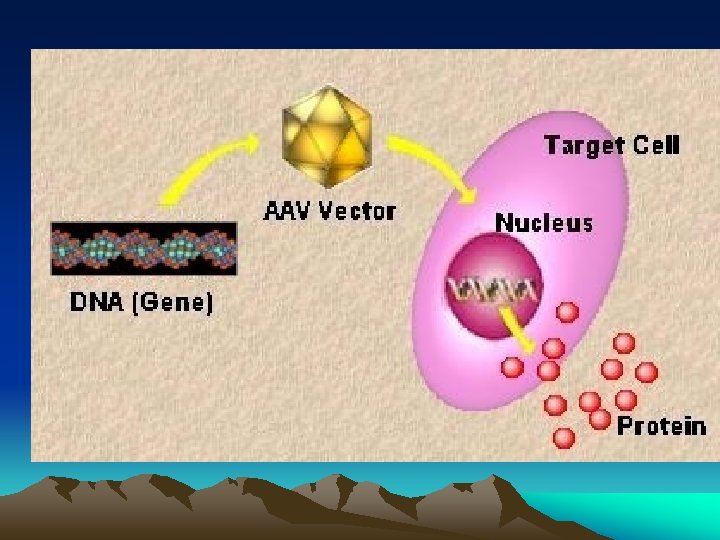
What is gene therapy? Gene therapy is an experimental technique that uses genes to treat or prevent disease. In the future, this technique may allow doctors to treat a disorder by inserting a gene into a patient’s cells instead of using drugs or surgery. Researchers are testing several approaches to gene therapy, including:
• Replacing a mutated gene that causes disease with a healthy copy of the gene. • Inactivating, or “knocking out, ” a mutated gene that is functioning improperly. • Introducing a new gene into the body to help fight a disease.
Although gene therapy is a promising treatment option for a number of diseases (including inherited disorders, some types of cancer, and certain viral infections), the technique remains risky and is still under study to make sure that it will be safe and effective. Gene therapy is currently only being tested for the treatment of diseases that have no other cures.
Gene therapy is the introduction of genetic material into cells for therapeutic purposes. Recent scientific breakthroughs in the genomics field and our understanding of the important role of genes in disease has made gene therapy one of the most rapidly advancing fields of biotechnology with great promise for treating inherited and acquired diseases.
Many human diseases are caused by the absence or inappropriate presence of a protein. Biotechnology's first promise was to isolate and produce these natural proteins through genetic engineering and recombinant technology. The protein could then be administered to patients in order to compensate for its absence. Because proteins are not orally available, biotech companies focused on innovative methods of protein delivery and sustained drug delivery.
Today, gene therapy is the ultimate method of protein delivery, in which the delivered gene enters the body's cells and turns them into small "factories" that produce a therapeutic protein for a specific disease over a prolonged period. As gene therapy has moved from the laboratory into the clinic, several issues have emerged as central to the development of this technology: gene identification, gene expression and gene delivery.
• The types of gene therapy described thus far all have one factor in common: that is, the tissues being treated are somatic (somatic cells include all the cells of the body, excluding sperm cells and egg cells). In contrast to this is the replacement of defective genes in the germline cells (which contribute to the genetic heritage of the offspring).
• Gene therapy in germline cells has the potential to affect not only the individual being treated, but also his or her children as well. Germline therapy would change the genetic pool of the entire human species, and future generations would have to live with that change. In addition to these ethical problems, a number of technical difficulties would make it unlikely that germline therapy would be tried on humans in the near future.
Understanding the Text Para. 1 • gene • chromosome • physical • heredity • sequences of bases • encode / encoded • genetic disorder
Para. 2 • defective/faulty genes • nonspecific location • a nonfunctional gene • genome • swap: to exchange 置换,交换, 掉换 e. g. I’d swap my job for hers any day. 我愿随时和她调换 作。 • homologous recombination • selective reverse mutation • regulation
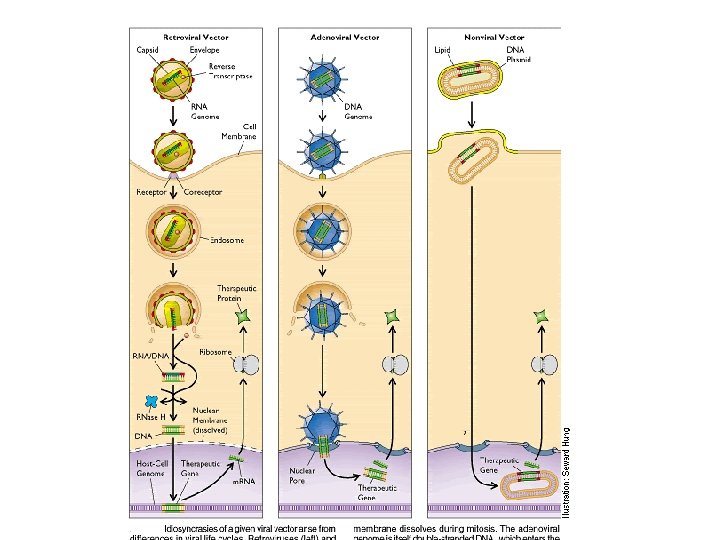
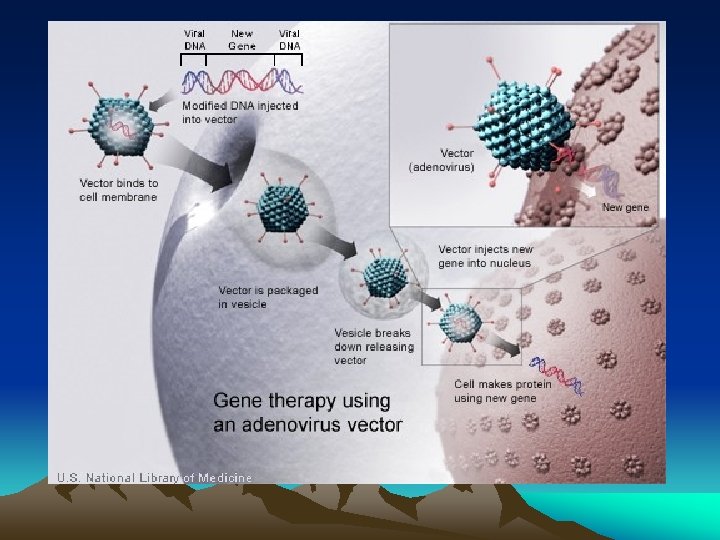
Para. 3 • carrier / vector • therapeutic gene • target cell • genetically altered • evolve a way of:develop a way of 具备…途径 • encapsulate:把…密封于… ;压缩 • capability • manipulate: to use or control sth. with skill
Para. 6 • retroviruses: 逆转录酶病毒 • double-stranded: 双链 • integrated: 整合 • host cell
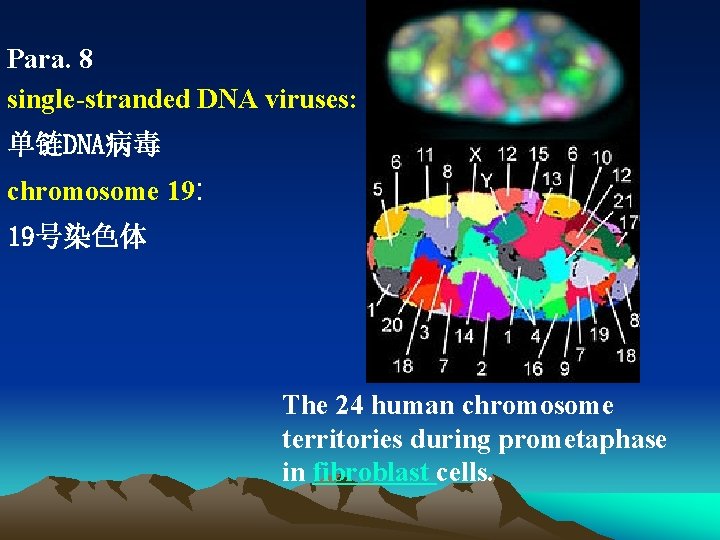
Para. 8 single-stranded DNA viruses: 单链DNA病毒 chromosome 19: 19号染色体 The 24 human chromosome territories during prometaphase in fibroblast cells.
Para. 9 • herpes simplex virus type 1: I型单纯疱疹 • cold sores 感冒疮; 唇疱疹 Cold sores are small, painful, fluid-filled blisters or sores that appear on the lips, mouth, or nose that are caused by a herpes simplex virus infection. The sores can be painful and usually last a few days. Unlike most viral infections, the cold sore virus is not completely eliminated by the body defenses. For this reason, cold sores often recur.
Para. 10 • virus-mediated • gene-delivery • non-viral options ( for ) non-viral approach
Para. 11 • artificial lipid sphere: 人 脂质球 • an aqueous core: 水质核 • liposome: 脂质体 A liposome is a tiny bubble (vesicle), made out of the same material as a cell membrane. Liposomes can be filled with drugs, and used to deliver drugs for cancer and other diseases.
Para. 12 • chemically: 以化学方法 • bind/bound ( to ): link / linked to • cell receptors: …受体 • therapeutic DNA constructs: …结构 • engulfed by: 被细胞膜吞噬
Para. 13 • autonomously alongside: • mutation • substantial amount of: considerable amount of • construction and autonomy: 结构和自主性 • genetic code • anticipate: expect • potential method: promising method 具有应用前景的方法
Para. 14 • for sale: 销售 • clinical trial • suffer a major setback: 受到重创 • multiple organ failures • triggered by: caused by • adenovirus carrier: 腺病毒载体
• OTCD Ornithine transcarboxylase deficiency (OTCD), the most common of the urea cycle disorders, is a rare metabolic disorder, occurring in one out of every 80, 000 births. OTCD is a genetic disorder resulting in a mutated and ineffective form of the enzyme ornithine transcarboxylase.
bubble baby syndrome • Bubble baby syndrome, known as X-linked severe combined immunodeficiency (X-SCID) is caused by a genetic condition that affects the immune system. Babies born with X-SCID need to be shielded from all infections at birth and have to be kept in a sterile environment, 'a bubble', or they can die in their first year from infections such as pneumonia or chicken pox.
Gene therapy for X-SCID has been used to treat children who were unable to find a suitable bone marrow donor. It has been extremely successful in restoring the children's immune function enabling them to live fuller and healthier lives. Unfortunately, as with all medicines, there can be side effects. One of the first children in Britain to receive gene therapy for 'bubble baby syndrome' has developed leukaemia as a result of his treatment.
Para. 16 • BRMAC: 生物反应调节剂咨询委员会 • proceed with • appropriate safeguards: proper protection
Para. 17 • short-lived / long-lived: for short / long period • integrate into • rounds of therapy: 多轮的治疗
Para. 19 Viruses, while the carrier of choice in most gene therapy studies, … 尽管病毒是多数基因疗法研究的首选载体 gene control and targeting issues 基因调控和靶向问题
Para. 20 the best candidates for: 由单个基因异常所导致的疾病最适合采用基因治疗 variations in genes 基因变异 Para. 21 • coated in: embedded in 包埋于 • polyethylene glycol ( PEG ): 聚乙二醇 • potential: n. • Parkinson’ s disease
• blood-brain barrier The blood-brain barrier (BBB) is a metabolic or cellular structure in the central nervous system (CNS) that restricts the passage of various chemical substances and microscopic objects (e. g. bacteria) between the bloodstream and the neural tissue itself, while still allowing the passage of substances essential to metabolic function (e. g. oxygen).
• Huntington’s disease Huntington's disease, also called Huntington's chorea, chorea major, or HD, is a genetic neurological disorder characterized after onset by uncoordinated, jerky body movements and a decline in some mental abilities. These characteristics vary per individual, physical ones less so, but the differing decline in mental abilities can lead to a number of potential behavioral problems. The disorder itself isn't fatal, but as symptoms progress, complications reducing life expectancy increase.
• Research of HD has increased greatly in the last few decades, but its exact mechanism is unknown, so symptoms are managed individually. Globally, up to 7 people in 100, 000 have the disorder, although there are localized regions with a higher incidence. Onset of physical symptoms occurs gradually and can begin at any age, although it is statistically most common in a person's mid-forties (with a 30 year spread). If onset is before age twenty, the condition is classified as juvenile HD.
• The disorder is named after George Huntington, an American physician who published a remarkably accurate description in 1872. In 1983 a marker for the altered DNA causing the disease was found, followed a decade later by discovery of a single, causal, gene. As it is caused by a single gene, an accurate genetic test for HD was developed; this was one of the first inherited genetic disorders for which such a test was possible. Due to the availability of this test, and similar characteristics with other neurological disorders, the amount of HD research has increased greatly in recent years.
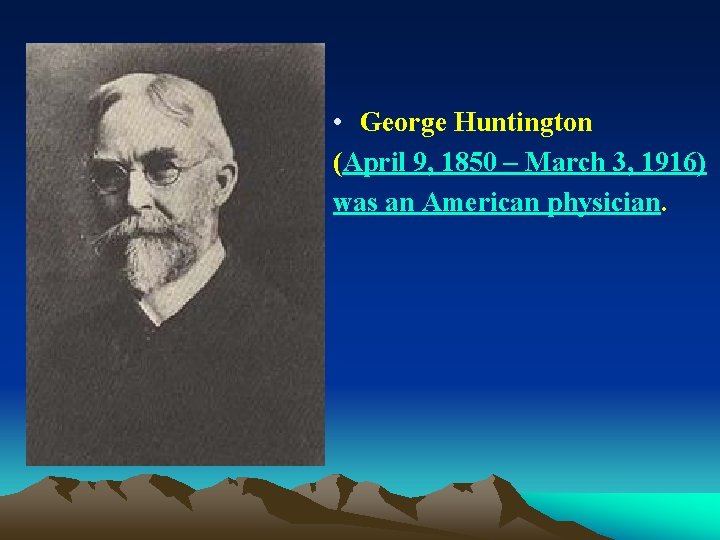
• George Huntington (April 9, 1850 – March 3, 1916) was an American physician.
Para. 23 • thalassemia 地中海贫血 Thalassemia, also known as Mediterranean Anemia, Cooley's Anemia or Homozygous Beta Thalassemia, is a group of inherited disorders in which there is a fault in the production of hemoglobin (oxygen-carrying pigment found in red blood cells).
• Causes and Risk Factors of Thalassemia is a genetically determined disease. It tends to be found in individuals whose families come from the Mediterranean region, Africa, and sometimes Asia. • Symptoms of Thalassemia in severe condition: Ø Paleness Ø Headaches Ø Fatigue Ø Shortness of breath Ø Jaundice Ø Spleen enlargement
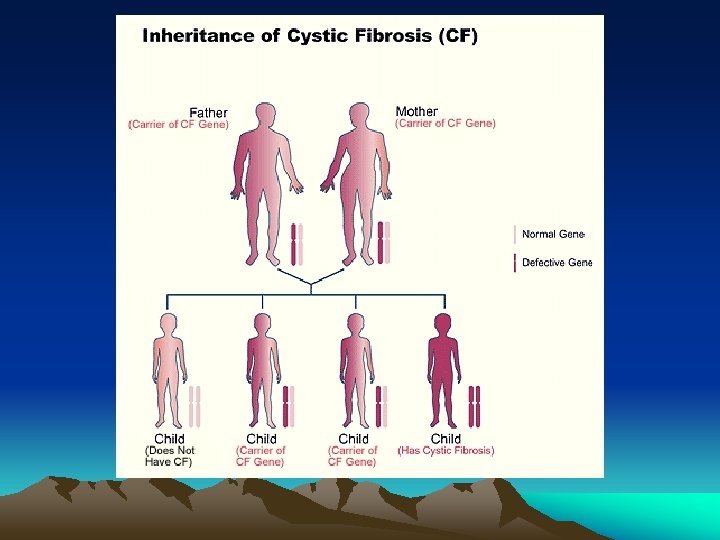
Cystic fibrosis 囊性纤维化 • Cystic fibrosis (CF) is an inherited disease of your mucus and sweat glands. It affects mostly your lungs, pancreas, liver, intestines, sinuses, and sex organs. • Normally, mucus is watery. It keeps the linings of certain organs moist and prevents them from drying out or getting infected. But in CF, an abnormal gene causes mucus to become thick and sticky. • The mucus builds up in your lungs and blocks the airways. This makes it easy for bacteria to grow and leads to repeated serious lung infections. Over time, these infections can cause serious damage to your lungs.
• The thick, sticky mucus can also block tubes, or ducts, in your pancreas. As a result, digestive enzymes that are produced by your pancreas cannot reach your small intestine. These enzymes help break down the food that you eat. Without them, your intestines cannot absorb fats and proteins fully.
• • As a result: Nutrients leave your body unused, and you can become malnourished. Your stools become bulky. You may not get enough vitamins A, D, E, and K. You may have intestinal gas, a swollen belly, and pain or discomfort.
• The abnormal gene also causes your sweat to become extremely salty. As a result, when you perspire, your body loses large amounts of salt. This can upset the balance of minerals in your blood. The imbalance may cause you to have a heat emergency. • CF can also cause infertility (mostly in men). • The symptoms and severity of CF vary from person to person. Some people with CF have serious lung and digestive problems. Other people have more mild disease that doesn't show up until they are adolescents or young adults.
• Respiratory failure is the most common cause of death in people with CF. • Until the 1980 s, most deaths from CF occurred in children and teenagers. Today, with improved treatments, people with CF live, on average, to be more than 35 years old. Research continues to look for: Ø Better treatments Ø A cure
Other Names for Cystic Fibrosis • CF • Cystic fibrosis of the pancreas • Fibrocystic disease of the pancreas • Mucoviscidosis of the pancreas • Pancreas fibrocystic disease • Pancreatic cystic fibrosis
Para. 25 • 25 nanometers across • pores in the nuclear membrane: 核膜孔隙 pore---- A minute opening in tissue, as in the skin of an animal, serving as an outlet for perspiration, or in a plant leaf or stem, serving as a means of absorption and transpiration.
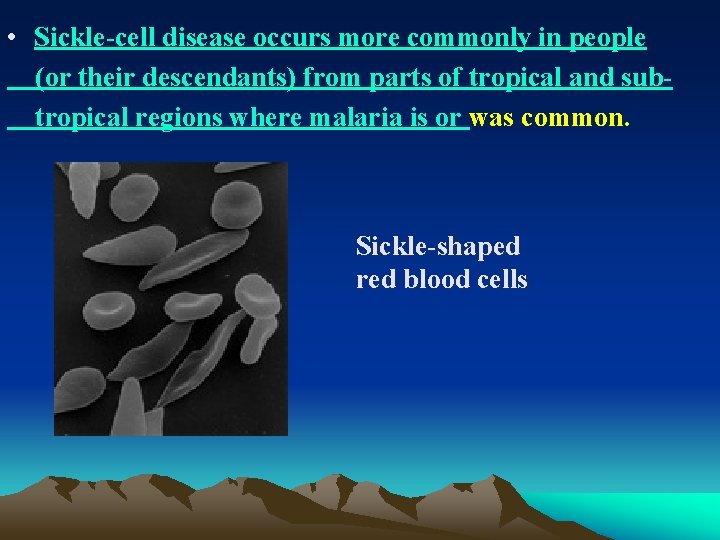
Para. 26 sickle cell: 镰状细胞贫血 • Sickle-cell disease or sickle-cell anaemia (or anemia) is a blood disorder characterized by red blood cells that assume an abnormal, rigid, sickle shape. Sickling decreases the cells' flexibility and results in a risk of various other complications. Life expectancy is shortened, with studies reporting an average life expectancy of 42 and 48 years for males and females, respectively.
• When sickle-shaped cells block small blood vessels, less blood can reach that part of the body. Tissue that does not receive a normal blood flow eventually becomes damaged. This is what causes the complications of sickle cell disease. There is currently no universal cure for sickle cell disease.
• Sickle-cell disease occurs more commonly in people (or their descendants) from parts of tropical and subtropical regions where malaria is or was common. Sickle-shaped red blood cells
Para. 27 demean: to deprive of esteem, self-worth, or effectiveness; to lower in character or quality 贬损 somatic gene therapy: 体细胞基因治疗 germline gene therapy: 生殖细胞基因治疗 preliminary: preparatory 预备的; 初步的 have access to ( therapies ) access (to sth. )---the chance or right to use or have sth. e. g. Do you have access to a personal computer ?
Phrases in the text 1. 2. 3. 4. 5. 6. 7. 8. 9. Sequences of bases Genetic disorders Defective genes Homologous recombination Selective reverse mutation Target cells Human immunodeficiency virus Herpes simplex viruses Cold sores
10. Therapeutic DNA 11. Genetic code 12. Clinical trials 13. Multiple organ failures 14. A permanent cure 15. Viral vector 16. Multigene disorders 17. RNA interference 18. Gene silencing
19. 20. 21. 22. 23. 24. 25. blood-brain barrier Cystic fibrosis Pores in nuclear membrane Sickle cell Somatic / germline gene therapy Huntington’s disease Bubble baby syndrome